4.8: The Chinese Exclusion Act - SY23
star
star
star
star
star
Last updated about 2 years ago
8 Nsɛmmisa
Hyɛ no nsow a efi ɔkyerɛwfo no hɔ:
0
1
Ɛhia
1
0
Content Objective: I will be able to explain how 19th-century Chinese immigrants helped to make America great.
Standard Objective: I will be able to identify claims and counterclaims explicitly stated in text or determine implicit claims and counterclaims from text.
Absent? Just want to review this slides? Click here.
Content Objective: I will be able to explain how 19th-century Chinese immigrants helped to make America great.
Standard Objective: I will be able to identify claims and counterclaims explicitly stated in text or determine implicit claims and counterclaims from text.
Absent? Just want to review this slides? Click here.
Warm Up: How is your week going? Is there anything you are looking forward to or would like to share with your U.S. History teacher(s)?
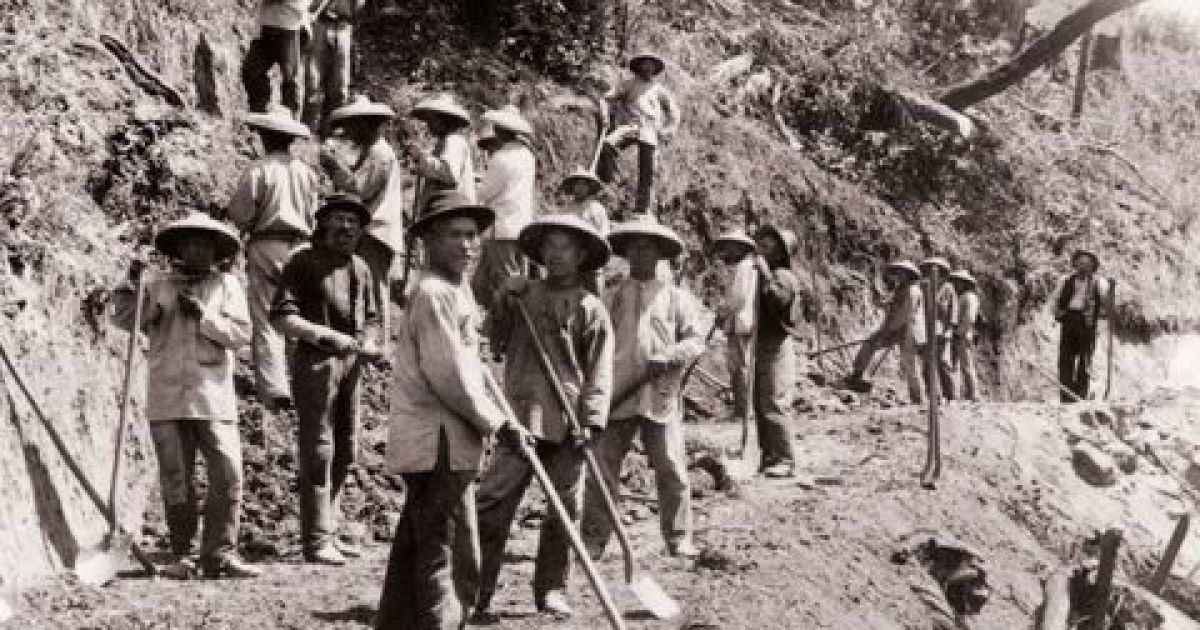
Prohibited by law in 1790 from obtaining US citizenship through naturalization [legally becoming a citizen], Chinese immigrants faced harsh
The Chinese community banded
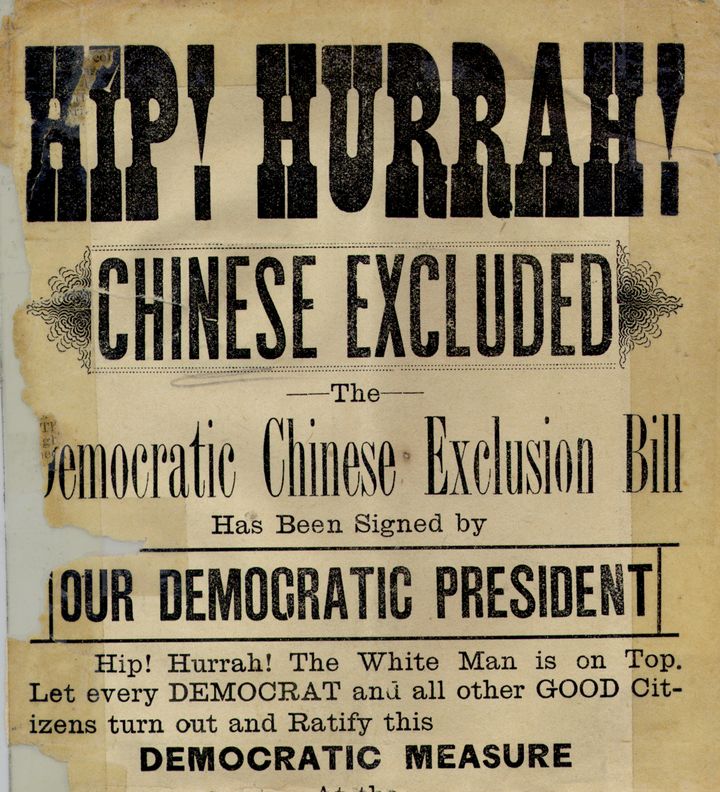
But, as Chinese workers began competing with white Americans for jobs in California cities, anti-Chinese discrimination increased with the rise of
Racism and discrimination became law. The new California constitution of 1879 denied naturalized Chinese citizens the right to vote or hold state
Furthermore the US Congress passed the Chinese Exclusion Act in 1882, which was the first significant law
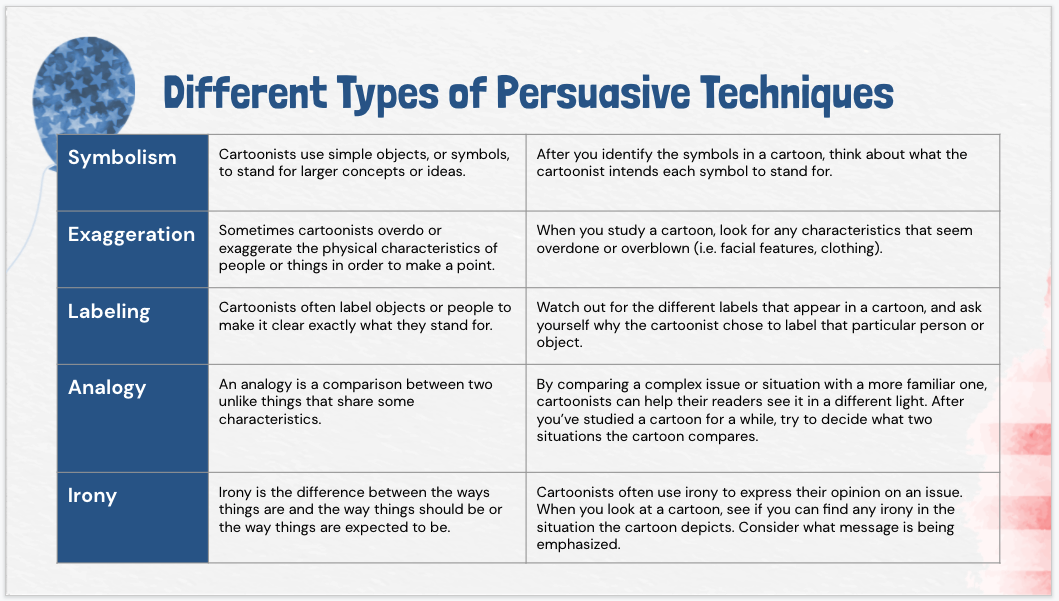
Applying Knowledge Together: Today, we are going to analyze a political cartoon from the time that the Chinese Exclusion Act was passed. Recall the persuasive techniques of political cartoons that we learned last week
Applying Knowledge: Let's take a look at another political cartoon from the time period we're studying.
Meet the Cartoon: What do you notice first? (Circle the 3 most obvious elements in "Show Your Work")
Observe the Visuals: List the people, objects, and places. Consider actions or activities as you caption each element. Which ones do you think are symbolic?
Consider the Words: Which words or phrases are most significant? List adjectives that describe the emotions portrayed in your captions.
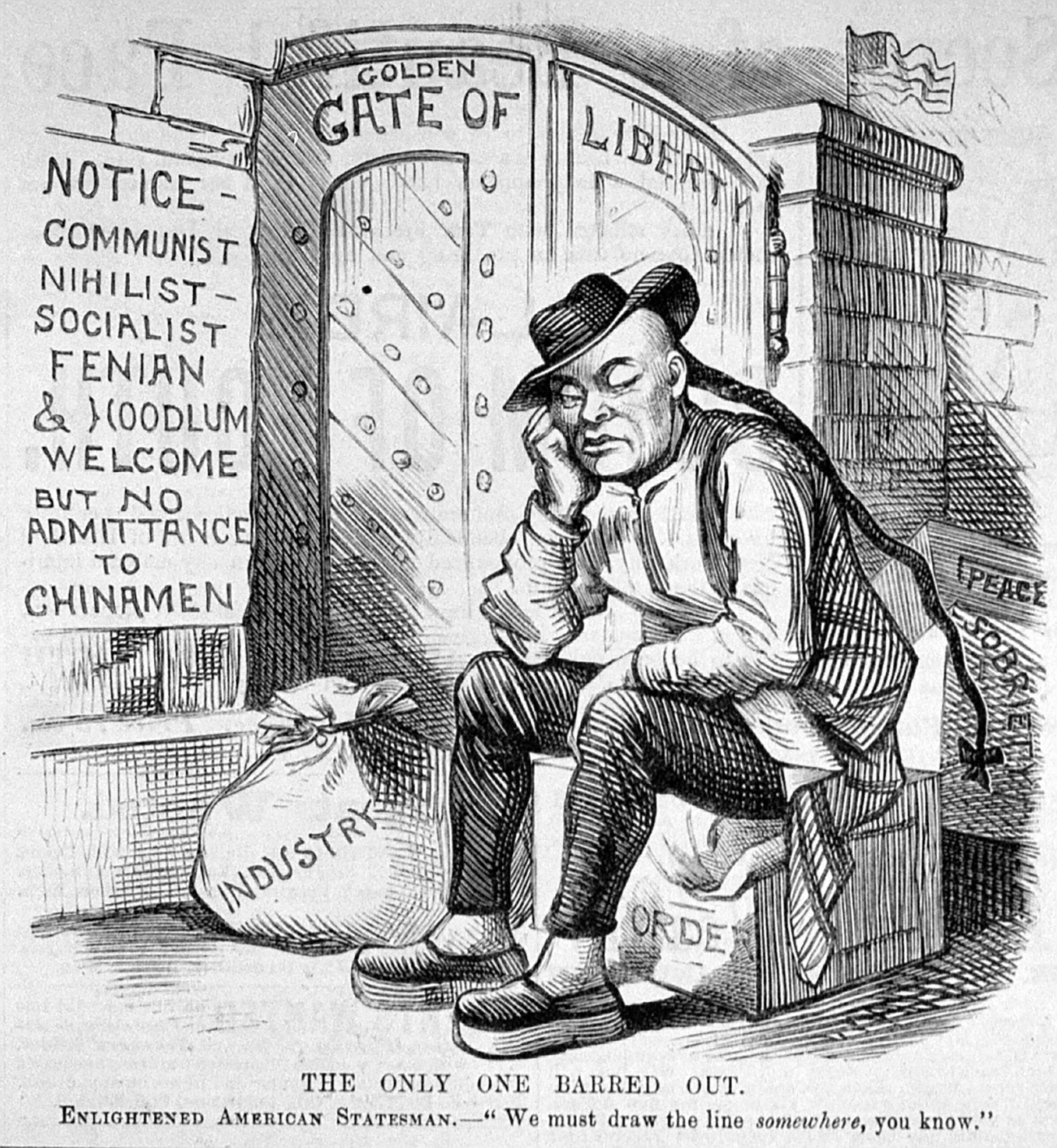
4. Dig Even Deeper: What time period do you think this political cartoon is from? What was happening historically at the time it was created?
5. Use as Evidence: What is the overall message of this image?
Exit Ticket: Which persuasive techniques were used in the "Golden Gate of Liberty" political cartoon?
Exit Ticket: Please evaluate how well you understood today’s lesson on a scale from 1 to 4: