Use the skull basics and the teeth links to complete the polar bear diagram and questions below.
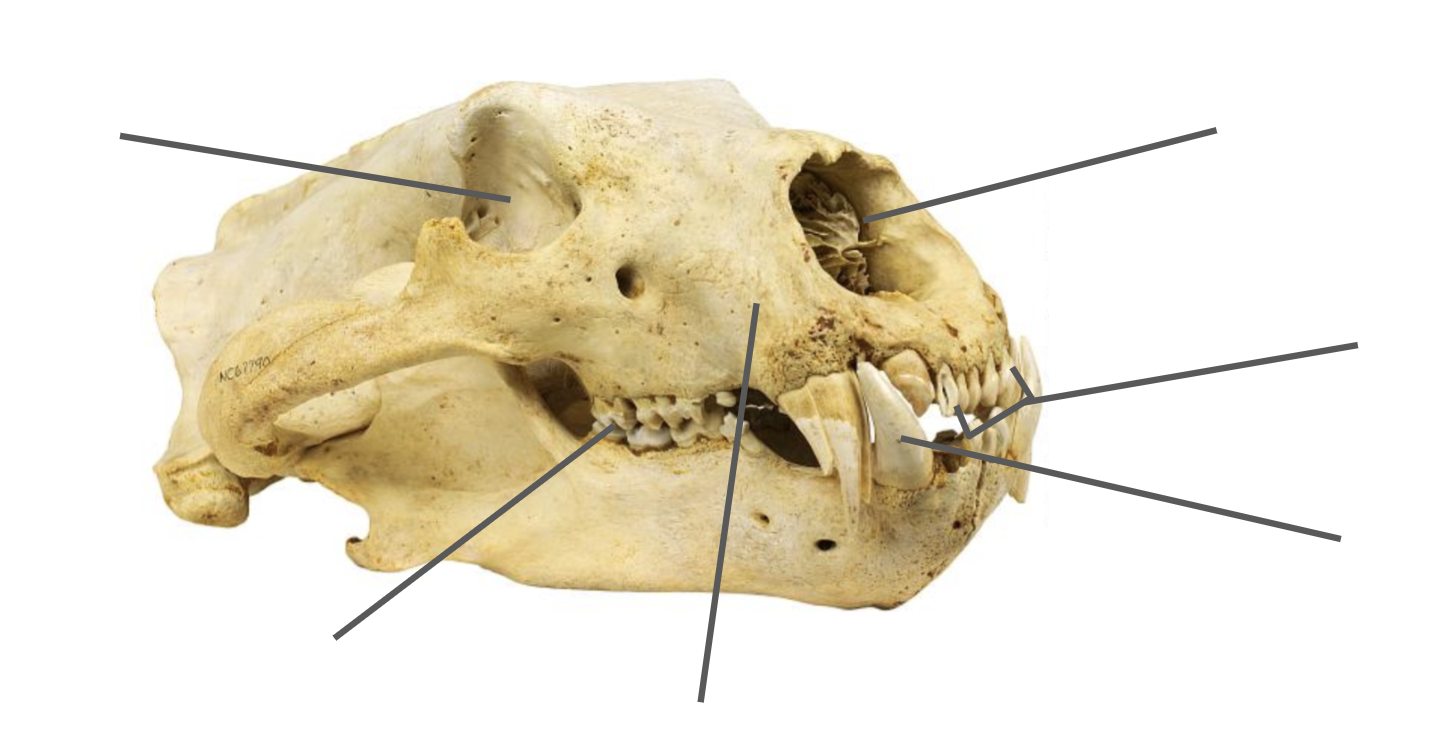
Mmuae Afoforo a Wobɛpaw:
incisors
maxilla
nasal passage
eye socket
canines
molars
Use the skull basics and the teeth links to complete the polar bear diagram and questions below.
What do the features of this polar bear skull tell you about the animal's eating behavior?
What does the location and size of the polar bears's eye sockets tell you about the animal? How does the polar bear's eye socket compare to other animals?
Use the foramen magnum and the teeth link to complete the diagram and questions below. You can also find a detailed diagram of a Polar Bear here.
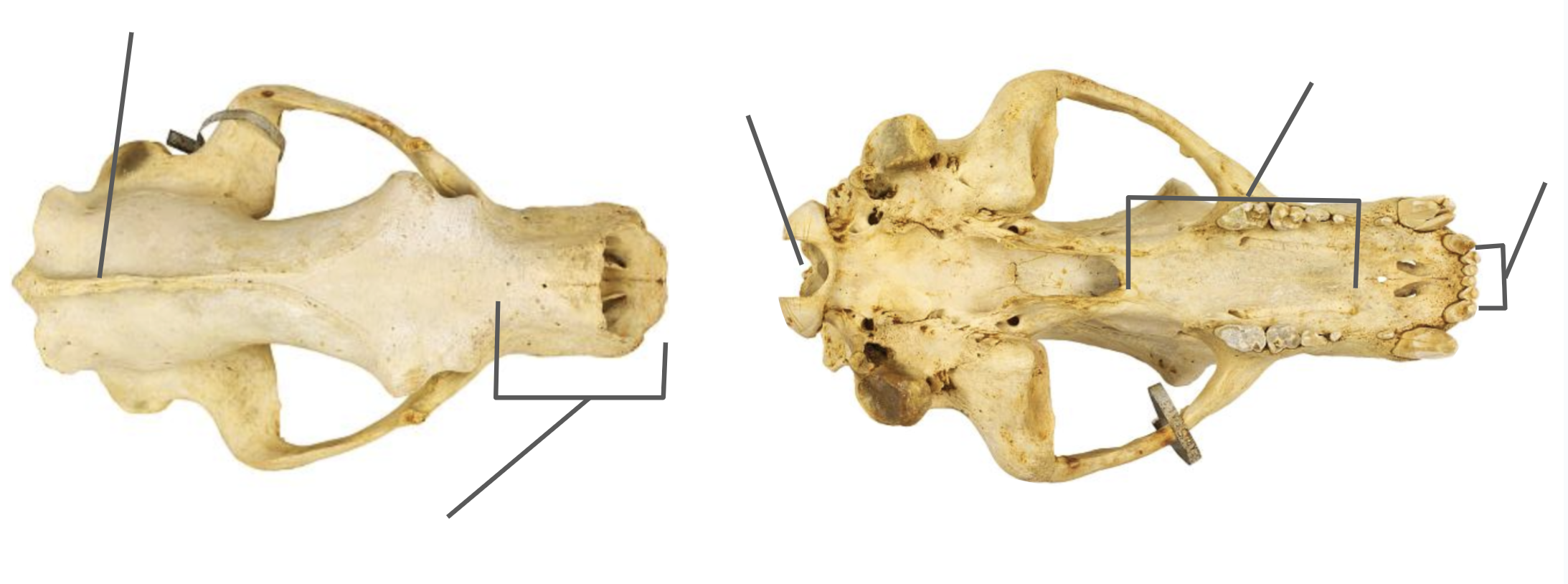
What does the location of the foramen magnum tell us about how the polar bear walks and the orientation of the spinal cord and column? How does this compare to other animals?
What does the shape & size of the nasal cavity tell you about the polar bear's ability to smell? How does this compare to other animals?
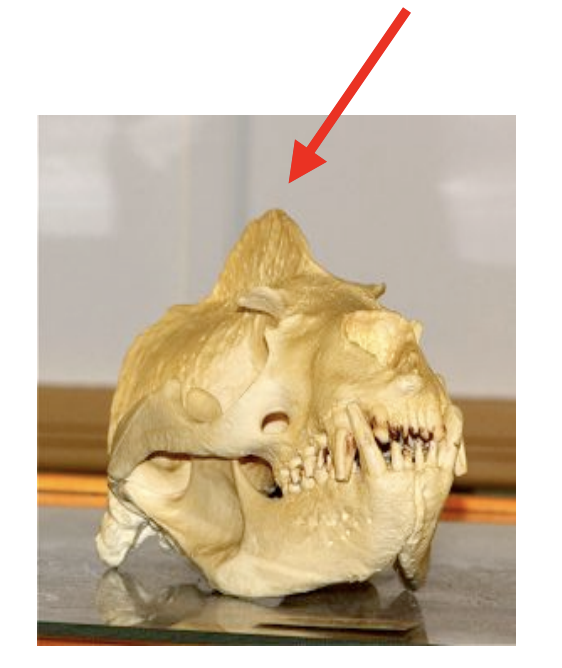
Skulls are made of separate bones that look like plates. In some animals these plates meet at the top of the skull and form a ridge. This ridge is called the sagittal crest, and runs the length of the skull. (Follow the red arrow in the picture to the right.)
The sagittal crest is a point of attachment for the muscles that run from the top of the head to the jaw. These muscles are responsible for controlling the crushing lower jaw. The larger the sagittal crest, the more powerful the muscles of the jaw and the bite of the animal. The picture above shows the large sagittal crest of a California Sea Lion.
Predators have larger sagittal crests than prey animals. Small sagittal crests are usually present in omnivore species such as coyotes, raccoons and beavers. Because most herbivores have smaller jaw muscles, they do not have a sagittal crest.
What does the size of the sagittal crest tell you about the strength of the muscle (masseter and temporalis) that is attached to it?
How does the size of the sagittal crest of the polar bear compare to the California Sea Lion?
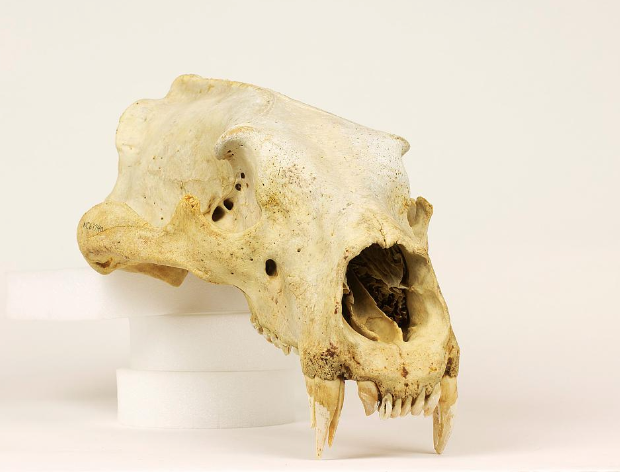
Polar Bear ⬆️
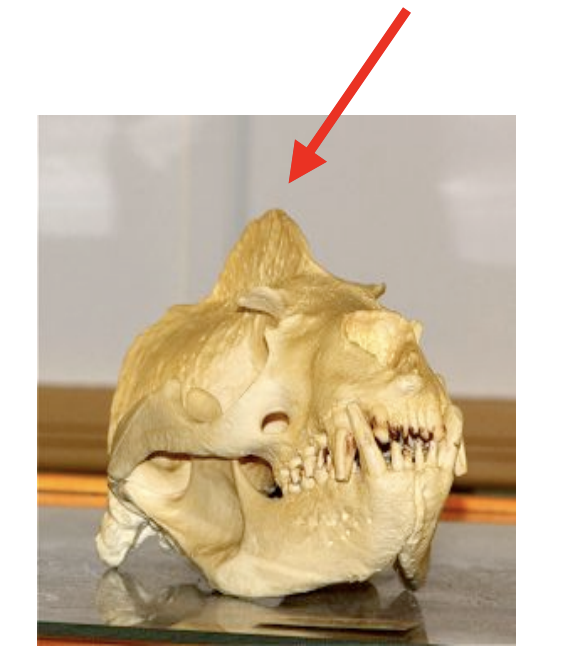
California Sea Lion ⬆️
Visually examine your skull and the pictures provided, how long is your skull in cm?
Estimate the total length of the original specimen by taking the length of your skull and multiplying it by 5. How long is your specimen?
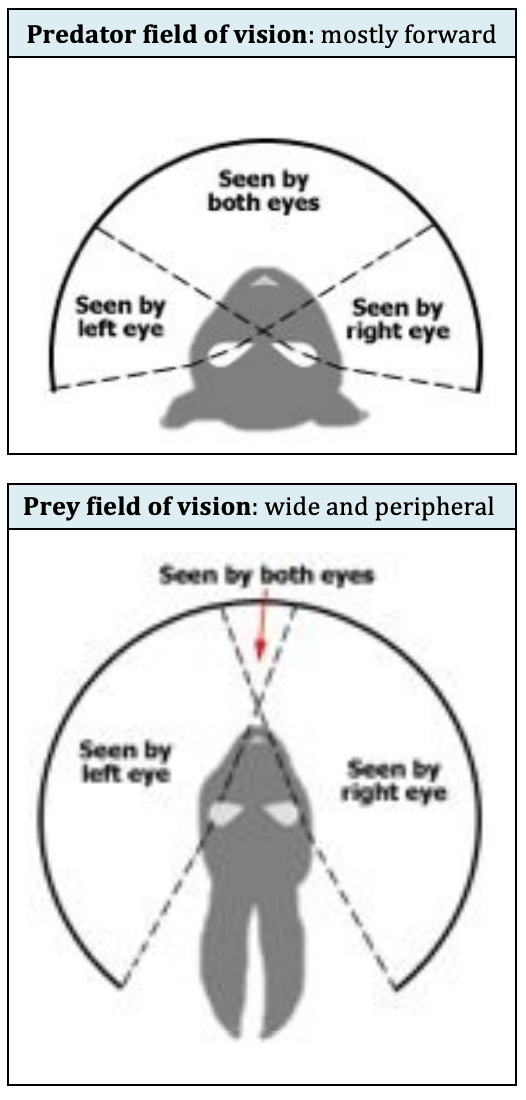
Describe the position of the eyes on your skull and explain if your specimen would be a predator or prey.
Let's examine the mouth and teeth in the skull (if present), teeth shape indicates how and what the animal is eating.
Does your skull have an upper and lower jaw
Does your animal have teeth
If your animal does have teeth, try to identify the following, type yes if present, or no if absent, if you can count the number of teeth, type the number. Compare your skull to the image below to help. REMEMBER NOT TO TOUCH THE SKULLS!
Incisors:
Canines:
Premolars:
Molars:
Carnassial Teeth:
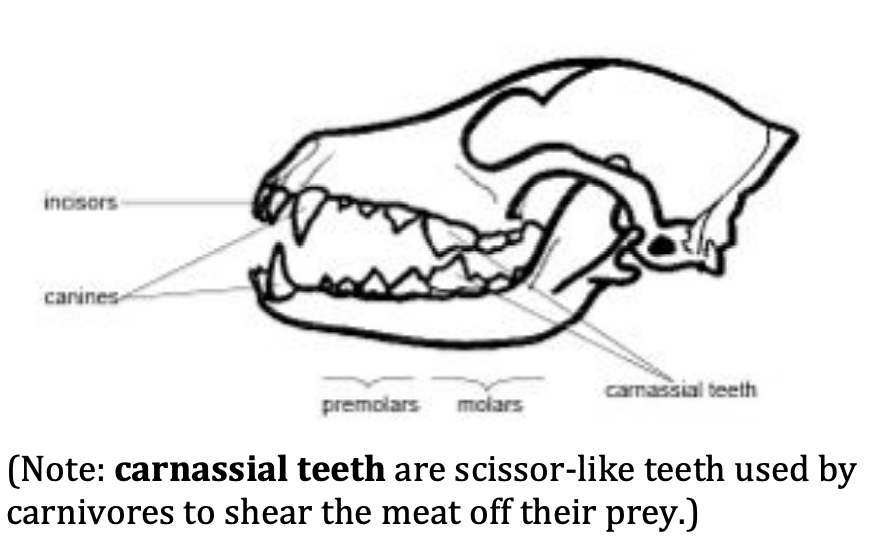
Based on your animal skull's teeth (or lack of) what type of diet do you think it has? Why? Be sure to include the type of teeth in your response. Look here if you need additional help.
Does your skull have a sagittal crest? How strong do you think the bite of your animal is based on this?
Look at the nasal cavity of your skull, the thin membranes inside are called turbinates. The more complex these structures are the better sense of smell your animal had.

Describe the pattern of turbinates and the sense of smell you animal might have. If you don't see any or it is very simple, explain how that might affect your animal.
Look at the picture of the skull with a blue dowel positioned in the back of the skull through the foramen magnum. The dowel represents the vertebrate and is there to show you how the skull is connected to the body.
Describe the position of your skull's foramen magnum and if you think your animal walked on 4 legs or 2 legs. NOTE: sometimes animals that we typically think of as 4-legged can actually stand on 2 legs. Will this make a difference in the angle?
Find the colored circle/tag on your skull and write the letter:
What animal do you think your skull is?
Please do not write on the dichotomous key!
To use the dichotomous key, start at the top and answer each question for your skull until you get to a circled species.
To check if you are right, answer this question in the following format:
letter of your skull, name of the animal
so if you thought your skull a was a cow you would type in:
a, cow
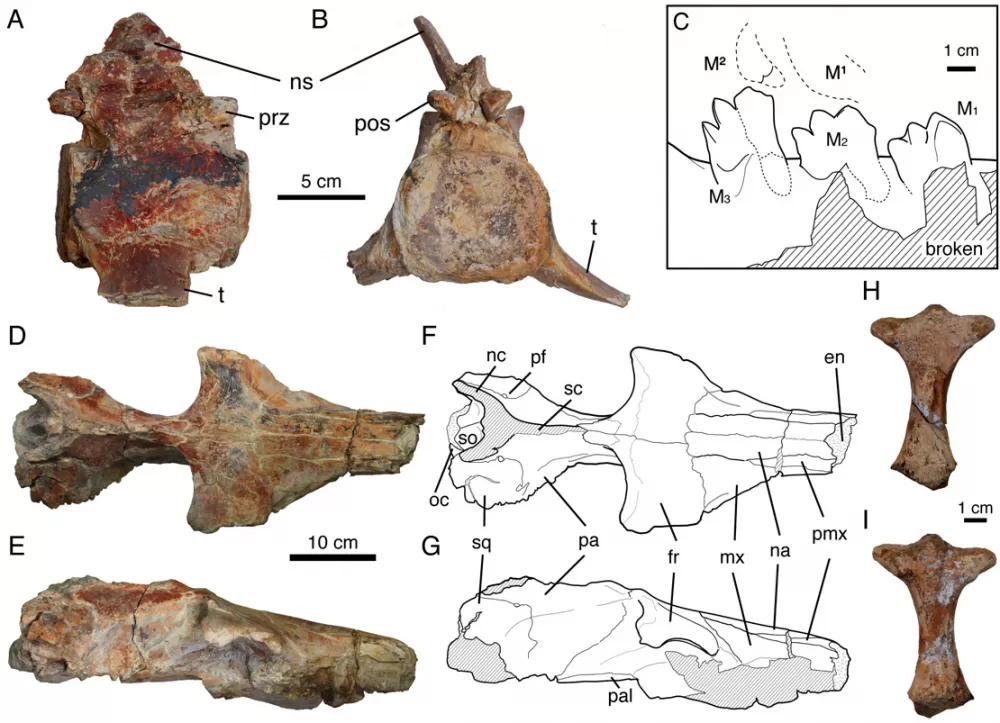
Was your prediction correct? What challenges do you think scientists face when trying to figure out the behavior and size of animals using only fossil skulls like the one below of an early whale?