Ɛhia
1
Circle what you have tried or might try in the future. Feel free to note any questions you might have.
Circle what you have tried or might try in the future. Feel free to note any questions you might have.
We are going to pace through the first section in "teacher-paced" mode. Then, I will switch the Formative to "student-paced" so that you can continue working through the Formative.
Which of the following AI tools have you tried?
What is ChatGPT?
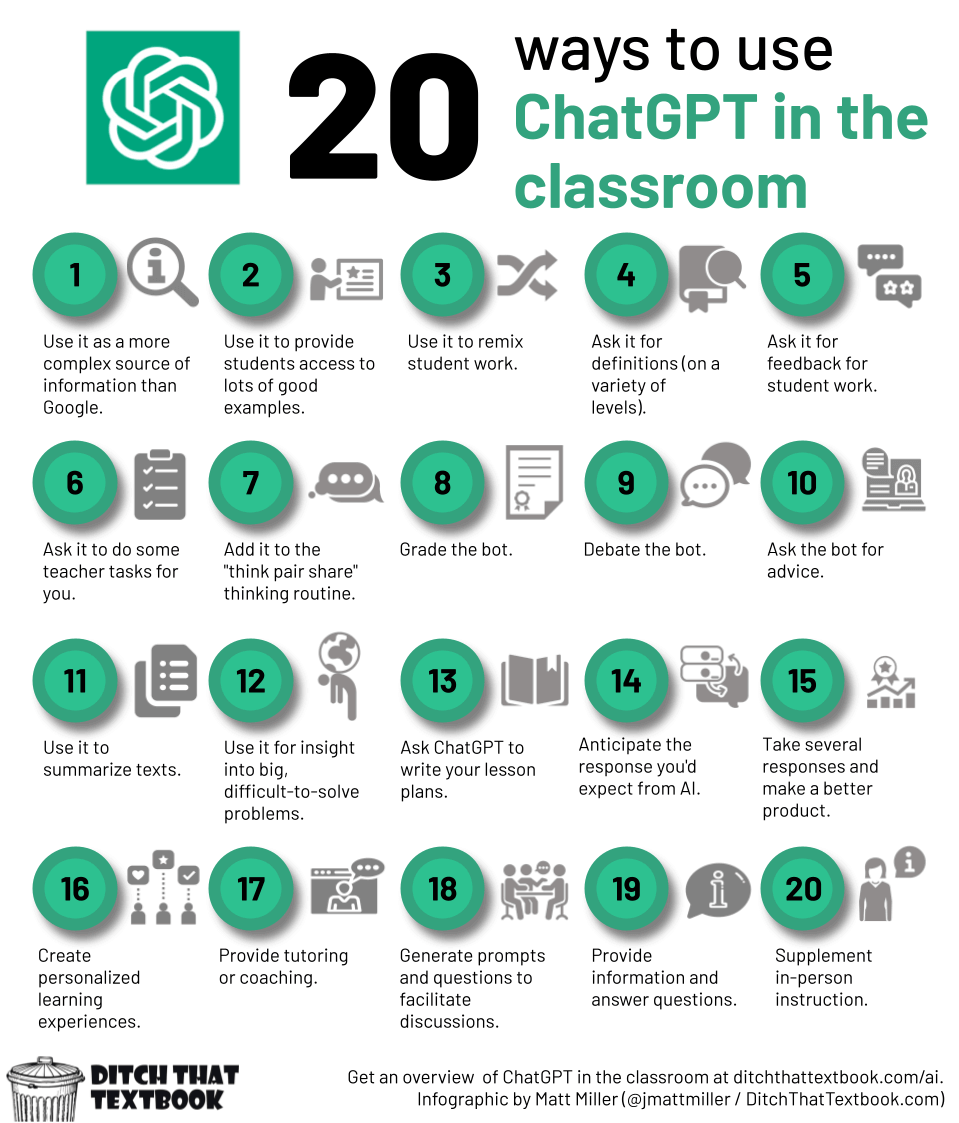
How can teachers use ChatGPT in the classroom?
Circle what you have tried or might try in the future. Feel free to note any questions you might have.
Can ChatGPT provide personalized feedback to students based on their individual needs?
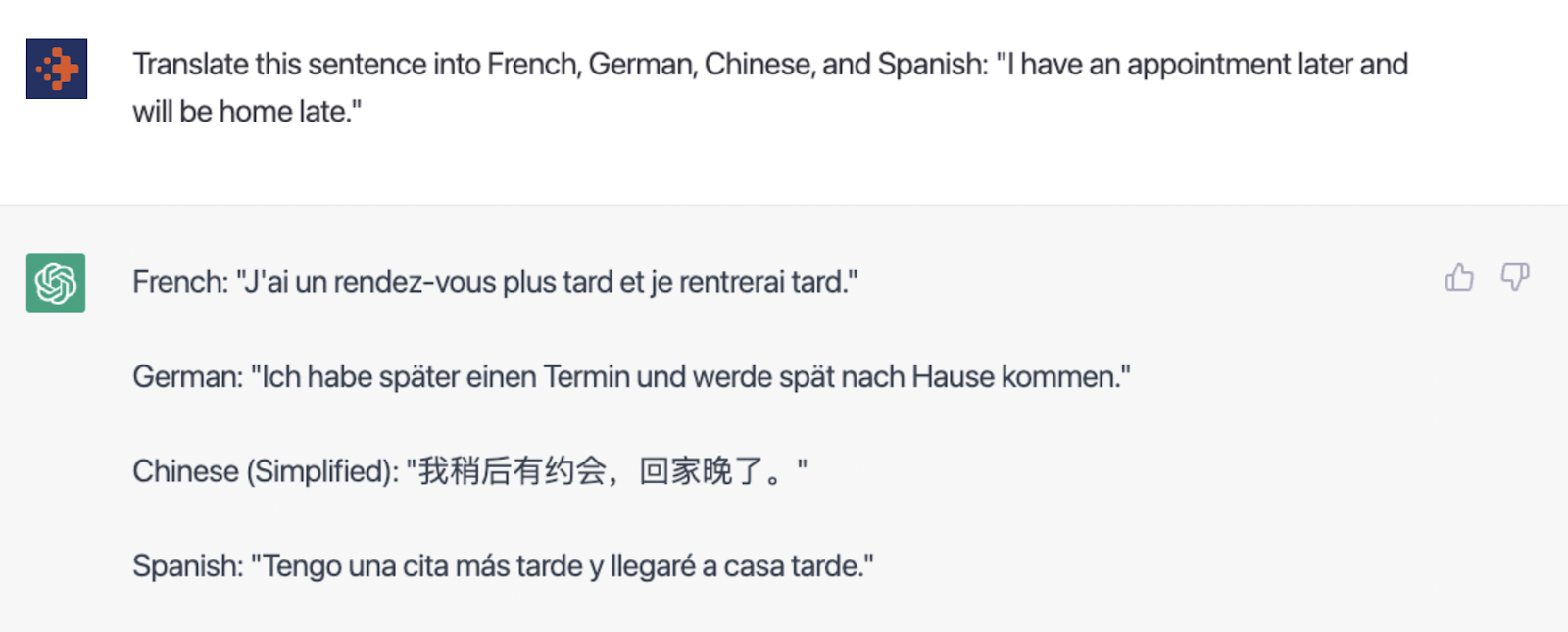
How can Chat GPT help students with language learning?
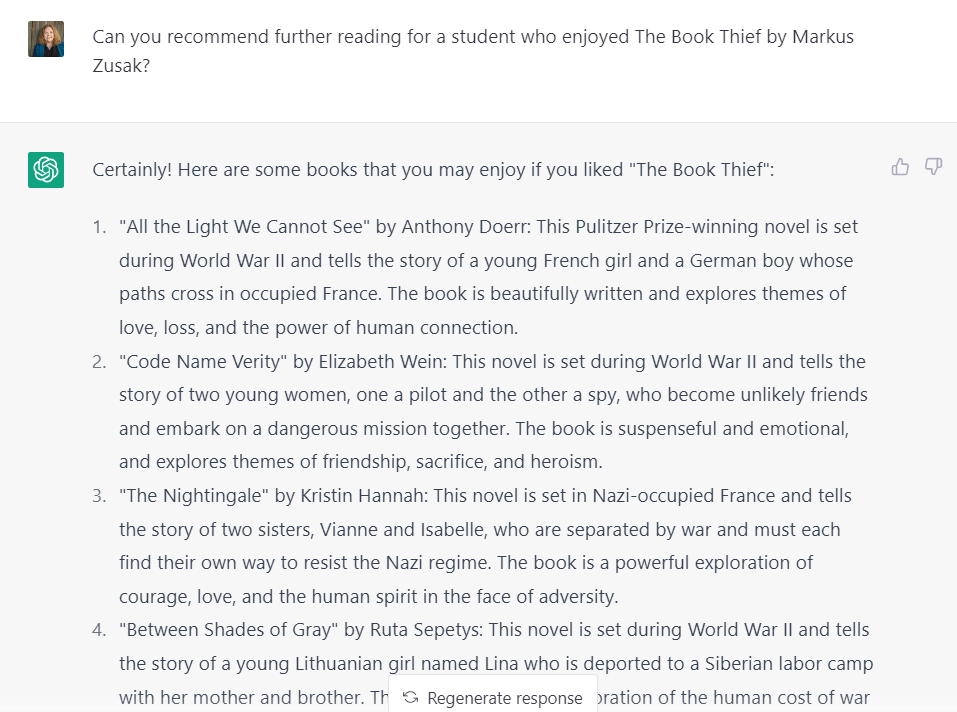
Can ChatGPT provide recommendations for further reading and learning?
Match each feature
| Draggable item | arrow_right_alt | Corresponding Item |
|---|---|---|
This feature of ChatGPT provides access to educational videos and articles to enhance students' learning experience | arrow_right_alt | Writing assistance |
This feature of ChatGPT can translate sentences to different languages, which is especially helpful for language learners. | arrow_right_alt | Access to educational resources |
This feature of ChatGPT can personalize difficult concepts and provide personalized feedback to help students improve their performance. | arrow_right_alt | Language translation |
This feature of ChatGPT helps students who struggle with writing assignments by providing feedback on grammar and sentence structure. | arrow_right_alt | Personalized feedback |
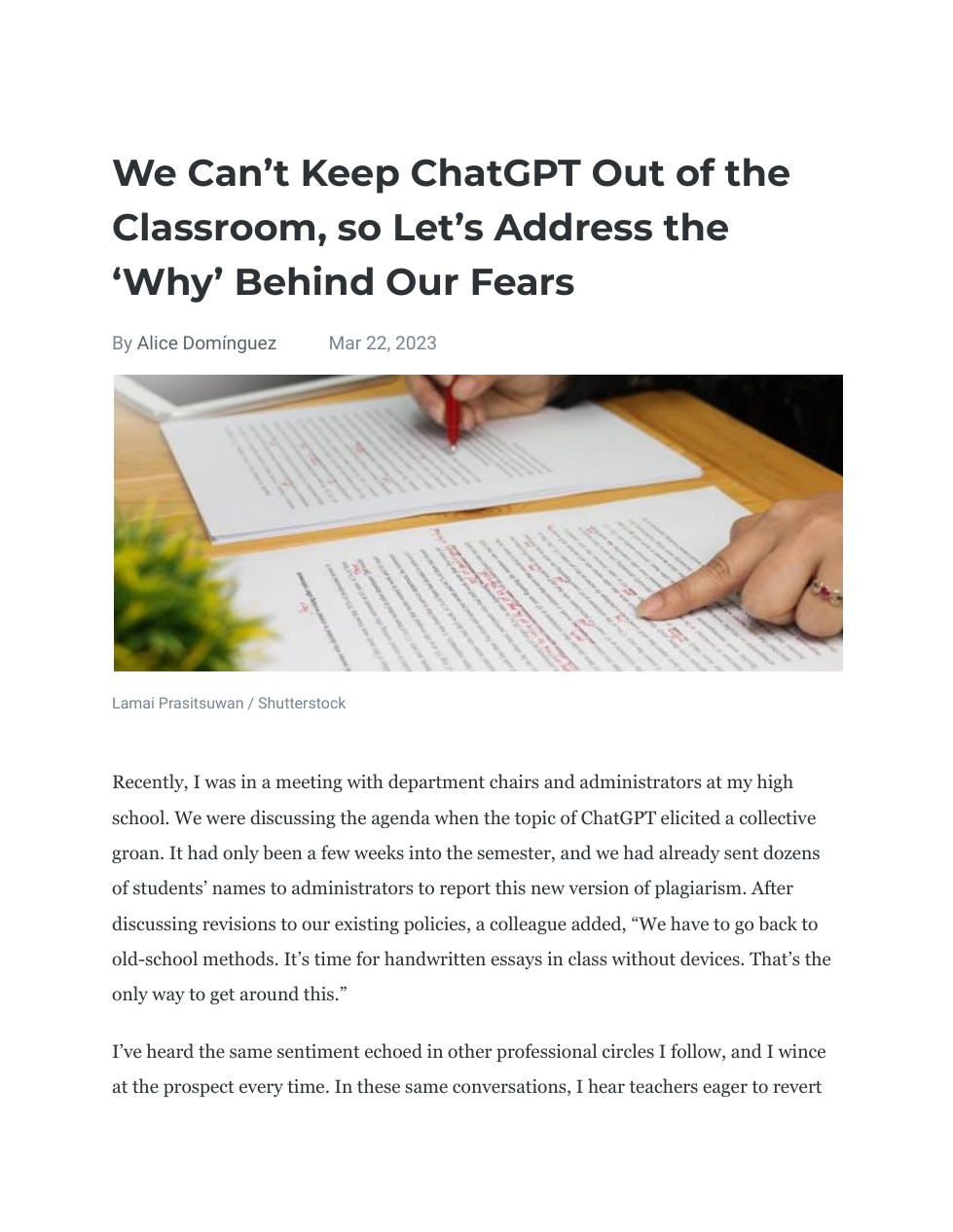
While reverting back to paper can be viewed as a necessary stopgap as we get our bearings with AI, there are many benefits to using technology that students will lose if pen and paper become the new norm. Which of these issues concern you the most? - Miller, Matt. AI for Educators: Learning Strategies, Teacher Efficiencies, and a Vision for an Artificial Intelligence Future (p. 34). Ditch That Textbook. Kindle Edition.
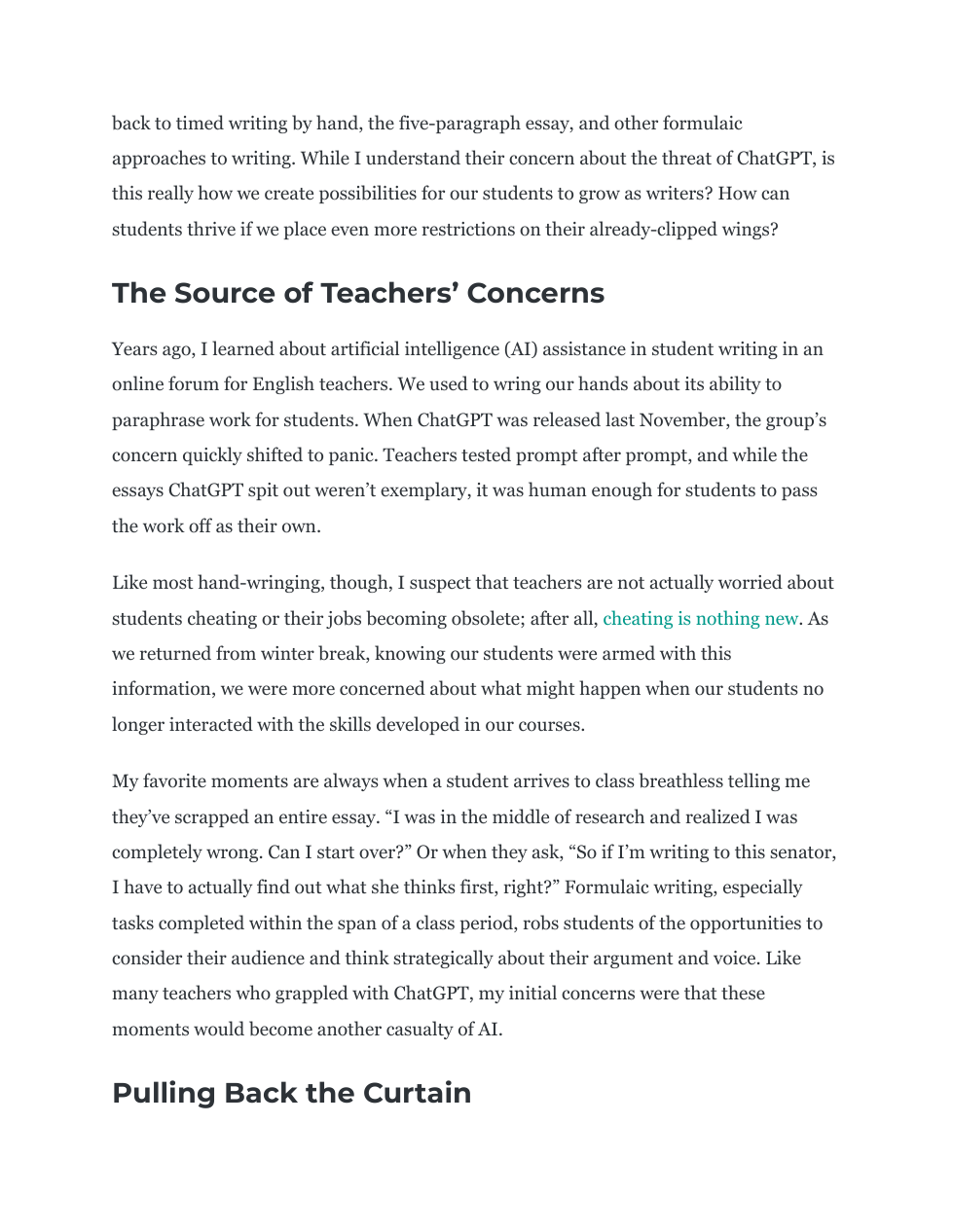
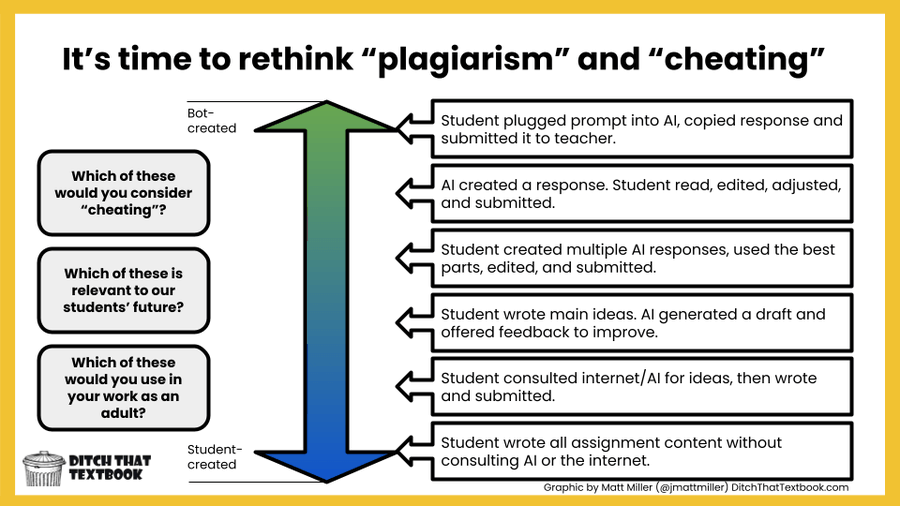
Consider the graphic above. "If cheating is nothing new," how might AI call for us to revise our definition of cheating and plagiarism?
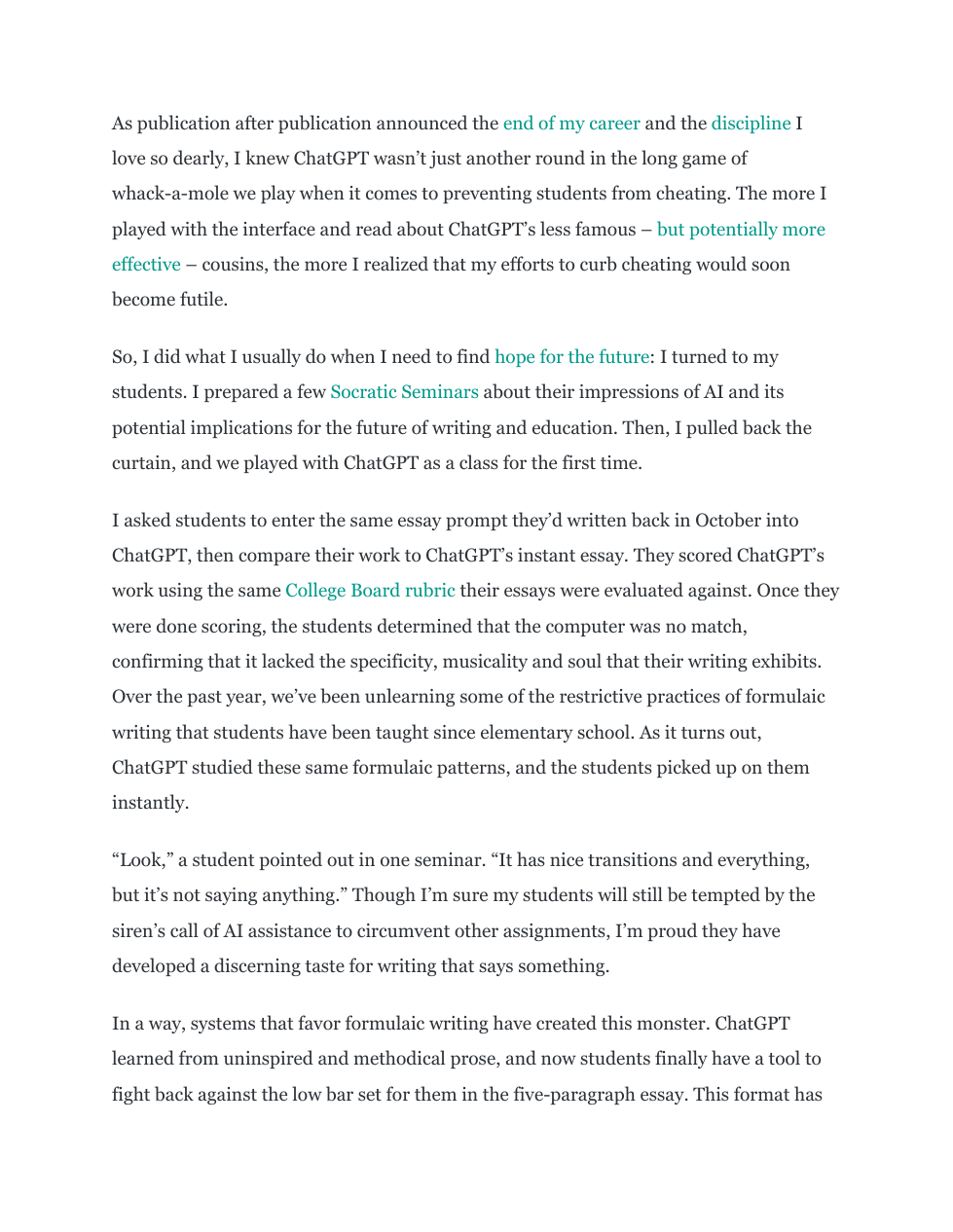
How might the AI revolution help us find ways to help our students develop their voice? What roadblocks might stand in our way?
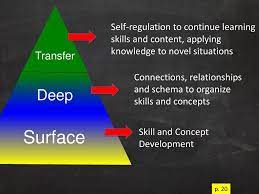
Instead of being consumers of learning, students can be content creators and contributors, making learning more engaging, relevant and authentic. I asked ChatGPT about the impact of content creation on the transfer of learning. Annotate the text to show your reactions, ideas, and questions.
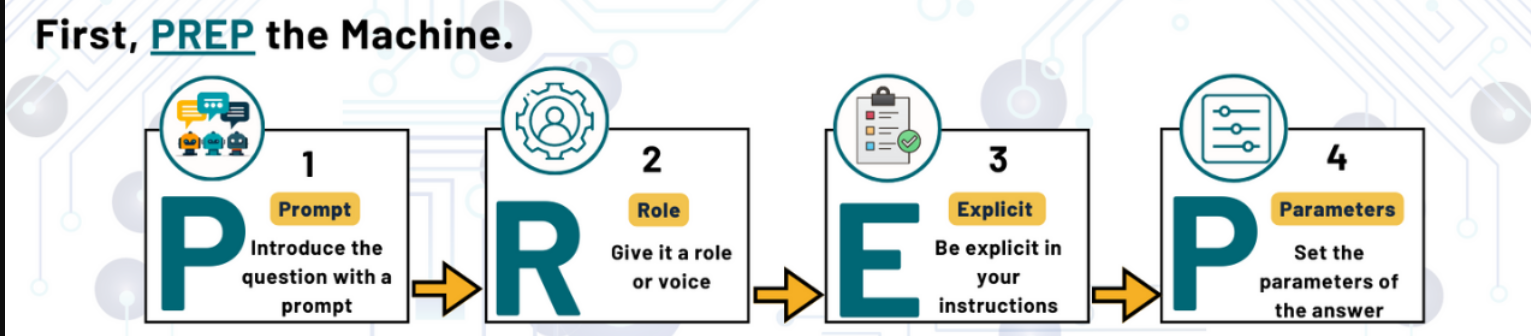
Try crafting a prompt using PREP.
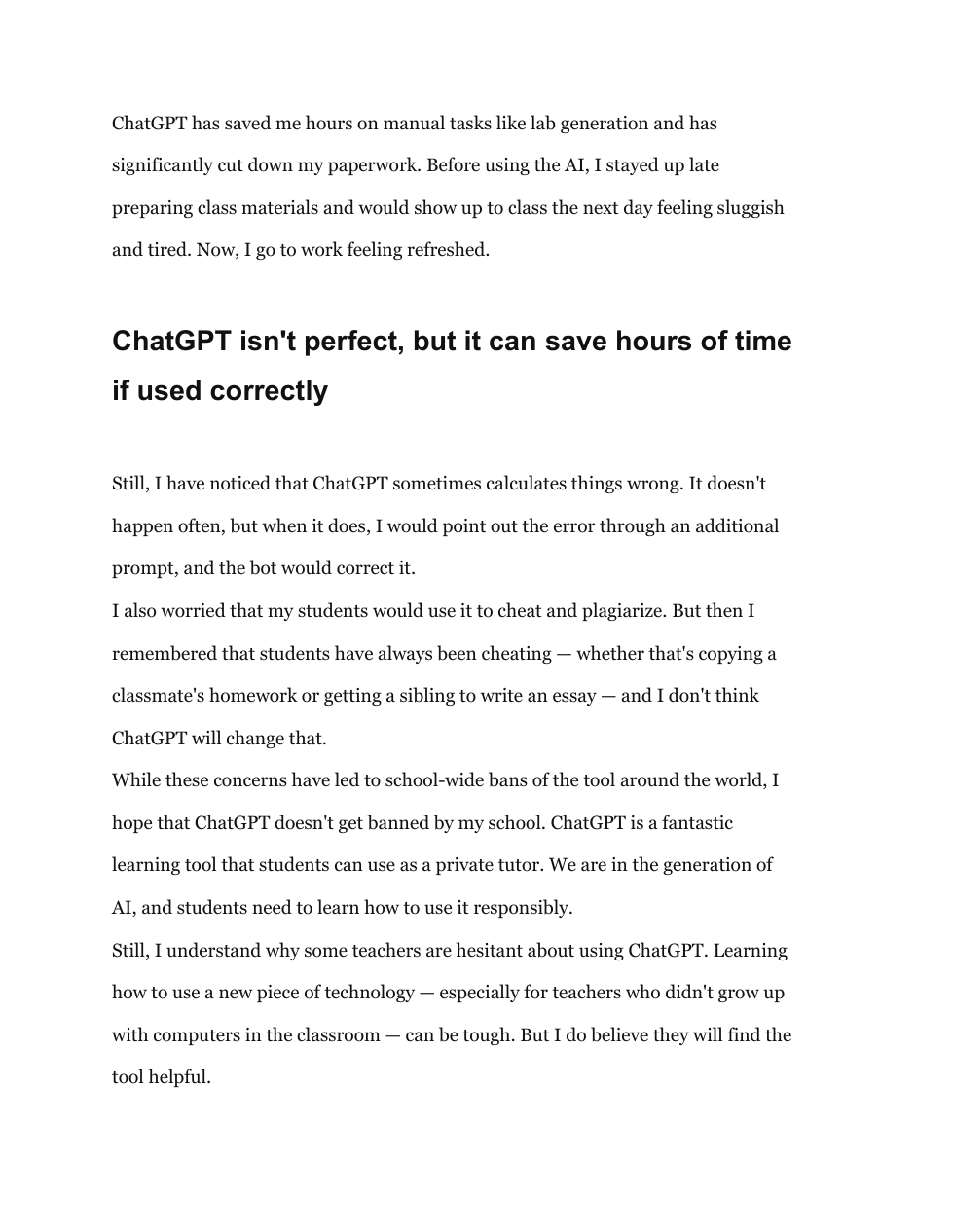
Annotate the text from the article to indicate your thoughts, reactions, and questions.
Here are some ideas recently generated and shared from teachers across the globe. Which ones sound interesting to you?

"Conversation is a timeless skill. We’re still going to need to be able to talk to other humans and interact extemporaneously. We’ll still create and support opinions. We’ll still come up with questions. Even though we’ll ask machines for answers sometimes, we will always want to ask humans those questions, too."
Miller, Matt. AI for Educators: Learning Strategies, Teacher Efficiencies, and a Vision for an Artificial Intelligence Future (p. 36). Ditch That Textbook. Kindle Edition.
How can we utilize discussion strategies in the face of AI?
Check off all of the tools that students could potentially use for content creation to support learning transfer. If you have additional ideas, note them in the "show your work" section.
Sarah Dillard founder of Kaleidoscope Education wrote: “Augmenting the think-pair-share with ChatGPT could be one of the biggest tech-enabled leaps in pedagogy: Think. Pair. ChatGPT. Pair. Share.” Students think about a prompt, encouraging them to retrieve what they know from memory and consider it. Then they discuss it with a classmate. Then they do any searches they want with an AI assistant. They pair back up to discuss what they’ve found. Then they share with the class. The AI assistant adds an additional perspective and more information.
Educator Alona Fyshe explained it this way: “I used it to get a better definition of intentionality. I asked it to explain it to me like I was 5 and it was slightly better than how I had been trying to explain it.” PROMPT TIP: You can give an AI assistant a definition from a textbook or a definition you commonly use yourself. Then, ask it to improve it, to make it easier to understand, or to provide an analogy.