Pedro Pantera/Reflexive verbs

Last updated over 1 year ago
13 questions

Reflexive verbs

Spanish reflexive verbs are somewhat different as they represent actions that affects the subject of the sentence not the object itself. Reflexive verbs will not end in -AR, -ER or -IR but in -SE.
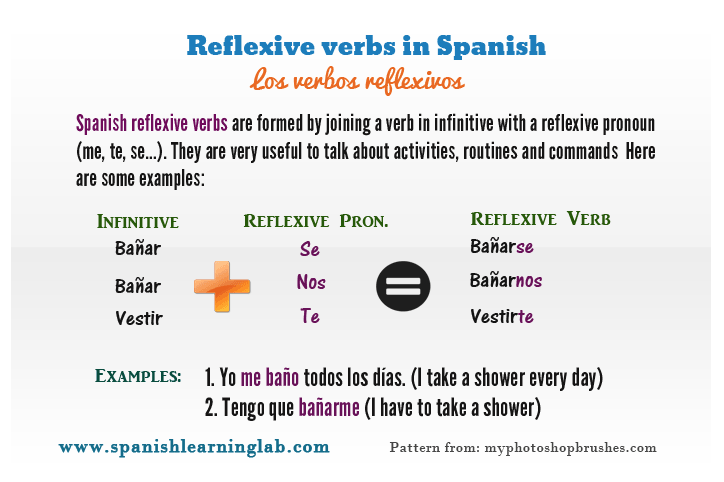
It is often a verb in infinitive (part 1) plus the -SE ending (part 2), for example: BAÑAR + SE = BAÑARSE.
As shown in the picture, reflexive verbs in Spanish are formed by two parts: a verb in infinitive + a reflexive pronoun.
The verb in infinite is conjugated following the rules for regular verbs so for a verb like BAÑARSE (BAÑAR + SE), we should apply the rules for –AR ending verbs and conjugate that part as (Yo) baño, (Tú) bañas, (Él) baña and so on.
The reflexive pronoun -SE at the end of BAÑARSE will also change depending on the pronoun or subject in use, e.g. “Yo me baño”, where ME is the reflexive pronoun that corresponds to YO.
Putting all the pieces together, for the verb BAÑARSE we could say:
Yo me baño”, “Tú te bañas”, “Él se baña”… and so on. Leaving out the subject pronoun is totally fine, but do not omit the reflexive pronoun.

List of common reflexive verbs

A list of common Spanish reflexive verbs

VESTIRSE – Yo me visto
Translation: I get dressed

DORMIRSE- Tú te duermes
Translation: You go to sleep

ALISTARSE – Él se alista
Translation: He gets ready

PONERSE – Ella se pone el sombrero
Translation: She puts on the hat

QUITARSE – Nosostros nos quitamos el brazalete
Translation: We take off the bracelet

ENCONTRARSE – ¿Ustedes se encontraron con ellos?
Translation: Did you meet with them?

DARSE CUENTA – ¿Ellos ya se dieron cuenta del accidente?
Translation: Did they realize about the accident?

FIJARSE – Yo siempre me fijo en los anuncios
Translation: I always pay attention to the ads

METERSE – Siempre nos metemos en problemas
Translation: We always get in trouble

ACORDARSE – ¿Tú te acuerdas de mi?
Translation: Do you remember me?

ENOJARSE – Él se enojó contigo
Translation: He got angry with you

IRSE – ¿Usted se va con nosotros?
Translation: Are you going with us?
Required
1
Draggable itemCorresponding Item
bañarse
to go to bed
acostarse
to wake up
levantarse
to get up
despertarse
to take a bath
cepillarse
to brush
Required
1

¿Dónde vive Pedro Pantera?

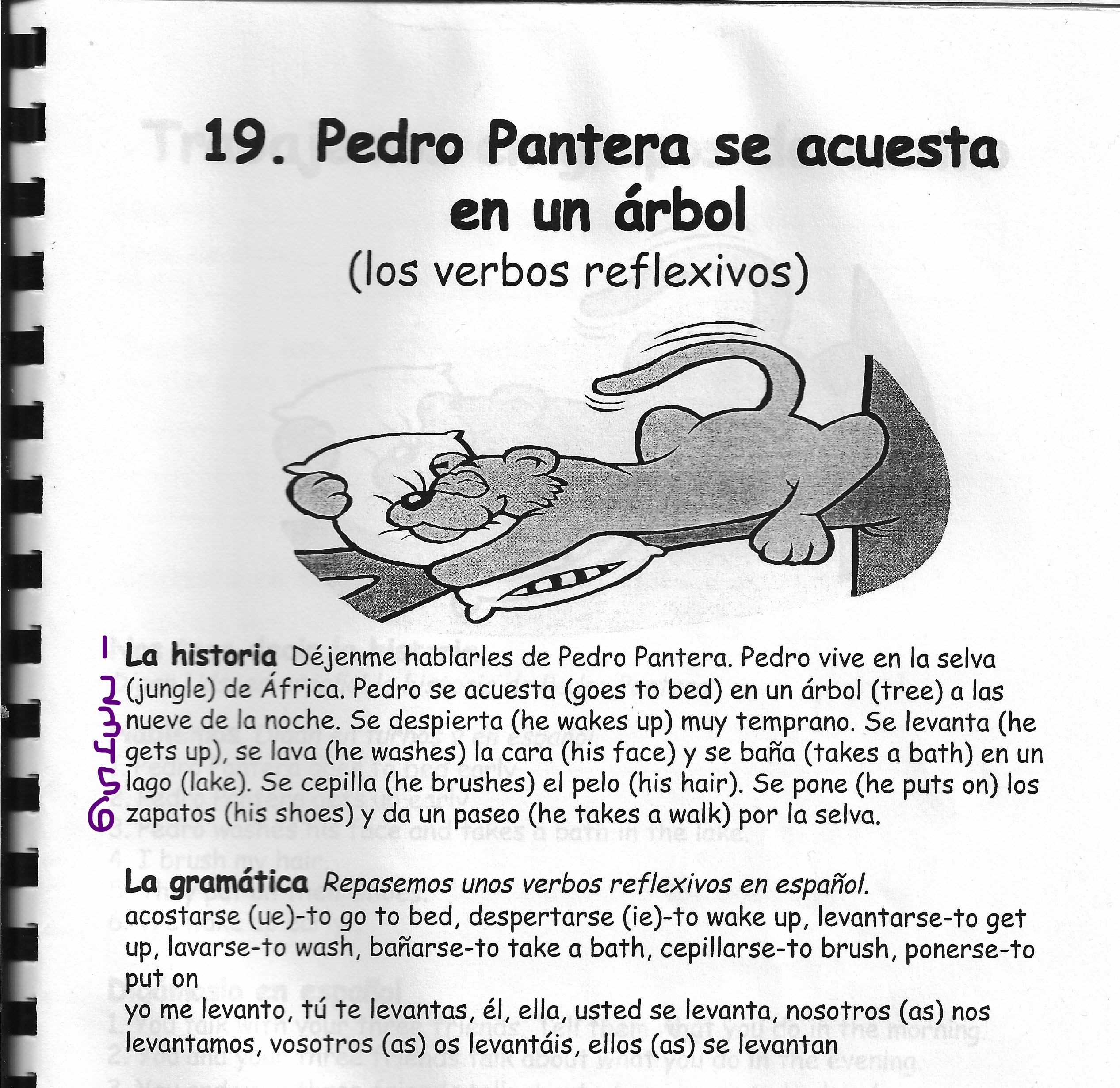
Déjenme hablarles de Pedro Pantera. Pedro vive en la selva (jungle) de África. Pedro se acuesta (goes to bed) en un árbol (tree) a las nueve de la noche. Se despierta (he wakes up) muy temprano. Se levanta (he gets up), se lava (he washes) la cara y se baña (takes a bath) en un lago (lake). Se cepilla (he brushes) el pelo (his hair). Se pone (he puts on) los zapatos (shoes) y da un paseo (he takes a walk) por la selva.
Required
1

¿Cuándo  se acuesta Pedro Pantera?

Déjenme hablarles de Pedro Pantera. Pedro vive en la selva (jungle) de África. Pedro se acuesta (goes to bed) en un árbol (tree) a las nueve de la noche. Se despierta (he wakes up) muy temprano. Se levanta (he gets up), se lava (he washes) la cara y se baña (takes a bath) en un lago (lake). Se cepilla (he brushes) el pelo (his hair). Se pone (he puts on) los zapatos (shoes) y da un paseo (he takes a walk) por la selva.
Required
1

¿Dónde se acuesta Pedro Pantera?

Déjenme hablarles de Pedro Pantera. Pedro vive en la selva (jungle) de África. Pedro se acuesta (goes to bed) en un árbol (tree) a las nueve de la noche. Se despierta (he wakes up) muy temprano. Se levanta (he gets up), se lava (he washes) la cara y se baña (takes a bath) en un lago (lake). Se cepilla (he brushes) el pelo (his hair). Se pone (he puts on) los zapatos (shoes) y da un paseo (he takes a walk) por la selva.
Required
1

¿Cuándo  se despierta Pedro Pantera?

Déjenme hablarles de Pedro Pantera. Pedro vive en la selva (jungle) de África. Pedro se acuesta (goes to bed) en un árbol (tree) a las nueve de la noche. Se despierta (he wakes up) muy temprano. Se levanta (he gets up), se lava (he washes) la cara y se baña (takes a bath) en un lago (lake). Se cepilla (he brushes) el pelo (his hair). Se pone (he puts on) los zapatos (shoes) y da un paseo (he takes a walk) por la selva.
Required
1

¿Dónde se lava la cara y se baña?

Déjenme hablarles de Pedro Pantera. Pedro vive en la selva (jungle) de África. Pedro se acuesta (goes to bed) en un árbol (tree) a las nueve de la noche. Se despierta (he wakes up) muy temprano. Se levanta (he gets up), se lava (he washes) la cara y se baña (takes a bath) en un lago (lake). Se cepilla (he brushes) el pelo (his hair). Se pone (he puts on) los zapatos (shoes) y da un paseo (he takes a walk) por la selva.
Required
4

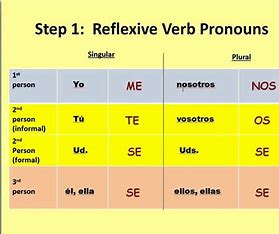
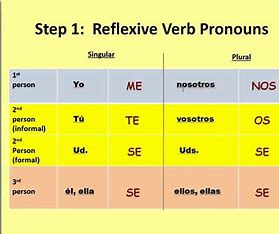
Use the chart above to help you match the reflexive verb pronoun with the corresponding subject pronoun.

yo
él, ella, usted, ustedes, ellos, ellas
nosotros, nosotras
me
te
se
nos
Required
1

Francisco y yo ______ despertamos a las siete de la mañana.

Required
1

Los amigos de Francisco ______ duchan antes de salir.

Required
1

Yo nunca _____ afeito después de comer.

Required
1

¿Tú _____ secas el pelo con un secador de pelo?

Required
1

Todos los días, Francisco ____acuesta a las diez.

Required
1

In Spanish and in complete sentences, describe 3 things you do in your morning routine before school. Use the Spanish reflexive verbs.