DE_LE_Unit1 Formative

Last updated over 2 years ago
19 questions
Note from the author:
For this formative, there will be stations scattered throughout the classroom. Each station corresponds to a set of questions for this formative. Some stations will be hands-on, online, or a hybrid of both, but you will be graded on the content in this formative. Questions in Red are done at the stations.
1.1 Earth's Spheres Lab
4

Hydrosphere & Cryosphere:
https://tinyurl.com/2s3sjcns
Using the data you collected in the simulation, create a bar graph to display your information. Make sure to include labels, units, numbers.

4
Geosphere:
https://tinyurl.com/2s3sjcns
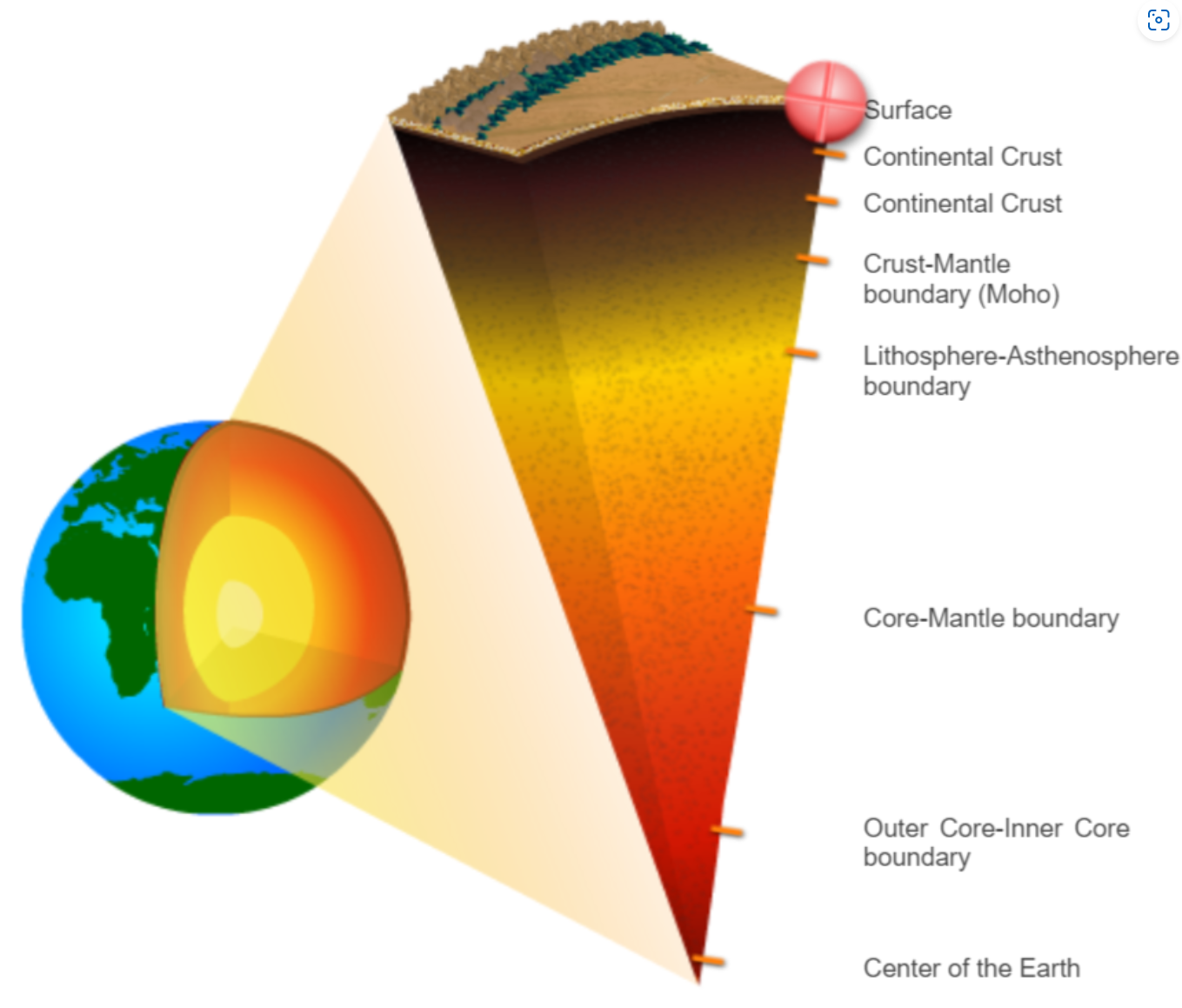
Using the data you collected in the simulation, fill in the blanks for each of the eight different depths noted in the simulation and the image. (Depth in Kilometers, Temperature in Celsius)

Surface
Depth: _______ Temperature: _______
Continental Crust (1)
Depth: _______ Temperature: _______
Continental Crust (2)
Depth: _______ Temperature: _______
Crust-Mantle Boundary
Depth: _______ Temperature: _______
Lithosphere-Asthenosphere Boundary
Depth: _______ Temperature: _______
Core-Mantle Boundary
Depth: _______ Temperature: _______
Outer Core-Inner Core Boundary
Depth: _______ Temperature: _______
Center of the Earth
Depth: _______ Temperature: _______

As we move closer to the center of the Earth, temperature will _______.
4
Atmosphere:
https://tinyurl.com/2s3sjcns
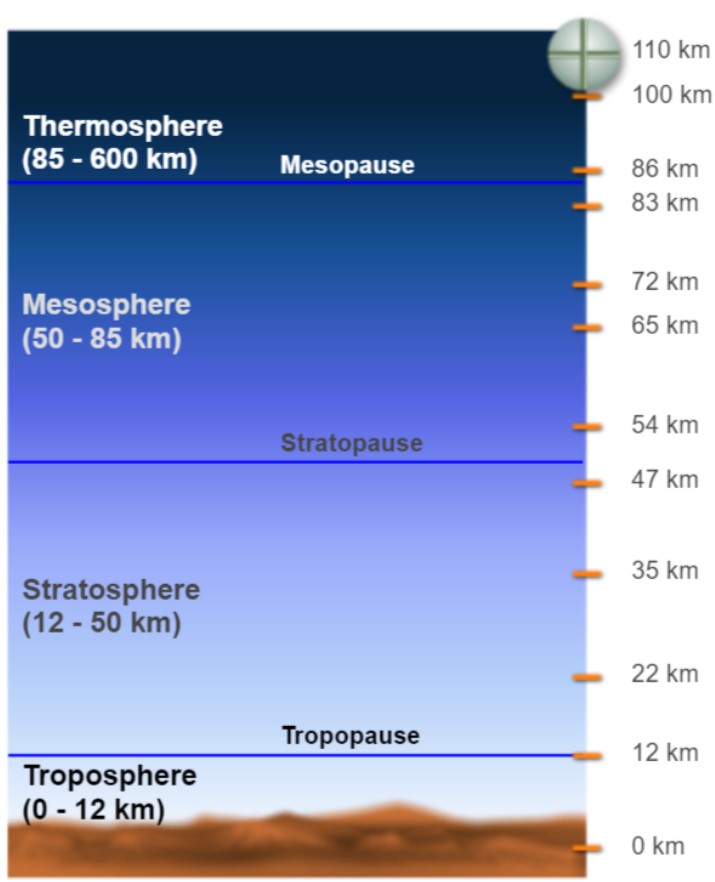
Using the data you collected in the simulation, fill in the blanks for each of the eight different altitudes noted below. (Altitude in Kilometers, Pressure in mb, Temperature in Celsius)

Altitude of 0 km
Pressure: _______ Temperature: _______
Altitude of 12 km
Pressure: _______ Temperature: _______
Altitude of 35 km
Pressure: _______ Temperature: _______
Altitude of 47 km
Pressure: _______ Temperature: _______
Altitude of 54 km
Pressure: _______ Temperature: _______
Altitude of 65 km
Pressure: _______ Temperature: _______
Altitude of 86 km
Pressure: _______ Temperature: _______
Altitude of 110 km
Pressure: _______ Temperature: _______

As altitude in the atmosphere increases, pressure will _______ and temperature will _______.
0
Biosphere:
Select and observe 3 different live cams (except Monterey Bay Cam) from the Monterey Bay Aquarium website.
1st Cam: __________
2nd Cam: __________
3rd Cam: __________
2

Biosphere:
Using the 3 live cams you selected, name as many organisms as you can that you observed.

2

Biosphere:
What are some of the notable/interesting behaviors from the animals that you observed?

4

Magnetic Fields Station:
Position the magnet in a way that demonstrates a magnetic field and sketch it.
Use this example to draw a magnetic field around the Earth.

2

Earth's Polarity:
Using the two posters (Poster A and Poster B) for this station, run a compass across them from left to right.

What did you notice is different between the two posters?

2

Earth's Polarity:
Read the webpage displayed on the side of this question that explains the shift in the polarity of Earth.

How did scientists discover that the polarity of Earth is reversed every few thousands of years?

1
With the information from the station and the reading, I can predict that__________ has an ocean that is above a mid-ocean ridge.
1.1 Earth's Spheres Homework
2

Match the term with its proper description.

Draggable itemCorresponding Item
Condensation
Matter changes from a gas to a liquid as it loses heat energy.
Freezing
Matter changes from a liquid to a solid as it loses heat energy.
Melting
Matter changes from a solid to a liquid as it gains heat energy.
Sublimation
Matter changes from a solid to a gas as it gains heat energy
Vaporization
Matter changes from a liquid to a gas as it gains heat energy.
2

Select the four incorrect/inaccurate statements by clicking on the sentences.

The rock cycle describes the way that rock material cycles through Earth's crust. All rocks start out as lava or magma that cools into igneous rock. An igneous rock must then be weathered into sediments for the next stage of the cycle. Sediments are compressed and cemented to become sedimentary rock. Metamorphic rock forms when rocks are heated and squeezed deep in Earth's crust. New igneous rock forms when metamorphic rock is heated so much that it melts into igneous rock. All rocks go through this cycle over and over again.
1

Which statements are accurate descriptions of Earth's magnetic field? Select all that apply.

2

Match each sphere with the correct description.

Draggable itemCorresponding Item
Hydrosphere
Describes the solid exterior and interior of Earth.
Atmosphere
Describes all water on the planet: solid, liquid and gas.
Geosphere
The gaseous mixture of air at the planet's surface.
Biosphere
Consists of all living things on Earth plus the nonliving things that make up their environments.
2
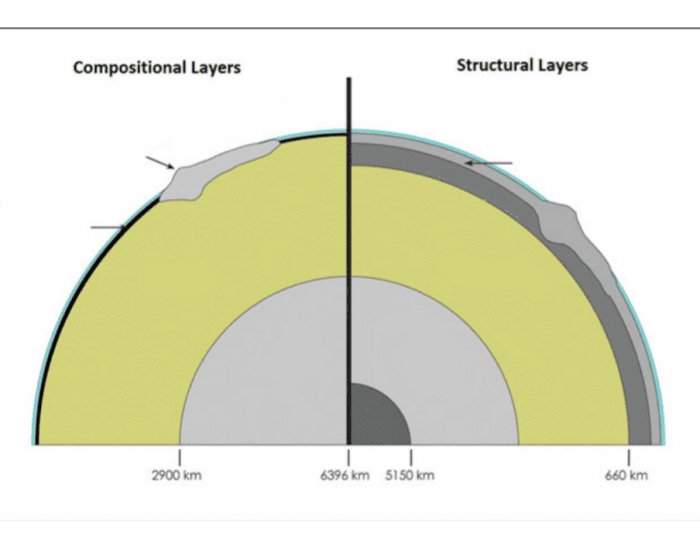
Match each layer of the geosphere with the correct label.
Other Answer Choices:
Inner Core
Aesthenosphere
Outer Core
Core
Mantle
Lithosphere
Mesosphere
Crust
1

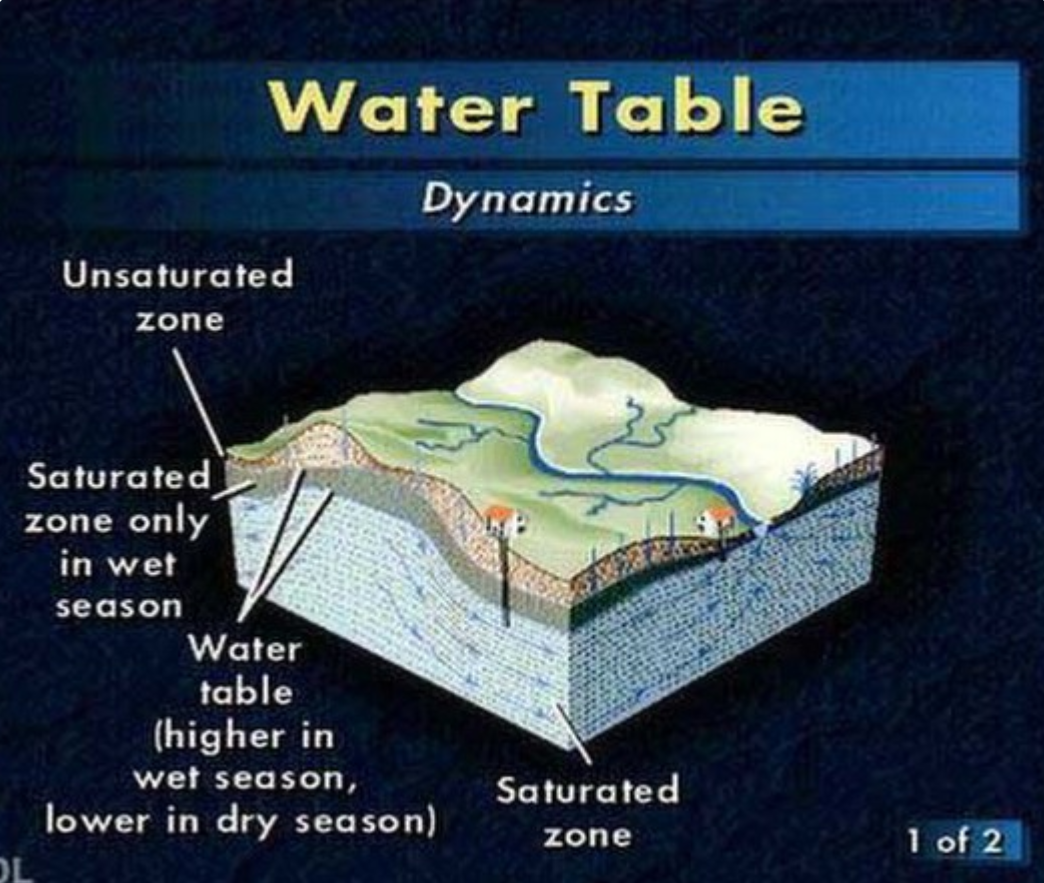
Groundwater is a freshwater reservoir found underground between soil and rock layers. Use the diagram above to determine which of the following is also known as the Zone of Aeration.

2
Saltwater accounts for ________ of water on the planet. About ________ of dissolved solids in ocean water is chlorine, and about________ is sodium. The remaining _______ of water on the planet's surface is freshwater, with around________ of that being groundwater.
Other Answer Choices:
30%
70%
3%
31%
92%
50%
97%
55%
8%
1

Which is NOT an example of a greenhouse gas?

1
Earth’s _______ rotates, producing the planet’s _______. The magnetic field protects the planet from incoming _______, composed of charged particles (ions) ejected from the Sun’s upper atmosphere.
1.2 Ecosystems
1.3 Describing Populations
1.4 Biomes