Log in
Sign up for FREE
arrow_back
Library

7.2 Career Basics (Due 4/6/23)

star
star
star
star
star
Last updated about 1 year ago
24 questions

Day 1 4/4/23

In this lesson, you will learn to:

Identify different available career pathways.
Analyze the relationship between education, pay, and unemployment.
Recognize how different careers can be connected by similar skill sets.
Contextualize the minimum and median wage in your state.

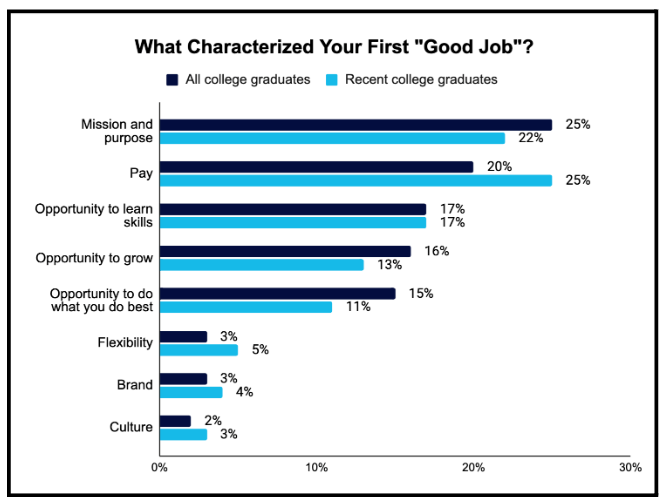
DATA CRUNCH: What Job Characteristics Matter Most to College Grads?

Analyze the graph to answer the questions on this Data Crunch.
NOTE: Although this Data Crunch uses data on college graduates, these job characteristics are still relevant for students pursuing other career options.
Required
5
Question 1
1.

What were the three most important characteristics for all college graduates? What were the three least important characteristics?

Required
5
Required
10
Required
20
Required
30

Work or College?

What should you do after high school? It’s a big question, but don’t panic. Watch this video that breaks down your different options, then answer the questions.
Required
15
Question 6
6.
What are three options you can pursue after high school?
1. _______
2. _______
3. _______
Required
10
Question 7
7.

Why might going to college be a good financial decision, despite the cost?

Required
10

Alternatives To College: What Are My Options?

A 4-year college is a great option after high school, but it’s not the only one. Read the article to learn more about community college, trade school, and more! Then, answer the questions.
Required
10
Question 9
9.

Why might you consider community college if you know you want a four-year bachelor's degree?

Required
10
Question 10
10.

Why do you think there is so much demand for apprenticeships?

Required
10
Question 11
11.

Trade schools and boot camps prepare students to enter a specific career, but many are for-profit programs. Explain what “for-profit” means. What are the potential disadvantages of attending a for-profit school?

Day 2 4/6/23

Education Saves Jobs

The benefits of education go beyond pay. Watch the video to learn how education is related to unemployment, then answer the questions.
Required
10
Required
10
Required
10
Required
10
Required
10
Required
10

INTERACTIVE: What is the Most Common Job in Each State?


Interactive: BLS’ Charts of the Largest Occupations in Each Area
Which job is the most popular in the United States? What about your state? Your specific area? In this activity, you’ll use an interactive chart from the Bureau of Labor Statistics to answer these questions.
Required
10
Question 18
18.

BEFORE accessing the interactive, write a prediction. What do you think is the most common job in the United States? Why?

Required
10
Question 19
19.

BEFORE accessing the interactive, what two jobs do you think are the most common in your state? Why?

Part I: United States Data
First, we’ll explore what occupations were the most common in the United States.

At the top of the chart, you will see two drop-down options, one for State and one for Area. Make sure both are set to “United States.”
Required
10
Question 20
20.

Access the interactive. When was the data in these charts last reported? (e.g. May 2019)

Required
15
Question 21
21.
What were the top three jobs in the country at the time this data was reported? Does this surprise you? Why or why not?

1._______
2._______
3._______
Part II: State Data
Let’s now look at occupational statistics for your state.

For the State drop down, select your state. For the Area drop down, select the first option for “[Your State] (statewide).”
Required
15
Question 22
22.
What were the top three jobs in your state at the time this data was reported? How do they compare to the most common jobs in the country?

1._______
2._______
3._______
Required
15
Required
15
Question 24
24.

Why do you think these are the most common jobs in your area and state? Do they correlate with goods/services your state is known for?

Question 2
2.

Which characteristics were more important for recent graduates than for all graduates?

Question 3
3.

When responding to the survey, were graduates asked to select one characteristic or multiple? Explain how you know.

Question 4
4.

Why do you think recent graduates were more likely to cite pay as the main reason a job was good, compared to all graduates?

Question 5
5.

Opportunities to grow are usually linked to pay. Hypothesize why recent college graduates place more importance on pay and less importance on opportunities to grow, compared to all graduates.

Question 8
8.

What are the pros and cons of beginning work directly after high school?

Question 12
12.

Between February and April 2020, the unemployment rate went from 3.5% to…

Question 13
13.

Economists pay close attention to the unemployment rate because:

Question 14
14.

Which demographic of workers in the US had the fewest jobs lost in March & April 2020?

Question 15
15.

The unemployment rate for college grads was 8.4% in April 2020 & the rate for those with a high school diploma was:

Question 16
16.

The sectors predicted to recover the slowest after the economic downturn of early 2020 are:

Question 17
17.

Do you think the correlation between higher education and job security will continue in the future? Why or why not?

Question 23
23.
Let’s now see what the data is for your specific area within your state. Select the area that is closest to you in the Area drop down at the top of the chart, keeping the state the same.

What were the top three jobs in your area at the time this data was reported? How do they compare to the most common jobs in the state?

1._______
2._______
3._______