Log in
Sign up for FREE
arrow_back
Library
3P Chemical Bonding
By Rachel Lim
star
star
star
star
star
Share
share
Last updated almost 3 years ago
13 questions
Add this activity
Instructions
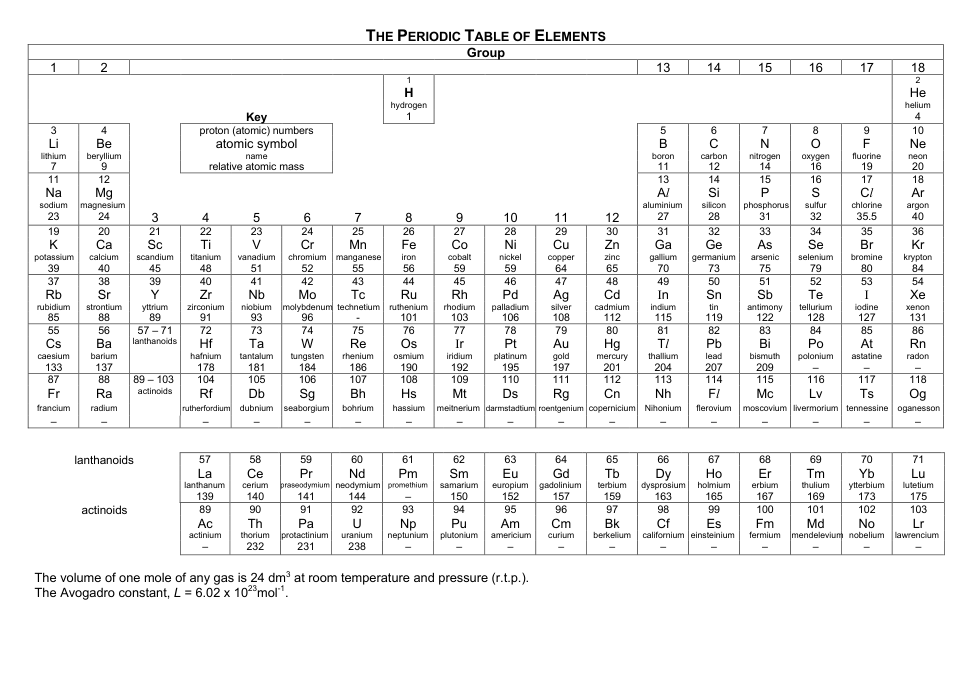
You may refer to the Periodic Table for the following questions.
Required
2
Required
2
Required
2
Required
2
Required
1
Required
1
Question 1
1.
Draw the dot-and-cross diagram of sodium fluoride. Show all the electrons
visibility
View drawing
Question 2
2.
Draw the dot-and-cross diagram of magnesium chloride.
Show only the valence electrons
.
visibility
View drawing
Question 3
3.
Draw the dot-and-cross diagram of hydrogen chloride. Show only the valence electrons.
visibility
View drawing
Question 4
4.
Draw the dot-and-cross diagram of oxygen.
visibility
View drawing
Question 5
5.
Draw the dot-and-cross diagram of a carbon dioxide molecule. Show all valence electrons.
visibility
View drawing
6
7
8
9
10
11
12
zoom_in
Required
1
Required
1
Required
1
Required
1
Required
4
Required
5
Required
1
Question 13
13.
With the help of a diagram, describe the arrangement and bonding of the metallic element, aluminium. (You may show a maximum of 9 A
l
particles.)
visibility
View drawing
Question 6
6.
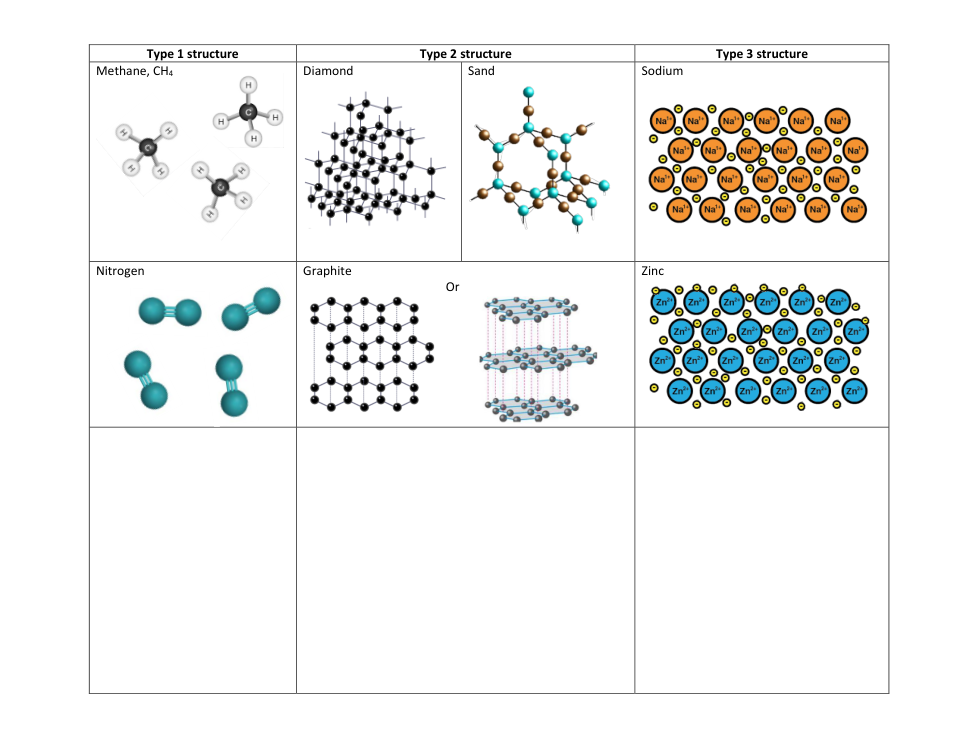
What is Type 1 structure?
giant covalent molecule
giant ionic crystal lattice
giant metallic lattice
simple covalent molecule
Question 7
7.
What is Type 2 structure?
giant covalent molecule
giant ionic crystal lattice
giant metallic lattice
simple covalent molecule
Question 8
8.
What is Type 3 structure?
giant covalent molecule
giant ionic crystal lattice
giant metallic lattice
simple covalent molecule
Question 9
9.
Which of the following describes Type 1 structure and bonding?
discrete (small groups of atoms)
countable number of atoms
uncountable number of atoms
metal cations
continuous structure
extensive network
sea of mobile (delocalised) electrons
strong electrostatic forces of attraction
strong covalent bonds
weak intermolecular forces of attraction
metallic bonding
Question 10
10.
Which of the following describes Type 2 structure and bonding?
discrete (small groups of atoms)
countable number of atoms
uncountable number of atoms
metal cations
continuous structure
extensive network
sea of mobile (delocalised) electrons
strong electrostatic forces of attraction
strong covalent bonds
weak intermolecular forces of attraction
metallic bonding
Question 11
11.
Which of the following describes Type 3 structure and bonding?
discrete (small groups of atoms)
countable number of atoms
uncountable number of atoms
metal cations
continuous structure
extensive network
sea of mobile (delocalised) electrons
strong electrostatic forces of attraction
strong covalent bonds
weak intermolecular forces of attraction
metallic bonding
Question 12
12.
Using helping words from Q11,
define
the type of bonding present in Type 3 structure.