Log in
Sign up for FREE
arrow_back
Library

The Odyssey part 1

star
star
star
star
star
Last updated about 2 years ago
19 questions
Required
1
Required
1
Required
1
Question 1
1.

In lines 35-37, what does Odysseus say he values the most?

Required
1
Required
1
Required
1
Required
1
Question 5
5.

What is the metaphor in lines 133-134?

Required
1
Question 6
6.

In lines 223-231, why does Odysseus lie to the Cyclops about his ship?

Required
1
Required
1
Required
1
Required
1
Required
2
Required
1
Required
1
Required
1
Required
1
Required
1
Required
1
Question 18
18.

Question 19
19.

Question 2
2.

Question 3
3.

Question 4
4.

Question 7
7.

Question 8
8.

Question 9
9.

Question 10
10.

Question 11
11.

Question 12
12.

Question 13
13.

Question 14
14.

Question 15
15.

Question 16
16.

Question 17
17.

In which of these episodes from the excerpt from the Odyssey, Part 1, does Odysseus lose all his men?
“The Lotus-Eaters”
“The Sirens”
“The Cyclops”
"The Cattle of Sun God"
In the excerpt from the Odyssey, Part 1, what ancient Greek value does Odysseus most clearly describe in these words to Alcinous?
“Men hold me formidable for guile in peace and war:
this fame has gone abroad to the sky’s rim.”
admiration for peacemaking
admiration for modesty
admiration for sincerity
admiration for cunning
What danger do the Lotus-Eaters pose to Odysseus’ men in the excerpt from the Odyssey, Part 1
The Lotus-Eaters deliberately cause the winds to subside.
The Lotus-Eaters are dishonest and try to mislead the crew about the route home.
Familiarity with the Lotus-Eaters is dangerous because they are cannibals.
The Lotus-Eaters offer the men the Lotus plant, which causes them to lose interest in returning home
What values important to the ancient Greeks inspire Odysseus’ observations in these lines from the excerpt from the Odyssey, Part 1?
“In the next land we found were Cyclopes,
giants, louts, without a law to bless them.
In ignorance leaving the fruitage of the earth in mystery to the immortal gods, they neither plow nor sow by hand, nor till the ground....
Cyclopes have no muster and no meeting,
no consultation or old tribal ways....”
admiration for a natural, pure life and surviving by one’s instincts
admiration for agriculture, law, tradition, and social organization
admiration for physical size, strength, and power
admiration for devotion to one’s religion
What does Odysseus compare the Cyclops
with in lines
“In the next land we found were Cyclopes,
giants, louts, without a law to bless them.
In ignorance leaving the fruitage of the earth in mystery to the immortal gods, they neither plow nor sow by hand, nor till the ground....
Cyclopes have no muster and no meeting,
no consultation or old tribal ways....”?
the god Zeus
a meal
a squirming puppy
a wild animal
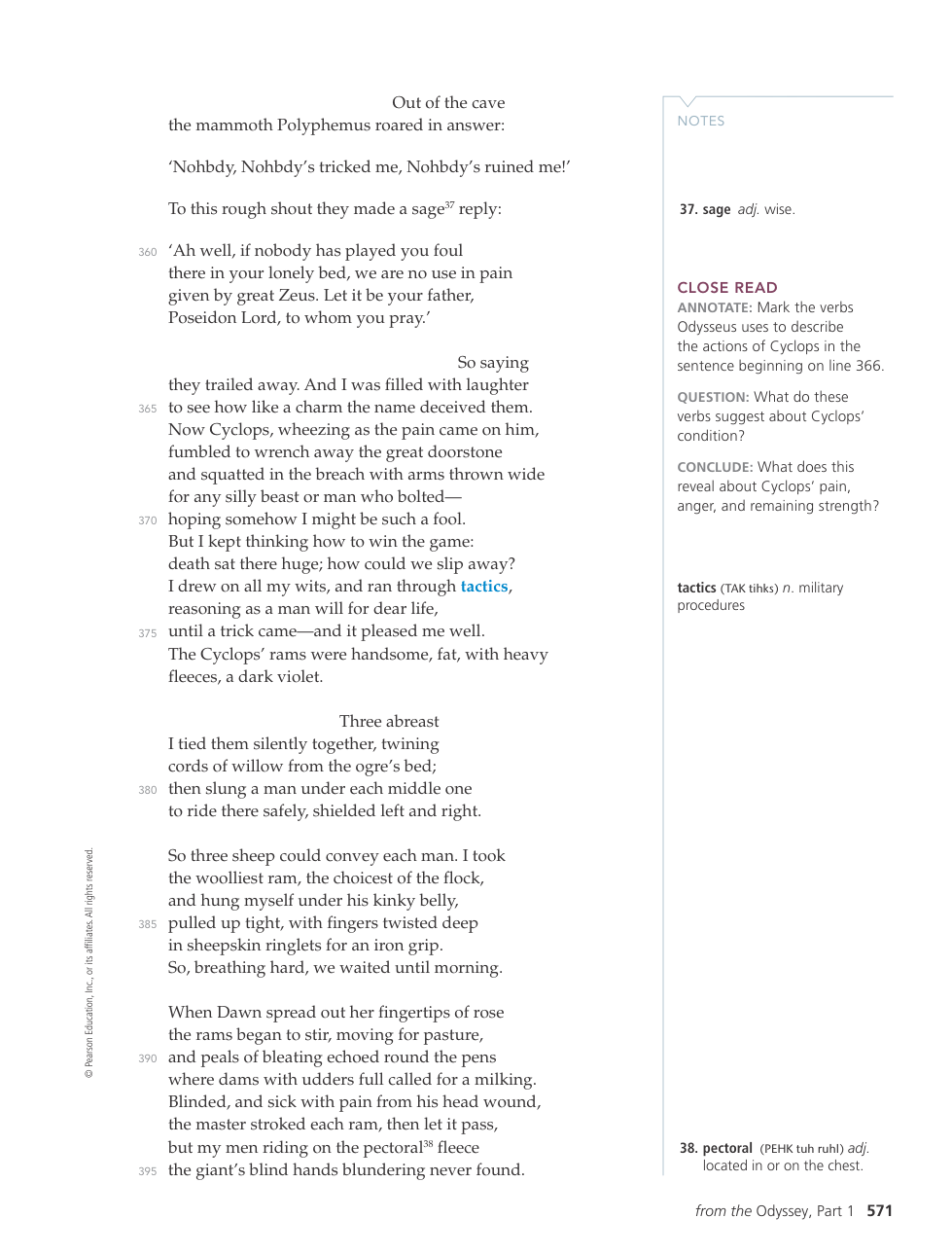
Why does Odysseus blind the Cyclops rather than kill him in his sleep?
Odysseus’ men convince him that Poseidon will curse them if they kill any of the Cyclopes.
Odysseus and his men need the Cyclops to move the stone that blocks the cave’s entrance.
Odysseus and his men lack the physical strength to kill the giant.
Odysseus’ heart is moved by compassion for the foolish Cyclops.
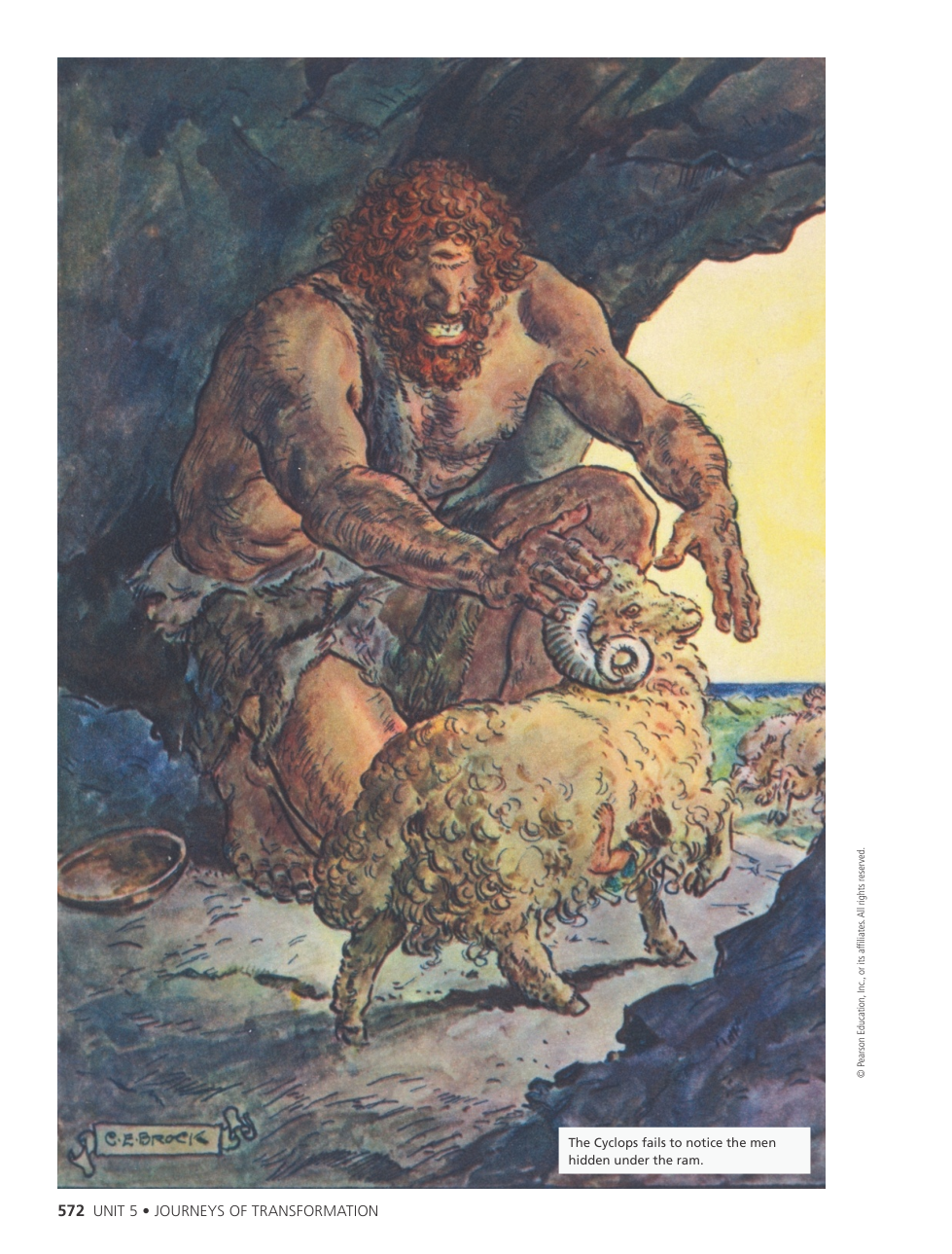
In the excerpt from the Odyssey, Part 1, what quality for which Odysseus is famous is most clearly illustrated when he tells Cyclops that his name is Nohbdy?
He is courageous.
He is clever.
He is trained for battle.
He is an effective leader.
At the end of the episode with the Cyclops in the excerpt from the Odyssey, Part 1, what does Polyphemus do that affects future events in the epic?
He prophesies that Odysseus will visit Hades.
He destroys Odysseus’ ship.
He tells Odysseus that he will chase him back to Ithaca.
He begs his father, Poseidon, to curse Odysseus.
What prophecy of Teiresias does Odysseus withold from his men?
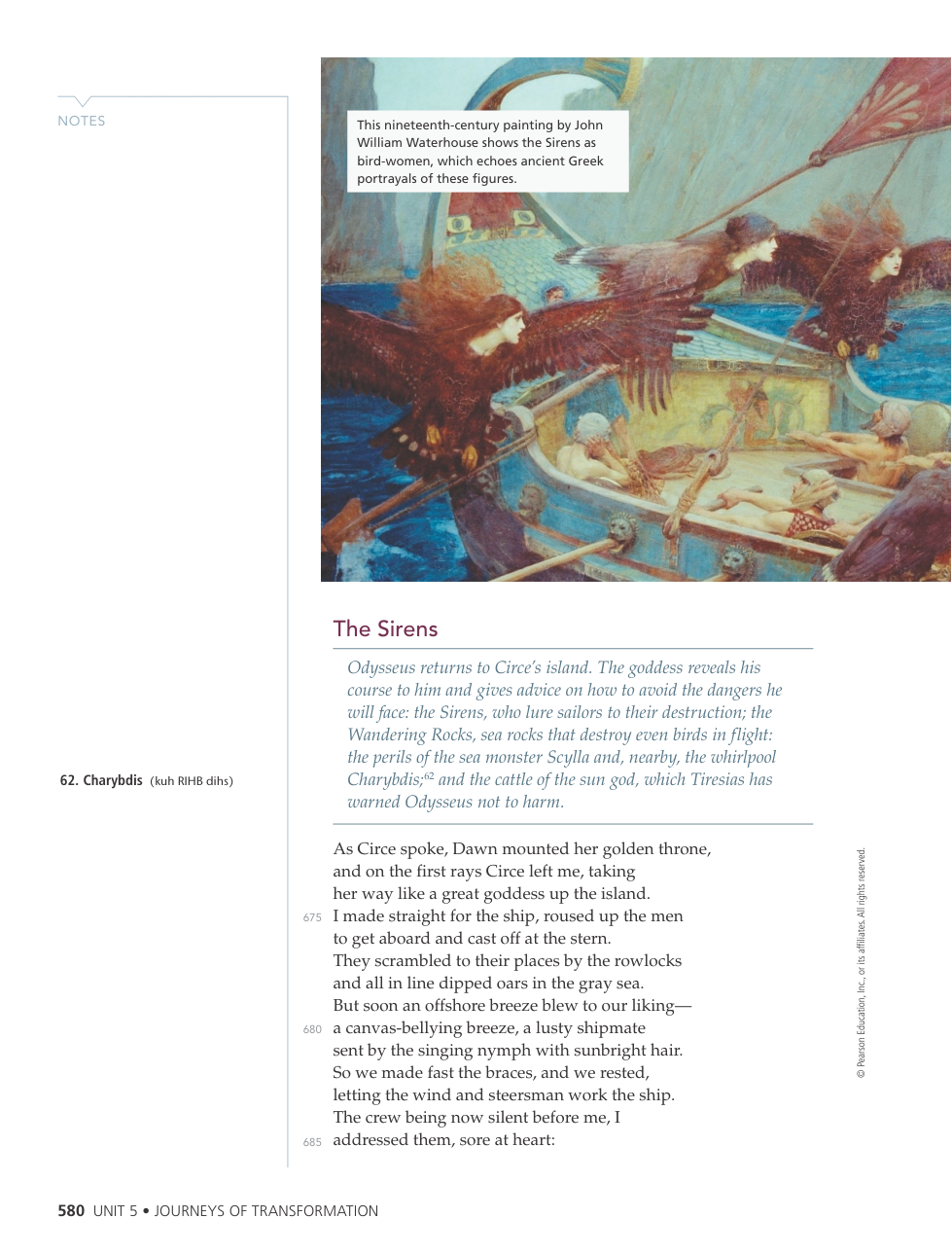
Poseidon will capsize their ship near Charybdis.
Only Odysseus will survive and return home
Odysseus and his crew will return triumphant to Ithaca
The sailor's adventures will last another 10 years
Odysseus often gets into trouble because of his
caution
curiousity
pride
The following question has two parts. Answer Part A first, and then Part B.

Part A As they travel through the land of the Sirens in the excerpt from the Odyssey, Part 1, how do Odysseus’ men avoid falling under the Sirens’ spell?
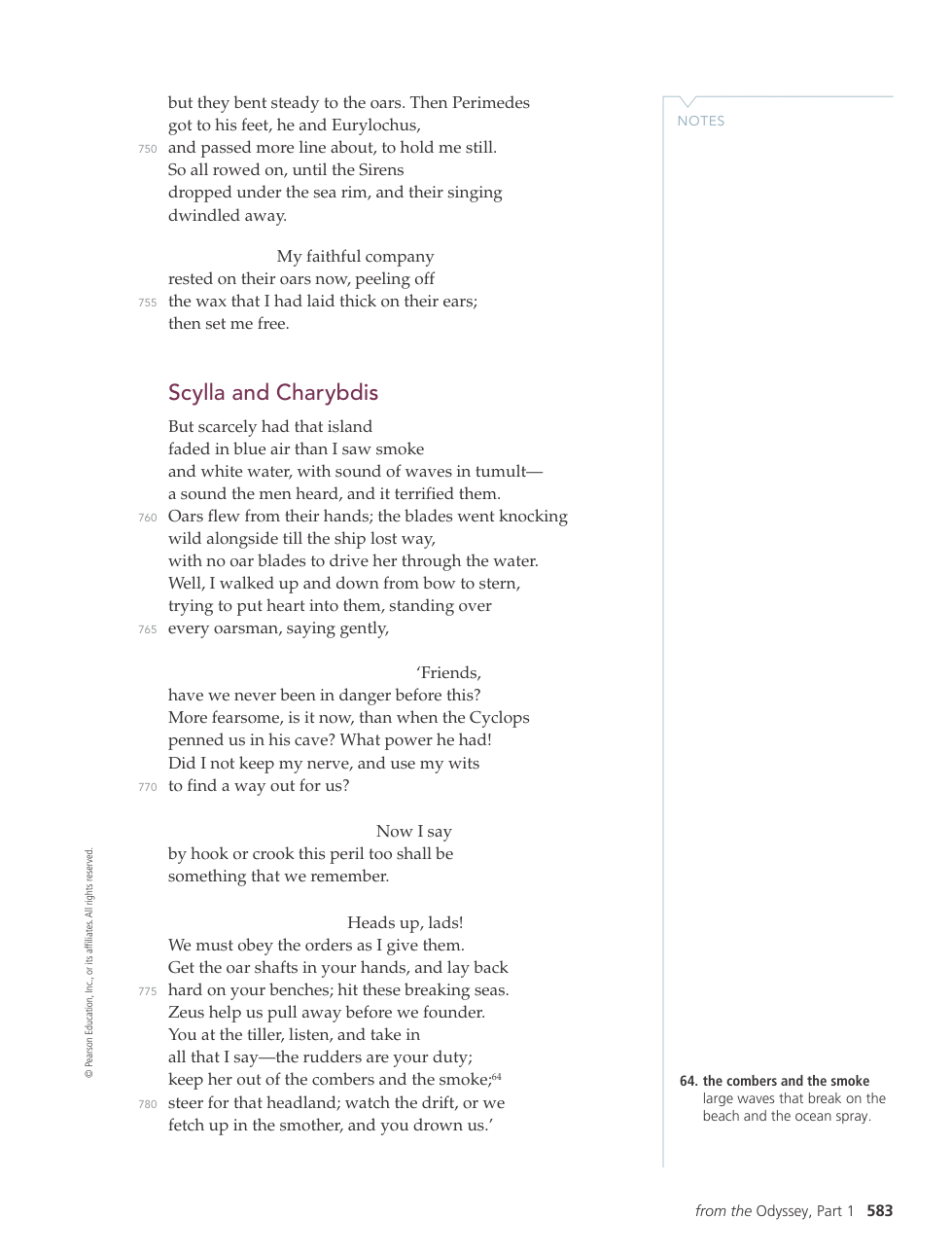
Odysseus ties them up.
They look only at their oars.
Odysseus plugs their ears.
They listen only to Odysseus.
Which of these passages from “The Sirens” in the excerpt from the Odyssey, Part 1, best supports the answer to Part A?
“... Sirens / weaving a haunting song over the sea / we are to shun, she said, and their green shore / all sweet with clover; yet she urged that I / alone should listen to their song....”
“... Therefore / you are to tie me up, tight as a splint, / erect along the mast, lashed to the mast, / and if I shout and beg to be untied, / take more turns of the rope to muffle me.”
“... My faithful company / rested on their oars now, peeling off / the wax that I had laid thick on their ears; / then set me free.”
“The lovely voices in ardor appealing over the water / made me crave to listen, and I tried to say / ‘Untie me!’ to the crew, jerking my brows; / but they bent steady to the oars....”
How does Odysseus prevent himself from being lured by the Sirens’ song?
He has his men tie him to the mast.
He asks Circe for a potion.
He puts beeswax in his ears.
He shouts to block their song.
The following question has two parts. Answer Part A first, and then Part B.

Part A Throughout the excerpt from the Odyssey, Part 1, Odysseus tempts fate by behaving recklessly. What is the reaction of his men?
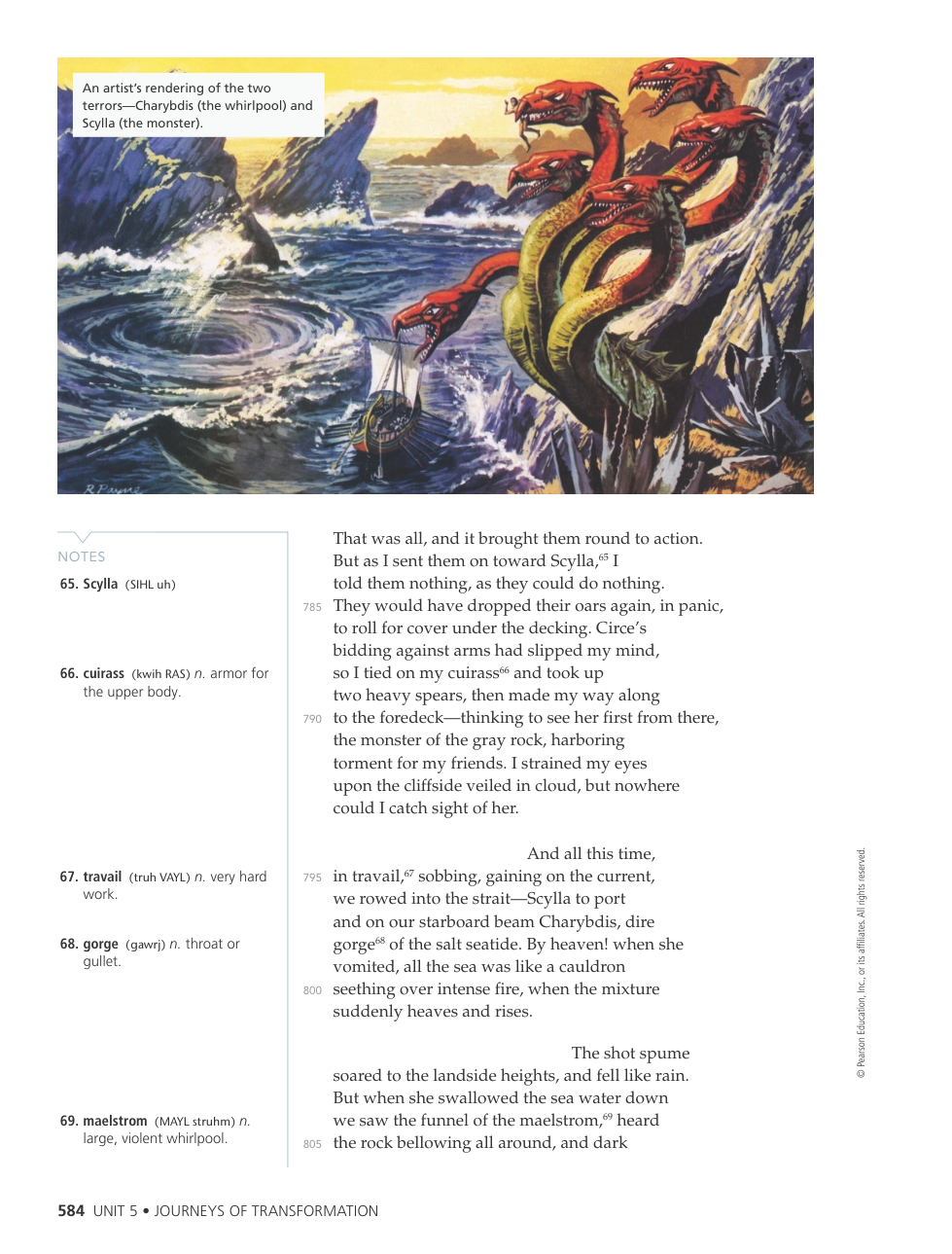
They welcome his risk-taking action.
They try to discourage his rashness.
They laugh at his hotheaded behavior.
They trust his ability to protect them.
Part B Which of these passages from “The Cyclops” in the excerpt from the Odyssey, Part 1, best supports the answer to Part A?
“... But Zeus disdained my offering; / destruction for my ships he had in store / and death for those who sailed them, my companions.”
“... I wished / to see the cave man, what he had to offer— / no pretty sight, it turned out, for my friends.”
“Now, by the gods, I drove my big hand spike / deep in the embers, charring it again, / and cheered my men along with battle talk / to keep their courage up: no quitting now.”
“‘Godsake, Captain! / Why bait the beast again? Let him alone!’”
Odysseus chooses not to tell his men the truth about Scylla and Charybdis because he
hopes that Zeus will appear and save his
men
worries that his men will think he is lying
knows that his men will panic and stop
rowing
fears that his men will change course