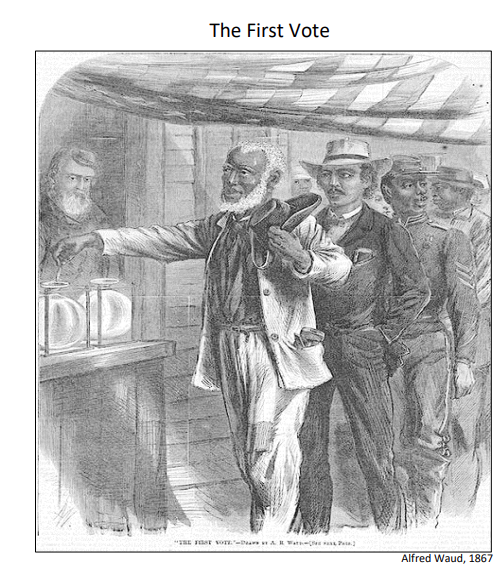
This picture would look different before the ratification of the -
This picture would look different before the ratification of the -
Read each question carefully. Determine the best answer to the question.
This picture would look different before the ratification of the -
This excerpt is from President Johnson's Impeachment trail.
When Andrew Johnson took upon himself the duties of his high office, he swore to obey the Constitution and take care that the laws be faithfully executed. That, indeed, is and has always been the chief duty of the President of the United States. The duties of legislating the laws of this country fall in no way to his lot...Having been sworn on the Holy Bible to obey the Constitution...he turns to the person administering the oath and says, "Stop; I have a further oath. I do solemnly swear that I will not allow the act entitled 'An act regulating the tenure of certain civil offices.' Just passed by Congress over the presidential veto, to be executed; but I will prevent the execution of the [tenure of certain civil offices] by virtue of my own constitutional power." How shocked Congress would have been--when sworn into office on that fatal day of March which made his the successor of Abraham Lincoln!
- Thaddeus Stevens, Closing arguments from Johnson Impeachment trail, 1868
What reason did the speaker in the excerpt give for the Impeachment of Andrew Johnson?
Which statement supports the answer to the previous question?
Reconstruction can be defined as the time period in which -
How did carpetbaggers impact Reconstruction?
Section 1
Neither slavery nor involuntary servitude, except as a punishment for crime whereof the party shall have been duly convicted, shall exist within the United States, or any place subject to their jurisdiction.
-Thirteenth Amendment, U.S. Constitution
This amendment was significant because it -
What was sharecropping AND what was a long-term consequence of this farming system?
Think about the question carefully. Then enter your answer to BOTH parts of the question.
The Freedman's Bureau assisted former slaves during Reconstruction by -
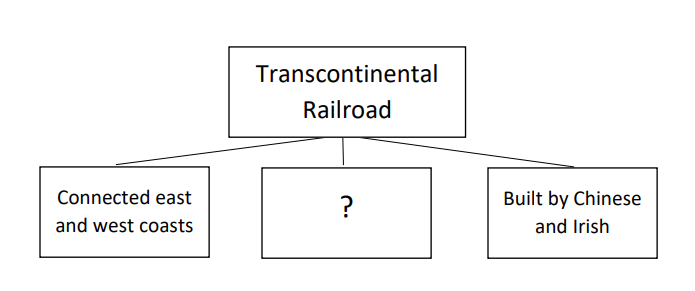
Which of the following best completes this diagram?
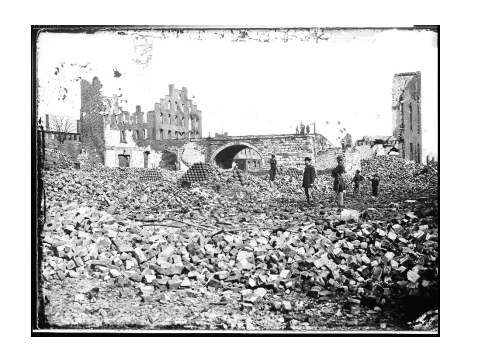
This photograph illustrates that after the Civil War -
Hiram Rhodes Revels was significant to the Reconstruction Era because he -
Section 1
All persons born or naturalized in the United States, and subject to the jurisdiction thereof, are citizens of the United States and of the state wherein they reside. No state shall make or enforce any law which shall abridge the privileges or immunities of citizens of the United States; nor shall any state deprive any person of life, liberty, or property, without due process of law; nor deny to any person within its jurisdiction the equal protection of the laws.
- Fourteenth Amendment, U.S. Constitution
What prompted Congress to ratify this amendment?

Which of the following best completes this diagram?
This image is from a newspaper article in 1870. Complete the sentences by selecting the correct answer.

Republicans in Congress passed the which outlined how southern states would be readmitted to the Union. These acts divided the South into military districts and required southern state governments to
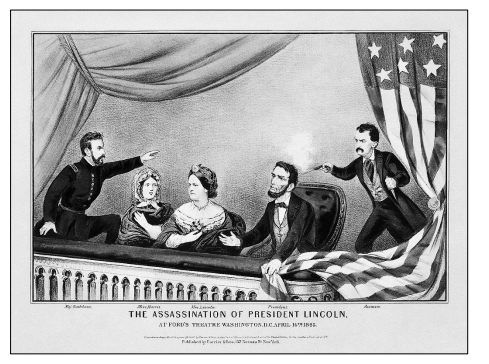
As a result of this event -
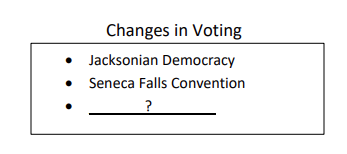
If this information was included in a presentation to an 8th grade U.S. history class, then which of the following topics would complete the list?
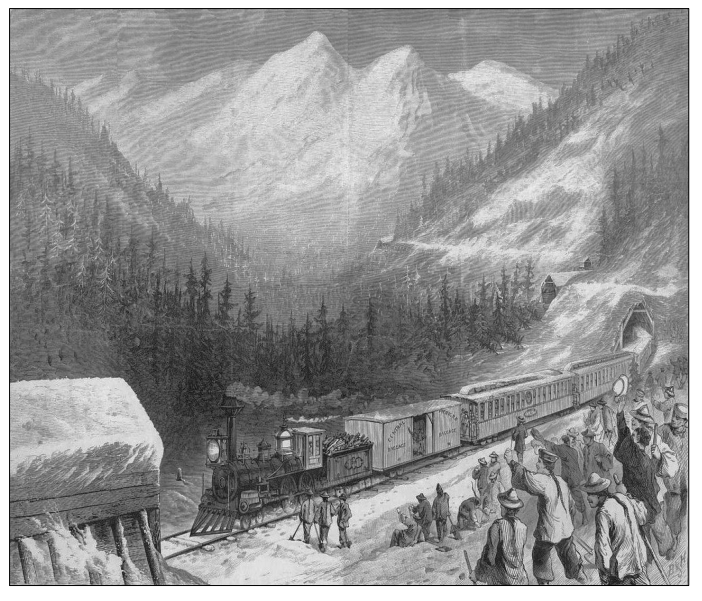
This picture of the Transcontinental Railroad shows that -
Determine which description explains the impact of the Reconstruction Amendment.
Thirteenth Amendment | Fourteenth Amendment | Fifteenth Amendment | |
|---|---|---|---|
African Americans could sevce on juries or run for political office | |||
Newly freed African Americans struggled to make a living wage | |||
African American voters helped bring the Republican Party to power in the South |
What is one way in which Confederate leaders were punished for their role in the Civil War?
Which amendment required that African Americans be treated equally under the law?
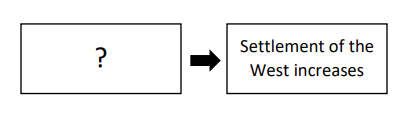
Which of the following best completes this diagram?
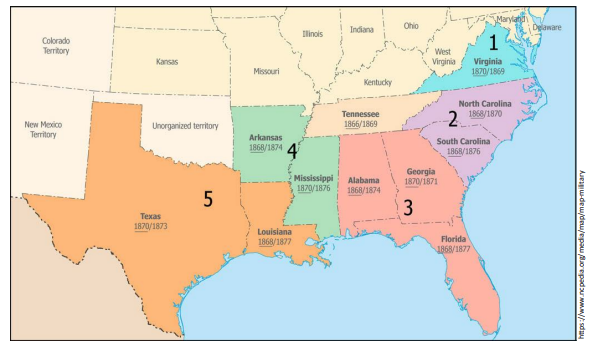
This map most closely reflects -
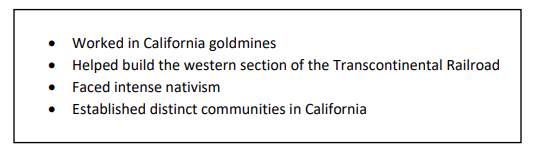
This list describes the nineteenth-century experience of immigrants from -

Which of the following groups worked to make this headline a reality?