1
1
1
1
1
1
1
1
1
1
1
1
1
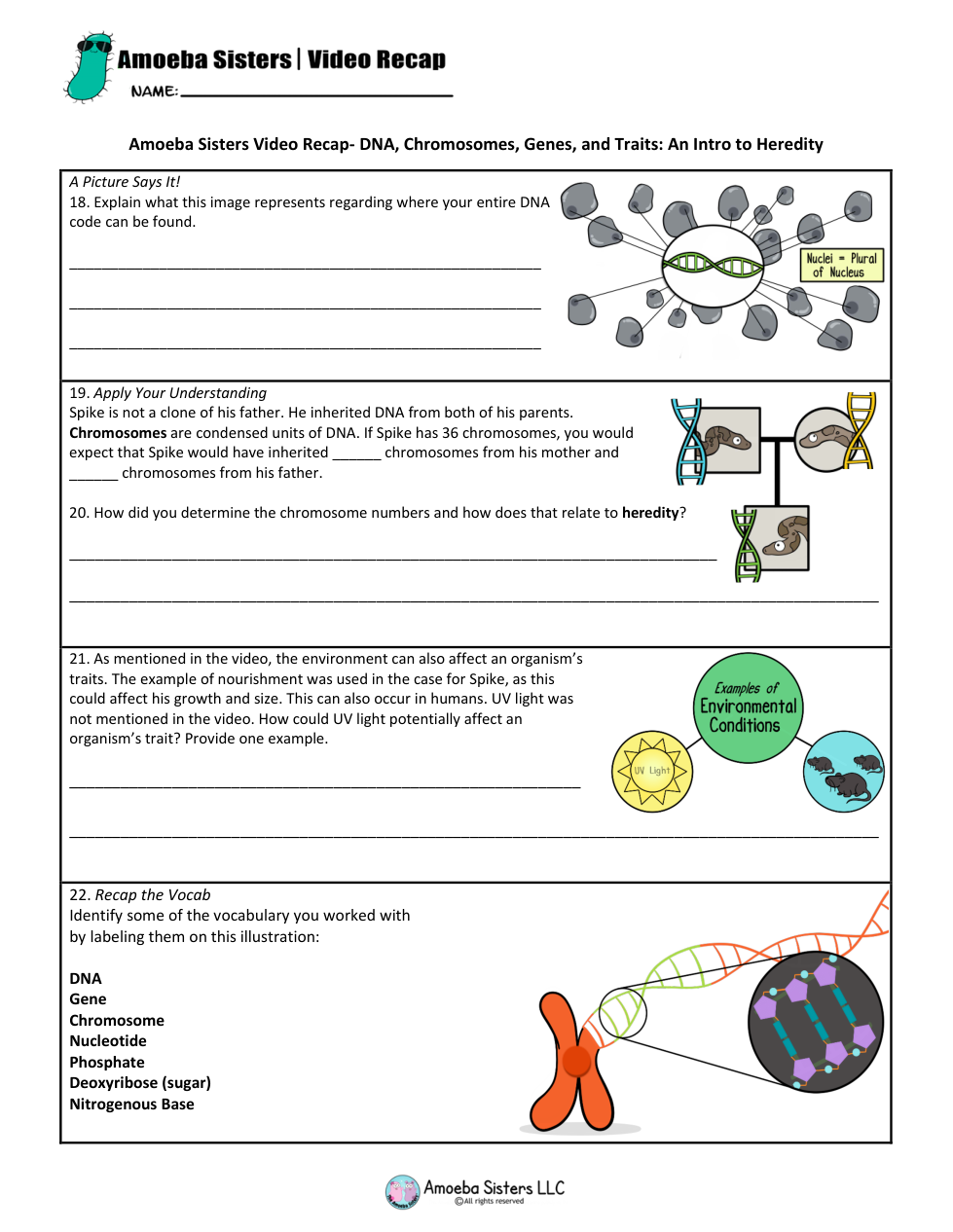
Spike is not a clone of his father. He inherited DNA from both of his parents. Chromosomes are condensed units of DNA. If Spike has 36 chromosomes, you would expect that Spike would have inherited


The material for this topic is on CK12 - THERE ARE TWO ARTICLES!! Click the links below and:
Read the article
Watch the videos
Complete the Practice
Hit the TURN IN button on CK12 ONLY

What is Gregor Mendel known for?
Which part of plants is the male gamete? (Not the male organ, the actual gamete)
Critical Thinking: On a pea plant, the pea pod is a carpel, or a single simple ovary. The peas are the ovules, which are fertilized female gametes. How do you think this compares to an apple?
To the Google! What is Mendel's Law of Independent Assortment?
To the Google! What is Mendel's Law of Segregation?
To the Google! What is Mendel's Law of Dominance?
Complete the chart of definitions in the Show Your Work Box (use the text tool!!)



Which statement best describes the relationship between inherited traits and genes?
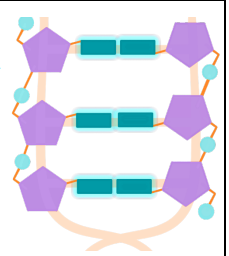
Which statement best describes the structure of a DNA molecule
A portion of DNA that codes for a protein, that causes a trait, is a
Chromosomes contain...
Normal human females have two X chromosomes. Which of the karyotypes shown is from a normal female?

Genes contain the instructions for assembling
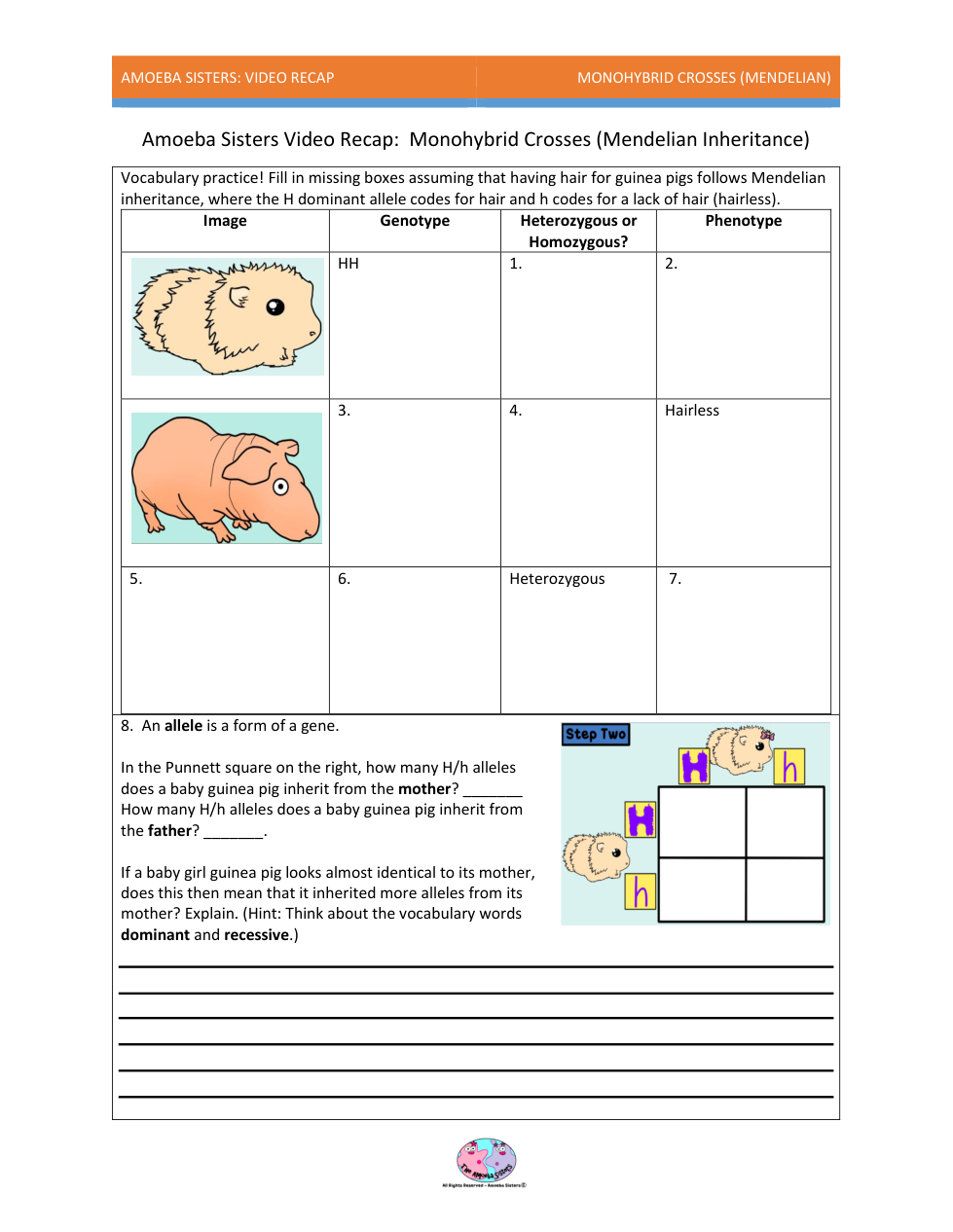
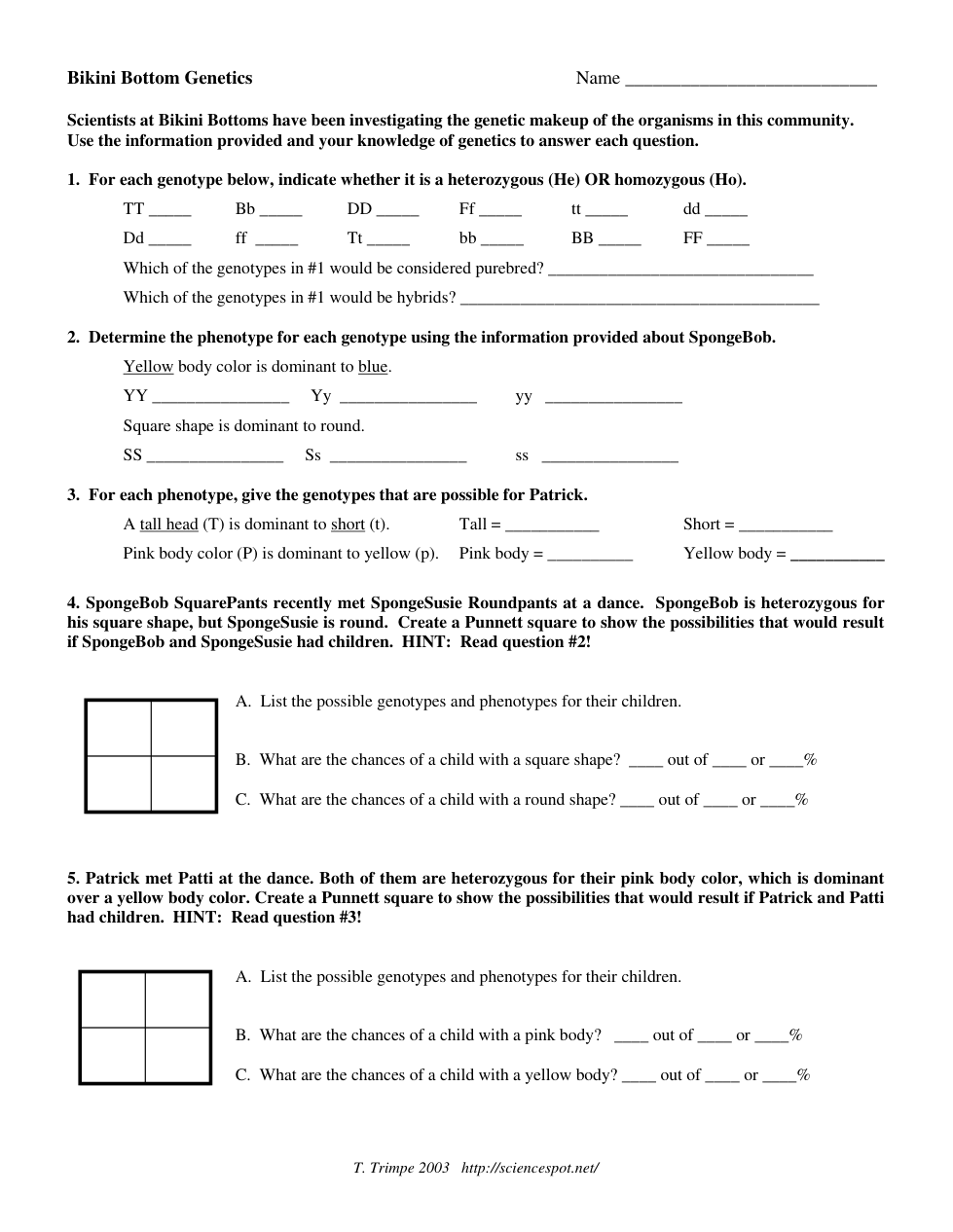
Two parents are carriers for sickle cell trait - this means they have the recessive gene, but they don't have the disease because they also have the dominant gene. What's the chance of their child having sickle cell anemia? Complete the Punnett Square in the Show Your Work Box
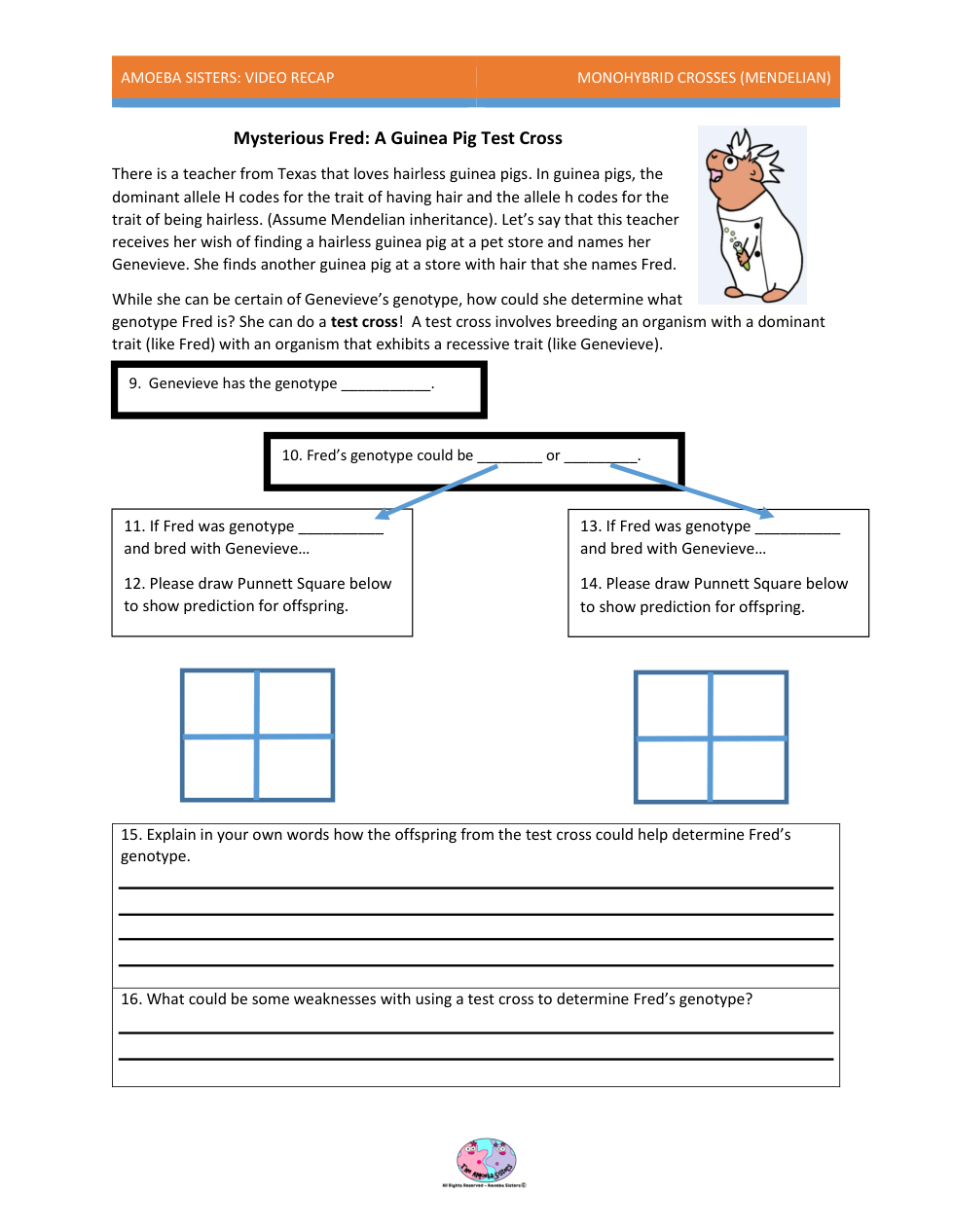
In fruit flies, red eyes (R) are dominant to white eyes (r). Create a punnett square a cross between a white eyed female (hint: if she has white eyes, what are her alleles?) and a purebred red eyed male. (hint: purebred = homozygous)
For the above cross, the genotypes of the offspring would be?
For the above cross, the Phenotype of the offspring would be?
Two hybrid (or heterozygous) red eyed flies (Rr) are crossed. What percentage of their offspring do you think will be red eyed? Show your work and circle your answer.
If the flies had 625 children, how many would you expect to have white eyes? Why?
The observable traits expressed by an organism are
described as its ________.
Explain the difference between genotype and phenotype. Use examples
In lizards, two toes on the back feet is a recessive trait, three toes is dominant. Number of toes is the...
In lizards, two toes on the back feet is a recessive trait, three toes is dominant. If a lizard has three toes on the back feet, what are its possible genotypes?
In lizards, two toes on the back feet is a recessive trait, three toes is dominant. If a lizard has three toes on the back feet and is heterozygous, what are its possible genotypes?
In lizards, two toes on the back feet is a recessive trait, three toes is dominant. If a homozygous dominant lizard is crossed with a homozygous recessive lizard, what are the genotypes of those two parents?
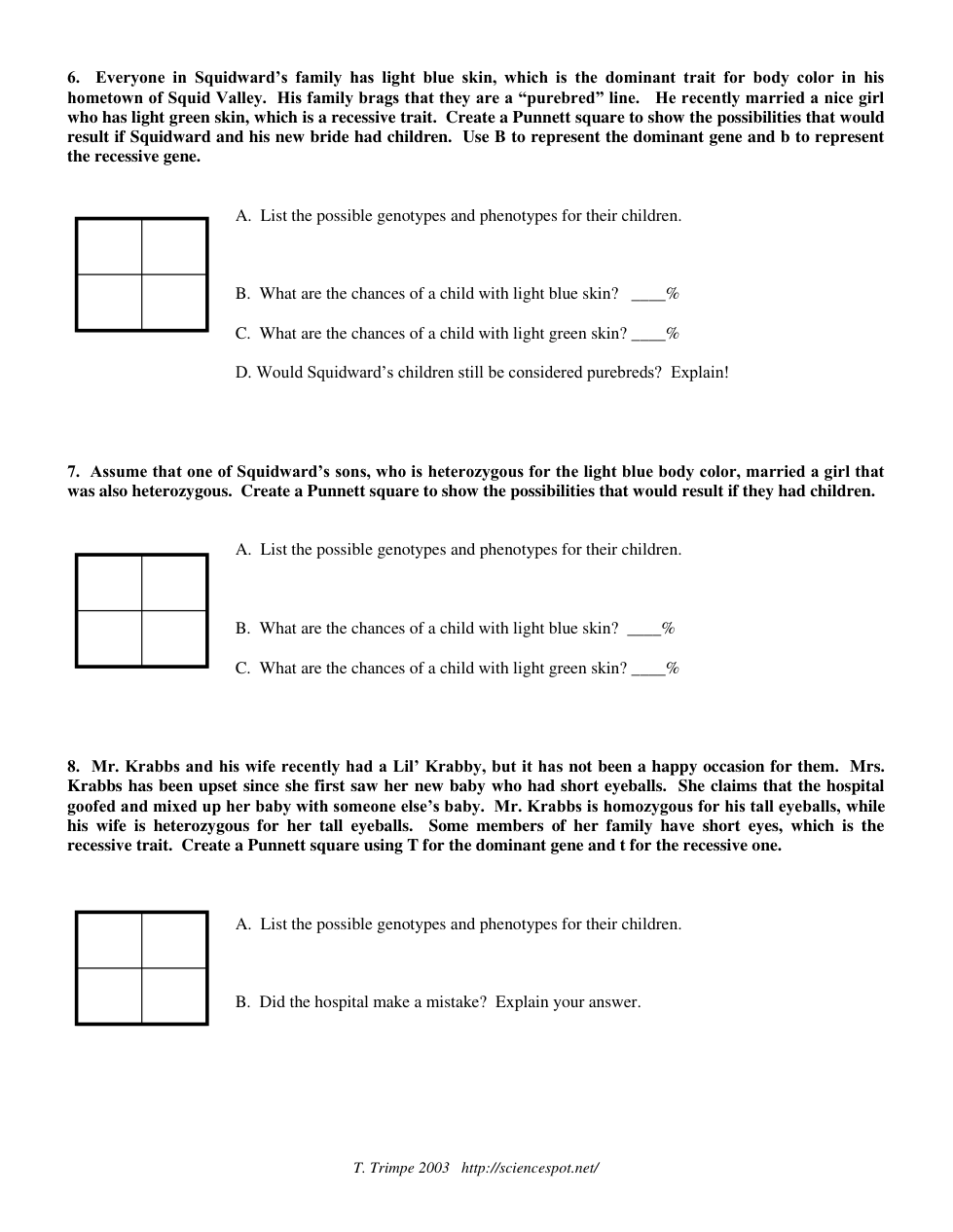
In lizards, two toes on the back feet is a recessive trait, three toes is dominant. If a homozygous dominant lizard is crossed with a homozygous recessive lizard, what are the genotypes of the offspring? Show your Punnett Square!
In lizards, two toes on the back feet is a recessive trait, three toes is dominant. If a homozygous dominant lizard is crossed with a homozygous recessive lizard, what are the phenotypes of the offspring?
In order to produce a two-toed lizard...
Fill in the Punnett Square
Tt
Bb
DD
Ff
tt
dd
YY
Yy
yy
SS
Ss
ss
Complete the Punnett Square
Complete the Punnett Square