Log in
Sign up for FREE
arrow_back
Library

Concept Check: NYS Relationships and Biodiversity

star
star
star
star
star
Last updated almost 2 years ago
17 questions
1
1
1
1
1
1
1
1
1
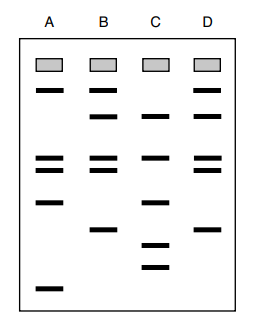
Tests were performed to help identify the person who committed a crime. Lane D contained DNA from evidence found at the crime scene. Lanes A, B, and C contained DNA from each of the three suspects.

5
5
5
The Elephant Shrew

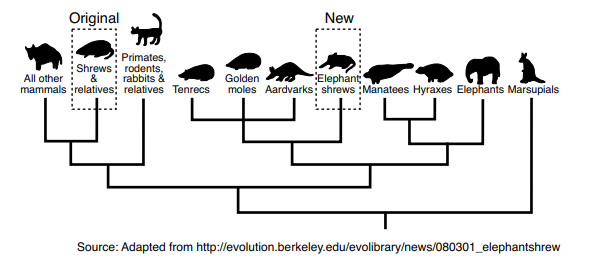
The elephant shrew spends its days searching the leaf litter on the forest floor for insect prey. When first discovered, due to structural similarities, the elephant shrew was classified with other shrews and their relatives. However, scientists recently reclassified the elephant shrew, as shown in the evolutionary tree below:

5
5
Question 6
6.

Question 7
7.

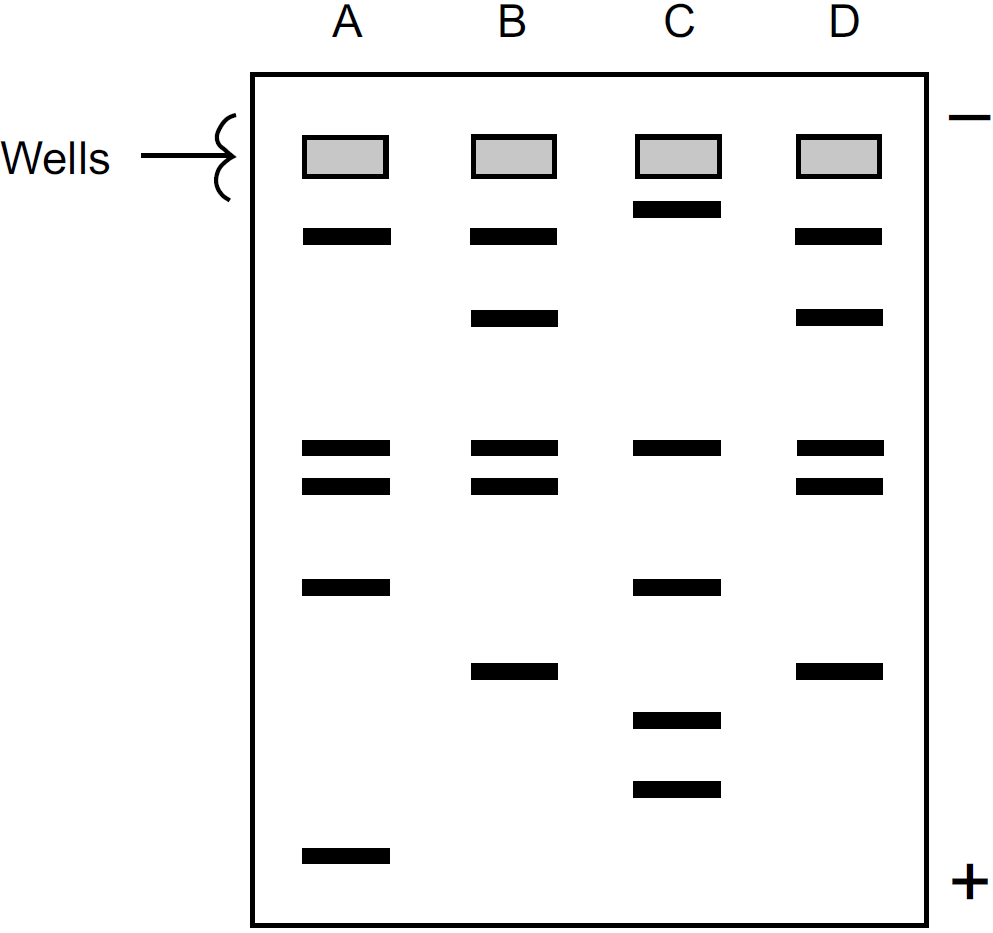
DNA samples were taken from four different species of animals labeled A, B, C, and D. The diagram below represents the results of a procedure that separated the DNA fragments from each species.
1
1
Question 10
10.

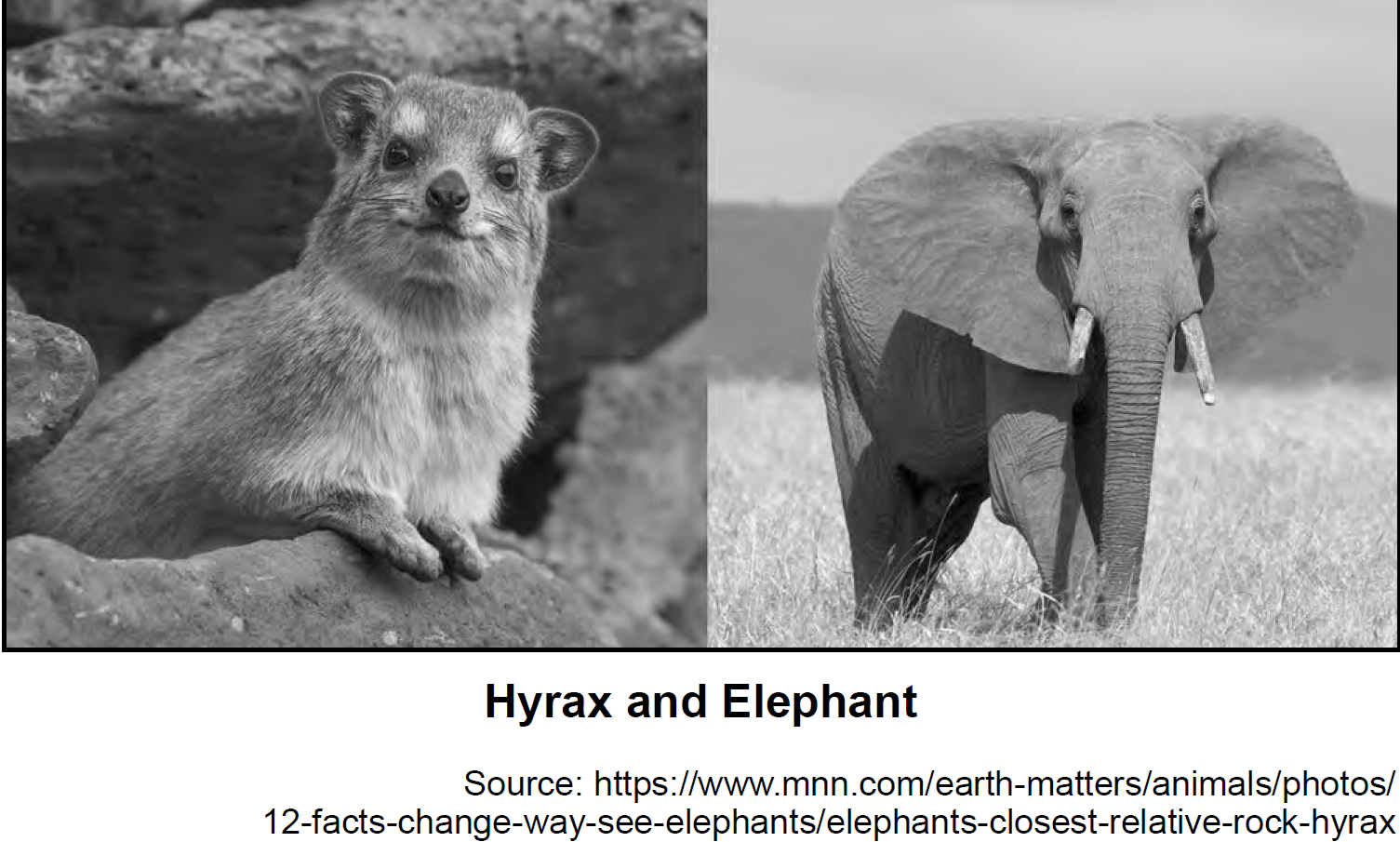
A Close Relative of the Elephant
A hyrax is an animal that has been called a rock rabbit and looks like a guinea pig. Fossil records show that hyraxes first appeared on Earth approximately 37 million years ago. As they evolved, some became mouse-sized, while some were the size of a horse. Some eventually adapted to marine life and are related to manatees, and some became grazers and are related to elephants.

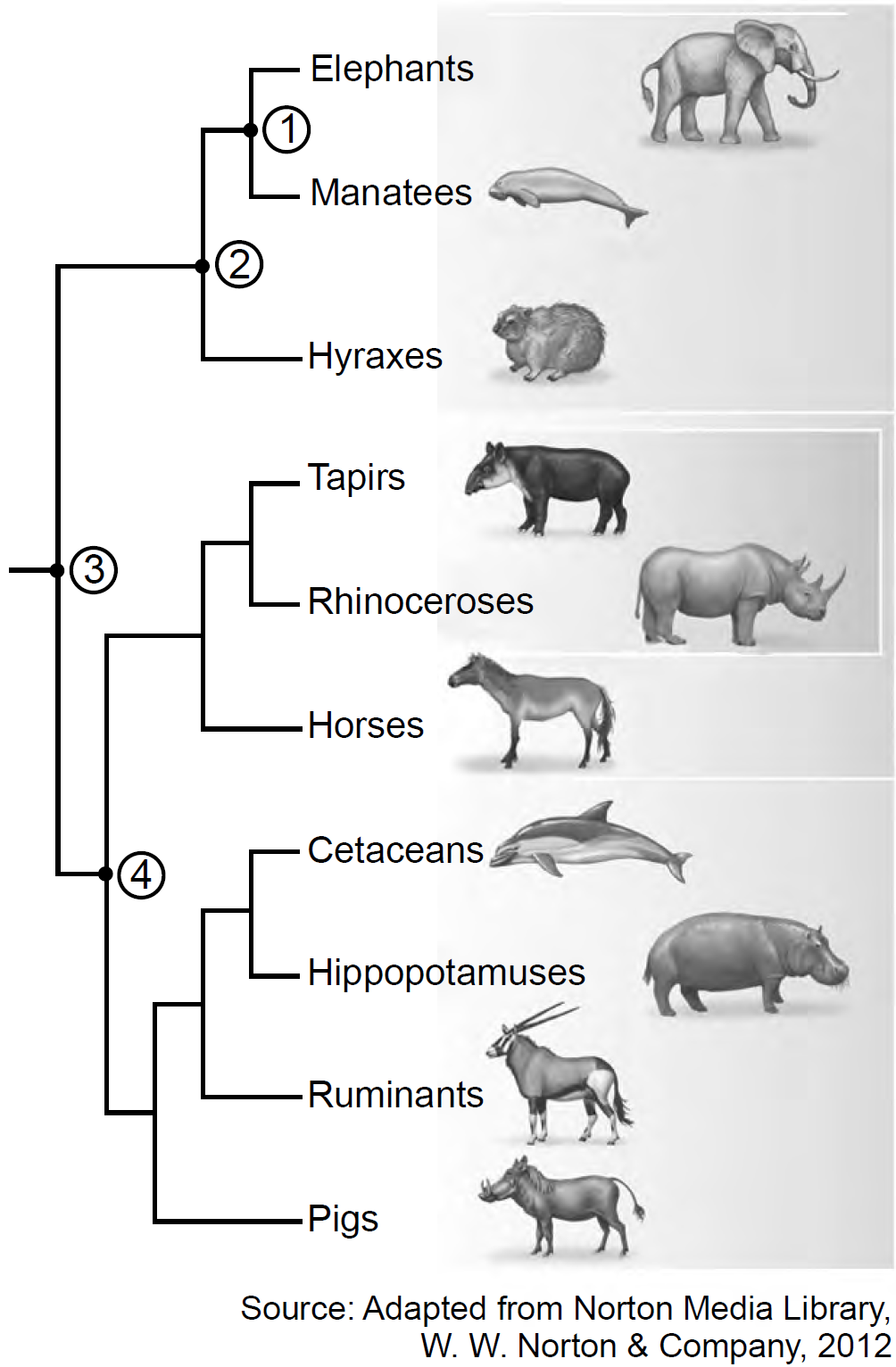
A section of the mammalian evolutionary tree is shown below.

1
Question 12
12.

Question 13
13.

Question 14
14.

Question 15
15.

Question 16
16.

Question 17
17.

Question 1
1.

Question 2
2.

Based on the data, which lane most likely contained DNA from the suspect who committed the crime? Support your answer

Question 3
3.

Identify the lane that contained the band with the shortest fragments of DNA. Support your answer.

Question 4
4.

Question 5
5.

Base your answer on the information and chart below and on your knowledge of biology.
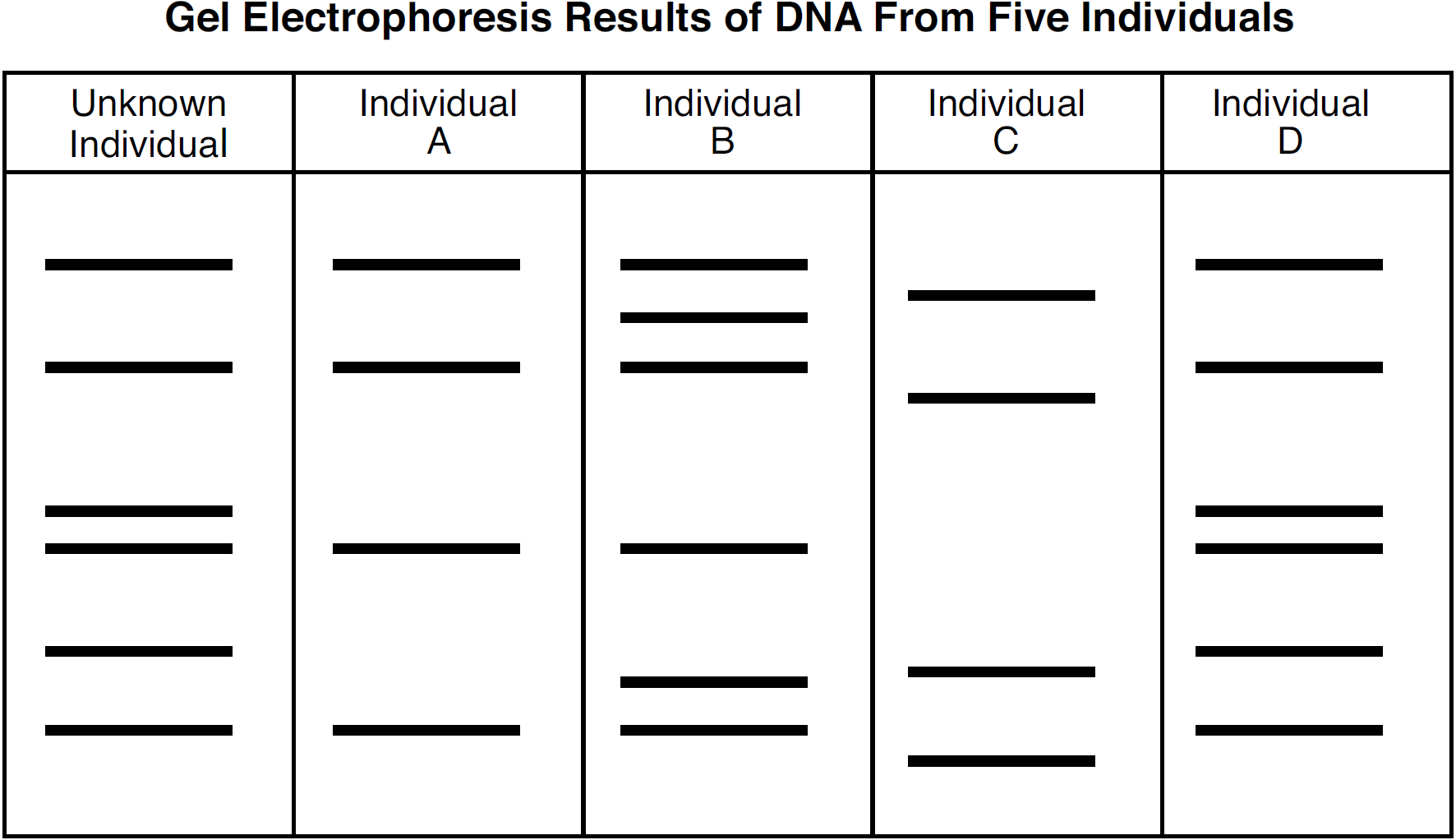
The chart represents the results of gel electrophoresis of DNA from an unknown individual and four known individuals.

Before conducting an electrophoresis procedure, enzymes are added to DNA in order to
convert the DNA into gel
cut the DNA into fragments
remove smaller DNA fragments from the samples
synthesize larger fragments of DNA
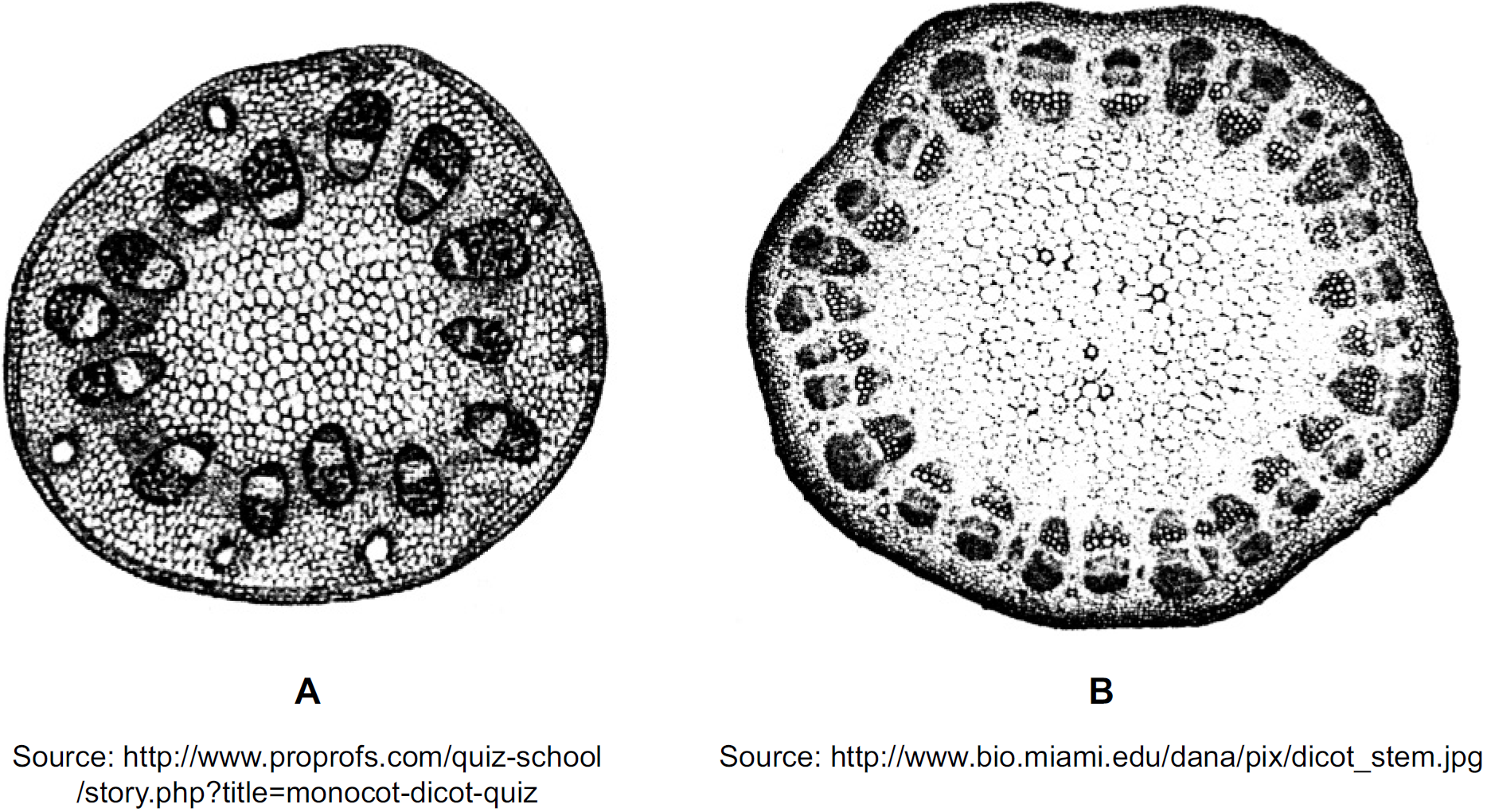
The illustrations represent cross sections of two different plant stems.
A student compared two stem cross sections. Stem cross section A is from a plant that can be used to produce products with valuable medicinal properties. Stem cross section B is from a plant growing in the same area of the forest and its usefulness for producing medicines is unknown. The student concluded that the stem cross sections had many structural similarities and that the plant that produced cross section B would produce the same valuable medicinal products.

Is the student's conclusion valid?
Yes, because the structural similarities indicate a close relationship between the organisms.
Yes, because these plants grow in the same regions of the forest ecosystem and look similar.
No, because he did not evaluate soil conditions, such as pH, with chemical indicators.
No, because this structural evidence alone is insufficient and molecular evidence should be obtained.
Question 8
8.

Question 9
9.

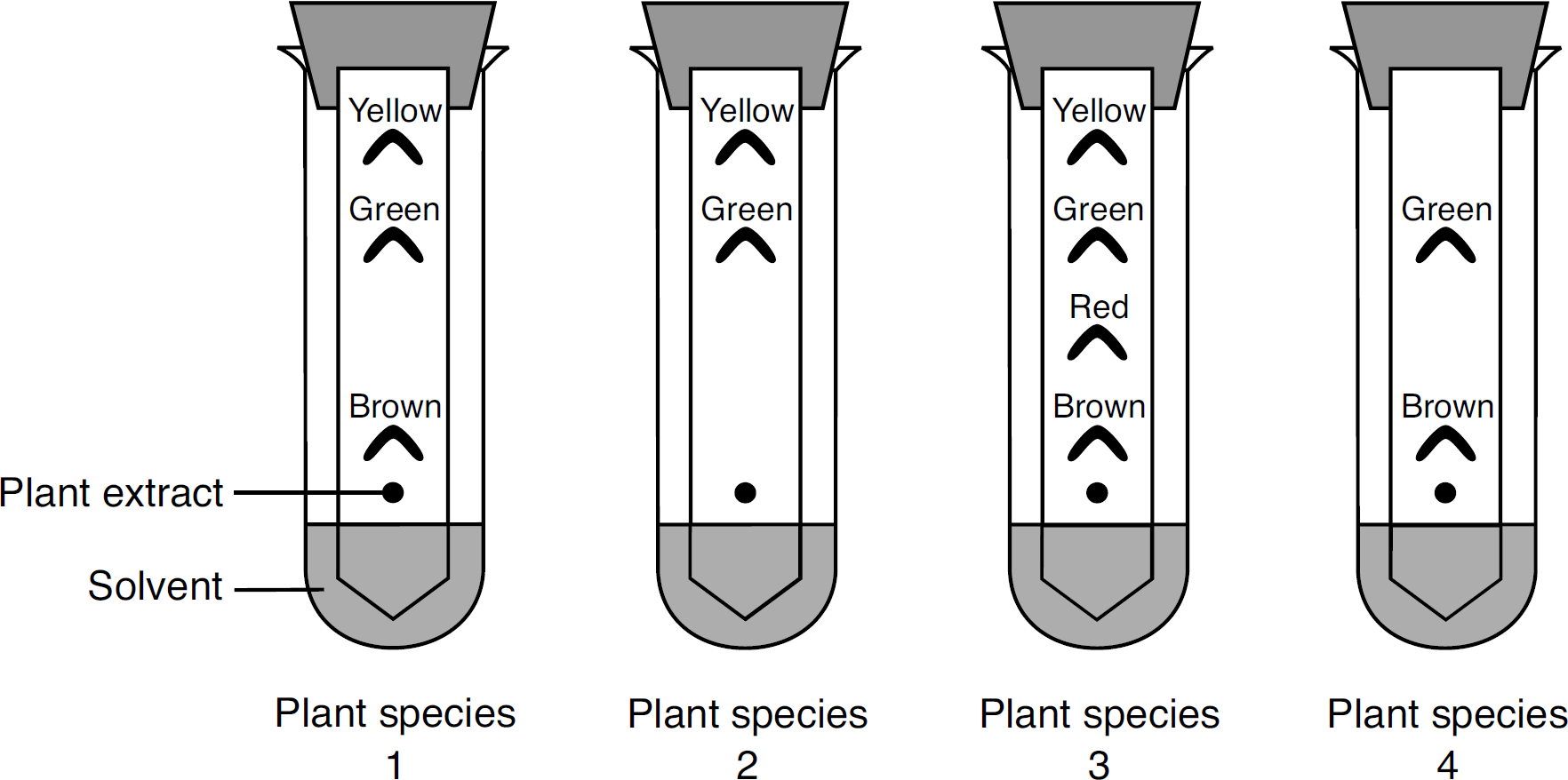
In an effort to determine how closely related several plant species are, a student performed the laboratory test shown below.

The method used by the student to compare plant extracts from the different species is
gel electrophoresis
DNA banding
a staining technique
paper chromatography
Question 11
11.

If scientists want to determine the similarities in the DNA fragments in several plant species, they should
add salt water to cells from each plant
analyze electrophoresis results
compare seed structures of the plants
examine their chromosomes with a microscope
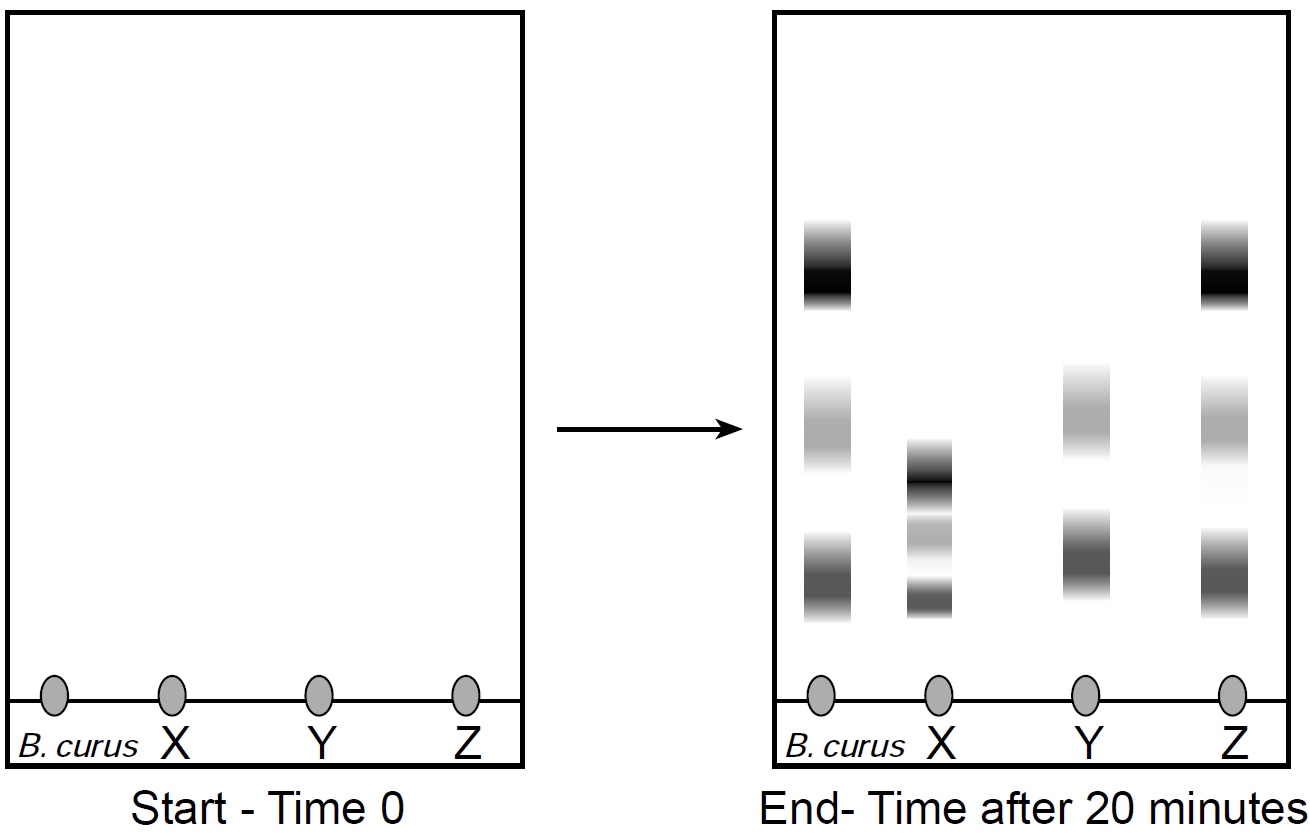
During the Relationships and Biodiversity lab, simulated pigments from three plant species were compared to those in Botana curus. The results were similar to those represented below.
Based on the results of this comparison alone, is there enough information to conclude which of the other three species is most closely related to Botana curus?
Yes. Only species X has the same bands as Botana curus.
Yes. Species Z has only two of the bands that Botana curus has
No. Additional tests should be done to test for other chemical similarities
No. Other rainforest plant species should be tested.
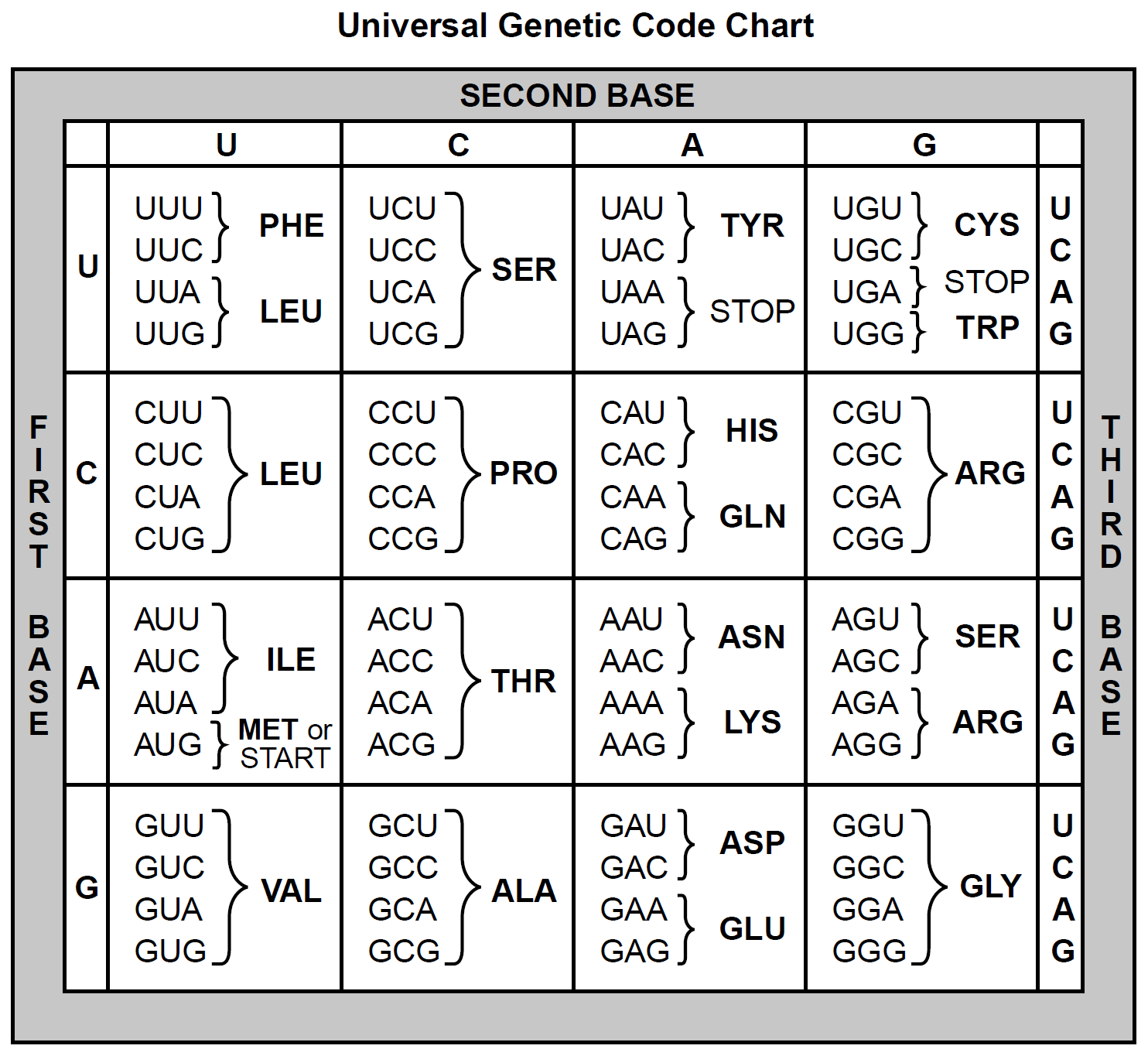
When provided with a sequence of bases in one segment of mRNA, the Universal Genetic Code Chart is used to
directly identify the DNA from an animal cell
determine the sequence of amino acids in a protein
change the RNA sequence of a protein into DNA
identify the specific mutations in the genetic material in a cell
In many parts of the world, plants are used as a source of medicine. Many of these plants are in danger of becoming extinct. It is therefore important for researchers to
collect and dry all the medicinal plants to preserve them for future use
search for other plant species that could be used as a new source of that medicine
use the plants now while we still have them
apply fertilizer to reduce the numbers of the plants that grow in the wild
Which group of materials would be most useful to a student planning to separate a mixture of leaf pigments using paper chromatography?
filter paper, dropper, solvent, beaker
enzymes, beaker, goggles, compound microscope
compound microscope, filter paper, coverslip, glass slide
meterstick, thermometer, solvent, enzymes
A rare tropical plant was found to have medicinal properties. A search was conducted to find other plants that are closely related to the rare plant. Which combination of characteristics would best identify the plant most closely related to the original one?
shape of seeds, number of flower petals, leaf pigments
number of flower petals, positive reaction to a specific enzyme
leaf pigments, sequence of DNA bases, positive reaction to a specific enzyme
presence of DNA bases, internal stem structure, shape of seeds
Identify the technique used to obtain the results seen in the diagram.
structural evidence
gel electrophoresis
chromatography
diffusion
The new, more accepted classification of the elephant shrew is most probably based on an analysis of
the DNA present in the cells of the elephant shrews
a number of newly found shrew fossils
the feeding habits of the elephant shrew compared to other shrews
the coloration of the elephant shrew’s fur
According to the new evolutionary tree, elephant shrews are most closely related to
primates, rodents, rabbits, and relatives
tenrecs, golden moles, and aardvarks
shrews and their relatives
manatees and hyraxes
The fragments of DNA separated into these bands because of their
pH and color
charge and radioactivity
electrical charge and size
color and size
The species that has the band containing the smallest DNA fragment for the sample that was sequenced is
A
B
C
D
Which number would indicate the most recent common ancestor of the hyrax, elephant, and manatee on the section of this mammalian evolutionary tree?
1
2
3
4