Unit 5.9 Classwork: Pearl Harbor & U.S. Entry into WWII - SY23
star
star
star
star
star
Last updated about 2 years ago
13 Nsɛmmisa
Hyɛ no nsow a efi ɔkyerɛwfo no hɔ:
0
1
Ɛhia
1
Ɛhia
1
IIWD.01
Ɛhia
1
Ɛhia
1
RAG.03
Ɛhia
1
Ɛhia
1
Ɛhia
1
0
Content Objective: I will be able to analyze the historical context of FDR's "Infamy" speech.
Standard Objective: I will be able to draw reasonable conclusions from the text.
Absent? Just want to review the slides? Click here for the slides from today.
Content Objective: I will be able to analyze the historical context of FDR's "Infamy" speech.
Standard Objective: I will be able to draw reasonable conclusions from the text.
Absent? Just want to review the slides? Click here for the slides from today.
Warm Up: There's a war happening in the world right now! Have you been following the Russia-Ukraine war? What are your thoughts on this current event?

World War II was the biggest and deadliest war in history, involving over
Sparked by Nazi Germany invading
Due to
Please categorize each country to the corresponding side in World War II.
Russia
United States
Germany
Japan
France
Great Britain
Italy
Axis Powers
Allied Powers
Both (Axis -> Allied Power)

The worldwide Great Depression of the 1930s took its toll in different ways throughout the world. In Europe, political power shifted to
The United States, however, chose to withdraw from world affairs and concentrate on its own economic problems.
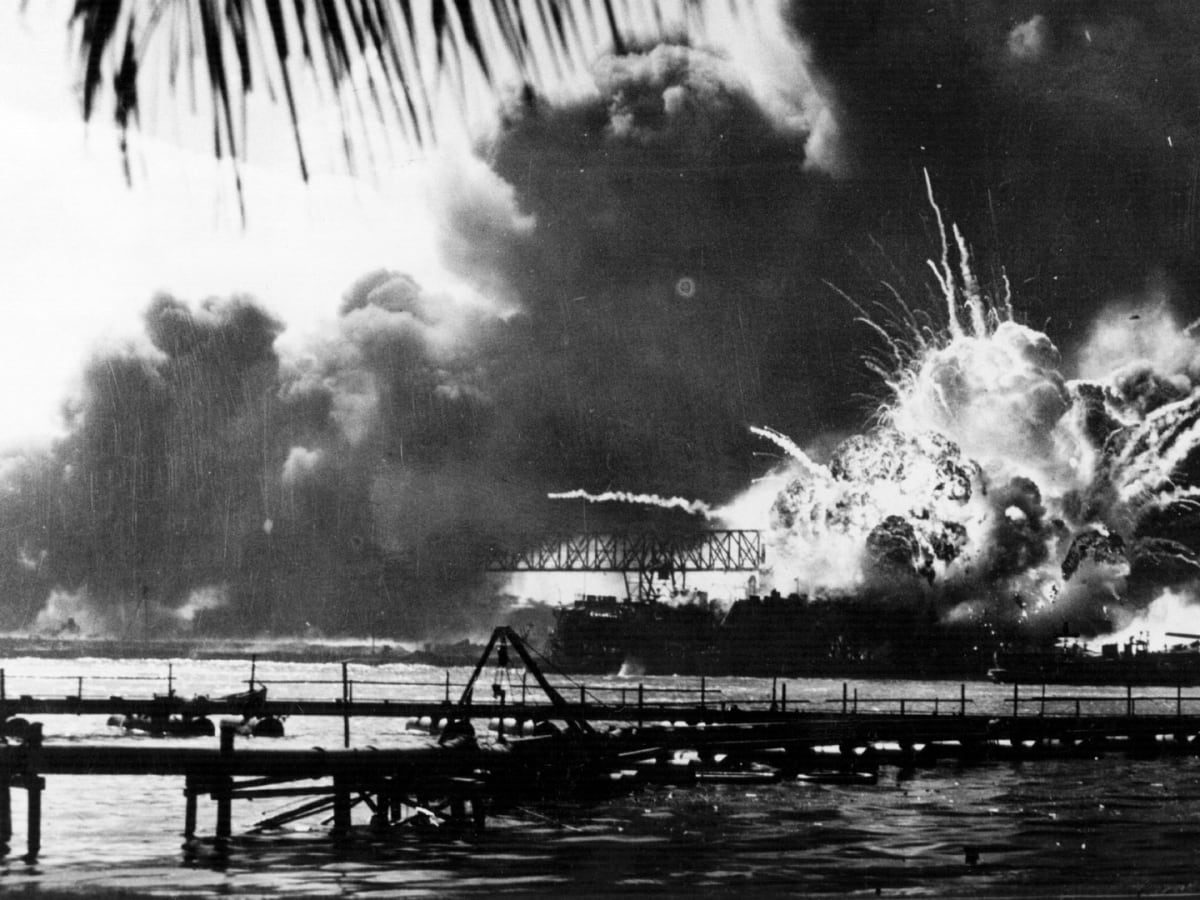
On December 7, 1941, the U.S. naval base in Pearl Harbor was attacked in one of the biggest military
Over 300 airplanes, 20 American naval vessels, including eight battleships, destroyed.
More than 2,400 Americans died, including
The American people were outraged. Though diplomatic relations between the United States and Japan were
The day after the assault, President Franklin D. Roosevelt gave a speech asking
Applying Knowledge: Today, we are going to listen to President Franklin D. Roosevelt's famous "Infamy" speech, which was given on December 8th, 1941 - the day after Pearl Harbor.
What does President Roosevelt mean by the word “infamy”?
The phrases "many American lives were lost" and "onslaught against us" primarily serve to
The primary reason President Roosevelt makes for entering World War II is to
True or False? Only the U.S. President can declare war on another country.
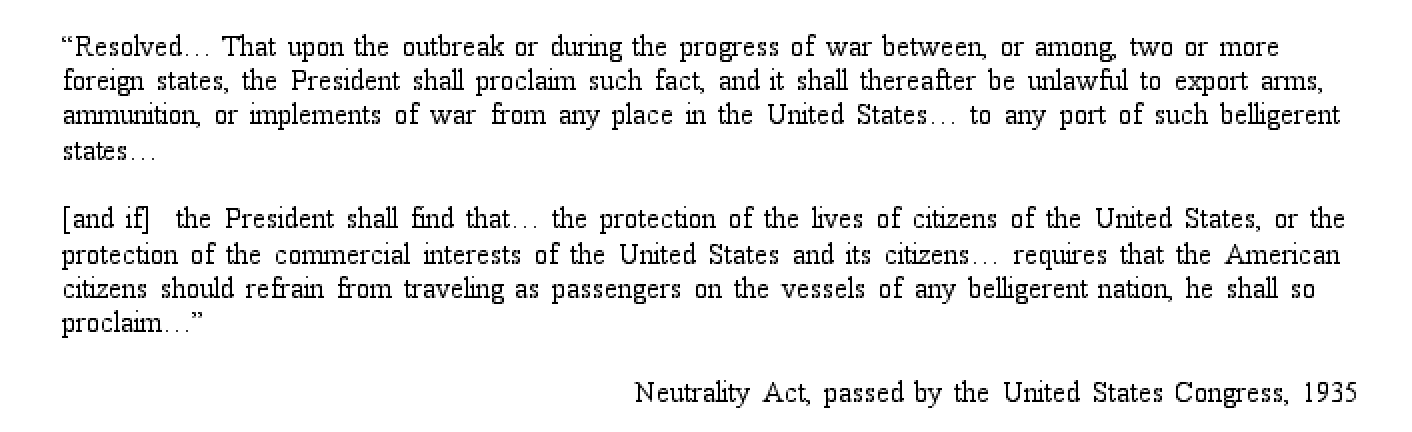
It can be reasonably inferred that the Neutrality Act was passed
The content of this law reveals an American understanding of the
Homework: Please evaluate how well you understood today’s lesson on a scale from 1 to 4: