[AP Statistics] 12.1 Chi Square Test for Goodness of Fit

Last updated 5 months ago
35 questions
1
College admission equity has been a large topic of debate in recent years. Let's analyze the pool of top academic applicants to Harvard in 2019



Imagine that Harvard claims: “We only accept the top academic applicants and we treat those applicants equally." We would like to test if there is convincing evidence against this claim.


Expected Counts:

Asian-American _______

Hispanic _______

African-American _______

White _______


Round to 1 decimal place
1

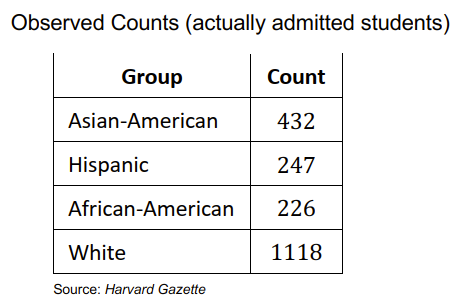
Here are the Observed Counts for the same data. These are the demographics of the students who were actually admitted from the pool.


Compare the values. Which groups are over represented and which are underrepresented?

1

1

Why can't we use the inferences tests we have already learned to tackle this problem?

1

We want to conduct a significance test to determine if there is convincing evidence against the claim that the pool of top academic applicants was treated equally.

Forget the hyperspecific statistical language that we usually use for a moment. In your own words, what is the Null Hypothesis for our test?

1

In your own words, what is the Alternative Hypothesis for our test?

1

Because we are comparing multiple different categories of observed vs expected values, we will use the Chi (pronounced "Kai") Square test for goodness of fit.

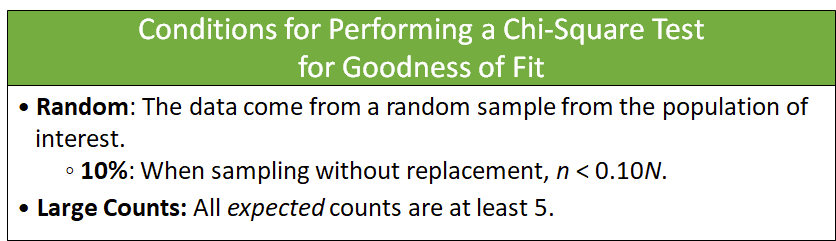
We will need to check the conditions for the chi-square test statistic first.


Do we meet the Large Counts condition?

(our data is not random because we only have 1 specific year of data in this case)

1

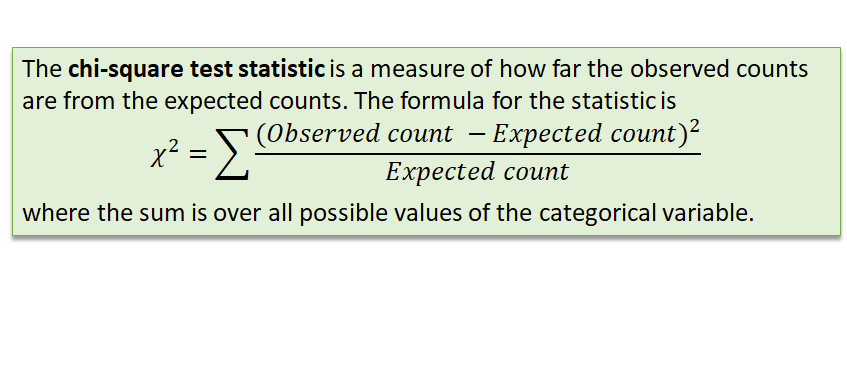
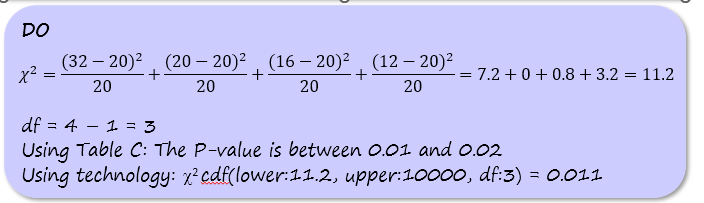
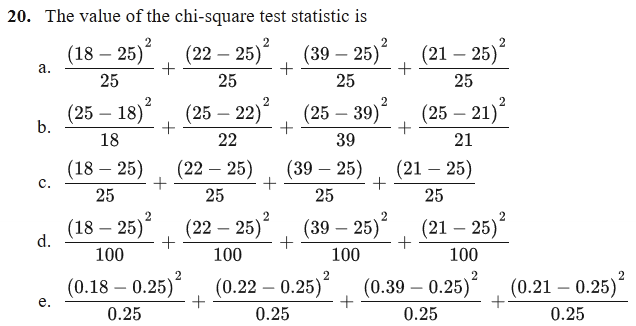
We will need to calculate the chi-square test statistic in order to eventually find the p-value


Calculate (Observed - Expected)2 / Expected for Asian-American students only

Round to 1 decimal places

1

Calculate the same for Hispanic students

1

African-American Students

1

White Students

1

The Chi-Square test statistics is equal to the sum of the 4 previous answers. Input it below

1

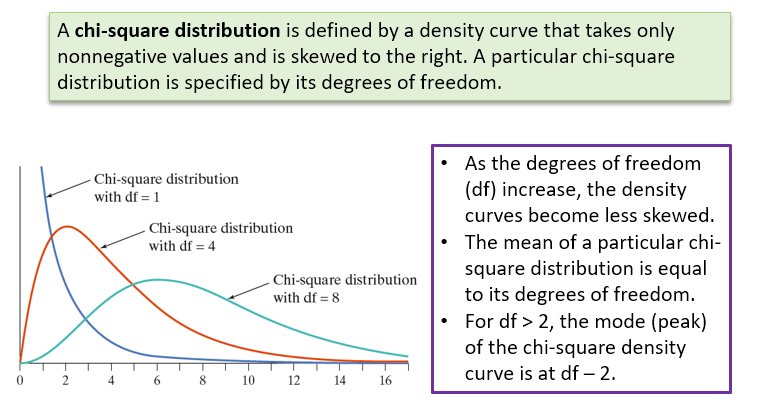
Your Chi-Square test statistic seems to be a rather large number. What do you think it means for a Chi-Square test statistic to be larger vs smaller?

1


The number of degrees of freedom for a Chi-Square test is equal to the number of categories minus 1.

How many degrees of freedom for our Harvard Study?

1

We can use a calculator to calculate the p-value of our test (alternatively, there is a table of values)

Stat-> Edit

Put OBSERVED values in L1
Put EXPECTED values in L2

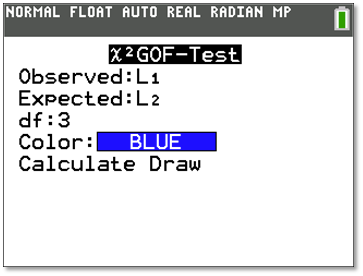
Stat->Test-> X2GOF-Test


What is the p-value for our test? Round to two decimal places

1

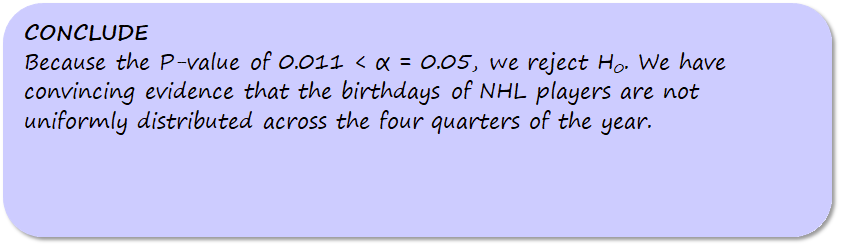
What is your conclusion based on the p-value?

1

Despite the evidence above, how do you believe Harvard's lawyer would defend the school's admissions policy against claims of discrimination?

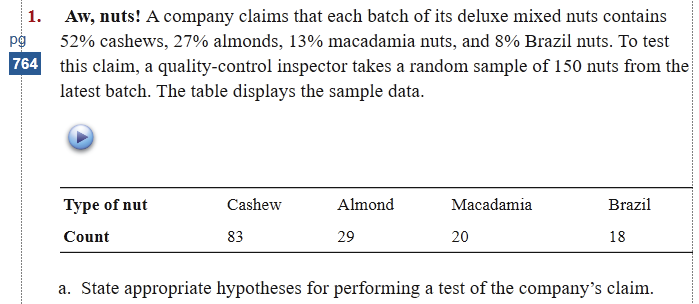
SAMPLE STATE/PLAN/DO/CONCLUDE


For DO, list the Test Statistics, Degrees of Freedom, and P-Value

1

1

1


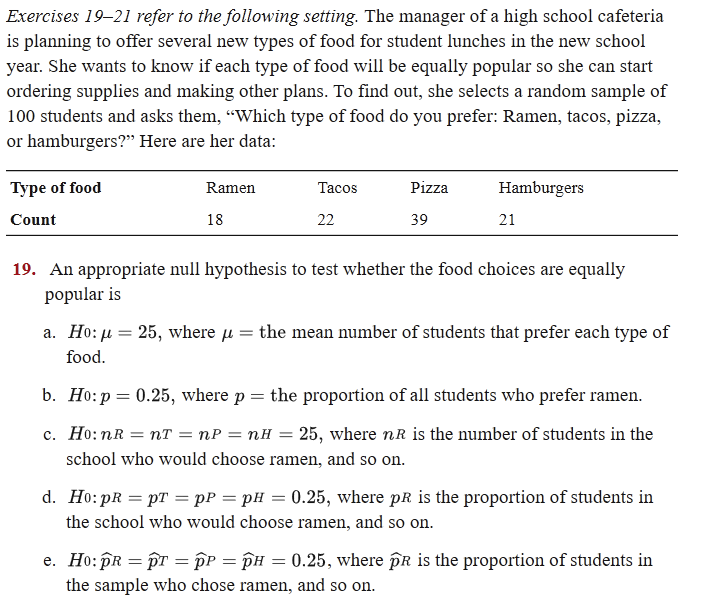
Round to 1 decimal place
1

Do you meet the conditions for a X2-test?

1

Explain

1

What is the degrees of freedom?

1

Use your calculator to find the p-value

Round to 3 places

1

What is your conclusion based on the p-value at a 5% significance level?

1

Explain

1


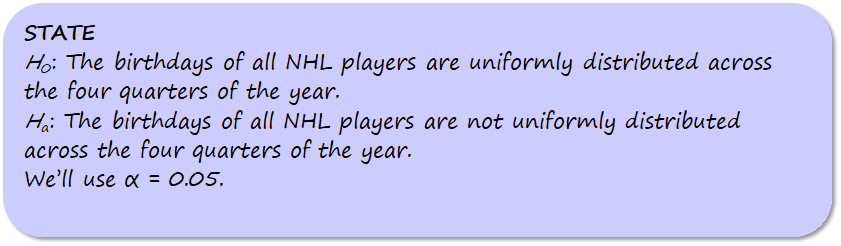
STATE

1

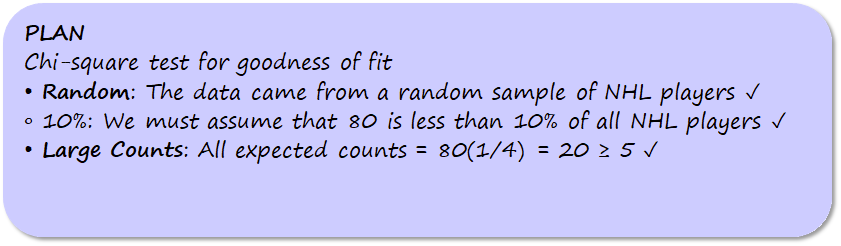
PLAN

1

DO

1

CONCLUDE

1

1

1

1

1

Are there any problems above that you would like to go over in class? Indicate the question numbers below (Numbers refer to the Formative question number). I'll try to cover anything that is highly requested.