Log in
Sign up for FREE
arrow_back
Library

NEPHROTIC SYNDROME - DEPARTMENT OF PAEDIATRICS

star
star
star
star
star
Last updated about 3 years ago
15 questions
Required
1
Required
1
Required
1
Required
1
Required
1
Required
1
Required
1
Required
1
Required
1
Required
1
Required
1
Required
1
Required
1
Required
1
Required
1
ANSWER ALL OF THESE QUESTIONS
Question 1
1.

Question 2
2.

Question 3
3.

Question 4
4.

Question 5
5.

Question 6
6.

Question 7
7.

Question 8
8.

Question 9
9.

Question 10
10.

Question 11
11.

Question 12
12.

Question 13
13.

Question 14
14.

Question 15
15.

3 Year old female child was brought to EMD with complaints of facial puffiness and abdominal distention , Identify the test done ?
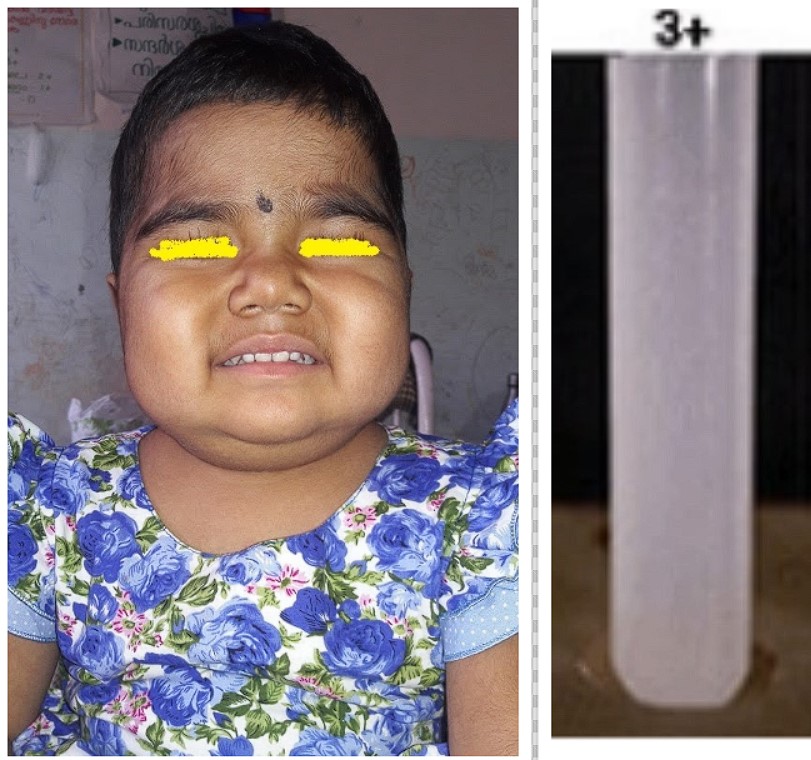
Urine SSA
Urine heat coagulation test
Urine Dispstick test
Urine Benedict test
What are the typical signs and symptoms of nephrotic syndrome in children?
a) High blood pressure and fever
b) Joint pain and stiffness
c) Edema and frothy urine
d) Chest pain and shortness of breath
What is the peak incidence age for nephrotic syndrome in children?
a) 1-2 years old
b) 2-6 years old
c) 6-10 years old
d) 10-16 years old
What are the common underlying diseases that can cause nephrotic syndrome?
a) Influenza and streptococcal infections
b) Rheumatoid arthritis and lupus
c) Minimal change disease and focal segmental glomerulosclerosis
d) Osteoporosis and osteoarthritis
What diagnostic tests are typically used to confirm the diagnosis of nephrotic syndrome?
a) Blood culture and chest X-ray
b) ECG and echocardiogram
c) Urine dipstick test and serum albumin level
d) CT scan and MRI
What is the initial management approach for children with nephrotic syndrome?
a) Antibiotics and antivirals
b) Corticosteroids
c) Immunosuppressive agents
d) Surgery
What medications are commonly used to induce remission in children with minimal change disease?
a) Antibiotics
b) Diuretics
c) Corticosteroids
d) Antihistamines
What are the long-term management goals for children with nephrotic syndrome?
a) To achieve complete remission
b) To prevent complications and maintain remission
c) To increase fluid intake
d) To avoid physical activity
What are the potential complications of nephrotic syndrome in children?
a) Thromboembolic events and infections
b) Headaches and dizziness
c) Joint deformities and contractures
d) Vision and hearing loss
How can complications of nephrotic syndrome be prevented in children?
a) By maintaining remission and preventing infections
b) By avoiding medication side effects
c) By reducing physical activity
d) By increasing fluid intake
What is the recommended dietary protein intake for children with chronic renal failure?
A) High protein intake
B) Moderate protein intake
C) Low protein intake
D) No restriction on protein intake
Which of the following is a potential complication of long-standing hypertension in children with chronic renal failure?
A) Renal osteodystrophy
B) Growth retardation
C) Metabolic acidosis
D) Hyperphosphatemia
Which of the following is a non-pharmacological treatment option for hypertension in children with chronic renal failure?
A) Dietary sodium restriction
B) Angiotensin-converting enzyme (ACE) inhibitors
C) Calcium channel blockers
D) Beta-blockers
Which of the following laboratory findings is typically seen in children with chronic renal failure?
A) Elevated serum creatinine
B) Decreased serum potassium
C) Increased serum calcium
D) Normal blood urea nitrogen (BUN)
Which of the following is a potential complication of chronic renal failure in children?
A) Anemia
B) Hypernatremia
C) Hypocalcemia
D) Hypophosphatemia