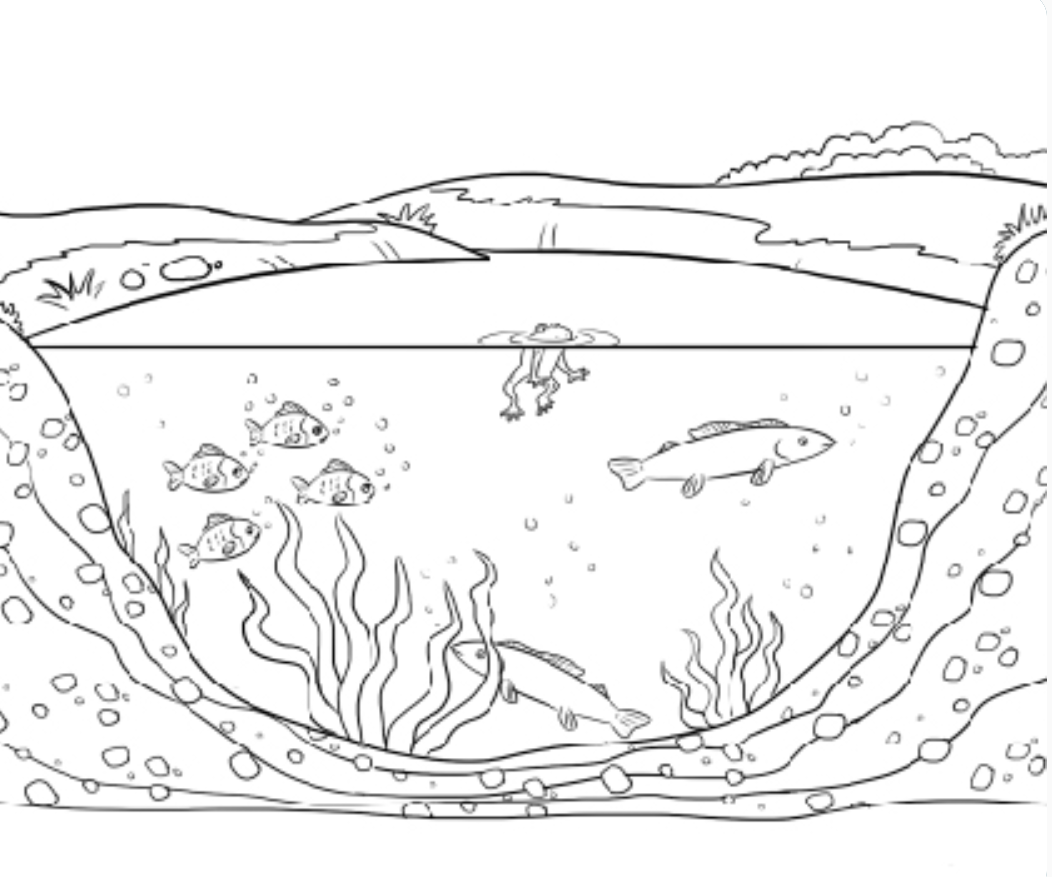
Select all of the abiotic factors affecting the aquatic biome.
Select all of the abiotic factors affecting the aquatic biome.
The geothermal gradient describes
The cryosphere encompasses
The most abundant gas in the atmosphere is .
Which of the following are considered major constituents of ocean water?
What produces Earth's magnetic field?
In which layer of the geosphere does the asthenosphere lie?
When communities form in previous uninhabited areas, this is called .
A particular area contains snakes, lizards, hawks, and squirrels. Together these animals make up the area's .
If the primary consumers in a food chain become extinct, what will most likely happen?
A certain ant species benefits from the food and shelter provided by the acacia tree. If the two species are in a mutualistic relationship, what happens to the tree in return?
Which of the following best describes all pioneer species?
Which statement best explains why producers are located at the bottom of the energy pyramid?
How do parasitism and predation differ?
The number of individuals of the same species in an area is the . The number of individuals living in a specific unit area or volume is the . The manner in which individuals are spread thorughout a given area is the given .
Density-independent factors are often
When a population reaches carrying capacity the population size will
As a population nears carrying capacity, the growth rate will stabilize. This is a demonstration of
A population with high infant mortality typically has which type of survivorship curve?
Select all of the abiotic factors affecting the aquatic biome.
An organism has a respiratory system that can get oxygen from water, one fin on either side of their body, and the ability to expel excess salt. Select the statement below that correctly describes the organism.
The taiga biome is most characterized by its
What are the most important climate factors that define a biome?
Which of the following is a difference between tropical and temperate rain forests?
Most of the benthic zone of the deep ocean is: