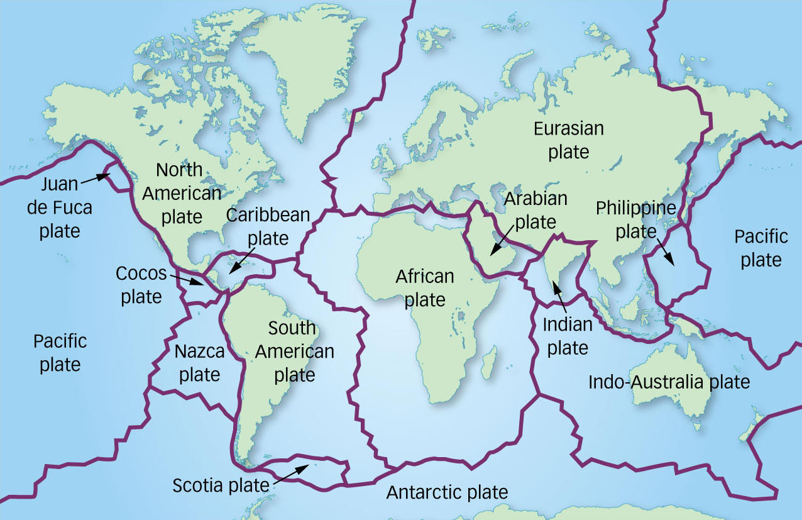
Click on the island on the Mid-Atlantic ridge.
Click on the island on the Mid-Atlantic ridge.
What is the thickness of the Earth's crust?
What is the name for the layer of crust and upper mantle consisting of solid, brittle rock?
Click on the island on the Mid-Atlantic ridge.
Click on destructive boundary where fold mountains and a volcanic arc is found.
Click on collision zone where the Himalayan fold mountains are formed.
Click on the destructive plate boundary where two oceanic crusts are converging.
Click on the constructive margin where a rising plume of magma is creating a rift valley.
Click on the conservative margin known as the San Andreas fault.
Name the process from the spec: basaltic oceanic crust is created and then moves laterally away from the linear fracture. More oceanic crust is created and a conveyer belt process occurs so that older crust moves further away from crust on the other side of the boundary. This creates large ocean basins and means the Americas are getting further from Europe and Africa.
What is the difference between ocean trenches and ocean ridges?