Select one or more statements that are considered to be true about genetics.
1 point
1
Question 3
3.
Gregor Mendel followed specific steps when breeding pea plants to determine the underlying cause and mathematical ratio of specific traits. Sequence the responses so that they describe the order of his process and findings.
Mendel cross-bred F1 plants with each other.
Mendel labeled the offspring of the first plants bred F1, for the first filial generation.
The F2 population produced flowers in a 3:1 ratio of dominant to recessive traits.
Mendel crossed two contrasting true-breeding plants with two different traits for a given characteristic.
1 point
1
Question 4
4.
Match the following phenotypes and genotypes with the correct term.
Draggable item
arrow_right_alt
Corresponding Item
heterozygous
arrow_right_alt
Phenotype: Blue eyes
Genotype: two recessive blue alleles
homozygous recessive
arrow_right_alt
Phenotype: Brown eyes
Genotype: Two dominant brown alleles
homozygous dominant
arrow_right_alt
Phenotype: Brown eyes
Genotype: One dominant brown allele and one recessive blue allele
1 point
1
Question 5
5.
One of Mendel’s laws that states that two copies of a gene will segregate so that each gamete receives only one copy is known as the _______________________. Mendel's law that states each pair of alleles segregates independently of one another during the formation of gametes is known as the __________________________________ .
Other Answer Choices:
Law of Independent Assortment
Law of Segregation
1 point
1
Question 6
6.
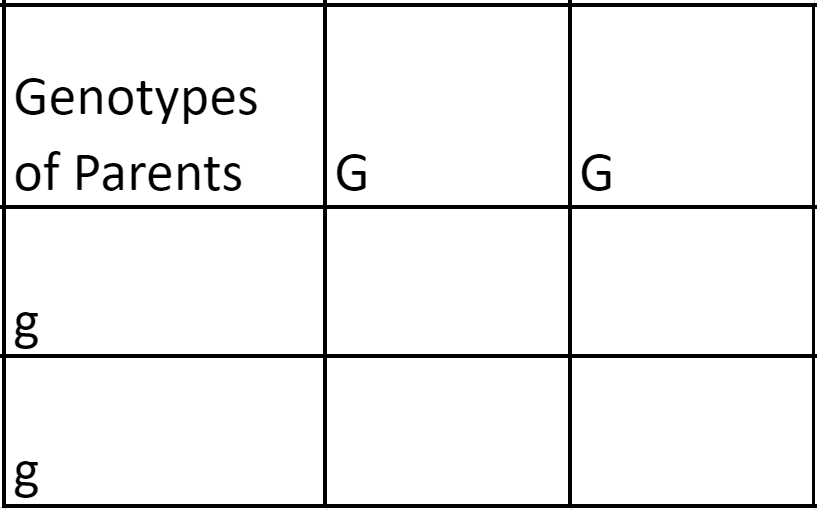
Complete the Punnett square shown below.
Other Answer Choices:
gg
Gg
Gg
GG
Gg
Gg
gg
gg
GG
GG
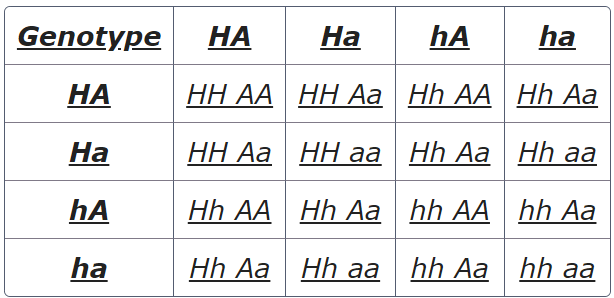
Use dihybrid cross to solve the following problems.
Key:
H = long hair
h = short hair
A = brown
a = green
1 point
1
Question 7
7.
What is the probability of having offspring that are homozygous dominant for both traits?
1 point
1
Question 8
8.
What is the probability that the first offspring will be either long-haired and brown-eyedorlong-haired and green-eyed?
1 point
1
Question 9
9.
What is the probability that among the first two offspring, one will be short-haired and green-eyed, and the other will be short-haired and brown-eyed?
1 point
1
Question 10
10.
Evaluate each statement as an example of or a contradiction of either the law of independent assortment or the law of segregation. Drag each statement to the correct column. Remember that brown hair is dominant over blond hair, and that brown eyes are dominant over blue eyes.
Most blue-eyed people have blond hair because those traits are linked
Children of two heterozygous brown-haired brown-eyed parents will have the same probability of having blue-eyed children as having blond-haired children.
If a brown-eyed parent and a blue-eyed parent have a blue-eyed baby, both genes came from the blue-eyed parent.
If a brown-eyed parent and a blue-eyed parent have a blue-eyed child, then the brown-eyed parent must have a recessive blue-eyed allele.
Example of Law of Segregation
Contradiction of Law of Segregation
Example of Law of Independent Assortment
Contradiction of Law of Independent Assortment
4.2 DNA
2 points
2
Question 11
11.
DNA and RNA are the two molecules that carry the genetic information by which living things transfer characteristics from one generation to the next. These molecules are comprised of various atoms and compounds. Classify the following as either an atom or compound of DNA and RNA.
nitrogen base
carbon
oxygen
ATP
sugar
Atoms
Compounds
1 point
1
Question 12
12.
The functioning of DNA and RNA are affected by various enzymes. Sometimes, environmental factors can influence how these enzymes work. Which of these are factors that can change enzyme functionality?
2 points
2
Question 13
13.
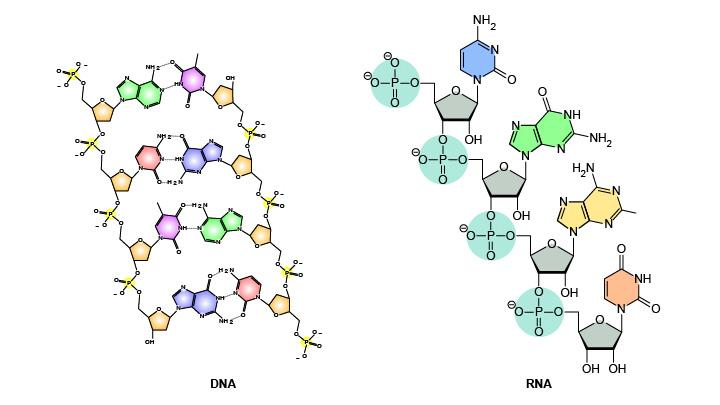
DNA and RNA are both nucleic acids. Models of DNA and RNA are shown. Determine whether each of these statements describe DNA, RNA, or both.
has uracil bases
has a free -OH group on its sugar
has a sugar-phosphate backbone
is usually double stranded
contains nitrogenous bases
contains carbon, nitrogen, phosphorus, and oxygen
DNA
RNA
Both
2 points
2
Question 14
14.
DNA contains four differen nucleotides, each with a different chemical base: _______ (A), _______ (G), _______ (T), and _______ (C). For RNA, the base _______ (U) replaces (T)
1 point
1
Question 15
15.
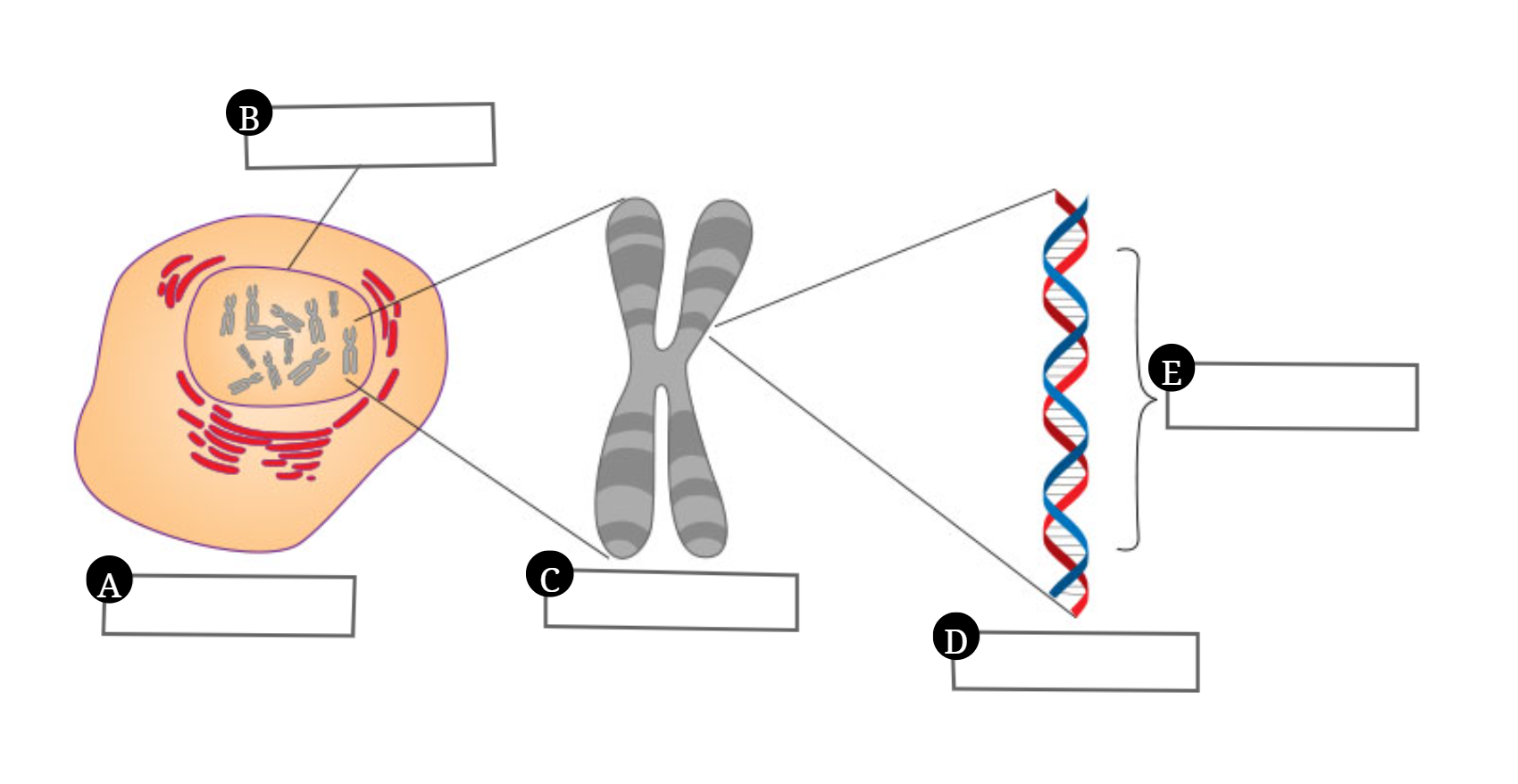
In eukaryotic organisms, DNA is contained inside the cell ____________ . DNA is tightly coiled around proteins to form structures called ________________ . This packaging enables the long, delicate strands of DNA to be compacted into a tiny space. It also provides a way for cells to control ____________________ The chromosomes of eukaryotes are typically _______________ . By contrast, the DNA of prokaryotes is usually arranged in a single _____________ chromosome that is located in an area called the _____________ and may be loosely tethered to the cell _____________ .
Other Answer Choices:
membrane
nucleus
circular
chromosomes
nucleoid
gene expression
rod-shaped
1 point
1
Question 16
16.
Match the following terms with their correct description.
Draggable item
arrow_right_alt
Corresponding Item
replication fork
arrow_right_alt
the shape of a DNA molecule; two spiral strands wrapped around each other
RNA polymerase
arrow_right_alt
Y-shaped structure that forms during the process of DNA replication; the unseparated double stranded DNA represents the base of the Y
double helix
arrow_right_alt
enzyme that transcribes RNA from a DNA template
helicase
arrow_right_alt
responsible for unwinding DNA at the start of the replication process
2 points
2
Question 17
17.
Determine whether each of these events of eukaryotic DNA replication is associated with leading strand synthesis or lagging strand synthesis or both.
Primase begins RNA polymerization de novo.
DNA polymerase synthesizes DNA 5' to 3'.
Ligase joins Okazaki fragments together
DNA polymerase replaces RNA primers with DNA.
Leading strand
Lagging strand
1 point
1
Question 18
18.
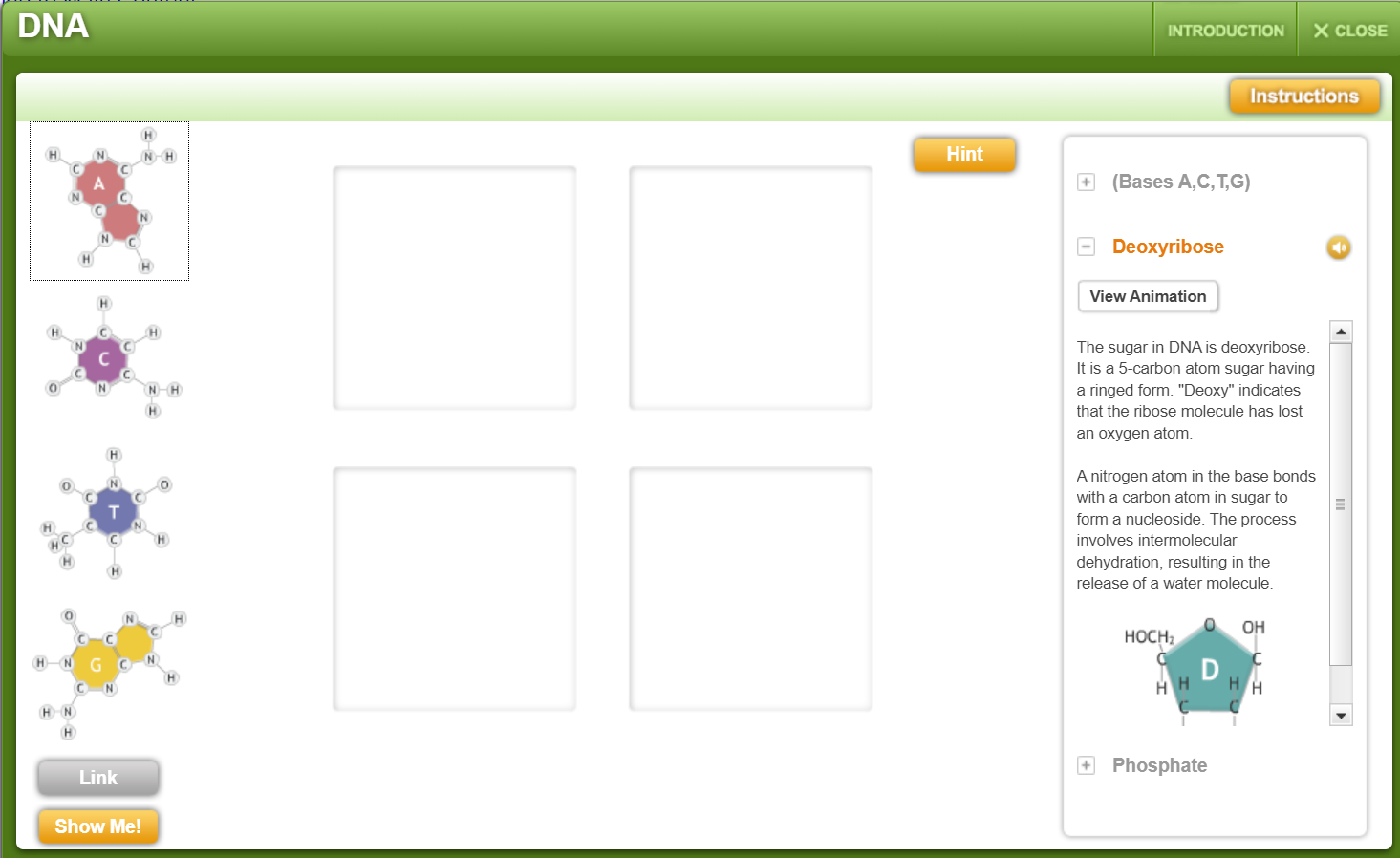
DNA Exploration Lab link
bit.ly/3H6r9fV
Using the 'Build' tab at the bottom of the text, follow the prompts to build your DNA segment. Post a screenshot of your model to this question.
1 point
1
Question 19
19.
DNA Exploration Lab link
bit.ly/3H6r9fV
Using the 'Replicate' tab at the bottom of the text, follow the prompts to build a copy of a DNA strand using nucleotides. Post a screenshot of your model to this question.
4.3 Transcription and Translation
1 point
1
Question 20
20.
Refresh: Gregor Mendel studied the transmission of traits from parents to offspring. While he had no knowledge of DNA, RNA, or protein synthesis at the time, he was able to postulate several accurate ideas about how traits are inherited.
Match the following terms or processes with the best definition.
Draggable item
arrow_right_alt
Corresponding Item
monohybrid
arrow_right_alt
having two identical alleles for the same trait
pedigree
arrow_right_alt
the first generation of offspring after a cross
codominant
arrow_right_alt
multiple alleles being expressed at the same time
homozygous
arrow_right_alt
having one dominant and one recessive allele for a particular trait
first filial
arrow_right_alt
a cross involving only one trait
heterozygous
arrow_right_alt
a family tree showing the inheritance of a particular trait
1 point
1
Question 21
21.
Which of the following best describes the relationship between DNA and proteins?
2 points
2
Question 22
22.
Transcription is the beginning of protein synthesis. Some of the following sentences describe events that occur during the process of transcription in eukaryotes. Place the steps of the process of transcription in the order that they occur.
The enzyme separates the DNA into two strands.
The enzyme RNA polymerase binds to DNA.
The RNA molecule (called the transcript) moves to the cytoplasm.
RNA polymerase adds complementary base pairs to form a strand of RNA.
1 point
1
Question 23
23.
Three main steps must occur to process the mRNA molecule in preparation for protein synthesis:
Extra sequences at one or both ends of the _______________________ are trimmed off. Specialized enzymes called _____________________ cut the RNA strand at specified locations.
Sections of sequences in the middle of RNA are edited out. Enzymes join, or ___________, the remaining sequences to form the complete RNA.
RNA nucleotides can be modified at either end or within the body of the strand. Modification on the ends, which caps the molecule, prevents further ________________ by exoribonucleases. Other modifications _______________ RNA for different functions it will perform during protein synthesis.
Other Answer Choices:
degradation
splice
primary transcript
exoribonucleases
specialize
1 point
1
Question 24
24.
Match the type of RNA with their correct functions.
Draggable item
arrow_right_alt
Corresponding Item
Messenger RNA (mRNA)
arrow_right_alt
It contains a sequence of nucleotides that direct the assembly of amino acids into proteins. It carries this information from the cell nucleus to ribosomes in the cytoplasm.
Transfer RNA (tRNA)
arrow_right_alt
It transfers amino acids to the ribosome as the protein is built. It also connects each three-letter genetic code carried in mRNA to a corresponding amino acid. There are 64 different three-letter codes for 20 amino acids.
Ribosomal RNA (rRNA)
arrow_right_alt
It is present in the subunits of a ribosome that allow for decoding of mRNA. It also interacts with tRNA during protein synthesis to help form peptide bonds between amino acids.
3 points
3
Question 25
25.
Sequence the process for translation.
A ribosome attaches to the mRNA strand. A tRNA anticodon matches with the mRNA codon.
The amino acids become a protein when released from the ribosome. The chain twist up to make a protein.
A chain of amino acids is formed until a stop codon is reached.
The new tRNA molecule carrying another amino acid pairs with the second mRNA codon.
Usually first codon is AUG. The ribosome then slides over one codon on the mRNA.
The amino acids are joined by a peptide bond.
2 points
2
Question 26
26.
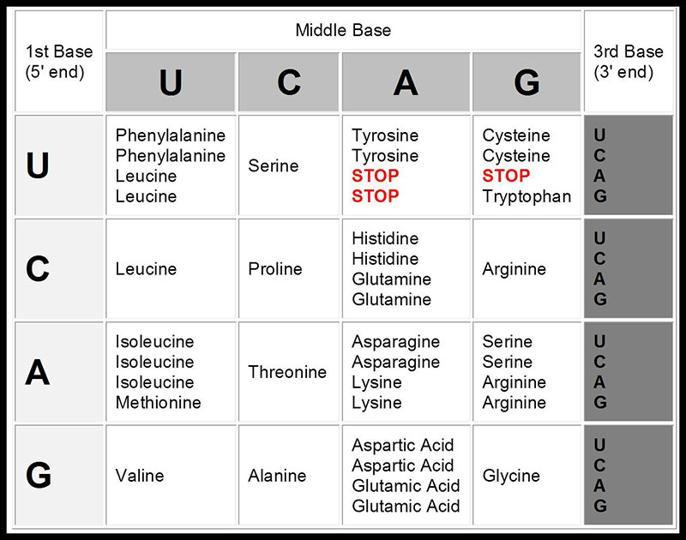
Use the genetic code chart to translate each codon. Then, connect the codon to the amino acid it represents.
GGG = _______
UUA = _______
UAA = _______
CAC = _______
AUG = _______
2 points
2
Question 27
27.
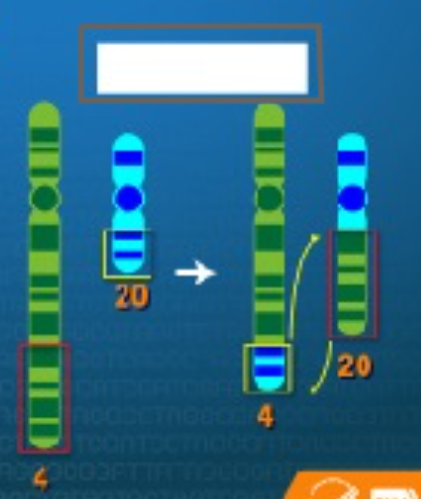
Categorize the following types of mutations as either a gene mutation or a chromosomal mutation.
substitution - One nucleotide is switched for a different nucleotide.
insertion - An extra nucleotide is added to the mRNA strand.
amplification - An extra copy or copies of part or all of a chromosome is made.
translocation - Part of one chromosome breaks off and attaches to another.
deletion - A nucleotide is deleted from the mRNA strand.
deletion - Part of a chromosome is lost.
Gene Mutations
Chromosomal Mutations
1 point
1
Question 28
28.
The __________ is the widely-accepted idea that DNA provides the template of instructions for the synthesis of RNA, and mRNA provides the template of instructions for the synthesis of proteins. All cells, whether they are bacterial cells or human cells, share two basic steps of gene expression: __________. The visible or measurable traits of an organism that result from this process are called __________. Sometimes, mistakes happen in the process of gene expression. These include erroneous substitution, insertion, or deletion of a nucleotide, which is also called __________. Gene expression can also be influenced by __________ factors. Different genders exhibit __________ traits, such as baldness, genes for which are carried by both sexes but are only expressed in males. __________ can lead to deseases and birth defects, but they can also result in __________ that may aid an organism's survival in a changing environment.
4.4 Genetic Disorders and Technology
1 point
1
Question 29
29.
Which statements about genetic disorders are correct? Discuss how to modify any incorrect statement to make it a correct statement with a classmate.
2 points
2
Question 30
30.
Fill in the blanks to complete the sentences about the molecular basis of heredity.
1. The hereditary information of an organism is contained in a molecule called _______.
2. Chromosomes are composed of a well-defined mixture of _______ and DNA.
3. Genetic _______ are sometimes harmful to organisms, but they can lead to genetic diversity.
4. _______ reproduce through the process of meiosis.
5. Human gametes contain _______ chromosomes.
1 point
1
Question 31
31.
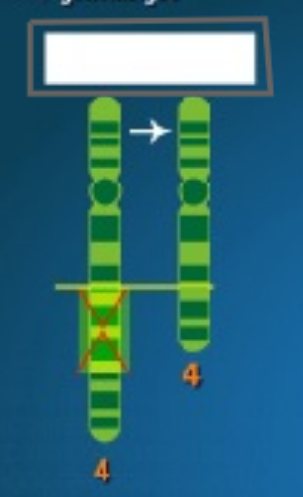
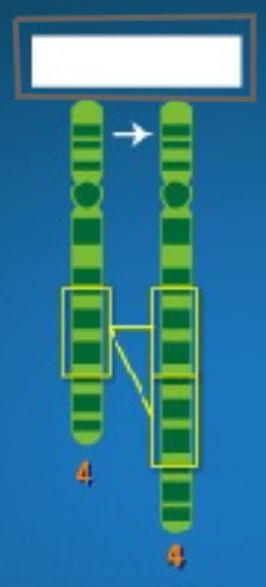
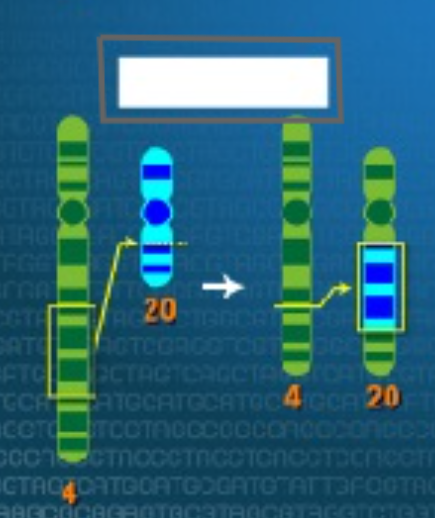
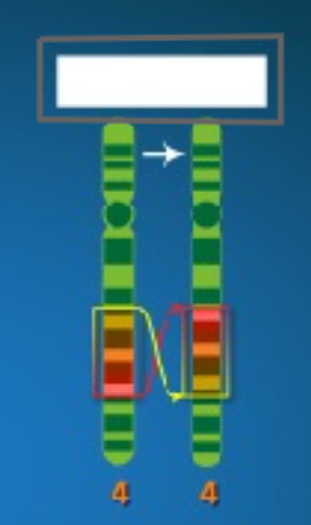
Match the term with the appropriate image of the abnormality.
Draggable item
arrow_right_alt
Corresponding Item
deletion
arrow_right_alt
inversion
arrow_right_alt
insertion
arrow_right_alt
duplication
arrow_right_alt
translocation
arrow_right_alt
2 points
2
Question 32
32.
An _______________________ disorder is one that arises if even just one allele is mutated. This means that a child would only have to inherit a diseased allele from one parent in order to contract the illness. _________________________ is an example of this disorder.
An individual must have two copies of dysfunctional, or mutant, alleles in order to have an ________________________ disorder. If they have one normal copy of the gene, they will remain healthy. One example of this disorder is ____________________ .
_______________ disorders are caused by mutations in genes on the X or Y chromosome. Thus, they affect males and females differently. There are both X-linked and Y-linked disorders. __________________ is an X-linked disease that affects approximately 1 in 10,000 births. _____________________ can be caused by a Y-linked disorder in which portions of the Y chromosome are deleted.
Other Answer Choices:
Male infertility
cystic fibrosis
Rett syndrome
sex-linked
autosomal dominant
autosomal recessive
Huntington's disease
1 point
1
Question 33
33.
_______ reveals information about whether or not patients carry diseased alleles. _______ uses an experimental technique by replacing diseased genes with healthy ones or inactivating or knocking out the diseased genes altogether. The _______ was an international research program aimed at creating a complete map and understanding of all the genes of human being—the complete human genome. It was discovered that there about _______ human genes.