Log in
Sign up for FREE
arrow_back
Library

Test U2L1 Somos estudiantes

star
star
star
star
star
Last updated 2 months ago
44 questions
1
Question 1
1.

1
1
1
1
1
1
1
1
1
1
1
1
1
1
1
1
1
1
1
1
1
1
1
1
1
1
1
1
1
1
1
1
1
1
1
1
1
1
1
1
1
1
5
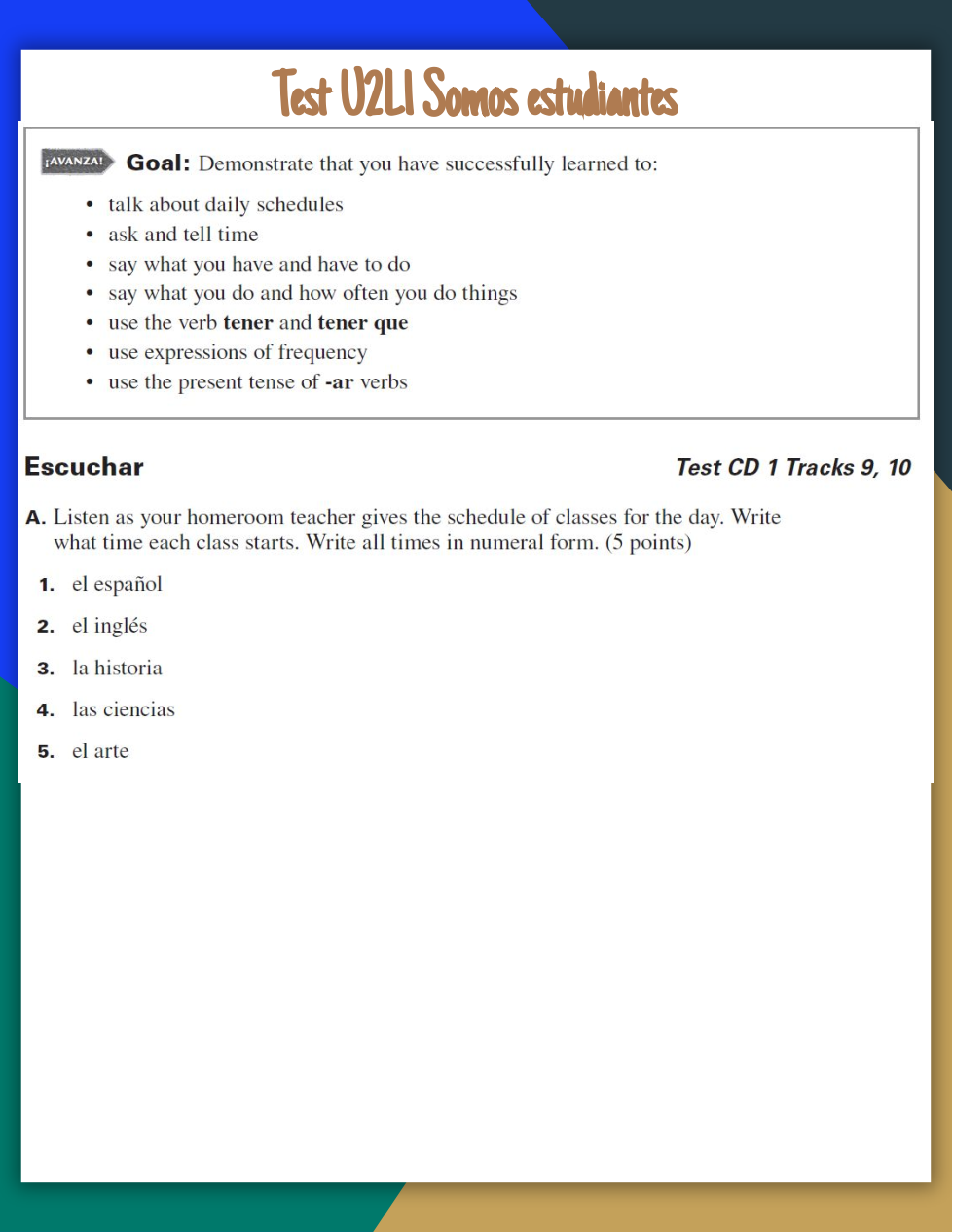
Listen as your homeroom teacher gives the schedule of classes for the day. Write what time each class starts. Write all times in numeral form.
For example: 3:00
Note: You will use the same audio for the first 5 questions.
Question 2
2.

Listen as your homeroom teacher gives the schedule of classes for the day. Write what time each class starts. Write all times in numeral form.
For example: 3:00

Question 3
3.

Listen as your homeroom teacher gives the schedule of classes for the day. Write what time each class starts. Write all times in numeral form.
For example: 3:00.

Question 4
4.

Listen as your homeroom teacher gives the schedule of classes for the day. Write what time each class starts. Write all times in numeral form.
For example: 3:00

Question 5
5.

Listen as your homeroom teacher gives the schedule of classes for the day. Write what time each class starts. Write all times in numeral form. For example: 3:00.

Question 6
6.

Question 7
7.

Question 8
8.

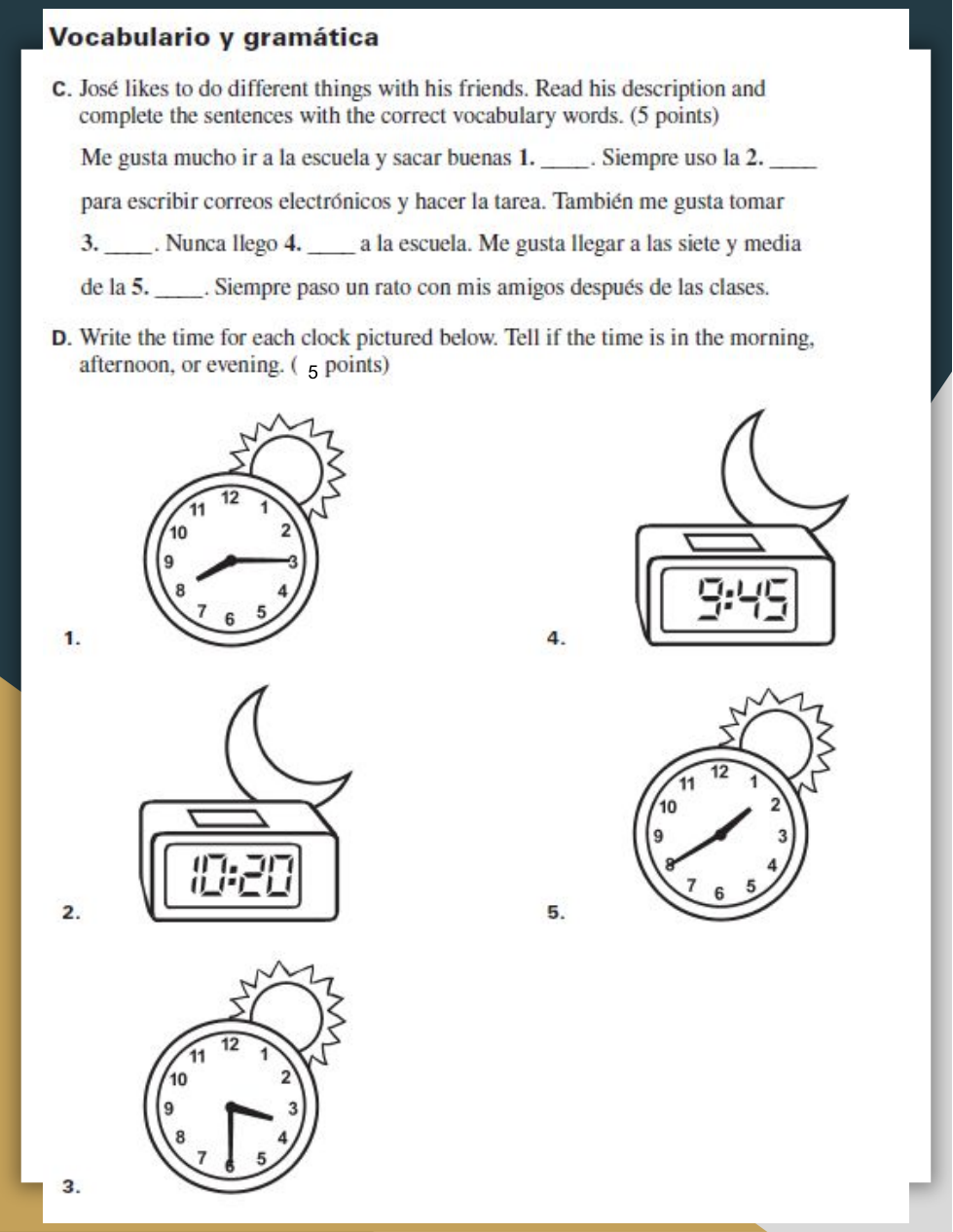
José likes to do different things with his friends. Read his description and complete the sentences with the correct vocabulary words. Write 1 word only.

Question 9
9.

Question 10
10.

Question 11
11.

Write the time for each clock pictured below. Tell if the time is in the morning,
afternoon, or evening. Answer in a complete sentence in Spanish.
For example: It's two in the afternoon. (but written in Spanish).

Question 12
12.

Write the time for each clock pictured below. Tell if the time is in the morning,
afternoon, or evening. Answer in a complete sentence.

Question 13
13.

Question 14
14.

Write the time for each clock pictured below. Tell if the time is in the morning,
afternoon, or evening. Answer in a complete sentence.

Question 15
15.

Write the time for each clock pictured below. Tell if the time is in the morning,
afternoon, or evening. Answer in a complete sentence.

Question 16
16.

Question 17
17.

Question 18
18.

Question 19
19.

Question 20
20.

Question 21
21.

Question 22
22.

Question 23
23.

Question 24
24.

Question 25
25.

Question 26
26.

Question 27
27.

Question 28
28.

Question 29
29.

Question 30
30.

Question 31
31.

Question 32
32.

Question 33
33.

Question 34
34.

Question 35
35.

Question 36
36.

Question 37
37.

Question 38
38.

Question 39
39.

Question 40
40.

Question 41
41.

Question 42
42.

Question 43
43.

Question 44
44.

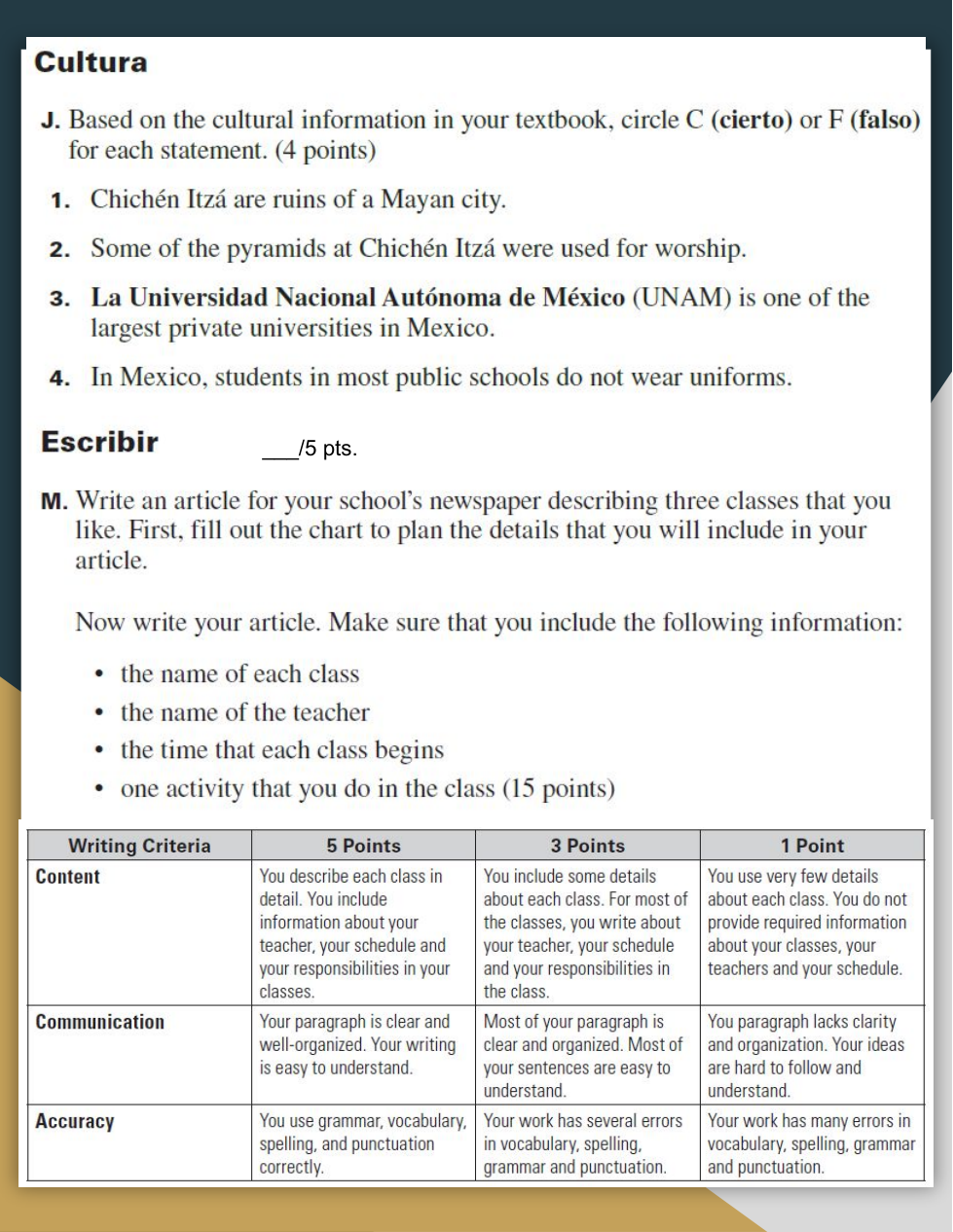
In Spanish, write an article for your school’s newspaper describing three classes that you like. First, fill out the chart to plan the details that you will include in your article.
Now write your article. Make sure that you include the following information:
• the name of each class
• the name of the teacher
• the time that each class begins
• one activity that you do in the class

José likes to do different things with his friends. Read his description and complete the sentences with the correct vocabulary words.
lápices
notas
historia
José likes to do different things with his friends. Read his description and complete the sentences with the correct vocabulary words.
computadora
cuaderno
teléfono
José likes to do different things with his friends. Read his description and complete the sentences with the correct vocabulary words.
temprano
tarde
José likes to do different things with his friends. Read his description and complete the sentences with the correct vocabulary words.
mañana
tarde
noche
Choose the best answer to tell the time for each clock pictured below. Tell if the time is in the morning, afternoon, or evening.
Son las tres y media de la tarde.
Es la tres y media.
Son las cuatro y treinta de la tarde.
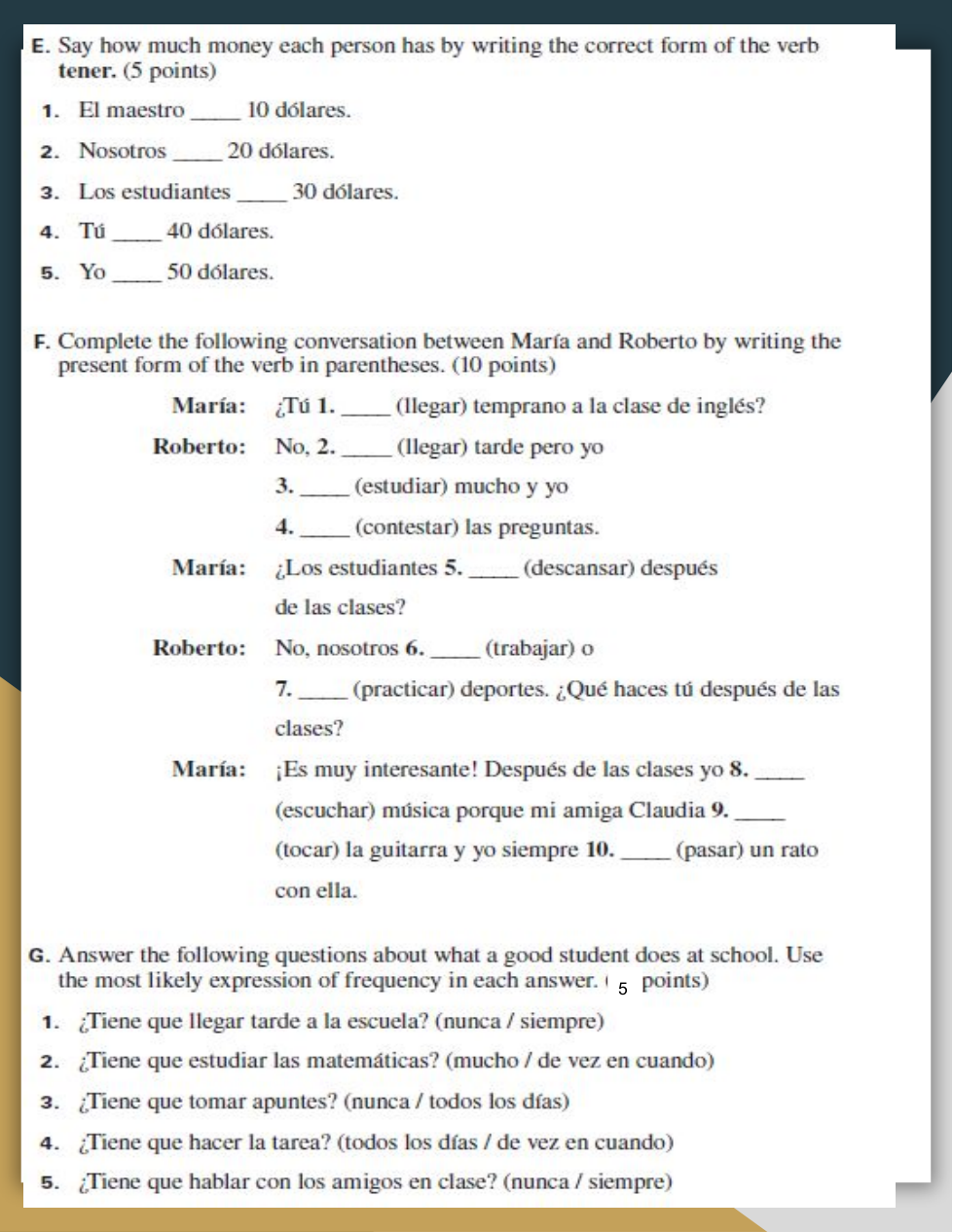
Say how much money each person has by writing the correct form of the verb tener.
tenéis
tenemos
tiene
tienen
tengo
tienes
Say how much money each person has by writing the correct form of the verb tener.
tengo
tienen
tiene
tenéis
tenemos
tienes
Say how much money each person has by writing the correct form of the verb tener.
tienes
tenéis
tienen
tiene
tenemos
tengo
Say how much money each person has by writing the correct form of the verb tener.
tienes
tengo
tienen
tenemos
tiene
tenéis
Say how much money each person has by writing the correct form of the verb tener.
tengo
tienes
tenemos
tenéis
tienen
tiene
Complete the following conversation between María and Roberto. Use the present form of the verb in parentheses.
llega
llegamos
llegan
llegáis
llego
llegas
Complete the following conversation between María and Roberto. Use the present form of the verb in parentheses.
llegáis
llegan
llega
llego
llegamos
llegas
Complete the following conversation between María and Roberto. Use the present form of the verb in parentheses.
estudio
estudiamos
estudiáis
Complete the following conversation between María and Roberto. Use the present form of the verb in parentheses.
contesta
contestan
contesto
Complete the following conversation between María and Roberto. Use the present form of the verb in parentheses.
descansa
descansan
descansar
descansamos
Complete the following conversation between María and Roberto. Use the present form of the verb in parentheses.
trabajando
trabajan
trabajar
trabajamos
Complete the following conversation between María and Roberto. Use the present form of the verb in parentheses.
practican
practicáis
practicamos
practicando
Complete the following conversation between María and Roberto. Use the present form of the verb in parentheses.
escucho
escuchan
escucháis
Complete the following conversation between María and Roberto. Use the present form of the verb in parentheses.
tocas
toca
tocan
Complete the following conversation between María and Roberto. Use the present form of the verb in parentheses.
paso
pasamos
pasáis
Answer the following questions about what a good student does at school. Use the most likely expression of frequency in each answer.
Nunca tiene que llegar tarde a la escuela.
Siempre tiene que llegar tarde a la escuela.
Answer the following questions about what a good student does at school. Use the most likely expression of frequency in each answer.
De vez en cuando tiene que estudiar las matemáticas.
Tiene que estudiar mucho las matemáticas.
Answer the following questions about what a good student does at school. Use the most likely expression of frequency in each answer.
Tiene que tomar apuntes todos los días.
Nunca tiene que tomar apuntes.
Answer the following questions about what a good student does at school. Use the most likely expression of frequency in each answer.
Tiene que hacer la tarea de vez en cuando.
Tiene que hacer la tarea todos los días.
Answer the following questions about what a good student does at school. Use the most likely expression of frequency in each answer.
Siempre tiene que hablar con los amigos en clase.
Nunca tiene que hablar con los amigos en clase.
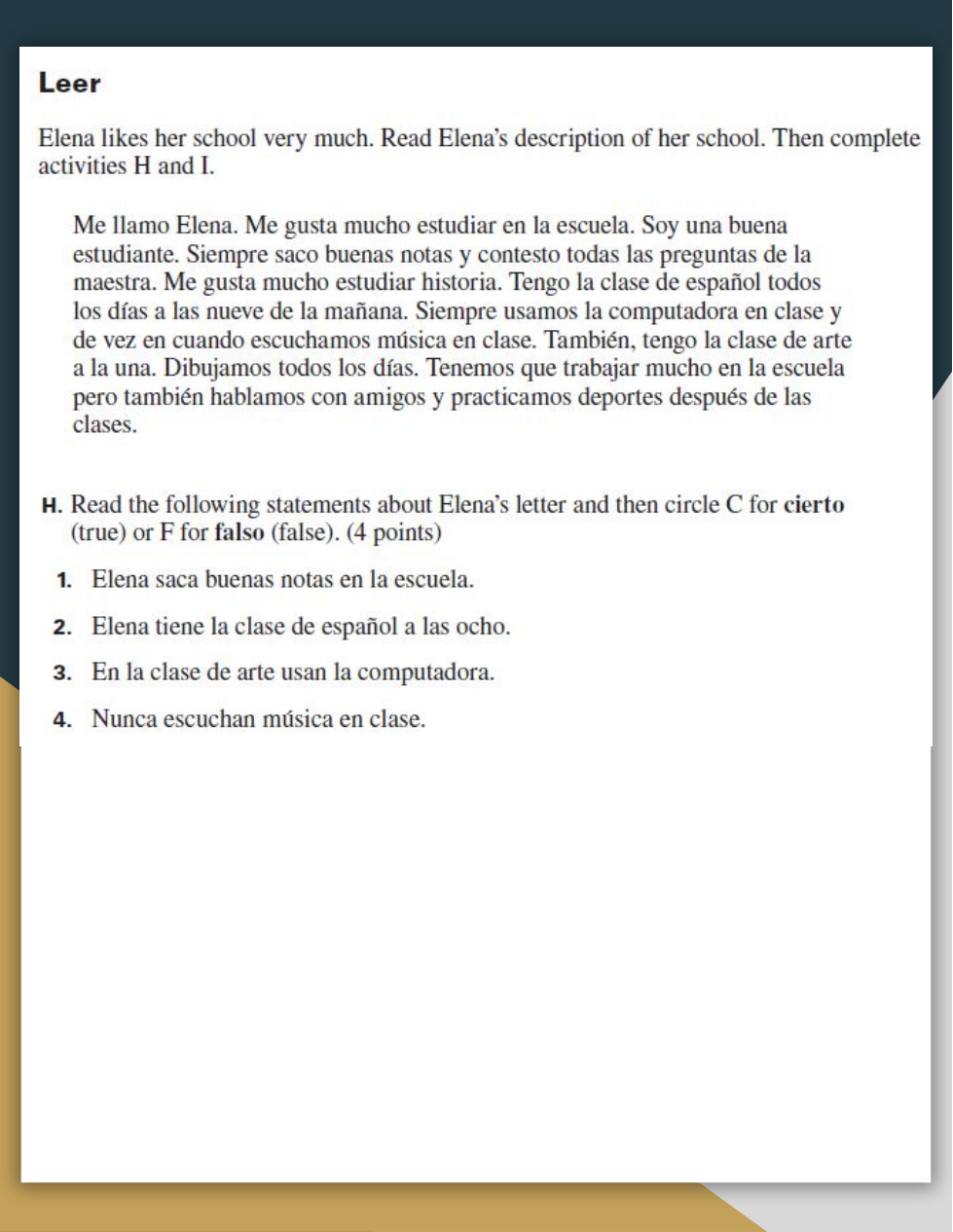
Read the following statements about Elena’s letter and then choose C for cierto(true) or F for falso (false).
True
False
Read the following statements about Elena’s letter and then choose C for cierto(true) or F for falso (false).
True
False
Read the following statements about Elena’s letter and then choose C for cierto (true) or F for falso (false).
True
False
Read the following statements about Elena’s letter and then choose C for cierto(true) or F for falso (false).
True
False
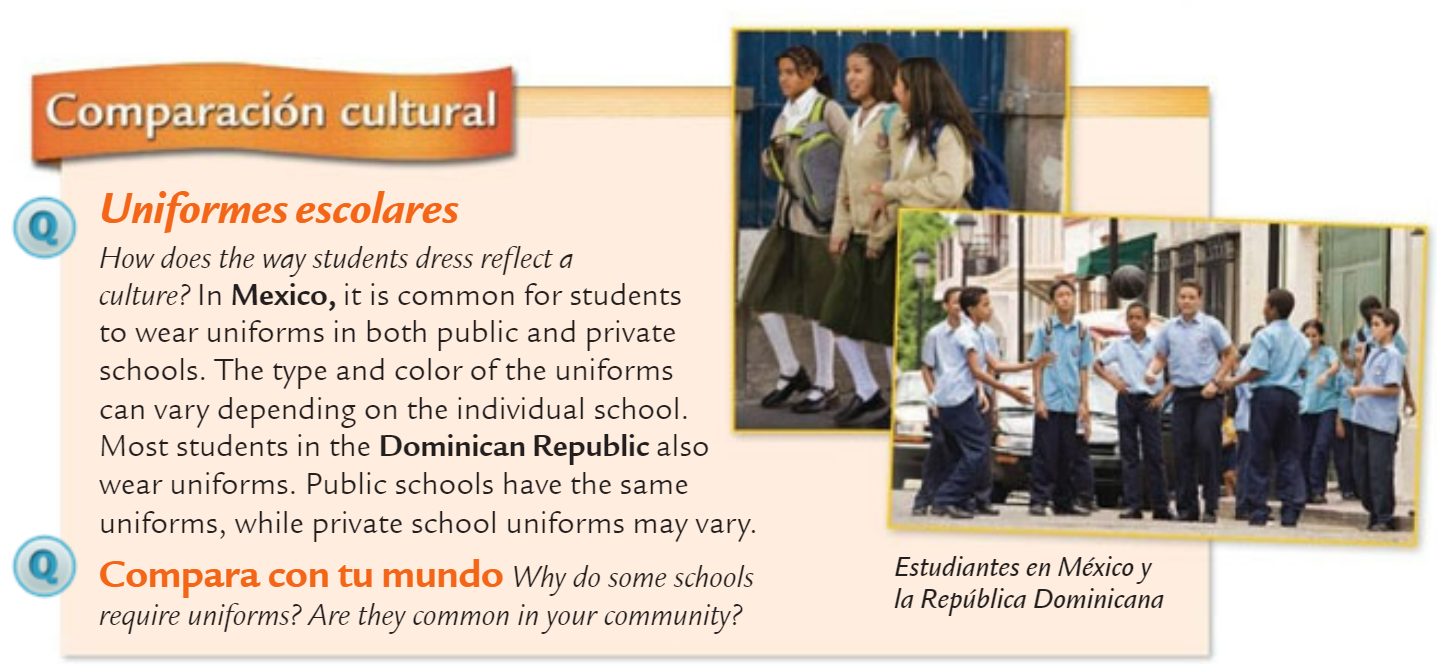
Based on cultural information, choose True or False for each statement.

True
False
Based on cultural information, choose True or False for each statement.

True
False
Based on cultural information, choose True or False for each statement.

True
False
Based on cultural information, choose True or False for each statement.

True
False