Homework - Air Pressure and Air fronts
star
star
star
star
star
Last updated 9 months ago
15 questions
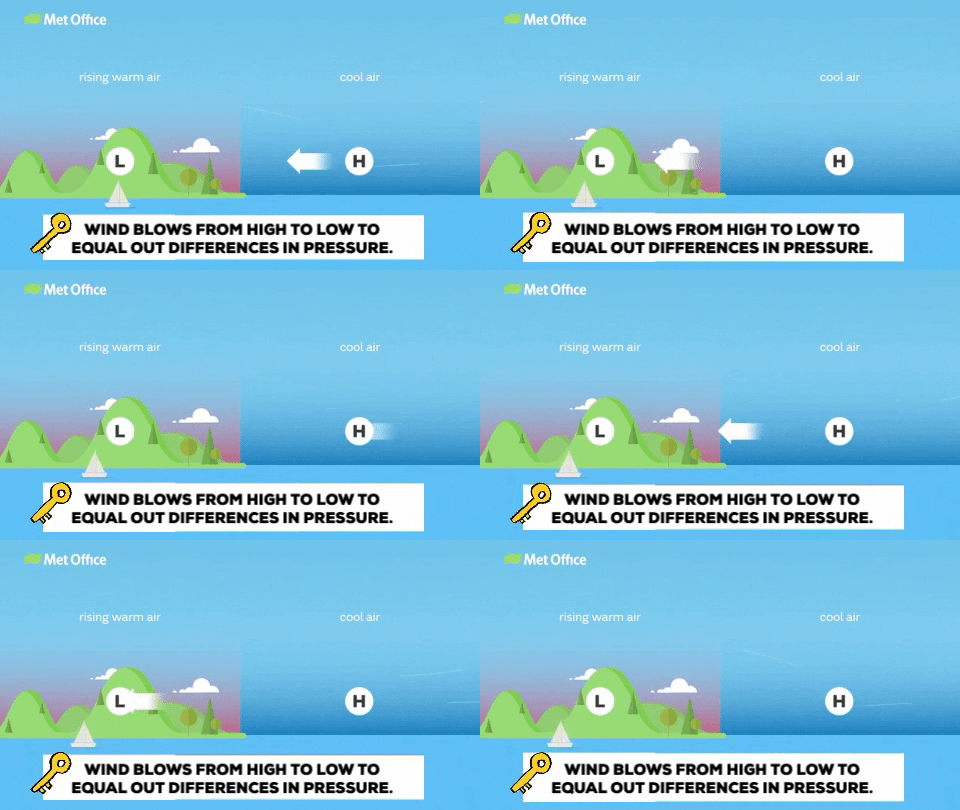
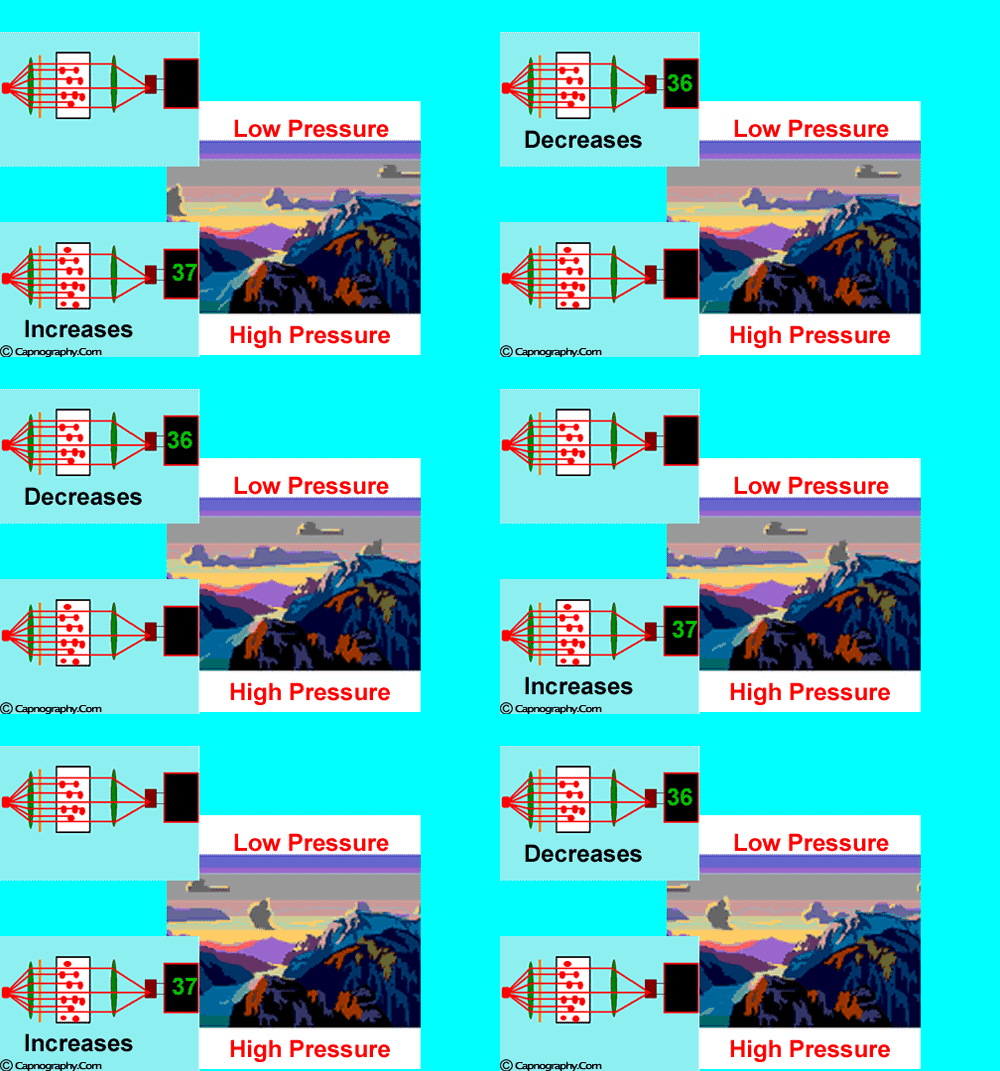
Air pressure is the weight of the molecules in a large mass of air. When molecules of air are cool, they are closer together than when they are warm. Cool air masses have high pressure, or more weight. Warm air masses have low pressure, or less weight.
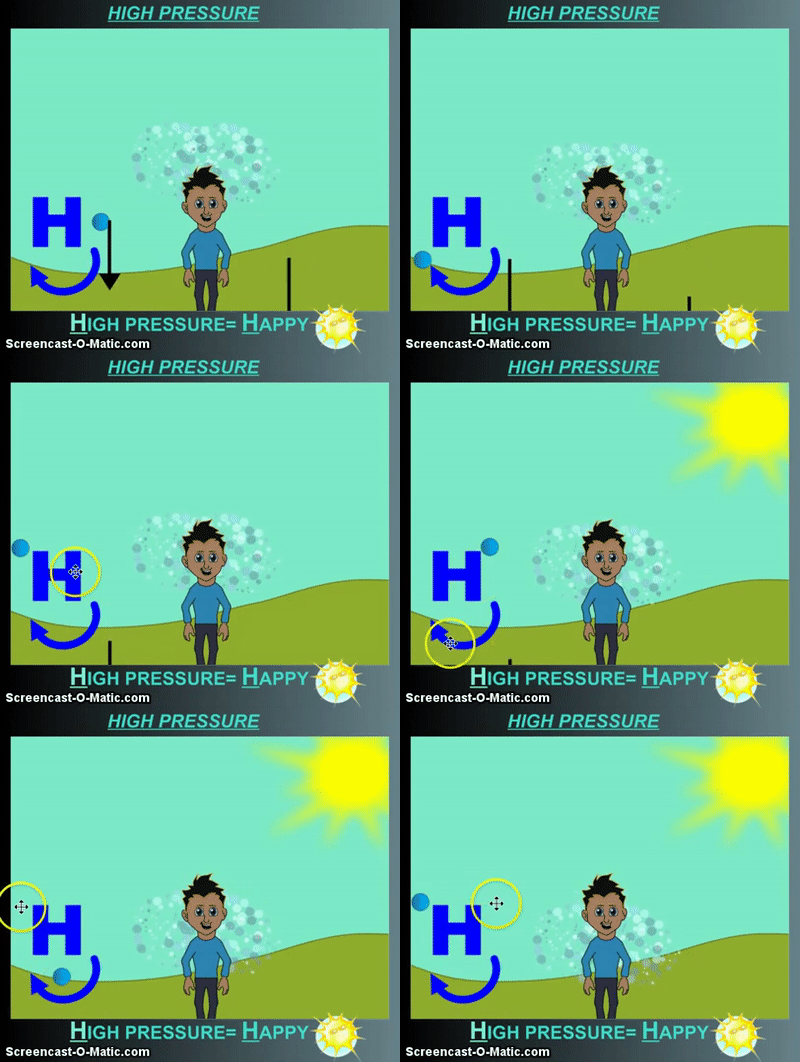
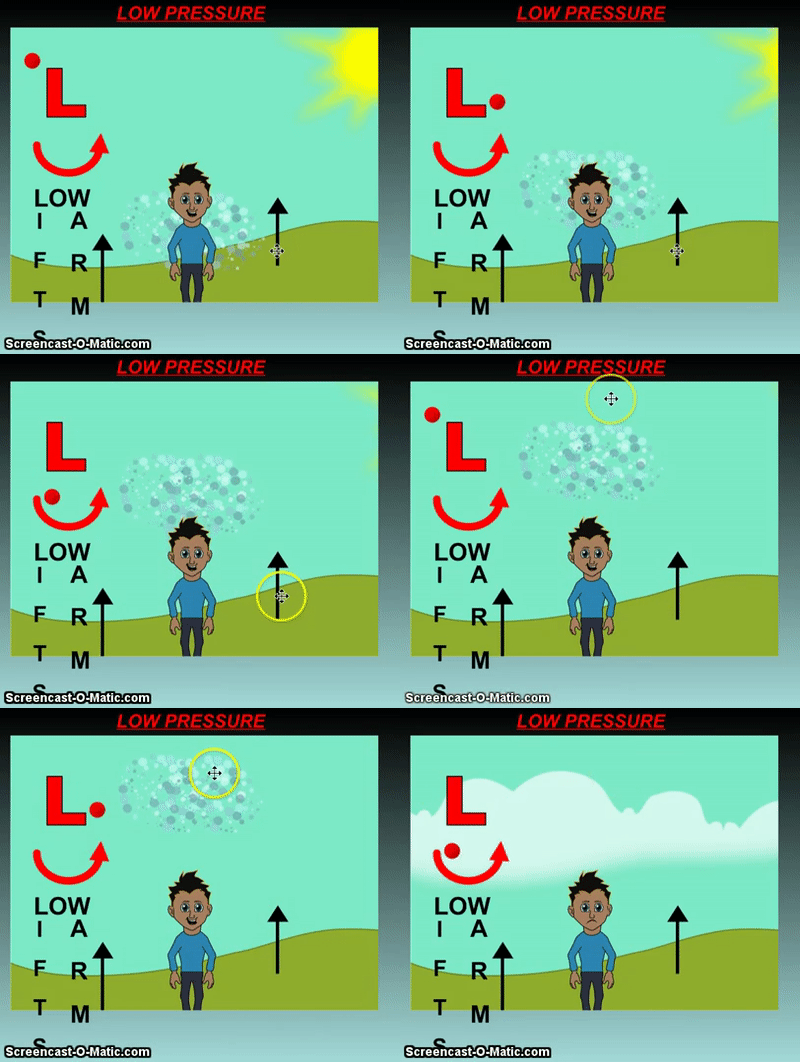
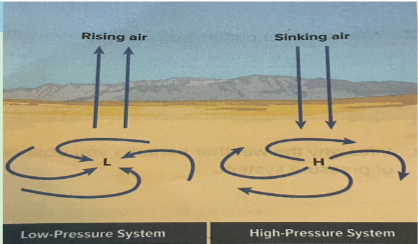
Warm air also puts less pressure on the Earth than cool air. As a result, air in a low-pressure system rises. Cool air puts greater pressure on the Earth than warmer air. As a result, air in a higher pressure system sinks.
1
1
Cold air __________ and sinks. When cool air condenses like this, more weight or __________ is put on the Earth.
Warm air __________ and rises. When hot air expands it puts __________ on the Earth.
In the Northern Hemisphere, Earth's rotation causes winds to blow counterclockwise around a low-pressure system and converge. Around a high pressure system, the winds blow clockwise and diverge.
In a High Pressure System, cool, dense air sinks and clouds cannot form. High pressure systems often bring clear skies and fair weather. In a lower pressure system, warm less dense air rises. This rising air cools as water vapor in the air condenses. Therefore, a low-pressure system is often associated with cloudy weather and precipitation.
1
1
In the Northern Hemisphere, Earth's rotation causes winds to blow __________ and converge.
Around a high pressure system, the winds blow __________ and diverge.
Diverge means to __________.
1
Use the text to above to help you complete the table
Low Pressure System | High Pressure System | |
|---|---|---|
cool, dense air sinks and clouds cannot form | ||
rising air cools as water vapor in the air condenses | ||
cloudy weather and precipitation | ||
clear skies and fair weather |

1
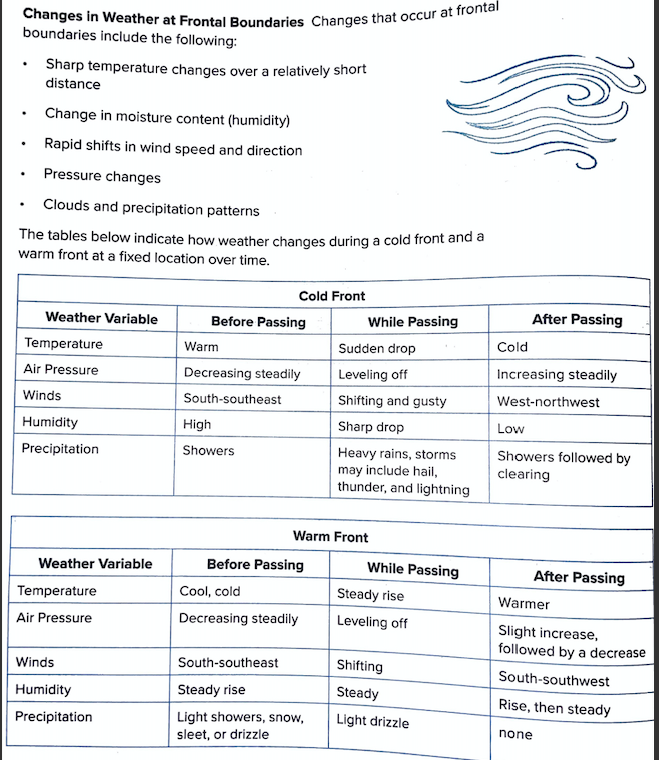
A) Create a diagram of the cold fronts before, while, and after passing.
B) Create a diagram of the warm fronts before, while, and after passing.
A) Create a diagram of the cold fronts before, while, and after passing.
B) Create a diagram of the warm fronts before, while, and after passing.
6
Are masses are large regions of air that have similar _______ from the surrounding area. Air masses can form over places like warm tropical oceans, cold dry _______ regions, or even hot and dry deserts. As air masses move over different regions it will _______ take on the characteristics of that new region and begin to change.
As air masses move across the Earth, they will run _______ each other. The boundaries between these two air masses are referred to as _______ .
Fronts are labeled in reference to the relative temperature of the air that is _______ and replacing the existing air mass.
There are 4 types of fronts: cold front, warm front, stationary front, and occluded front.
1
A warm front occurs when a warm air mass _______ an air mass of a colder temperature. Warm _______ usually move slowly, around 10 to 25 miles per hour. They have a gradual slope that will slide over the _______ of a cooler air mass and move it out of the area.
Warm fronts contain high _______ and have more stratoform or layered clouds along the frontal boundary. Drizzle and decreased visibility will be present as temperatures rise. Once the front passes, rain _______ are possible followed by a gradual clearing.
1
A cold front occurs when cold _______ air overtakes warmer air. Cold fronts move _______ than warm fronts, averaging 25 to 35 miles per hour, but can go as fast as 60 miles per hour.
Cold fronts stay _______ to the ground and they have a steeper angle than a warm front. They will move across the ground and _______ existing air at a very rapid rate. This rapid upward motion will cool the air and form cumulus clouds, which could eventually turn into _______ or even a line of thunderstorms called a squall line. Once the front passes, the weather will clear and improve.
4
Stationary front
A stationary front occurs when two air masses meet but _______ one moves the other out of the way. Stationary fronts can have a combination of weather from both a warm and cold front. These fronts can oscillate but will generally _______ around for several days before one of the air masses pushes the other air mass out of the way.
Occluded front
They form when a fast moving cold front _______ up to a slower moving warm front. The cold front will then lift the warm front and eventually interact with the air that is in front of the warm front. This stacking of fronts can give rise to a variety of weather _______ from fog to thunderstorms.

1
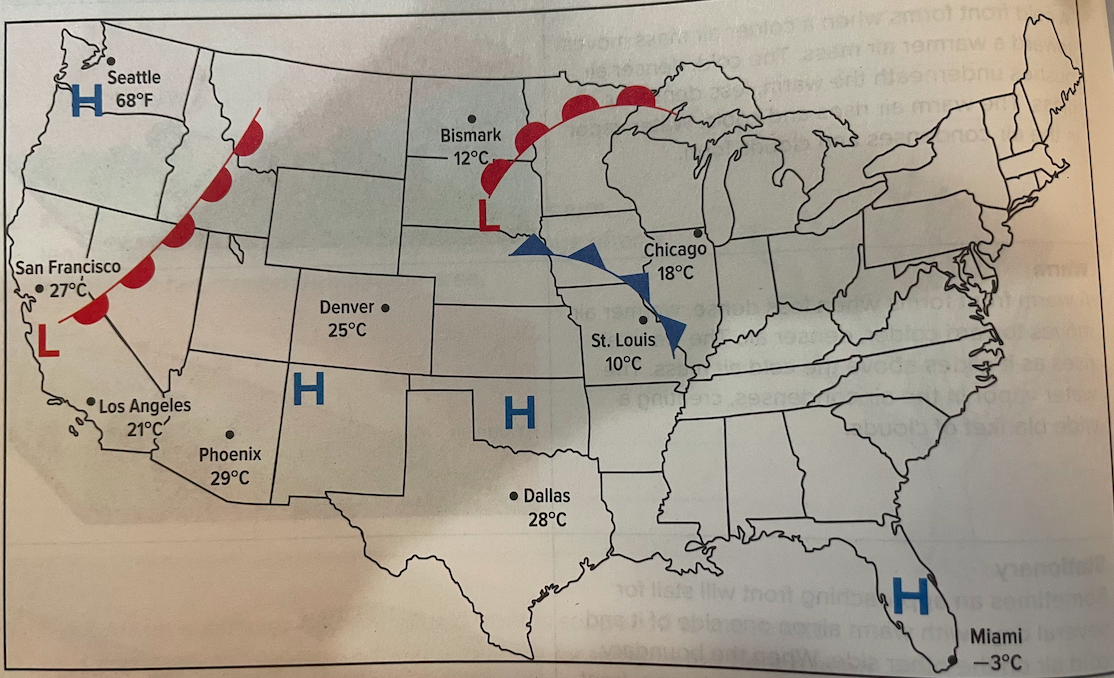
Which of these cities is experiencing clear dry weather conditions?
1
Which of these cities are probably experiencing stormy conditions or rainy weather conditions?
1
What type of front passed through St. Louis?
Explain the type of weather they experienced as the front passed.
What type of front passed through St. Louis?
Explain the type of weather they experienced as the front passed.
1
What type of front passed through San Francisco? Explain the type of weather they experienced before and after the passing of the front.
1
A) Look it up! What does a negative number on the Celsius scale represent?
B) The weather station in Miami reported their temperature reading as - 3 degrees C. Argue weather you think this temperature was reported in error.
A) Look it up! What does a negative number on the Celsius scale represent?
B) The weather station in Miami reported their temperature reading as - 3 degrees C. Argue weather you think this temperature was reported in error.