Match the following functions with the types of organic molecules they belong in. The functions may match to more than one molecule type.
provide energy for the cell
component of cell membranes
catalyze chemical reactions
store genetic information
structure of cell walls
Nucleic Acids
Proteins
Carbohydrates
Lipids
Asemmisa {{asɛmmisaAhyɛnsode}}
2.
Match the following types of molecules with the correct group of macromolecules.
waxes
glucose
fructose
DNA Polymerase
amylase
sterols
DNA
RNA
fat
Carbohydrates
Lipids
Protein
Nucleic Acids
Asemmisa {{asɛmmisaAhyɛnsode}}
3.
Which of the following are true statements about enzymes?
Asemmisa {{asɛmmisaAhyɛnsode}}
4.
What are some examples of organic and inorganic molecules? Classify each object into the proper group.
ethanol (C2H5OH)
water (H2O)
carbon dioxide (CO2)
methane (CH4)
nitrates (NO31-)
diamonds (C)
disulfur (S2)
glycine (an amino acid; C2H5NO2)
Organic
Inorganic
Asemmisa {{asɛmmisaAhyɛnsode}}
5.
Enzymes are biological that speed up biochemical reactions. Most enzymes are , but some are made of RNA. Catalysts make chemical reactions take place at rates than they would without the enzyme. There are hundreds of different kinds of enzymes. Enzymes are specific to a or group of chemical reactions. Like all catalysts, enzymes speed up reactions by lowering the amount of energy needed to get them going, called the .
Asemmisa {{asɛmmisaAhyɛnsode}}
6.
Cells use to power most cellular activities that require work. ATP is most often used to drive an reaction, or one that releases energy. In substrate-level phosphorylation, ATP is formed when a is transferred directly to ADP. ATP is synthesized by in oxidative phosphorylation. ATP synthesis is driven by reactions
Mmuae Afoforo a Wobɛpaw:
endergonic
ATP
NAD+
phosphate group
oxygen
ATP synthase
NADH
exergonic
reduction
hydrogen ion
10
Asemmisa {{asɛmmisaAhyɛnsode}}
7.
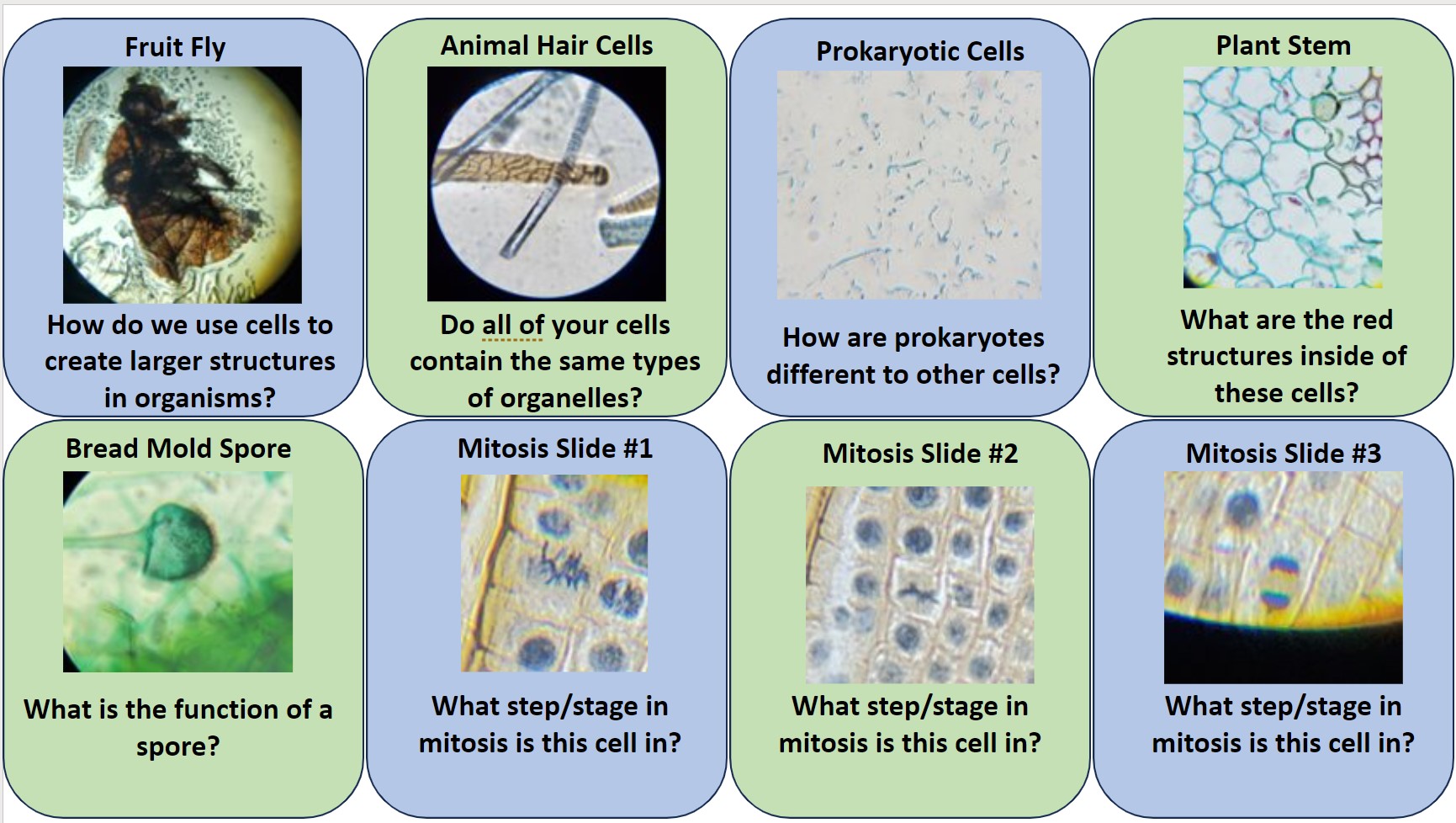
Upload an image to this question of your sketches of the slides and the written answers for your questions. If you did not get to all of the slides, reference the image for what you are sketching and are meant to answer.
Asemmisa {{asɛmmisaAhyɛnsode}}
8.
Classify the following as a characteristic of prokaryotic, eukaryotic, or both.
vacuoles
Golgi apparatus
ribosomes
nucleoid
mitochondria
cell membrane
Prokaryotic
Eukaryotic
Both
Asemmisa {{asɛmmisaAhyɛnsode}}
9.
Which of the following are components of the cell theory?
Asemmisa {{asɛmmisaAhyɛnsode}}
10.
The cell theory of life is a fundamental concept in biology. Choose the correct word or phrases that explain how humans satisfy the cell theory.
Like all living things, the organs and tissues in the human body are made up of that form individual living units that can function independently from one another. Thus, they are the smallest in our body. All human children develop when unite to form a new organism.
Asemmisa {{asɛmmisaAhyɛnsode}}
11.
A lacks a membrane-bound nucleus. In contrast, a has a distinct membrane-bound nucleus. This nucleus contains of DNA. In contrast, in prokaryotic cells the DNA is not enclosed and usually is organized as a chromosome. Furthermore, prokaryotic cells lack other membrane-bound . Eukaryotic cells contain well-defined organelles that are enclosed in .
Asemmisa {{asɛmmisaAhyɛnsode}}
12.
Match the following organelles with their function.
Draggable item
arrow_right_alt
Corresponding Item
nucleus
arrow_right_alt
serves as a barrier to unwanted chemicals; controls which substances move into and out of the cell.
lysosomes
arrow_right_alt
the fluid part of a cell
mitochondria
arrow_right_alt
holds the genetic material of the cell
endoplasmic reticulum
arrow_right_alt
a macromolecular complex enabling efficient packaging of DNA
chloroplasts
arrow_right_alt
convert chemical energy obtained from food into energy-rich compounds
Golgi apparatus
arrow_right_alt
produce sugars and starches via the process of photosynthesis
chromatin
arrow_right_alt
contain digestive enzymes that break down food into simpler molecules
cytosol/cytoplasm
arrow_right_alt
where proteins are modified and exported to the rest of the cell.
cell membrane
arrow_right_alt
will hold ribosomes on its surface (rough) and are involved in detoxifying chemicals (smooth)
Asemmisa {{asɛmmisaAhyɛnsode}}
13.
Mitochondria supply to the cell. They do this through a process called . In cellular respiration, oxygen combines with food molecules to release energy in the form of . Cells use this ATP to provide energy necessary for key cellular processes. These, in turn, drive the activities of tissues, such as and nerve impulses.
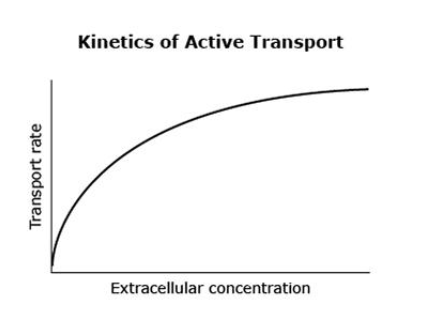
The kinetics of transport is the speed at which a cell transports a solute across a membrane. Active transport kinetics tends to have the shape of the graph shown below. Choose the best words or phrases that explain why the graph appears this way.
2
Asemmisa {{asɛmmisaAhyɛnsode}}
14.
In active transport, there is a that is reached at very high extracellular concentrations of solute. This is because solutes move through during active transport. Since there is a available in the cell membrane, they can only transport a at a given time.
Asemmisa {{asɛmmisaAhyɛnsode}}
15.
Classify the following as characteristics of either prokaryotic or eukaryotic cell division by dragging them to the correct column.
A growth period separates the DNA replication and the actual cell division.
Division involves mitosis to associate a complete set of chromosomes with each daughter nucleus.
Divides by binary fission.
A single chromosome replicates, and two copies attach to either end of the cell membrane.
Prokaryotic
Eukaryotic
Asemmisa {{asɛmmisaAhyɛnsode}}
16.
Eukaryotic chromosomes are packaged into a condensed structure made of , whereas chromosomes of prokaryotic cells are not packaged this way.
Asemmisa {{asɛmmisaAhyɛnsode}}
17.
Match the following terms or processes with the best definition.
Draggable item
arrow_right_alt
Corresponding Item
G2
arrow_right_alt
Cell grows & prepares for DNA replication.
G1
arrow_right_alt
DNA replication occurs.
M
arrow_right_alt
Cell checks for DNA erros & prepares to divide.
S
arrow_right_alt
Cell division takes place and is completed.
Asemmisa {{asɛmmisaAhyɛnsode}}
18.
Read the following questions. Select those that could be answered through an investigation of chromosome structure.
Asemmisa {{asɛmmisaAhyɛnsode}}
19.
Cell division describes the process by which one cell duplicates into two daughter cells. In prokaryotes, this is referred to as or prokaryotic fission. Cell division in all eukaryotes involves a process called . In mitosis, the replicated is divided between the two .
Asemmisa {{asɛmmisaAhyɛnsode}}
20.
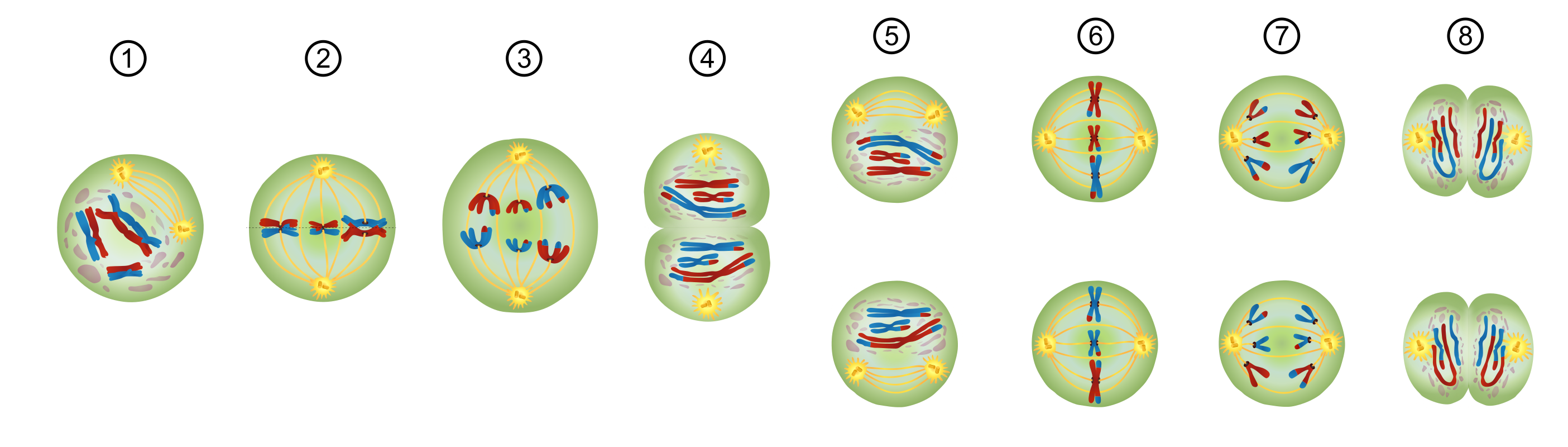
The cell cycle is responsible for the reproduction of cells in the body. Place the steps of the cell cycle in order.
Asemmisa {{asɛmmisaAhyɛnsode}}
21.
In a diagnosis of cancer, a doctor ordered a karyotype of a suspect tissue. The karyotype is returned as shown below, and it confirms his diagnosis of cancer. How does the karyotype confirm the doctor’s diagnosis?
Asemmisa {{asɛmmisaAhyɛnsode}}
22.
Which of the following can engage in sexual reproduction? Select all that apply.
Asemmisa {{asɛmmisaAhyɛnsode}}
23.
Complete the sentences to describe the steps in sexual reproduction.
Sexual reproduction begins with meiosis, which results in male and female haploid . Sperm cells from the male organism fuse with the female egg cell in a process called . The resulting diploid cell, the , contains genetic information from both parents. This cell continues to divide via as it develops into an embryo and, later, a fetus.
Asemmisa {{asɛmmisaAhyɛnsode}}
24.
Match each phrase to the correct category.
two daughter cells
crossing over occurs
four daughter cells
daughter cells are haploid
daughter cells are diploid
Mitosis
Meiosis
Asemmisa {{asɛmmisaAhyɛnsode}}
25.
Asexual and sexual reproduction share many similarities and have many differences. Study the characteristics listed and then drag each into the correct column to classify it as either an asexual reproduction characteristic, a sexual reproduction characteristic, or both.
requires more energy input
offspring are genetically different from parent
produces offspring
involves one parent
involves two parents
involves cell division
no formation of gametes
essential for survival of species
offspring are genetically identical to parent
Asexual Reproduction Characteristic
Both Asexual Reproduction and Sexual Reproduction Characteristics
Sexual Reproduction Characteristic
Asemmisa {{asɛmmisaAhyɛnsode}}
26.
Select the correct statements that belong to either haploid or diploid cells.
4 pairs of homologous chromosomes
4 non-homologous chromosomes
Gametes
Somatic cells
1N
2N
Diploid
Haploid
1
1
1
1
1
1
1
1
Asemmisa {{asɛmmisaAhyɛnsode}}
35.
The process of forming sperm is called . The process of forming an egg is called . Ova and sperm serve the single purpose of producing an offspring. The first step to this goal is .
Asemmisa {{asɛmmisaAhyɛnsode}}
36.
Non-disjunction can lead to , which is a condition in which an offspring has an abnormal number of chromosomes. is the condition in which a daughter cell is missing a chromosome or part of a chromosome from one parent. is a condition in which a daughter cell receives an additional chromosome from one of the parent cells.
Asemmisa {{asɛmmisaAhyɛnsode}}
37.
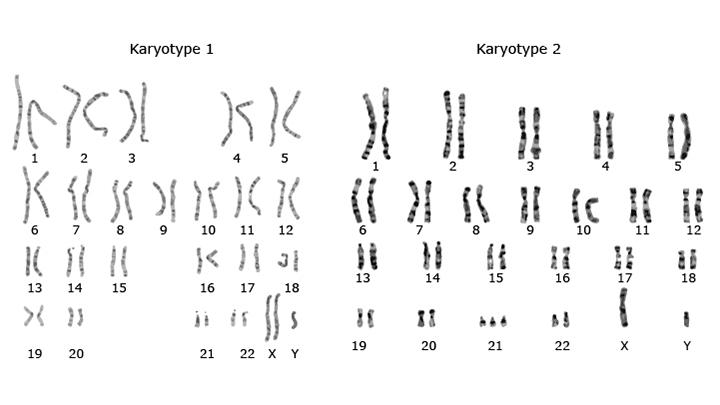
Two human karyotypes are shown. Analyze each karyotype, and then choose the correct terms to complete the blanks in the summary paragraph.
Both karyotypes show examples of how occurring during meiosis can lead to , a condition in which one or more chromosome numbers are not normal. The individual corresponding to karyotype 1 has a condition known as , which is an example a(n) disorder. The individual corresponding to karyotype 2 has a condition known as , which is an example of a type of .
Mmuae Afoforo a Wobɛpaw:
aneuploidy
sex-linked
Down Syndrome
trisomy
Klinefelter Syndrome
non-disjunction
Asemmisa {{asɛmmisaAhyɛnsode}}
38.
The cellular structures and functions of organisms may be unique and specialized.
Asemmisa {{asɛmmisaAhyɛnsode}}
39.
The muscular system interacts with other body systems to perform life’s functions. Classify each of the following terms as belonging to the muscular system, another body system, or both by dragging them to the correct box.
adrenal gland
cell
heart
bone
neuron
vertebrae
biceps
ligament
tendon
connective tissue
cartilage
trachea
Muscular System
Other Body System
Both
Asemmisa {{asɛmmisaAhyɛnsode}}
40.
Match the following organ system with an example of its function.
Draggable item
arrow_right_alt
Corresponding Item
respiratory
arrow_right_alt
Oxygen, nutrients, wastes, and chemical messengers are transported.
circulatory
arrow_right_alt
Nutrients, salts, and water are broken down and absorbed
digestive
arrow_right_alt
Growth, development, and metabolism are regulated.
integumentary
arrow_right_alt
Fluid levels are maintained, and waste is eliminated.
endocrine
arrow_right_alt
Responses to changes in the internal and external environment are regulated.
excretory
arrow_right_alt
Gases such as O2, CO2, and water vapor are transferred.
nervous
arrow_right_alt
Body temperature is regulated, and a barrier function is fulfilled.
Asemmisa {{asɛmmisaAhyɛnsode}}
41.
Multicellular organisms are organized in a hierarchical manner. Match the organism component with the correct level in the hierarchy.
Heart
Mitochondria
Xylem tracheid
Triceps
Neuron
Smooth Muscle
Organelle
Cell
Tissue
Organ
Asemmisa {{asɛmmisaAhyɛnsode}}
42.
Organs in the digestive system sometimes fail. Doctors can diagnose this by analyzing a patient’s symptoms. Match each organ to a symptom that would occur if it failed.
Draggable item
arrow_right_alt
Corresponding Item
Small intestines
arrow_right_alt
The patient cannot eat through the mouth.
Stomach
arrow_right_alt
The patient cannot properly reabsorb water from food.
Esophagus
arrow_right_alt
The patient cannot store food for later digestion.
Large intestines
arrow_right_alt
The patient cannot enzymatically break down proteins fully.
Asemmisa {{asɛmmisaAhyɛnsode}}
43.
1. A breastfeeding mother produces oxytocin and prolactin, which stimulate milk production. The action of her baby nursing at the mother’s breast stimulates the production of more oxytocin and prolactin, which stimulate more milk production.
2. When blood glucose rises, the pancreas releases insulin; when blood glucose concentration falls, the pancreas stops releasing insulin.
3. The adrenal gland produces adrenaline in response to a threatening situation. Adrenaline increases alertness and sends energy to muscles to prepare to fight or run away from danger. When the danger is averted, the adrenal gland stops producing adrenaline.
4. Wounded skin and blood cells send out chemical signals that increase the flow of blood, which causes swelling in the area. This sends out more signals that increase the flow of blood and blood products to the area, which increase the chemical signals.