Twa kɔ nsɛm atitiriw so
Log in
Sign up for FREE
arrow_back
Laabri

Move over - Lab

star
star
star
star
star
Last updated over 1 year ago
6 Nsɛmmisa

You are the first one on the school bus in the morning. After a few more stops, you notice that the bus is rather noisy. By the time you get to school, every seat is taken. Like the school bus, space on Earth is limited.

1
1
1
1
1

Procedure:

A. In the Data and Observations section below, draw a square that is 10 cm on each side. The square represents 1 km2 of land. In 1965, an average of 22 people lived on 1km2 of land. Choose a color and draw 22 small circles inside your square to represent this.

B) In 1990, the average was 35 people per 1 km2 of land. Choose a new color and add 13 circles to illustrate this increase.

C) In 2025, the estimated number of people will be 52 per 1km2 of land. Choose a new color and add enough circles to represent this increase.

Asemmisa {{asɛmmisaAhyɛnsode}}
2.

A) Draw a square that is 10 cm on each side. The square represents 1 km2 of land. In 1965, an average of 22 people lived on 1km2 of land. Choose a color and draw 22 small circles inside your square to represent this.

B) In 1990, the average was 35 people per 1 km2 of land. Choose a new color and add 13 circles to illustrate this increase.

C) In 2025, the estimated number of people will be 52 per 1km2 of land. Choose a new color and add enough circles to represent this increase.

Asemmisa {{asɛmmisaAhyɛnsode}}
3.

Prepare a bar graph that shows population density for these years. Plot population on the vertical axis and year on the horizontal axis.

1965 - 22 people

1990 - 35 people

2025 - 52 people

Asemmisa {{asɛmmisaAhyɛnsode}}
4.

Explain the changes in Earth's population over time reflected in your bar graph? What is the general trend?

Asemmisa {{asɛmmisaAhyɛnsode}}
5.

What impact might this have on land?

Land as a resource.

No matter where you live, you and all living things use land for living space. Living space includes natural habitats, as well as the land on which buildings, sidewalks, parking lots, and streets are built.

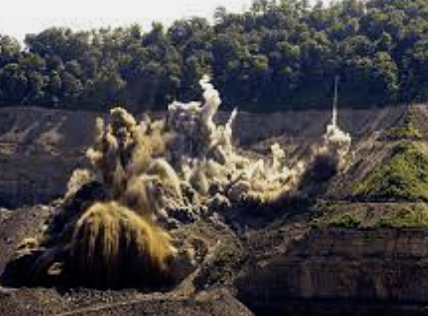
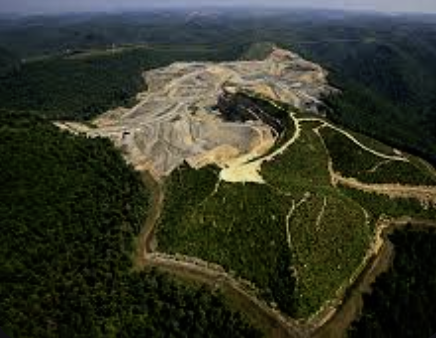
People also use soil for growing crops and forests to harvest wood for making furniture, houses, and paper products. They mine minerals from the land, sometimes removing entire mountaintops, as shown to the right. In each of these cases, people use land to meet their needs.
1