Twa kɔ nsɛm atitiriw so
Log in
Sign up for FREE
arrow_back
Laabri

Scientific Inquiry #07 (Evolution Review)

star
star
star
star
star
Last updated about 1 month ago
16 Nsɛmmisa
1
Asemmisa {{asɛmmisaAhyɛnsode}}
13.

Ɛhia
0.5
Ɛhia
0.5
Ɛhia
0
Question 1
01:15
keyboard_arrow_down
0.25
Question 2
01:28
keyboard_arrow_down
Ɛhia
0.25
Question 3
01:54
keyboard_arrow_down
Ɛhia
0.25
Question 4
02:00
keyboard_arrow_down
Ɛhia
0.25
Question 5
02:14
keyboard_arrow_down
0.25
Question 6
02:23
keyboard_arrow_down
0.25
Question 7
02:27
keyboard_arrow_down
0.25
Question 8
02:31
keyboard_arrow_down
0.25
Question 9
03:18
keyboard_arrow_down
0.25
Question 10
03:58
keyboard_arrow_down
0.25
Question 11
04:35
keyboard_arrow_down
0.25
Question 12
04:50
keyboard_arrow_down
0.25

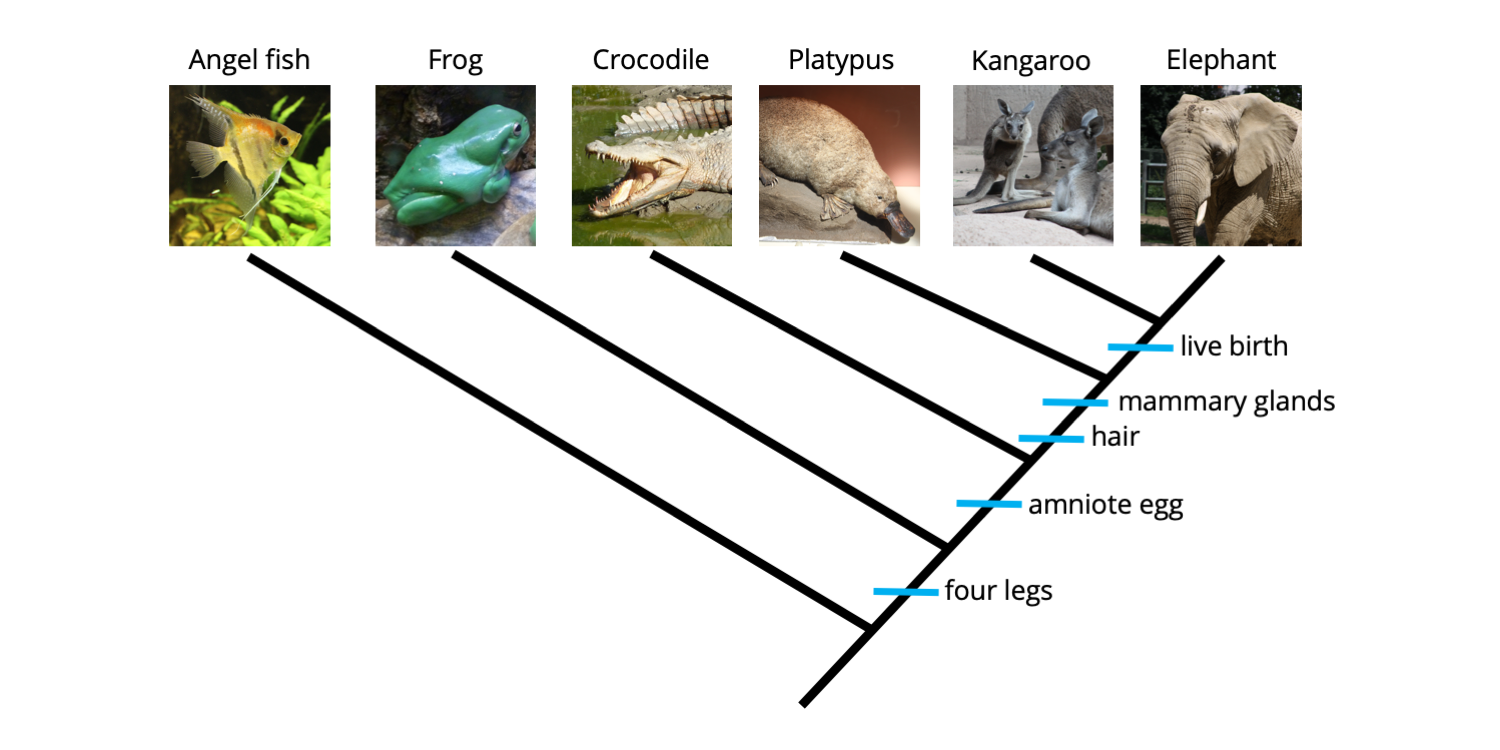
Using the evolutionary tree above, which two organisms share the most recent common ancestor? Explain why you chose your answer.

Asemmisa {{asɛmmisaAhyɛnsode}}
14.

I can explain with evidence how natural selection leads to adaptation of populations.

Review Materials

OLS Readings

  • 2.01 Adaptations

  • 2.02 Genetic Variation

  • 2.03 Natural Selection

  • 2.04 Allele Frequency in a Population

CK12 Population Genetics

Understanding Evolution

  • Natural Selection

  • Natural Selection at Work

  • Adaptation

Asemmisa {{asɛmmisaAhyɛnsode}}
15.

I can support with evidence that common ancestry and biological evolution are supported by multiple types of evidence.

Review Materials

OLS Readings

  • 2.05 Evolution and Populations

  • 2.07 Genetic Isolation

  • 2.08 Geographic Isolation

  • 2.10 Evidence for Evolution -- Molecular Genetics

  • 2.11 Evidence for Evolution -- Anatomy

  • 2.12 Evidence for Evolution -- Earth's History and Fossils

CK12

  • Mutations

  • Comparative Anatomy

Understanding Evolution

  • Trees not Ladders

  • How We Know What Happened When

Asemmisa {{asɛmmisaAhyɛnsode}}
16.

Would you like to be invited to a small group intervention to work on 2.14 Unit 2 Assessment? You will be required to actively participate through chat, mic, and/or webcam.

Asemmisa {{asɛmmisaAhyɛnsode}}
1.

This diagram is a best guess at how these organisms may be related.

Asemmisa {{asɛmmisaAhyɛnsode}}
2.

The base of the tree represents

Asemmisa {{asɛmmisaAhyɛnsode}}
3.

What occurs at each branch point?

Asemmisa {{asɛmmisaAhyɛnsode}}
4.

The branches are defined by the differences in the traits of the descendants.

Asemmisa {{asɛmmisaAhyɛnsode}}
5.

What trait evolved in the lineage after the first branch point?

Asemmisa {{asɛmmisaAhyɛnsode}}
6.

What trait evolved in the lineage after the second branch point?

Asemmisa {{asɛmmisaAhyɛnsode}}
7.

What trait evolved in the lineage after the third branch point?

Asemmisa {{asɛmmisaAhyɛnsode}}
8.

What trait evolved in the lineage after the last branch point?

Asemmisa {{asɛmmisaAhyɛnsode}}
9.

Which two organisms share the closest common ancestor?

Asemmisa {{asɛmmisaAhyɛnsode}}
10.

Rotating the order of the organisms at the top of the tree changes the relationships between them.

Asemmisa {{asɛmmisaAhyɛnsode}}
11.

What evidence supports the order of the organisms?

Asemmisa {{asɛmmisaAhyɛnsode}}
12.

Evolutionary trees are 100% correct and are not redrawn.