Communist China
star
star
star
star
star
Last updated over 2 years ago
10 questions
Required
1
What issues did China struggle with from 1911 to 1928?
Required
1
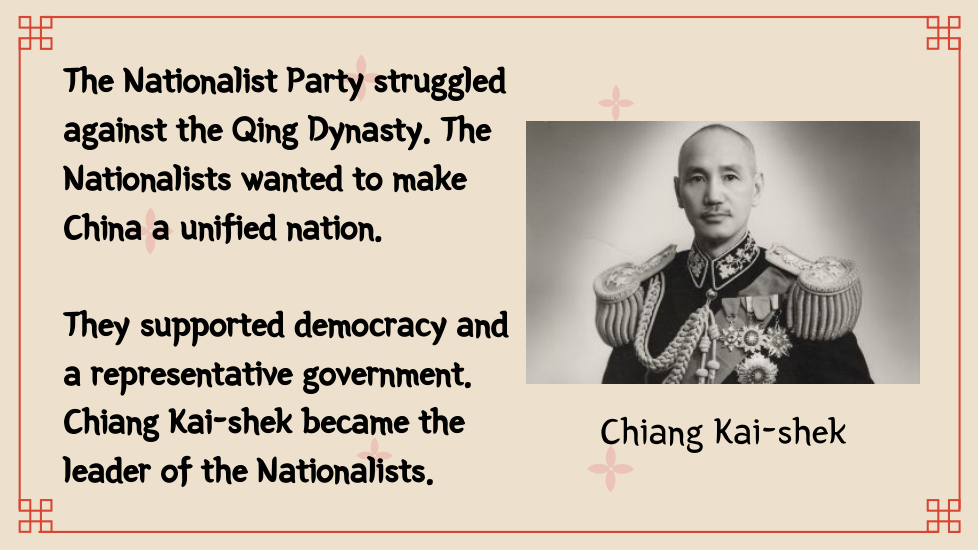
The Nationalist Party struggled against the Qing Dynasty. The Nationalists wanted to make China a unified nation. They supported ______________ and a representative government. ____________________ became the leader of the Nationalists.
Other Answer Choices:
Marshal Peng Dehuai
monarchy
totalitarianism
Kim Il-sung
democracy
Chiang Kai-shek
Required
1
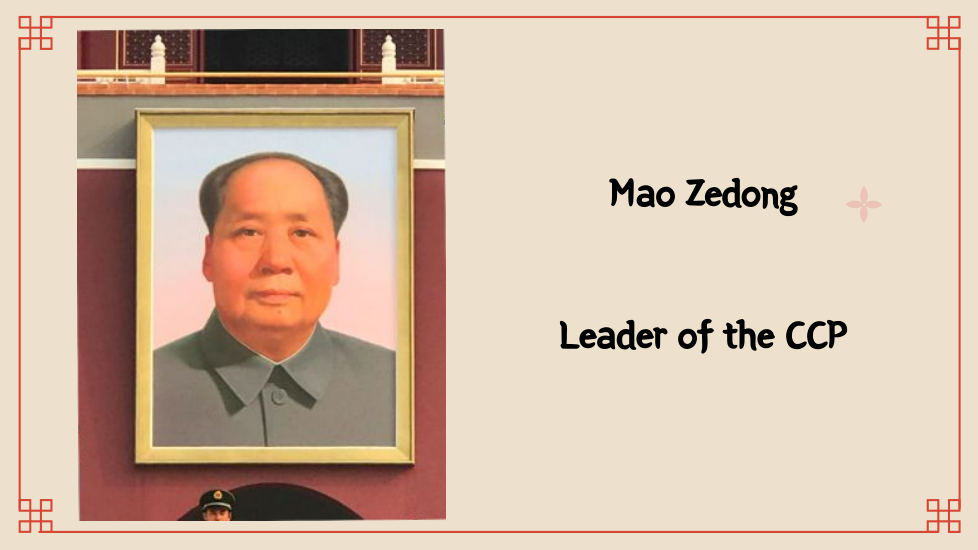
Who was the leader of the Chinese Communist Party?
Required
1
How did the Communist treat the peasants? Why?
A group of young Chinese formed the Chinese Communist Party (CCP) in 1921. During the late 1920s and the 1930s, Mao Zedong emerged as the leader of the Chinese Communists. Mao believed that the Communist would succeed in China only by winning the support of the peasants. He insisted that Communist forces treat peasants fairly and politely. Unlike other Chinese armies, the Communist paid the peasants for the food their forces required. With the support of the peasants, Mao’s army grew in numbers.
Required
0
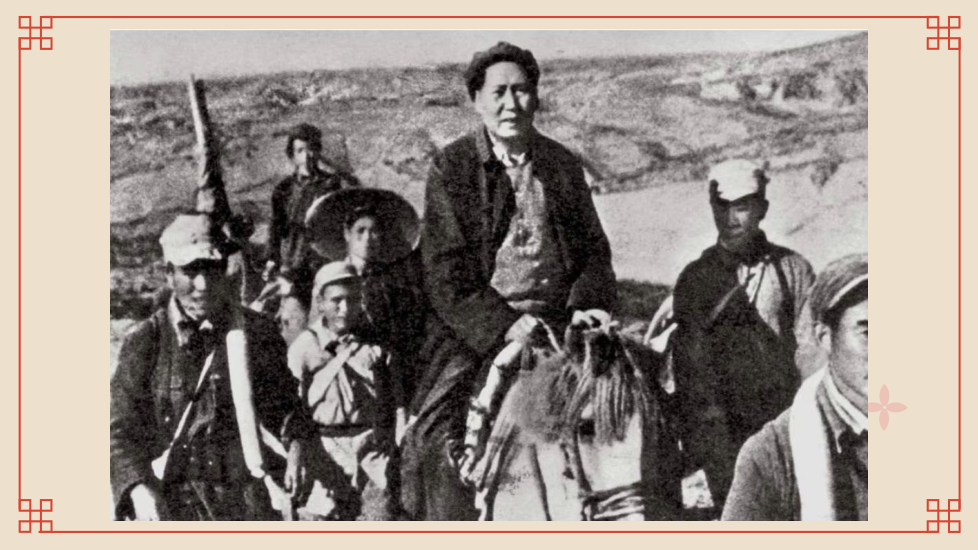
What was the Long March?
Required
1
What was the impact of the Long March?
Required
1
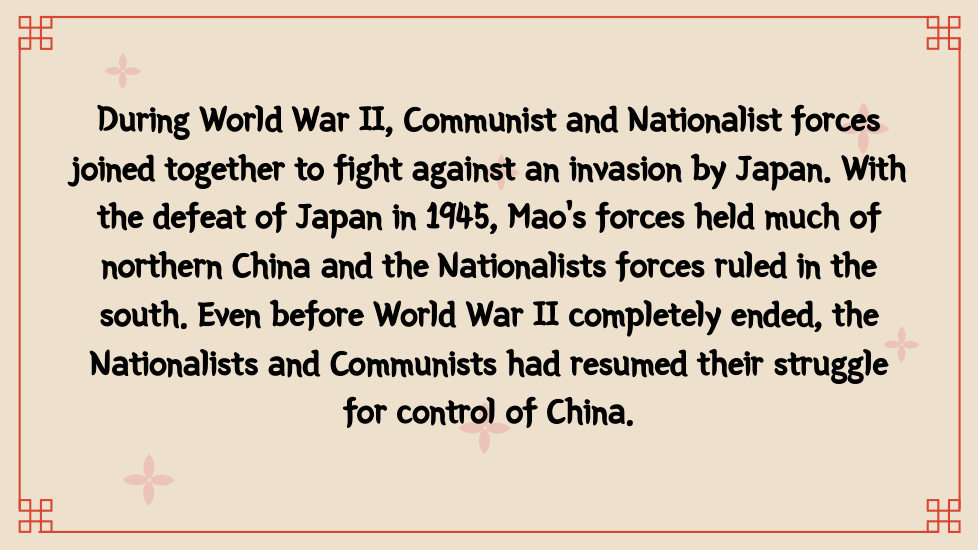
During World War II, Communist and Nationalist forces continued fighting each other while also fighting against an invasion by Japan.
Required
1
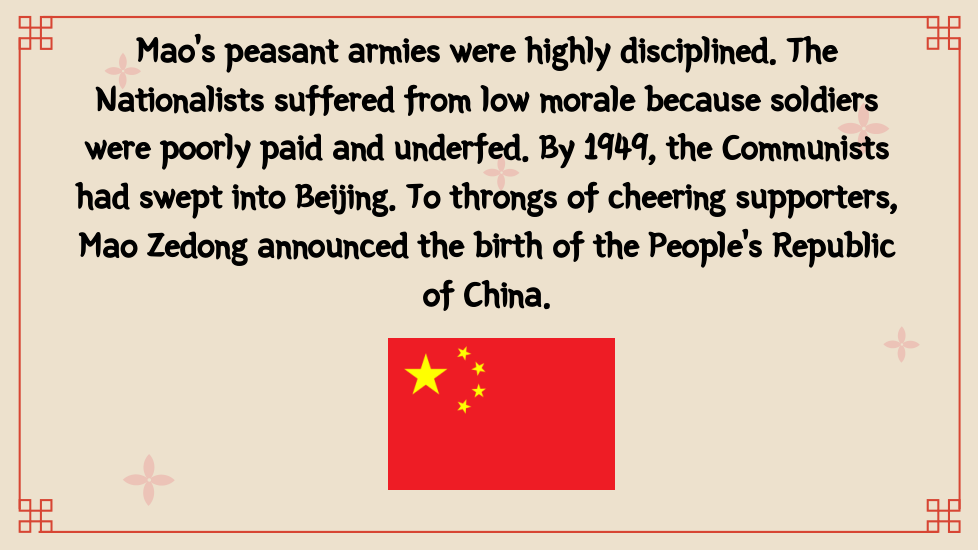
How did the Nationalist and Communist armies differ?
Required
1
Describe the government of the new People’s Republic of China.
Once in power, the Chinese Communists wrote a new constitution. On paper, it set up a National People’s Congress, permitted free elections, and protected other democratic rights. In practice, China became a one-party dictatorship. Communist party members held all the important jobs and controlled the government and the economy. Supported by the army, the Communists silenced critics and enforced their own views. As head of the Chinese Communist party, Mao Zedong became chairman of the People’s Republic of China.
Required
1
What problems did the new Communist government face?