Wednesday 4/30 - ER Unit Test

Last updated 14 days ago
17 questions
Use the information from the following scenario to answer questions 1 – 4.
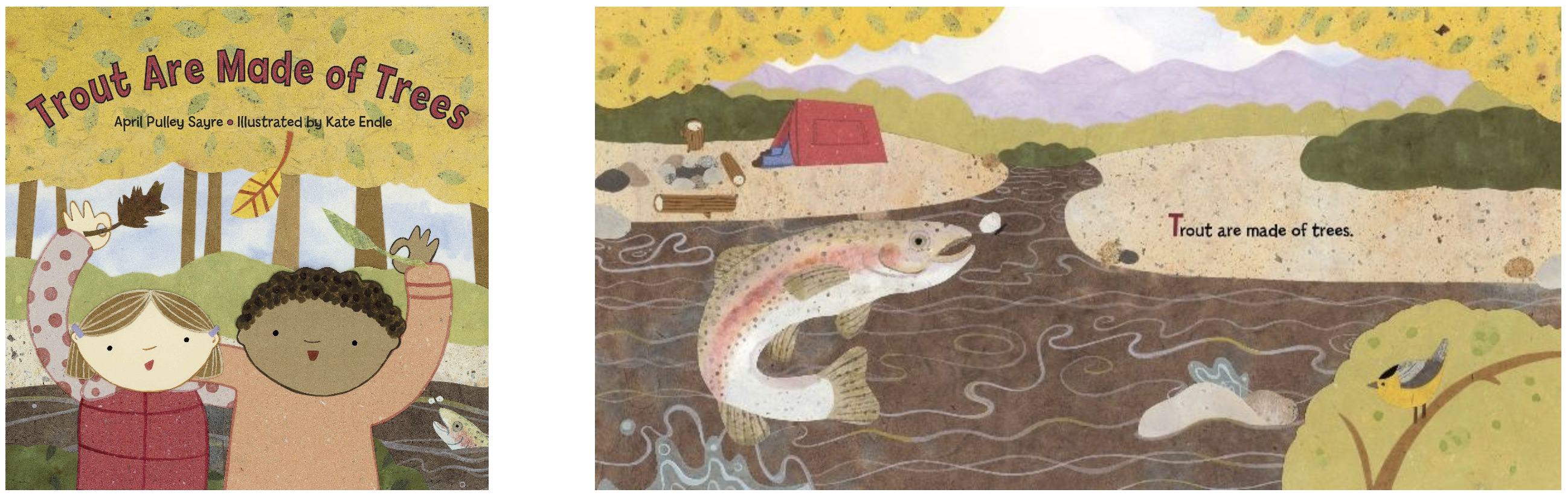

You and your mother are walking through a bookstore, and you both see a book in the children’s section. The title of the book is “Trout Are Made From Trees.” A trout is a type of fish. Your mother turns to you and says “how could a trout come from a tree?” You think and realize that it is true! You decide to draw what your science teacher calls a model – a really detailed picture that shows your thinking.
3
Fill out this table to describe how each organism in this ecosystem must get its energy (1 point each):

Trout (fish) - How does the trout get energy? _______
Aquatic insects- How do the aquatic insects get energy? _______
Alder tree leaves - How does the alder tree get energy? _______
3

Draw a food web with the organisms trout, alder tree leaves, aquatic insects to correctly show the energy relationships (3 points).
  • organisms are in the correct order
  • arrows correctly show the flow of energy
  • all three organisms are included in the food web

2

Explain how the title of the book “Trout Are Made From Trees” is a true statement, even though trout do not eat tree leaves. In your response be sure to explain how the body matter molecules in the alder tree leaves can one day end up as body matter molecules in the trout fish. (2 points)

Criteria For Success:
  1. Describe the food chain
  2. Explain how the food molecules move in the food chain.

2

A man who is moving to a new state decides to abandon his three painted turtle pets, and sets the three turtles free in the river where the trout live. Painted turtles are omnivores and will eat leaves and insects. Will the size of the trout population increase, decrease, or stay the same? Explain why. (2 points)


Criteria For Succes:

1. Think / identify what the turtles eat
2. Think / identify what the trout eat
3. Explain what happens to the trout population


The trout population will ___________________________ because ___________________________

Passage for questions 5 - 6:

The earth is made up of thousands of living organisms, some that you can see with you eye and others that are microscopic. Cows are grazing animals that eat grass and are known for living on farms. Pill bugs are found in places where the soil is very fertile like on farms. They eat dead plants and animals. Skunks are known for not only their white stripes on their back but also the smell they release when they are in danger. They are known for eating little rodents, mice, and plants. A polar bear is known to hunt seals, sea lions, and other animals in order to survive.
2

5. Where do the pill bugs directly get the energy that they need to survive?

A) from the sun
B) from dead plants and animals
C) from eating grass
D) from the water that they drink

3

All of the organisms in the passage above use food matter to get energy.

What are two things animals use energy to do?

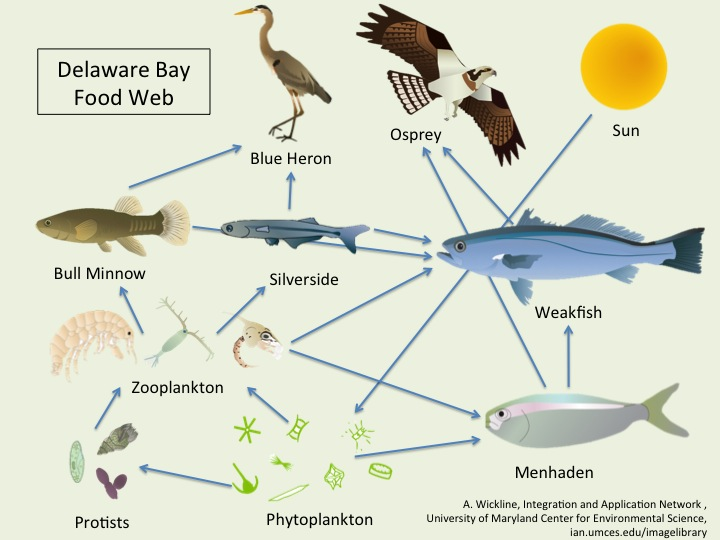
Food web for questions 7 – 9:

2

Where do the food molecules that the Blue Heron eats *originally* come from?

A) from the bull minnow and the silverside
B) from the phytoplankton
C) from the zooplankton
D) from the protists

2

While bacteria are not shown in this food web, they would exist in this ecosystem. Which of the following statements is NOT true about the role bacteria would play in this ecosystem?

A) Bacteria release nutrients into the bay that the phytoplankton can use.
B) Bacteria help break down the body matter of dead organisms in the bay.
C) Bacteria act as decomposers within the bay.
D) Bacteria are an extra source of food for the phytoplankton, protists, and zooplankton that live in the bay.

2

Which organism in this food web gets energy from sunlight to produce its own food?

A) the protists
B) the menhaden
C) the phytoplankton
D) the osprey

Read and examine the passage, tables, and pictures below. Then answer Questions 10 – 13.

The Pitiful Potted Plant
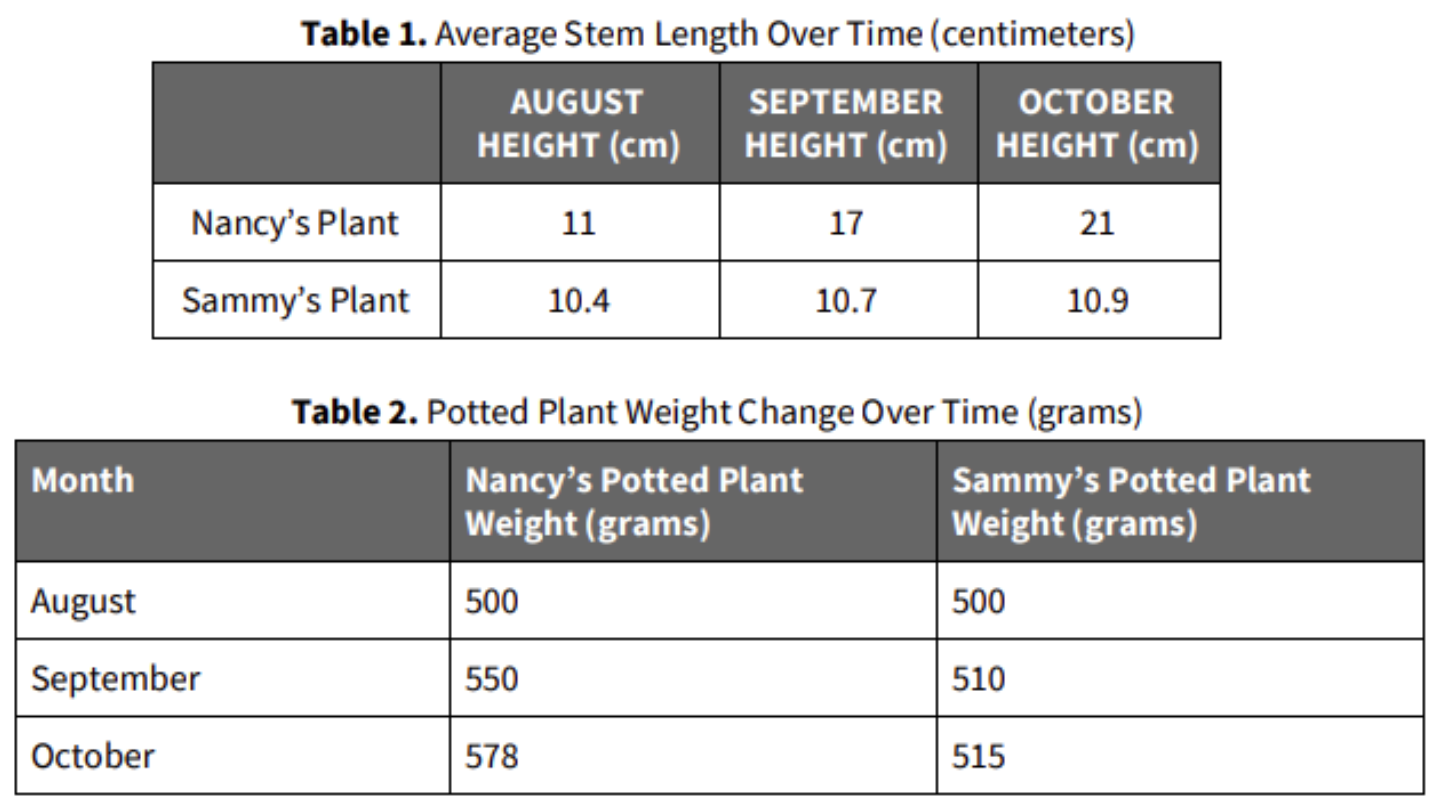
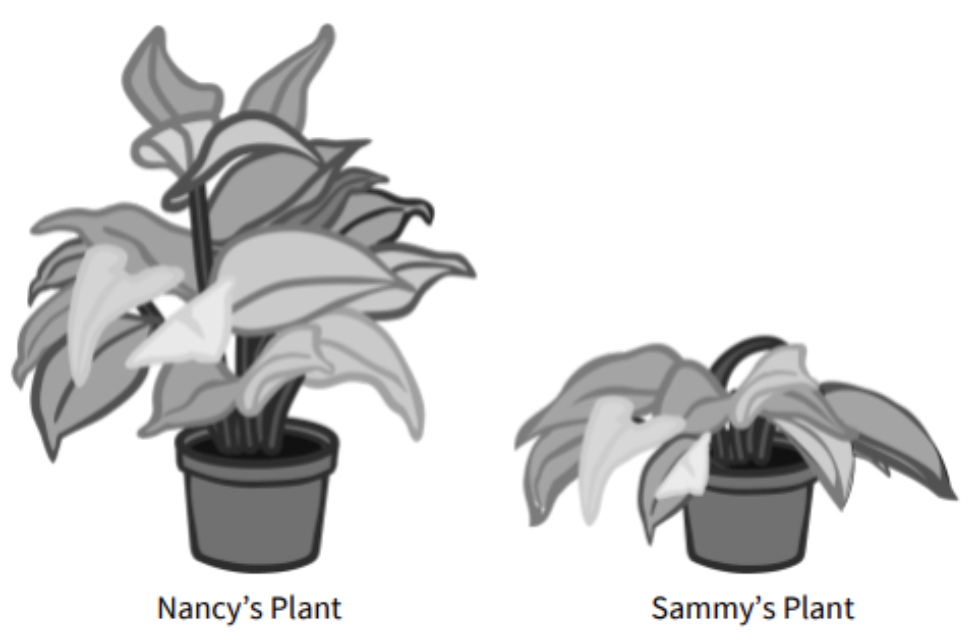
At the beginning of the school year, Mrs. Jewels brought two potted plants into her classroom and placed them on the same shelf. The classroom lights were on all day. Nancy and Sammy were responsible for watering the plants every week, but Sammy usually only watered his plant once a month. Students wanted to see how much the plants would grow throughout the year, so they measured the stem lengths of several specific stems on the plants and recorded the averages on a data table. They also weighed each pot, plant, and soil in August, September, and October. The data tables are shown below. Students also took pictures of the plants at the end of October.


2

Which of the following claims best describes what happened with the potted plants?

A) Maria’s claim: A lack of water caused Sammy’s plant to grow less.

B) Alexis’s claim: A lack of sunlight caused Sammy’s plant to grow less.

C) DeeDee’s claim: A lack of soil caused Sammy’s plant to grow less.

D) Todd’s claim: A lack of air caused Sammy’s plant to grow less.

3

For the claim that you chose in Question 10, list two pieces of evidence from the reading passage that support the claim:

Criteria For Success:
  1. Identify evidence from the passage and data that supports your claim.
  2. Explain how the evidence supports your claim that caused Sammy’s plant to grow less.
In the passage, it says ____. In table ____, it shows ____. Sammy's plant grew less because ____.

2

Nancy was so proud of her plant that she decided to take it home and keep it. She put the potted plant in a clear plastic bag, tied it tightly closed, placed it in her backyard, and then totally forgot about it for three months.

Choose the answer that best describes what will happen to Nancy’s plant, and why.

A) Nancy’s plant will not survive due to lack of water.
B) Nancy’s plant will not survive due to lack of water and air.
C) Nancy’s plant will survive because the bag is clear and the plant can still get sunlight.
D) Nancy’s plant will survive because there is water in the soil.

2

As shown in Table 1 and Table 2, Nancy’s plant grew taller and has more weight. Where did the matter for the change in height and weight come from?

A) from the soil
B) from water and air
C) from nutrients
D) from sunlight

Ian and Karlyn are two fifth grade students. They place seeds into plastic bags. Both students place the same amount of seeds on the paper towel, and add the same amount of water to their plastic bags. They add air to both bags and seal them shut, and tape them onto a window that receives sunlight throughout the day.

2

What resources did the plants need to make food molecules to be able to survive? Select ALL that apply:

A) dirt / soil
B) sunlight
C) water
D) fertilizer
E) oxygen
F) carbon dioxide

2

Karlyn ripped up some old leaves and added the dead matter to the paper towel in her bag. Explain how this caused the lettuce plants in her plastic bag to grow taller and to thrive more than the plants in Ian’s bag:

Criteria For Success:

1. Identify what the type of organism that eats dead matter AND what they release (into soil).
2. Explain how plants use what the organism that eats dead matter adds in the soil to grow taller.

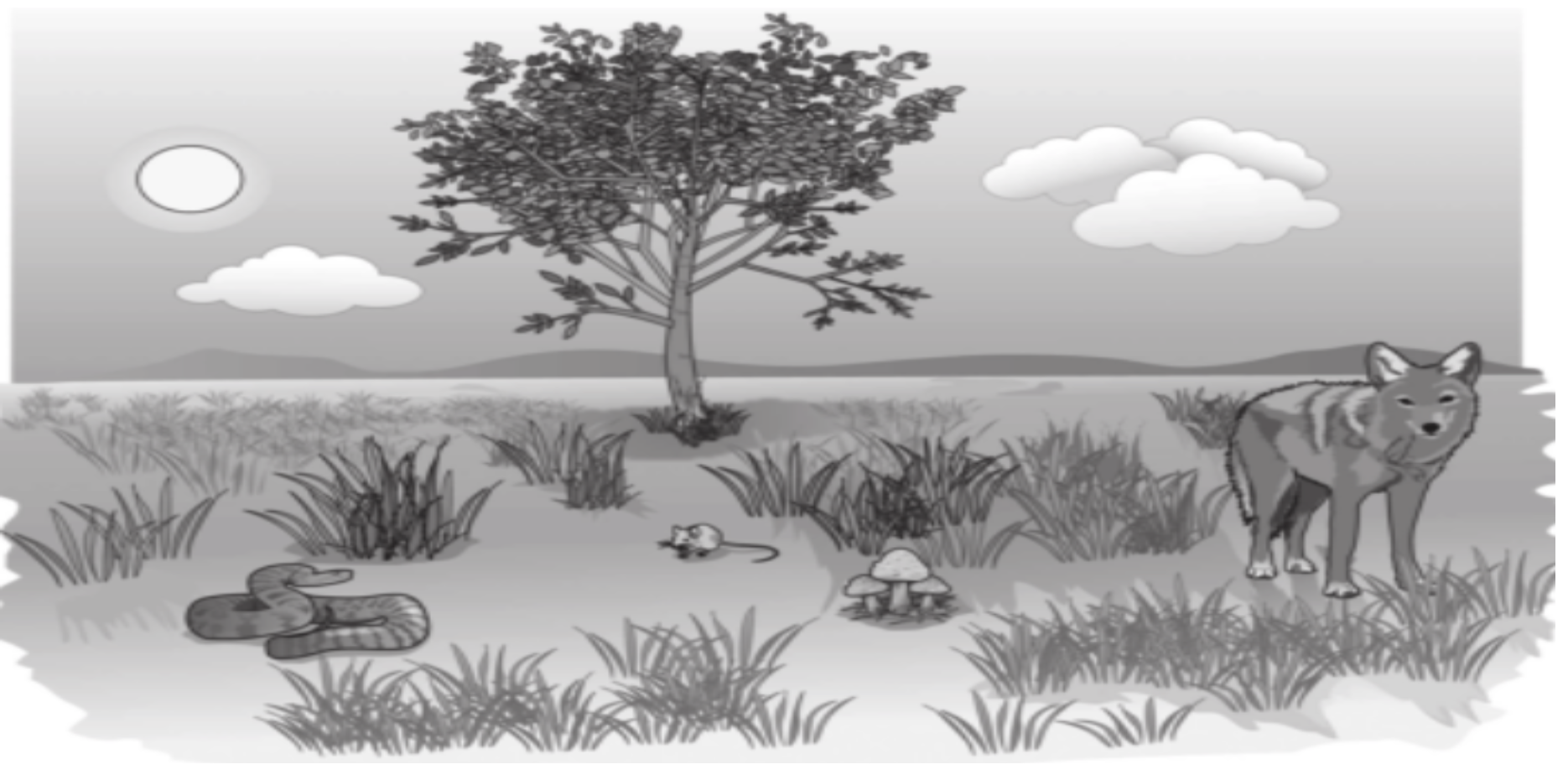
The picture below shows a prairie ecosystem which includes many organisms, such as grasses, coyotes, trees, mushrooms, snakes, and mice, as shown in the picture below. The energy needed by all the organisms in the ecosystem comes from one primary source. Use this picture to answer questions 16 and 17.

2

How do mushrooms in this prairie get the food molecules they need to survive?

A) from the nutrients in the soil
B) from sunlight, water, and carbon dioxide in a process called photosynthesis
C) from the matter of dead organisms

5

Explain how the energy that the coyote uses to grow, move, stay warm, and repair its body is energy that once came from the sun. Your response should correctly describe at least four energy transfers and fully show how energy the coyote uses can be traced back to the sun.

Criteria For Success:

1. Make a food chain with the following organisms: grasses, coyotes, snakes, and mice.
2. Add the sun in the food chain.

3. Explain how each organism gets energy. Explain how the grasses, coyotes, snakes, and mice get energy.

The grass gets energy by ______. The mouse gets energy by ______. The snake gets energy by ______. The coyote gets energy by ______.