5/4 FA 7.1 Credit Basics

Last updated over 2 years ago
32 questions
Note from the author:
OBJECTIVES & STANDARDS
Math Objectives
  • Calculate simple interest
  • Read and interpret data presented as multi-line graphs and stacked line graphs
Common Core Math Standards
  • Link to all CCSS Math
  • CCSS.HSA.SSE.A.1
  • CCSS.HSM
  • CCSS.HSS.IC.B.6
Personal Finance Objectives
  • Explain why a person may need or want credit and the impact of debt on American finances
  • Identify the major types of credit and their characteristics
  • Understand the three basic components of a credit agreement: principal, interest rate, and term
  • Differentiate between interest rate and APR
National Standards for Personal Financial Education
Managing Credit
  • 1b: Compare the cost of borrowing $1,000 by means of different consumer credit options
  • 2a: Give examples of unsecured and secured loans
  • 2b: Explain why lenders charge lower interest rates on secured loans than on unsecured loans
  • 2c: Compare what happens if a borrower fails to make required payments on a secured loan, such as an auto loan or a home mortgage, versus failing to pay a credit card account
OBJECTIVES & STANDARDS
Math Objectives
  • Calculate simple interest
  • Read and interpret data presented as multi-line graphs and stacked line graphs
Common Core Math Standards
  • Link to all CCSS Math
  • CCSS.HSA.SSE.A.1
  • CCSS.HSM
  • CCSS.HSS.IC.B.6
Personal Finance Objectives
  • Explain why a person may need or want credit and the impact of debt on American finances
  • Identify the major types of credit and their characteristics
  • Understand the three basic components of a credit agreement: principal, interest rate, and term
  • Differentiate between interest rate and APR
National Standards for Personal Financial Education
Managing Credit
  • 1b: Compare the cost of borrowing $1,000 by means of different consumer credit options
  • 2a: Give examples of unsecured and secured loans
  • 2b: Explain why lenders charge lower interest rates on secured loans than on unsecured loans
  • 2c: Compare what happens if a borrower fails to make required payments on a secured loan, such as an auto loan or a home mortgage, versus failing to pay a credit card account
Intro
Required
1
PLAN AHEAD: How Would You Pay?
Say you really want an amazing new_______ , which costs $250. (Blank is intentionally blank – picture something you’d really value).
Required
1

Which option would you choose?
a. Just forget about it because you don’t have the funds
b. Ask for it for your birthday, which is 7 months away
c. Save up money from your part-time job and buy it once you have enough
d. Use a credit card or Buy Now/Pay Later and pay it off over time
e. Buy a cheaper, less desirable option with the $100 you have now

Defend your choice.

VIDEO: 100 People Share How Much Debt They Have
If you chose answer d in the intro above – Use a credit card or Buy Now/Pay Later and pay it off over time – you chose to take on debt to buy the $250 item. In this video, you’ll see 100 people share about the amount of debt they have in real life. From their responses, be prepared to answer the questions below.
Required
1

What is meant by debt?

Required
1

Other than credit card usage, what are some other reasons people say they are in debt? Do their reasons for carrying debt seem valid to you? Why or why not?

Required
1

Throughout the video, you can tell that individuals’ FEELINGS about their debt are quite different. What might cause one person to worry about the same level of debt that someone else feels quite comfortable having?

Learn It
EDPUZZLE: Loan Basics
In the video, you heard from individuals with no debt to individuals with six figures of debt, and everything in between. Watch this video to learn more about how loans work. Then, answer the questions.
1

The details of any loan will include the following 3 components:

Required
1

Why are secured loans considered less risky to the lender?

Required
1

Having a good credit score, making a larger down payment, and finding a cosigner with good credit are all ways to...
A. Decrease your principal
B. Decrease your interest rate
C. Increase your term
D. Increase your total payments

Required
1

  1. Each of these statements describes a variable rate loan EXCEPT...
  2. Typically starts with a lower interest rate than a fixed rate loan
  3. Is riskier to the borrower because the interest rate could increase substantially
  4. Is almost always a better option
  5. Can increase or decrease the interest rate over the course of the loan

VISUALS: Interest Rate and APR Napkins
Let’s focus on the interest rate aspect of paying for goods or services using credit. You’ll look at two resources from Napkin Finances to learn about how interest rate and Annual Percentage Rate (APR) compare. In each section, review the napkin and then use it to answer the questions that follow.
Napkin 1: What's an Interest Rate?
  1. Looking at the factors that determine a given loan’s interest rate, divide them into categories of whether the borrower can or cannot control each factor:
Required
1

Borrower has control over this factor (Name 4)

Required
1

Borrower does not have control over this factor (Name 4)

In the next lesson, you’ll learn the equation for compound interest, which is how most loan interest is actually calculated. Until then, we’ll use the more straightforward equation for simple interest, which is
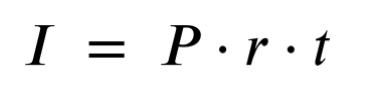


Where:
  • I = interest
  • P = principal (This may be referred to by other terms such as starting balance or loan amount)
  • r = the annual interest rate
  • t = the amount of time in years
Required
1

If Tristian borrows $4000 at an interest rate of 7.4% with a loan term of 3 years, how much does Tristian pay in interest?

Required
1

What is the total amount of money (principal and interest) Trisitan will pay to the bank for this same loan?
Napkin 2: What's APR? (Annual Percentage Rate)
Required
1

What makes an annual percentage rate (APR) different from an annual interest rate?

Required
1

As you saw above, Tristian’s interest rate was 7.4%. As he read carefully into his loan terms, he also realized there was a loan origination fee of $50 (paid at the start of the loan) and an annual fee of $25 that he’d pay 3 times over the course of his loan.
  1. What would you expect Tristian’s APR to be?
  2. Drastically higher than 7.4%
  3. A bit higher than 7.4%
  4. Exactly 7.4%
  5. A big lower than 7.4%
  6. Drastically lower than 7.4%

Required
1

Explain your thinking

ANALYZE: Household Debt and Credit Report
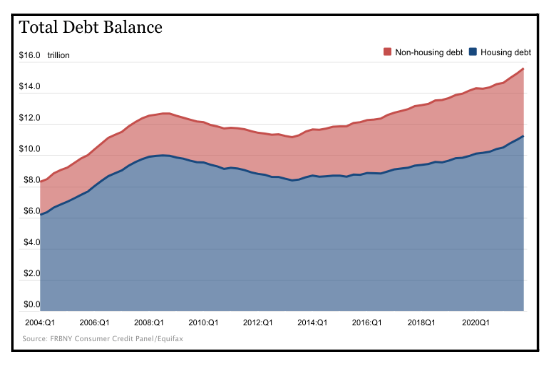
Every quarter the Federal Reserve Bank of New York collects data and compiles the Household Debt and Credit Report. Use the three interactive graphs to answer the questions.

Graph I - Total Debt Balance

Required
1

What is the total household debt (non-housing and housing combined) figure for the most recent quarter?

Required
1

How would you describe the trend for total household debt in the last 15 years?

Required
1

How much larger is the housing debt than the non-housing debt for the most recent quarter?

Required
1

Why do you think housing debt is so much higher than non-housing debt?

ANALYZE: Household Debt and Credit Report
Every quarter the Federal Reserve Bank of New York collects data and compiles the Household Debt and Credit Report. Use the three interactive graphs to answer the questions.

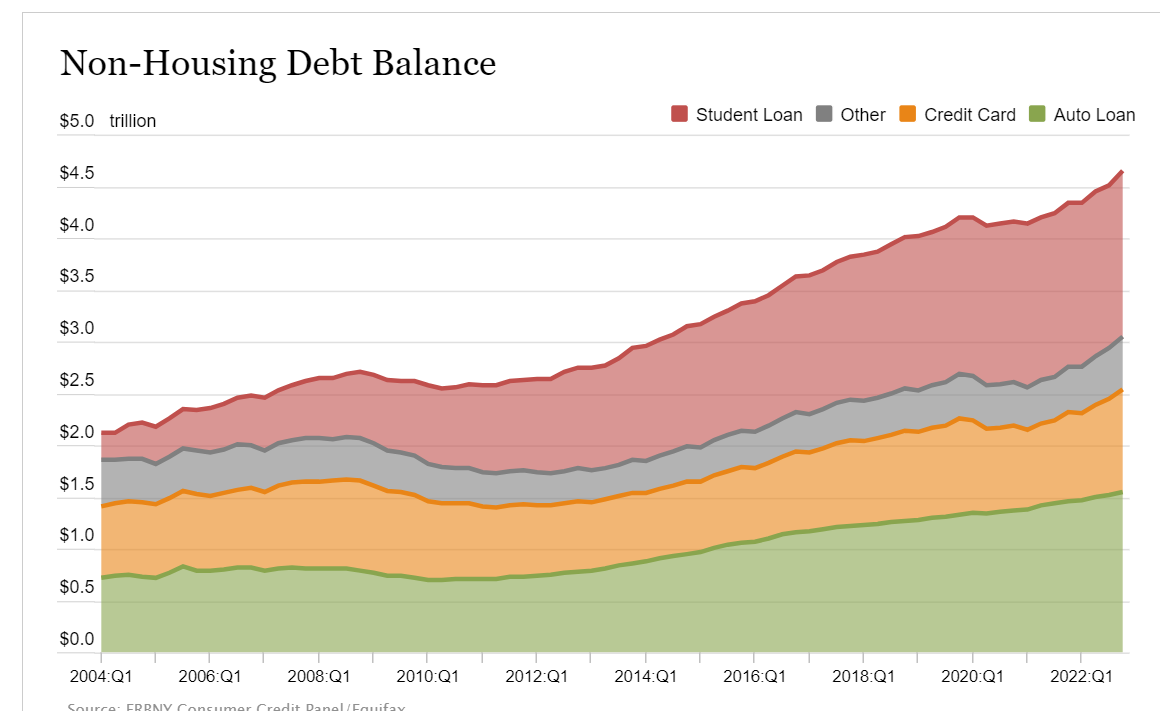
Graph II - Non-Housing Debt Balance

Required
1

How would you describe the trend for non-housing debt balances in the last 15 years?

Required
1

For the most recent quarter, rank the four categories of non-housing debt in order from largest to smallest.

Required
1

Compared to the media coverage that “debt in America” gets, does the ranking in question 6 surprise you? Why or why not?

Required
1

Predict what this graph will look like in the future. Describe what trends you’re likely to see in all four categories.

ANALYZE: Household Debt and Credit Report
Every quarter the Federal Reserve Bank of New York collects data and compiles the Household Debt and Credit Report. Use the three interactive graphs to answer the questions.

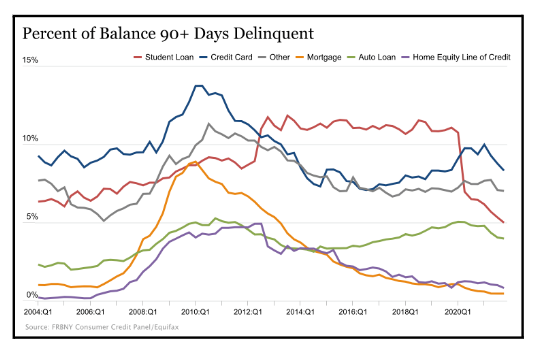
Graph III - Percent of Balance 90+ Days Delinquent


Required
1

On what type of debt are Americans most likely to be 90 or more days behind on payment?

Required
1

Brainstorm at least 3 potential causes for the high rate of delinquency in the category listed for question 9.

Required
1

On what types of debt are Americans least likely to be 90 or more days behind on payment?

Required
1

Brainstorm at least 3 potential causes for the low rates of delinquency in the categories listed for question 11.

Required
1

Part IV - Summary
If someone asked you, “Are debt and delinquency a problem in America?” what other information would you want to know in order to give an accurate answer?

Exit TIcket (Green Sheet)
Required
1

  1. Which type of debt is considered revolving credit?
  2. A credit card
  3. A mortgage
  4. An auto loan
  5. A small business loan

Required
1

  1. MIshika is considering a 9.99%, $10,000 loan to be repaid after 6 years. What does that mean?
  2. Term is 9.99%, principal is $10,000, interest rate is 6 years
  3. Term is 6 years, principal is $10,000, interest rate is 9.99%
  4. Term is $10,000, principal is 9.99%, interest rate is 6 years
  5. Term is $10,000, principal is 6 years, interest rate is 9.99%

Required
1

  1. Using the equation for simple interest, how much should JJ expect to pay the bank, in total, for his 3 year, $10,000 loan at 5% interest?
  2. $1,500
  3. $11,500
  4. $31,500
  5. $150,000

The End!