reactant
product
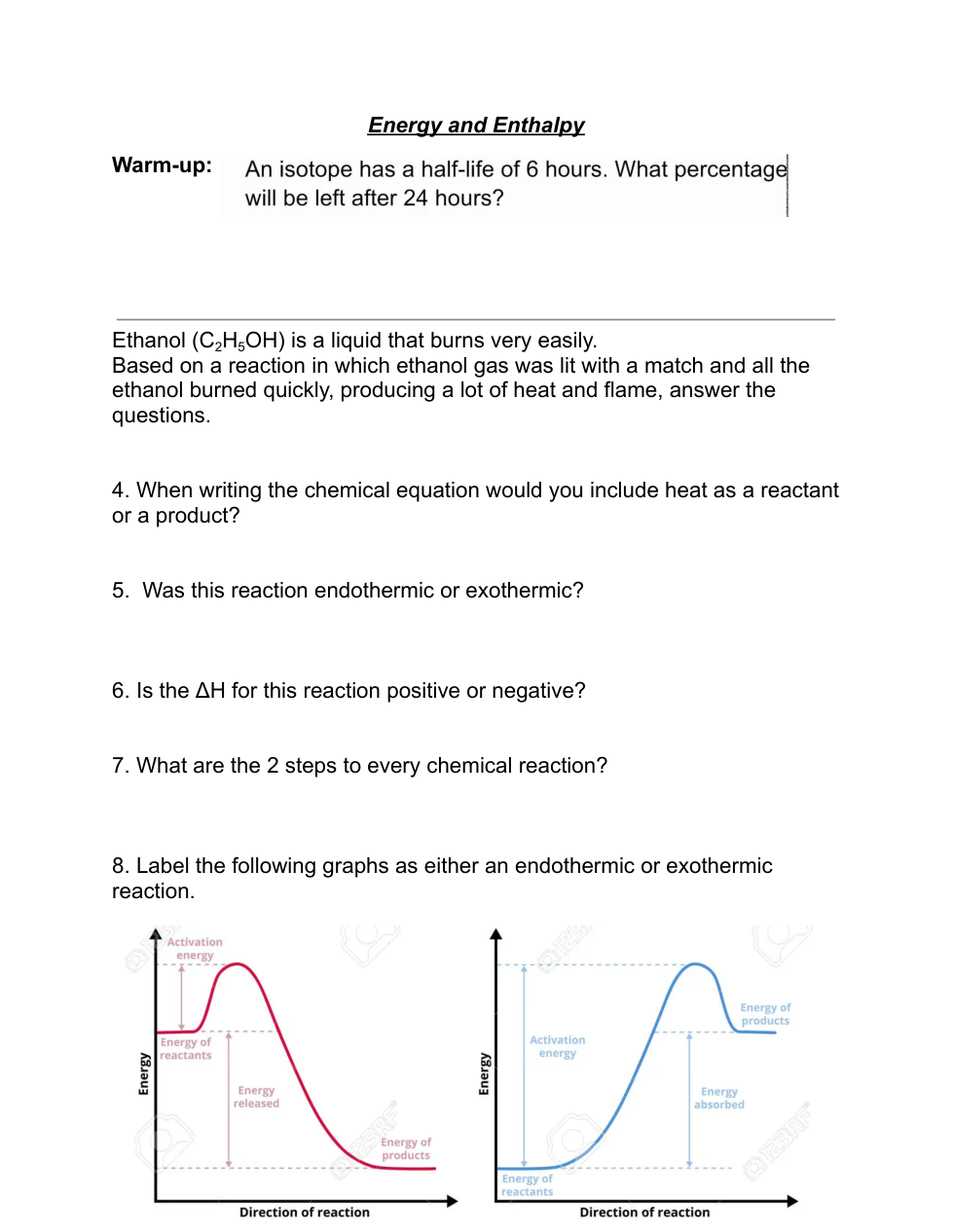
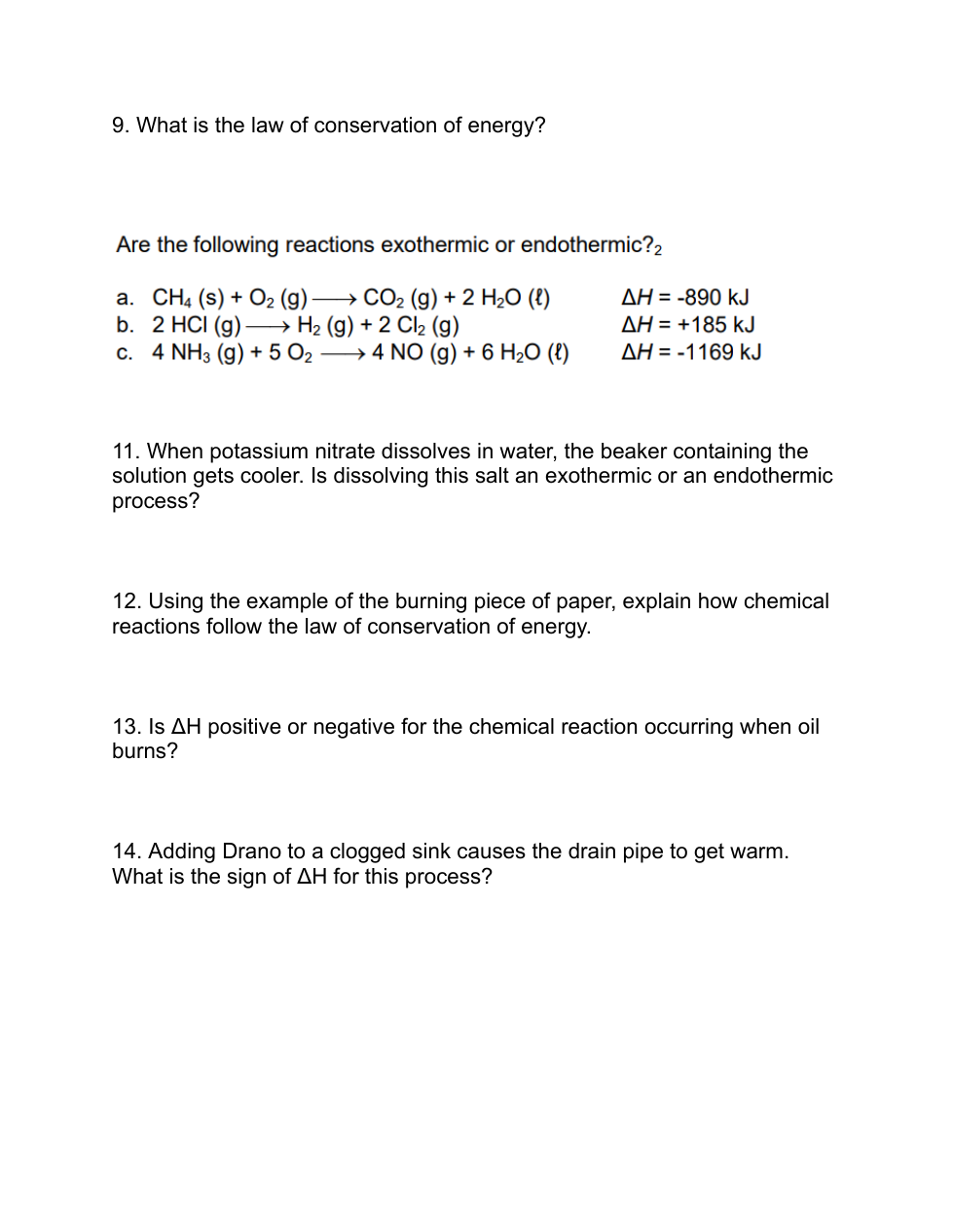
endothermic
exothermic
positive
negative
bond breaking
bond transformation
bond making
bond synergy
energy is first gained and eventually lost
energy is never gained, but it can be lost
energy can be gained, but not lost
energy is never gained or lost it just changes forms
burning violates this law because energy is lost as heat
the energy held in the chemical bonds of paper is changed into the energy of heat
it violated the law because there was no ice for that burn
the energy held in the chemical bonds of paper is greater than that lost as heat
the energy held in the chemical bonds of paper is less than that lost as heat
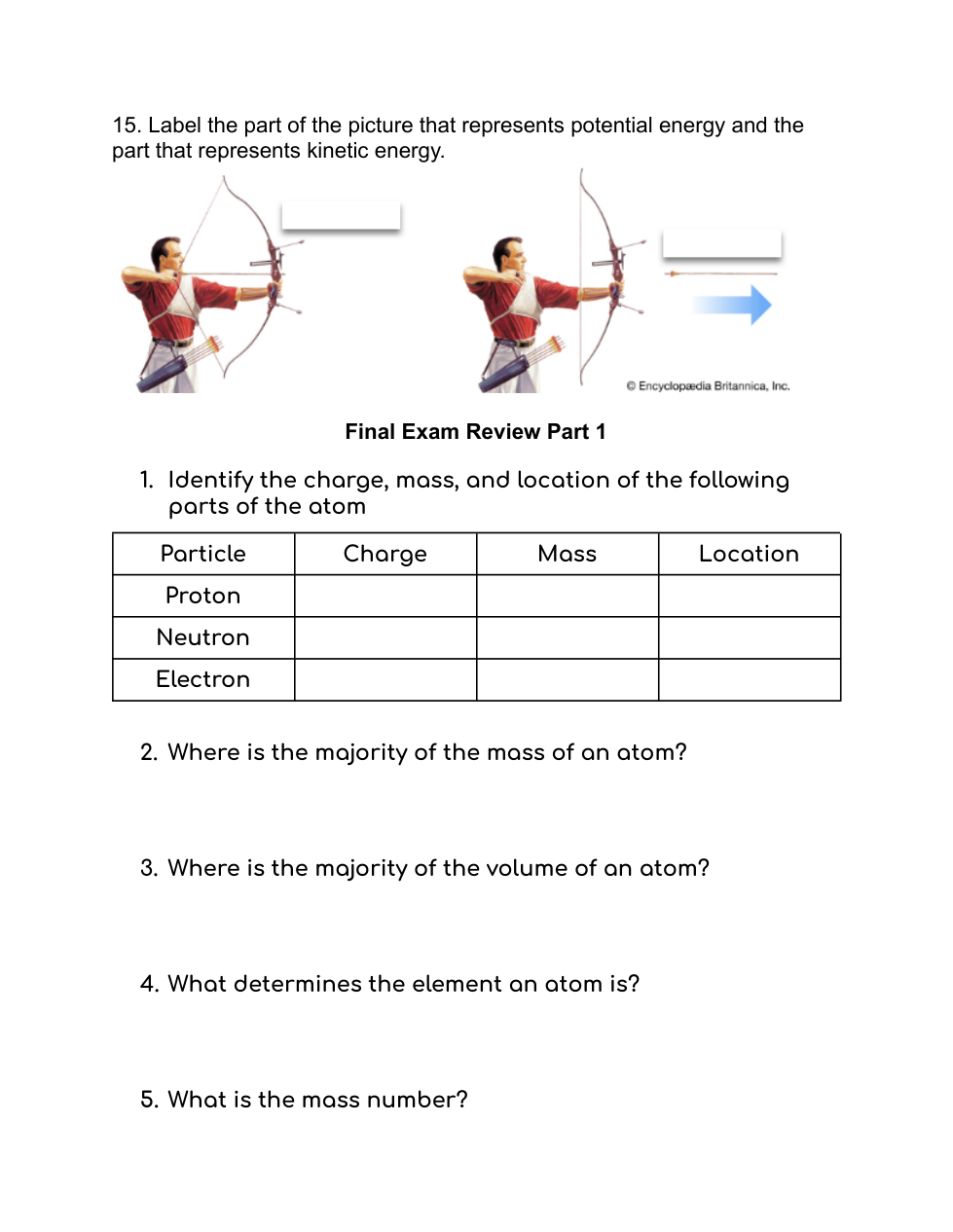
potential energy
kinetic energy
neutral
1
0
-1
nucleus
orbitals
both nucleus and the orbitals
number of neutrons
number of electrons
number of electrons plus protons
number of protons
number of electrons plus neutrons
number of neutrons plus protons
2
4
6
8
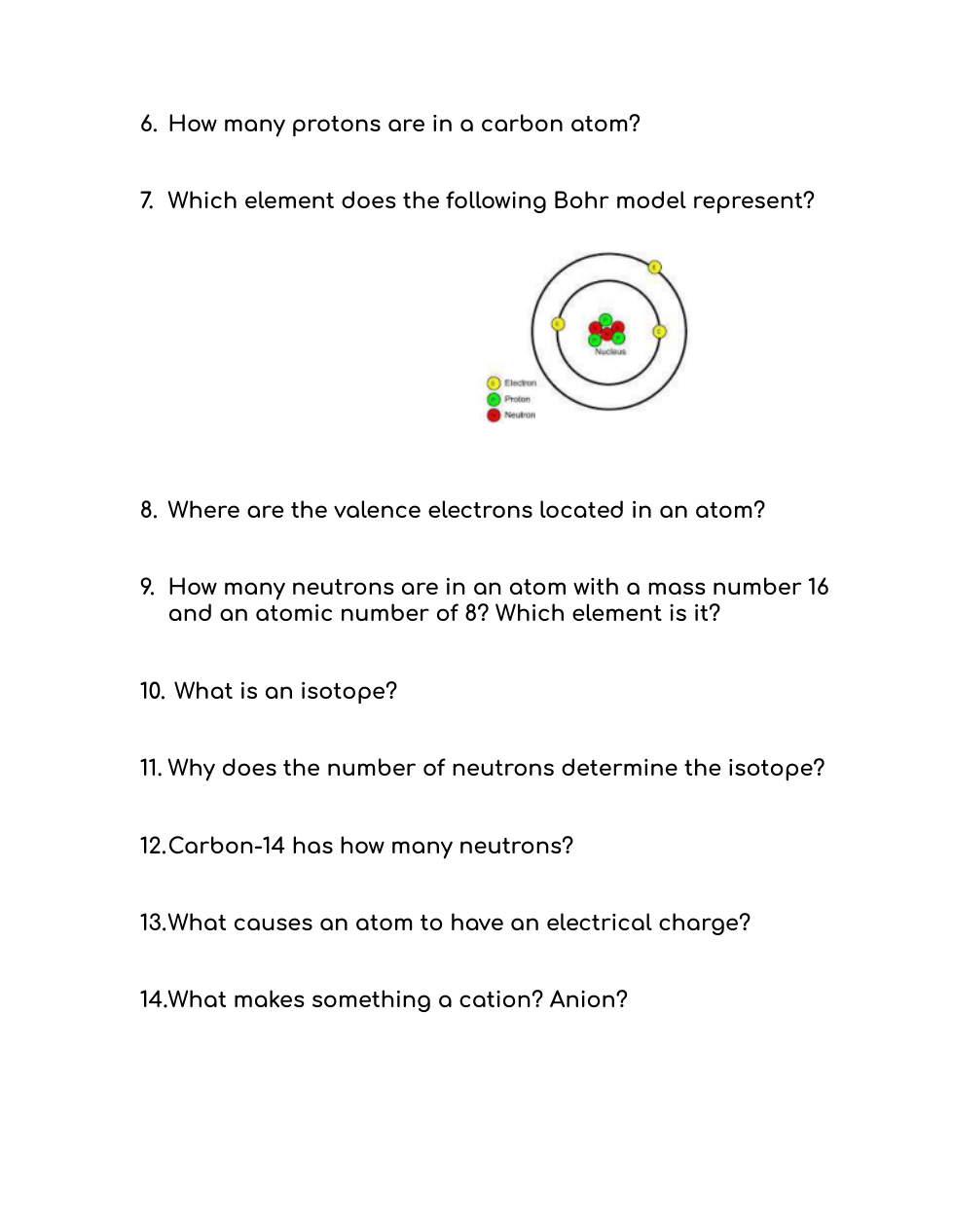
H
Li
He
C
N
O
Ca
outermost orbital
innermost orbital
an average between orbitals 2 and 4
both innermost and outermost orbitals
16 - oxygen
8 - nitrogen
8 - oxygen
16 - nitrogen
8 - carbon
16 - carbon
same number of neutrons, but different number of electrons
same number of neutrons, but different number of protons
same number of protons, but different number of neutrons
same number of electrons, but different number of protons
same number of electrons, but different number of neutrons
10
different number of neutrons and protons
different number of protons and electrons
different number of electrons and neutrons
cation - more protons than electrons
anion - more protons than electrons
cation - more electrons than protons
anion - more electrons than protons
26.1
27.1
28.1
29.1
30.1
when the number of electrons is greater than the number of protons
when the number of protons is greater than the number of electrons
when it absorbs energy
when it gives off energy
it gives off energy in the form of light
it absorbs energy in the form of light
a alpha particle is released
a beta particle is released
a gamma ray is released
every atom in a period has the same emission spectrum
every atom in a group has the same emission spectrum
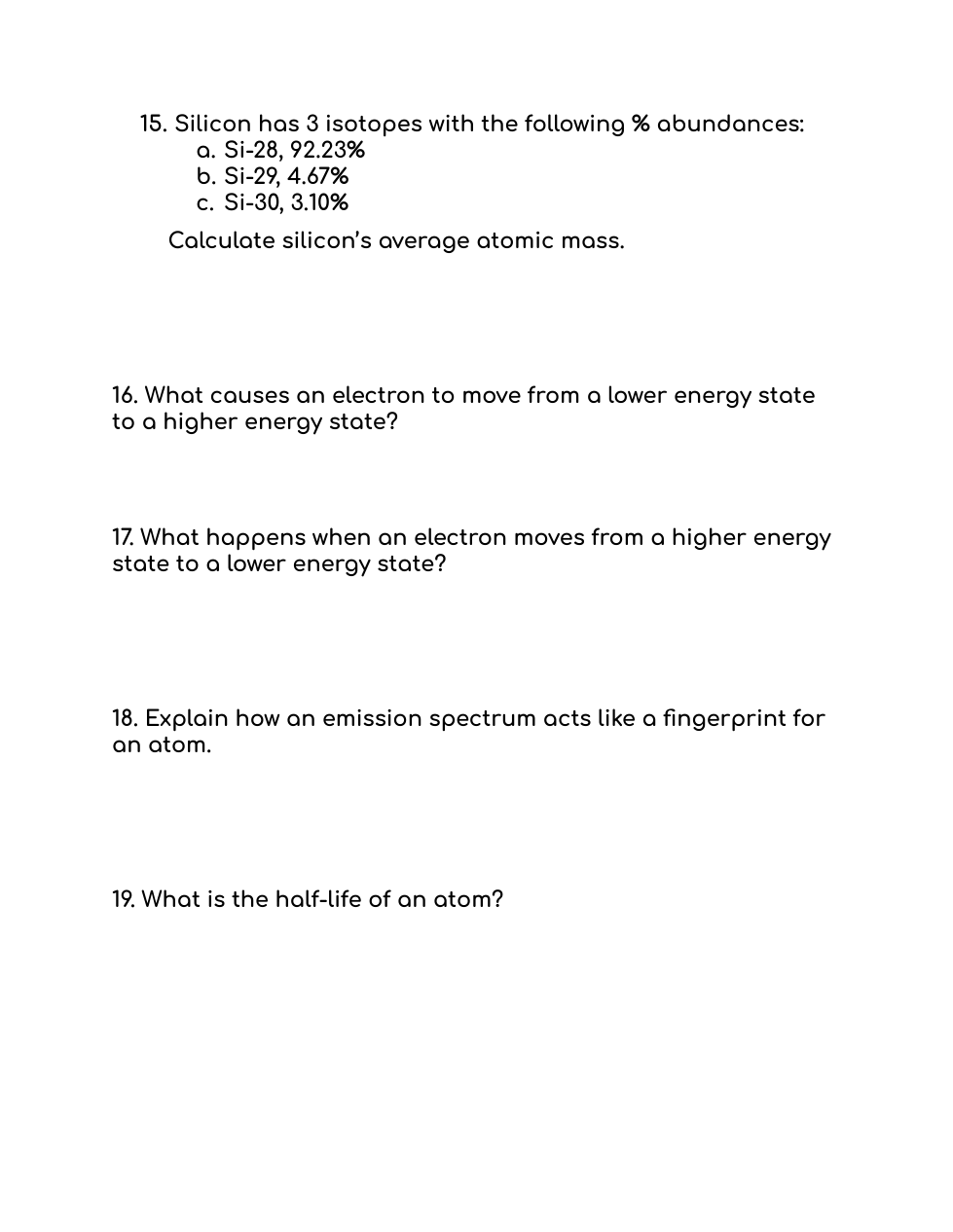
every atoms has its' own unique emission spectrum
the time it takes for half of an atoms protons to be converted into neutrons
the time it takes for half of an atoms neutrons to be converted into protons
the time it takes for half of a radioactive substance to decay
the time it takes for half of an atoms electrons to be converted into neutrons