Bullet point some observations that you see from the graph data below.
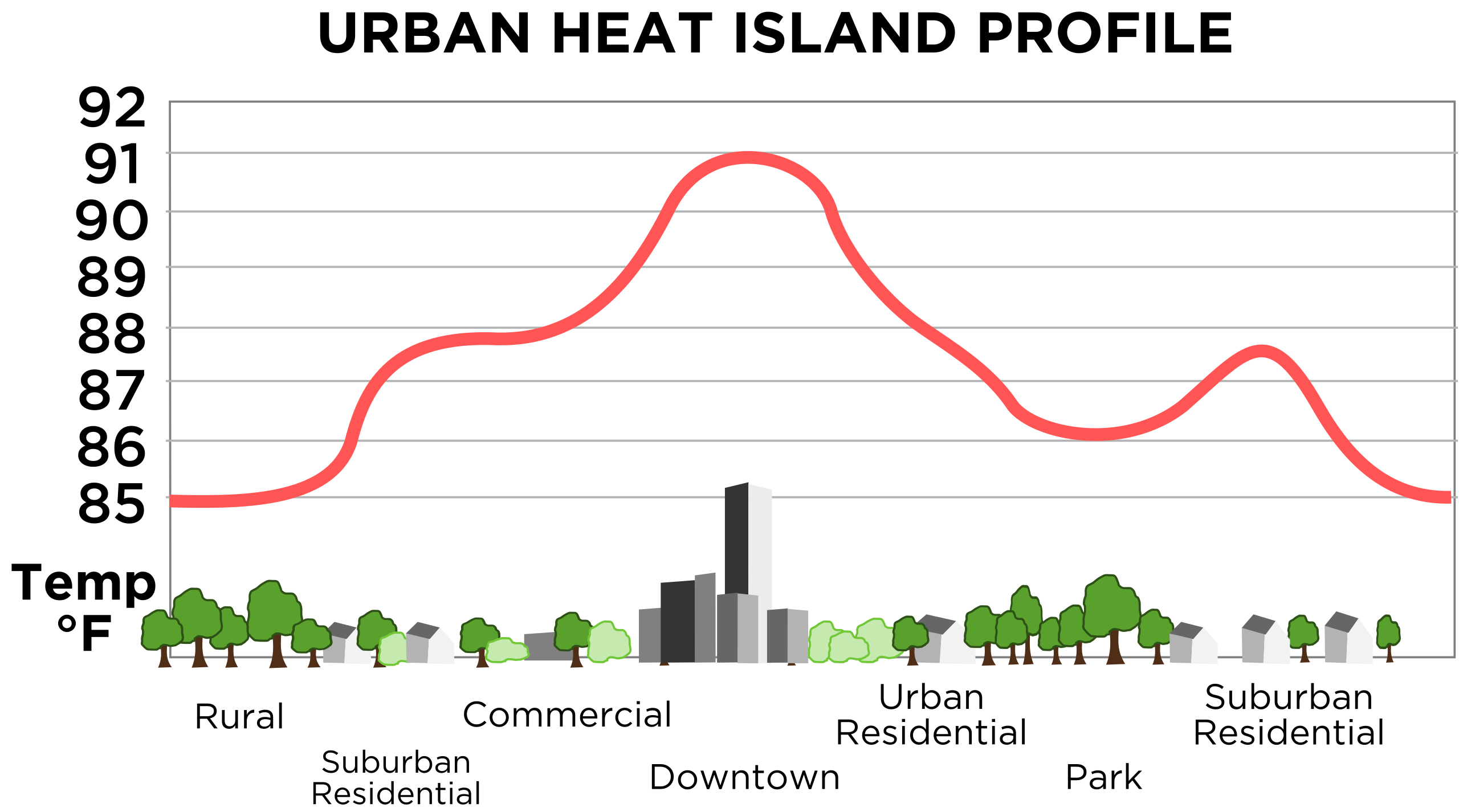
Bullet point some observations that you see from the graph data below.
Urban heat islands are metropolitan areas that are hotter than their outlying regions, with the impacts felt most during summer months. About 85% of the U.S. population lives in metropolitan areas. Neighborhoods in a highly-developed city can experience peak temperatures that are 15°F to 20°F hotter than nearby areas with more trees and less pavement.
Climate Central created an index to evaluate the intensity of urban heat islands and applied it to 159 cities across the U.S. The cities with the five most intense urban heat islands are New Orleans, Newark, N.J., New York City, Houston, and San Francisco. Find more results in our urban heat island report.
Heat islands are heavily influenced by albedo, which measures whether a surface reflects sunlight or absorbs and retains the sun’s heat. Other factors include the amount of impermeable surface, lack of greenery and trees, building height, and heat created by human activities.
Extreme urban heat is a public health threat, especially for individuals and communities that are more vulnerable due to health, social, economic, or other reasons. But there are a number of short-term and long-term solutions to adapt to an increasingly warmer future, as well as to mitigate some of the urban heat stress.
Urban heat islands are metropolitan areas that are hotter than their outlying regions, with the impacts felt most during summer months. About 85% of the U.S. population lives in metropolitan areas. Neighborhoods in a highly-developed city can experience peak temperatures that are 15°F to 20°F hotter than nearby areas with more trees and less pavement.
Climate Central created an index to evaluate the intensity of urban heat islands and applied it to 159 cities across the U.S. The cities with the five most intense urban heat islands are New Orleans, Newark, N.J., New York City, Houston, and San Francisco. Find more results in our urban heat island report.
Heat islands are heavily influenced by albedo, which measures whether a surface reflects sunlight or absorbs and retains the sun’s heat. Other factors include the amount of impermeable surface, lack of greenery and trees, building height, and heat created by human activities.
Extreme urban heat is a public health threat, especially for individuals and communities that are more vulnerable due to health, social, economic, or other reasons. But there are a number of short-term and long-term solutions to adapt to an increasingly warmer future, as well as to mitigate some of the urban heat stress.
Bullet point some observations that you see from the graph data below.
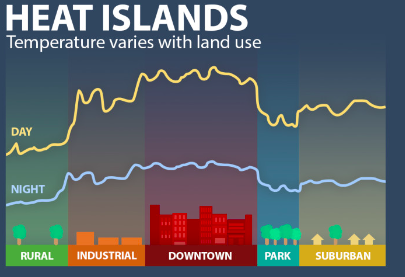
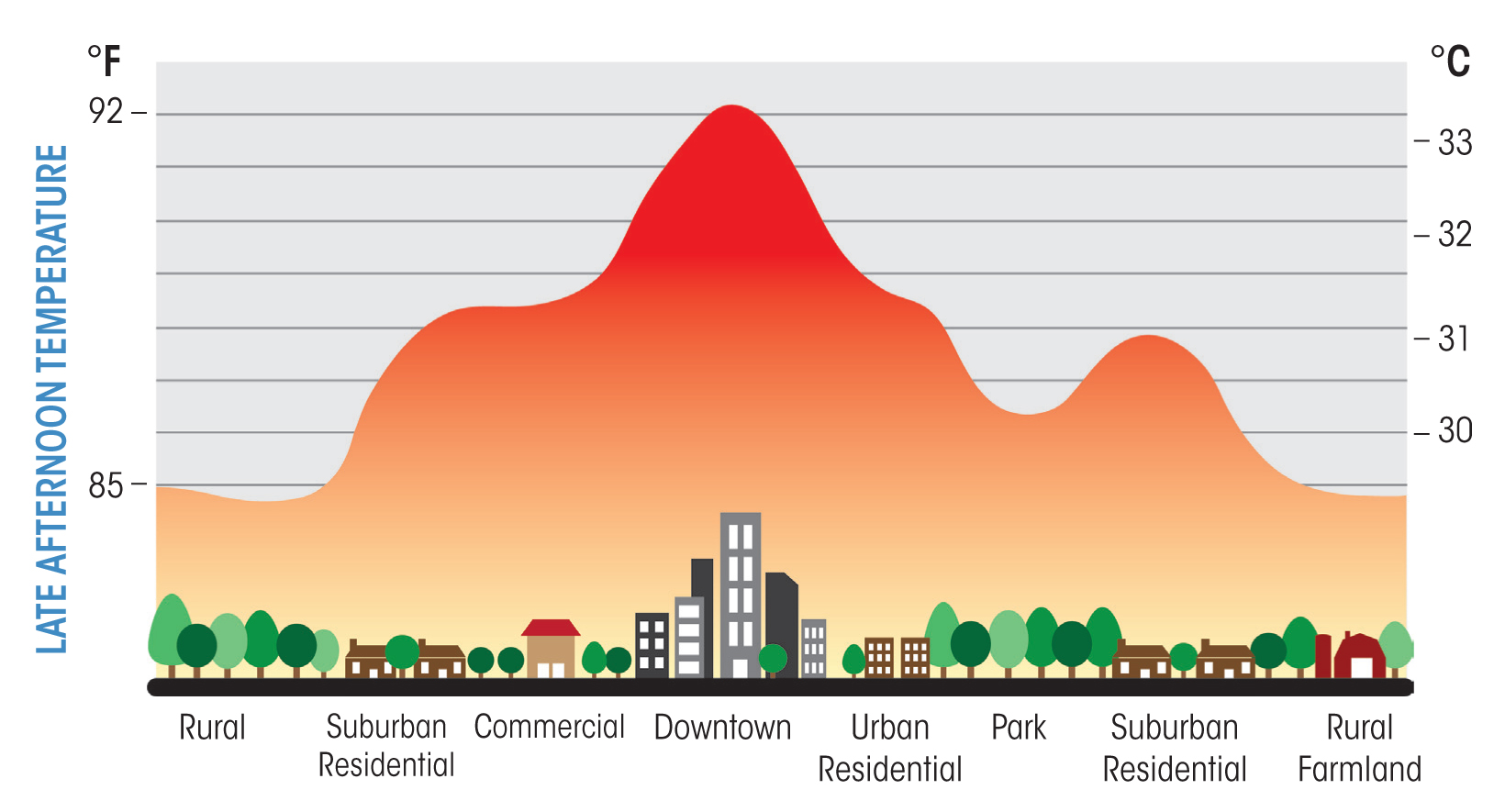
What are urban heat islands? Urban heat islands are metropolitan places where buildings and pavement cause it to be hotter than their outlying areas, with the impacts felt most during summer months. Paved roads, parking lots, and buildings absorb and retain heat during the day and radiate that heat back into the surrounding air. Neighborhoods in a highly-developed city can experience mid-afternoon temperatures that are 15°F to 20°F hotter than outlying areas with more vegetation and less development.
How much hotter is your city?
Climate Central created an index to evaluate the intensity of urban heat islands and applied it to 158 cities across the U.S. By measuring the type of land cover in each city, from greenspace to paved areas, and factoring in building height and population density, our research team adapted the Sangiorgio model to estimate how urban heat island intensity varies across cities.
The index score for each city is a temperature representing the potential difference in average temperature for the city compared to its less developed surroundings. Our results show the index temperature scores range from less than 5°F to nearly 9°F.
Each score represents an average for the entire city, and certain neighborhoods or areas of a city will likely be cooler or hotter, depending on vegetation and other factors. So for example, our index shows that Baltimore may be up to 7°F warmer on average, although within the city, residents living next to a park will be cooler than residents living next to a parking lot or highway.
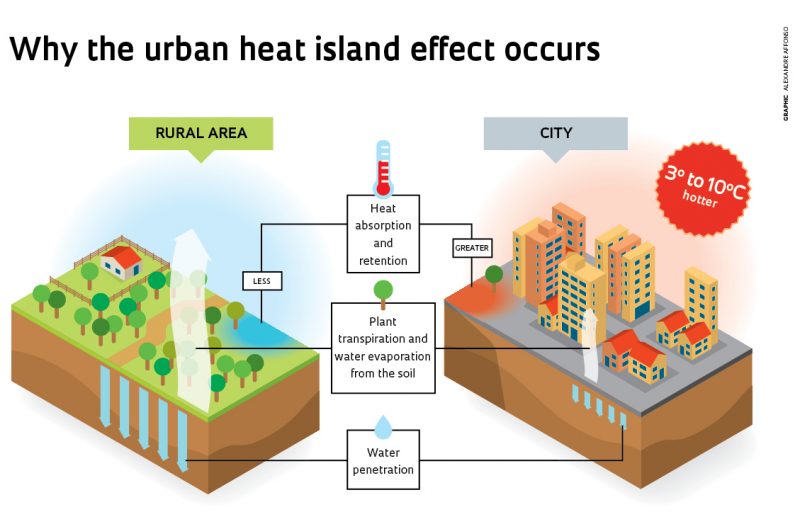
A) Cities are hotter than rural places because
B) Neighborhoods in a highly-developed city can experience mid-afternoon temperatures that are hotter than outlying areas with more vegetation and less development.
C) The index score for each city is a temperature (the difference in average) between a city compared to
D) What is a less developed area compared to a city?
Read the statement below and then answer the question:
"On the index it shows that Baltimore may be up to 7°F warmer on average, although within the city, residents living next to a park will be cooler than residents living next to a parking lot or highway."
What does this statement above imply?
The cities with the five highest scores are New Orleans, Newark, N.J., New York City, Houston, and San Francisco. Cities in the Midwest and Northeast, such as New York, Newark, Boston, Chicago, Providence, Detroit and Cleveland have more compact, historically built-out environments, with taller buildings. These factors add to the intensity of their urban heat island footprint. Cities like Houston and Fresno, Calif., scored higher due to the large percentage of impermeable surfaces that make up their city’s topography.
What do these cities have in common that contribute the urban heat island effect?
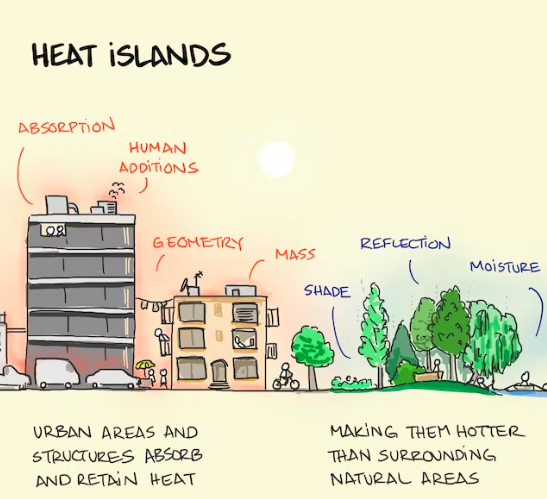
Heat islands are strongly influenced by albedo, which measures whether a surface reflects sunlight or absorbs and retains the sun’s heat. Other factors include the amount of impermeable surface, such as buildings, driveways, sidewalks, roads, and parking lots. Hard, dry surfaces provide less shade and less moisture than natural landscapes and contribute to higher temperatures. Other components include a lack of greenery and trees, the dimensions and heights of buildings, and heat created by human activities like running engines and air conditioners.
Extreme urban heat is a public health threat. It amplifies air pollution and creates dangerous conditions for people working outside or living in buildings without air conditioning. Discriminatory housing practices like redlining along with other socioeconomic factors mean that communities of color are often in areas with fewer trees and parks and thus are exposed to higher urban heat.
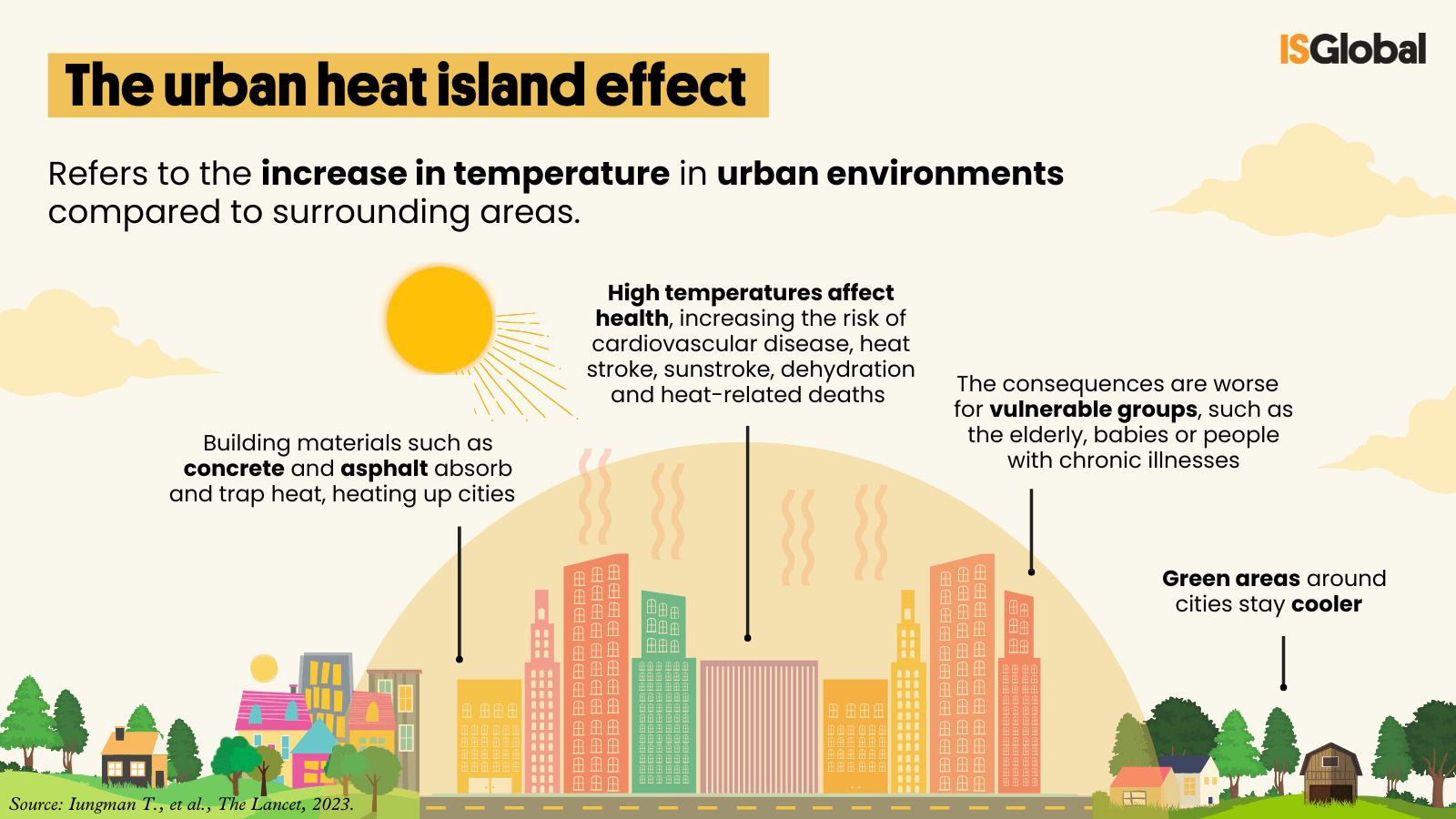
A) What is the albedo effect?
B) What does it measure?

A) Other factors include the amount of impermeable surface, such as buildings, driveways, sidewalks, roads, and parking lots. What does the word "impermeable" mean?
B) Hard, dry surfaces provide shade and than natural landscapes and contribute to temperatures.
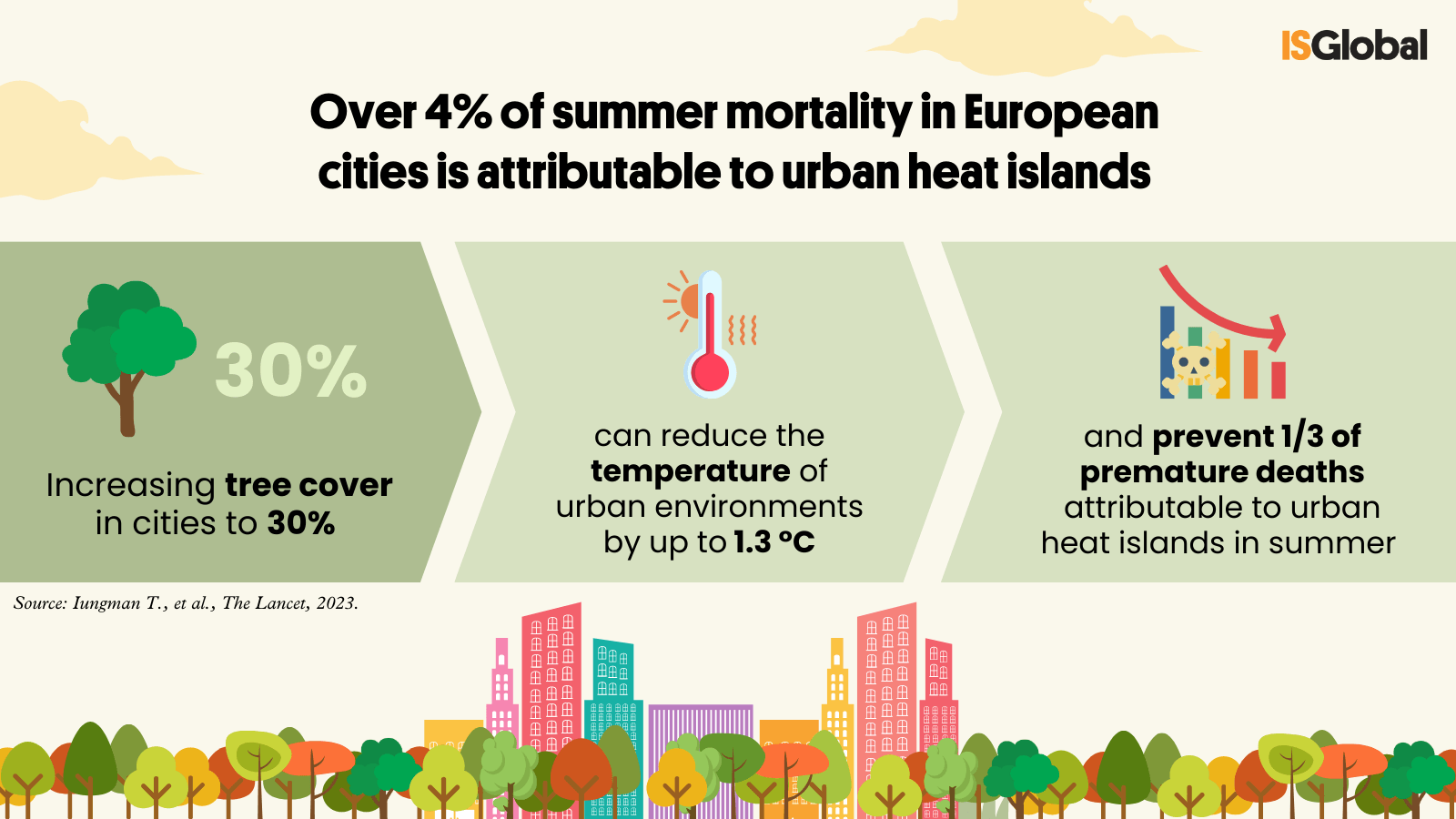
There are a number of short-term and long-term solutions to adapt to an increasingly warmer future, as well as to mitigate some of the urban heat stress. Short-term solutions are mostly about getting people out of the heat and ensuring their health and safety.
But there are also ways to reduce urban heat island effects such as:
Planting trees, particularly along paved streets.
A green roof, or rooftop garden, is a vegetative layer grown on a rooftop and can provide shade and lower temperatures of the roof surface and surrounding air.
Cool roofs are made of highly reflective and emissive materials that remain cooler than traditional materials, and help to reduce energy use.
Cool pavements, or whitewashing roads and sidewalks, is more complicated than roofs. In cities with urban canyons, the sunlight may not even reach the street level long enough to make a significant difference. In places like Los Angeles, a cool pavement study showed that heat was reflected off the white surface, but onto pedestrians and made people feel hotter.
Which of these mitigation techniques do you like the best and explain why you think it is the best choice for you. How does the choice you chose help mitigate urban heat islands and lower temperature.
Planting trees along paved streets
Making a green roof, rooftop garden
Cool roofs with highlight reflective material
Cool pavements or whitewashing roads
What actions are local officials taking to protect people from extreme heat? The EPA maintains a Community Actions Database of measures that communities are taking to mitigate the heat island effect in their area. ACEEE maintains a database tracking mitigation efforts for urban heat islands across most major U.S. cities.
Which neighborhoods in your area are more susceptible to excessive heat? Research has found that neighborhoods experiencing higher intensity urban heat islands were often the same ones subjected to discriminatory, race-based housing practices known as redlining. An interactive map created by the Science Museum of Virginia and Esri shows formerly redlined neighborhoods in 108 cities and their exposure to urban heat. The Future Heat and Vulnerability Map created by the National Integrated Heat Health Information System (NIHHIS) assigns a vulnerability score to each county across the U.S. based on race, income, and other parameters. Also, check out the citizen science and local reporting stories and projects at ISeeChange.
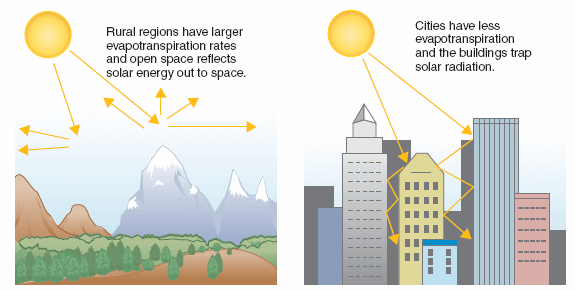
Research has found that neighborhoods experiencing higher intensity urban heat islands were often the same ones subjected to discriminatory, race-based housing practices known as redlining.
Conduct some research and explain:
What is redlining?
Why is redlining bad?
Who is at risk and why?
What makes areas of a city to be more likely cooler or hotter is
What are the components that determine the urban heat island effect and how much heat is trapped in a city?
Discriminatory housing practices like redlining along with other socioeconomic factors means...