Reveiw DNA, RNA, and Protein for the MCAS
What type of organic molecule are DNA and RNA?
What is the building blok of DNA and RNA?
Compare and Contrast. DNA and RNA. Move the words to show the similarties and differences between DNA and RNA.
Double helix
Deoxyribose Sugar
Single Stranded
Has the Base T
Made of Nucleotides
Has the Base U
Ribose Sugar
DNA
RNA
Both DNA and RNA
Find the complementary DNA strand. (Remember the base pairing: A-T and C-G)
If there is 22% of G in a DNA strand, how much C is there in the complementary strand?
Where does transcription occur?
What is made at the end of transcription?
Where does translation occur?
What is made at the end of translation?
Transcribe the following DNA sequence (remember A-U and C-G).
How many codons are in the sequence:

Translate the following mRNA sequence.
UAU-GGC-CUC
Transcribe the following DNA sequence (find mRNA).
TAC - GAG - TTC - GAT - CCG
Translate the following sequence (find the amino acid chain)
AUG- CAC-AAG- CUA- GGC
Which of the following describes a mutation in a parent that could change the phenotype of its future offspring?
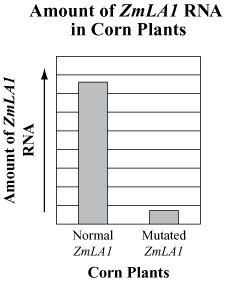
All corn plants contain the ZmLA1 gene. Some corn plants contain a certain mutation in the ZmLA1 gene. The graph below shows the amount of ZmLA1 RNA produced in plants with the normal gene and in plants with the mutated gene.
Based on the graph, what most likely happens in corn plant cells as a direct result of the mutated gene?

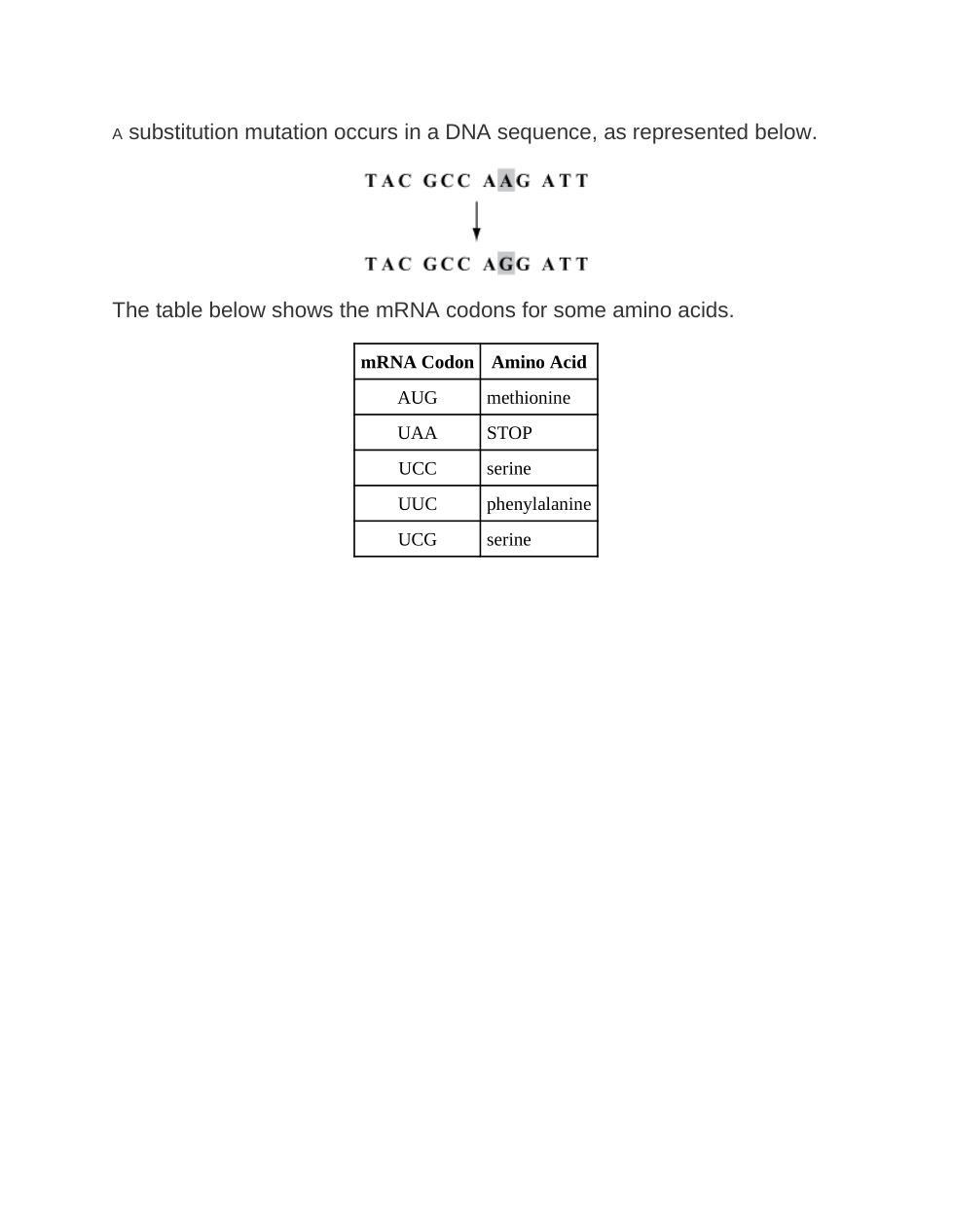
What type of mutation occurred in the DNA sequence shown?
What amino acid does the DNA codon AAG code for?

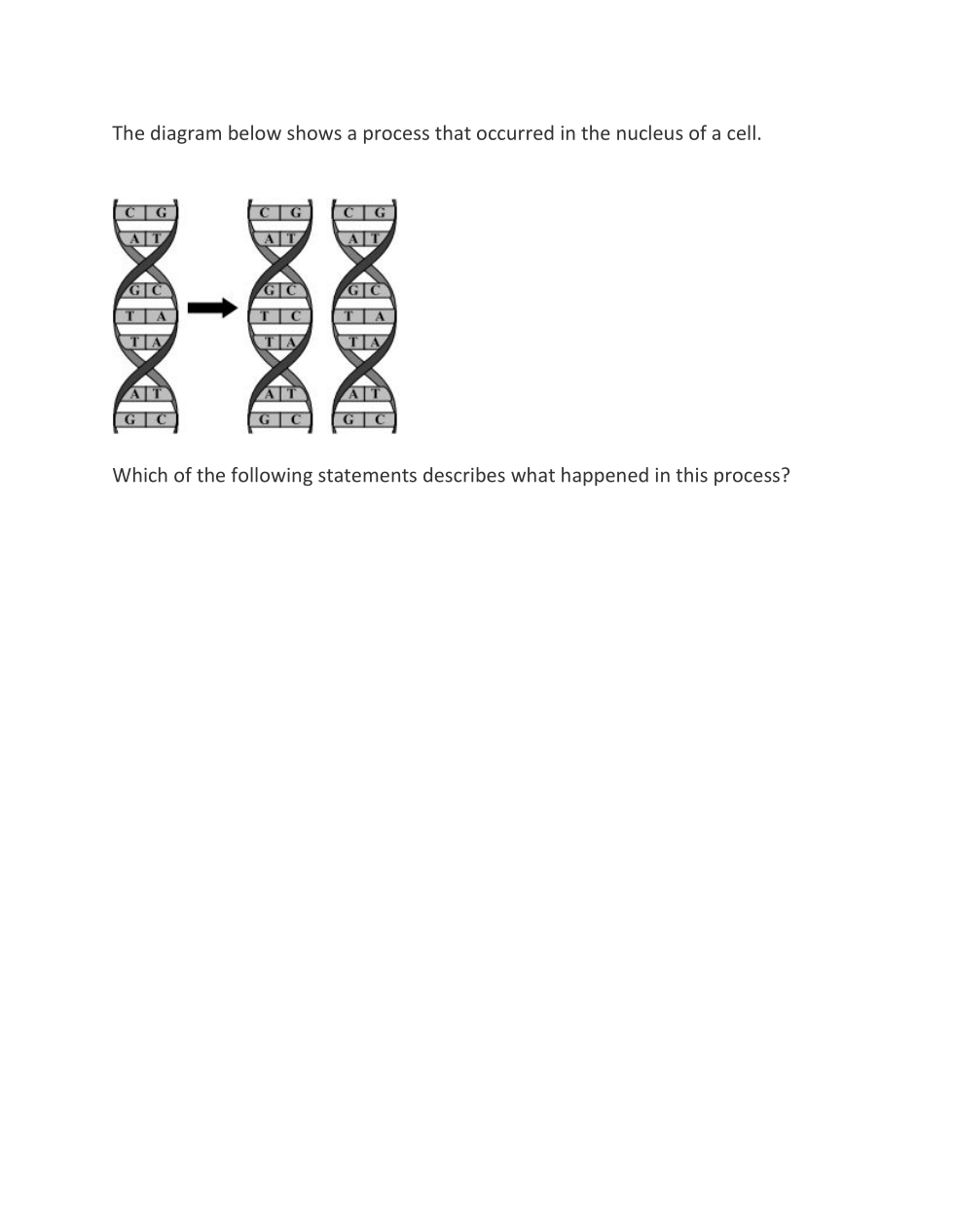
Which of the following statements describes what happened in this process?
What amino acid does the DNA codon AGG code for?