These are homologous structures because their origins are different, but they look and act the same.
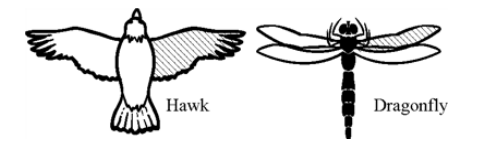
These are homologous structures because their origins are different, but they look and act the same.
Homologous structures show that two or more species could share a
Using a complete sentence, define embryology and discuss how it can be used to show an evolutionary relationship.
Butterflies taste with their legs, while humans taste with their tongues. In this way, butterflies' legs and humans' tongues are
The more homologous structures two species have, the closely related they may be.
Using
Joan wrote a science fiction story in which people only texted each other and never talked. They still had vocal chords, but the could not make sounds. Their vocal chords were
Which of the following is evidence of the evolution of living species?
These are homologous structures because their origins are different, but they look and act the same.
The genes and proteins of what animal would you expect to be more similar to the genes and proteins of a dog?

The diagrams show the developing embryos and the adult forms of various types of animals with backbones.
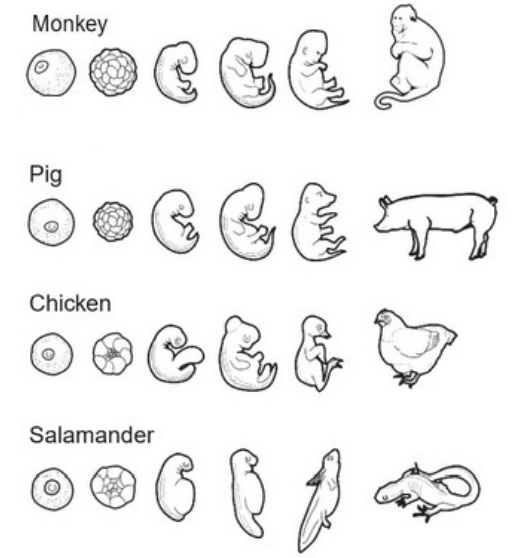
What statement is best supported by comparing the development of those four animals with backbones?
The embryos of all animals with backbones share an identical pattern of development into adult form. This is what they said.
Jolene: I think that the fin of the fish and the flipper of the whale are too different to even compare.
Azila: I think that the fin of the fish and the flipper of the whale have the same structure, but different functions.
Donna: I think that the fin of the fish and the flipper of the whale have a similar function, but differ in structure.
Using a complete sentence, state which friend has the best reasoning and why.