Log in
Sign up for FREE
arrow_back
Library

Ecosystem superheroes: Sea otters help keep coastal waters in check

star
star
star
star
star
Last updated about 3 years ago
4 questions
1
1
1
1
Question 1
1.

Question 2
2.

Question 3
3.

Question 4
4.

Read the paragraph below from the section "Sea Otters Were Once Targeted For Their Thick Fur."

"The islands might seem isolated. But humans have had an influence. Beginning about 200 years ago, hunters went there. They were looking for sea otters pelts. The animals once thrived there. Back then, there were hundreds of thousands of otters."

Which word could replace "influence" WITHOUT changing the meaning of the sentence?
interest
effect
concern
need
Read the paragraph below from the section "Help Keep Kelp Forests Healthy."

"Sea otters are a keystone species. Ecosystems depend on keystone species. Sea otters keep the kelp forests healthy. This helps local species too. They include fish, mussels and microorganisms."

What is the definition of "keystone species" based on the context clues?
plants and animals that are especially helpful to the environment
plants and animals that depend on microorganisms
plants and animals that live in kelp forests
plants and animals that are commonly found in ocean ecosystems
Which section from the article gives information about WHY the number of sea otters dropped?
Introduction [paragraphs 1-3]
"Sea Otters' Impact On Ecosystems"
"Help Keep Kelp Forests Healthy"
"Sea Otter Populations And The Killer Whale Threat"
Select the paragraph from the section "Sea Otters' Impact On Ecosystems" that explains what happened in areas that had no sea otters.
Sea otters have a huge appetite. Adults eat up to 11 kilograms (24 pounds) of food every day. This is about a quarter of its own body weight. They do this to survive.
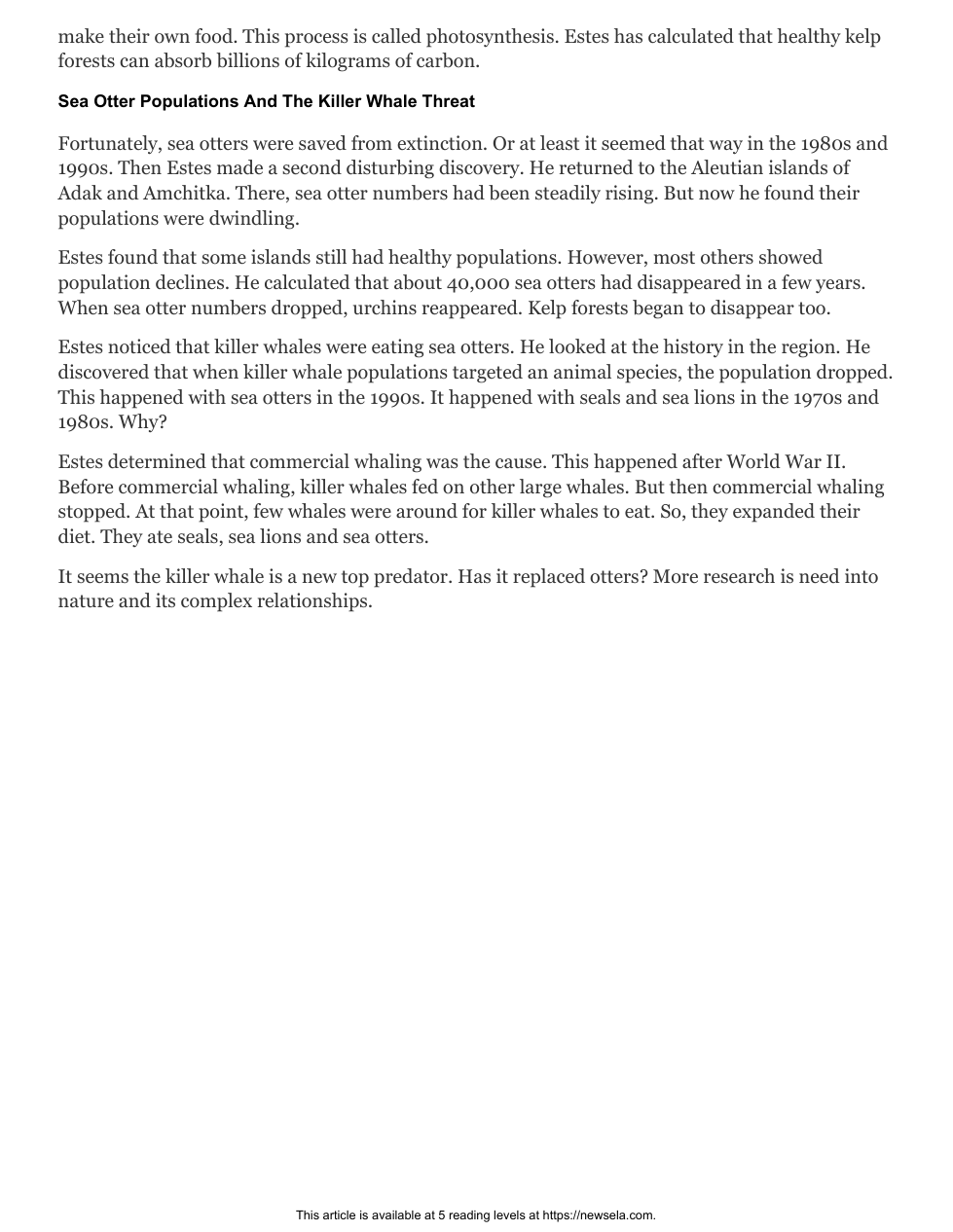
Estes wanted to know how otters shaped the ecosystem and what happened to the ecosystem after otters declined. So he began studying the seafloors around islands. He observed areas where sea otters had survived. He also observed areas where they disappeared.
Islands without sea otters had huge urchins. They littered the empty seafloor. Underwater forests of kelp used to grow there. Now the forests were gone. The urchins consumed every kelp plant in sight. "Our results were eye-opening," he says.
Things were different where sea otters survived or had been reintroduced. There was lots of kelp on those islands. This showed the Estes that removing otters changed the ecosystem. It had a negative effect.