Solve by either using substitution or elimination
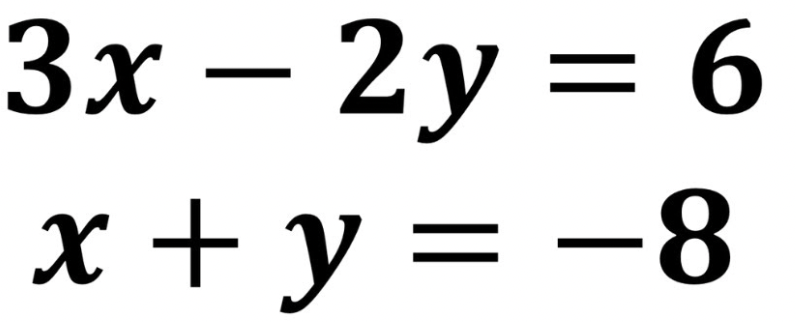
Write your answer as an ordered pair (x,y)
Solve by either using substitution or elimination
Write your answer as an ordered pair (x,y)
Work in small groups to complete these problems. Some of them are like mathematical puzzles! Watch the videos to see how to solve the tougher ones...or try them on your own first. :)
Work in small groups to complete these problems. Some of them are like mathematical puzzles! Watch the videos to see how to solve the tougher ones...or try them on your own first. :)
Solve by either using substitution or elimination
Write your answer as an ordered pair (x,y)
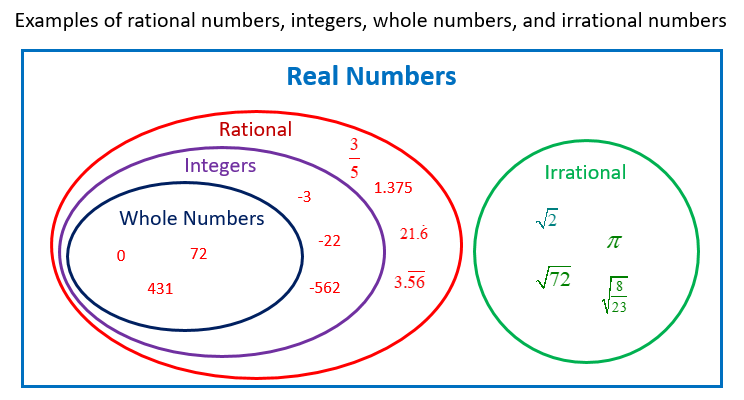
Rational numbers include whole numbers, fractions, or decimals that end or repeat.
Another way to think of this is that a rational number can be written as a fraction (ratio)
Sort each number into a category
3√5
9.31289452...
Rational
Irrational
Solve.
Type your answer in this format:
___
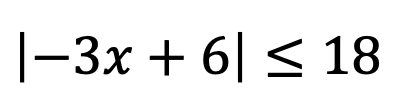
Select the correct number line for the solutions of:
Hint: sub -9 in for x.
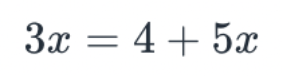
Solve each equation and then sort into a category based on the type of solutions.
| Draggable item | arrow_right_alt | Corresponding Item |
|---|---|---|
Hint: Subtract 5x first...plug back in to check! | arrow_right_alt | No real solution |
Hint: Factor & set equal to zero...plug back in to check! | arrow_right_alt | One real solution |
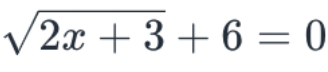
Hint: Subtract 6, then square both sides...plug back in to check! | arrow_right_alt | More than 1 real solution |
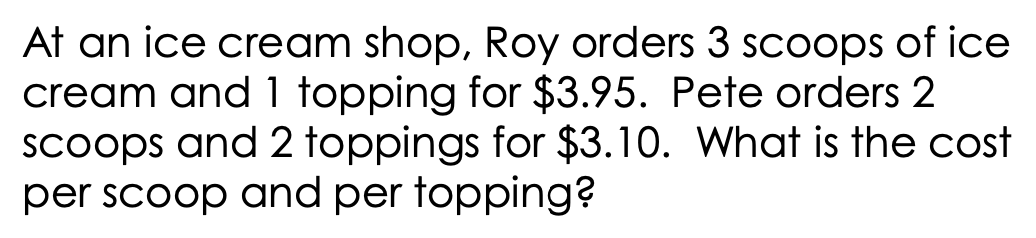
Cost per scoop =
Cost per topping =
Example:
Now you try:
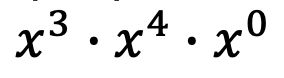
Simplify using properties of exponents
Example:
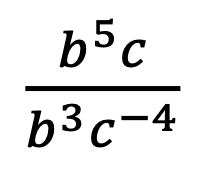
Subtract the exponents. Now you try:
Simplify using properties of exponents
Select ALL that apply.
A washing machine was purchased for $700 and loses
Type:
Use your equation from the previous question:
A washing machine was purchased for $700 and loses
Round to nearest penny and include $
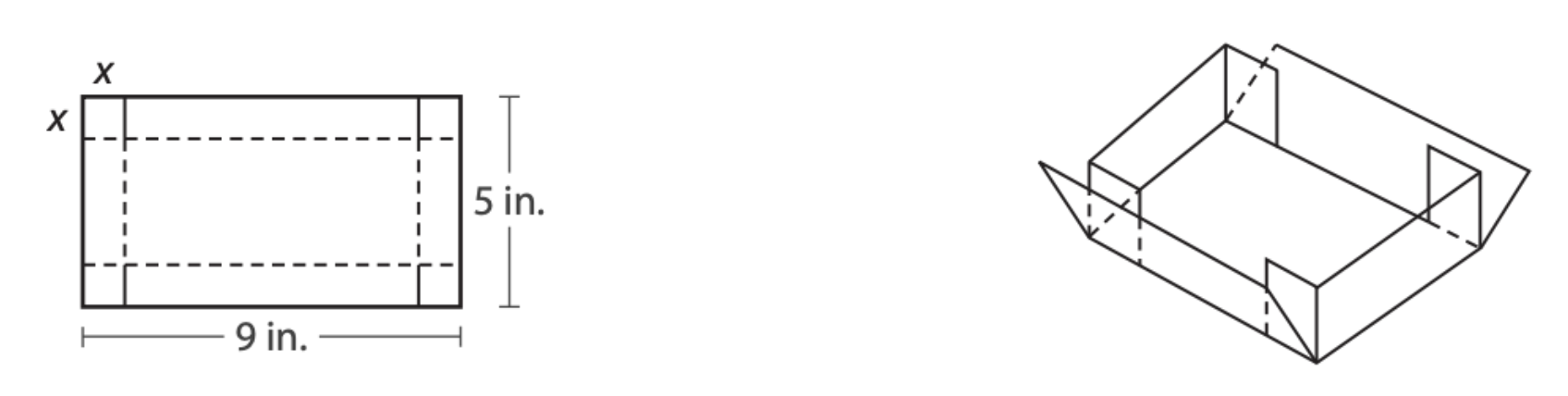
The dimensions of the box below are given as
height =
width =
length =
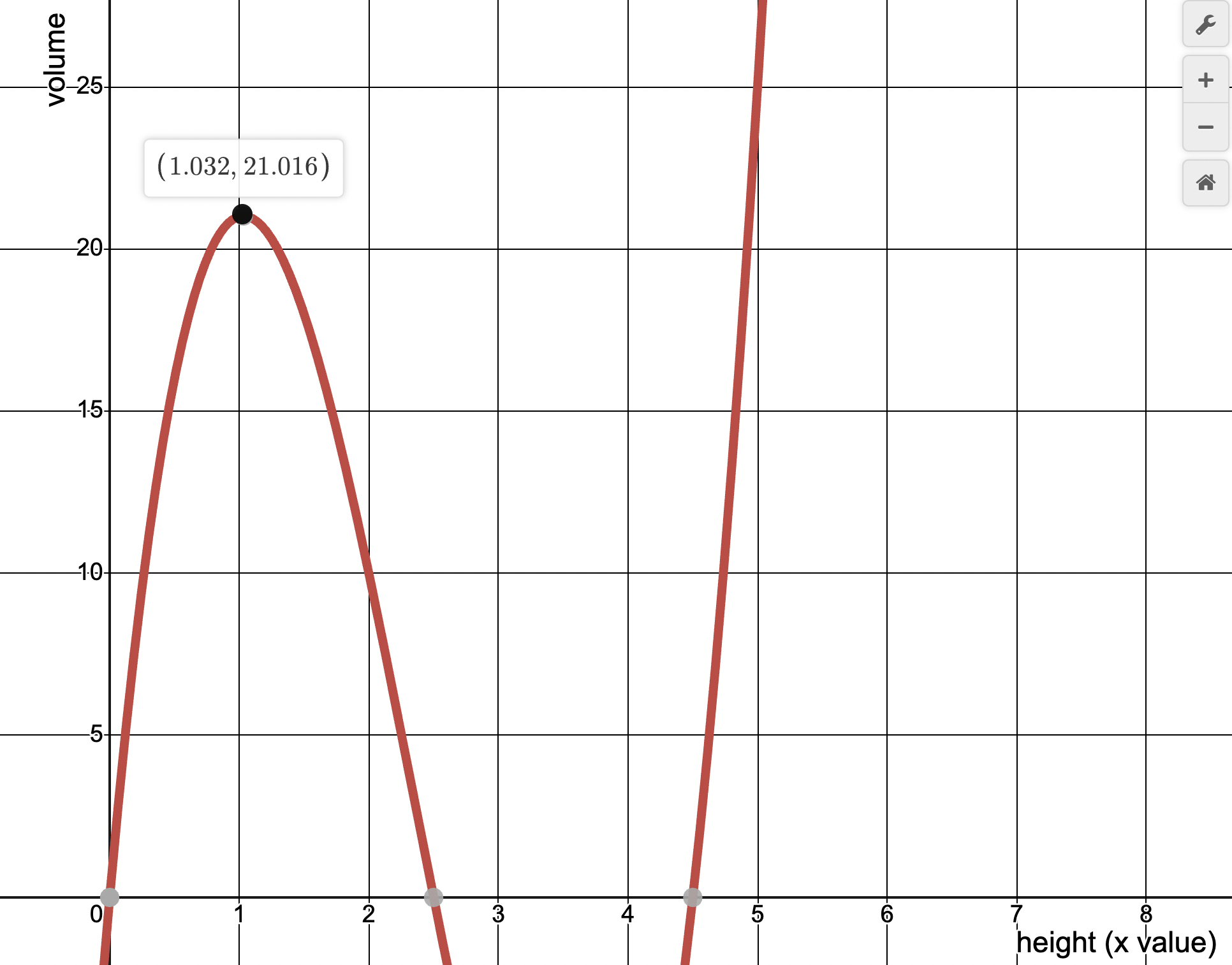
The volume of the box is given by the function:
The function is graphed below. Find the dimensions of the box that will give the maximum volume.
height =
Now sub that x-value into the width and length expressions:
width =
length =
Melissa drew a right triangle.
The length of the hypotenuse is
The perimeter is
Find the length of the other two sides of the triangle.
Enter the two numbers separated with a comma, and no spaces
A hot air balloon elevation is shown in the table below.
In which interval did the balloon gain the most altitude?
In which interval did the balloon drop the most?
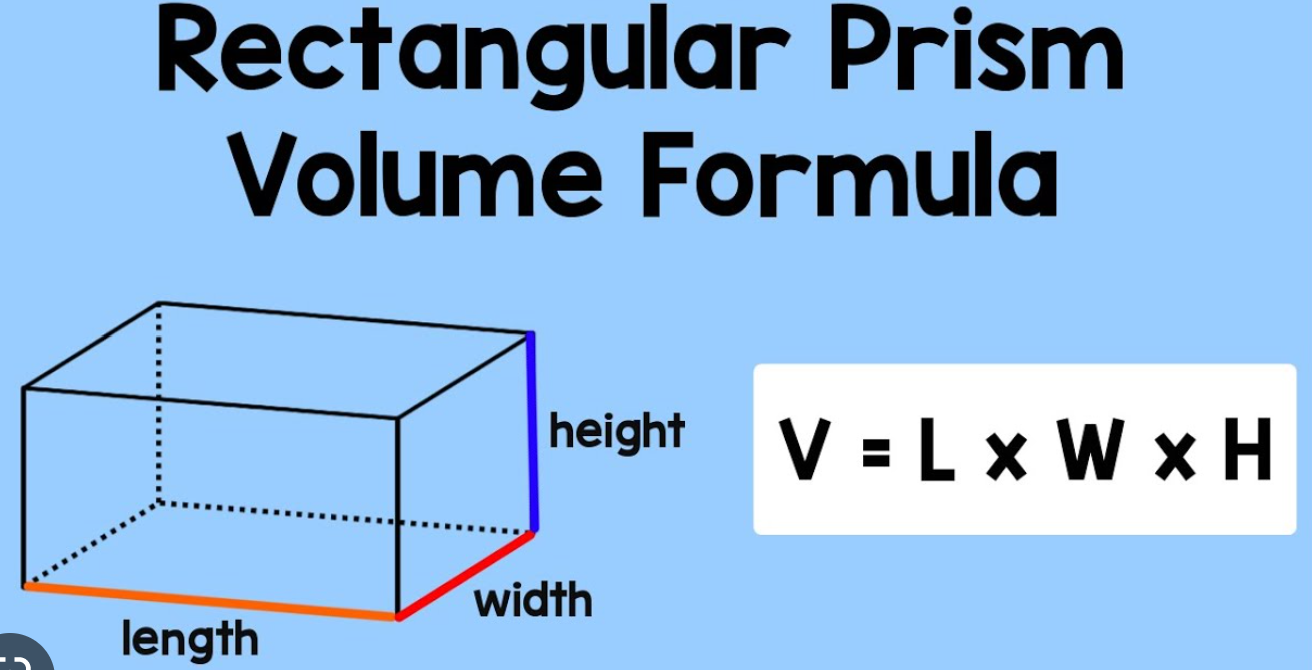
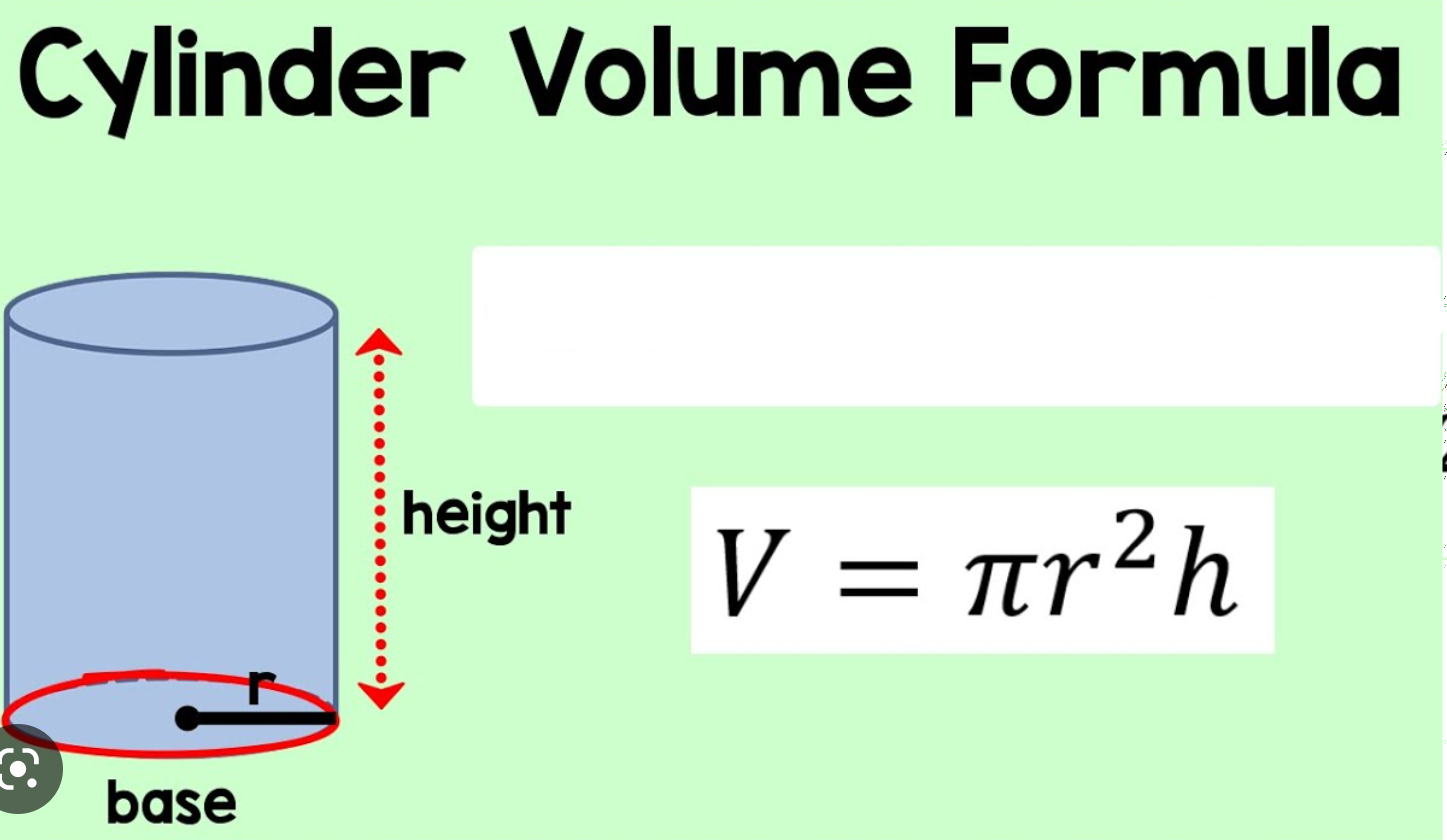
Use the formulas below:
Solve for
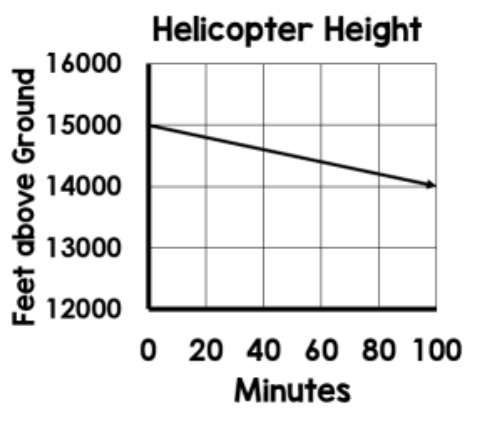
Write a function to represent the height of the helicopter.
Type:
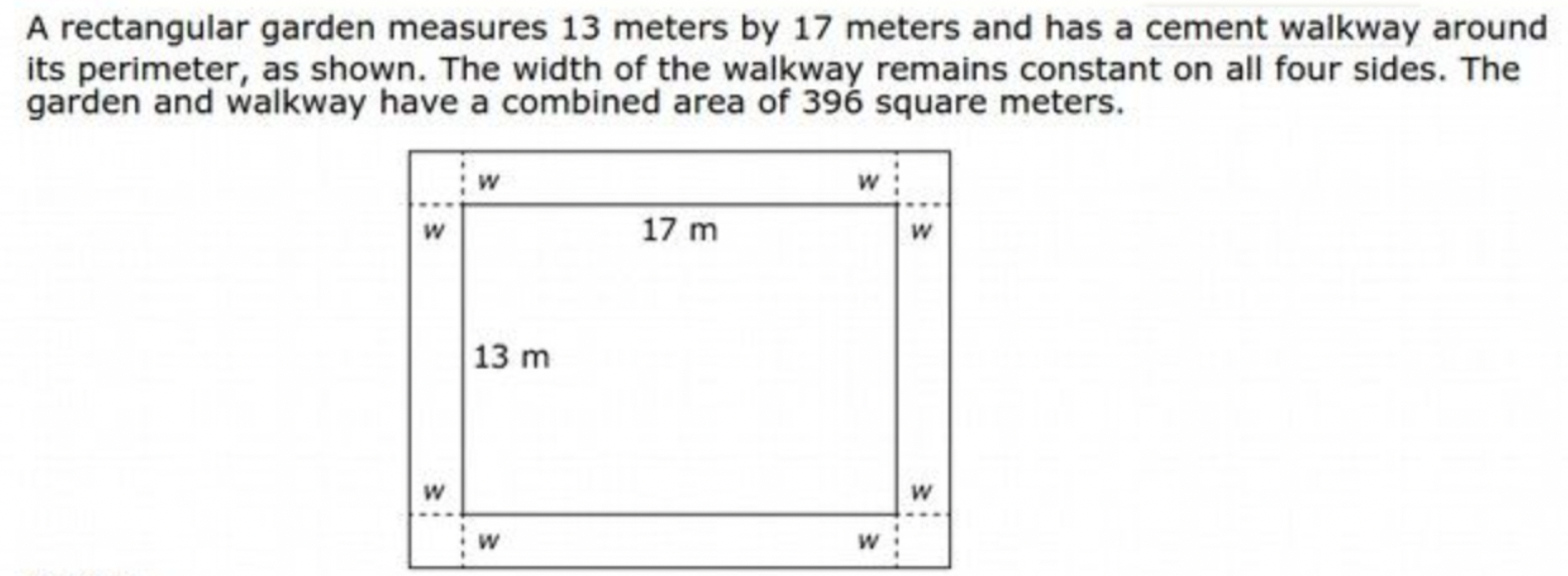
What is the width of the walkway? (solve for
Hint:
Length =
Width =
Area =
Area = (Length)(Width)
-FOIL the right side^
-Subtract
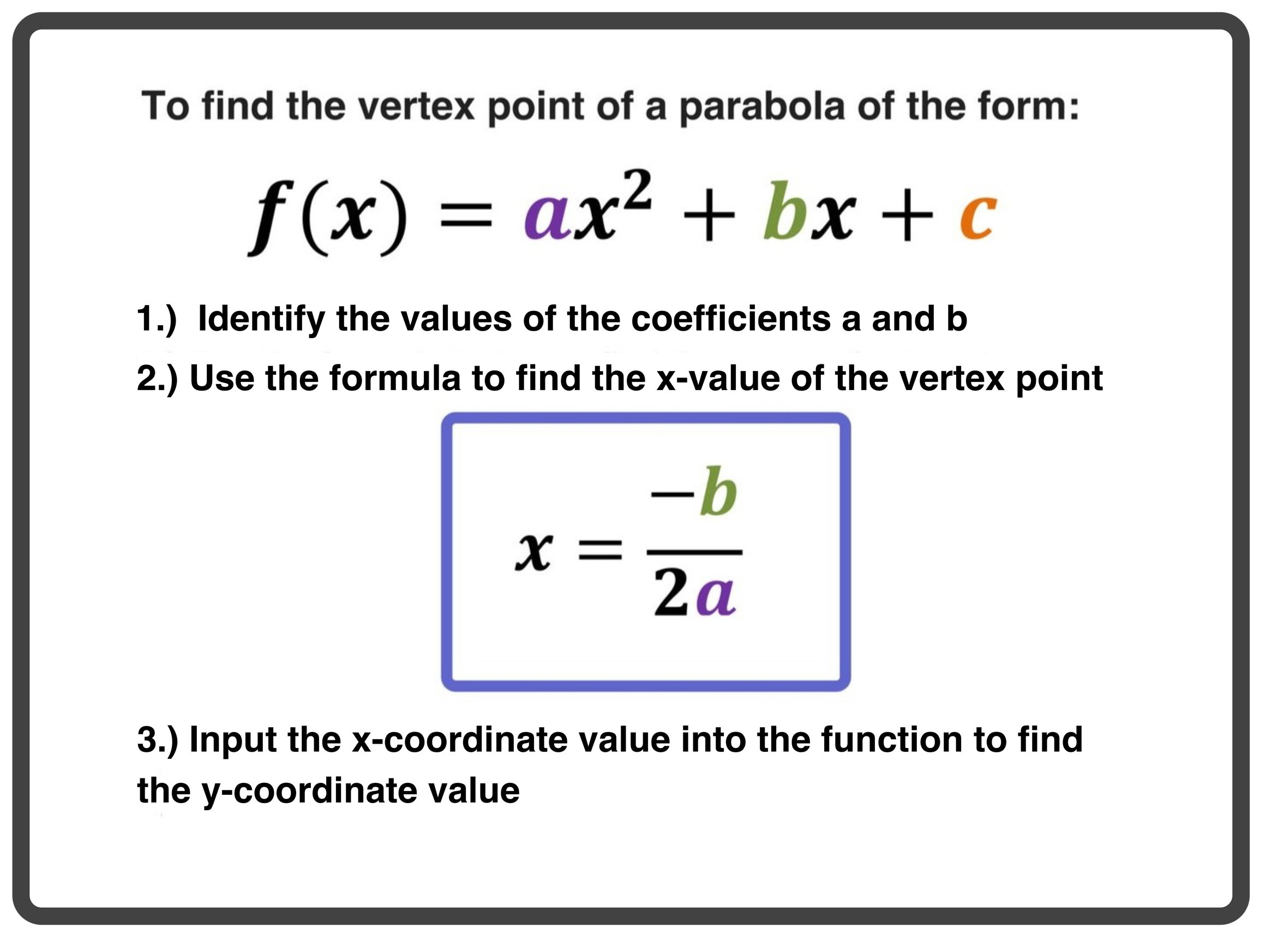
-Factor or use Quadratic Formula to solve for
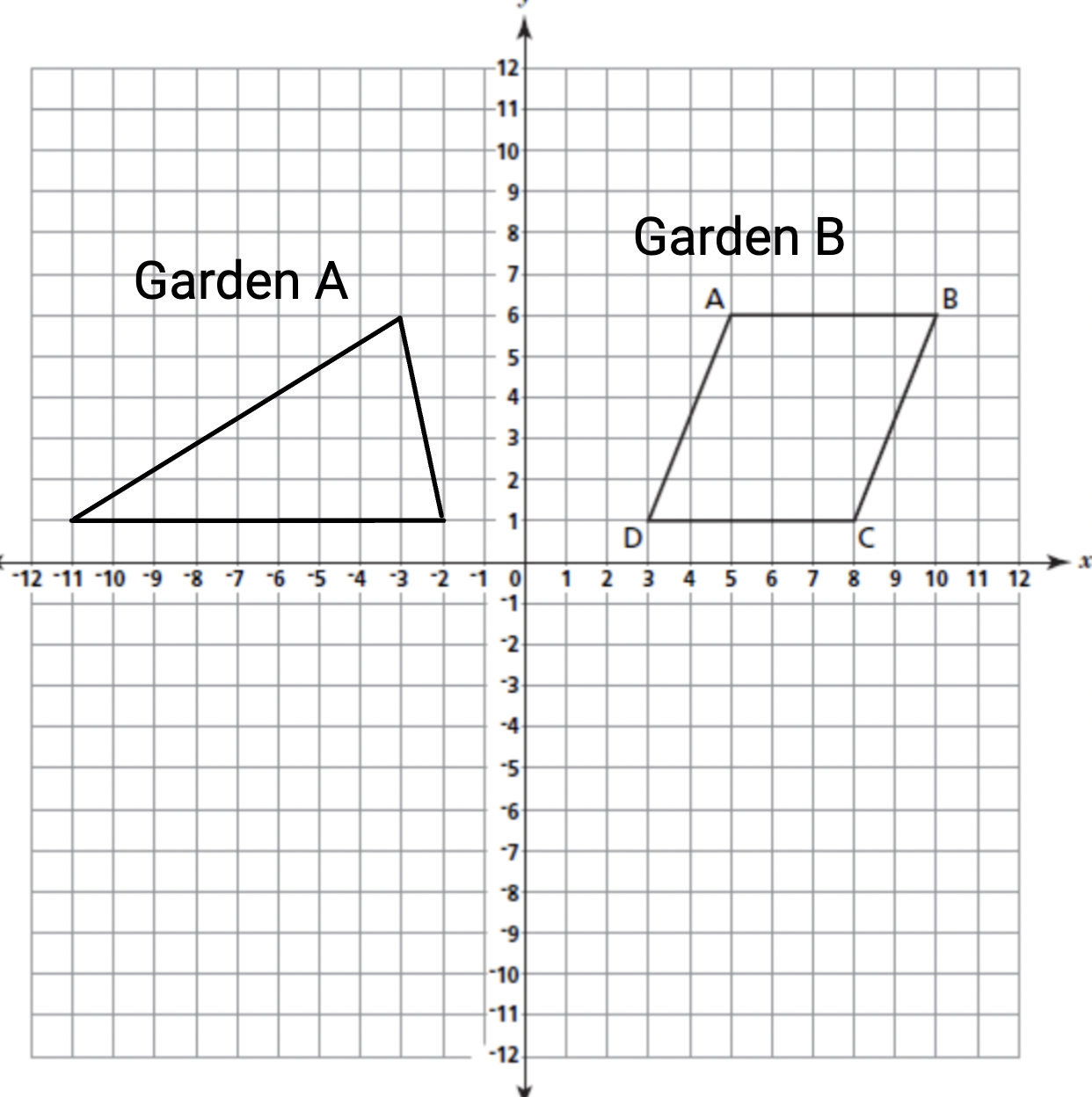
Two gardens are planted in the shape shown below.
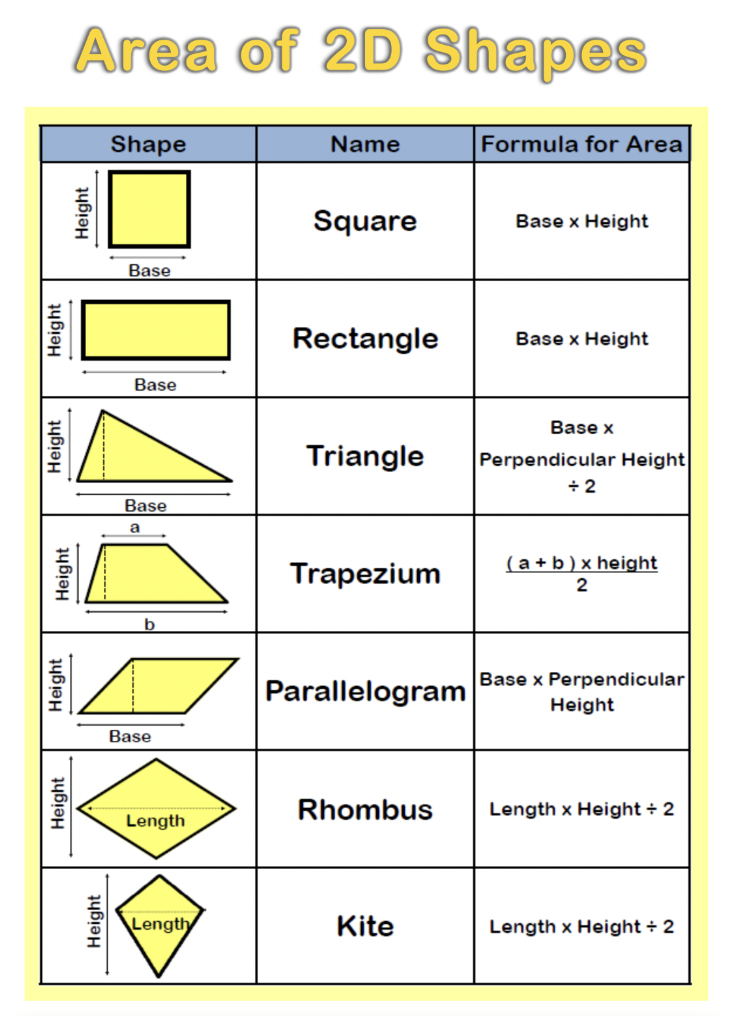
Which garden is bigger?
How much larger is that garden ?
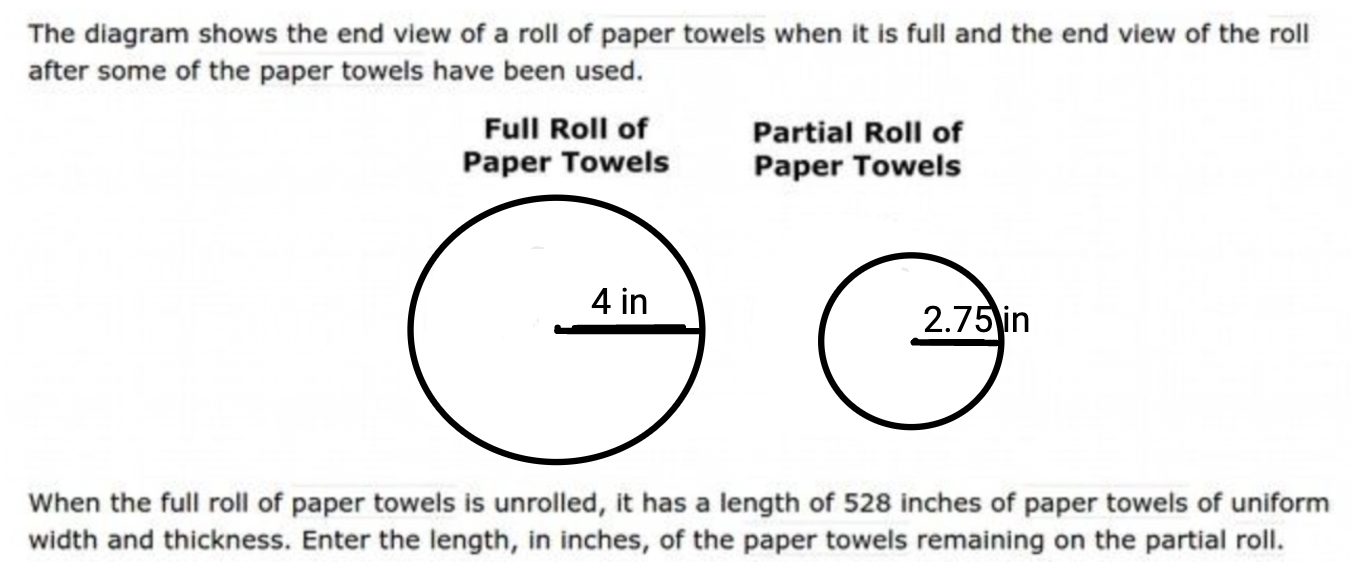
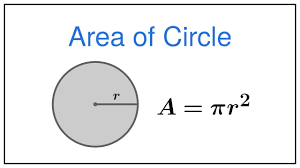
When the full roll of paper towels is unrolled, it has a length of 528 inches of paper towels. Enter the length, in inches, of the paper towels remaining on the partial roll.
Hint: Set up a proportion & cross-multiply to solve for
Round to the nearest whole number.
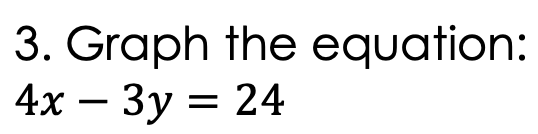
Graph the function below
Hint:
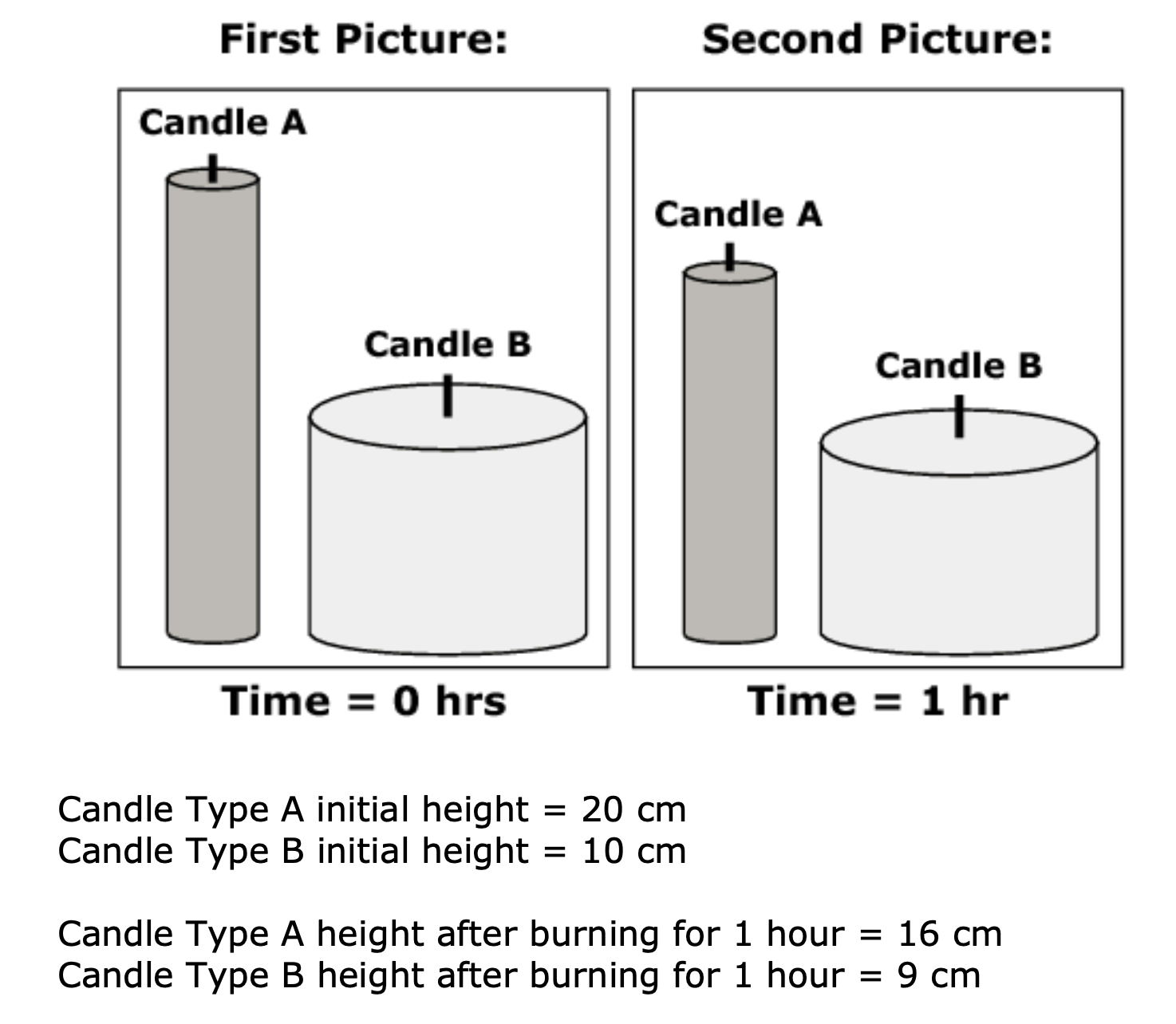
How high will candle A be after 3 hours?
How high will candle B be after 3 hours?
Which candle will burn out first?
Select ALL that apply.
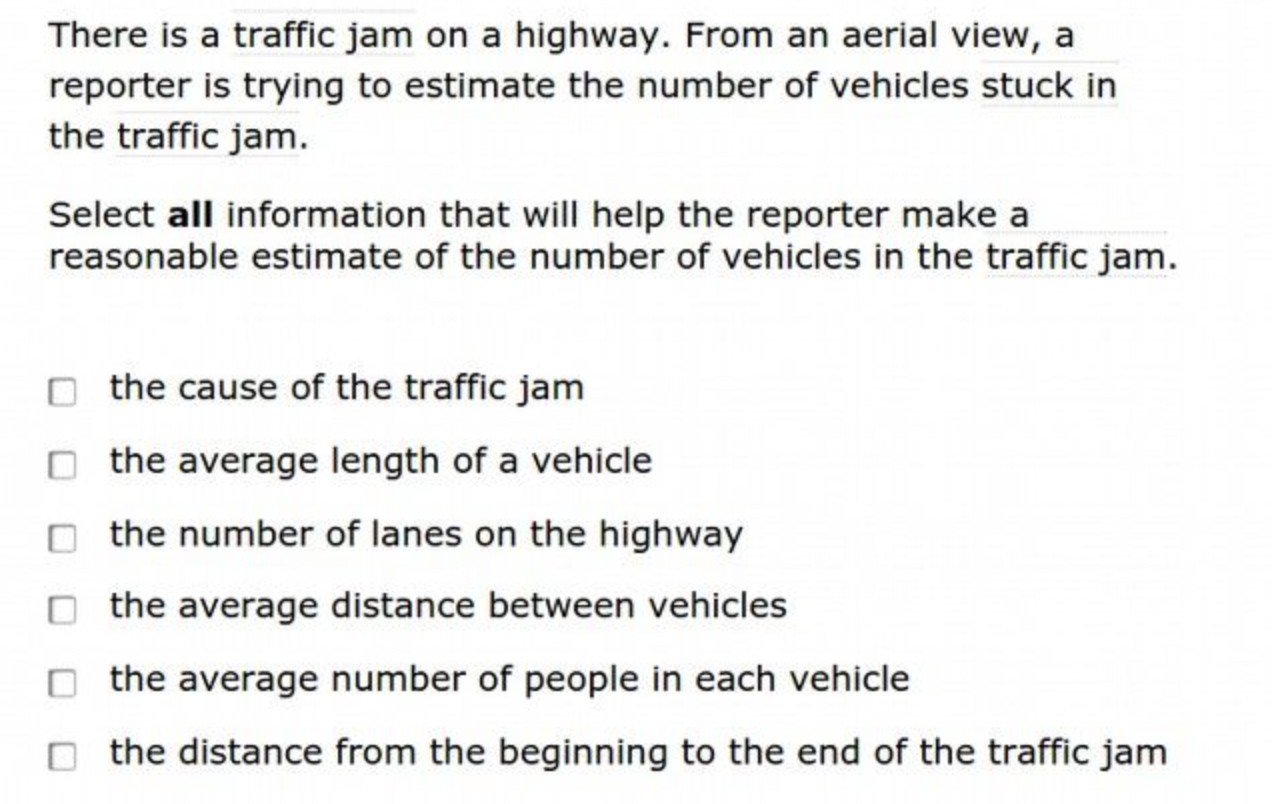
DRAW A PICTURE!
Mike sees a $58 sweatshirt at the store that is on sale for 30% off! He also has a coupon that will take an additional 20% off the sale price. How much will the sweatshirt cost?
Simplify
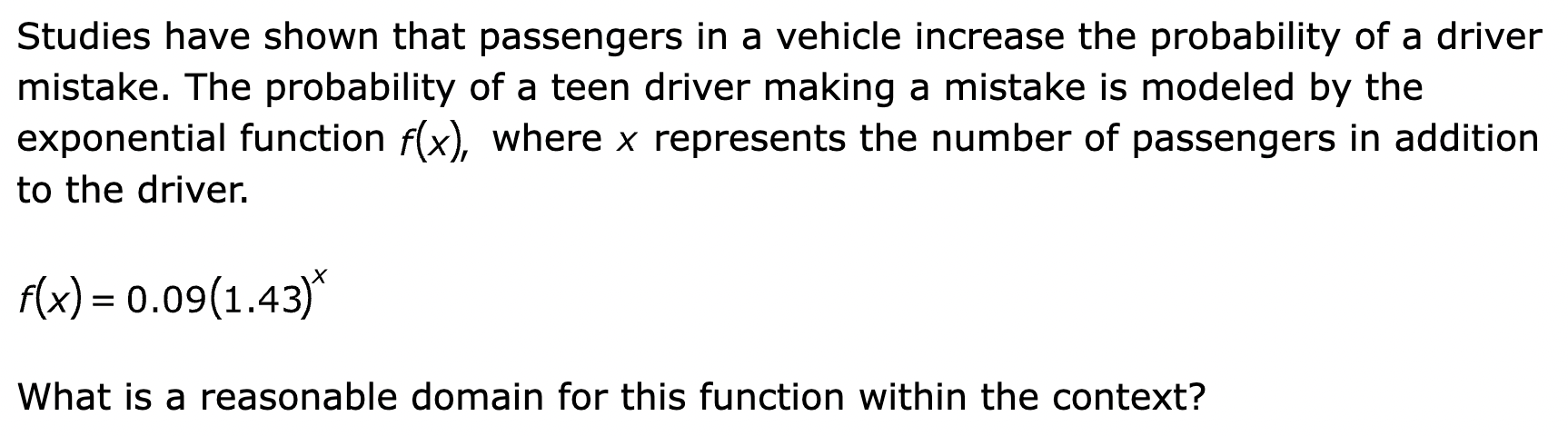
x represents the number of passengers in addition to the driver.
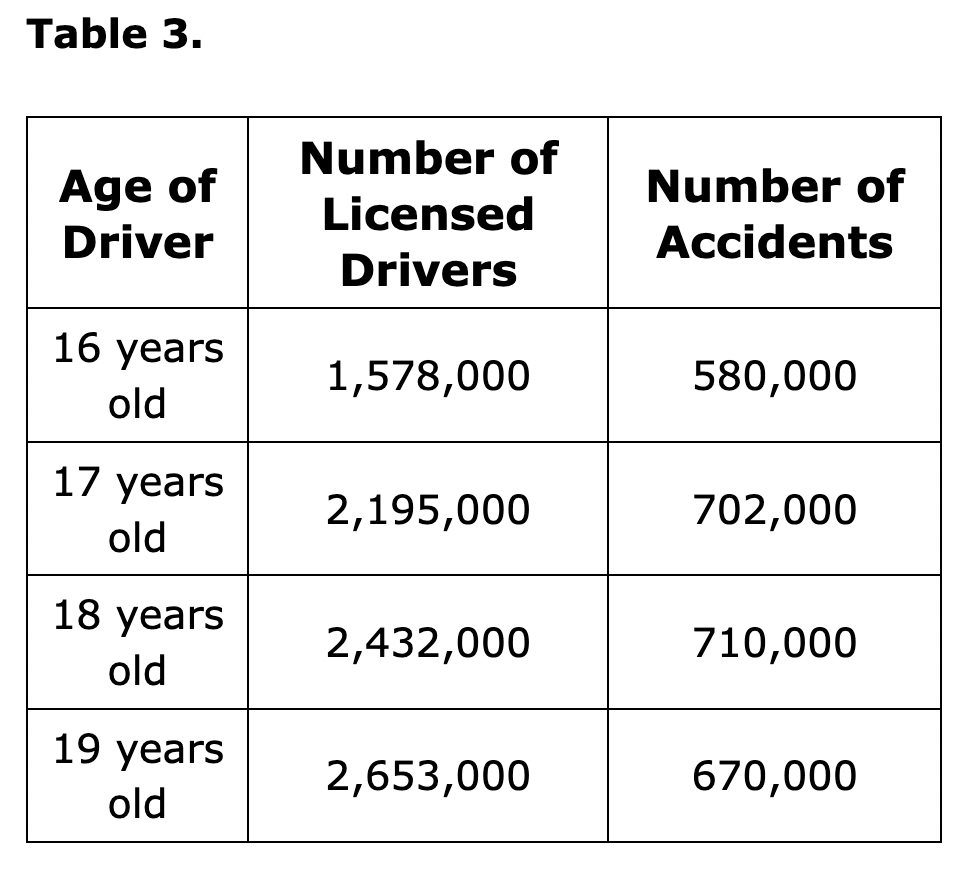
Table 3 shows the number of drivers and accidents by age of driver in the USA each year.
Your classmate, Kelly, claims that 16-year-olds are actually the safest teenage drivers because they have the least number of accidents. Find the probability for each age.
Type each answer as a percent and round to the nearest whole number.
Probability that a 16 year old gets into an accident
Probability that a 17 year old gets into an accident
Probability that a 18 year old gets into an accident
Probability that a 19 year old gets into an accident
Table 3 shows the number of drivers and accidents by age of driver in the USA each year.
Your classmate, Kelly, claims that 16-year-olds are actually the safest teenage drivers because they have the least number of accidents. Do you agree or disagree with Kelly? Explain any mathematics you did to reach your conclusion.
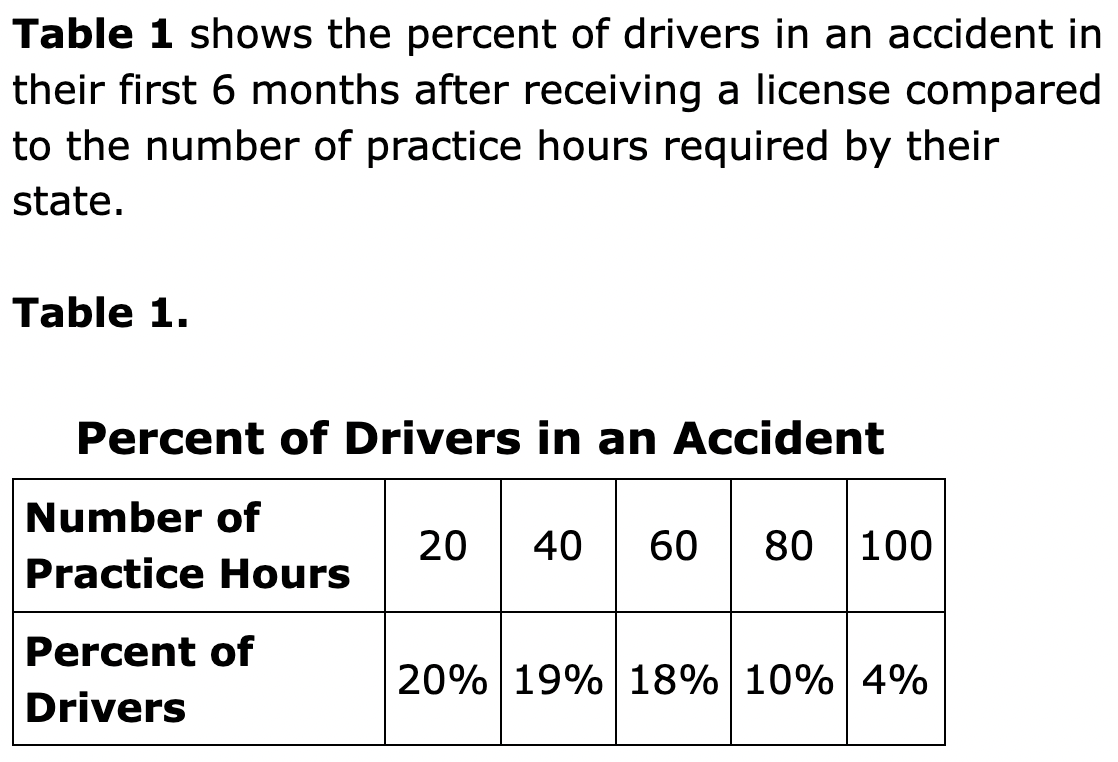
The table above shows data for new drivers in different states. Use the information to determine the average rate of change from states that require 20 hours of practice to states that require 100 hours.
Explain what the rate of change represents for this table (use your answer from above)
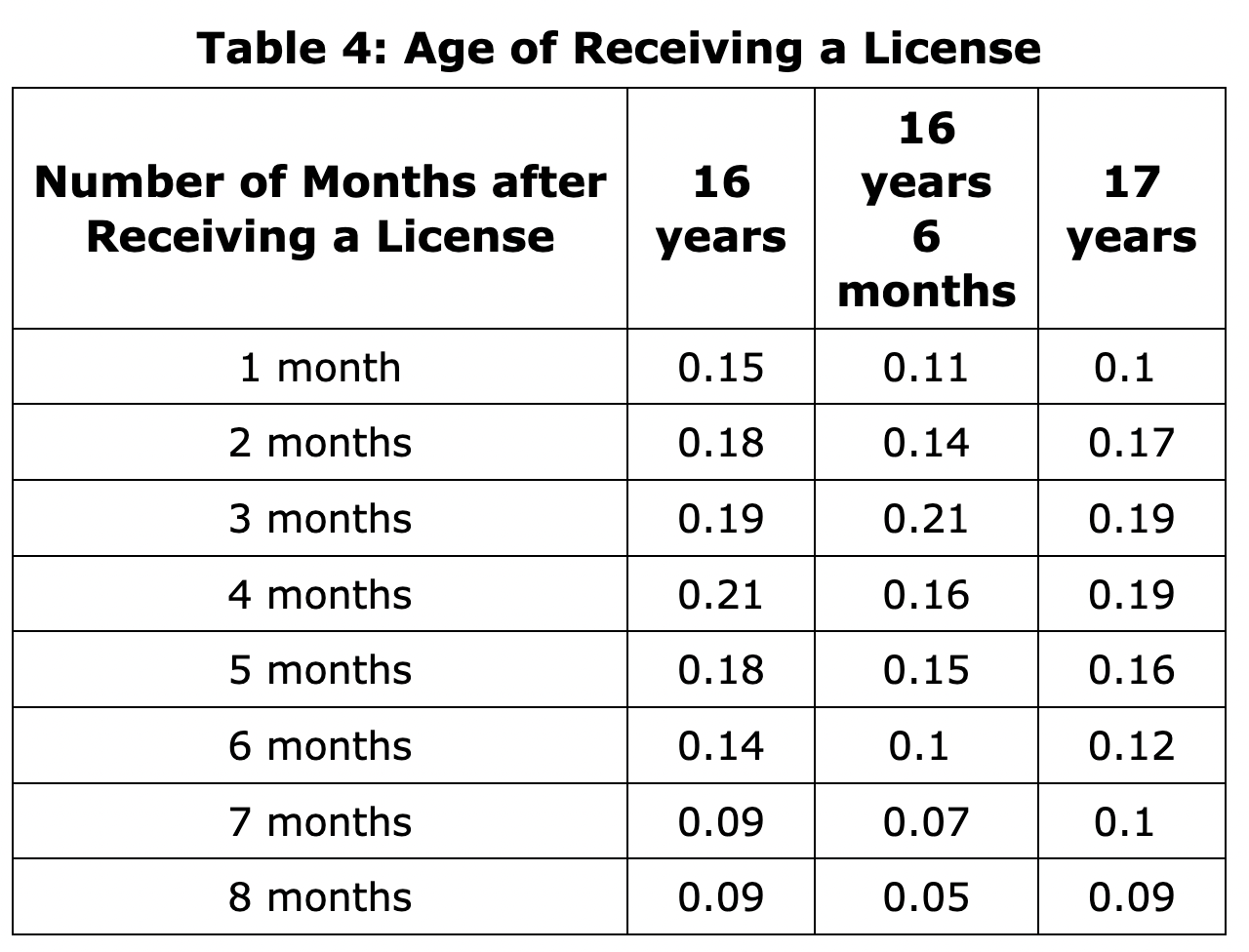
A recent study reported the probability of a driver committing a moving violation during each of the first 8 months after getting their license.
Put these drivers in order from LEAST likely to get a ticket to MOST likely
5 months after getting your license at 17 years
4 months after getting your license at 16 years
8 months after getting your license at 16.5 years
7 months after getting your license at 16.5 years
1 month after getting your license at 17 years
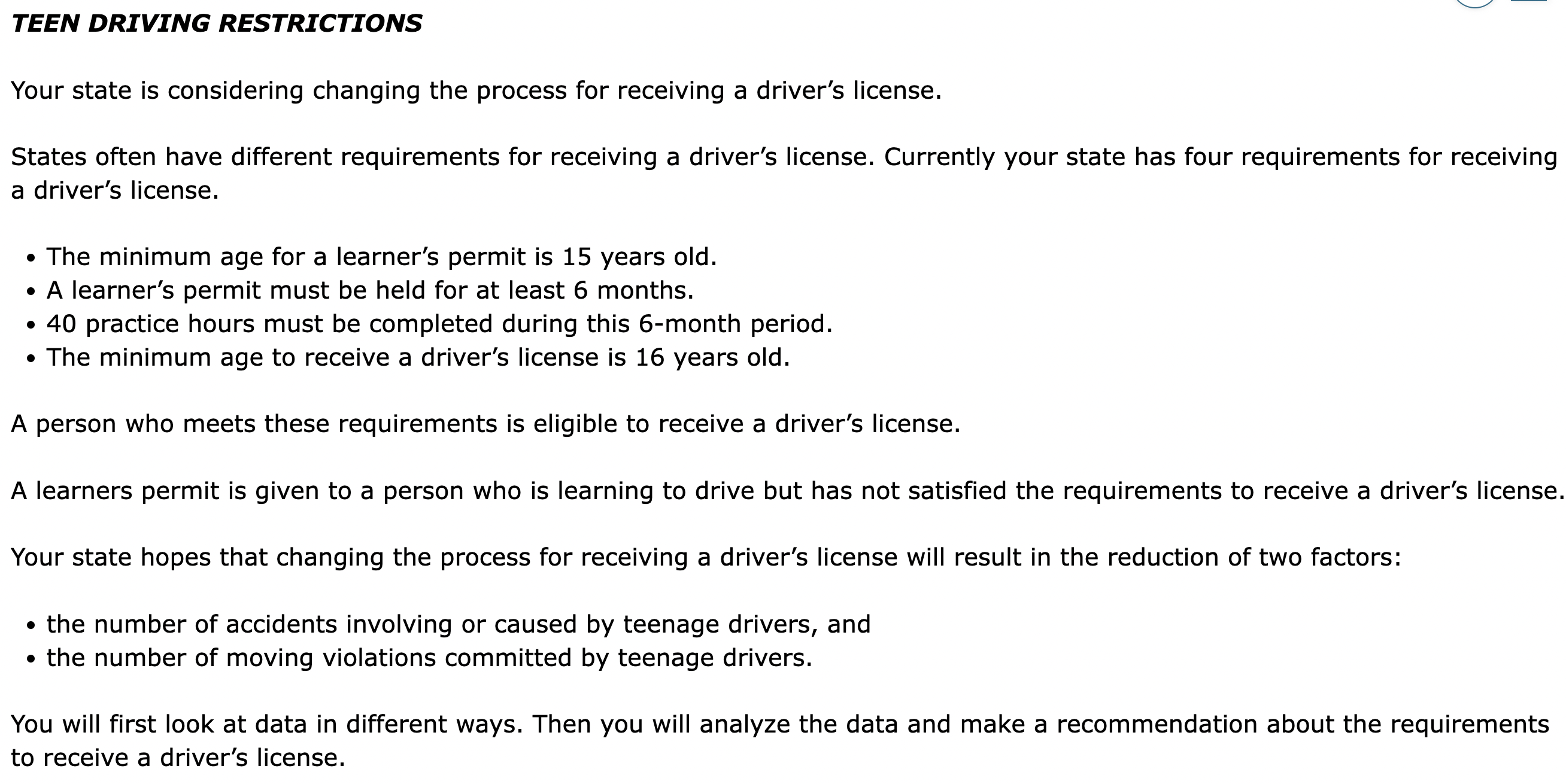
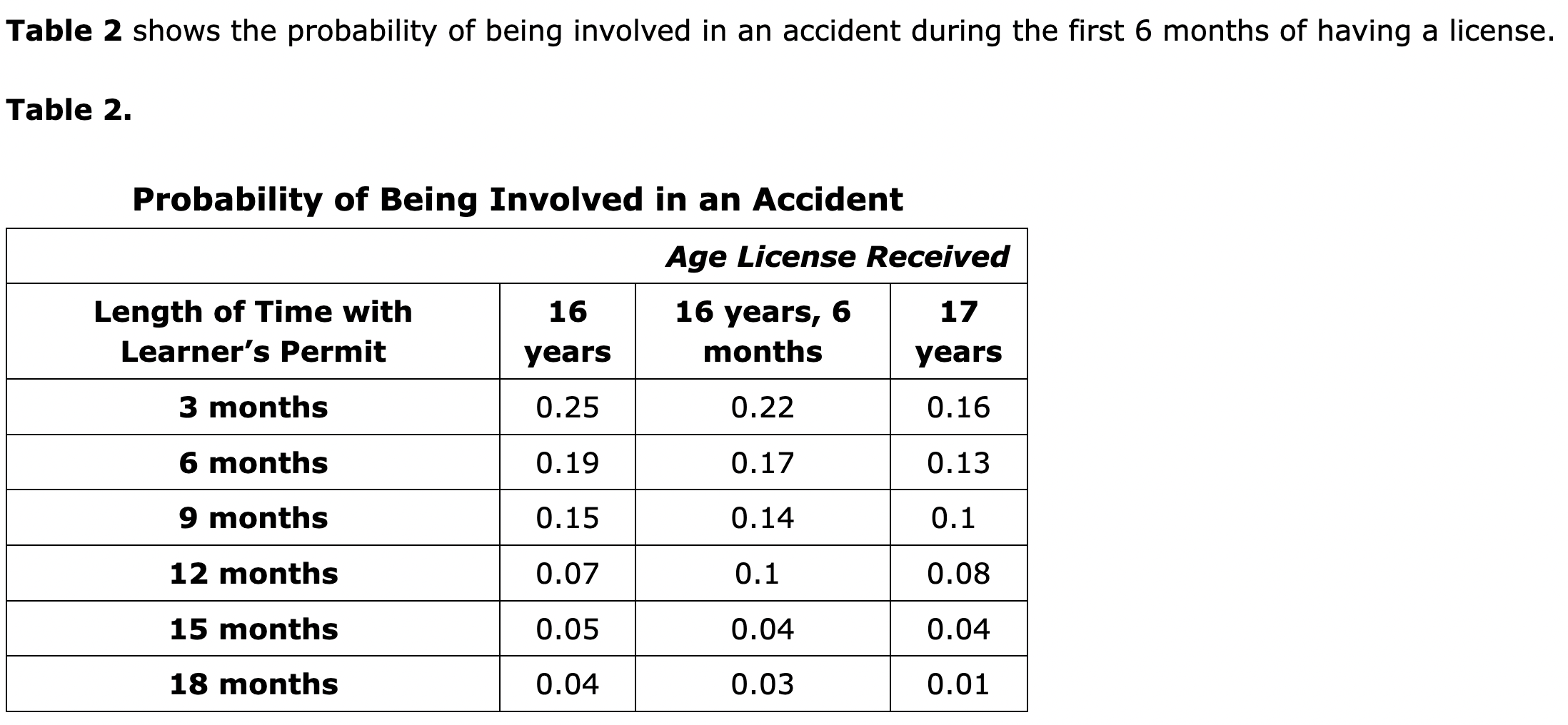
Currently you can get your license at 16 years old after having a permit for 6 months.
If there are 13,000 drivers that get their license each year in your state, how many accidents can you expect?
A new law would make it so that those 13,000 new drivers would need a permit for 12 months before they can get their license at 16 years old. How many accidents can we expect then?
Given all the data from above, and using your answers from this section....What changes would you recommend to the state to make the roads safer?
Recommendations could include:
-Changing the age a driver can get their permit
-The number of practice hours required
-The amount of time a driver must hold their permit
-The age a driver can get their license