Log in
Sign up for FREE
arrow_back
Library

Biology - Evolution and Speciation - Classwork

star
star
star
star
star
Last updated 10 months ago
84 questions
Section 1 - Darwin's Theory of Evolution
1
1
1
1
Section 2 - Natural Selection
Section 3 - Genetic Drift
Section 4 - Evidence for Evolution
1
1
1
1
1
1
Section 5 - The Rise of Mammals Video and Questions
Section 6 - Speciation
Section 7 - Quiz Review
1
10
10
10
10
1
1
1
1
1
1
1
1
1
1
1
1
1
1
1
1
1
1
1
1
1
1
1
1
1
1
1
1
1
The material for this topic is on CK12. Click the link below and:

  1. Read the article
  2. Watch the videos
  3. Complete the Practice
  4. Hit the TURN IN button on CK12 ONLY
Darwin
Question 1
1.

What are the two main ideas in Darwin's theory?

Question 2
2.

What is natural selection?

Question 3
3.

What is a species?

Question 4
4.

What did Darwin notice about the plants and animals on the different islands in the Galapagos?
1
Question 5
5.
1
Question 6
6.
1
Question 7
7.
1
Question 8
8.
1
1
Question 10
10.
1
Question 11
11.
1
Question 12
12.
1
Question 13
13.
1
Question 14
14.
1
Question 15
15.
1
1
1
1
1
The material for this topic is on CK12 Click the link below and:

  1. Read the article
  2. Watch the videos
  3. Complete the Practice
  4. Hit the TURN IN button on CK12 ONLY
Evidence for Evolution
Question 21
21.

How do fossils provide evidence of evolution?

Question 22
22.

What are the four major categories of evidence for evolution from living species?

Question 23
23.

What are the two categories of comparative anatomy? (Explain what each means and how they show evidence of evolution)

Question 24
24.

What is comparative embryology? How does it show evidence of evolution?

Question 25
25.

What are vestigial structures? How do they show evidence of evolution?

Question 26
26.

How does comparing DNA show evidence of evolution?
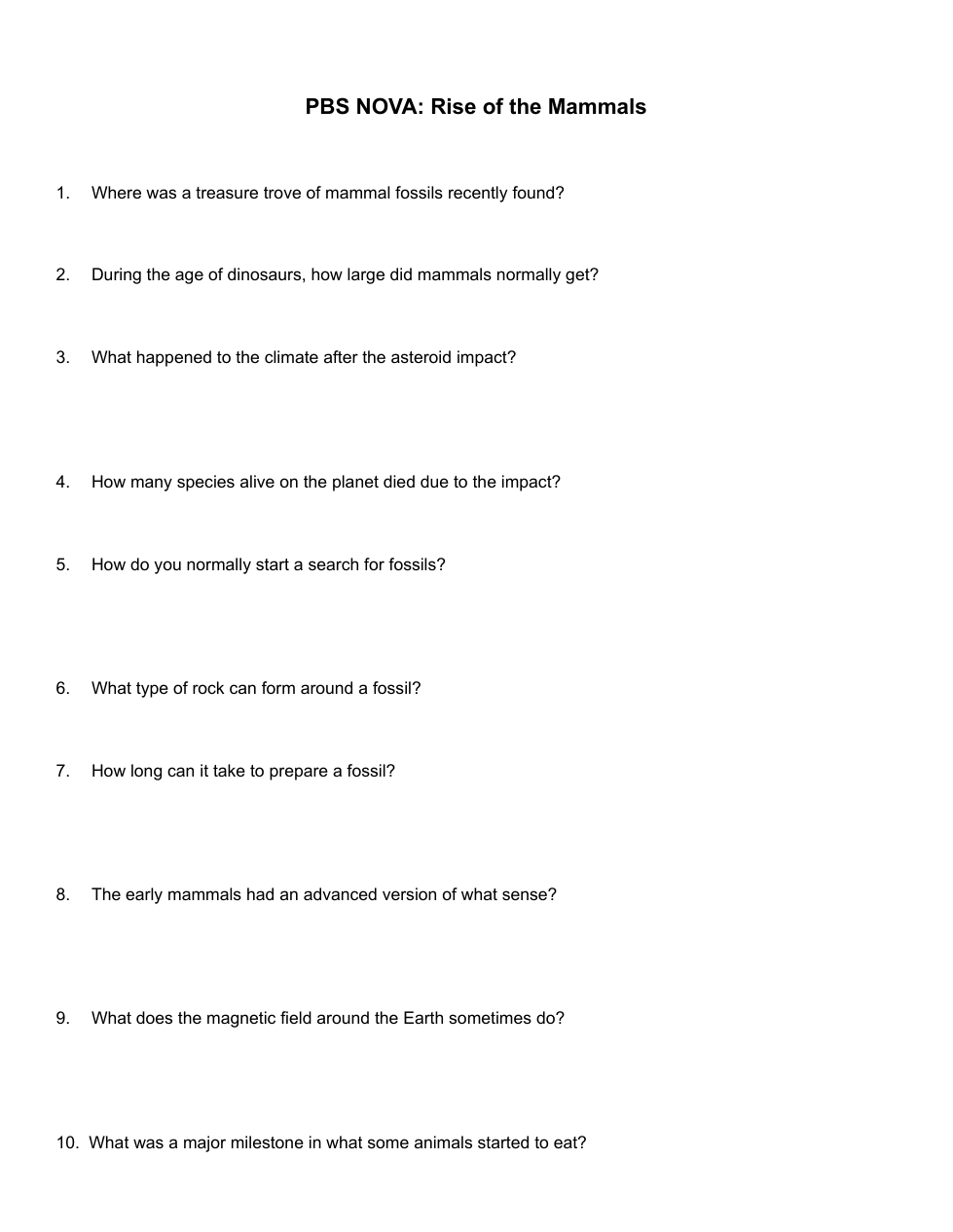
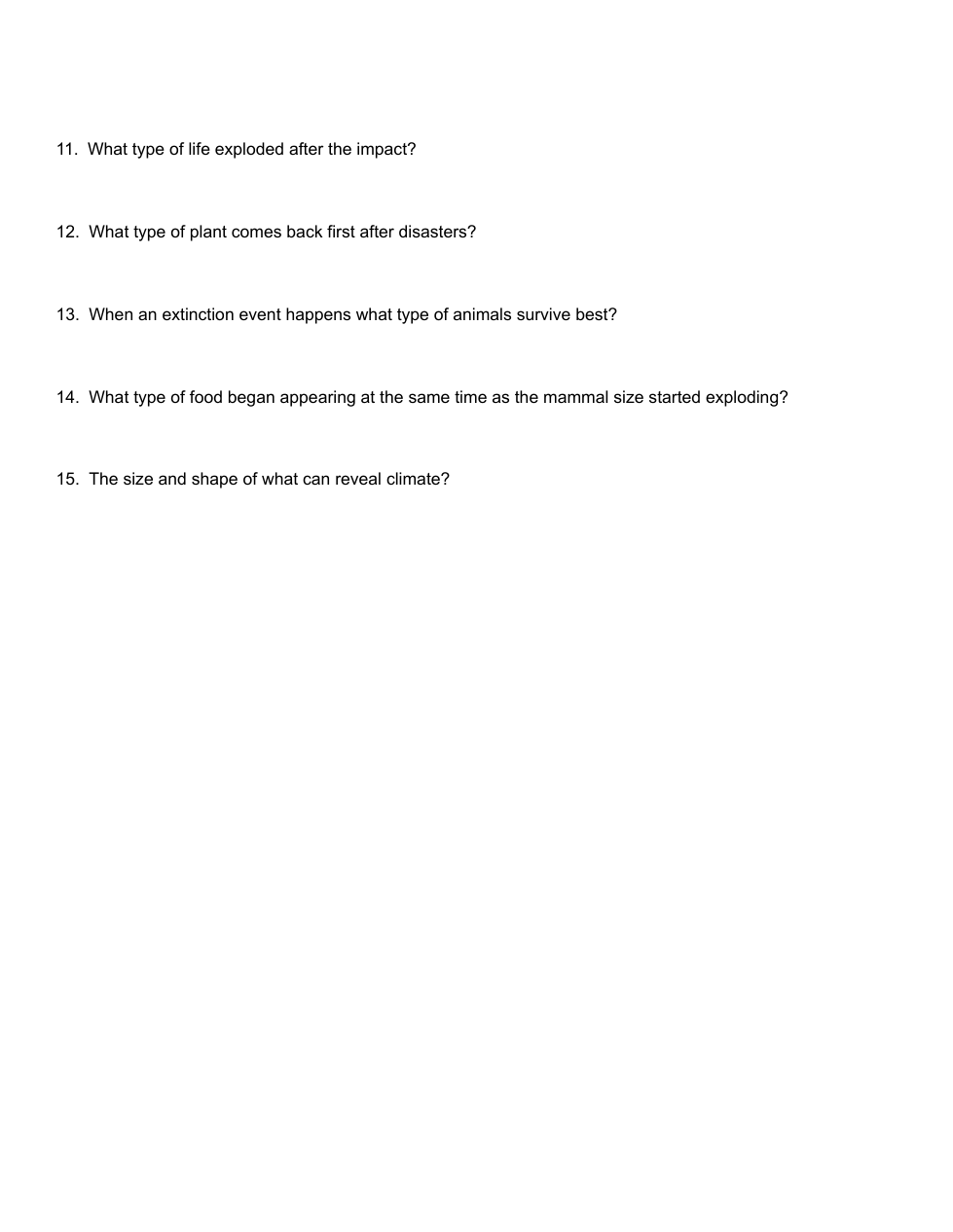
Watch the video Rise of Mammals and answer the questions below. The questions may not be in order in the video, so it is a good idea to read them ahead of time so that you know what you are watching for!
1
1
1
1
1
1
1
1
1
1
1
Question 37
37.
1
Question 38
38.
1
Question 39
39.
1
Question 40
40.
1
Question 41
41.
1
Question 42
42.
1
Question 43
43.
1
Question 44
44.
1
Question 45
45.
1
Question 46
46.
1
Question 47
47.
1
Question 48
48.
1
Question 49
49.
1
Question 50
50.
Question 51
51.

Question 52
52.

Question 53
53.

Question 54
54.

Question 55
55.

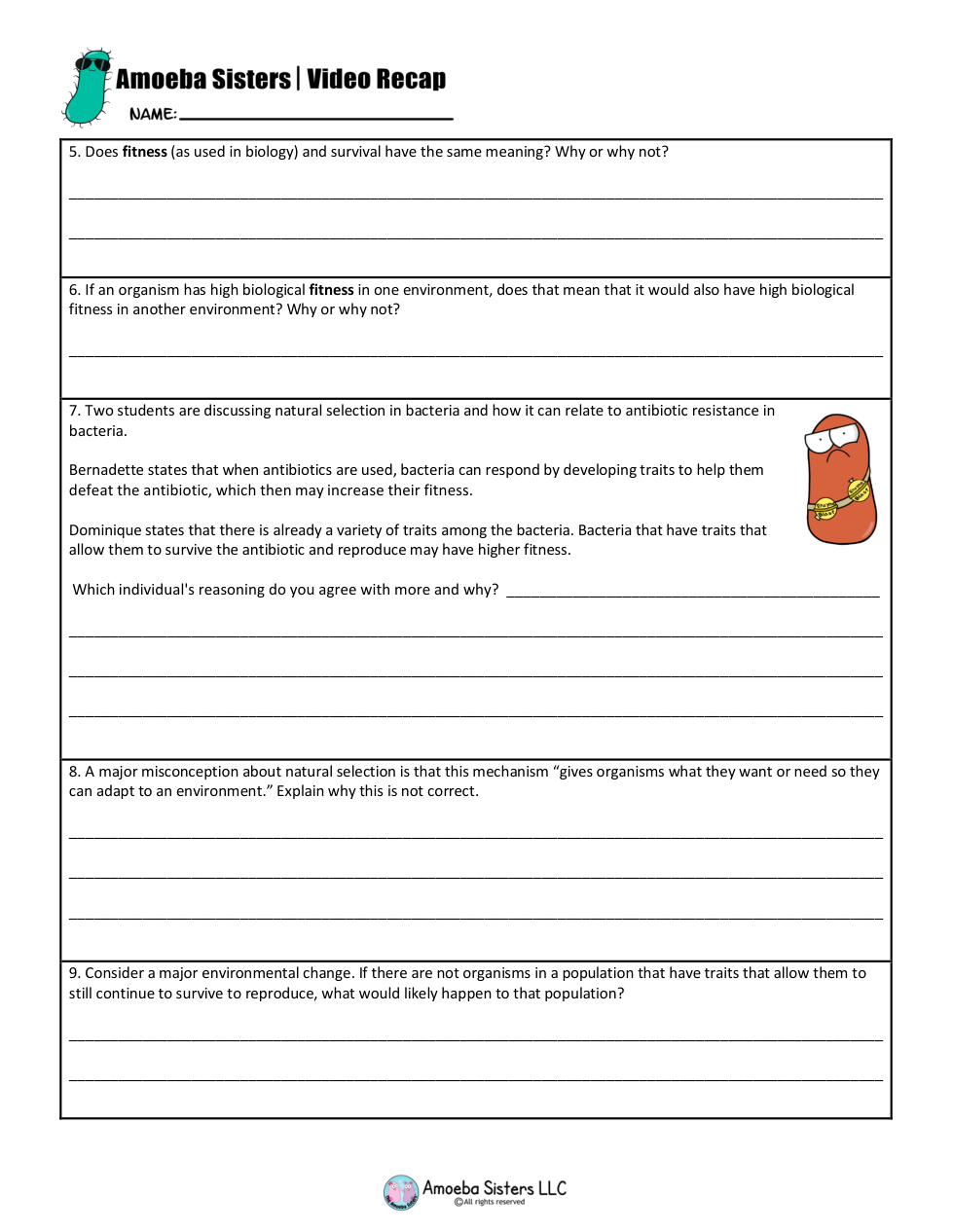
Explain how the environment plays a role in changing the frequency of a mutant allele in a population.

Question 56
56.

Question 57
57.

Question 58
58.

Question 59
59.

Question 60
60.

Question 61
61.

Question 62
62.

Question 63
63.

Question 64
64.

Question 65
65.

Question 66
66.

Question 67
67.

Question 68
68.

Question 69
69.

Question 70
70.

Question 71
71.

Question 72
72.

Question 73
73.

Question 74
74.

Question 75
75.

Question 76
76.

Question 77
77.

Question 78
78.

Question 79
79.

Question 80
80.

Question 81
81.

Question 82
82.

Question 83
83.

Draggable itemarrow_right_altCorresponding Item
arrow_right_alt
arrow_right_alt
arrow_right_alt
arrow_right_alt
Question 84
84.
Question 9
9.
Question 16
16.

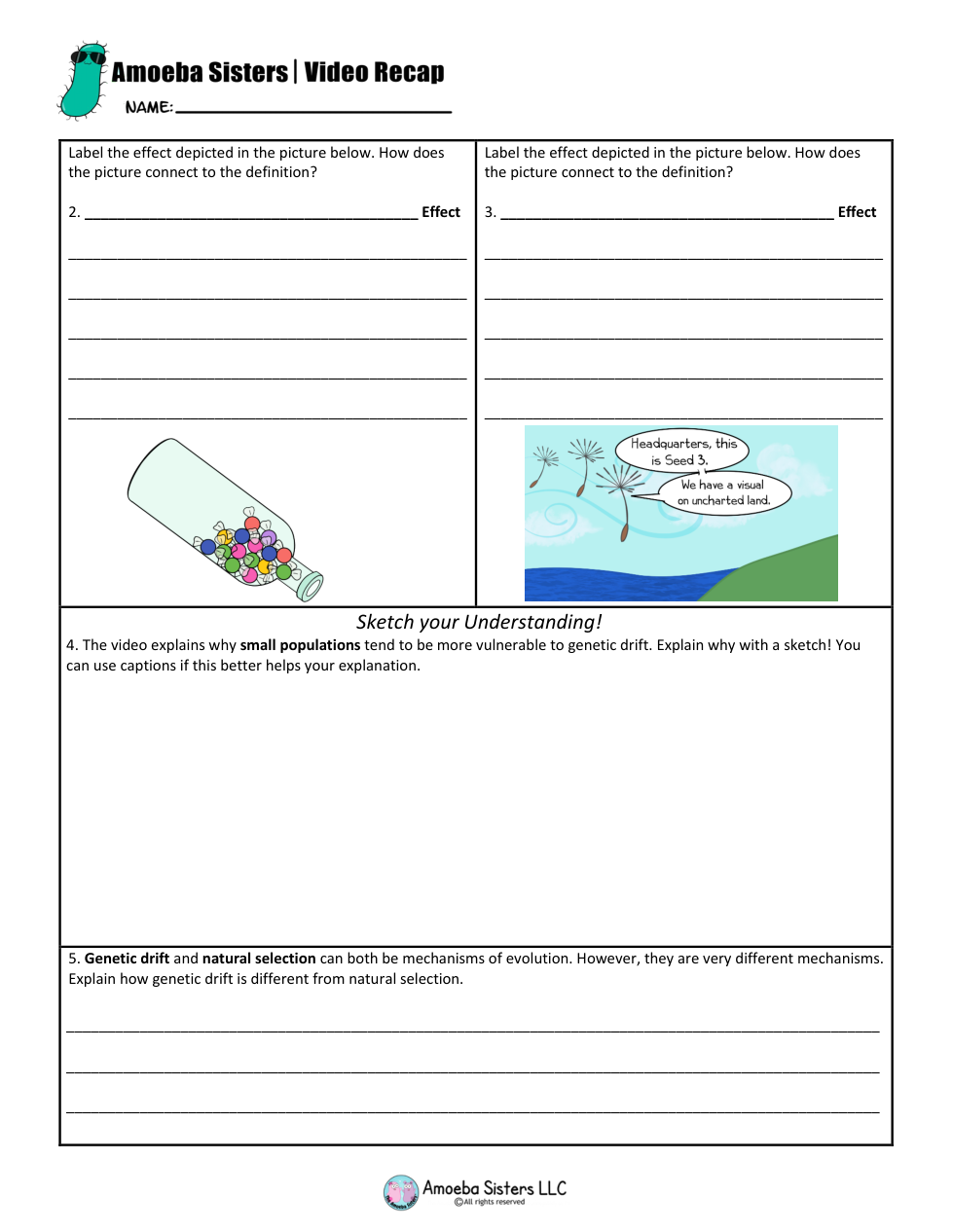
What is the name of the effect?

Question 17
17.

How does the picture connect?

Question 18
18.

What is the name of the effect?

Question 19
19.

How does the picture connect?

Question 20
20.

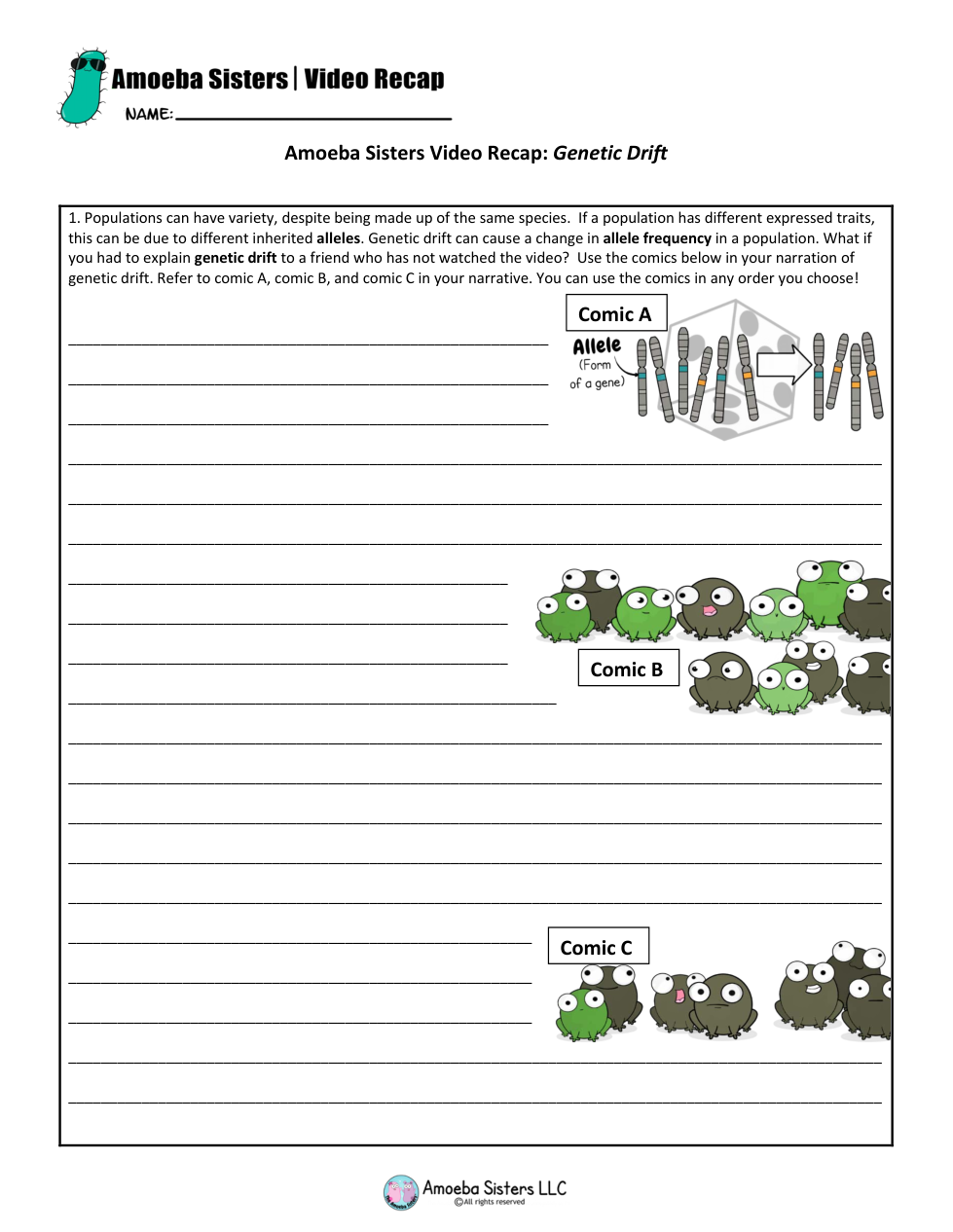
Looking for ONE key difference!

Question 27
27.
Question 28
28.
Question 29
29.
Question 30
30.
Question 31
31.
Question 32
32.
Question 33
33.
Question 34
34.
Question 35
35.
Question 36
36.
What are the two key points of Darwin's Theory of Evolution?
Species originated by Creationism and the Great flood
Species change over time and they change by natural selection
Species are determined by genotype and phenotype
Adaptation and mutation never create new species
True or False: “Mutations are caused by selective pressure in the environment.”
True
False
True or False: “The same mutation could be advantageous in some environments but deleterious in others.”
True
False
True or False: “The appearance of dark-colored volcanic rock caused the mutation for black fur to appear in the rock pocket mouse population.”
True
False
Which of the following is an example of an adaptation?
camouflage
a bee carrying pollen from one flower to another
peppered moths
hunting a population near to extinction
20 ants leave and start a new colony
Which of the following is an example of the bottleneck effect?
camouflage
a bee carrying pollen from one flower to another
peppered moths
hunting a population near to extinction
20 ants leave and start a new colony
Which of the following is an example of the founder effect?
camouflage
a bee carrying pollen from one flower to another
peppered moths
hunting a population near to extinction
20 ants leave and start a new colony
Categorize each item, you might use some answers more than once.
Some seeds blow on the wind and end up on a new island
Caused by environmental pressure
Leads to evolution
A hurricane wipes out the beach plants that have shallow roots, but the ones with deep roots survive
Some seeds have a mutation that makes them more sticky, so they are able to stay on pollinators longer
A hurricane wipes out half the beach rose plants on a beach
Completely random
Can lead to a change in allele frequency
Natural Selection
Genetic Drift
Individual organisms evolve.
True
False
In evolution, what does 'fittest' mean?
The oldest
The prettiest
The strongest
Best adapted to survive
Do the fittest organisms always live the longest in evolution?
No, fitness is about reproductive success.
Yes, they have higher life expectancy.
Yes, they adapt to their environment better.
No, the weakest always die first.
Which of these is a main reason why reproduction is an important step for evolution?
It ensures survival of the fittest individuals.
It allows for hybridization between species.
It accelerates the process of natural selection.
It enables genetic diversity and variation to occur.
The change in populations over time.
Evolution
Genetic Drift
Punctuated equilibrium
Natural selection
A priest who served as a naturalist on the H.M.S. Beagle. Formed Theory of Evolution by Natural Selection.
Thomas Malthus
Alfred Russel Wallace
Charles Darwin
Jean Babtiste Lamarck
A body structure in a present day organism that no longer serves its original purpose
Vestigial organ
The human appendix is an example
Internal organ
All of the above
Only A&B
A mechanism for change in populations where an organism with a favorable trait survives, reproduces, and pass the favorable phenotype to the next generation. Organisms without the favorable phenotype are less likley to survive and reproduce.
Directional Selection
Natural Selection
Disruptive Selection
Structural Selection
Body parts that do not have a commom evolutionary origin but are similar in function
Analogous structures
Homologous structures
vestigial structures
Evidence of Evolution.......
Fossil
Anatomical
Embryological
Biochemical
All of the above
Speciation can occur when a physical barrier divides a population.
Allopatric Speciation
Reproducive Isolation
Genetic Equilibrium
Adaptive Radiation
Structural features with a common evolutionary origin
Bird, whale, and human forearms are examples
Homologous structures
Analogous structures
A&B
What is the term for a feature that allows an organism to survive better in its enviroment?
variation
adaptation
homologous structure
vestigial structure
The hind leg bones in a whale are examples of
homologous structures
analogous structures
fossil structures
vestigial structures
What is the process in which humans breed organisms for certain traits?
natural selection
inheritance of acquired characteristics
artificial selection
descent without modification
When the DNA of an organism is altered it is referred to as...
Mutation
Genetic drift
Gene Flow
Sexual Selection
Which of the following is not an example of natural selection?
people selectivley breeding hamsters
bacteria becoming resistant to antibiotics
insect populations developing resistance to certain pesticides
male birds of certain species developing colorful feathers to attract female mates
Two organisms that are closley related would have
very similar DNA sequence
exactly the same DNA sequences
no proteins in common
completlely different DNA sequence
Why are advantageous traits more likley to be passed onto offspring?
Because they are more likley to survive and reproduce
Because they come from dominent alleles
Because they come from recessive alleles
Because the trait is an acquired phenotype
The ability of an organism to survive and reproduce in its specific enviroment
diversity
evolution
adaptation
fitness
What happens in allopatric speciation?
Adaptive radiation occurs
Mutations are spread randomly
Populations interbreed
Geographic barrier separates populations
Which of the following is an example sympatric speciation?
Darwin's finches on different islands
Hawaiian honeycreepers competing for resources
Apple maggot flies in the same orchard as their ancestors
Cheetahs separated by geography
Which of the following describes geographic isolation?
Random mating among individuals
Random changes in allele frequencies
Physical barrier prevents gene flow
Natural selection for advantageous traits
Match the term to the definition
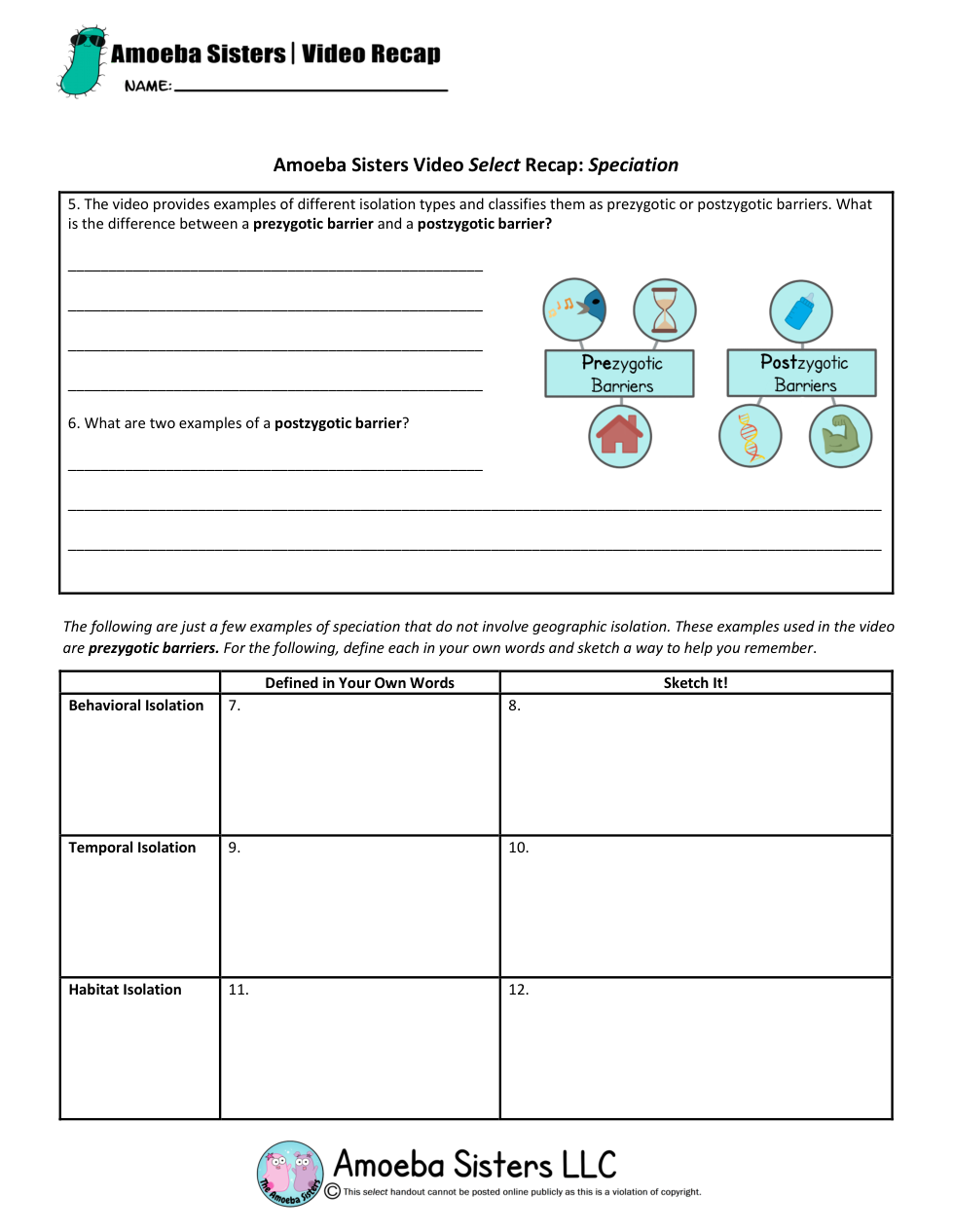
postzygotic barriers
single-cell fertilized egg
prezygotic barriers
multicellular early stage of development (pre-birth)
zygote
prevent organisms from mating and producing a fertilized egg
embryo
prevent fertilized eggs from becoming fertile offspring that survive and reproduce
Temporal isolation
Habitat isolation
Behavioral isolation
Geographic isolation
Infertile offspring
Weak/short-lived offspring
Embryo cannot develop
Prezygotic Barrier
Postzygotic Barrier
A
B
C
D