Ɛhia
1
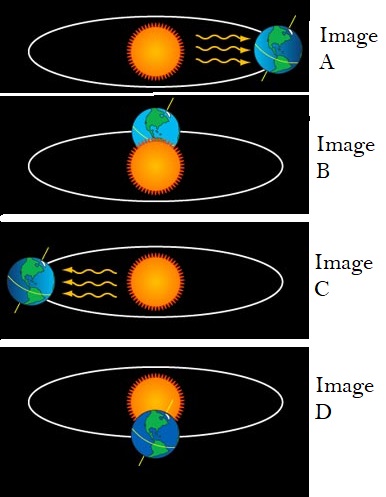
The Earth is tilted toward the sun in Image ?
The Earth is tilted toward the sun in Image ?
Ɛhia
1
Ɛhia
2
Created by AI then I added images
Formative Generation Completed!
Welcome to the wonderful world of seasons! Seasons are the cyclical changes that occur on Earth as a result of its axial tilt and rotation around the Sun. Earth's axial tilt is the reason we experience four seasons throughout the year. The four seasons are spring, summer, fall (autumn), and winter, with each lasting about three months. The two solstices (Summer and Winter) and two equinoxes (Spring and Autumn) mark the change of seasons throughout the year. The summer solstice is when the Northern Hemisphere is tilted toward the Sun and gets the most sunlight, making it the longest day of the year. The winter solstice is when the Northern Hemisphere is tilted away from the Sun and gets the least sunlight, making it the shortest day of the year. The spring and autumn equinoxes are when the Earth's tilt is at a right angle to the Sun and the length of day and night are about equal at all latitudes. In conclusion, seasons can be described as the weather and environmental changes that occur due to the Earth's rotation around the Sun throughout the year, and the solstices and equinoxes mark the change of seasons.
What causes four different seasons on Earth?
Each season lasts about a year.
Which two solstices mark the change of seasons throughout the year?
The two equinoxes are the
Have you ever wondered why the days are shorter in winter and longer in summer? Or why some parts of the world experience extreme temperature changes while others do not? Well, the answer to these questions can be found by understanding the Earth's tilt and orbit around the sun. The Earth spins on its axis at a tilt of 23.5 degrees, which means that different parts of the Earth face towards or away from the sun at different times of the year as it orbits. When the Northern Hemisphere is facing towards the sun, it receives more direct sunlight and experiences summer. In contrast, when the Southern Hemisphere is tilted towards the sun, it experiences winter. During the equinoxes, the sun is directly above the Earth's equator, so the entire planet experiences roughly the same amount of daylight. During the solstices, the Northern Hemisphere experiences the longest day (summer solstice) and shortest day (winter solstice) of the year. The tilt of the Earth's axis also causes the seasons to shift slightly from year to year. Understanding these movements helps us predict seasonal changes in weather, animal behavior, and vegetation growth.
The Earth is tilted toward the sun in Image ?
What causes the days to be shorter in winter and longer in summer?
During the equinoxes, the sun is
answers are in the paragraph above
The Northern Hemisphere experiences winter when it is tilted towards the sun.
What can be predicted by understanding the Earth's tilt and orbit around the sun?
In this image, the northern hemisphere is in ___

In this image, the northern hemisphere is in ___

In this image, the northern hemisphere is in ___
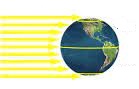
In this image, the northern hemisphere is in ___
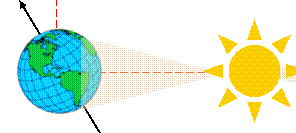
In this image, the northern hemisphere is in ___
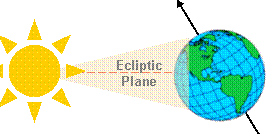
What day of year best is represented in this image
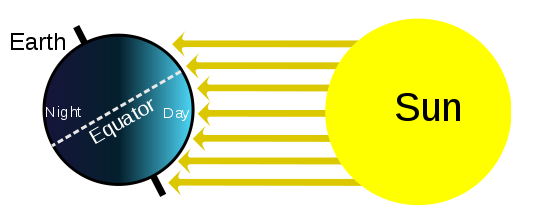
What day of year best is represented in this image
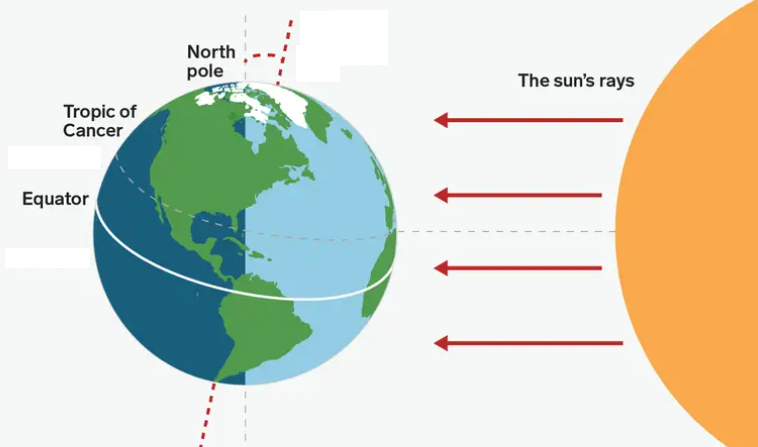
What day of year best is represented in this image
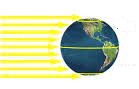
The Earth is tilted away from the sun in Image ?
The Earth is tilted NEITHER tilted away from nor towards the sun in Image ?