Log in
Sign up for FREE
arrow_back
Library

Lesson 2: Atomic Structure

star
star
star
star
star
Last updated over 2 years ago
17 questions
1
1
1
1
1
1
1
1
1
1
1
1
1
1
1
1
1

Atomic Structure


Objectives: Students will...
  • state the location, charge, and mass of protons, neutrons, and electrons.
  • determine the number of protons, neutrons, electrons, mass number, and charge of an atom or ion.
  • interpret or construct an atomic symbol to describe an atom or ion.
  • use the number of protons, neutrons, and electrons to draw a model of an atom or ion, identify the element, and determine the mass and charge.

Build an Atom - PhET Simulation

Part 1: Atom Screen

Directions: Click on the 'Atom' Screen in the simulation below. Answer questions 1-6.


If you'd like to have the simulation open in another screen while you work, click here: PhET Build an Atom Sim
Question 1
1.

Take three minutes to interact with the simulation. Write three observations you have about the simulation.

Question 2
2.

Which subatomic particle determines an atom's identity?

Question 3
3.

Determine the charge, mass, and location of each subatomic particle in the atom.

  • mass number = 0
  • Negative (-) charge
  • in the nucleus (center)
  • Positive (+) charge
  • in the orbits (orbitals)
  • Neutral (0) charge
  • mass number = 1
  • proton
  • neutron
  • electron
Question 4
4.

Which of the following best describes how to calculate the mass number of an atom?

Question 5
5.

Which of the following best explains what an ion is?

Question 6
6.

Complete the table

An explanation video will be uploaded soon. :) Sorry for the delay.

Build an Atom - PhET Simulation

Part 2: Symbol Screen

Directions: Click on the 'Symbol' screen at the bottom of the simulation, then answer questions 11-12.


If you'd like to have the simulation open in another screen while you work, click here: PhET Build an Atom Sim
Question 7
7.

Click on the Symbol screen and interact with the simulation. Write three observations you have from the 'Symbol' screen.

Question 8
8.

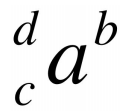
Let's figure out the important parts of an atomic symbol.


Using the symbol above, identify:
  • how the value of each letter is determined
  • what the letter represents.

  • represents: charge
  • represents: element symbol
  • represents: atomic number
  • represents: mass number
  • determined by: (# of protons) + (# of neutrons)
  • determined by: (# of protons) - (# of electrons)
  • determined by: # of protons
  • a
  • b
  • c
  • d
An explanation video will be uploaded soon. :) Sorry for the delay.
Question 9
9.

Part 3: Game Screen

The moment you've been waiting for! Click on the 'Game' Screen at the bottom of the simulation. Spend some time playing each of the four games.

Add your score for each game to the picture below.

Question 10
10.

Match the sentences below with the words that best go in the blanks.

Draggable itemarrow_right_altCorresponding Item
The center part of an atom is called the ____.
arrow_right_alt
atoms
A nucleus is made up of neutrons and ____.
arrow_right_alt
nucleus
All matter is composed of tiny particles called ____.
arrow_right_alt
protons
Elecrons are found ____ the nucleus.
arrow_right_alt
outside of
There is mostly ____ between electrons.
arrow_right_alt
empty space
Protons and neutrons are ____ than electrons.
arrow_right_alt
more massive
Use the periodic table below to answer questions 13-15. Note: the number above each element symbol is the element's atomic number.


Question 11
11.

A calcium (Ca) atom has a mass number of 42. How many neutrons are in the atom?

Question 12
12.

An oxygen ion with a charge of -2 has eight electrons.

Question 13
13.

Match the following atom/ion descriptions with the element

Draggable itemarrow_right_altCorresponding Item
An atom with 24 neutrons and a mass number of 50
arrow_right_alt
Tc (Technetium)
At atom with 23 protons and a mass number of 43
arrow_right_alt
Fe (Iron)
An atom with 36 protons and 36 electrons
arrow_right_alt
Br (Bromine)
An atom with a neutral charge and 24 electrons
arrow_right_alt
V (Vanadium)
An atom with 43 protons
arrow_right_alt
Cr (Chromium)
An ion with 36 electrons and a charge of -1
arrow_right_alt
Kr (Krypton)
Question 14
14.

Use the periodic table to fill out the table below. Assume all atoms are neutrally charged (i.e., they are not ions!)

Question 15
15.

What numbers did you write in the colored boxes in question 16? Match your answers below!

Draggable itemarrow_right_altCorresponding Item
Blue
arrow_right_alt
53
Purple
arrow_right_alt
20
Green
arrow_right_alt
13
Orange
arrow_right_alt
64
Pink
arrow_right_alt
5
Question 16
16.

Use the periodic table to fill out the table below.

Question 17
17.

What numbers did you write in the colored boxes in question 18? Match your answers below!

Draggable itemarrow_right_altCorresponding Item
Blue
arrow_right_alt
10
Orange
arrow_right_alt
11
Pink
arrow_right_alt
+3
Purple
arrow_right_alt
36
Green
arrow_right_alt
+1