What statement is true about the rock layers below?
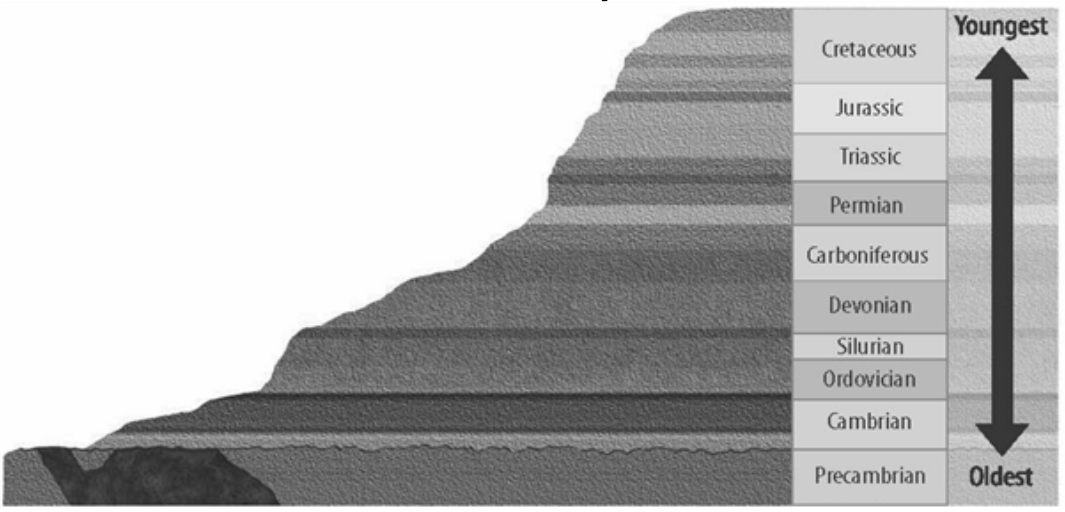
What statement is true about the rock layers below?
Butterflies taste with their legs, while humans taste with their tongues. In this way, butterflies' legs and humans' tongues are structures.
The more homologous structures two species have, the closely related they may be.
Using
Vestigial structures are remnants of organs or structures that had a function in an early ancestor but no longer serve a purpose.
What statement is true about the rock layers below?
Species become
The changes over time in the inherited traits of a type of organism are .
What type of organisms do scientist usually agree that birds are descended from?
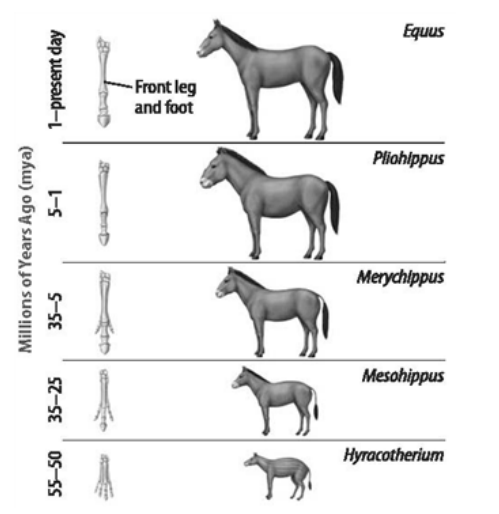
What does the figure suggest?
Extinctions can be caused by gradual environmental changes, such as mountain formation, or rapid ones, such as volcanic eruptions.
All organisms on Earth have genes that are made of DNA and function in a similar way.
Pharyngeal pouches are found in all vertebrate embryos.
How are tissues related to organs in the body?
What are the different types of animal tissues?
What are the different types of plant organ systems?
Which of the following statements is true?
Plants have organ systems.
Put the following items in order from smallest to largest
| Draggable item | arrow_right_alt | Corresponding Item |
|---|---|---|
Population | arrow_right_alt | 1 (smallest) |
Cell | arrow_right_alt | 2 |
Ecosystem | arrow_right_alt | 3 |
Community | arrow_right_alt | 4 |
Tissue | arrow_right_alt | 5 |
Organ | arrow_right_alt | 6 |
Organism | arrow_right_alt | 7 |
Biosphere | arrow_right_alt | 8 |
Organ System | arrow_right_alt | 9 (Largest) |
Which of the following is stored in the skeletal system?

What is the function of peristalsis?
Food enters the human body through the _____.
Digestion begins in the mouth with chewing and food mixing with
Through what structures does absorption occur in the small intestine?
Which of the following is a synonym for the circulatory system?
Where in your body can you find blood vessels? Choose the best answer.
Oxygen moves between the respiratory system and the circulatory system when it transfers from to .
Auditory receptors detect light.
Of the following, which is NOT a sense organ?
If an area of your body is very sensitive, what can you conclude about that area?
The leaf is a vital organ used for photosynthesis. It is made of more than 1 type of tissue.
The human skeleton can be divided into 2 parts, the axial, which is the core, and the appendicular, which are the limbs.
Which of the following is an organ system?
What type of human tissue is most similar to dermal tissues in plants?
Why is cartilage important?
What is made inside bones?
What type of muscle is most important to moving food through the
digestive system?
Gloria finds four sources of information about animals’ sensory receptors and how the receptors cause different responses in animals.
Which source will most likely provide Gloria with accurate and reliable information?
Of the following, which is NOT a function of blood?
Which of the following is NOT one of the five human senses?
Removal of waste products in the body is called .
A difference in beak shape among members of the same finch species is an example of variation.
Food we eat has most likely been modified through selective breeding.
Which of the following is a behavioral adaptation?
Choose ALL that apply.
An adaptation is _______.
A mutation can be inherited.
Match the nitrogenous base with it's pair.
| Draggable item | arrow_right_alt | Corresponding Item |
|---|---|---|
Guanine | arrow_right_alt | Thymine |
Thymine | arrow_right_alt | Guanine |
Adenine | arrow_right_alt | Adenine |
Cytosine | arrow_right_alt | Cytosine |
Gregor Mendel observed that pea plant traits did not blend in their offspring. This led him to conclude that:
Most mutations occur randomly.
Where is DNA mostly found?
What is a common ancestor?
A population of beetles changing from yellow to brown and surviving better is an example of .
The average size of a grocery store chicken has more than doubled in the past century. What is the most likely reason for this change?
How do mutations affect natural selection?
How is genetic engineering different from artificial selection?
What does a Punnett square show in terms of genetics?