Twa kɔ nsɛm atitiriw so
Log in
Sign up for FREE
arrow_back
Laabri
Unit 2 revision cloned 5/18/2023
Ɛnam {{ɔdefoɔ Edin}} so
star
star
star
star
star
Kyɛ
share
Last updated 3 months ago
34 Nsɛmmisa
Add this activity
1
1
1
1
1
1
1
1
1
1
1
1
4
4
4
4
4
4
Asemmisa {{asɛmmisaAhyɛnsode}}
1.
Asemmisa {{asɛmmisaAhyɛnsode}}
2.
Asemmisa {{asɛmmisaAhyɛnsode}}
3.
Asemmisa {{asɛmmisaAhyɛnsode}}
4.
Asemmisa {{asɛmmisaAhyɛnsode}}
5.
Asemmisa {{asɛmmisaAhyɛnsode}}
6.
Asemmisa {{asɛmmisaAhyɛnsode}}
7.
Asemmisa {{asɛmmisaAhyɛnsode}}
8.
Asemmisa {{asɛmmisaAhyɛnsode}}
9.
Asemmisa {{asɛmmisaAhyɛnsode}}
10.
Asemmisa {{asɛmmisaAhyɛnsode}}
11.
Asemmisa {{asɛmmisaAhyɛnsode}}
12.
13
14
15
16
zoom_in
1
1
1
1
17
18
19
20
21
22
23
zoom_in
1
1
1
1
1
1
1
24
25
26
27
28
zoom_in
1
1
1
1
1
Asemmisa {{asɛmmisaAhyɛnsode}}
29.
Asemmisa {{asɛmmisaAhyɛnsode}}
30.
Asemmisa {{asɛmmisaAhyɛnsode}}
31.
Asemmisa {{asɛmmisaAhyɛnsode}}
32.
Asemmisa {{asɛmmisaAhyɛnsode}}
33.
Asemmisa {{asɛmmisaAhyɛnsode}}
34.
What organelle is the stiff outer barrier of a plant cell?
cell membrane
cell wall
nucleus
chloroplast
What organelle contains the cell's DNA and is the control center of the cell?
ribosome
vacuole
nucleus
cytoplasm
What organelle is the structure that contains chlorophyll in a plant cell?
cell wall
mitochondria
chloroplast
ribosome
What is the green pigment in plants that captures energy from the sun?
chloroplast
chlorophyll
verde
green ink
Organelle in which proteins are made (protein synthesis).
nucleus
ribosome
mitochondria
vacuole
What is the main function of the cell wall
A. To protect and provide support for the cell
B. Build proteins
C. Convert solar energy to chemical energy
D. Takes in carbon dioxide
What is the main function of the cell wall
A. To protect and provide support for the cell
B. Build proteins
C. Convert solar energy to chemical energy
D. Takes in carbon dioxide
Which of the following are products of photosynthesis?
Glucose
Carbon dioxide
Oxygen
Water
Which of the following are reactants of photosynthesis?
Glucose
Carbon dioxide
Oxygen
Water
After processing of food in stomach, it moves into
large intestine
small intestine
Rectum
Anus
Read carefully the terms given below. Which of the following set is the correct combination of organs that do not carry out any digestive functions?
(a) Oesophagus, Large Intestine, Rectum
(b) Buccal cavity, Oesophagus, Rectum
(c) Buccal cavity, Oesophagus, Large Intestine
(d) Small Intestine, Large Intestine, Rectum
The acid present in the stomach
(a) kills the harmful bacteria that may enter along with the food.
(b) protects the stomach lining from harmful substances
(c) digests starch into simpler sugars.
(d) makes the medium alkaline.
Asemmisa {{asɛmmisaAhyɛnsode}}
13.
Asemmisa {{asɛmmisaAhyɛnsode}}
14.
Asemmisa {{asɛmmisaAhyɛnsode}}
15.
Asemmisa {{asɛmmisaAhyɛnsode}}
16.
Asemmisa {{asɛmmisaAhyɛnsode}}
17.
Asemmisa {{asɛmmisaAhyɛnsode}}
18.
Asemmisa {{asɛmmisaAhyɛnsode}}
19.
A
Asemmisa {{asɛmmisaAhyɛnsode}}
20.
Asemmisa {{asɛmmisaAhyɛnsode}}
21.
Asemmisa {{asɛmmisaAhyɛnsode}}
22.
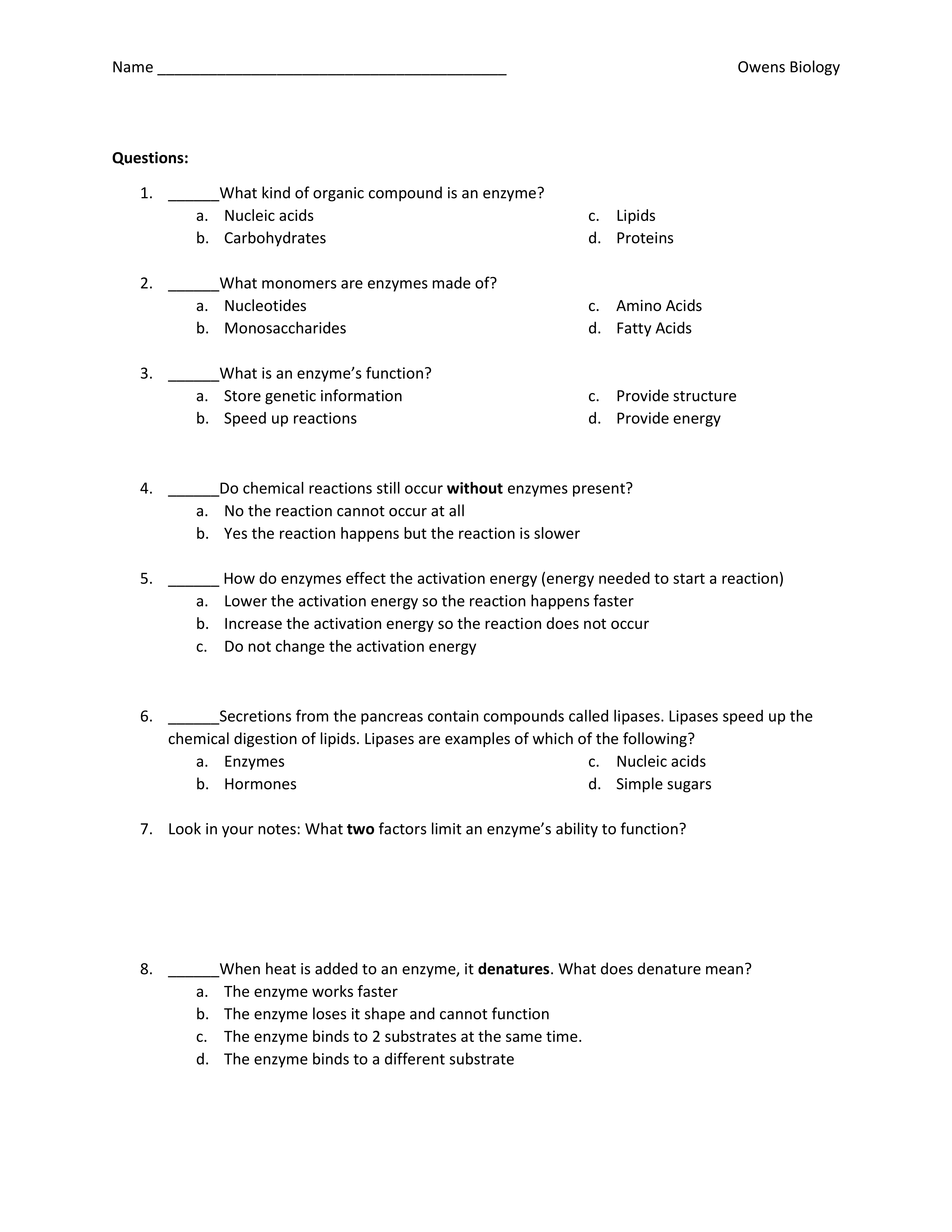
What are two factors that limit an enzyme's ability to function?
Asemmisa {{asɛmmisaAhyɛnsode}}
23.
Asemmisa {{asɛmmisaAhyɛnsode}}
24.
Asemmisa {{asɛmmisaAhyɛnsode}}
25.
Asemmisa {{asɛmmisaAhyɛnsode}}
26.
Which enzyme works best in an acidic environment (pH less than 7)
Asemmisa {{asɛmmisaAhyɛnsode}}
27.
Asemmisa {{asɛmmisaAhyɛnsode}}
28.
What happens to the enzyme when the pH increases to high?
Bile is produced by the _________________, and stored in the __________________.
gallbladder, small intestine
gallbladder, gallbladder
liver, gallbladder
gallbladder, liver
Which sequence shows the pathway that food takes in the digestive system?
stomach, esophagus, large intestine, small intestine
esophagus, stomach, large intestine, small intestine
stomach, esophagus, small intestine, large intestine
esophagus, stomach, small intestine, large intestine
Which of the following system breaks food into nutrients that can be used by the body?
circulatory
digestive
respiratory
reproductive
The digestion process begins in which of the following?
large intestine
mouth
small intestine
stomach
Which best describes the role of the esophagus in digestion?
It releases acid and mixes the food.
It aids in absorption of nutrients from food.
It carried food from the mouth to the stomach.
It carries food from the stomach to the intestines.
What does the stomach do for the body?
It chews food.
It breaks food down.
It swallows food.
None of the above
This is the
substrate
enzyme
active site
This is the
substrate
enzyme
active site
This is the
substrate
enzyme
active site
A
B
C
D
A
B
C
D
A
B
C
D
B
A
B
C
A
B
C
D
A
B
C
D
At what temperature does this enzyme work the fastest?
0
20
40
60
A
B
C
D
Which enzyme works best in a neutral environment?
chymrotrypsin
pepsin
both enzymes