Chapter 1 - The First Humans

Last updated 5 months ago
19 questions
Note from the author:
Created by Mr. Bergh of San Bernardino City Unified School District at Shandin Hills Middle School.
The following resources were utlilized in the creation of this Formative for educational/classroom use:
“Unit 1: The First Humans: PreHistory-3500 BCE.” Essay. In EVERYTHING YOU NEED TO ACE WORLD HISTORY IN ONE BIG FATE NOTEBOOK, 1–15. Workman Publishing Co., Inc., 2016.
“What Does It Mean to Be Human?” The Smithsonian’s Human Origins Program, July 21, 2022. https://humanorigins.si.edu/.
Learning Intention:
I will learn about hominids and how hominids developed into people today.
Success Criteria:
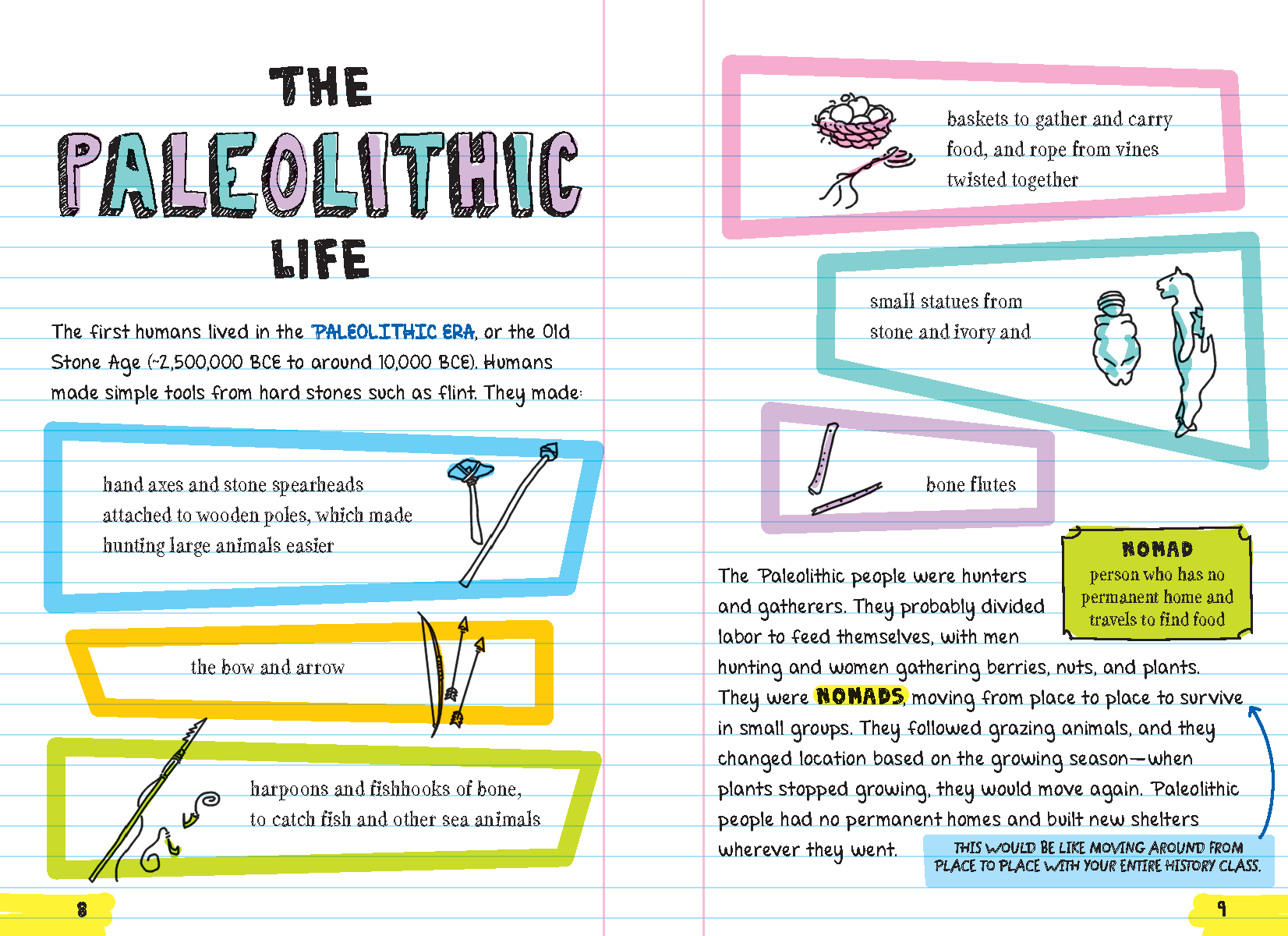
I can describe the hunter-gatherer societies, including the development of tools and the use of fire.
I can describe how humans adapted to a variety of environments.
Required
7
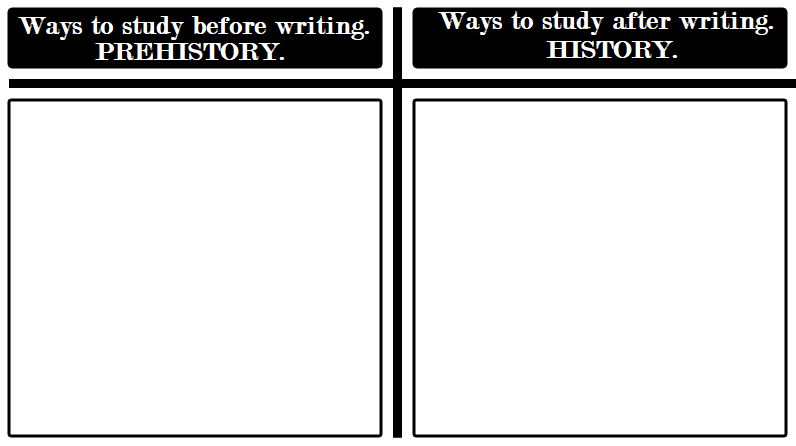
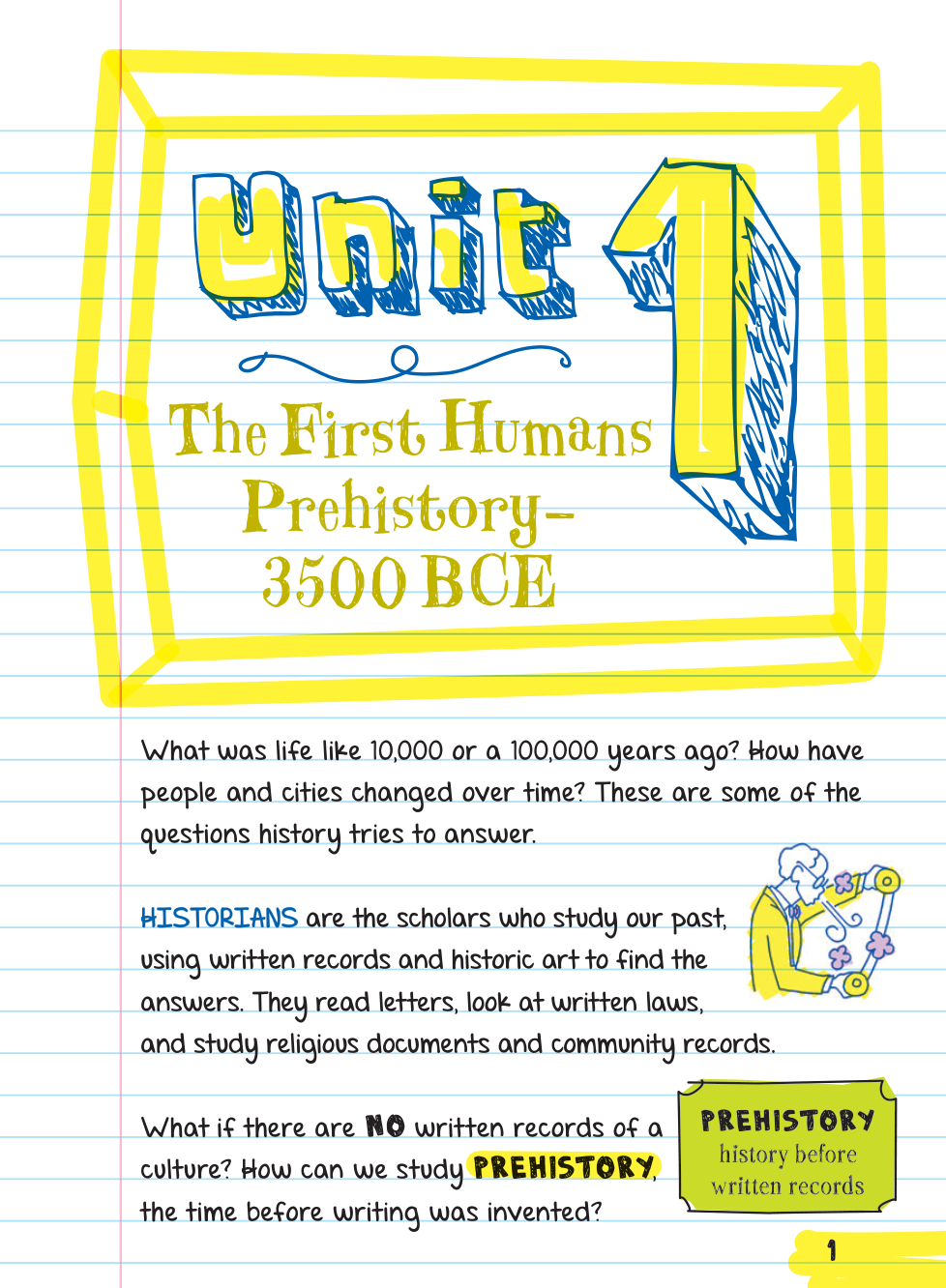
How can we study PREHISTORY?
How do we study HISTORY?
Drag and drop images below where you think they should go!
Other Answer Choices:
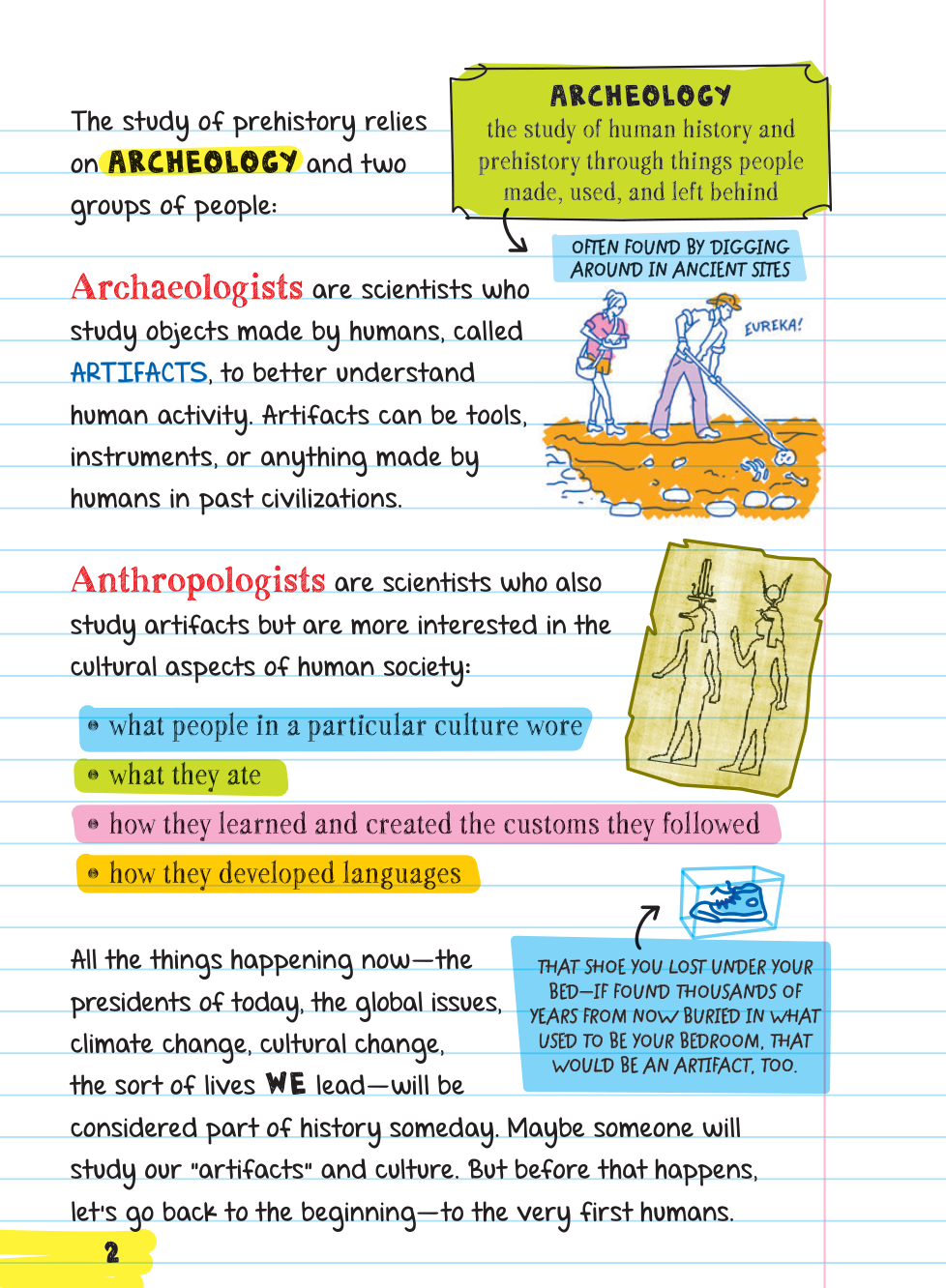
Comparing Languages
Digging for Evidence
Talking to Indigenous Peoples
Ancient Cave Paintings
Scanning for Unusual Ground
Analyzing Classical Statues
Analyze Remains
Required
1

Draw or upload an artifact you might leave behind for archeologists of the future to find.

Required
1

What artifact did you leave behind for archeologists to find? Why?
Type in at least 2 sentences.

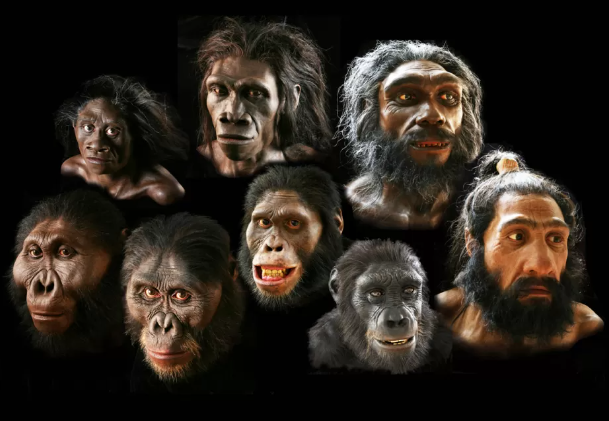
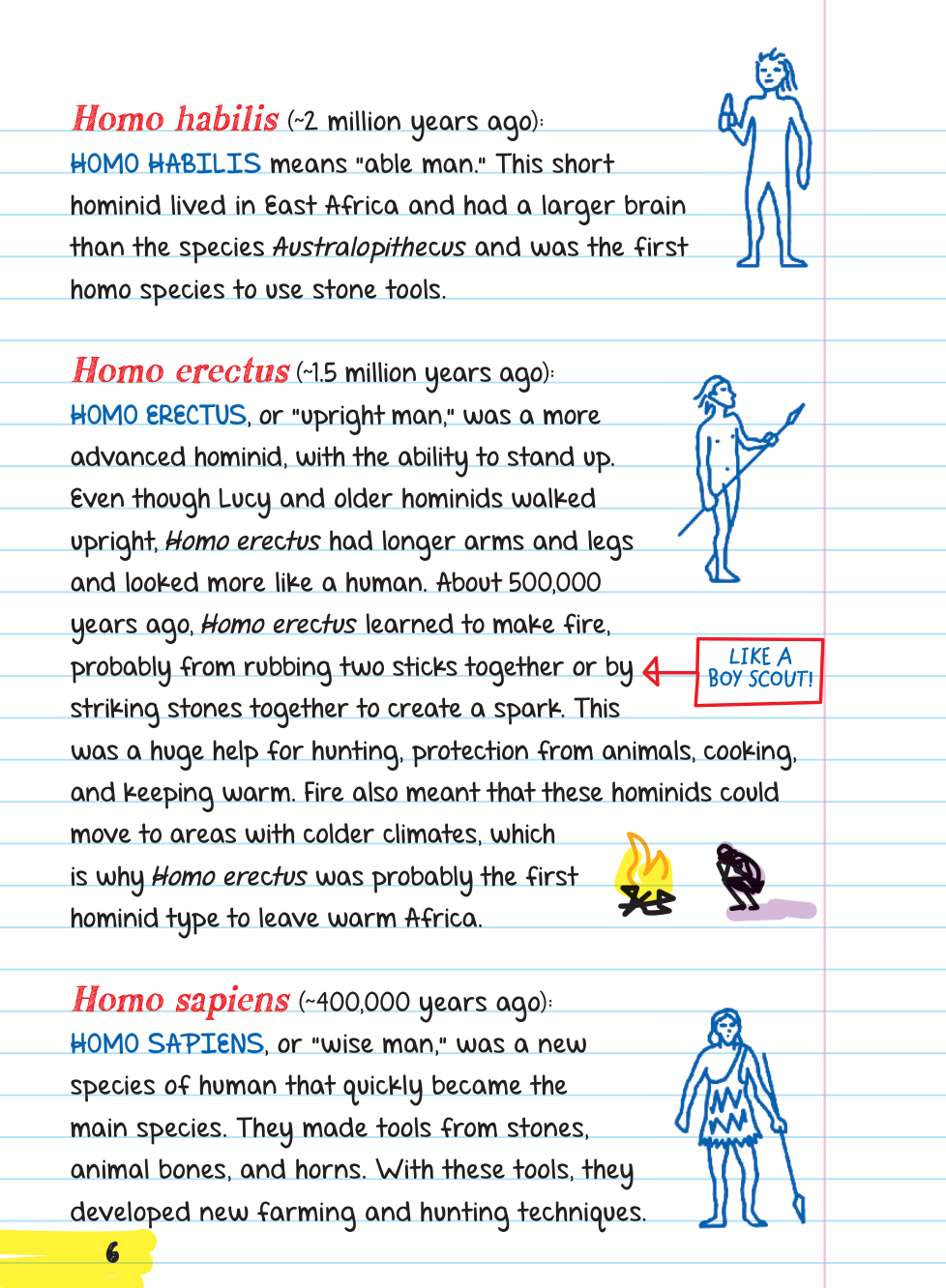
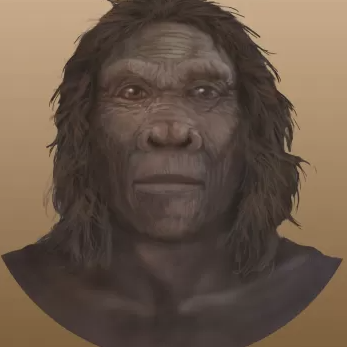
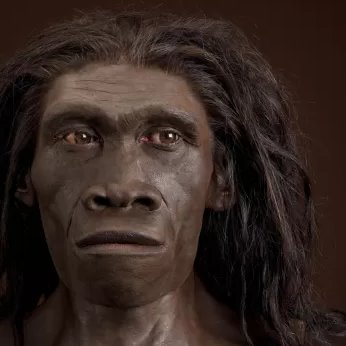
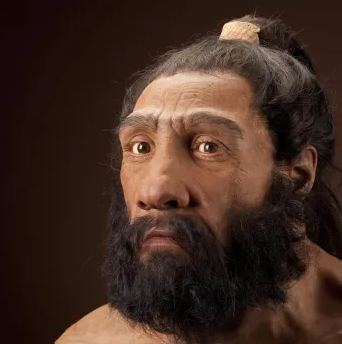
Reconstructions of Early Humans
© Copyright Smithsonian Institution
Required
1

What stood out to you the most when you looked at the image above?

Required
1

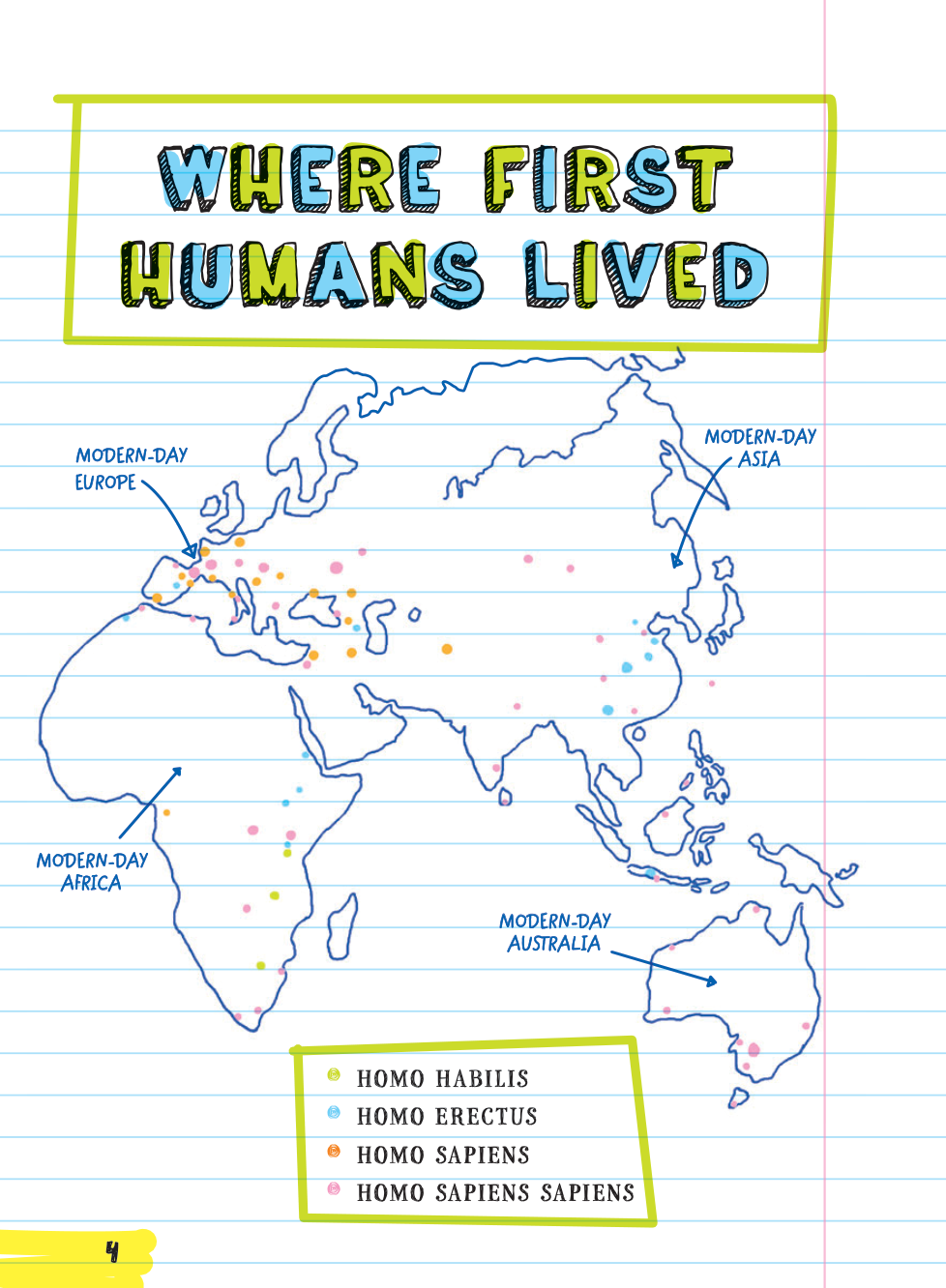
What continents are Homo Erectus found?

Required
1

What continents are Homo Sapiens found?

Required
1

What continents are Homo Sapiens Sapiens found?

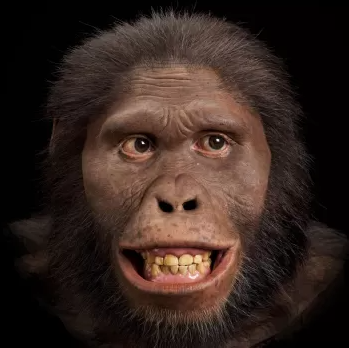
Australopithecus Africanus
© Copyright Smithsonian Institution
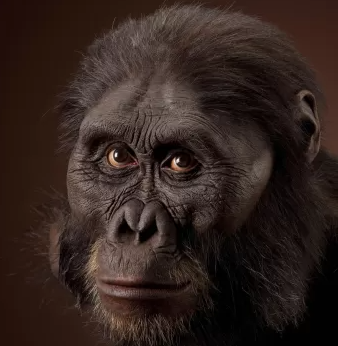
Australopithecus Afarensis
© Copyright Smithsonian Institution
Required
1

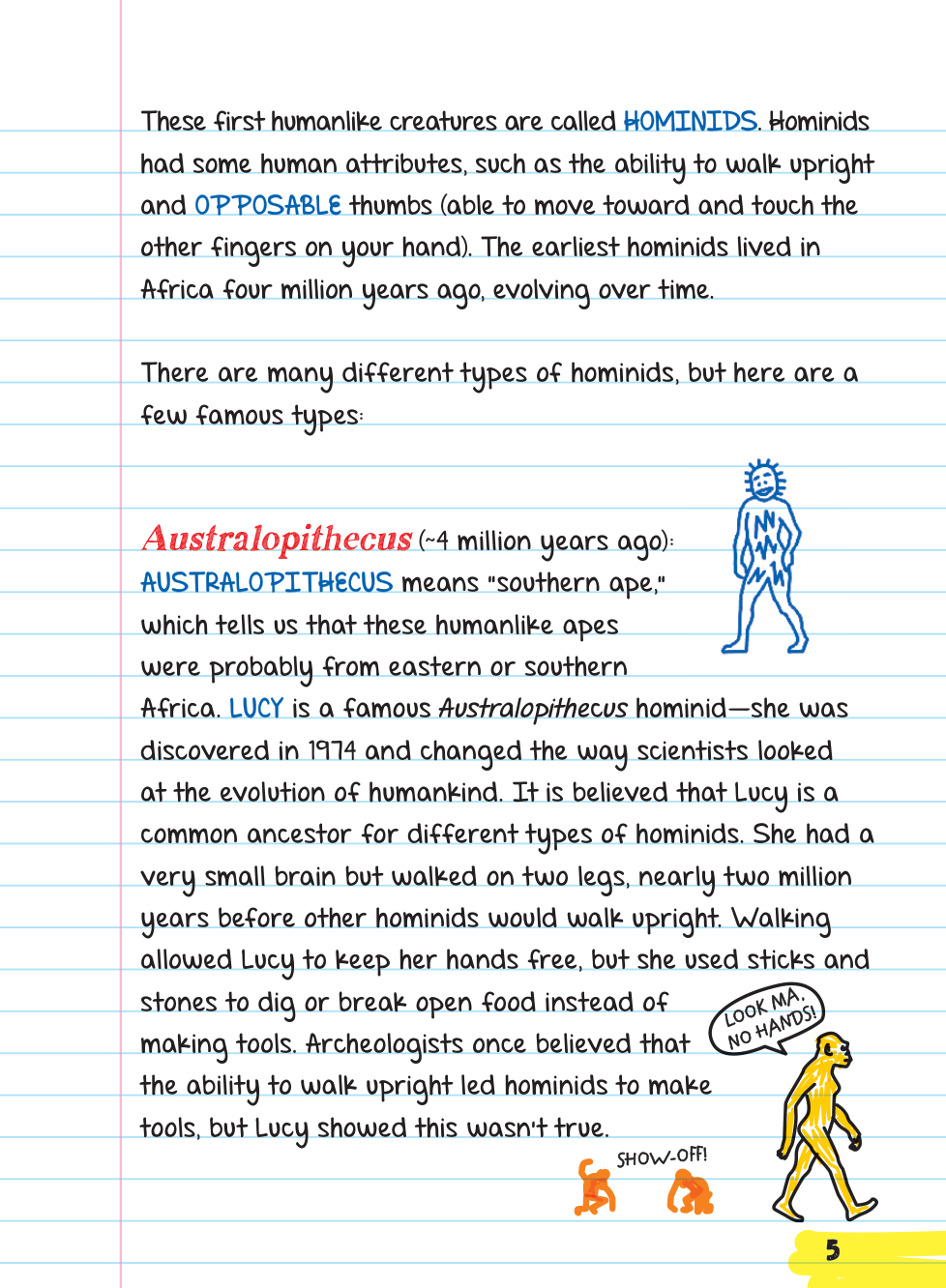
Monkeys and apes live mostly in trees.
Hominids walk upright and have opposable thumbs.
Why would Lucy (Australopithecus) walk on two legs if she didn't use tools?

Homo Habilis
© Copyright Smithsonian Institution
Homo Erectus
© Copyright Smithsonian Institution
Required
5

Match each description to a hominid.

Homo Habilis
Homo Erectus
Means "Upright Man"
Means "Able Man"
First Hominid to use tools
First Hominid to use fire
Probably first Hominid to leave Africa
Required
1

What continent are Homo Habilis found?

Required
4
In the past we thought that [__________] (cavemen) were not humans but a separate [__________]. Like how dogs and cats are different species. Now we know [__________] and humans are are two different [__________] which could breed and live together. Like how Chihuahuas and Labrador Retrievers are different looking subspecies but still dogs. Today many types of humans have been discovered! Homo Sapiens Sapiens, Neanderthals, Denisovans and probably many more we don't even know about yet!
Homo Neanderthalensis
© Copyright Smithsonian Institution
Required
1

Upload a photo of a Homo Saipen Saipen you found in the wild!
(Selfies or photos from Google.)

You will soon be assigned a team!
Team Hunters or Team Gatherers.
Each team will have a ...
Leader - who picks who does what job, makes sure teammates are working, and helps others.
Paper Cutter - who is in charge of using scissors safely.
Folder - who is in charge of folding papers properly.
Time Keeper - who tracks the time to make sure the team doesn't run out of time and helps others.
Hunters will need one paper, two papers of another color, and when your ready to glue, ask Mr. Bergh.
Gatherers will need three different colored papers and when your ready to staple, ask Mr. Bergh.
Watch the paper spear video below if your a hunter.
Watch the paper basket video below if your a gatherer.
You will also see RED "animals" to be hunted by hunters.
Around the room you will see GREEN "vegetables" to be gathered by gatherers.
Once teams are quiet and understand the rules each team will try to find one food for each team member. No food? Your team member "dies" and has to sit down in their seat while others survive.
At the end of each round the food will be collected, Mr. Bergh will take some food out, and those who "died" will be allowed to hide what's left around the room for the next round.
If only one person is left alive in a team, they are allowed to join another team, doesn't matter if they are hunter or gatherer. Keep playing until we run out of time or only one team is left.
0

Write out answers to these questions on a sheet of poster paper. Staple your spear or basket to it. Draw on the poster images of your "tribe" hunting and gathering.
What did you learn from playing our Hunter-Gatherer Survival game?
How did tribes survive?
How did tribes fall apart?
How did tribes grow larger?
Explain in three to five sentences.

Rubric (How you will be scored for our project/game.)
4 - I created hunter/gatherer tools to survive, hunted for food as a tribe, and wrote down what I learned.
3 - I helped create hunter/gatherer tools, participated in a hunt for food, and wrote down what I learned.
2 - I completed two out of the three success criteria.
1 - I completed one out of the three success criteria.
0 - I did not attempt to create tools, hunt for good, or type what I learned.
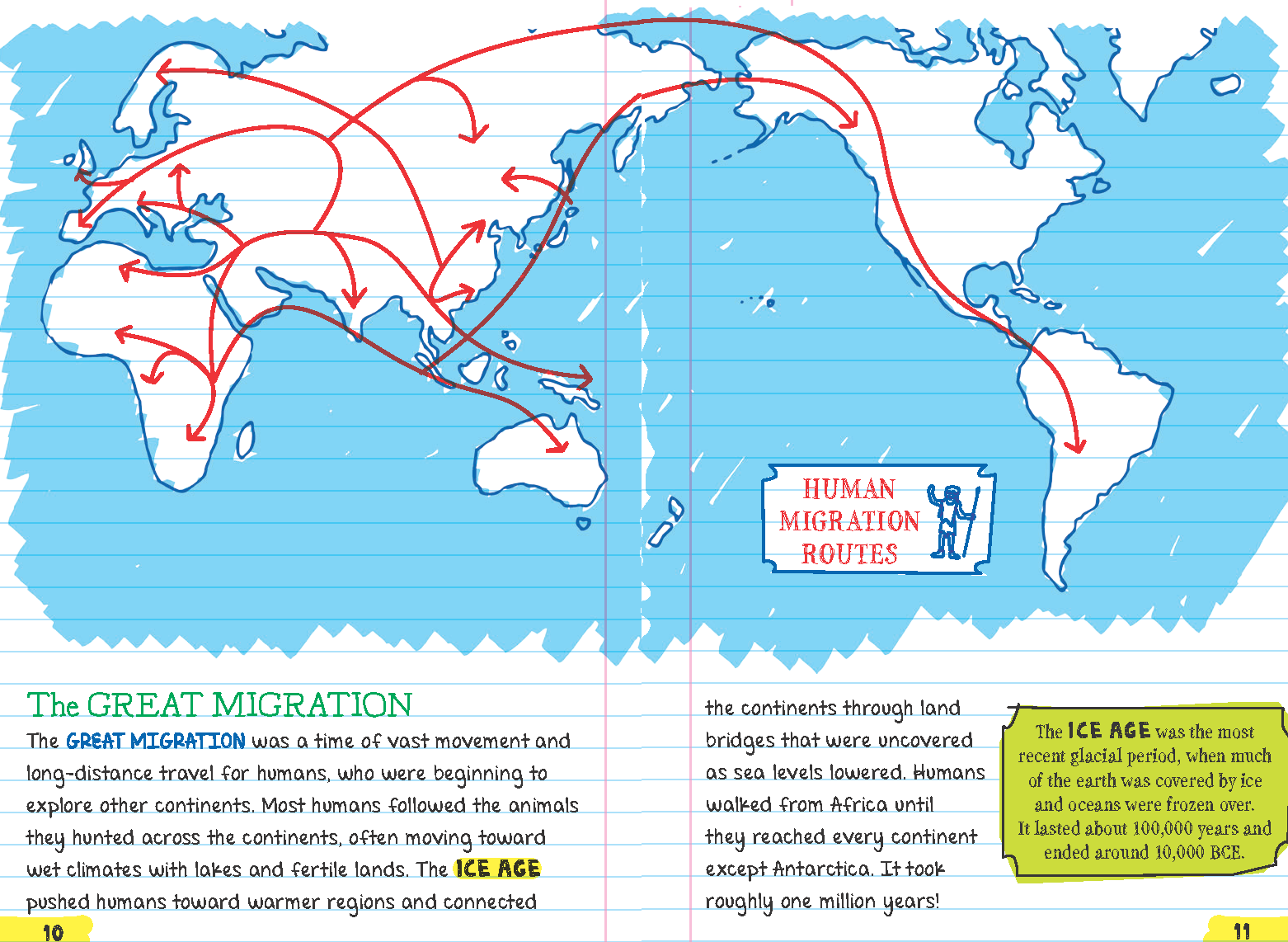
Use the map to answer all of the following questions.
Required
1

What continent did the original humans start out from before migrating?

Required
1

What continent was the farthest humans migrated to?

Required
1

It takes roughly 20 hours for someone to fly by plane from South America to Europe. How long did it take humans to migrate around the world by walking and small boats?

Required
1

Complete the statement.
Different parts of the world have different plants and animals.
Therefore different people in different parts of the world...

Required
1

How did people get from Asia to North America?

Required
7
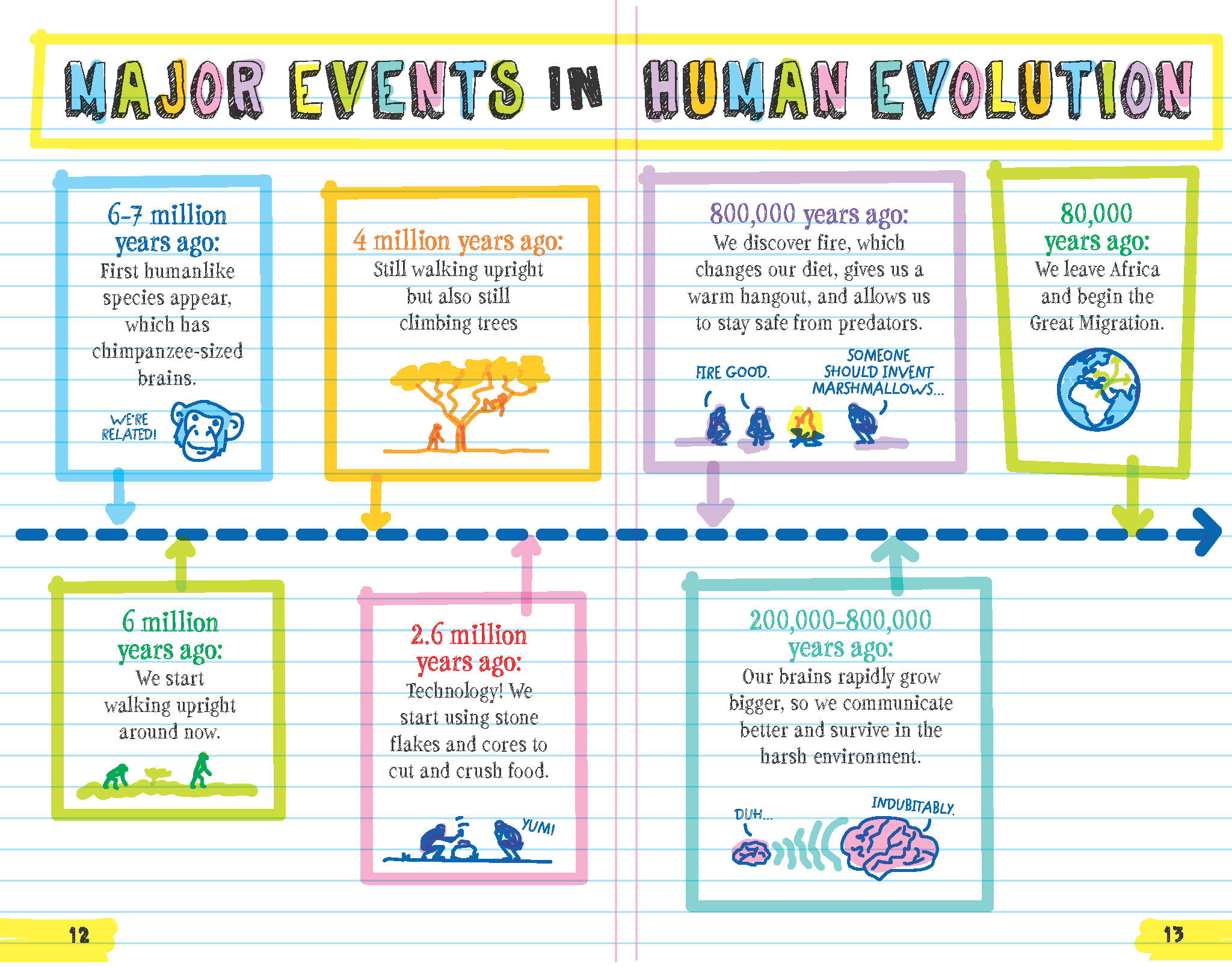
6-7 million years ago the first [_______] species appeared.
6 million years ago we start [_______].
4 million years ago humanlikes are both walking upright and [_______].
2.6 million years ago humanlikes start using tools for the first time thus creating [_______].
800,000 years ago humanlikes discover and control [_______] which immediately gives them an advantage over all other animals.
200,000 to 800,000 years ago [_______] brains grow allowing humanlikes to communicate better and survive in harsh environments.
80,000 years ago humans leave [_______] and begin the Great Migration.
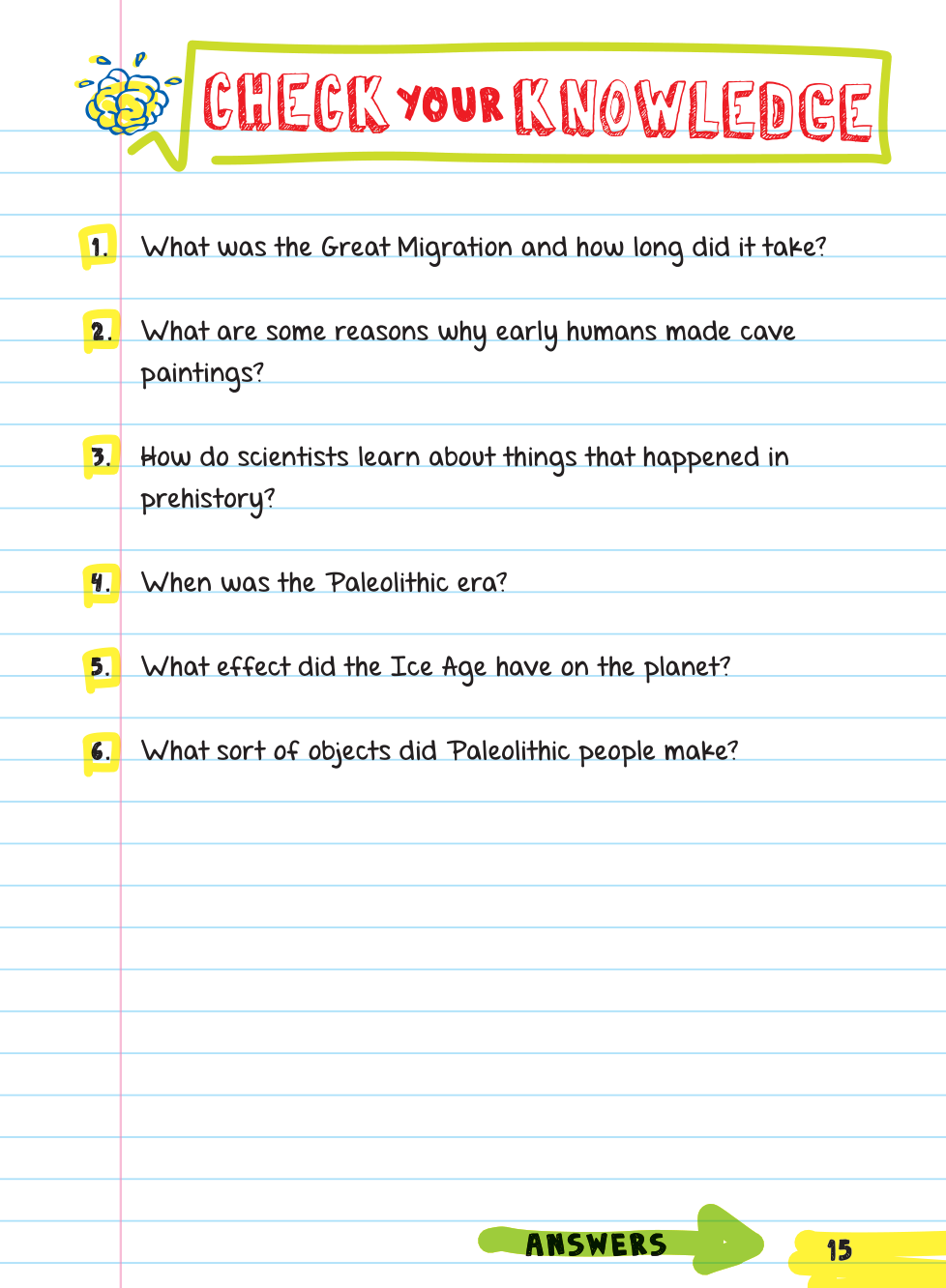
On a sheet of lined paper, title it CHECK YOUR KNOWLEDGE. This is our study guide. Use your knowledge, the Formative, your notes, and any projects to answer the questions. Write your answers on the sheet of lined paper.
After some minutes you will be buddied up with ONE student. Share your answers to make each others answers better!
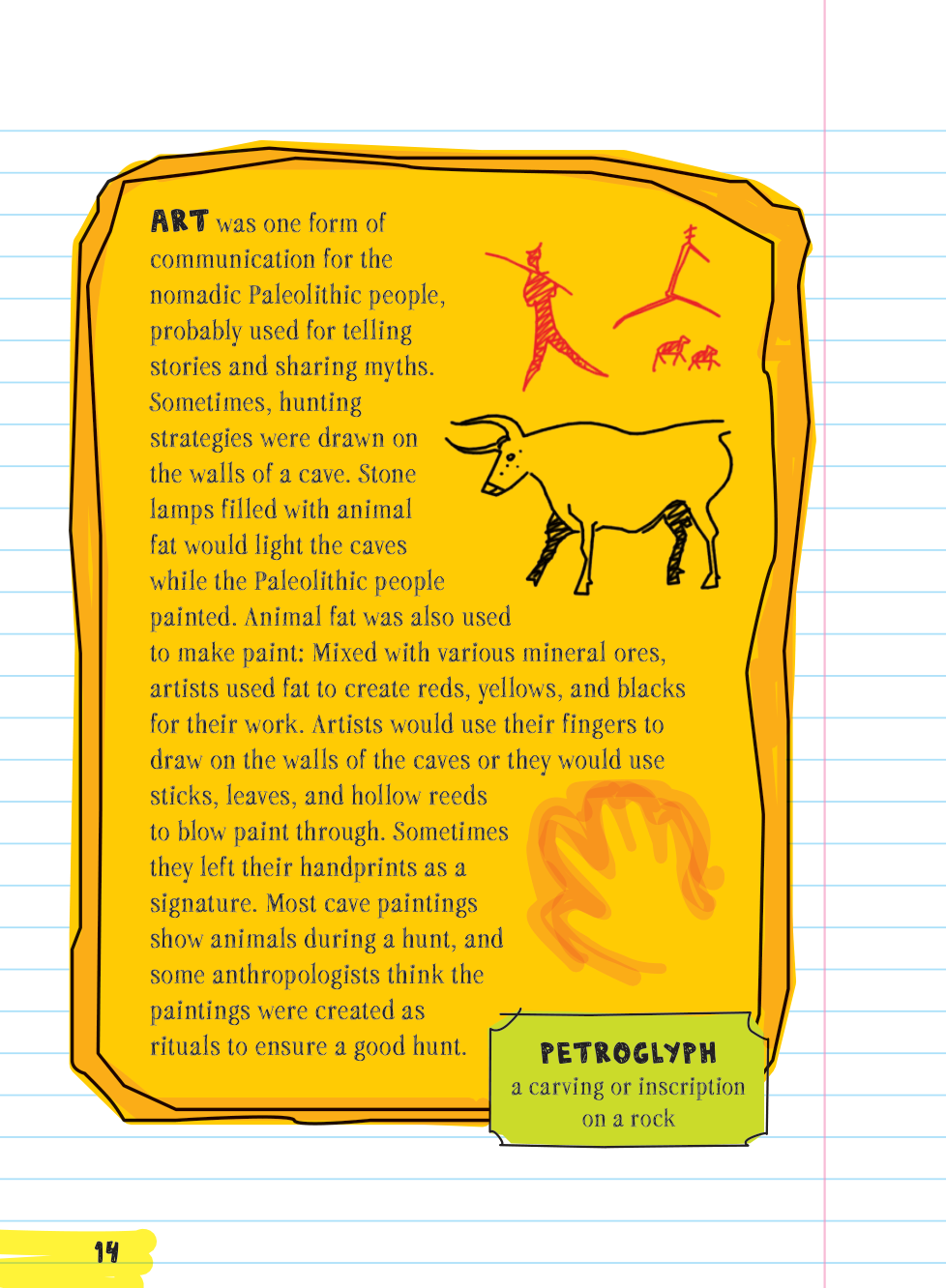
Time to draw like a caveman! Yippie! Umm... I mean OOGA BOOGA!
We will use pastel crayons, picking only five colors. Archaeological researchers have found the principal pigments used by early humans to be:
  1. Haematite, iron(III) oxide (Fe2O3), gives the mineral ochre a red colour (strangely, if the particle size is large it will also give purple);
  2. Limonite, the mineral form of hydrated iron(III) oxide-hydroxide of varying composition (FeO(OH)·nH2O), for yellow;
  3. Limestone, calcite or crushed shells, mineral forms of calcium(II) carbonate (CaCO3), for white;
  4. Manganite, the mineral form of manganese oxide-hydroxide (MnO(OH)), for brown;
  5. Pyrolusite, the mineral form of manganese(IV) oxide (MnO2), that gives black;
  6. Charcoal, the mineral form of carbon (C), which also gives black.Tell a simple story with your finger painting on poster paper. This represents oral tradition using petroglyphs.
You will present your story with only grunts, one word phrases, and body language, just like our ancestors long ago.
After presenting you will paraphrase another students' simple story the best you can on a half sheet of paper.
Rubric (How you will be scored for your presentation.)
1 - I have come up with a simple story.
2 - I have drawn out my story using only 3 colors to emulate ancient cave painting petroglyphs.
3 - I have presented my story using only petroglyphs, grunts, one word phrases, and body language.
4 - I have paraphrased another student’s simple story in writing.