Teacher Paced - One the Rise
star
star
star
star
star
Last updated over 1 year ago
9 Nsɛmmisa
1
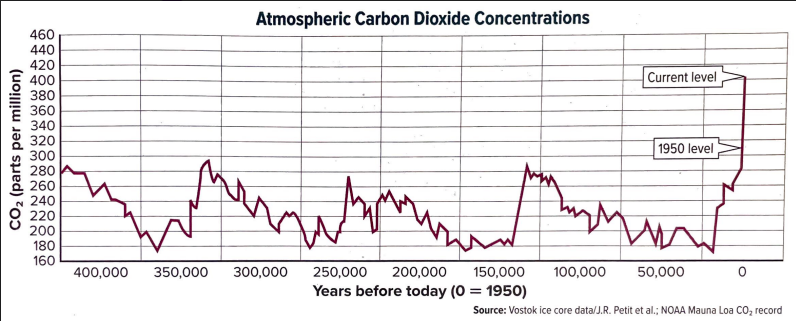
A) How would you describe the data prior to 1950?
B) How would you describe the trend in atmospheric CO2 from 1950 to now?
A) How would you describe the data prior to 1950?
B) How would you describe the trend in atmospheric CO2 from 1950 to now?
1
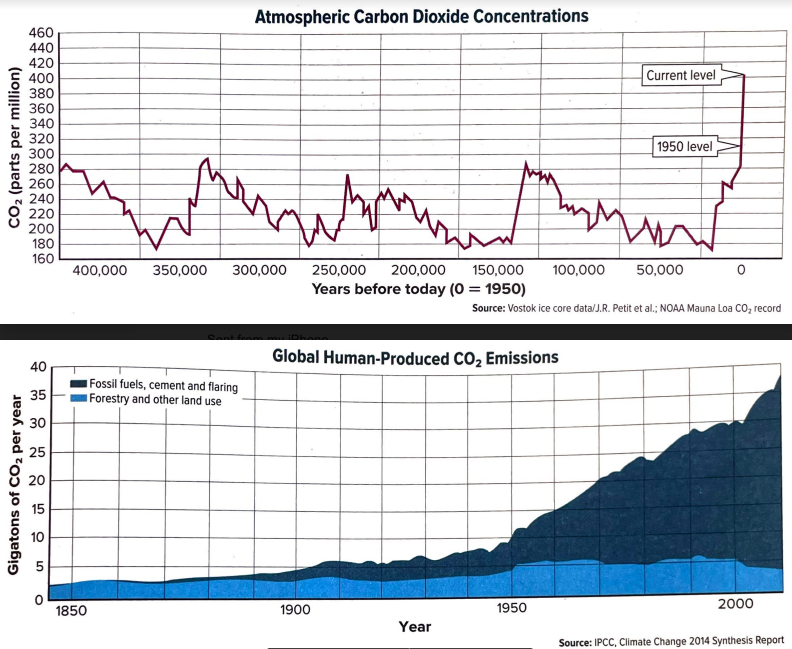
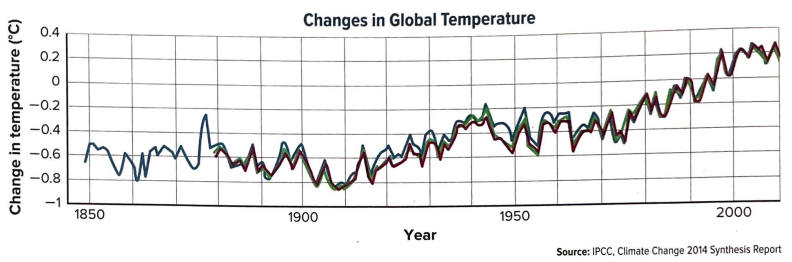
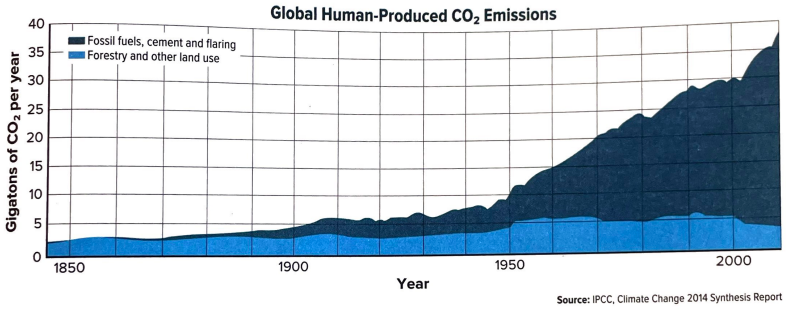
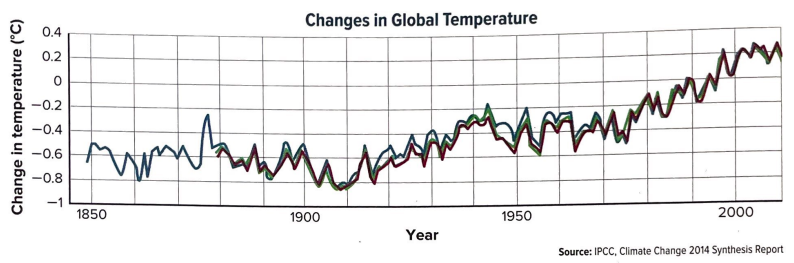
Would you consider the relationships as causal (an observed event or action appears to have caused a second event or action) or correlational (variables increase or decrease in parallel, however one might not have caused the other)? Explain.
Sentence starter:
I believe the relationship is __________. From the data we can see... This proves that this is ___________ because...
Would you consider the relationships as causal (an observed event or action appears to have caused a second event or action) or correlational (variables increase or decrease in parallel, however one might not have caused the other)? Explain.
Sentence starter:
I believe the relationship is __________. From the data we can see... This proves that this is ___________ because...