Log in
Sign up for FREE
arrow_back
Library

Quiz Friday 5/26 Dormant/Recessive Codominance/Incomplete dominance/X-Link

star
star
star
star
star
Last updated over 2 years ago
33 questions
Untitled Section
Required
1
Required
1
Required
1
Basic Punnet Square - Normal Dominate and Recessive - nothing else
Co-Domance Section
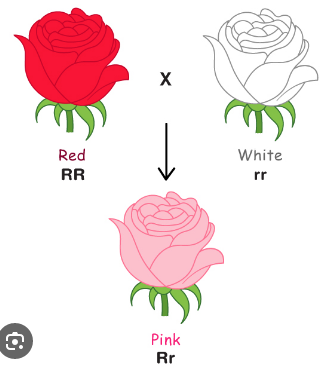
Incomplete Domanice
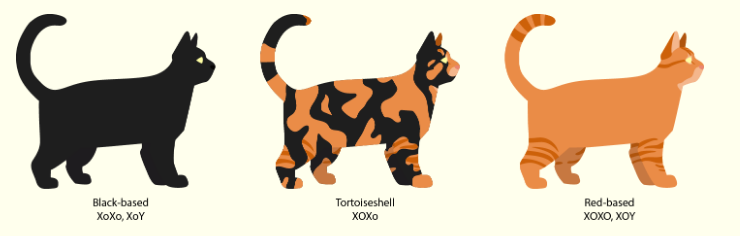
X-Linked Recessive
Question 1
1.

When one allele is "stronger" than the other, we call this allele the:

Question 2
2.

Codominance or Incomplete dominance
(need 2 answers)
Question 3
3.

Codominance or Incomplete dominance

(need 2 answers)

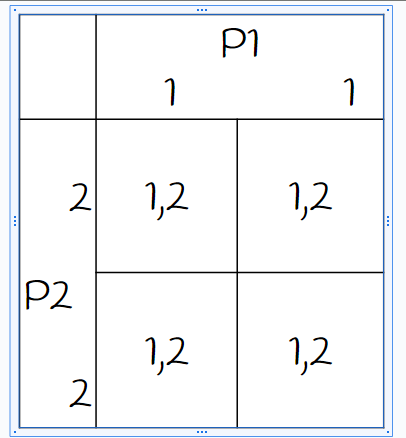
Parent 1 = one tall plant (1,1)
Parent 2 = one short plant (2,2)
Required
1
Required
1
Required
1
Required
1
Required
1
co-dominant.
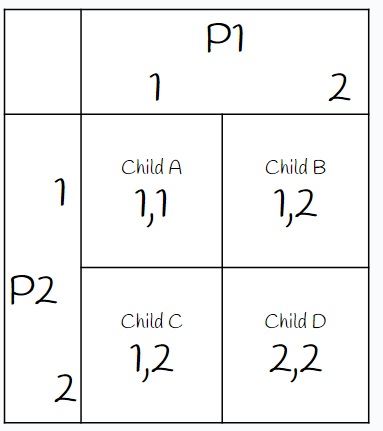
Cattle coats can be red (1,1 = all red hairs), white (2,2 = all white hairs), or roan (1,2 = red AND white hairs together).
Required
1
1
Required
1
Required
1
1
Required
1
Required
1.5
Required
1
Required
2
incomplete dominance.
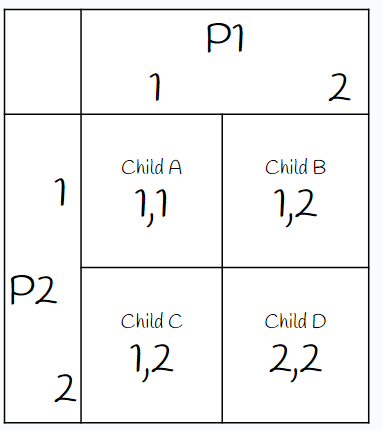
Radishes can be red (1,1),
white (2,2), or
purple (1,2).
Required
1
Required
1
Required
1
Required
1
Required
1
Required
1
Required
1
Required
1
Required
2
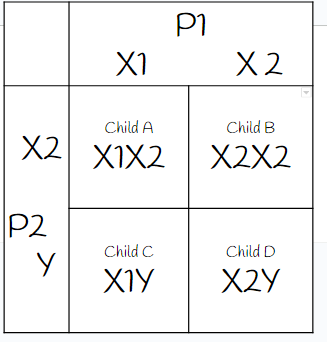
X1X1: normal female
X1X2: female carrier
X2X2: has hemophilia female
X1Y: normal male
X2Y: has hemophilia male
Required
1
Required
1
Required
2
Required
2
Required
2
Required
2
Required
3
Question 4
4.
The genotype of parent 1 is __________ and the phenotype is __________
Question 5
5.
The genotype of parent 2 is __________ and the phenotype is __________
Question 6
6.
The genotype of all the children is __________ and the phenotype is __________
Question 7
7.

Which are homozygous?

Question 8
8.

Which are heterozygous?

red (1,1 = all red hairs),
white (2,2 = all white hairs),
roan (1,2 = red AND white hairs together).
Question 9
9.
The genotype of parent 1 is __________ and the phenotype is __________
Question 10
10.
The genotype of parent 2 is __________ and the phenotype is __________
Question 11
11.
The genotype of child A is __________ and the phenotype is __________
Question 12
12.
The genotype of child B is __________ and the phenotype is __________
Question 13
13.
The genotype of child C is __________ and the phenotype is __________
Question 14
14.
The genotype of child D is __________ and the phenotype is __________
Question 15
15.
What is the percentage of phenotypes for the children
_______ % red coat,
_______ % white coat,
_______ % roan coat
Question 16
16.

Which are homozygous?

Question 17
17.

Which are heterozygous?

Radishes can be red (1,1),
white (2,2), or
purple (1,2).
Question 18
18.
The genotype of parent 1 is __________ and the phenotype is __________
Question 19
19.
The genotype of parent 2 is __________ and the phenotype is __________
Question 20
20.
The genotype of child A is __________ and the phenotype is __________
Question 21
21.
The genotype of child B is __________ and the phenotype is __________
Question 22
22.
The genotype of child C is __________ and the phenotype is __________
Question 23
23.
The genotype of child D is __________ and the phenotype is __________
Question 24
24.
What is the percentage of phenotypes for the children
_______ % red radish,
_______ % white radish,
_______ % purple radish
Question 25
25.

Which are homozygous?

Question 26
26.

Which are heterozygous?

X1X1: normal female
X1X2: female carrier
X2X2: has hemophilia female
X1Y: normal male
X2Y: has hemophilia male
Question 27
27.
The genotype of parent 1 is __________ and the phenotype is __________
Question 28
28.
The genotype of parent 2 is __________ and the phenotype is __________
Question 29
29.
The genotype of Child A is __________ and the phenotype is __________
Question 30
30.
The genotype of Child B is __________ and the phenotype is __________
Question 31
31.
The genotype of Child C is __________ and the phenotype is __________
Question 32
32.
The genotype of Child D is __________ and the phenotype is __________
Question 33
33.
What is the percentage of phenotypes for the children
_______% normal female
_______ % female carrier
_______% hemophilia female
_______ % normal male
_______ % hemophilia male