Chapter 4 - Ancient Africa

Last updated about 1 month ago
31 questions
Learning Intention:
I am learning about Ancient Africa by reading, watching videos, answering questions, and taking GRAPES notes.
Success Criteria:
I understand the relationship between religion and the social and political order in Egypt.
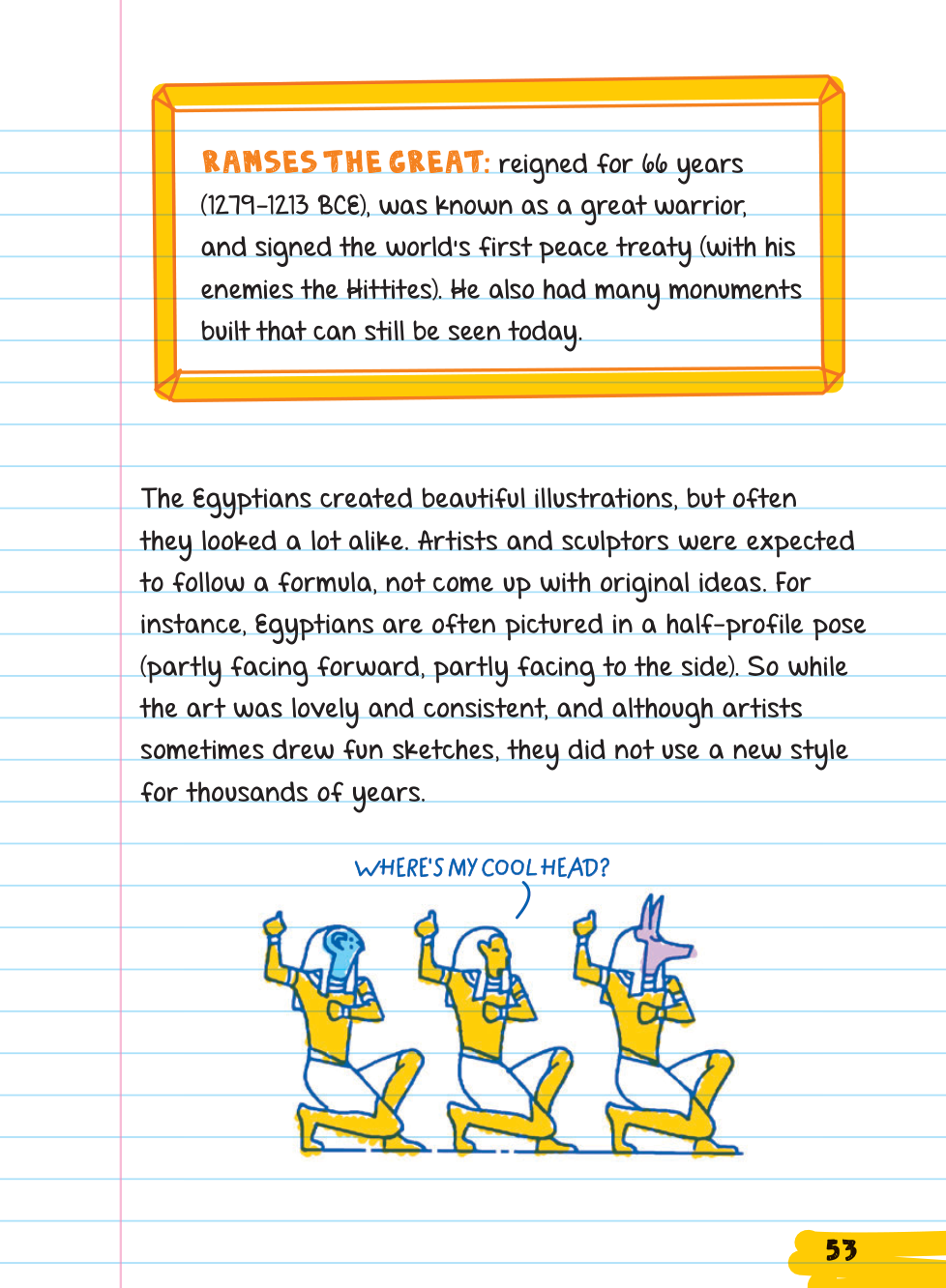
I can discuss the main features of Egyptian art and architecture.
I can describe the role of Egyptian trade in the eastern Mediterranean and Nile Valley.
I understand the significance of Queen Hatshepsut and Ramses the Great.
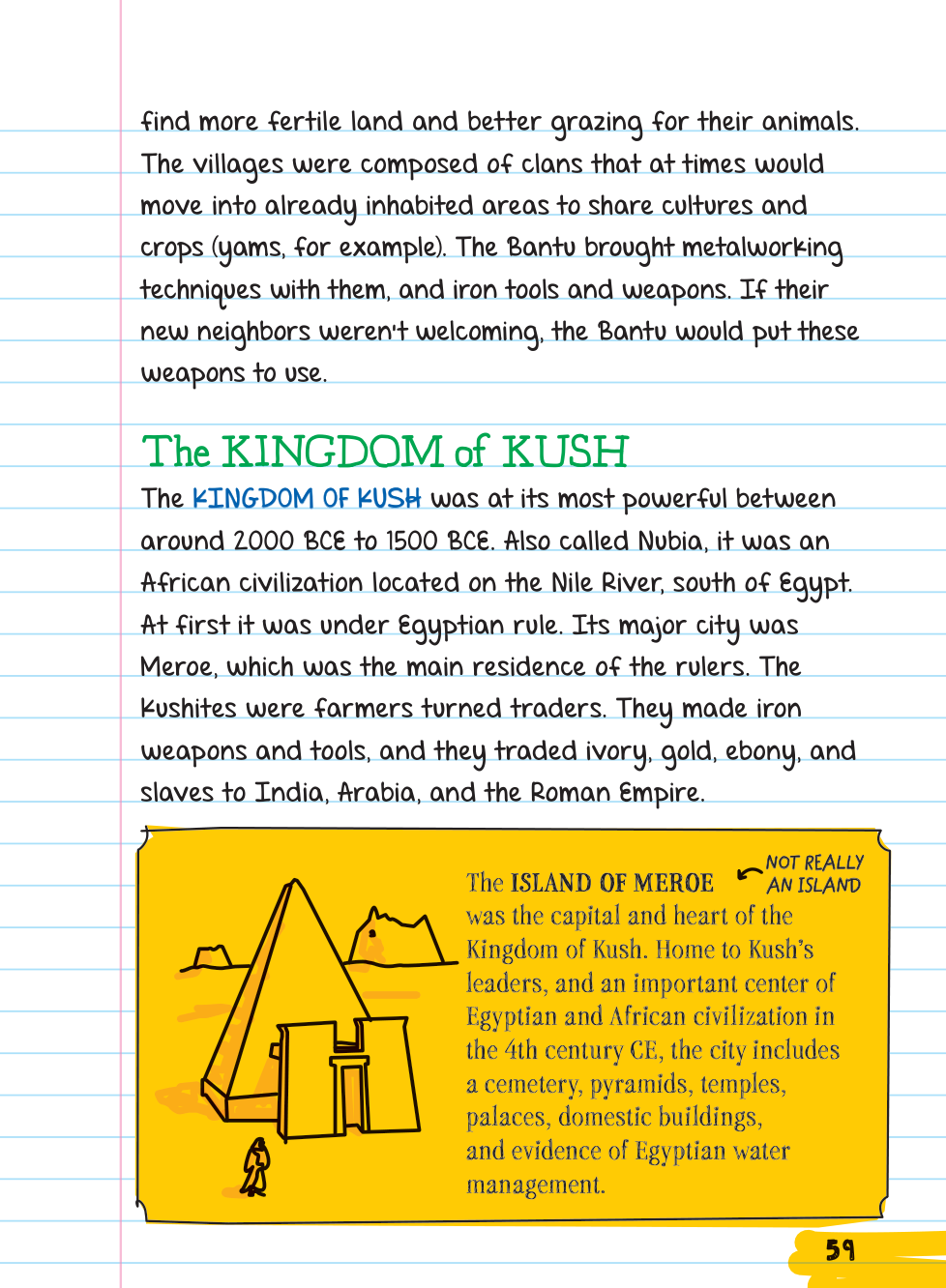
I can identify the location of the Kush civilization and describe its political, commercial, and cultural relations with Egypt.
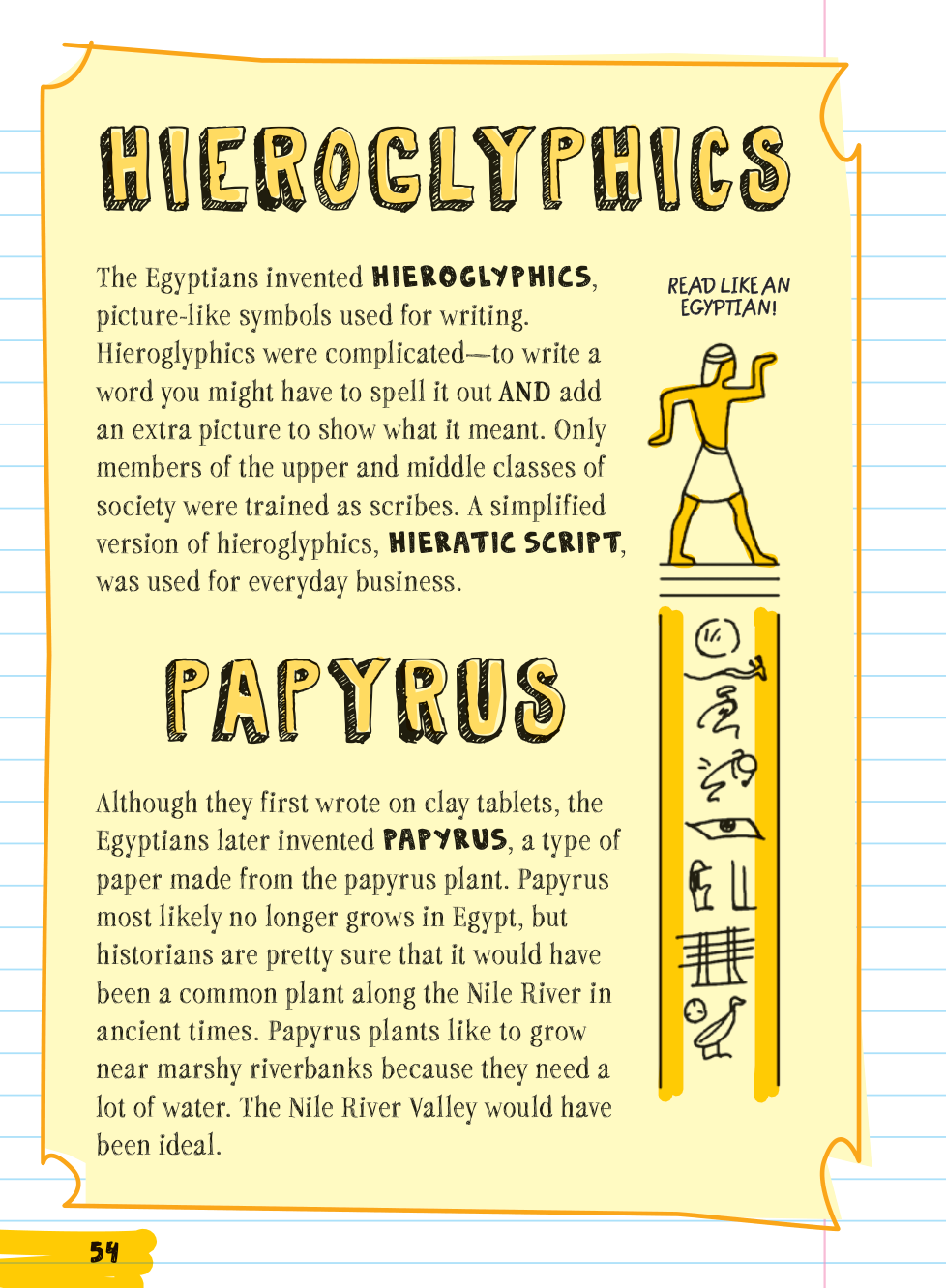
I can trace the evolution of language and its written forms.
Required
3

What reasons did the Egyptians have for living along the Nile River and not along the Mediterranean Sea's coast?

Required
1

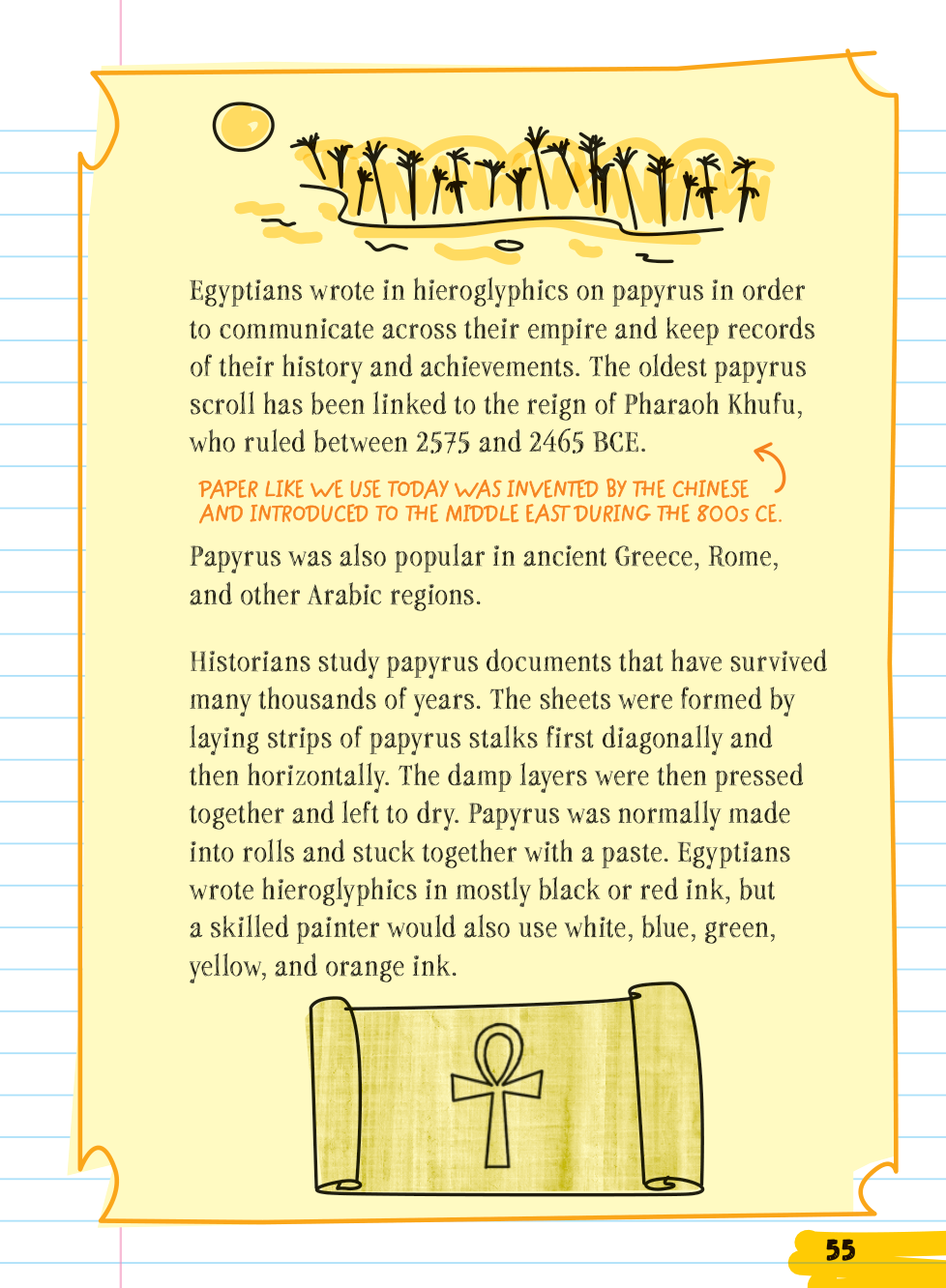
The Egyptians invented a special paper to write on made from plant stems. What is this special paper called?

Required
1

Ancient Egyptians wrote using cuneiform.

Required
1

No one could read ancient Egyptian for thousands of years, until a stone called the Rosetta Stone was found. This stone had written the same thing in three different languages, one was ancient Egyptian.

Required
1

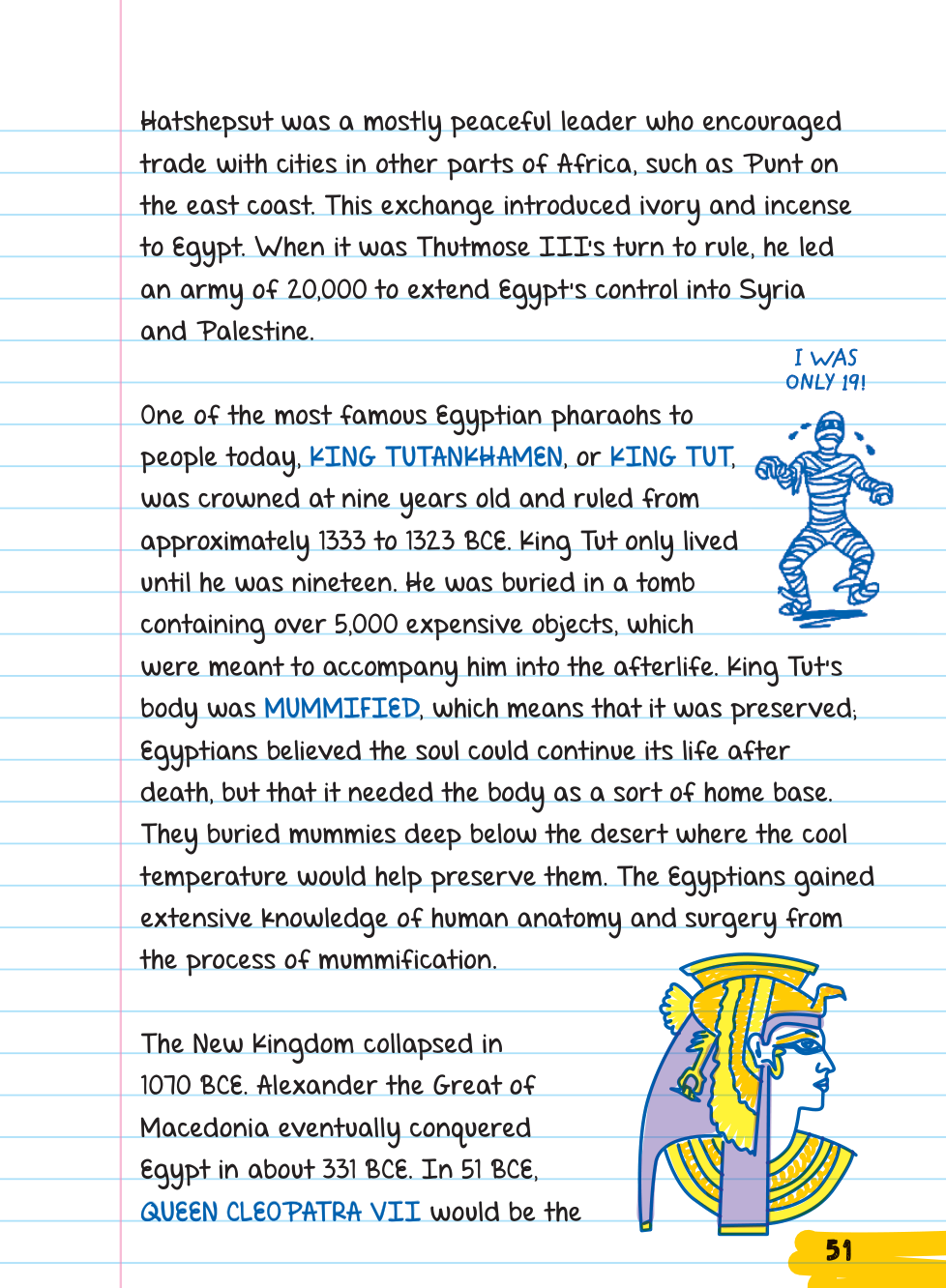
Ancient Egyptians believed that in order to make it to the afterlife your body had to be preserved and your belongings buried with you.

Required
3

What geographic barriers protect Egypt from outside threats?

Required
1

What is a dynasty?

Required
1

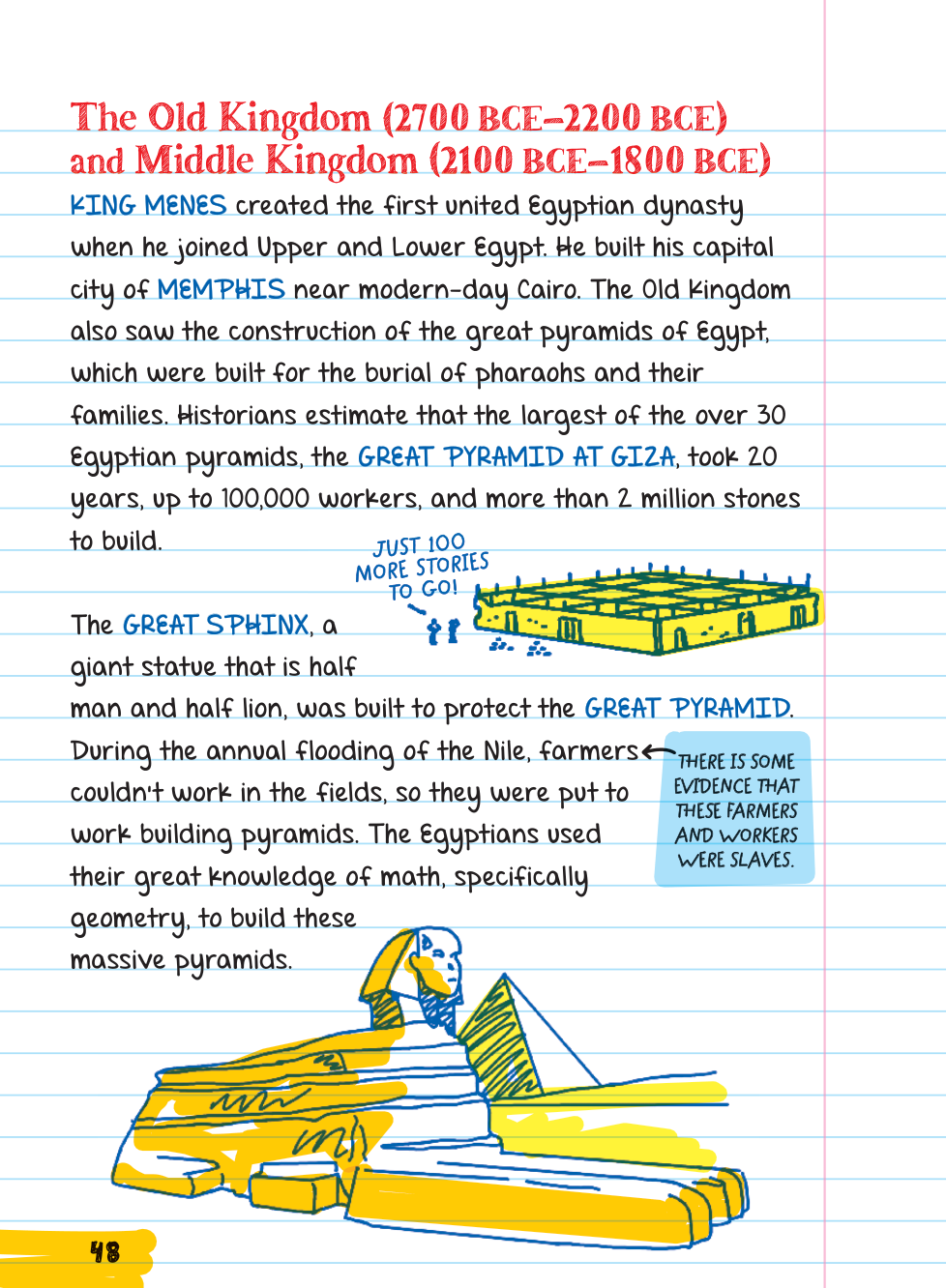
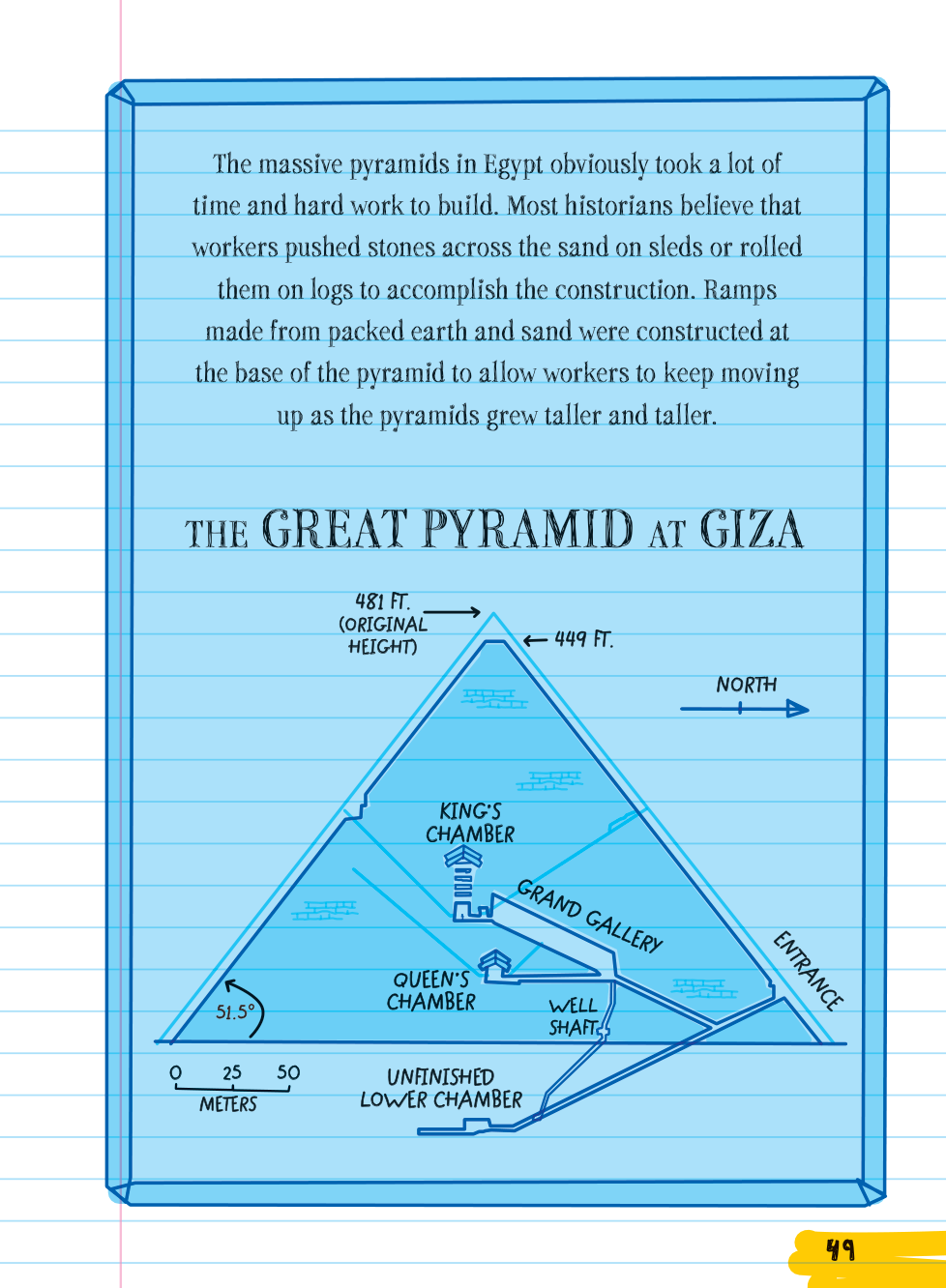
Why did the Egyptians build massive pyramids?

Required
1

What are you must looking forward to learning about the Ancient Egyptians? This question has no wrong answers except "idk" or "leaving it blank".

Required
1

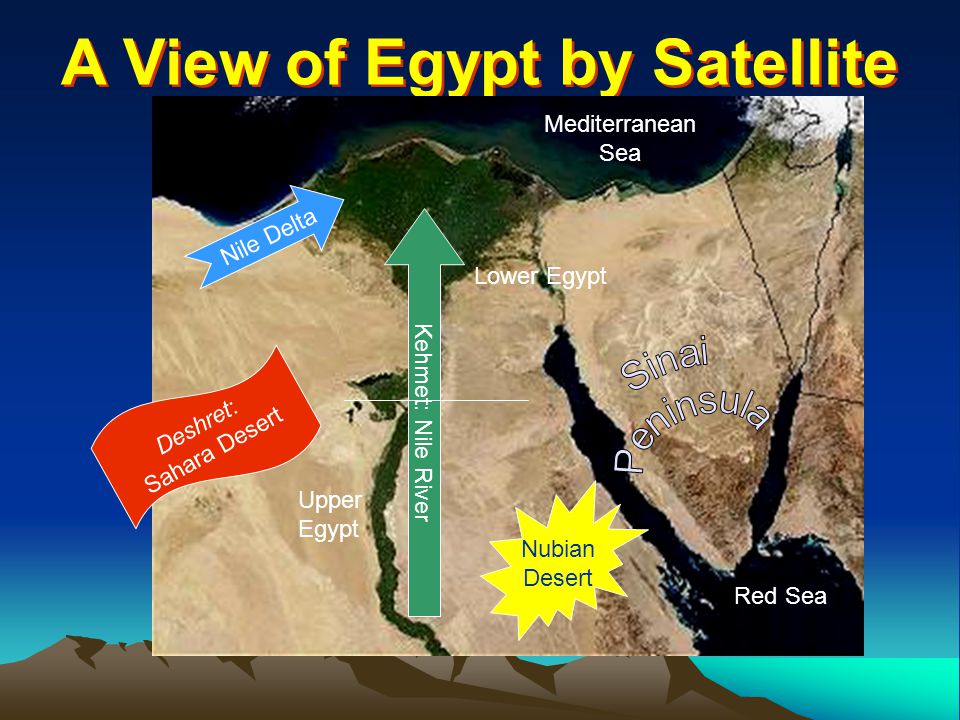
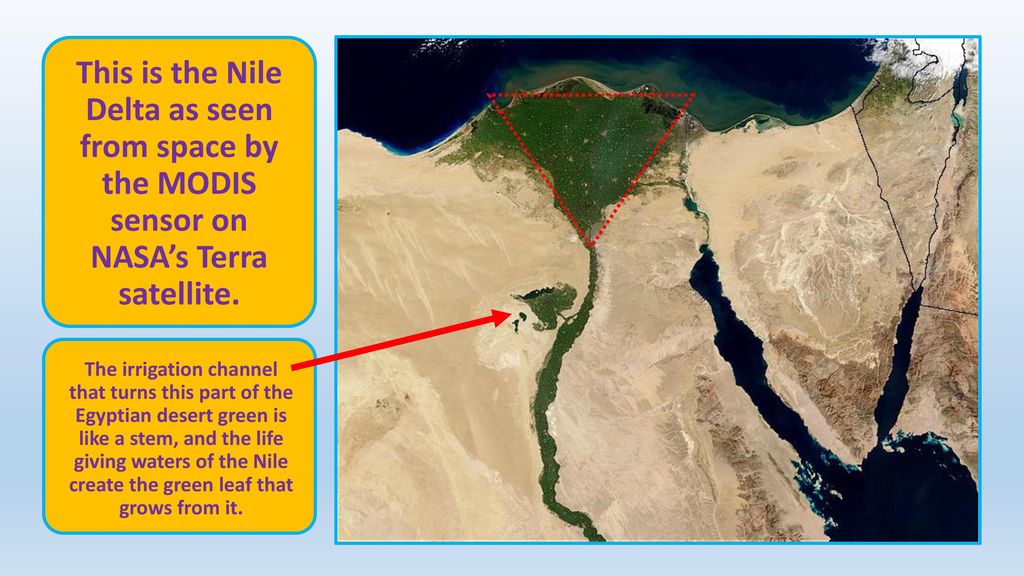
Above & below are satellite photos of the Nile River and Nile Delta.
If up on these photos is North, where does the water come from?

Required
1

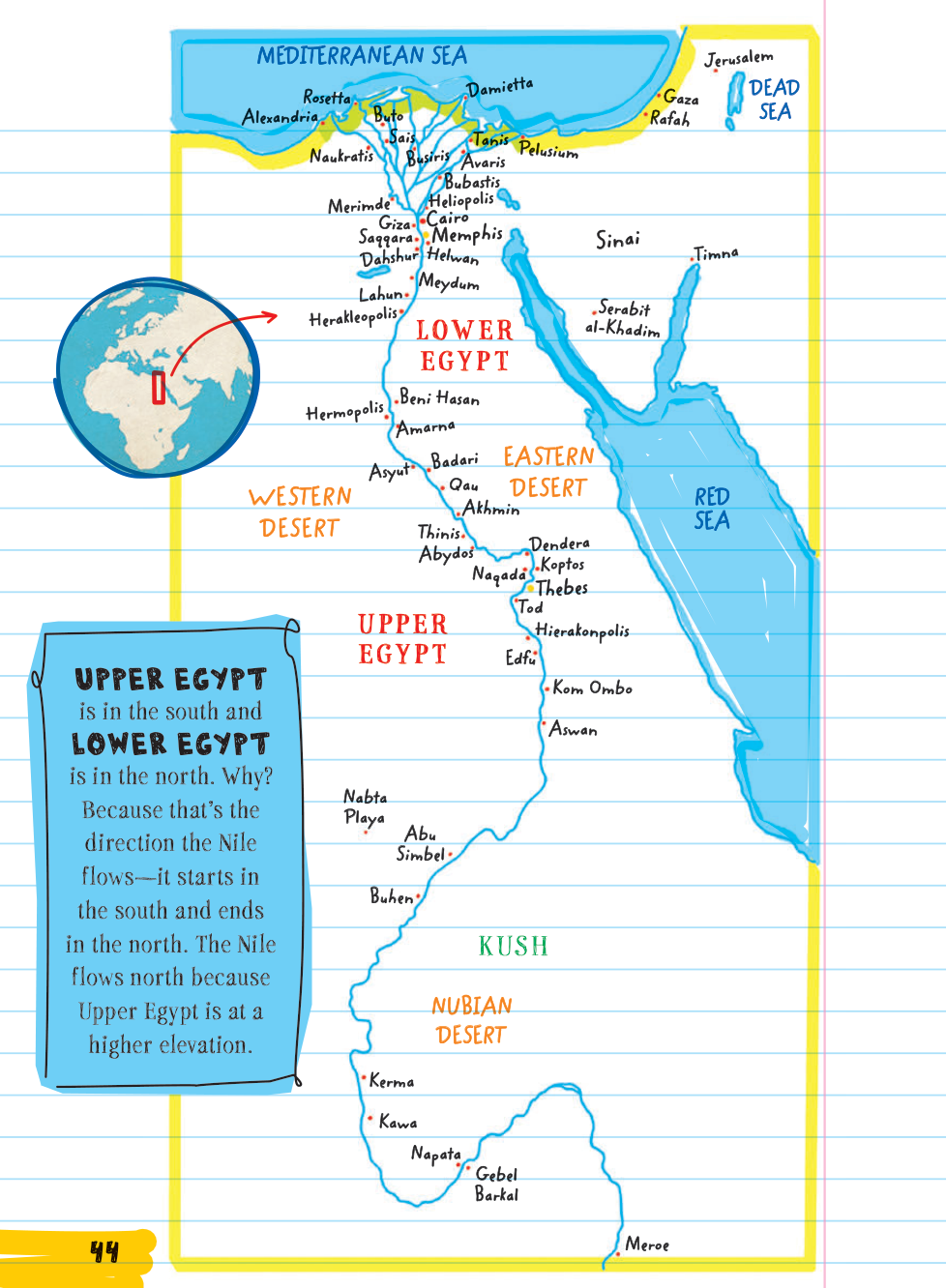
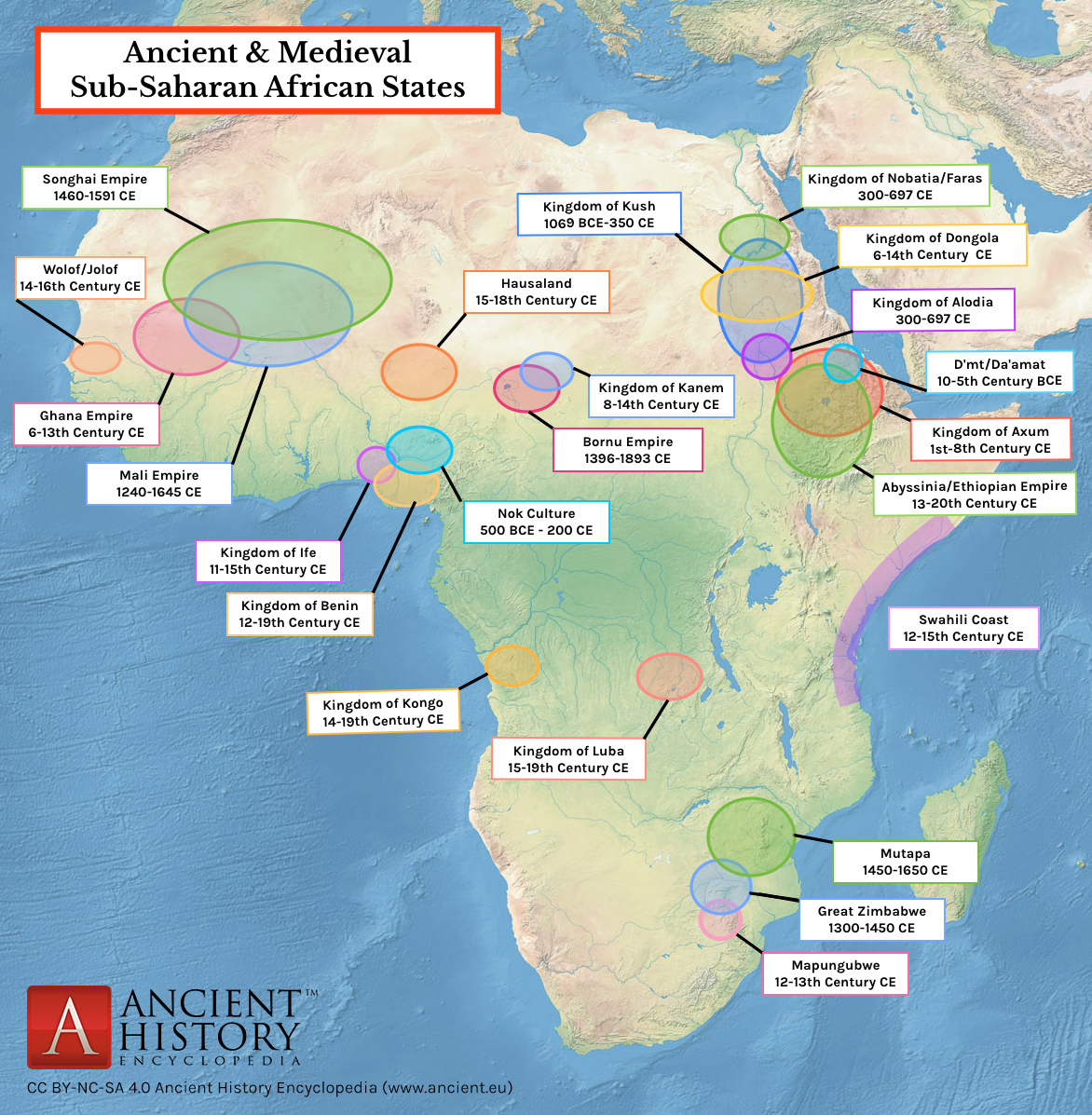
According to the map, Kush (Nubia) is in the South, Egypt is in the North.

The short video above shows how ancient people moved water from low ground to high ground. It would take a long time but it would be worth it because you need water to live and grow food.
Required
1

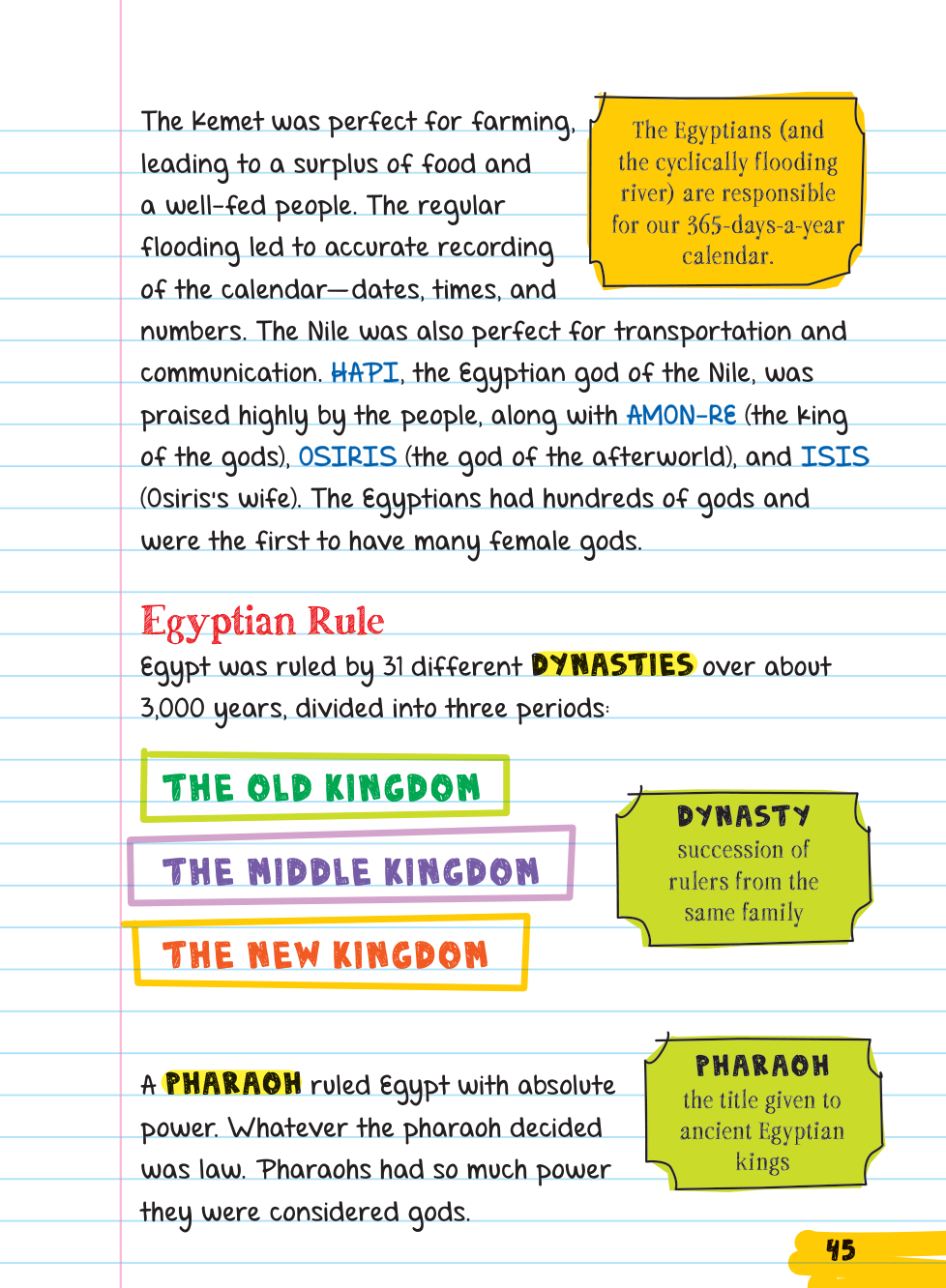
Is the Pharaoh like a king?

Required
1

How is the Pharaoh like a king? (1 sentence)

Required
1

Pharaohs had more power then a king would. How much power does a pharaoh have? Give an example from the text in your answer.

Required
1

Given what you've seen in the video, in your opinion, how do the Egyptians feel about their gods?

Required
3

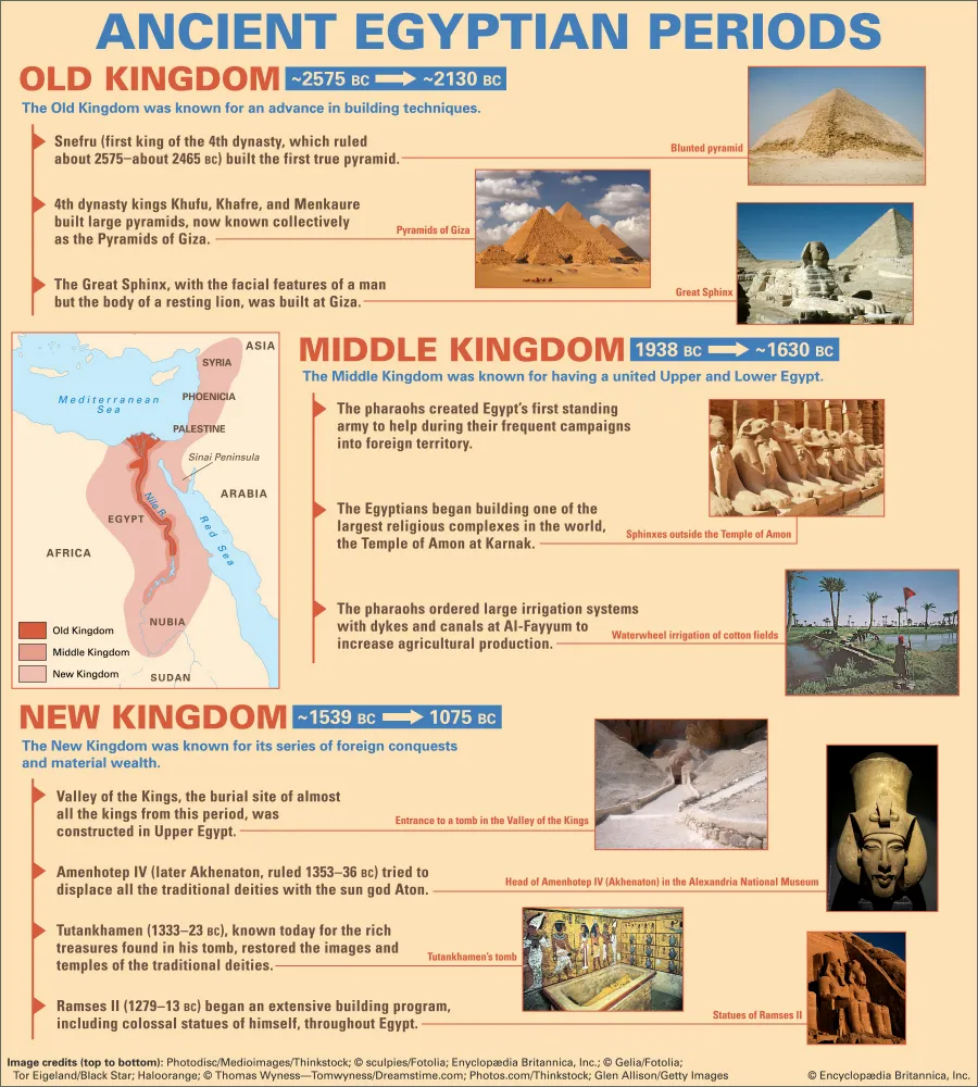
Select below the accomplishments of the Old Kingdom.

Required
2

Select below the accomplishments of the Middle Kingdom.

Required
3

Select below the accomplishments of the New Kingdom.

Required
5

Select below those things we've learned about Cleopatra so far:

Required
1

We don't know what Cleopatra actually looked like because everything made about her was created long after her death.

Required
1

Cleopatra was ethnically Egyptian.

Required
1

What did Cleopatra's husband/brother do to her?

Required
1

Julius Caesar annexed Egypt.

Required
3

Select below some of the reasons Cleopatra was considered extraordinary:

Required
1

Julius Caesar learned a lot from his time in Egypt and Cleopatra.

Required
4

Match the problems Cleopatra fixed during her reign.

Draggable itemCorresponding Item
The economy was fragile.
She stabilized the economy.
Drought hit Egypt.
She managed it successfully.
Egypt's bureaucracy was vast.
She curbed corruption.
Priests and officials were corrupt.
She opened the granaries to the public and passed a tax amnesty.
Required
2

What do you think of Queen Cleopatra? Write at least two sentences.

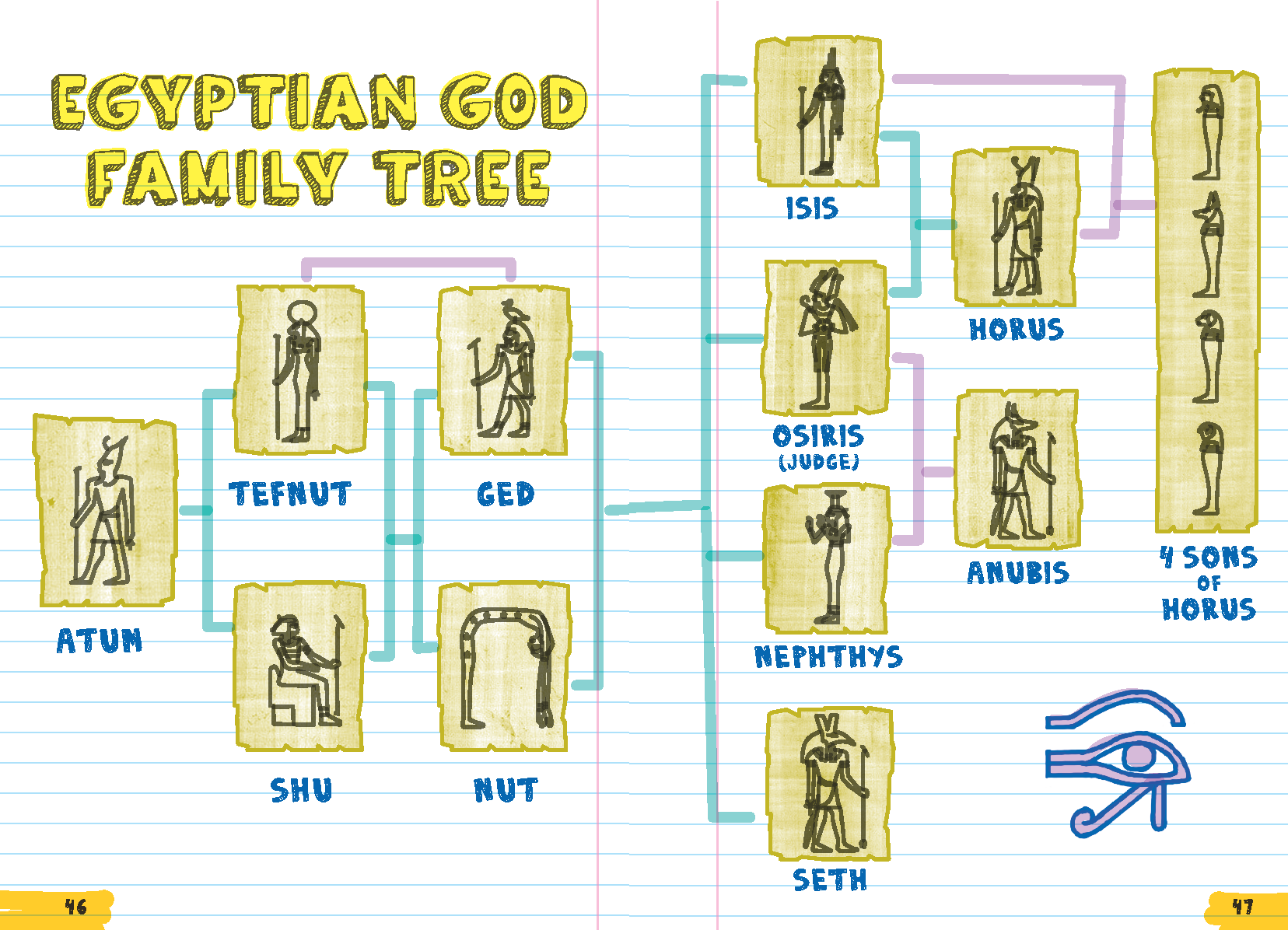
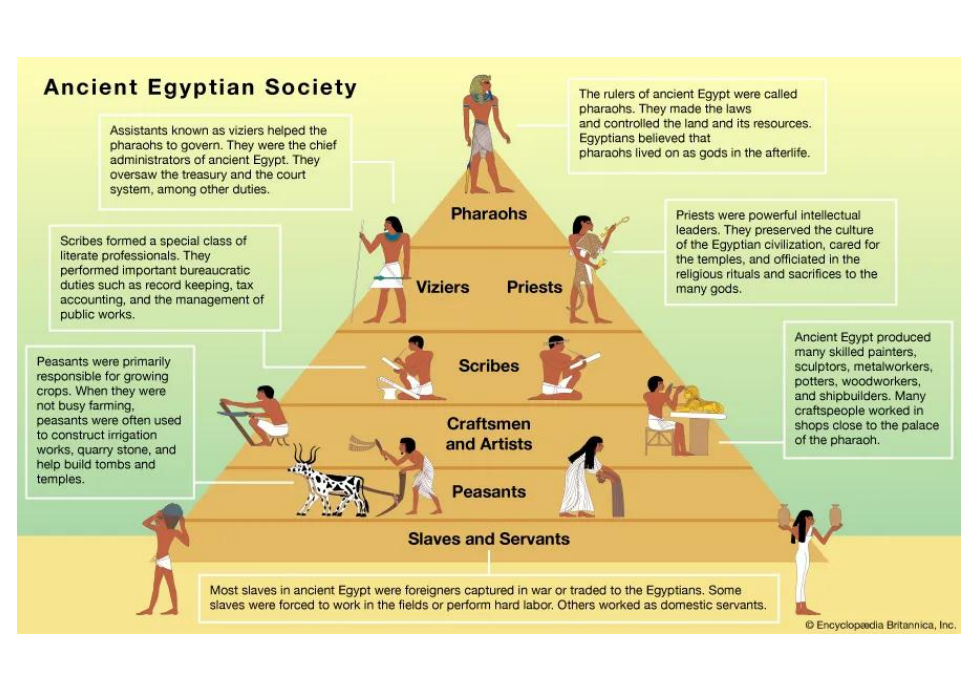
Draw out Ancient Egyptian Society. as seen below, on note paper. It will be on the test!
Required
1

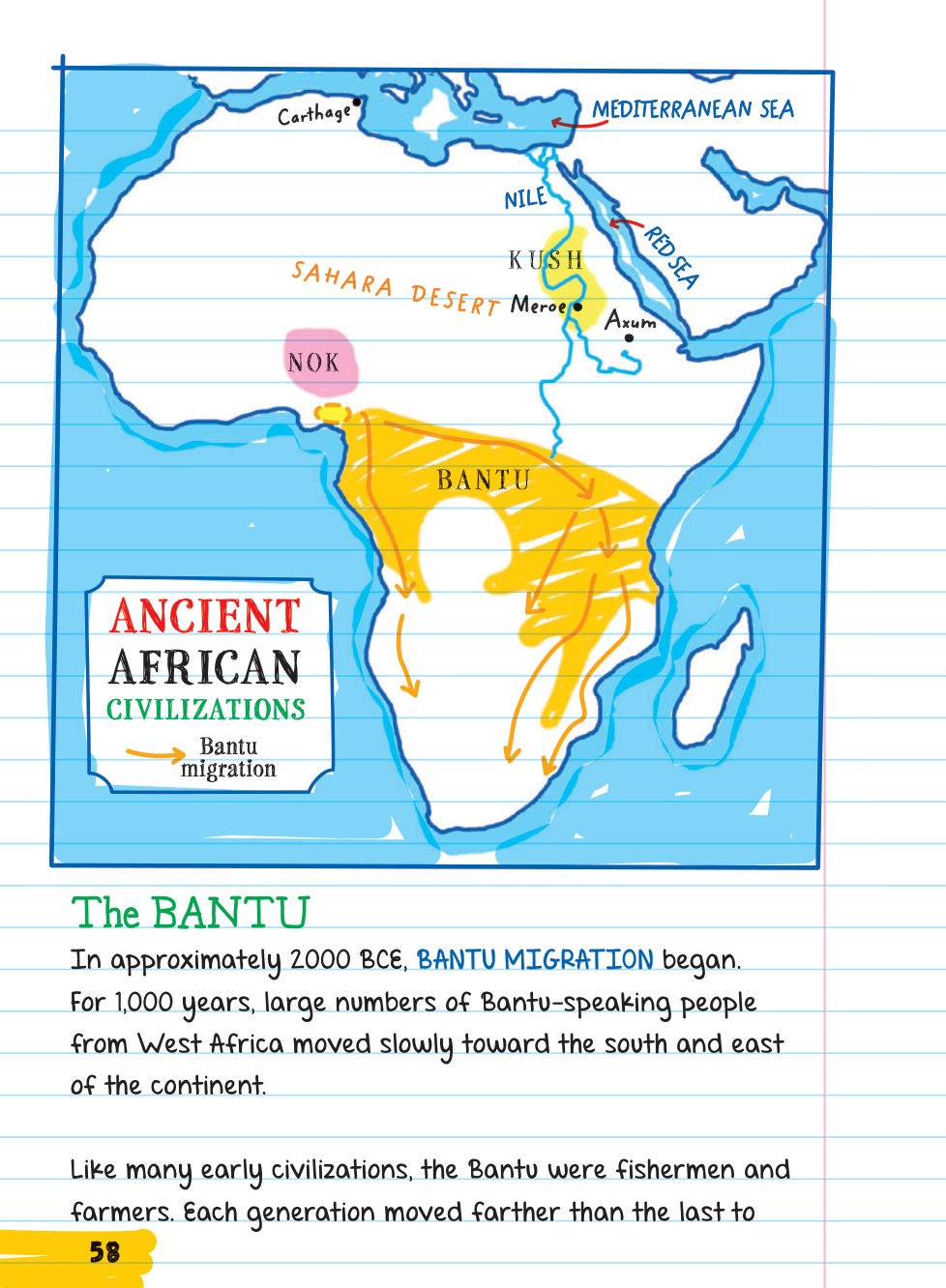
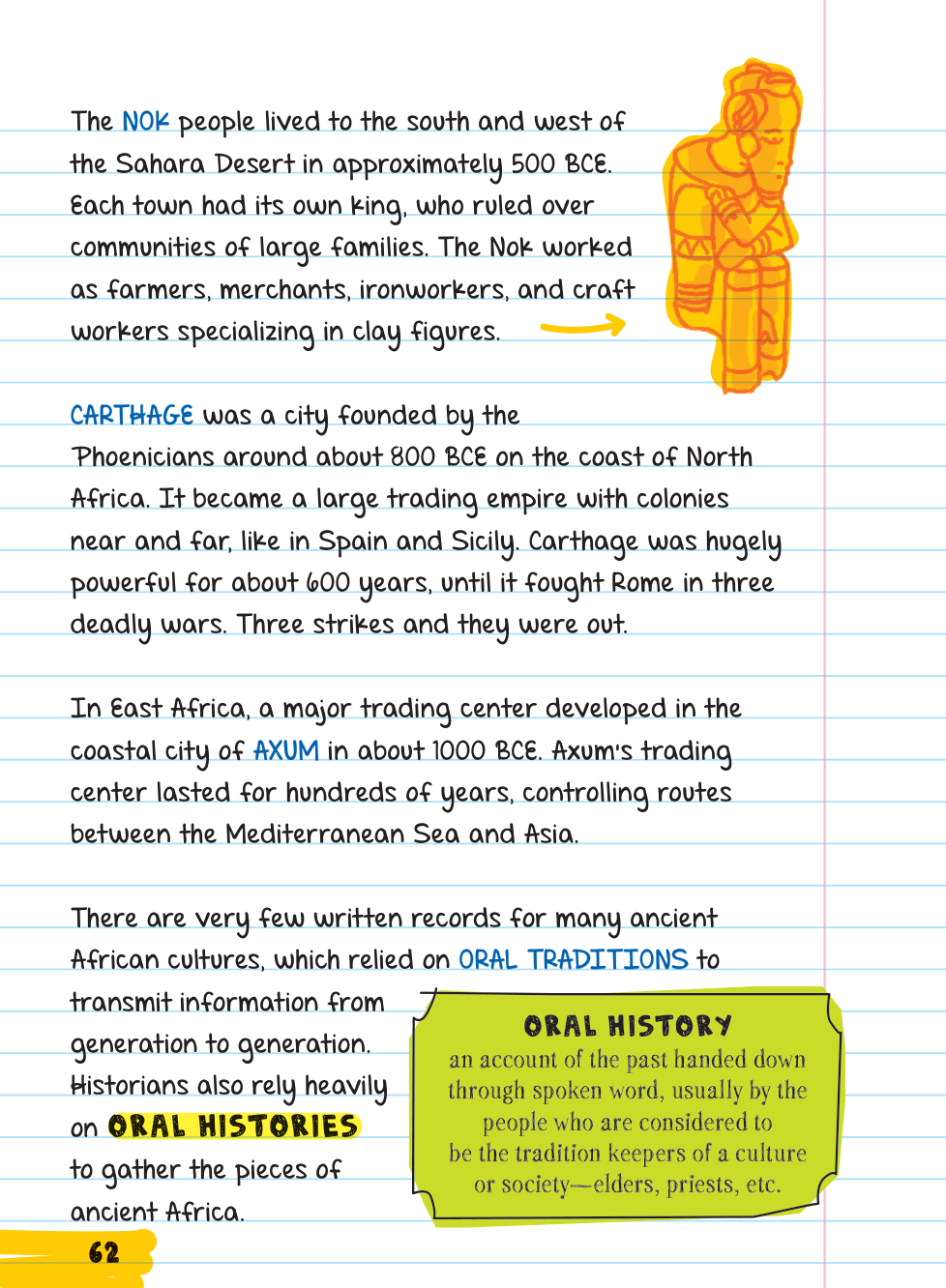
Why do most people in South-Eastern Africa speak some form of Bantu language even though the Bantu language is from West Africa?

Required
1

Which of the following descriptions best describes the Kingdom of Kush?

Required
2

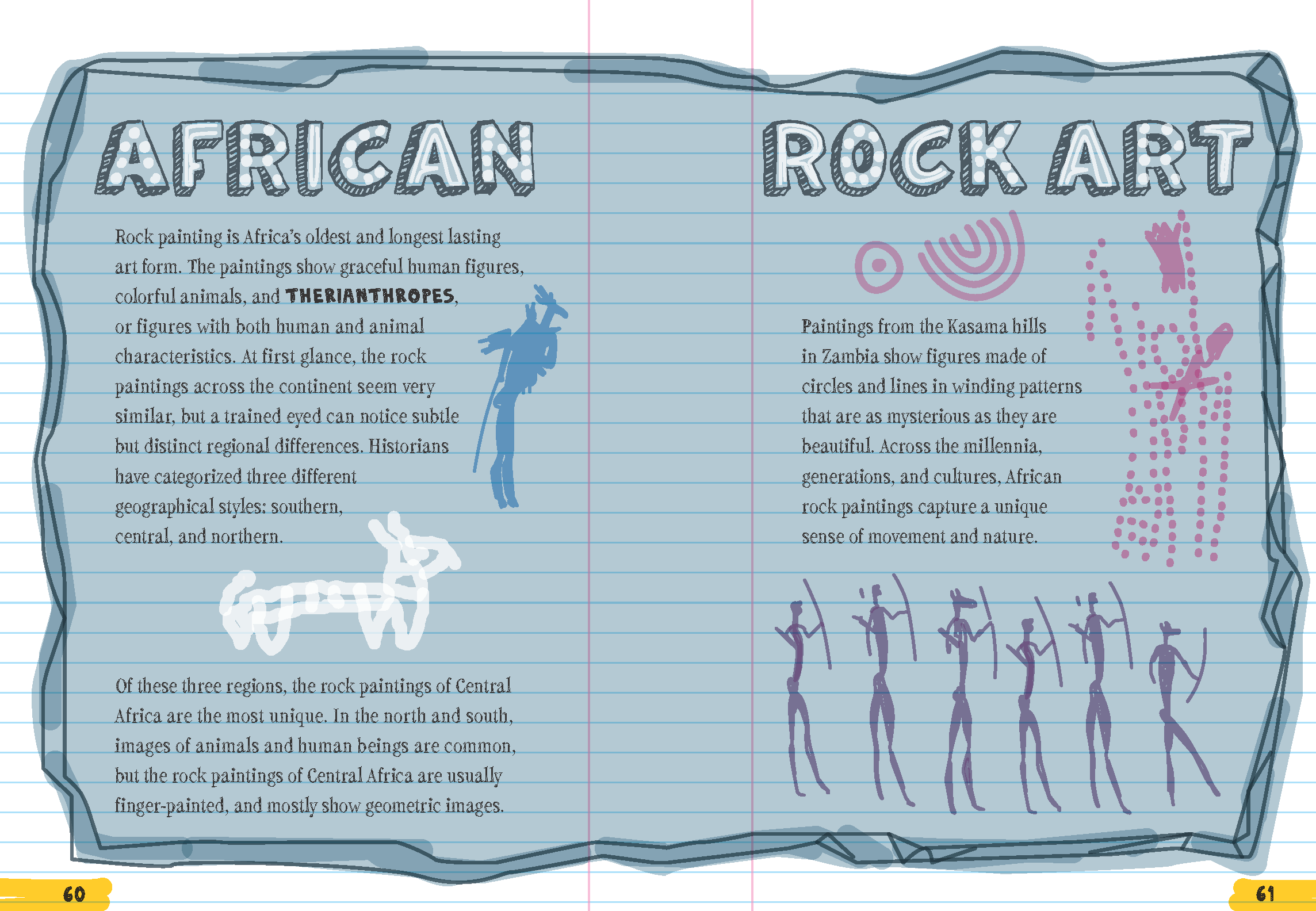
In your opinion, how does African Rock Art fit into the evolution of human language as we've learned in this class?
Is it more like cave painting, hieroglyphics or words? How do you know?
Write at least two sentences.

Required
3

Africa was and is not empty. Yet many people in the West (we live in the Western world!) view Africa as empty, filled with animals not people.
This is a stereotype, an oversimplified image or idea of a particular type of person or thing.
Why do you think this stereotype exists? Use evidence from the reading and the map.
Write your answer in at least three sentences using evidence.

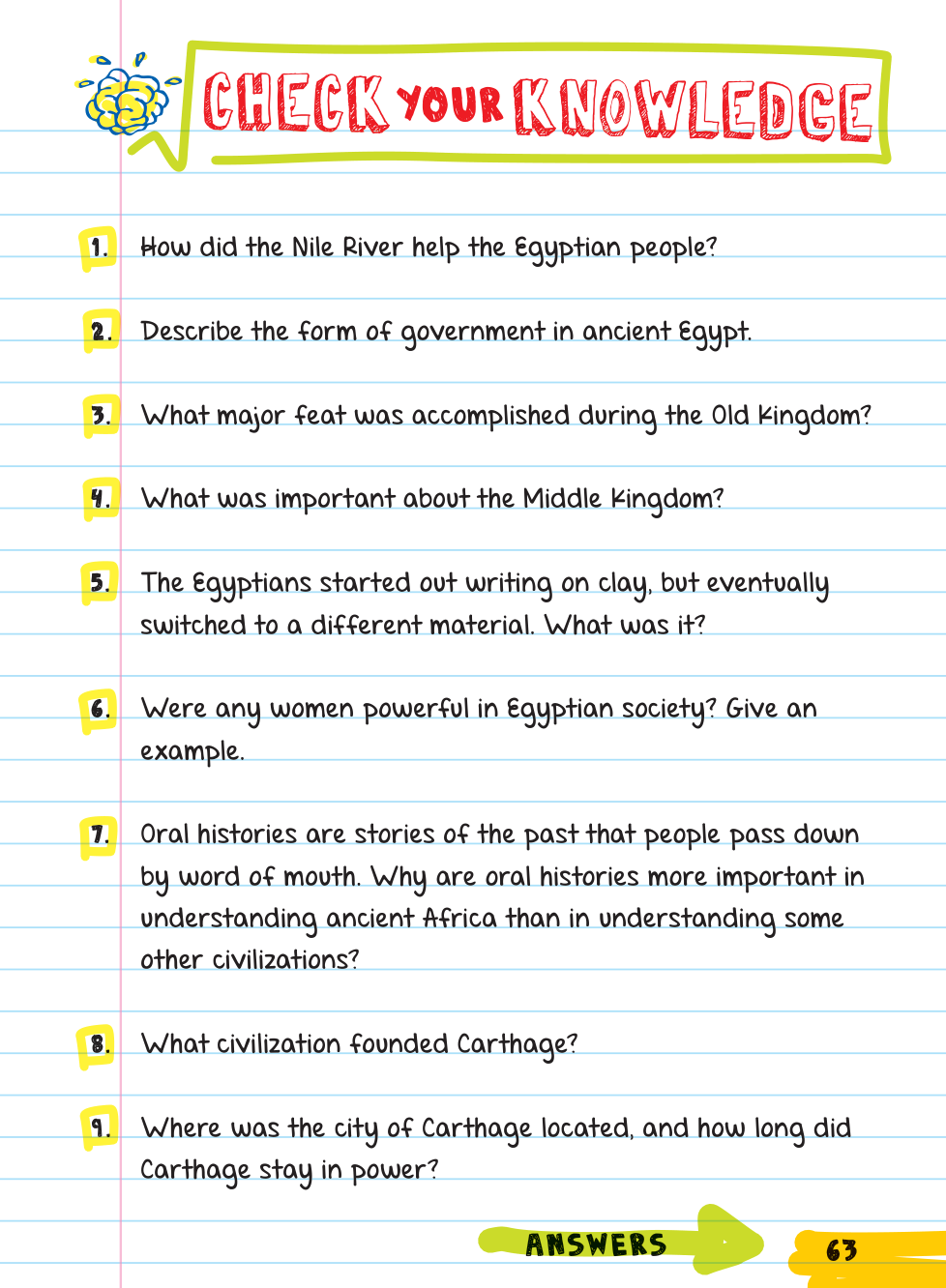
On a sheet of lined paper, title it CHECK YOUR KNOWLEDGE. This is our study guide. Use your knowledge, the Formative, your notes, and any projects to answer the questions. Write your answers on the sheet of lined paper.
After some minutes you will be buddied up with ONE student. Share your answers to make each others answers better!
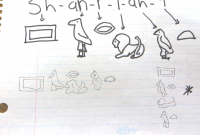
Use the key and instructions below to write your name in hieroglyphics!

Step 1

Write out your name the way you usually do on a piece of scrap paper.
Look for these tricky things in particular:
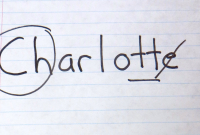
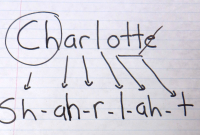
  • Silent letters in your name. If there are letters in your name that are not sounded out, don't write them in hieroglyphs. Look for silent letters in your name and *put a line through them*.
  • Some hieroglyphs stand for two letters. Does your name have a 'sh', 'ch', or 'th' sound? You will only need one hieroglyph for these. Look for these letter combinations and *circle them*.
  • If you have double letters in your name, say your name out loud and listen to hear if the double letter is really sounded out twice. If you don't hear the letter twice, don't repeat the hieroglyph. *Underline* any double letters in your name that are only pronounced once.
  • Remember that  not all languages have the same sounds; you may find that there is a sound in your name that is not in the ancient Egyptian alphabet. Do your best to break down the sounds -- for example, ancient Egyptians did not have the letter ‘x’, so in foreign names, the sound was represented by using ‘ks’.

Step 2

Write your name out again using the sounds in your name instead of the letters. Remember the tricky things to watch out for.

Step 3

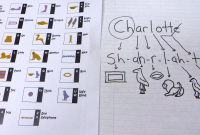
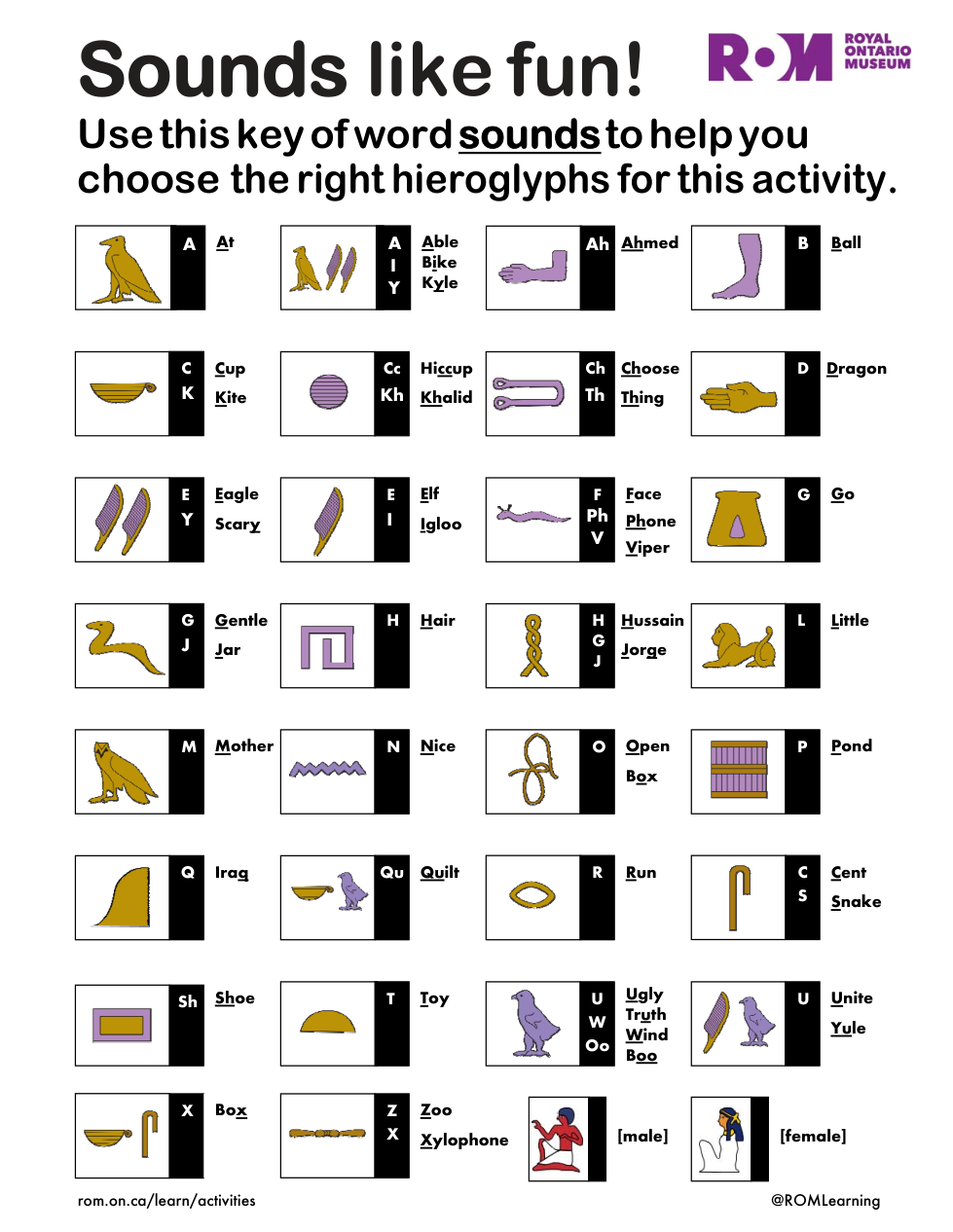
Use the hieroglyph key (PDF) to find hieroglyphs to match each sound in your name. Write each hieroglyph beneath the corresponding sound.
Note: If you want to show that your name belongs to a boy or a girl, you can add one of these symbols:
Boy:
Girl:
Step 4
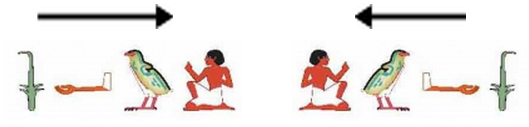
Figure out a nice arrangement for your hieroglyphs. They can run left to right, right to left, or up and down, and the Ancient Egyptians liked their names to look nice, so they would try to group the signs to fit into a neat square or rectangle.
Fun fact: Hieroglyphs can be written from left to right (like English), right to left (like Arabic, Hebrew, or Urdu), or even top to bottom (like Chinese). However you write them, all the faces of the figures should be pointing in the same direction. To read the hieroglyphs, read in the direction that moves toward their faces.
Step 5
Draw out your hieroglyphs on a clean sheet of paper.

Step 6

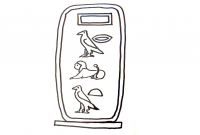
Enclose your name in a cartouche if you want to show that you are royalty!
Rubric (How you will be graded in the activity.)
4 - I wrote my name in Egyptian following all the steps!
3 - I wrote my name in Egyptian but broke at least one writing rule.
2 - I wrote my name in Egyptian but broke a few of the writing rules.
1 - I tried to write my name in Egyptian.
0 - I was unable to write my name in Egyptian.
Pocket Pyramid Project
Step 1
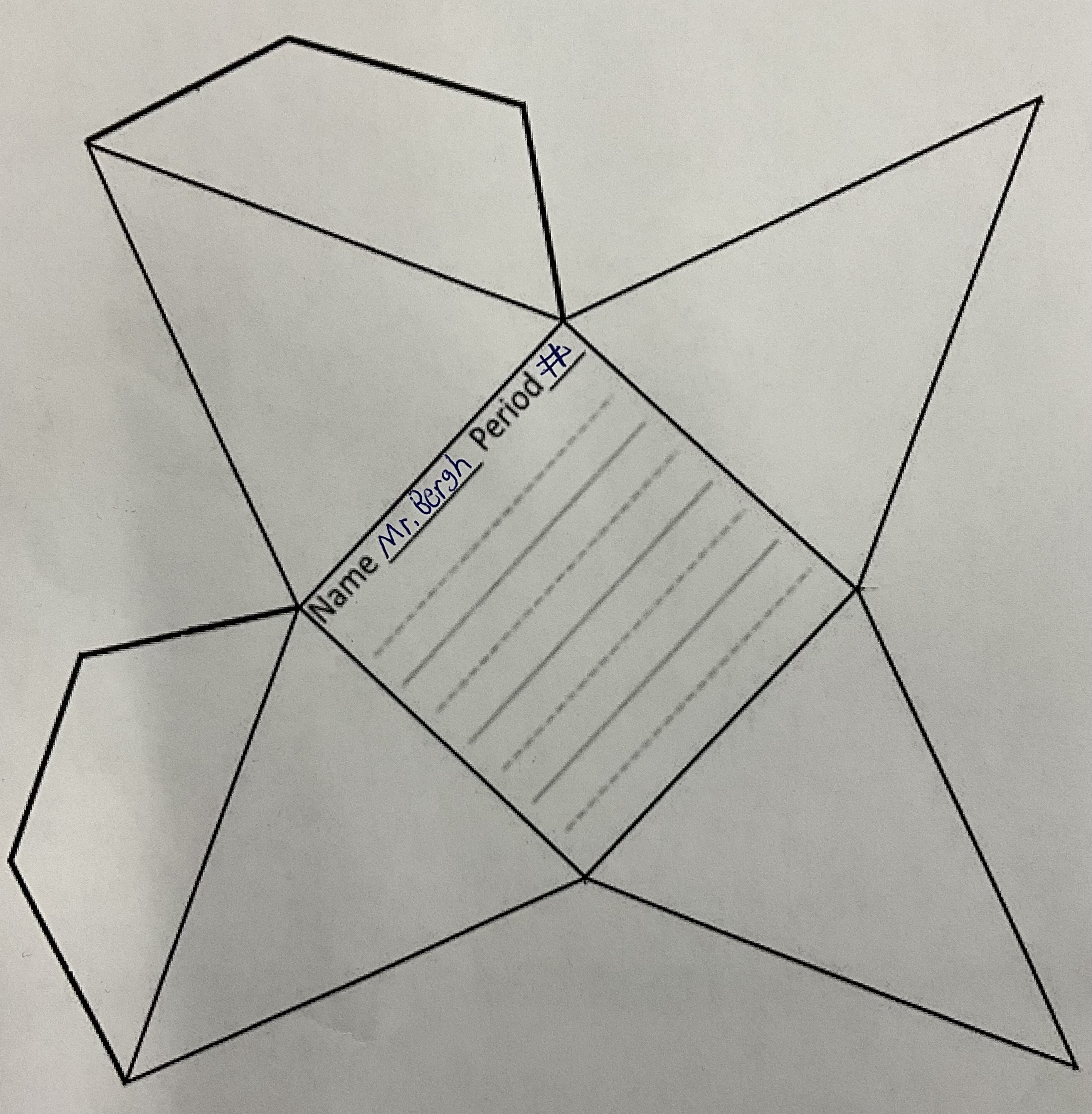
Once you receive your pocket pyramid template, write your name and period on the paper.
Step 2
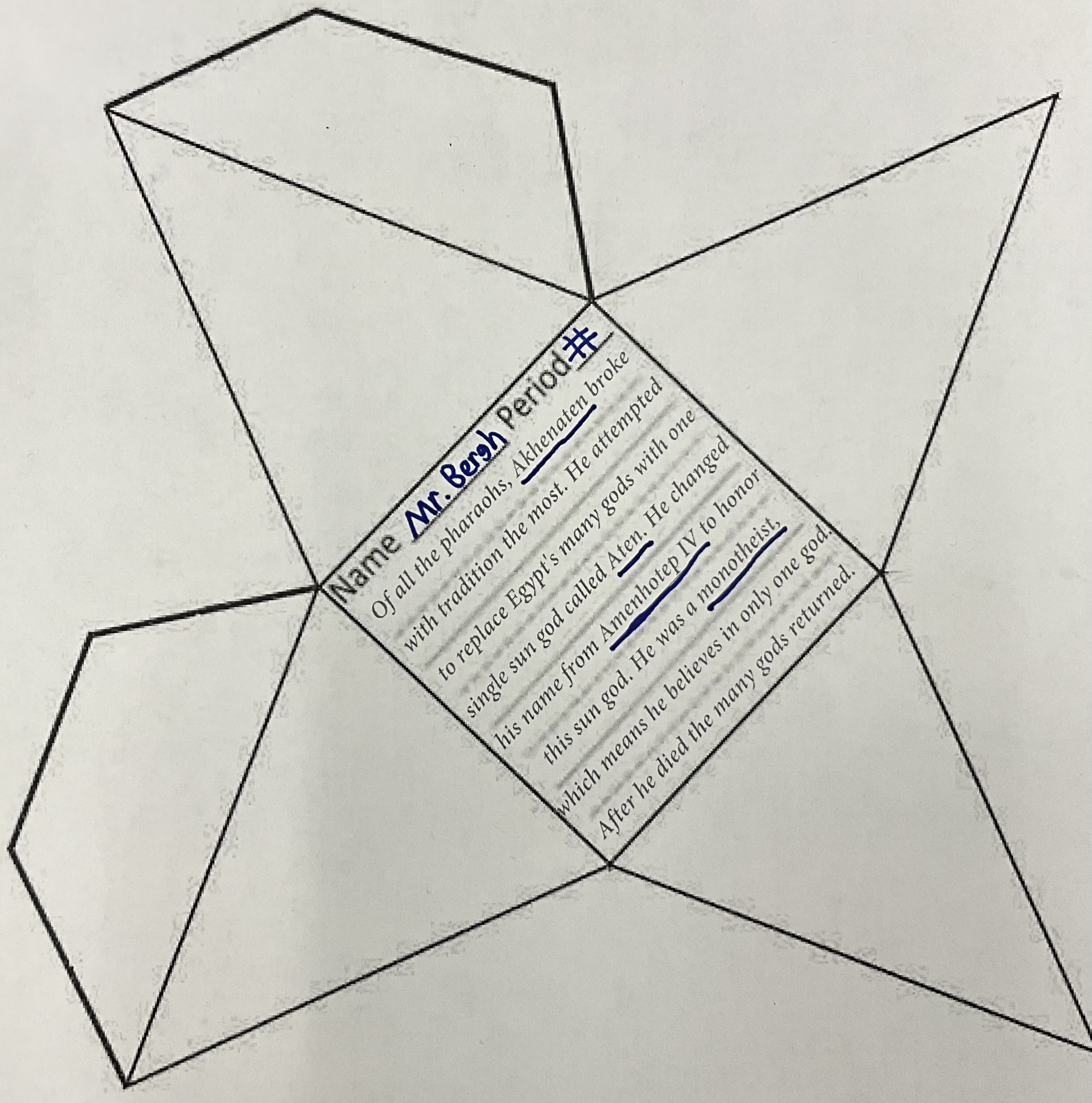
Pick one of the pharaohs we read about. Write a summary of their life on the bottom of your pocket pyramid. Include and underline vocabulary words from the reading.
Mr. Bergh typed his summary because he owes it to his class to actually be able to READ his example! If you want to type yours you must make sure it can fit onto the bottom of the pyramid before printing and glueing it.
Step 3
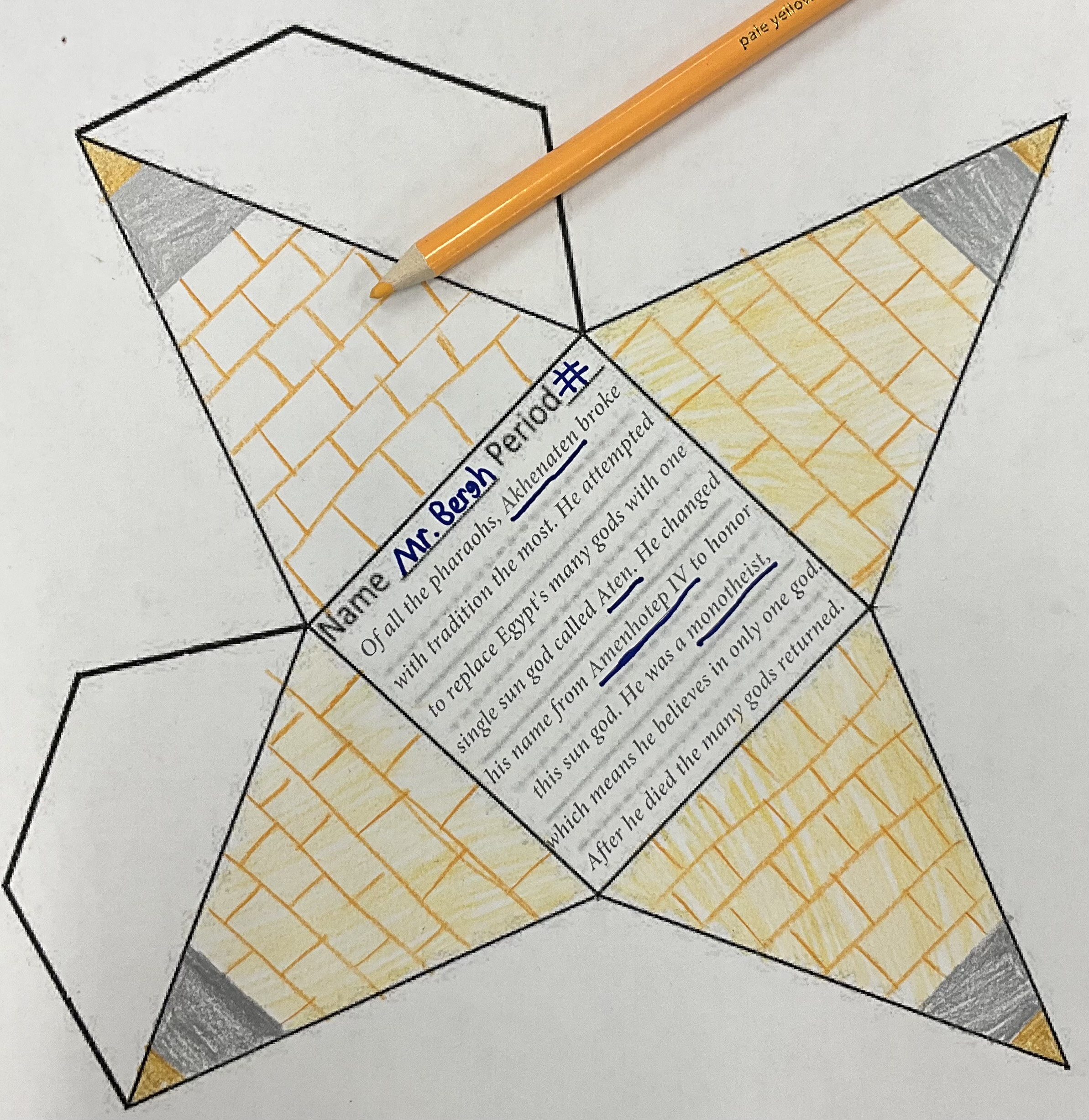
Design the outside of your pocket pyramid.
Step 4
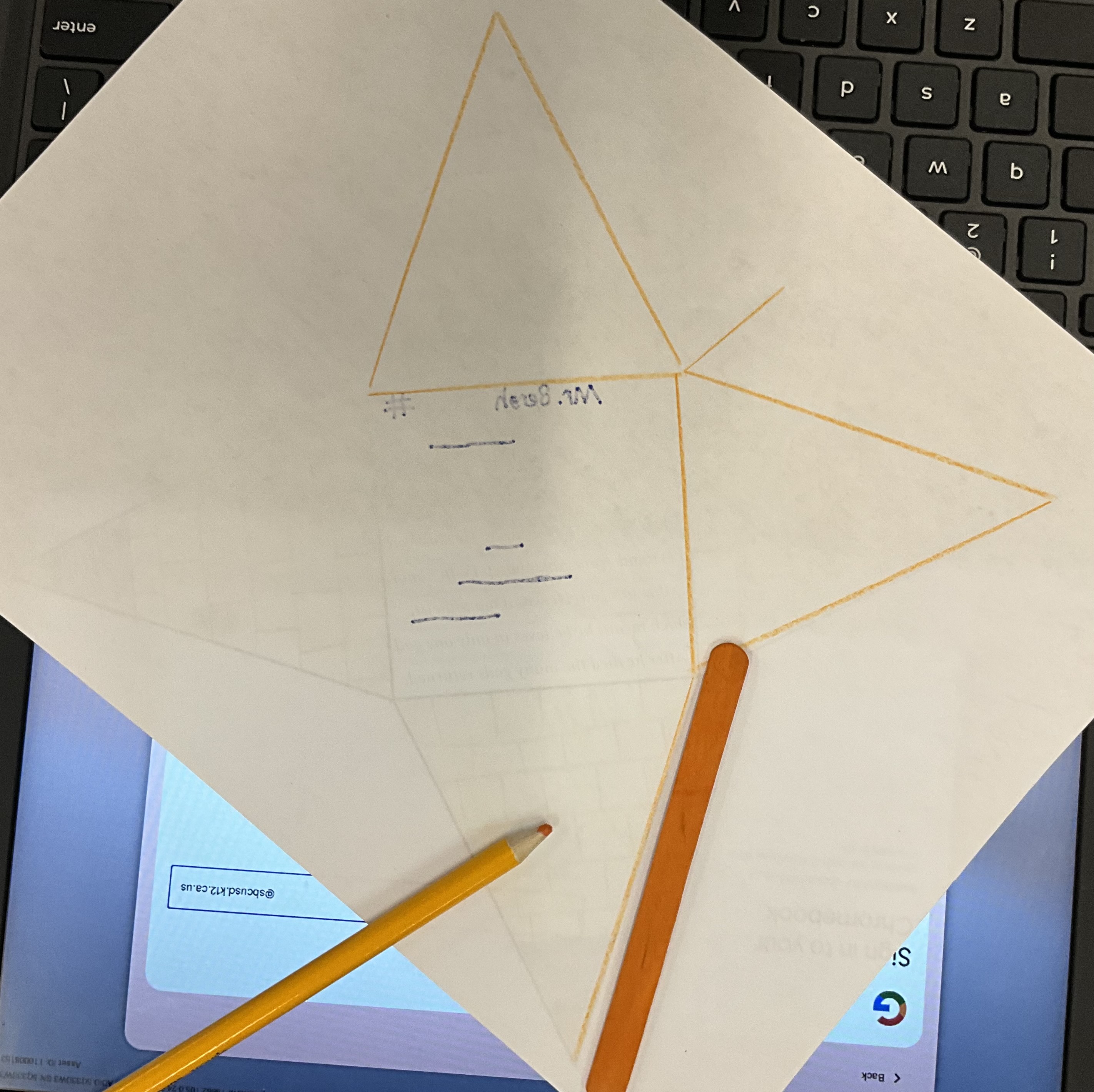
Flip the paper and trace the lines using a light source to make it easier.
Step 5
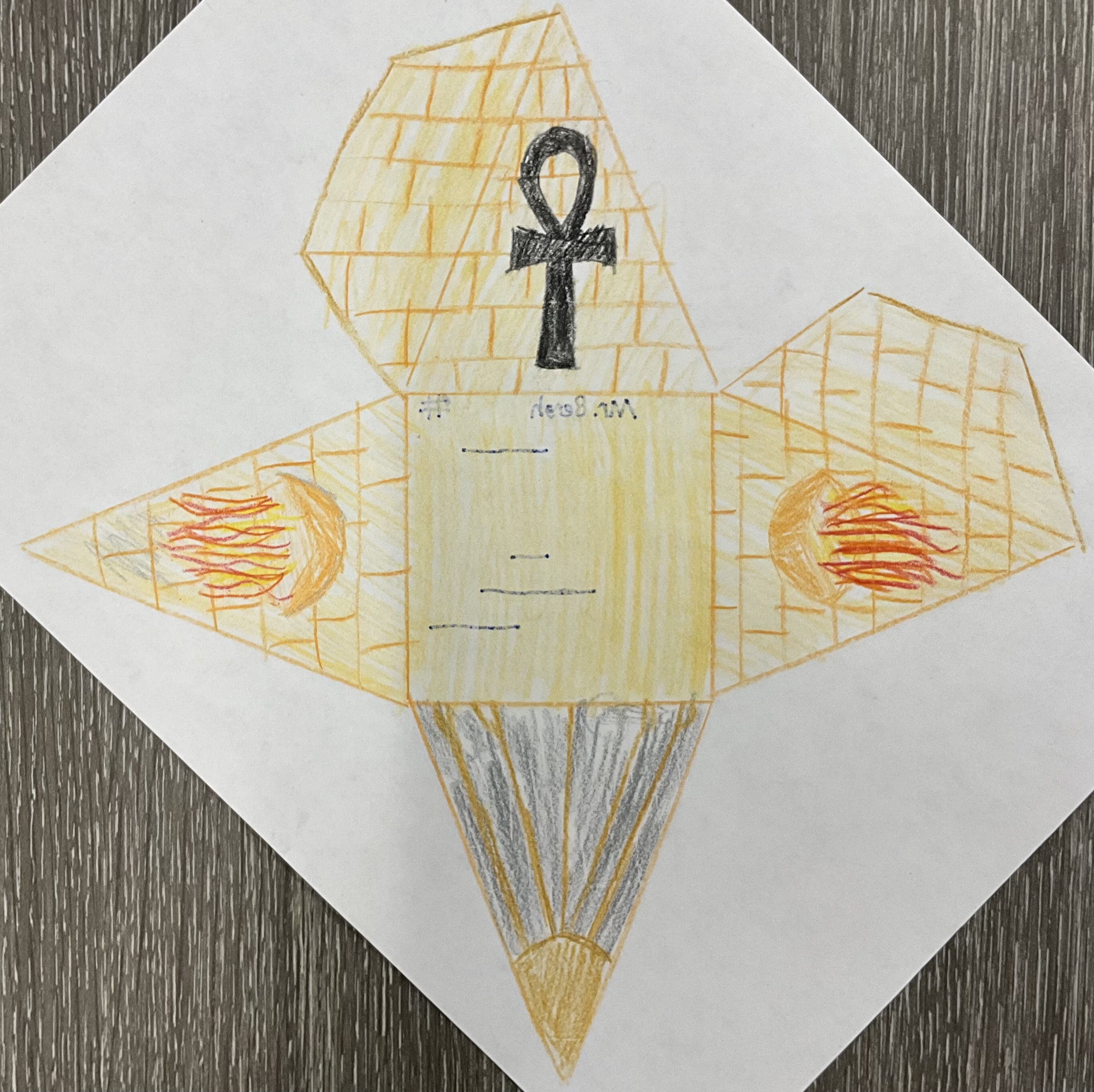
Design the inside of your pocket pyramid.
Mr. Bergh made a mistake with his design. He forgot that the flaps will cover the inside of your pocket pyramid. Consider where the flaps will cover once glued.
Step 6
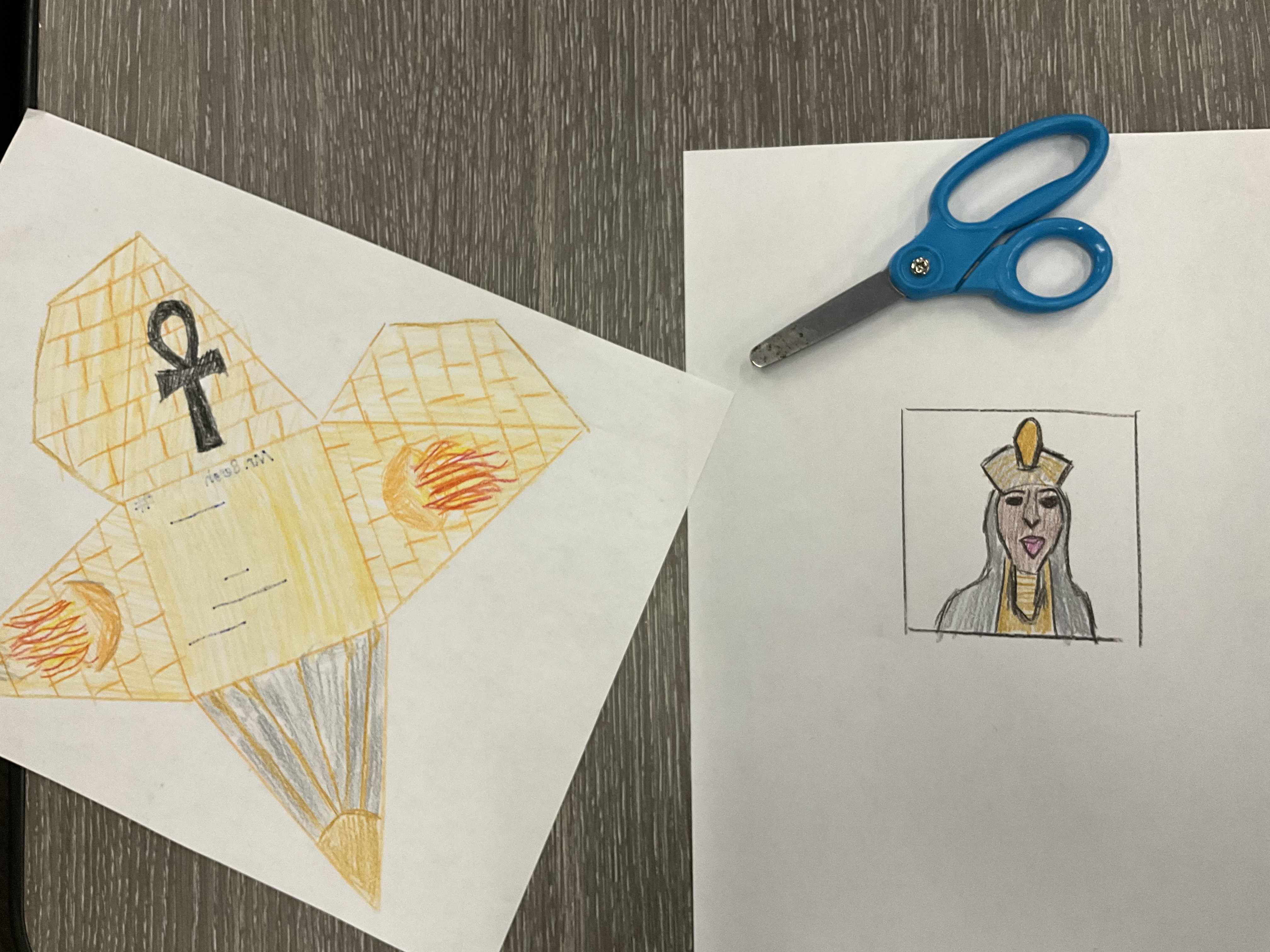
Draw your pharaoh on a small paper that can fit in your pocket pyramid.
Step 7
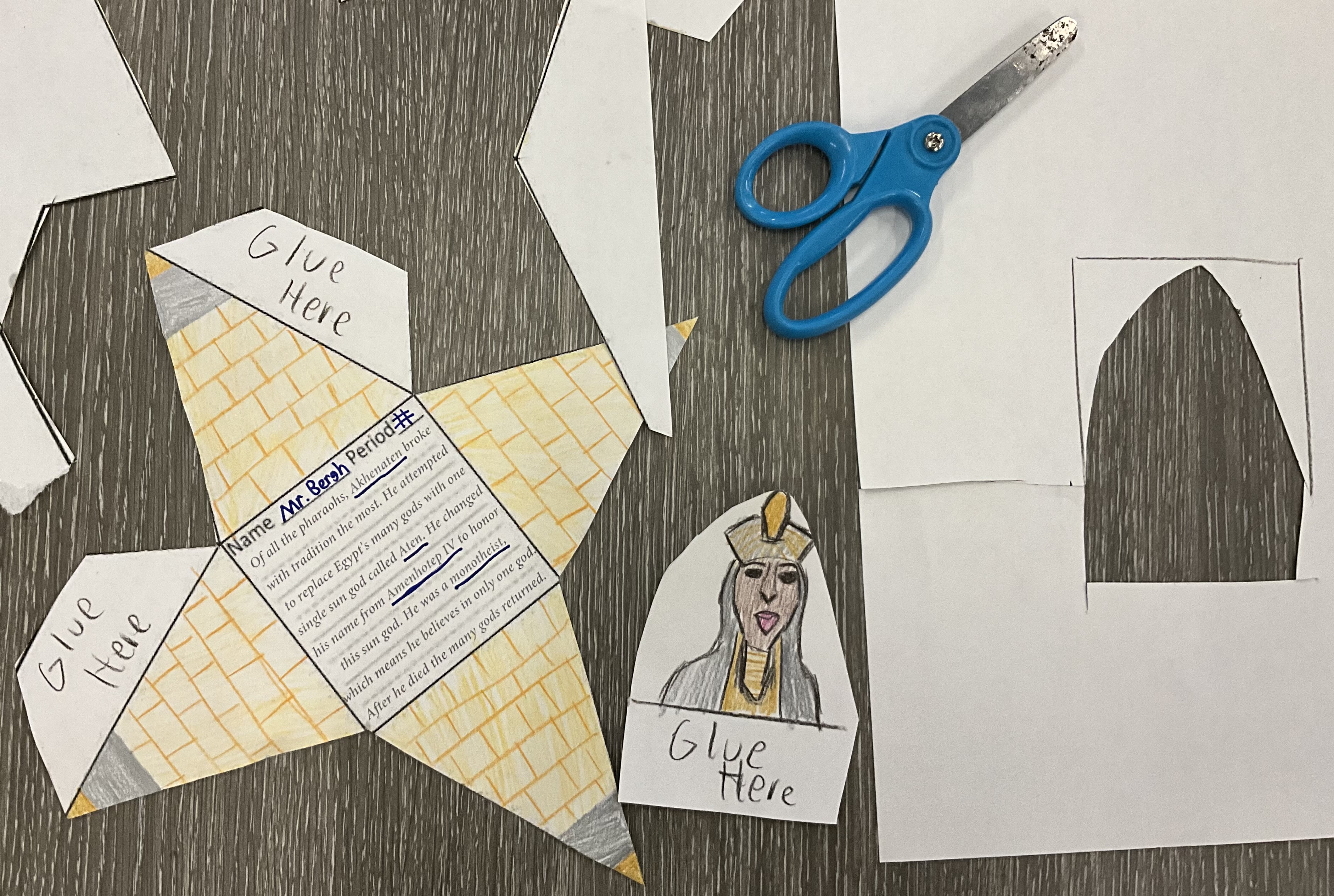
Cut out your pocket pyramid and pharaoh. Be careful to leave two flaps on your pyramid to put glue on. Be careful to leave a flap below your pharaoh to put glue on.
Step 8
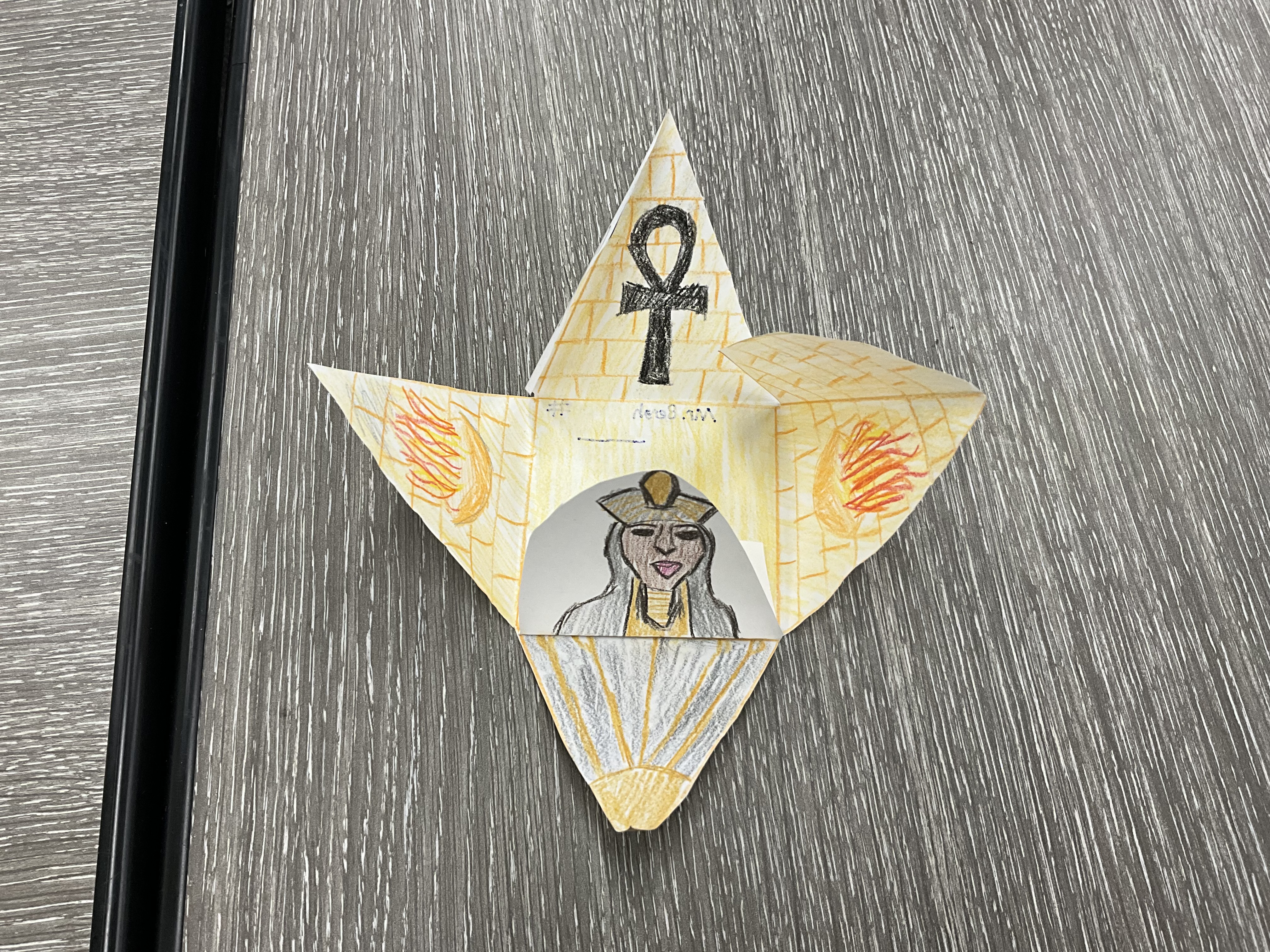
Glue the flaps to the pocket pyramid's insides so it stays standing upright.
You can also choose to glue it to the outsides, just keep in mind how it will affect the design.
Step 9
Make sure your pharaoh fits into the pyramid. Then glue the bottom slit of your pharaoh to the inside base of your pocket pyramid.
Step 10
Present your pocket pyramid to a classmate as practice, sharing with them the story of your pharaoh, then when your ready raise your hand for Mr. Bergh to hear your presentation and grade your awesome pocket pyramid!
Rubric (How you will be graded in the activity.)
4 - I made a pocket pyramid and presented it using what I wrote and filled my pyramid with.
3 - I made a pocket pyramid, writing the bottom and filled my pyramid.
2 - I made a pocket pyramid but only wrote on the bottom or filled my pyramid.
1 - I made a pocket pyramid but didn't write on the bottom and didn't filled my pyramid.
0 - I was unable to create my very own pocket pyramid.