Unit 3 - West Africa

Last updated about 2 years ago
17 questions
Note from the author:
Created by Mr. Bergh of San Bernardino City Unified School District at Shandin Hills Middle School.
The following resources were utlilized in the creation of this Formative for educational/classroom use:
“Chapter 11: Rise of Islam.” In EVERYTHING YOU NEED TO ACE WORLD HISTORY IN ONE BIG FATE NOTEBOOK. Workman Publishing Co., Inc., 2016.
& various other online educational materials.
Learning Intention:
I am learning about how the trans-Saharan trade impacted West African culture and society.
Success Criteria:
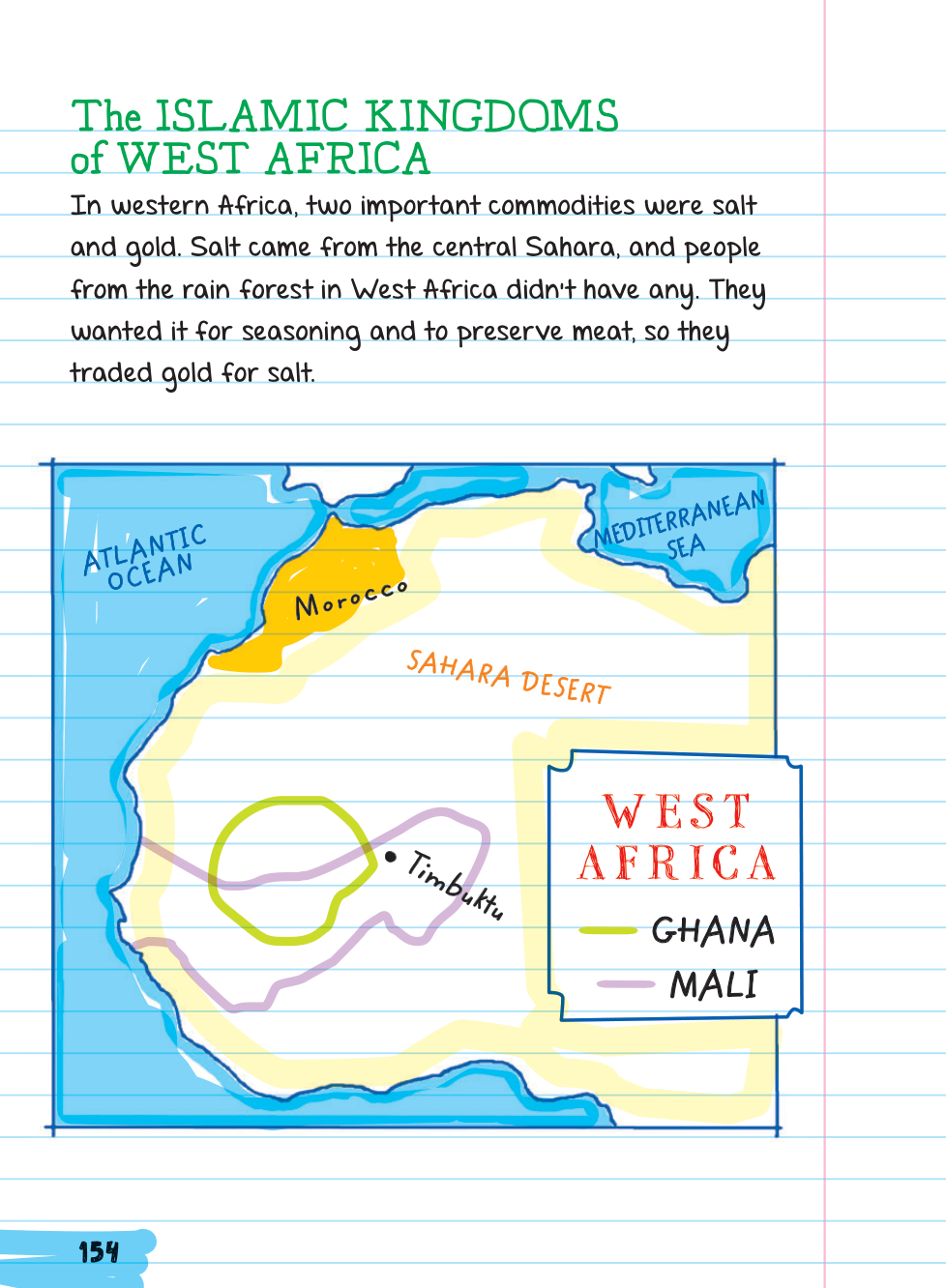
I will study the Niger River and the relationship of vegetation zones of forest, savannah, and desert to trade in gold, salt, food, and slaves; and the growth of the Ghana and Mali empires.
I have analyzed the importance of family, labor specialization, and regional commerce in the development of states and cities in West Africa.
I can describe the role of the trans-Saharan caravan trade in the changing religious and cultural characteristics of West Africa and the influence of Islamic beliefs, ethics, and law.
I can trace the growth of the Arabic language in government, trade, and Islamic scholarship in West Africa.
I can describe the importance of written and oral traditions in the transmission of African history and culture.
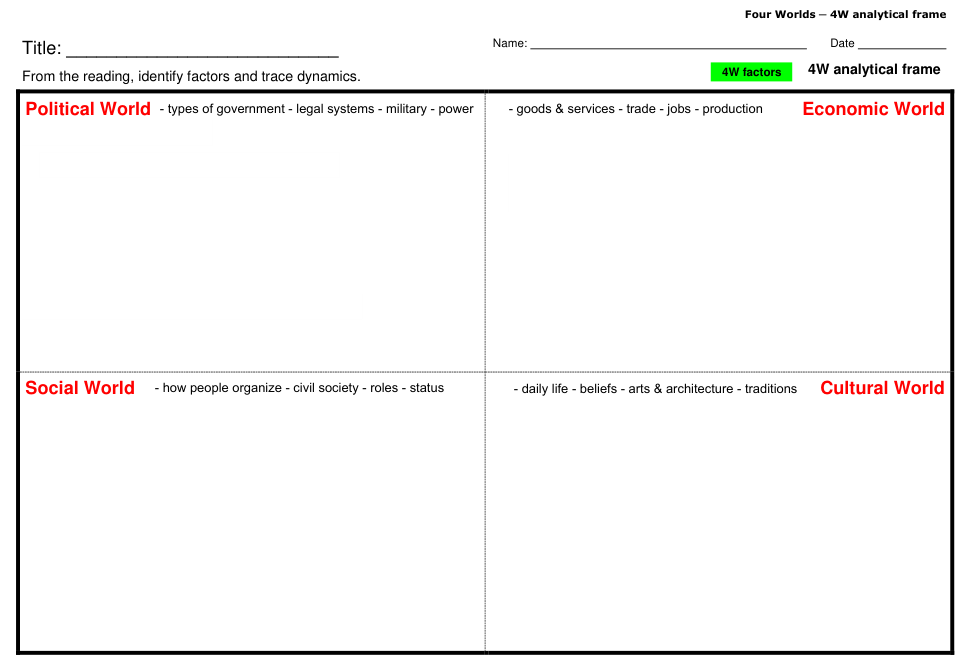
Mr. Bergh will give you a 4 Worlds sheet.
You will need this paper before starting the new chapter.
The title is "West Africa".
Write your name and period as well. Date optional.
If you run out of space as for another 4 Worlds Sheet.
Rubric (How you will be graded for the 4 Worlds.)
4 - I filled all 4 boxes with relevant notes, drawings, vocabulary, big ideas, and connected them together.
3 - I filled the equivalent of 3 boxes.
2 - I filled the equivalent of 2 boxes.
1 - I filled the equivalent of a box.
0 - I did not fill any boxes.
Required
1

The Mali Empire lasted around 200 years.

Required
1

Select all elements below that brought wealth to Mali Empire and it's king?

Required
1

North Africa was mostly desert. Sub-Saharan Africa was mostly jungle, forest, and savannah.

Required
3

Finish each sentence by matching them to the correct endings.

Draggable itemCorresponding Item
The Sahara Desert had salt that was
lacking salt.
Africa is hot so salt was
easier to get then ocean salt.
Sub-Saharan Africa was
always in high demand for peoples' food.
Required
1

In ancient and medieval times salt was a valuable as gold.

Required
1

Finish the sentence.
The Mali Empire got rich off controlling the trade of ...

Required
1

The people of the Sahara Desert still collect salt the same way they have for thousands of years to sell as their ancestors did.
Write your take-away (what's important to know) from the video.
1 minute.

Required
1

Share out loud the sentence you wrote. Write down the sentence your partner spoke below.
1 minute per share.

Required
1

Take both of your ideas, even if they don't agree, combine them into one sentence. Use words from both sentences.
2 minutes.

Required
1

The richest person to ever live was Bill Gates.

Required
1

In 1312 Europe was poor.
The Middle East, North and West Africa were rich.

Required
1

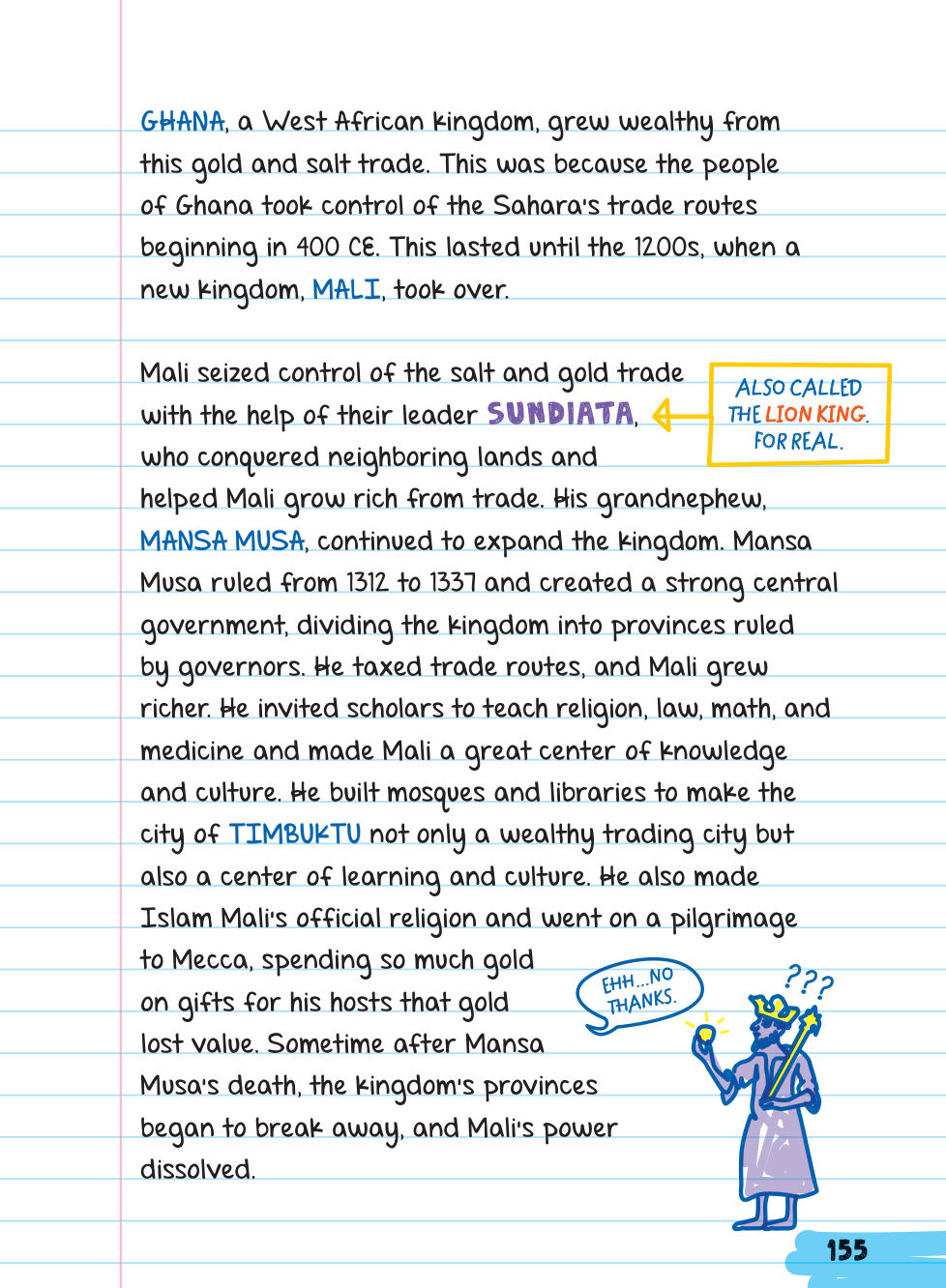
How did Mansa Musa increase the Mali Empire's size?

Required
1

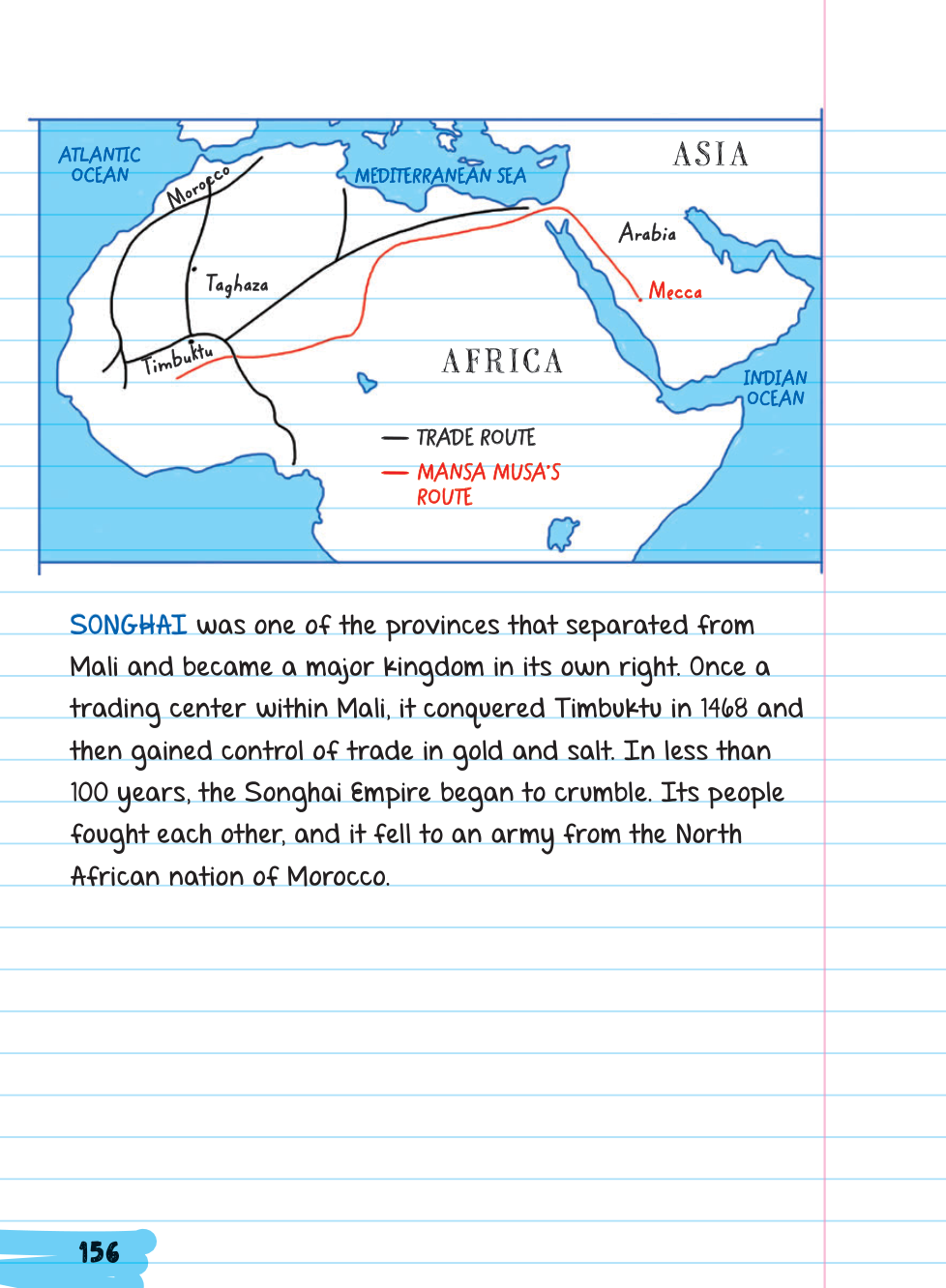
Mansa Musa spent so much gold on his trip to Mecca he caused mass inflation in the economy.

Required
3

Check mark every part of the world that had heard about the legendary Mansa Musa and his wealth.

Required
1

Mansa Musa spent his money on building places of learning and religion for his people that still stand today.

Required
3

Mansa Musa was so wealthy he literally put his kingdom on the map. He gave away huge amounts of money to the poor. He built mosques, schools, and universities. All of this without expecting anything physical in return.
If you were even close to as rich as Mansa Musa, what things would you buy or do to help people other then you? Write at least three (3) sentences.

Songhai was born from trade but expanded through war. The Songhai Empire collapsed in less then 100 years. Why might that be? Let's perform a character analysis of the founder of the empire Muḥammad I Askia to see if we can find out.
While this video is from a video game, it does a very good job portraying Askia.
What do you notice about the background?
What do you notice about Askia?
How does he sound when talking?
How does his face look?
This is the man who ruled the Songhai Empire when it was at its strongest.
Read the short biography below to getter a better idea of what kind of man Askia is.
1. Songhai was a trading city ruled by Sonni Baru who was not a devout Muslim. Muhammad I Askia overthrew him in a bloody insurgency in the name of Islam in 1492. He founded the Askia dynasty and turned Songhai into an Islamic state. He forced people to follow the Qur'an literally, what we call today Sharia Law.

2. Askia extended Songhai’s territory west to the Atlantic Ocean and east into what are now Nigeria. The empire controlled traditional trade routes across West Africa and held salt mines to the north. Most of the people of Songhai were animal herders who lived in the countryside and use oral tradition to keep traditional religions alive. In the towns lived Muslims who conducted the trade on which the empire depended.

3. He oversaw a general rebirth in trans-Saharan trade owing partly to the spread of Islam in the empire. The government collected taxes on the trade of gold and salt, and tributes from the provinces farms.

4. Askia also gave his attention to the cultural development of the empire, encouraging the development of Timbuktu and Djenné as centers of Islamic learning. The Songhai Empire began to falter after Askia died in 1528. His sons fought each other for control, until his empire was destroyed by the Moroccans from the north around 1582.

Source: https://school.eb.com/levels/middle/article/Songhai-empire/68696
Music for live story: https://youtu.be/L8XrWEjtDU0?feature=shared
Required
4

Why do YOU think the Songhai Empire collapsed in less then 100 years?
Use evidence (paraphrase or direct quote) from the above map, video and text. Use at least four (4) sentences.

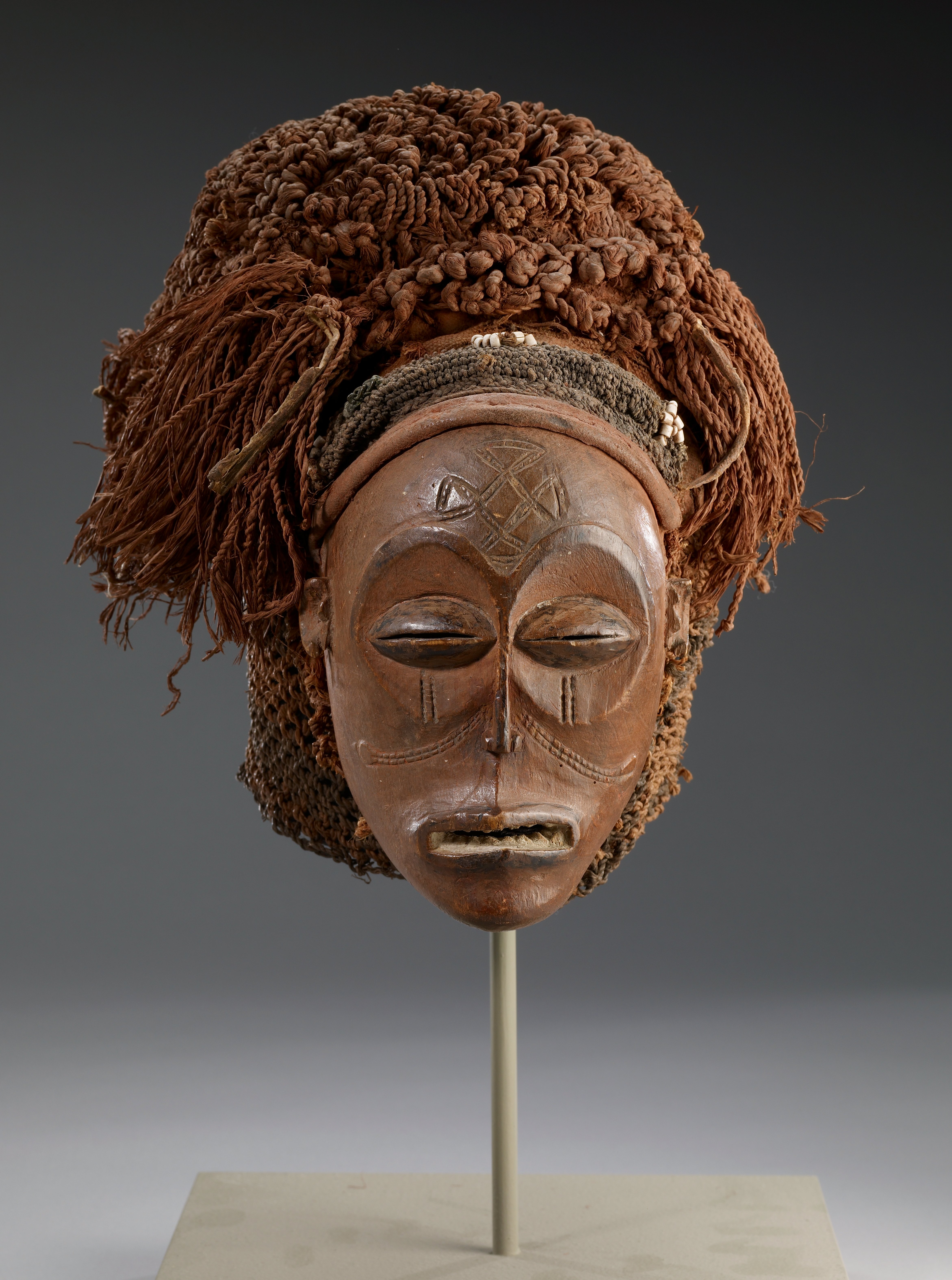
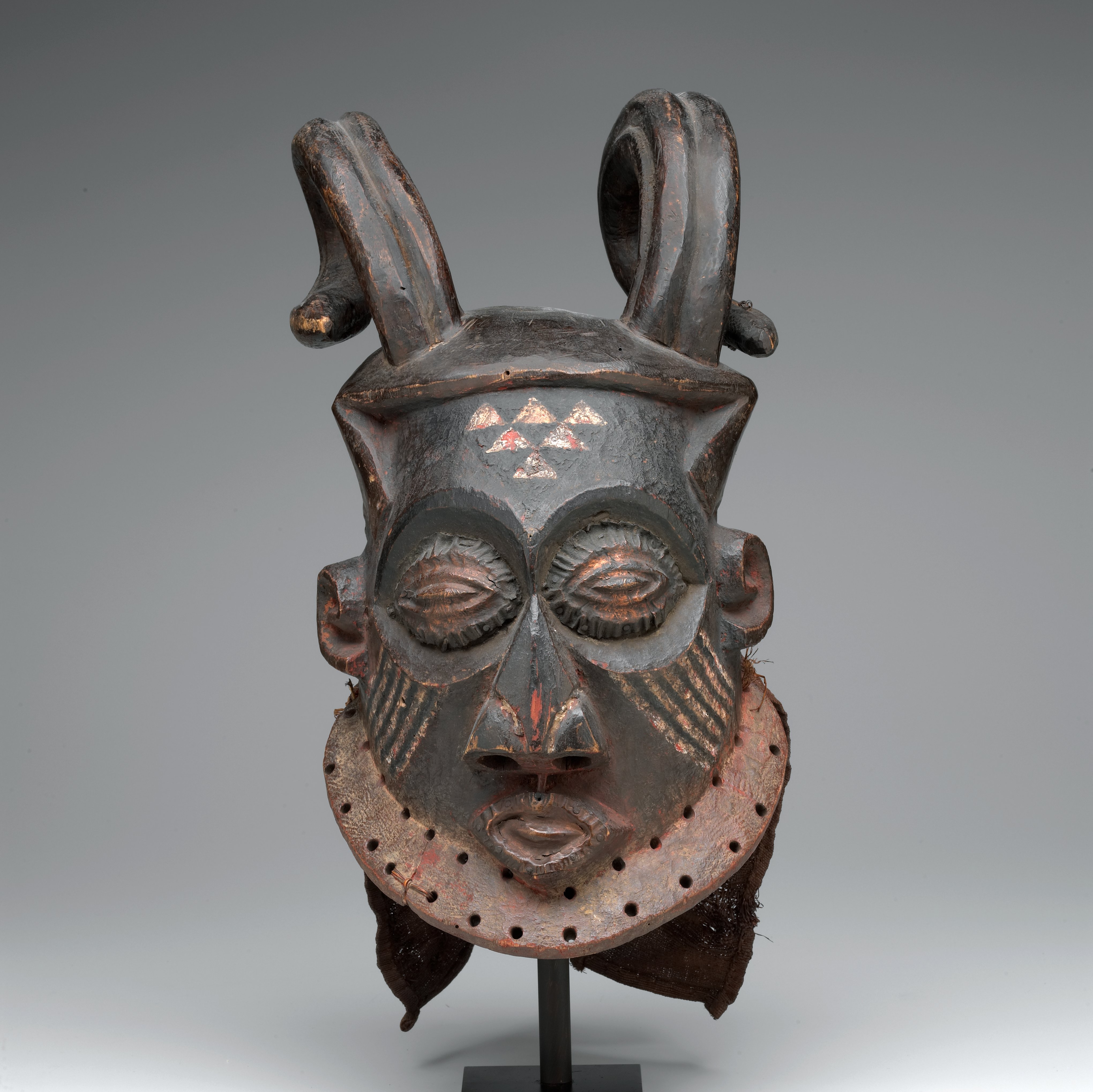
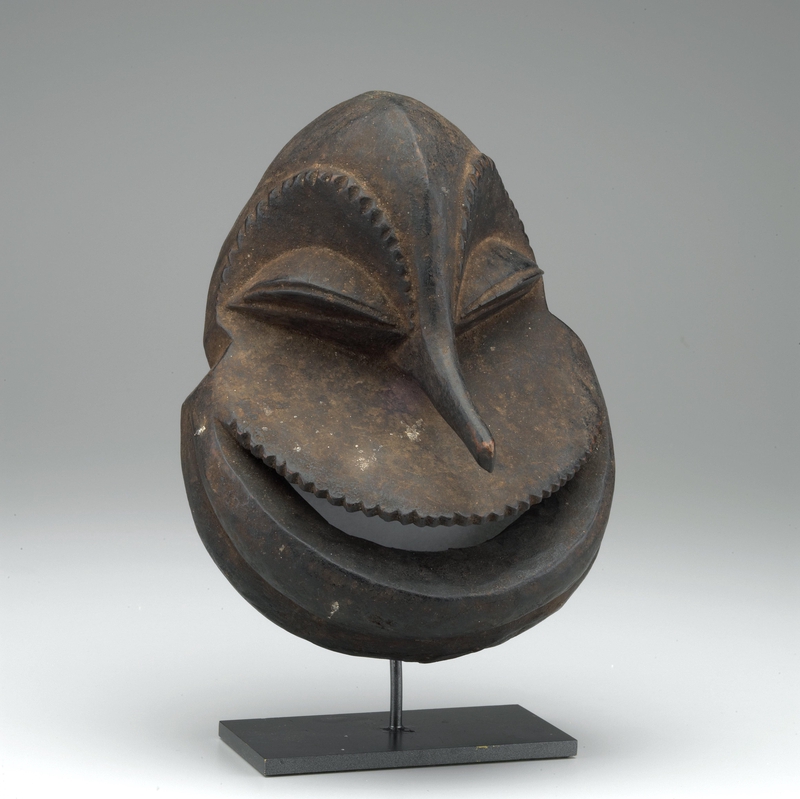
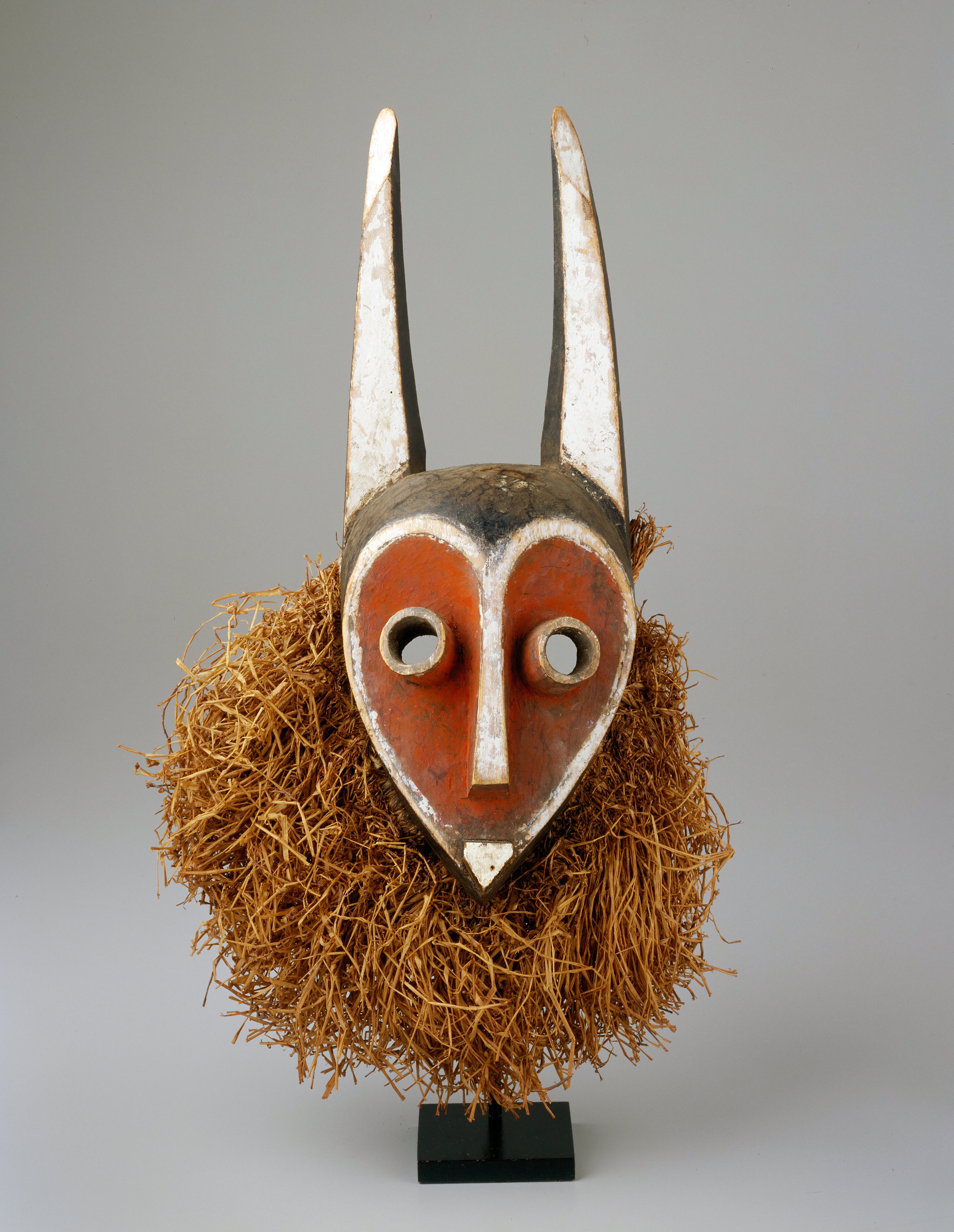
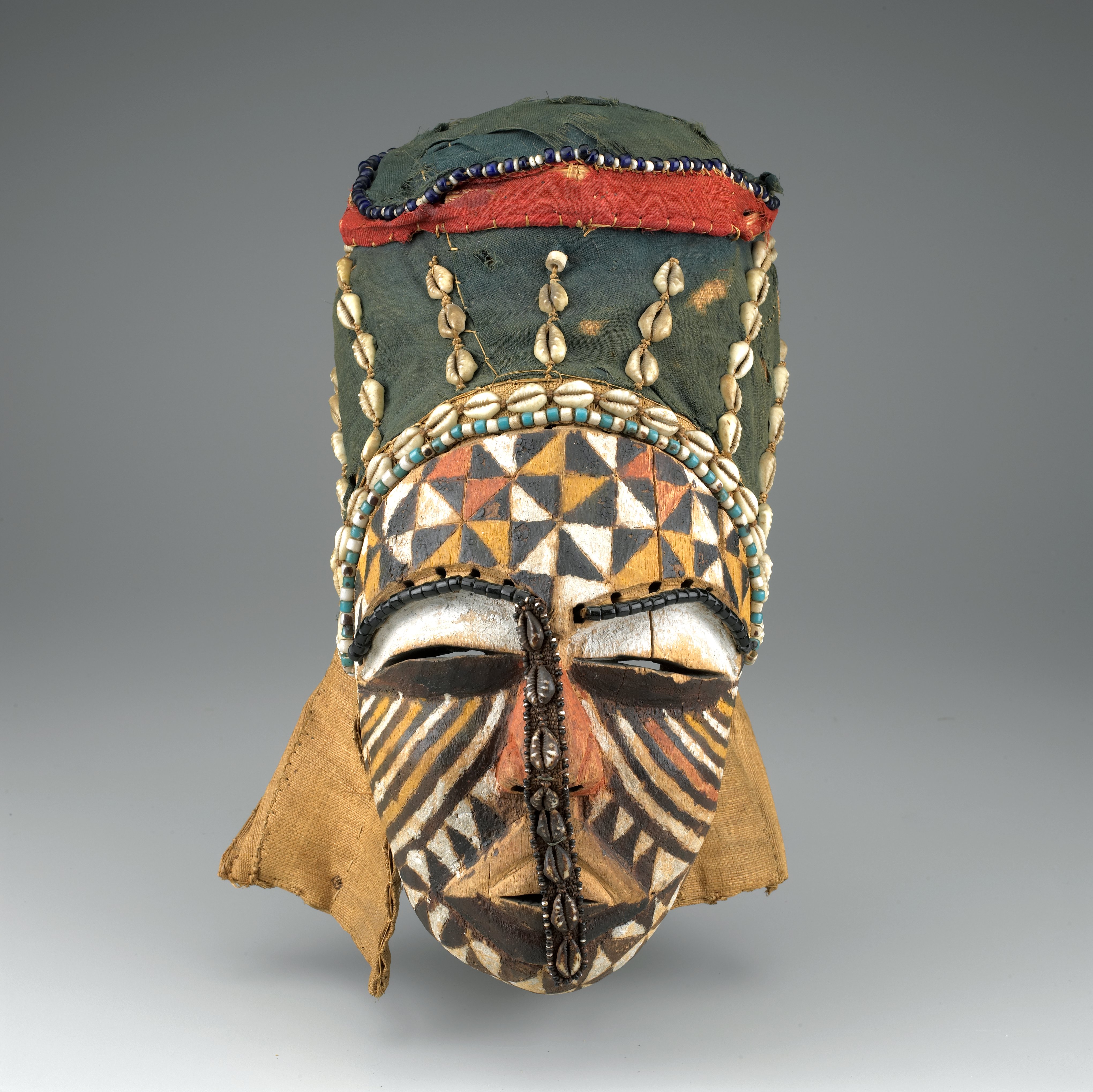
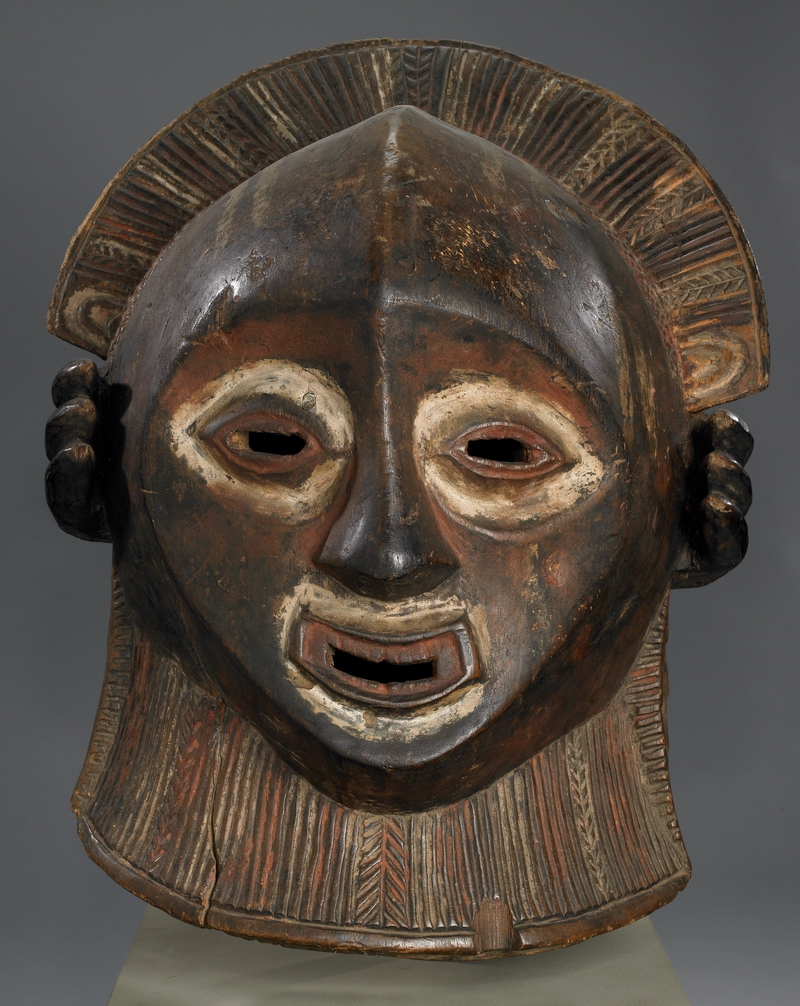
1. A mask is a covering for the face or the head. In many cultures, masks are an important part of traditional rituals. For thousands of years, African peoples have used masks in ceremonies and oral traditions, a community's cultural and historical traditions passed down by word of mouth or example from one generation to another without written instruction. Every African mask is unique.
2. In many African groups, masks are worn by dancers. Masked dancers often participate in ceremonies that include songs and prayers. Different ceremonies honor children’s coming of age, harvests, funerals, and other events. The person who wears the mask knows exactly what he or she must do.
3. There are many types of masks in Africa. One type of mask covers the face. Another type looks like a helmet that covers the entire head. Still another type is worn on top of the head, like a flat hat.
4. Each mask tells a different story. The shapes, colors, and sizes of African masks have special meanings for different cultures. Masks that represent animals are popular. For example, the Bwa and Nuna peoples in Burkina Faso make crocodile, eagle, and buffalo masks.
5. Artists use various materials to make African masks. Leather, metal, fabric, and wood are the most common. Artists often decorate the masks with paint, shells, glass, fibers, horns, or other items.
6. African masks are shown in museums and galleries all over the world. African masks also may be sold at local markets and overseas. The masks for sale are usually copies of original masks. Most original African masks are passed from one generation to the next.
Mask photos from: https://new.artsmia.org/programs/teachers-and-students/teaching-the-arts/five-ideas/african-masks-and-masquerades
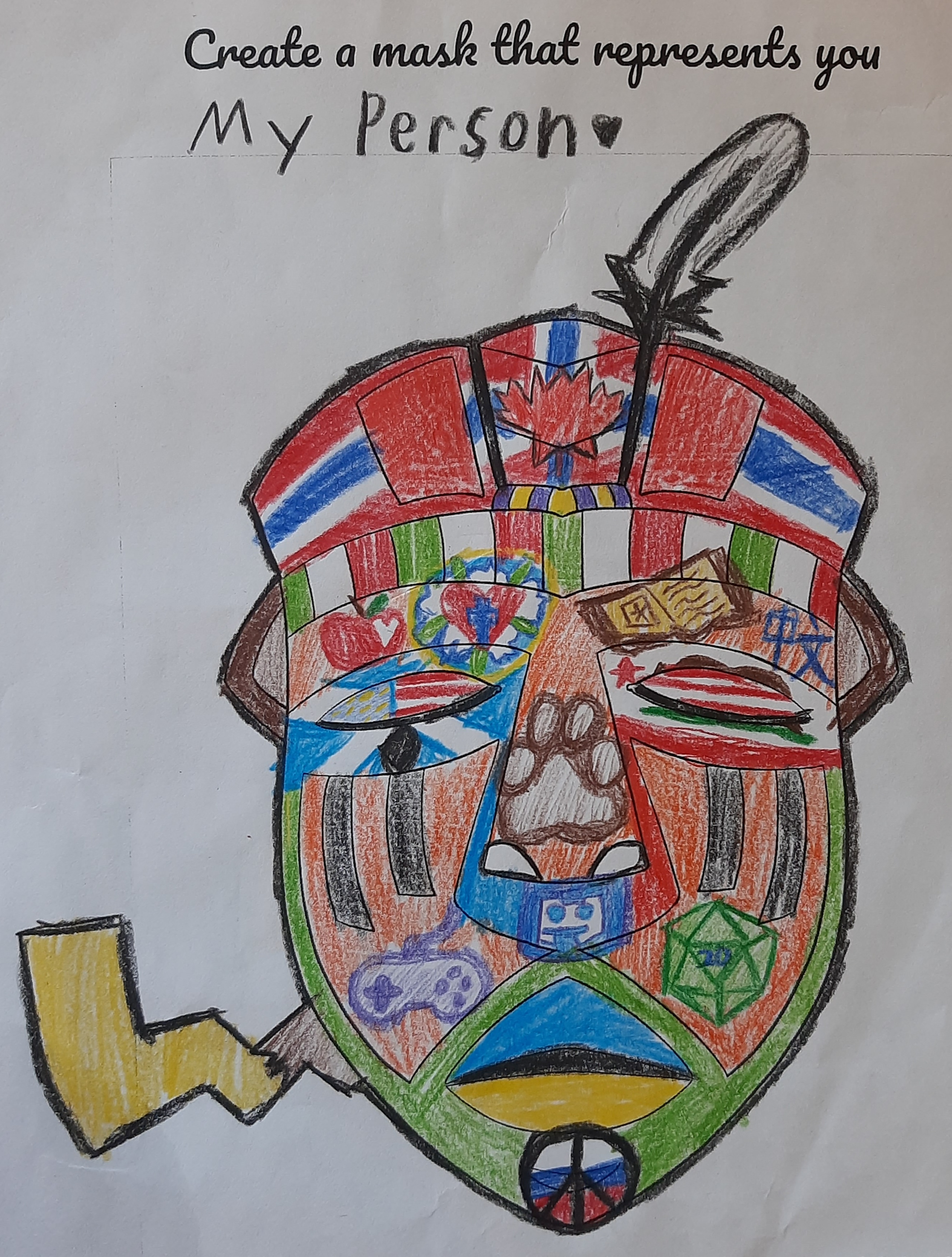
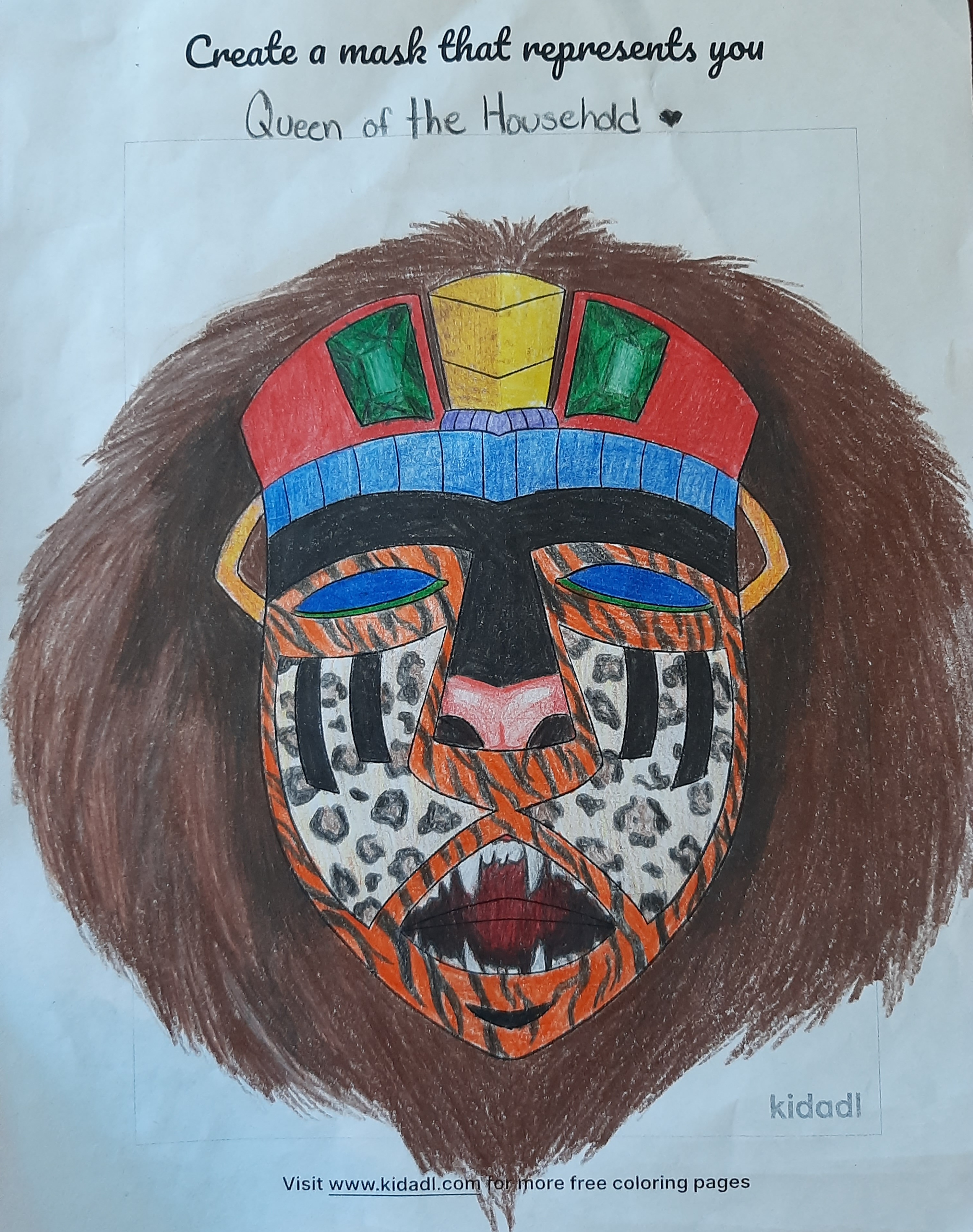
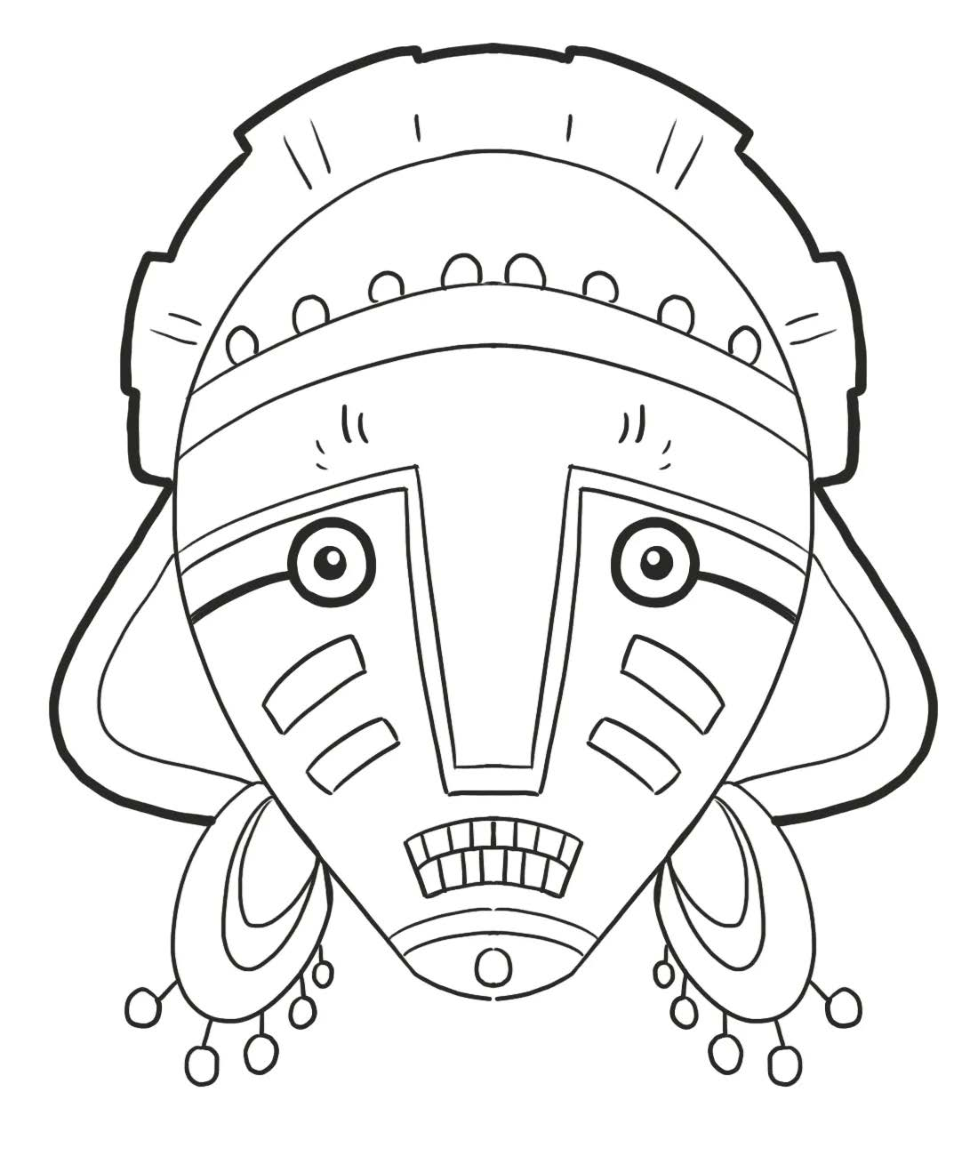
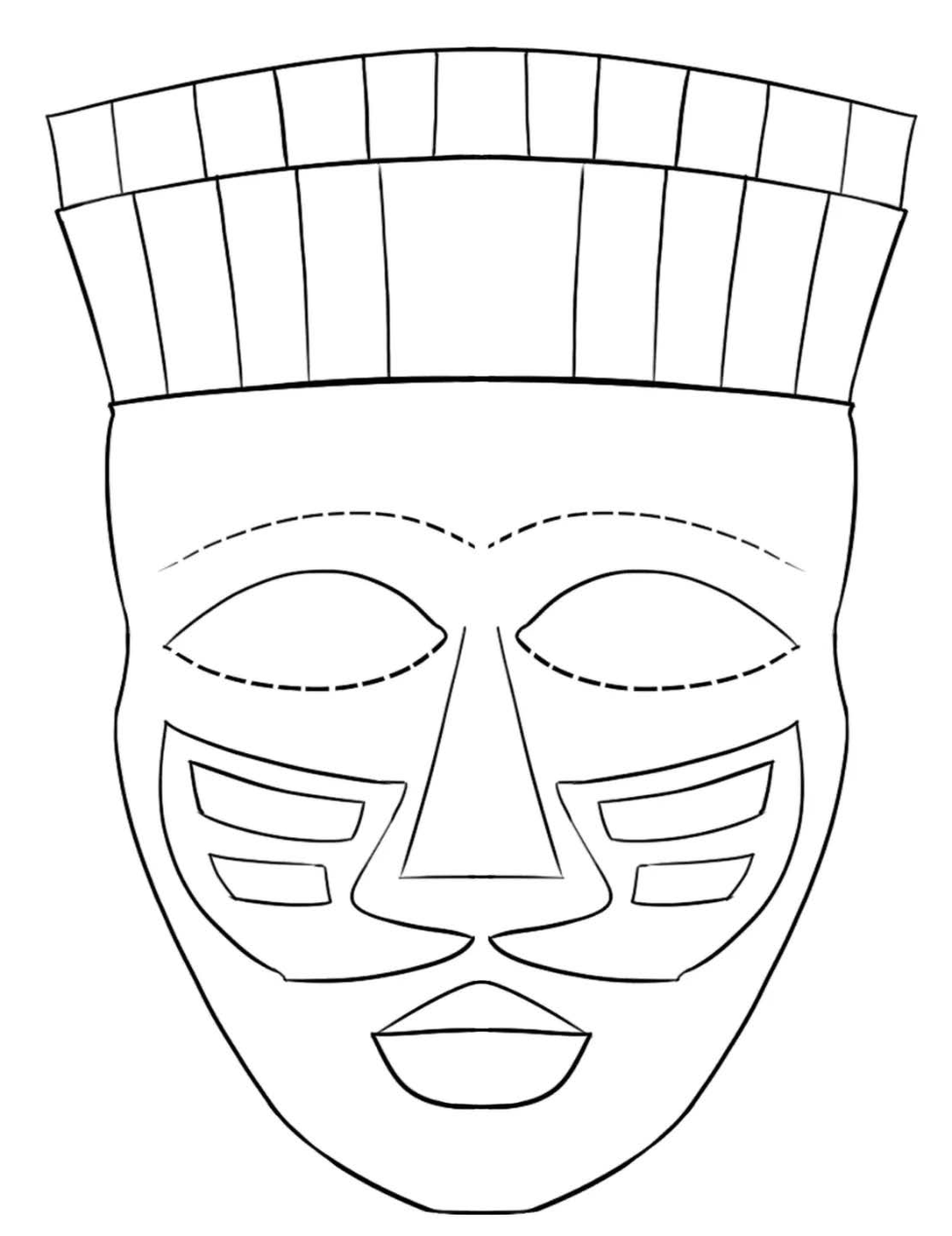
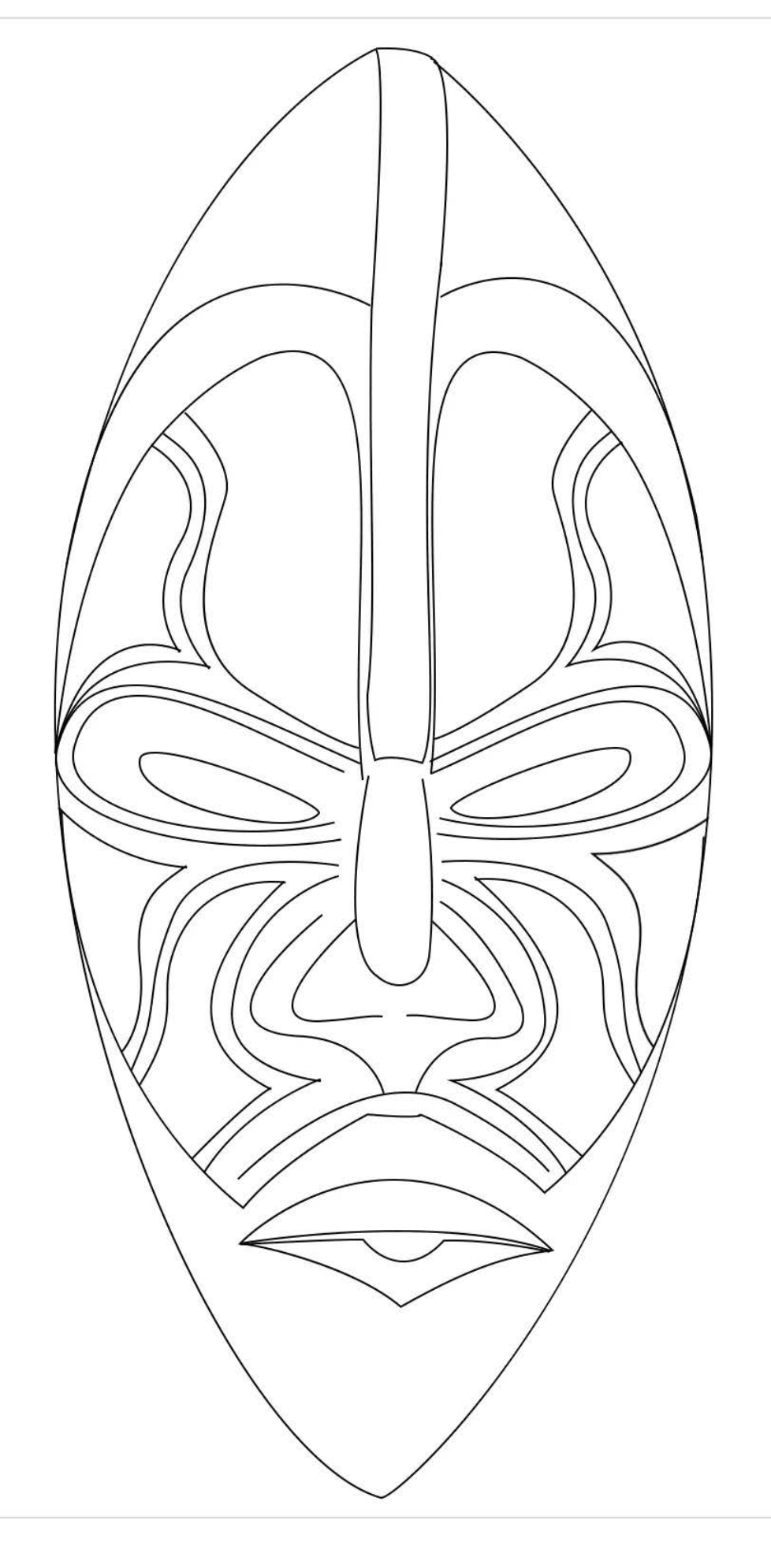
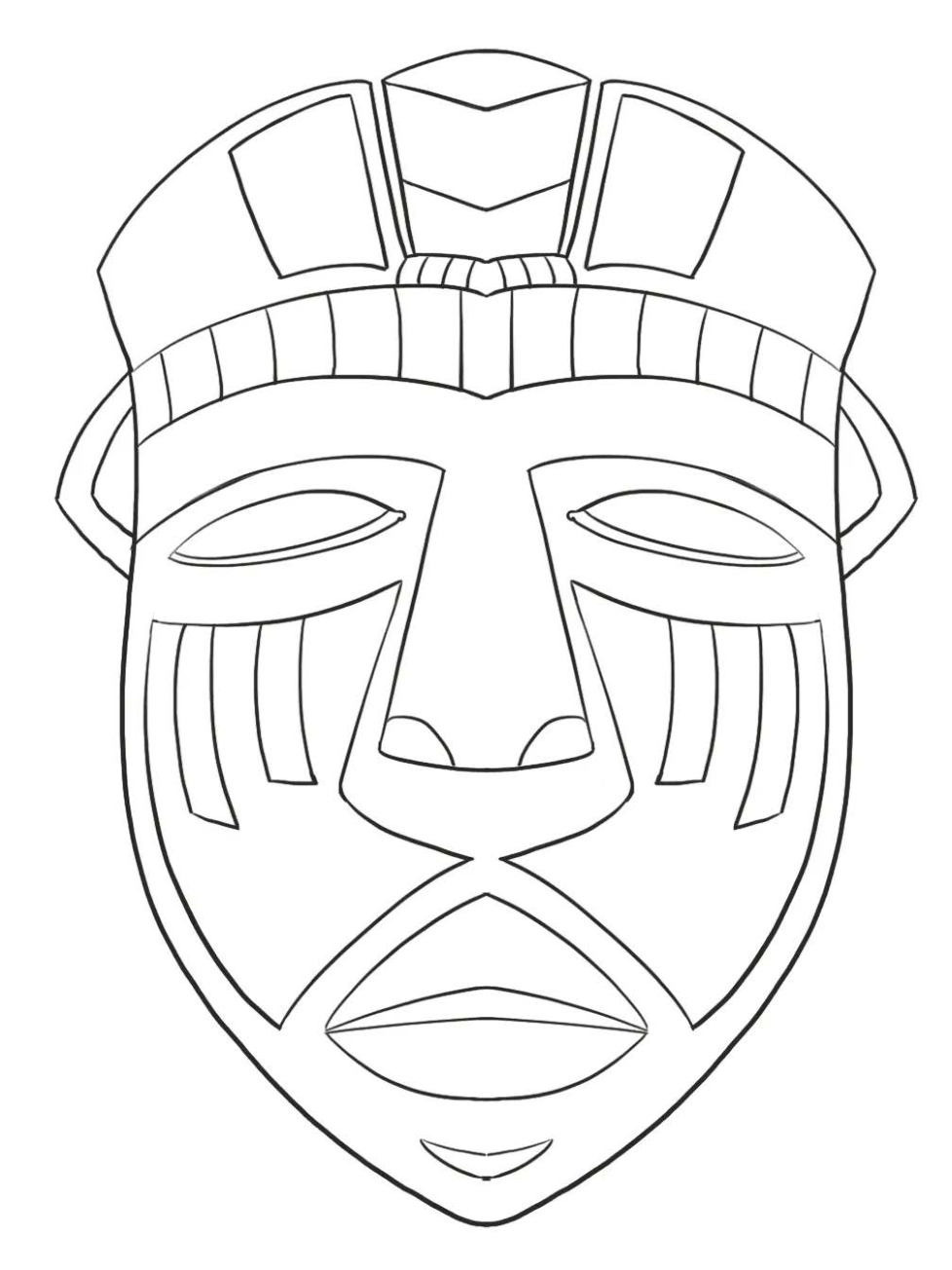
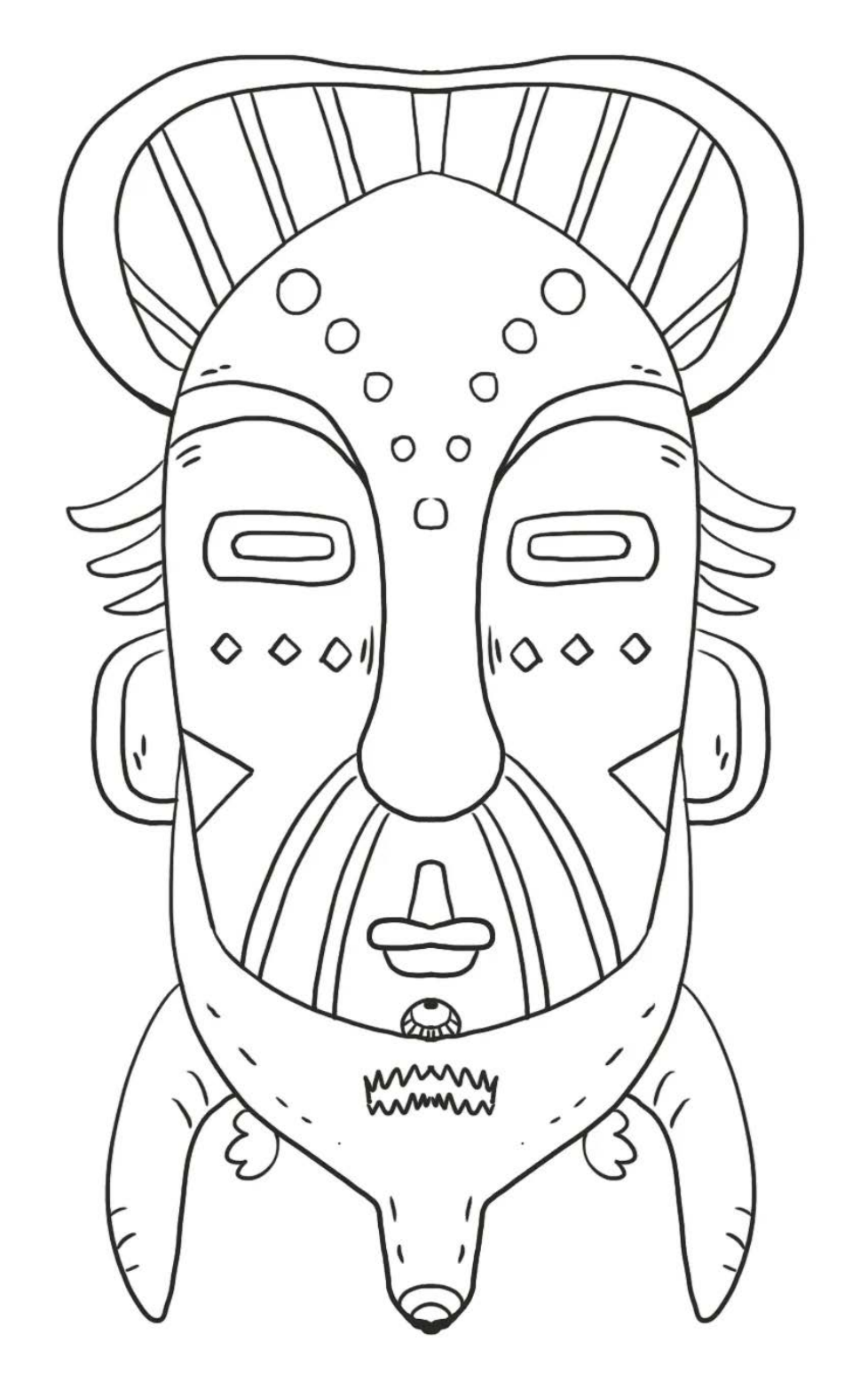
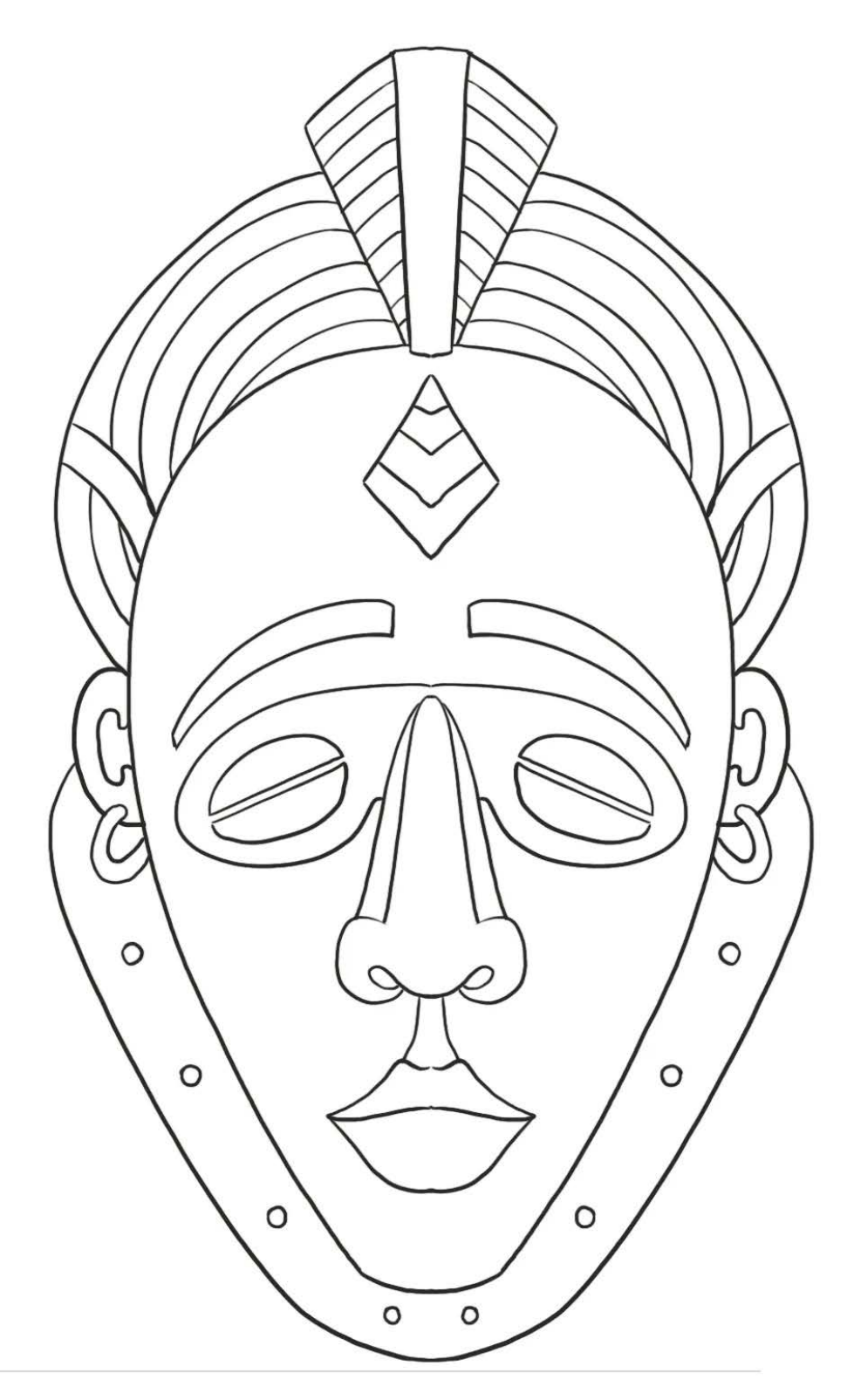
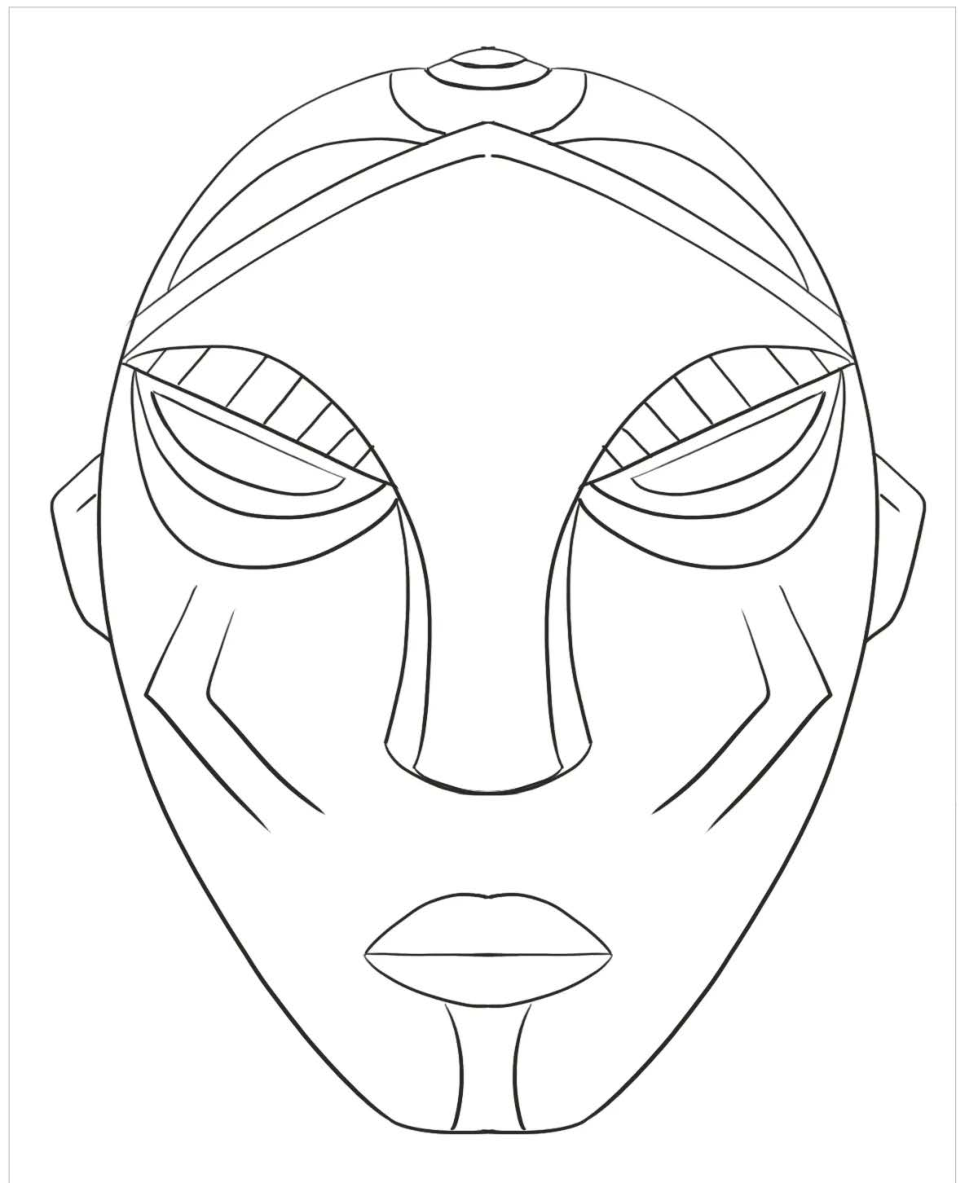
Create your very own African Mask using colors galore!
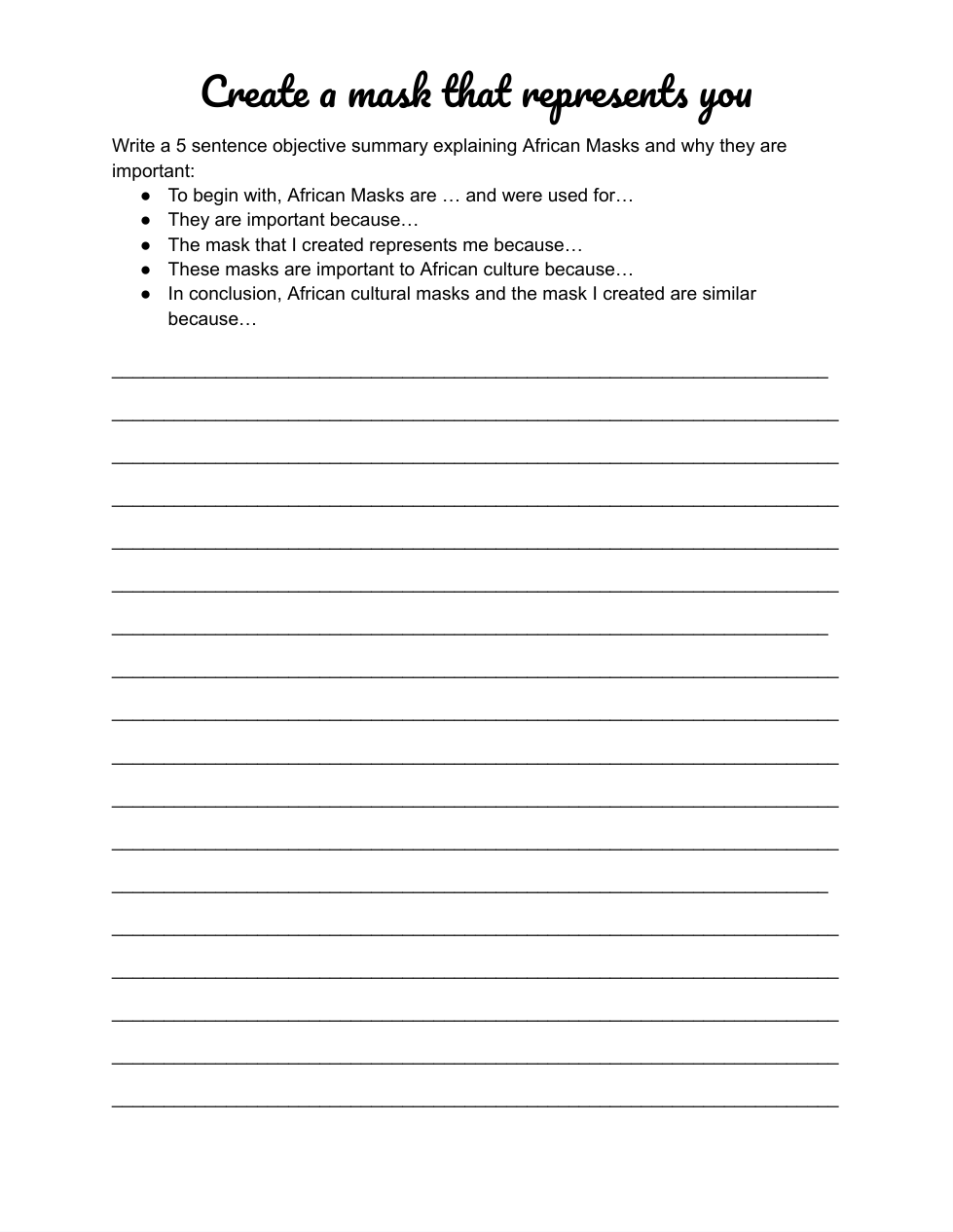
Mr. Bergh will hand you a random mask design. Make it your own by coloring and adding details that represent you. Then write a 5 sentence objective summary explaining African Masks and why they are important.
Rubric (How you will be scored for our project.)
4 - I created my very own African mask personal to me and explained the purpose and importance of African Masks in at least 5 sentences.
3 - I created my mask and explained African Masks in 4 sentences.
2 - I created my mask and explained African Masks in 3 - 1 sentences.
1 - I created my mask.
0 - I didn't attempt the project.
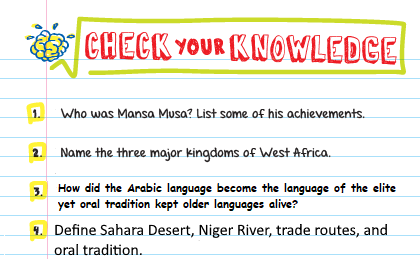
Check your 4 Worlds Sheet to make sure you have the answers to each of these questions! Number the parts of your 4 Worlds with the answers. If you don't have the answers to these questions start looking for them and add them to your 4 Worlds Sheet. Then after some minutes you will be buddied up with ONE student. Share your answers to make each others answers better!