Log in
Sign up for FREE
arrow_back
Library

5/9 FA 7.4 Student Loans

star
star
star
star
star
Last updated over 2 years ago
35 questions
Note from the author:
OBJECTIVES & STANDARDS
Math Objectives
  • Calculate the future value of a periodic investment
  • Analyze exponential growth rate using a real-world scenario about loan repayment and investment returns.
Common Core Math Standards
  • Link to all CCSS Math
  • CCSS.HSF.LE.B.5
  • CCSS.HSF.LE.A.1.C
Personal Finance Objectives
  • Explain the difference between private and federal student loans, and summarize the different types of federal student loans
  • Consider strategies to minimize student loan debt
  • Understand the different loan repayment options available
  • Analyze sample graduate profiles and choose the repayment option that works best in the context of an individual’s situation
National Standards for Personal Financial Education
Managing Credit
  • 5a: Compare federal and private student loans based on interest rates, repayment rules, and other characteristics
  • 5c: Estimate total interest on various student loans based on interest rates and repayment plan
OBJECTIVES & STANDARDS
Math Objectives
  • Calculate the future value of a periodic investment
  • Analyze exponential growth rate using a real-world scenario about loan repayment and investment returns.
Common Core Math Standards
  • Link to all CCSS Math
  • CCSS.HSF.LE.B.5
  • CCSS.HSF.LE.A.1.C
Personal Finance Objectives
  • Explain the difference between private and federal student loans, and summarize the different types of federal student loans
  • Consider strategies to minimize student loan debt
  • Understand the different loan repayment options available
  • Analyze sample graduate profiles and choose the repayment option that works best in the context of an individual’s situation
National Standards for Personal Financial Education
Managing Credit
  • 5a: Compare federal and private student loans based on interest rates, repayment rules, and other characteristics
  • 5c: Estimate total interest on various student loans based on interest rates and repayment plan
Untitled Section
LEARN IT
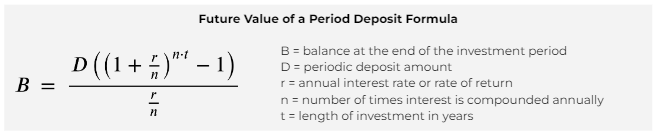
Math Connection: Future Value of a Periodic Investment (DESMOS LINK)
Exit Ticket
Required
1
Required
1
Required
1
The End: 67 Points Possible
CONSIDER: Previewing Student Loans
Before we dive into student loans, consider what you already know about them and what you’re curious to learn more about. Any level of familiarity is okay here, whether you’re brand-new to the topic or an expert.
Required
1
Question 1
1.

What do you Know about student loans?

Required
1
Question 2
2.

What do you want to know about student loans?

VIDEO: Federal vs. Private Student Loans
There are many different student loans you can use to pay for your education, but they generally fall into two categories: Federal and private student loans. Watch the video and answer the questions.
Required
8
Required
1
Question 4
4.

Why does the video recommend you explore your federal loan options before private loan options?

ARTICLE: Choosing a Loan That’s Right for You
Now that you have an overview of federal and private student loans, learn about the different types of federal loans and the detailed steps for how to choose a loan. Read the article and answer the questions.

TEACHER TIP: The article indicates that most students are eligible for federal student loans. Undocumented students are not eligible for federal student aid but may be eligible for some state aid. This overview of Financial Aid and Undocumented Students from the Office of Federal Student Aid may be helpful.
Required
1
Required
1
Question 6
6.

What is the first step the article identifies for getting a federal student loan?

Required
1
Question 7
7.

If you need to get a private student loan, what steps does the article recommend?

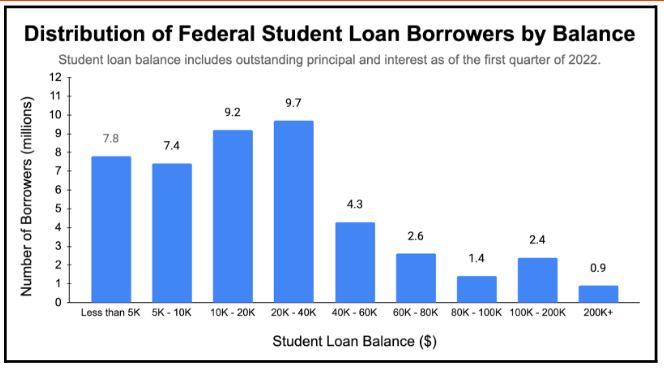
DATA CRUNCH: What's the Distribution of Federal Student Loan Debt in the U.S.?
How much should you expect to have in student loans? That answer will depend on personal factors, but we can still learn a lot from data on the distribution of student loan balances. Analyze the data and answer the questions on this worksheet to complete the Data Crunch.
What's the Distribution of Federal Student Loan Debt in the U.S.?

Data Crunch

Paying for College

Required
1
Required
1
Required
1
Required
1
Required
1
VIDEO: Repayment: What to Expect
What happens when it's time to repay your student loans? After graduation, you’ll have a number of federal student loan repayment plans to choose from, based on your financial situation. Watch this video to learn when and how you can expect to repay your federal student loans. Remember - private loans will have their own terms and repayment options.
Note: You can likely disregard informations specific to Perkins loans, unless you you are currently repaying a Perkins loan. Schools are no longer offering new Perkins loans.
Required
1
Question 13
13.

When do you have to start repaying your loan if you have a federal direct subsidized loan or a federal direct unsubsidized loan?

Required
1
Question 14
14.

What does a loan servicer do?

Required
1
ARTICLE: How To Reduce Student Loan Debt While You’re in School
You’ve learned about your student loan options; now, consider some of these ways you might be able to reduce your overall student loan debt. Follow your teacher’s directions to read a portion of this article and answer the questions.

TEACHER TIP
Section 1: Tips 1-5
Section 2: Tips 6-10
Section 3: Tips 11-15
Required
15
Required
1
Question 17
17.

Which tip would be the most useful for YOU personally? Why?

VIDEO: Repayment: What to Expect
What happens when it's time to repay your student loans? After graduation, you’ll have a number of federal student loan repayment plans to choose from, based on your financial situation. Watch this video to learn when and how you can expect to repay your federal student loans. Remember - private loans will have their own terms and repayment options.
Note: You can likely disregard information specific to Perkins loans unless you are currently repaying a Perkins loan. Schools are no longer offering new Perkins loans.
Required
1
Question 18
18.

When do you have to start repaying your loan if you have a federal direct subsidized loan or a federal direct unsubsidized loan?

Required
1
Question 19
19.

What does a loan servicer do?

Required
1
ACTIVITY: COMPARE: Which Repayment Option is Best?
Let’s explore the different repayment options. In this activity, you’ll use a loan simulator to compare which repayment option is the best for different scenarios. Follow the directions on the worksheet to complete this activity.
Federal student loans are typically set up to be repaid on the standard repayment plan -- equal payments split over 10 years; however, multiple other repayment plans are available. Use the Loan Simulator and follow these steps to complete this activity. (NOTE: You do not need to log in or create an account. If you are brought to the main page, click on “Or Start From Scratch”)
Instructions for Using Repayment Estimator
  1. On the Let’s Get Started Page, click on Or Start From Scratch under the first option, I Want to Find the Best Student Loan Repayment Strategy.
  2. Question 1 “Which of the following apply to you?” - Click I have a job or plan to get one soon, then Continue
  3. Question 2 “What state do you live in?” - Type in the state provided in the character descriptions
  4. Question 3 - “What is your yearly salary?” - Type in the salary provided in the character descriptions and keep 5% income growth
  5. Question 4 - “Estimate your loan balance.” Click the blue link at the bottom Enter your loans manually.
  6. Click +Add a Loan
  7. Select Direct Subsidized or Direct Unsubsidized as Loan Type, depending on character description
  8. Use the current interest rate for Direct Subsidized and Direct Unsubsidized Loans for Undergraduates on this page as the “Interest Rate”
  9. Enter the loan amount
  10. Click Save
  11. Repeat these steps if the character has additional federal loans.
  12. Question 5 - “Would you like to see repayment options if you maintain eligibility for Public Service Loan Forgiveness (PSLF)?” - Select No and click Continue.
  13. Question 6 - “What is your primary repayment goal?” - Select “Pay the Lowest Total Amount Over Time” (although we will look at other options ) and then click View Results.
  14. Scroll half way down the results page and click the button that looks like:


9. This page will list all repayment plans available for the character’s situation. Use the information on this page to answer questions: Monthly Payment, Total to be Paid, Pay Off Date, and Forgiveness Amount.
10. Click on View Details & Apply to look at a graph of payments over time and advantages / disadvantages for that repayment plan
Required
1
Required
1
Required
1
Required
1
Required
1
Required
1
Required
1
Required
3
Required
1
Required
1
Required
1
Desmos Link - Future Value of Periodic Invesements
Are Additional Loan Payments Worth It?


Investment Value
Required
10
Question 32
32.

What did you learn about Repayment Options from the Desmos? *Note Desmos Grade is entered here for the total formative grade for today's lesson*

Question 33
33.

All of the following are benefits of federal student loans compared to private student loans, EXCEPT…
  1. Federal student loans generally have lower interest rates
  2. Federal student loans can be forgiven under specific circumstances
  3. Federal student loans provide more options for repayment
  4. Federal student loans have no limit to how much you can borrow

Question 34
34.

Christine owes $23,000 in student loans and has a minimum payment of $230 per month. She decides to make an additional $100 payment towards the loan principal every month. What impact will the additional payment have?
  1. The additional payment will increase the total cost of her loan
  2. The additional payment will decrease the total cost of her loan
  3. The additional payment will increase the time it takes to repay her loan
  4. The additional payment will decrease the interest rate charged on her loan

Question 35
35.

Which of the following student loan repayment plans would result in the same monthly payment over the course of the loan?
  1. Standard Repayment Plan
  2. Graduated Repayment Plan
  3. Income-Based Repayment Plan
  4. Pay As You Earn (PAYE) Repayment Plan

Question 3
3.

As you watch the video, comparing federal and private student loans

  • Higher Interest Rates
  • Some Federal Loans could be forgiven if you work in particular fields
  • Usually need to repay the loan while in school
  • From the Government
  • Can be used to cover additional costs not covered by federal loans
  • Have Low Interest Rates set by Congress
  • May need a cosigner
  • Limited repayment options
  • Federal Student Loans
  • Private Studend Loans
Question 5
5.

  1. Which student loan does NOT charge you interest while you’re in school as an undergraduate?
  2. Direct Subsidized
  3. Direct Unsubsidized
  4. Direct PLUS
  5. Private

Question 8
8.

Which range of student loan debt contains the MOST borrowers? How many borrowers are in that range?

Question 9
9.

How many total student loan borrowers owe more than $100,000?

Question 10
10.

The average starting salary for a college graduate is approximately $55,000. What percentage of student loan borrowers have LESS than $60,000 in debt?

Question 11
11.

Think ahead to the year 2030. Predict one way you think this graph might change and explain your reasoning.

Question 12
12.

A substantial fraction of borrowers owe less than $5,000. Who do you think is represented in this debt range and why might the number of borrowers in this range be so large?

Question 15
15.

What are some reasons someone might switch from the standard repayment plan to a graduated, extended, or income-based plan?

Question 16
16.

Read the article portion assigned to you by your teacher and sort the tips for reducing student loan debt Before College & During College

  • Use a budget
  • Search for Grants
  • Graduate Early
  • Pay loan interest while in school
  • Meet with a faculty advisor
  • Fill Out the FASFA
  • Keep Track of Student Loans
  • Use the minimul loans necessary
  • Choose an affordable college
  • Borrow federal loans first
  • Plan Classes to Stay in Track
  • Save Before College
  • Work while in college
  • Apply for Scholarships
  • Spend School Breaks Wisely
  • Before College
  • During College
Question 20
20.

What are some reasons someone might switch from the standard repayment plan to a graduated, extended, or income-based plan?

SCENARIO #1: SARAH makes $43,000 per year, is single, and lives in Connecticut. She has $19,000 in Direct Subsidized loans and $8000 in Direct Unsubsidized loans.
Question 21
21.

Which repayment plan will be the cheapest for her in total?

Question 22
22.

What are some advantages and disadvantages of using this repayment plan?

Question 23
23.

If Sarah wanted her total amount paid to be even lower, what could she do?

Question 24
24.

Sarah looks at these results and realizes her monthly payment would be lower with most of the income-based repayment plans. But then, she looks at the Total Amount Paid and realizes that the loan price increases when she chooses these plans. How is this possible -- that her monthly payment is lower but her total payments are higher?

SCENARIO #2: LUCA makes $58,000 per year, is single, and lives in Seattle, WA. He has $27,000 in Direct Unsubsidized federal loans, but he’s got another $62,000 in private student loans and lives in an expensive neighborhood, so his rent is high. He’s hoping to keep his Federal student loan payments to less than $200 per month for the first few years so that his budget will work out.
*Note: This calculator ONLY works for Federal student loans, so know that he must also find a way to repay his private loans, but you will not enter those in this calculator.
Question 25
25.

Which plan meets Luca’s desire for Federal loan payments under $200 for the first few years?

Question 26
26.

Describe how this loan repayment plan works.

Question 27
27.

What is a potential downside of Luca’s taking this loan repayment plan that works in his budget right now?

SCENARIO #3: YASHARI earns $27,000 per year, is single, and lives in Wyoming. She has $7000 in Direct Subsidized loans and another $19,000 in Direct Unsubsidized loans. She is trying to save up an emergency fund of at least 6 months’ take-home pay, so she’s torn about how much she should devote to her student loans and how much to the emergency fund every month.
Question 28
28.

Yashari’s monthly take-home pay is $1850. What percentage of her paycheck will go toward student loans if she chooses the standard repayment plan? Does that payment amount seem reasonable? Why or why not?

Question 29
29.

Which plan has the highest total amount paid? How long is the repayment period for this plan?

Question 30
30.

How do you think Yashari should prioritize between her emergency fund goal and her student loan payments?

Question 31
31.

Which repayment plan do you think Yashari should select? Why?