Log in
Sign up for FREE
arrow_back
Library
Elasticity and Total Revenue
By Mr. Yosup Joo
star
star
star
star
star
Share
share
Last updated over 2 years ago
10 questions
Add this activity
1
1
1
1
1
1
1
1
1
1
Question 1
1.
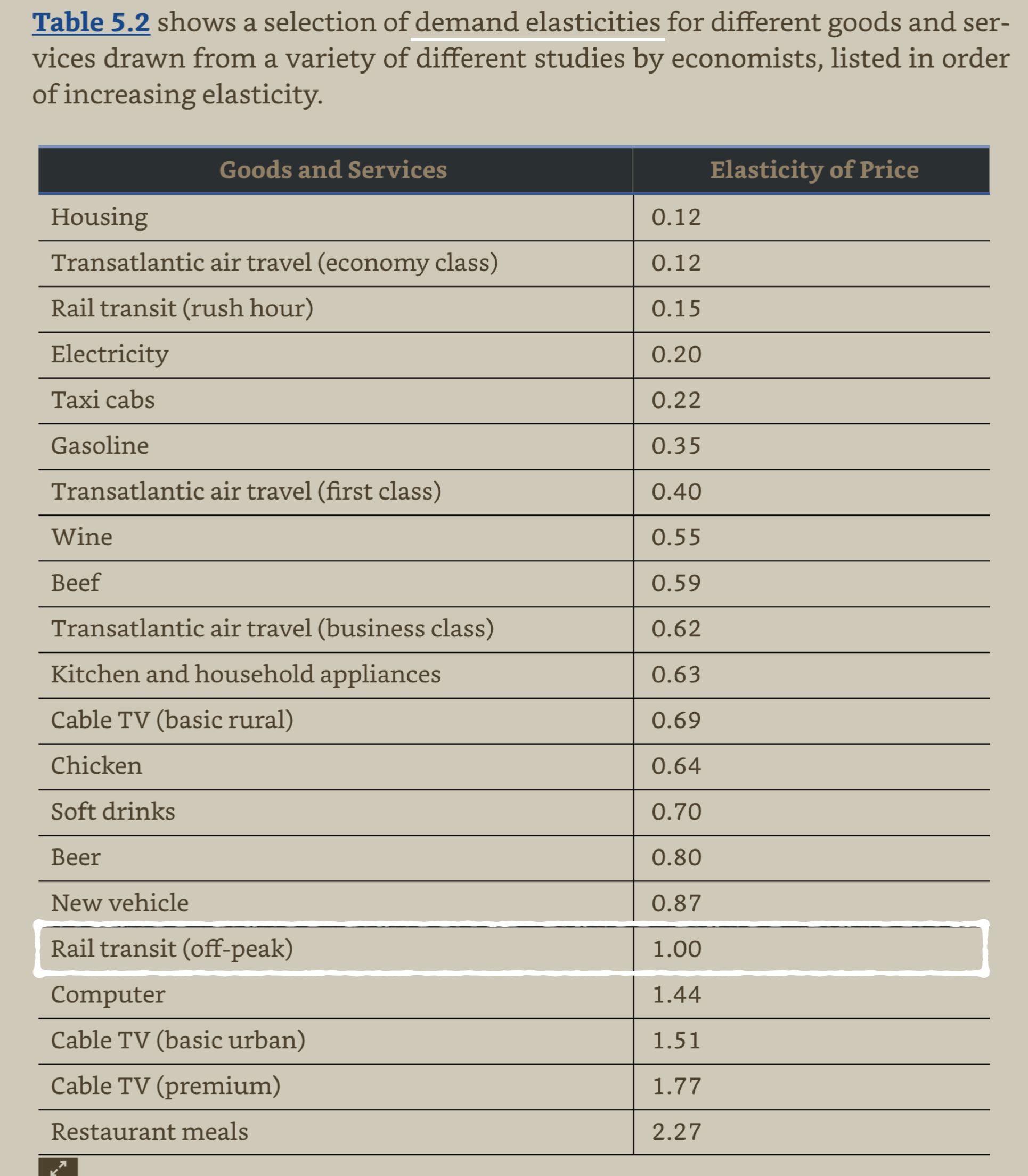
Look at the table above. What is the elasticity of demand for gasoline?
Unitary
Polar elastic
Polar inelastic
Inelastic
Elastic
Question 2
2.
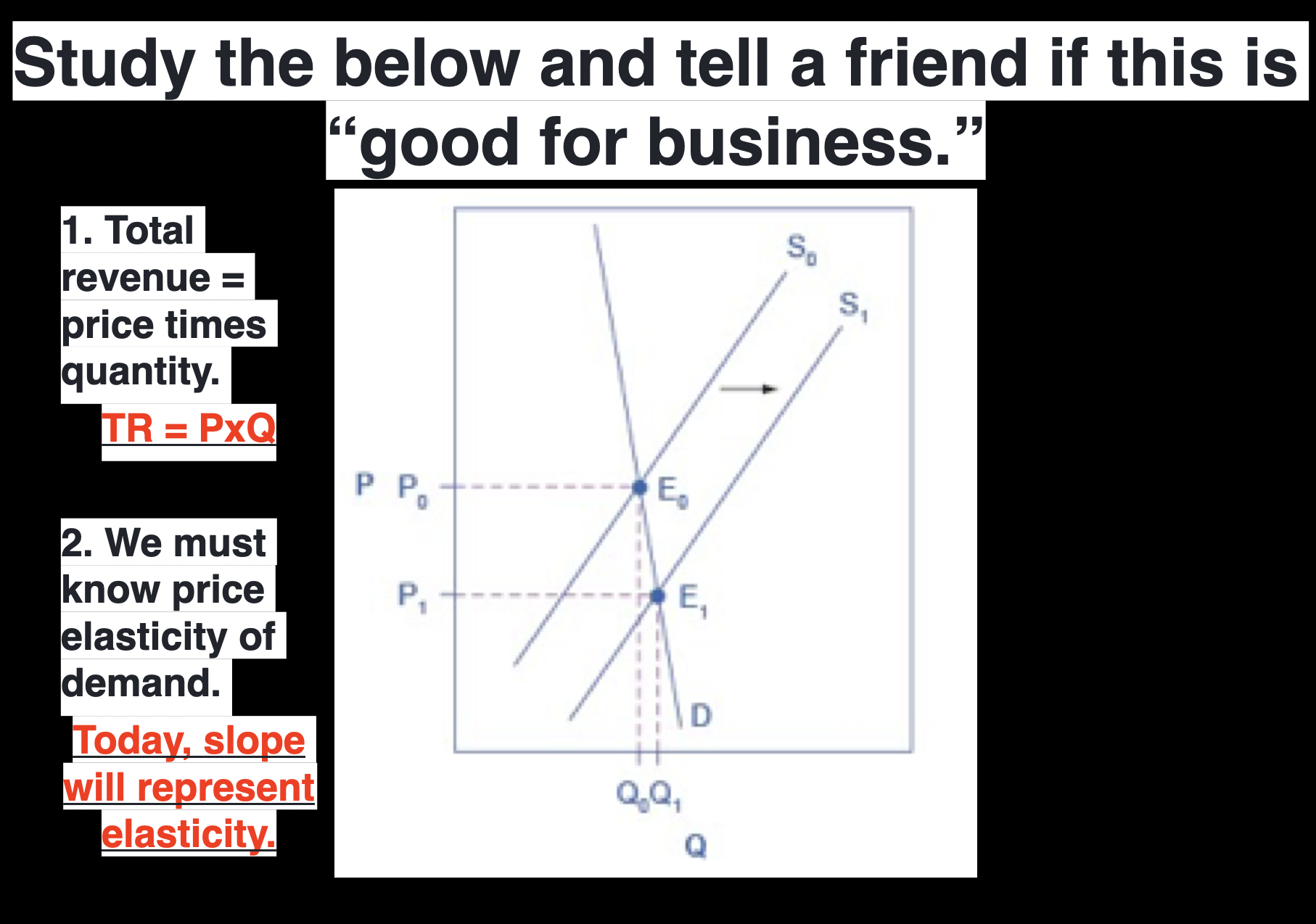
What's the shortcut for determining whether a demand curve is elastic of not?

The bigger they are, the harder they fall.
The higher the fence, the bigger the pant rip.
The steeper the slope, the more inelastic the demand.
The shallower the slope, the more inelastic the demand.
Question 3
3.
***Eyeball the above total revenues and remember our body mnemonic.***
Nope, this is not good for our revenues.
Yep, this is great for our revenues.
Question 4
4.
Look at the table above. What's the elasticity of demand for computers?

Inelastic
Unitary Elasticity
Elastic
Question 5
5.
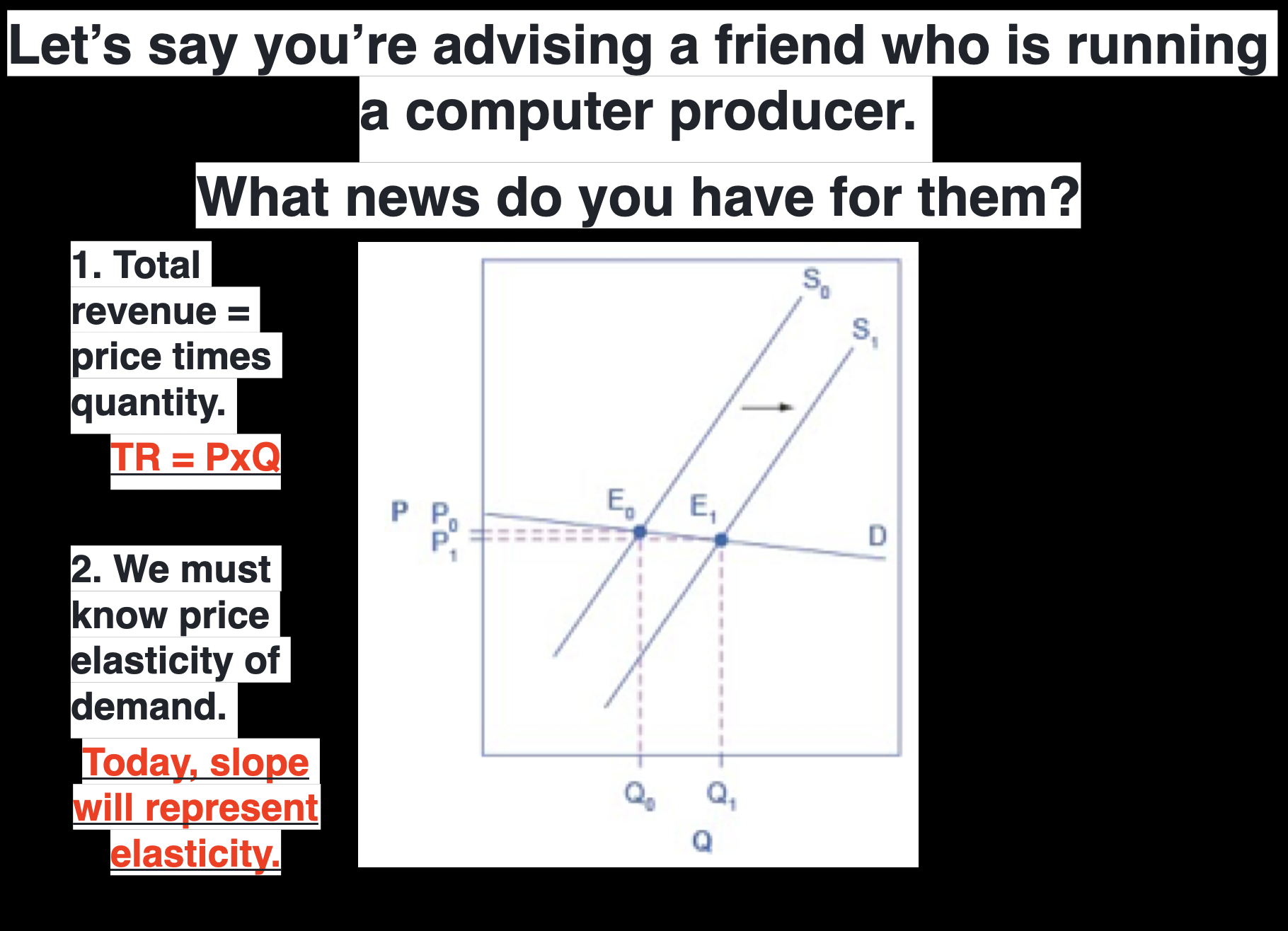
Bad news friend. The price drop means you get less money per purchase. That does not sound good to me.
¯\_(ツ)_/¯
Good news friend. Your company will make a lot more revenue despite the price drop, because look at the increase in quantity demanded.
Question 6
6.
¯\_(ツ)_/¯
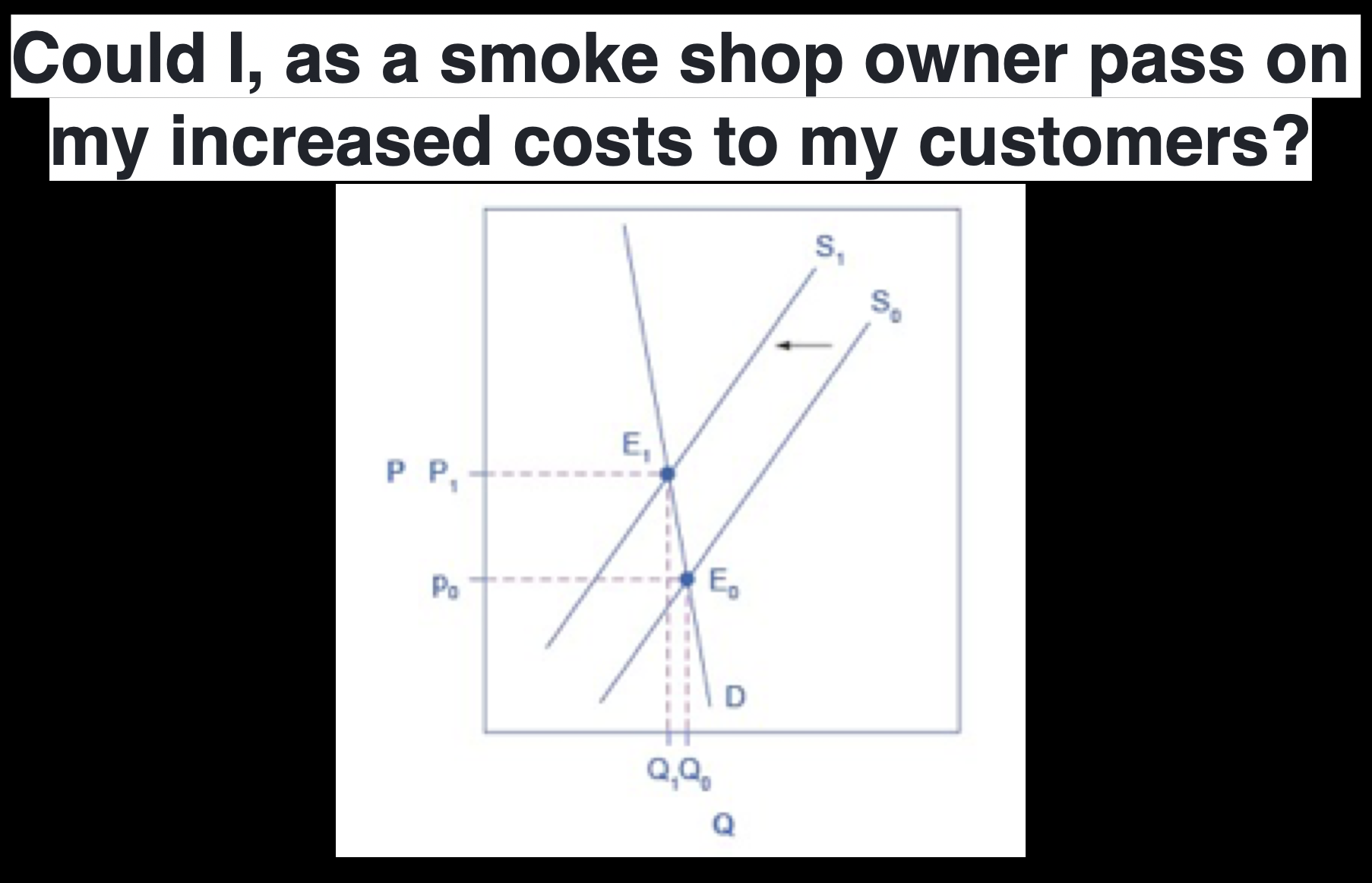
Nope. I would lose too many customers!
Look at that new revenue area!!! Maybe I should add a little more to the price on top of the new taxes. Hmmm...
Question 7
7.
This is not the same question as question #2.
No, I wouldn't because total revenue is pretty much the same.
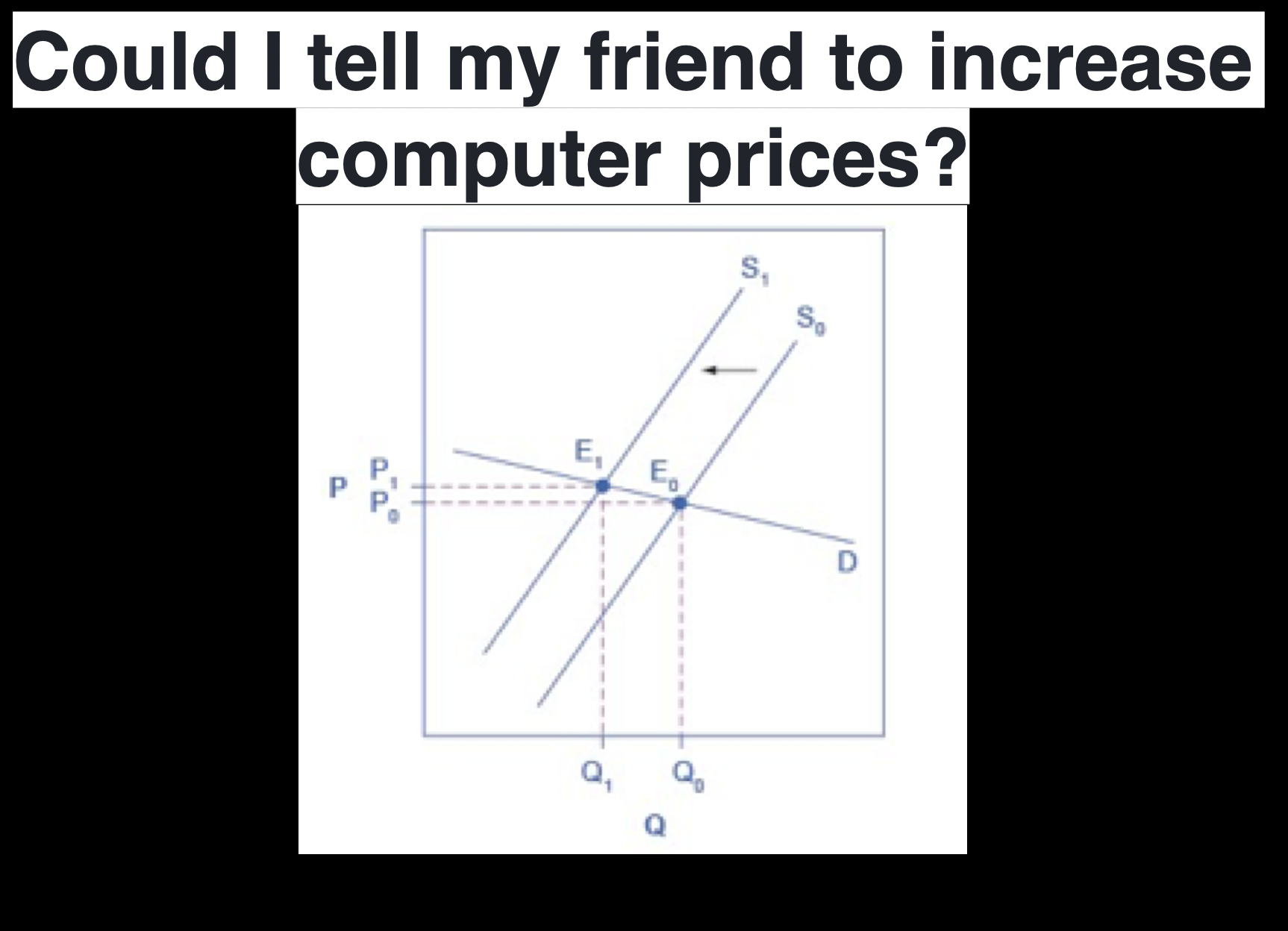
You could, but she'd lose a lot of revenue even with a small price bump up. I would advise them to take the L and reduce costs somewhere else and not pass on the spike in inputs to consumers.
Yes, because total revenue increased.
You could, because hey you have to, right?
Question 8
8.
Click on all of the below that are examples of excise taxes.
Sales tax on clothing.
The IRS actually levies a 10% tax on indoor tanning services. So, if the tanning salon you go to charges $100 each session, it pays the IRS $10 in excise tax for each session. If it charged $200, it would have to pay the IRS $20.
The price you pay for a gallon of gas (ex: $3.49) already has all the local, state, and federal taxes baked in.
You want to buy a pack of cigarettes. In New York, the state added a $4.35 tax to each pack in 2014 - no matter what the original retail price of the pack was.
Question 9
9.
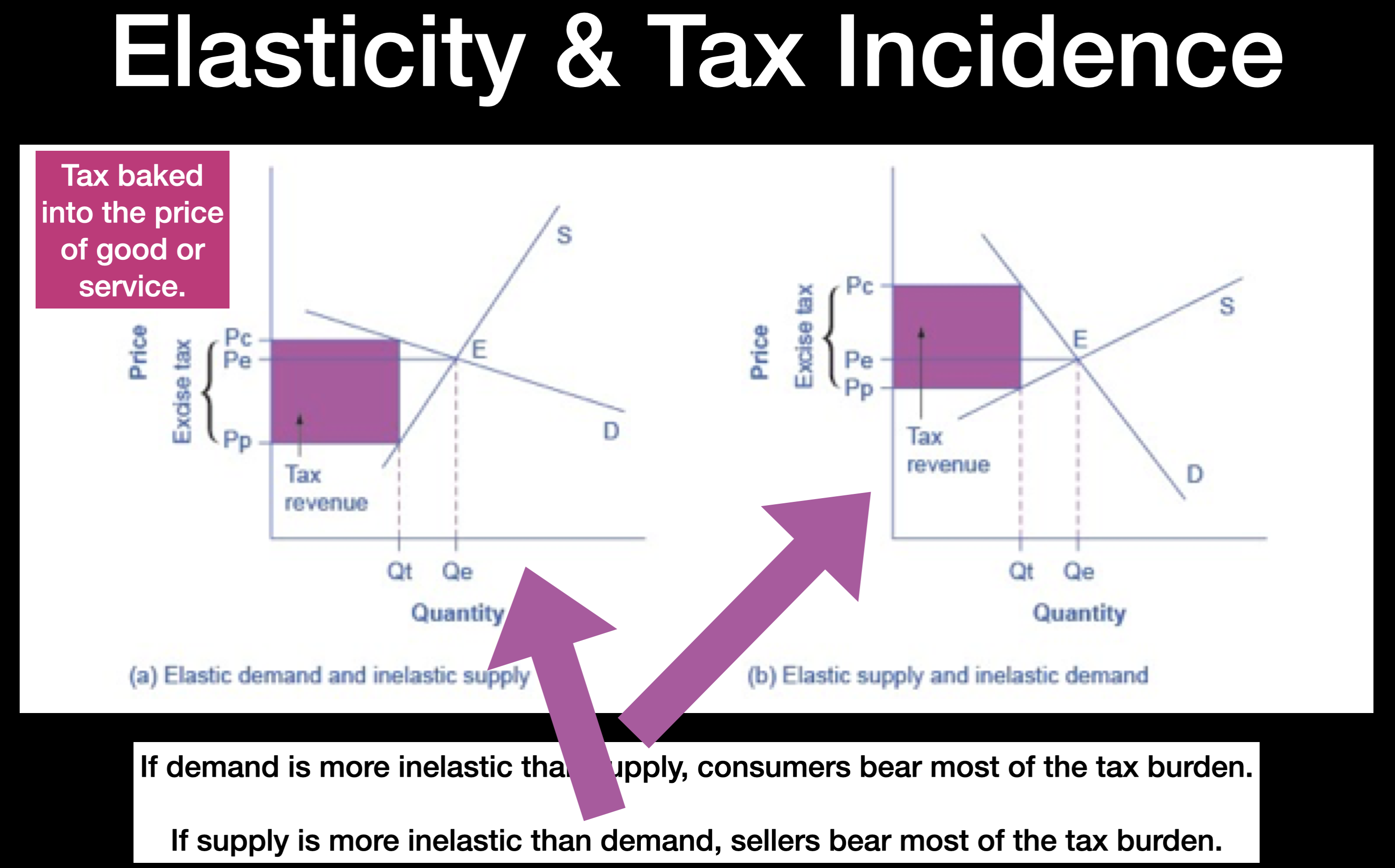
Analyze the above slide again. Please.
Who takes the brunt of the tax incidence of an excise tax when demand is more inelastic than supply?
¯\_(ツ)_/¯
Consumers
Producers
Question 10
10.
How about when supply is more inelastic?
Producers
Duh!
It's the other one of course.
Pleas click on the option that says, "Producers." Don't click on me.