Log in
Sign up for FREE
arrow_back
Library

Lesson 6 - Story Structure (4th Grade)

star
star
star
star
star
Last updated over 2 years ago
7 questions
1
RL.4.3
1
L.4.4.b
Question 1
1.

Question 2
2.

2
L.4.3.c
1
RL.4.3
1
RL.4.3
1
RL.4.5
4
Question 7
7.
Other Answer Choices:
Lavani decides to play by herself.
Suchita denies making a promise.
Suchita and Lavani come to an agreement.
Suchita denies making a promise.
RL.4.3
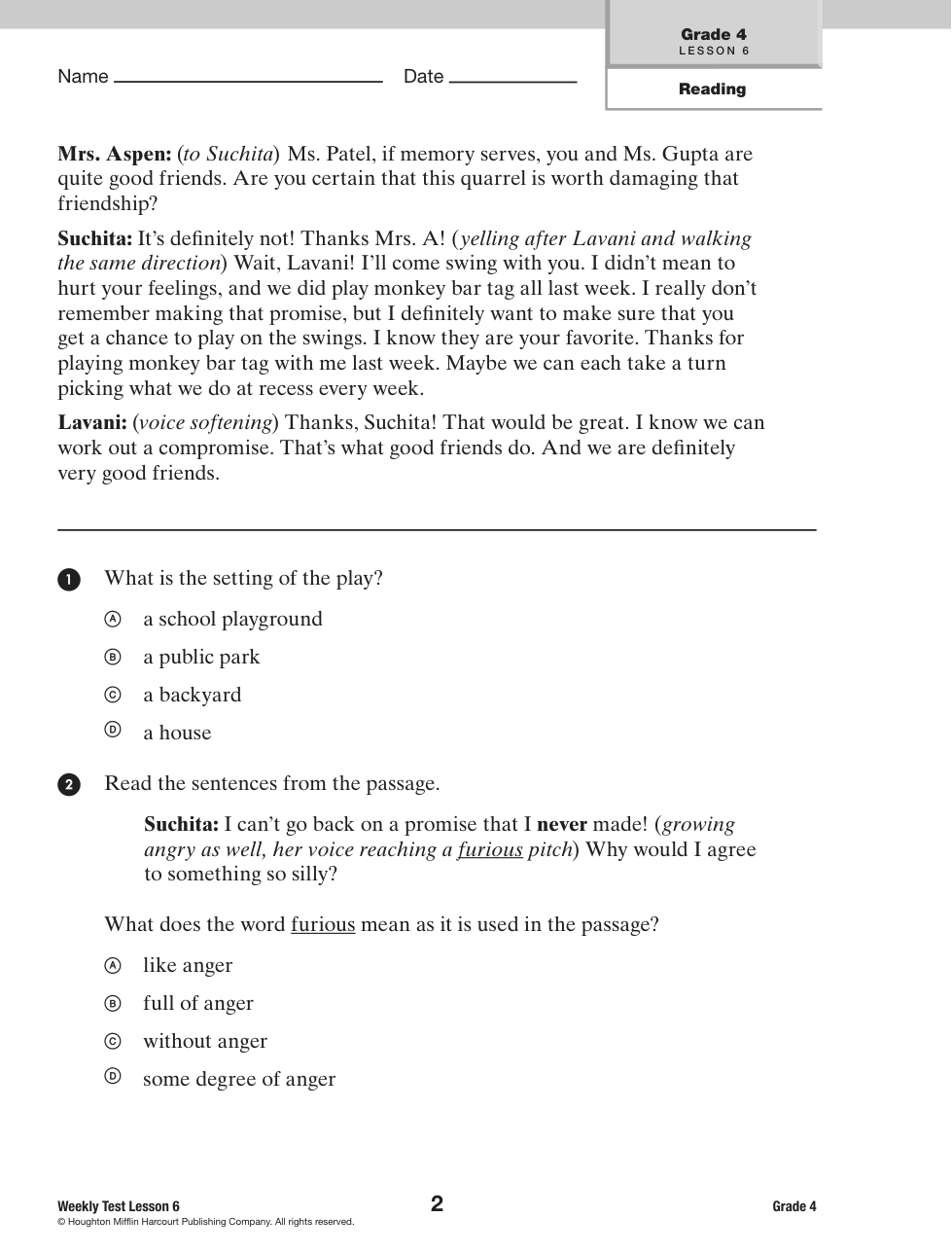
What is the setting of the play?
A. a school playground
B. a public park
C. a backyard
D. a house
Read the sentences from the passage.

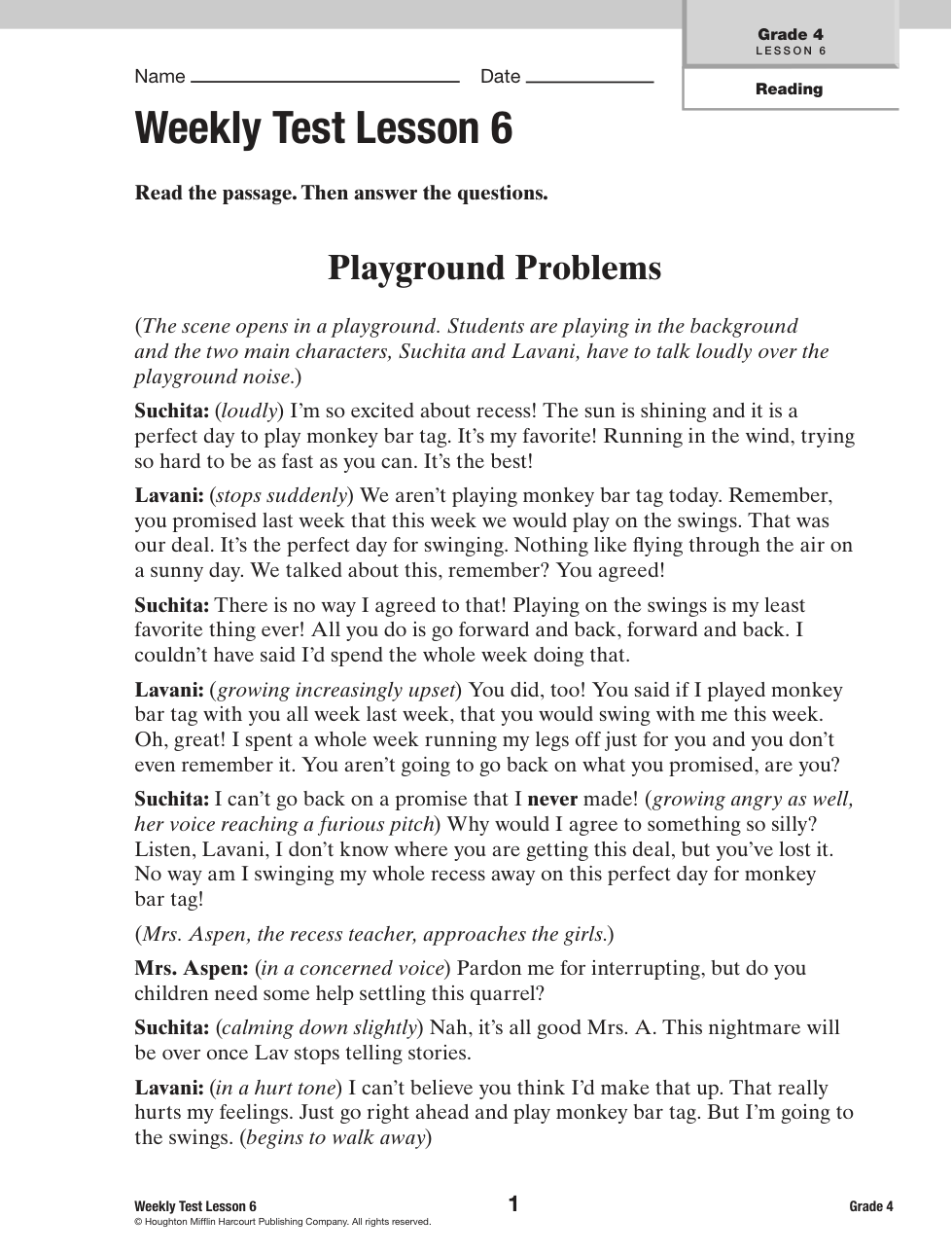
Suchita: I can’t go back on a promise that I never made! (growing angry as well, her voice reaching a furious pitch) Why would I agree to something so silly?

What does the word furious mean as it is used in the passage?
A. like anger
B. full of anger
C. without anger
D. some degree of anger
Question 3
3.

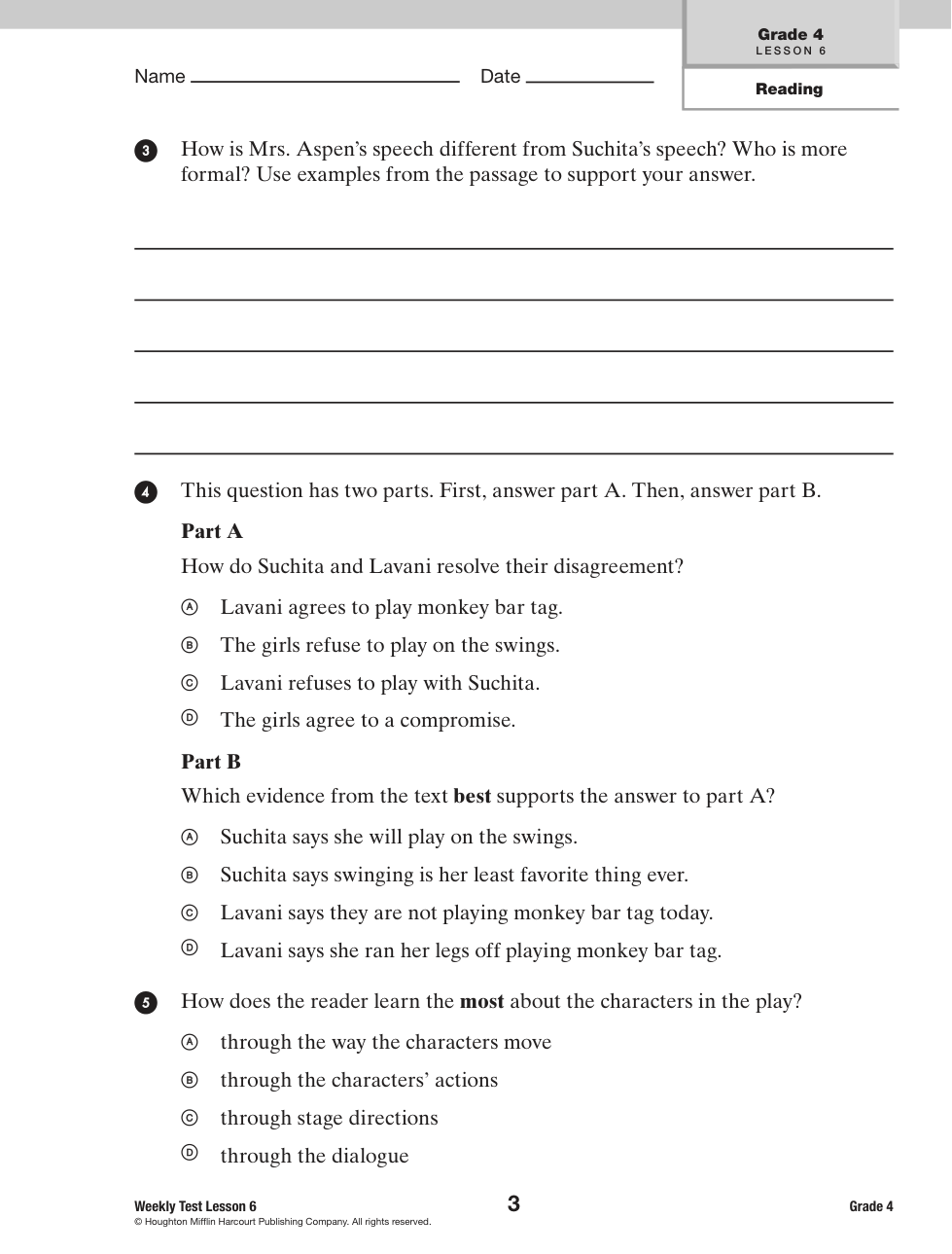
How is Mrs. Aspen’s speech different from Suchita’s speech? Who is more formal?

Use examples from the passage to support your answer.

Question 4
4.

Question 5
5.

Question 6
6.

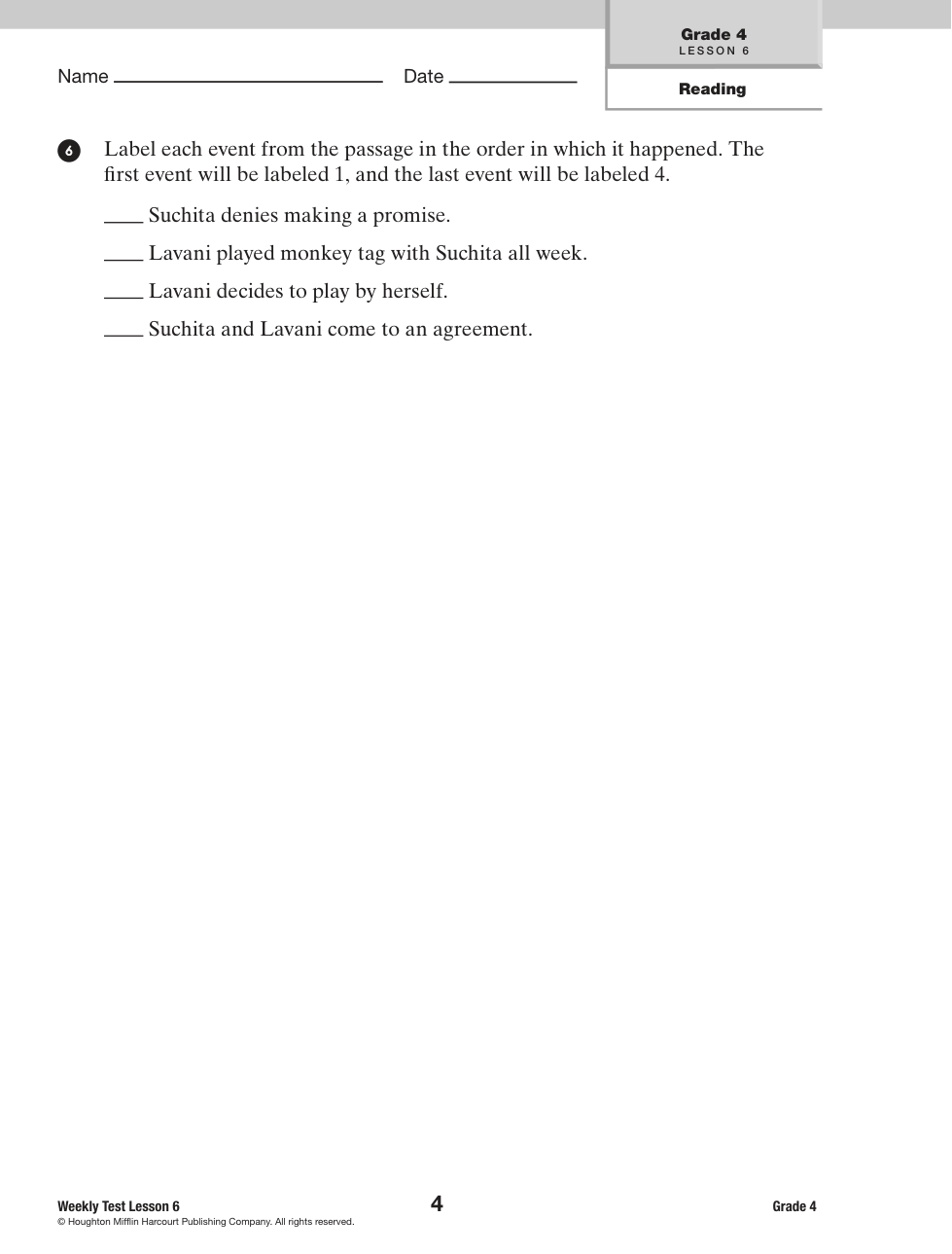
Label each event from the passage in the order in which it happened. The first event will be labeled 1, and the last event will be labeled 4.
1:_____________________________________
2:_____________________________________
3:_______________________________________
4:_____________________________________________
Part A

How do Suchita and Lavani resolve their disagreement?
A. Lavani agrees to play monkey bar tag.
B. The girls refuse to play on the swings.
C. Lavani refuses to play with Suchita.
D. The girls agree to a compromise.
Part B

Which evidence from the text best supports the answer to part A?
A. Suchita says she will play on the swings.
B. Suchita says swinging is her least favorite thing ever.
C. Lavani says they are not playing monkey bar tag today.
D. Lavani says she ran her legs off playing monkey bar tag.
How does the reader learn the most about the characters in the play?
A. through the way the characters move
B. through the characters’ actions
C. through stage directions
D. through the dialogue