10 - Author’s Purpose
star
star
star
star
star
Last updated about 3 years ago
7 Nsɛmmisa
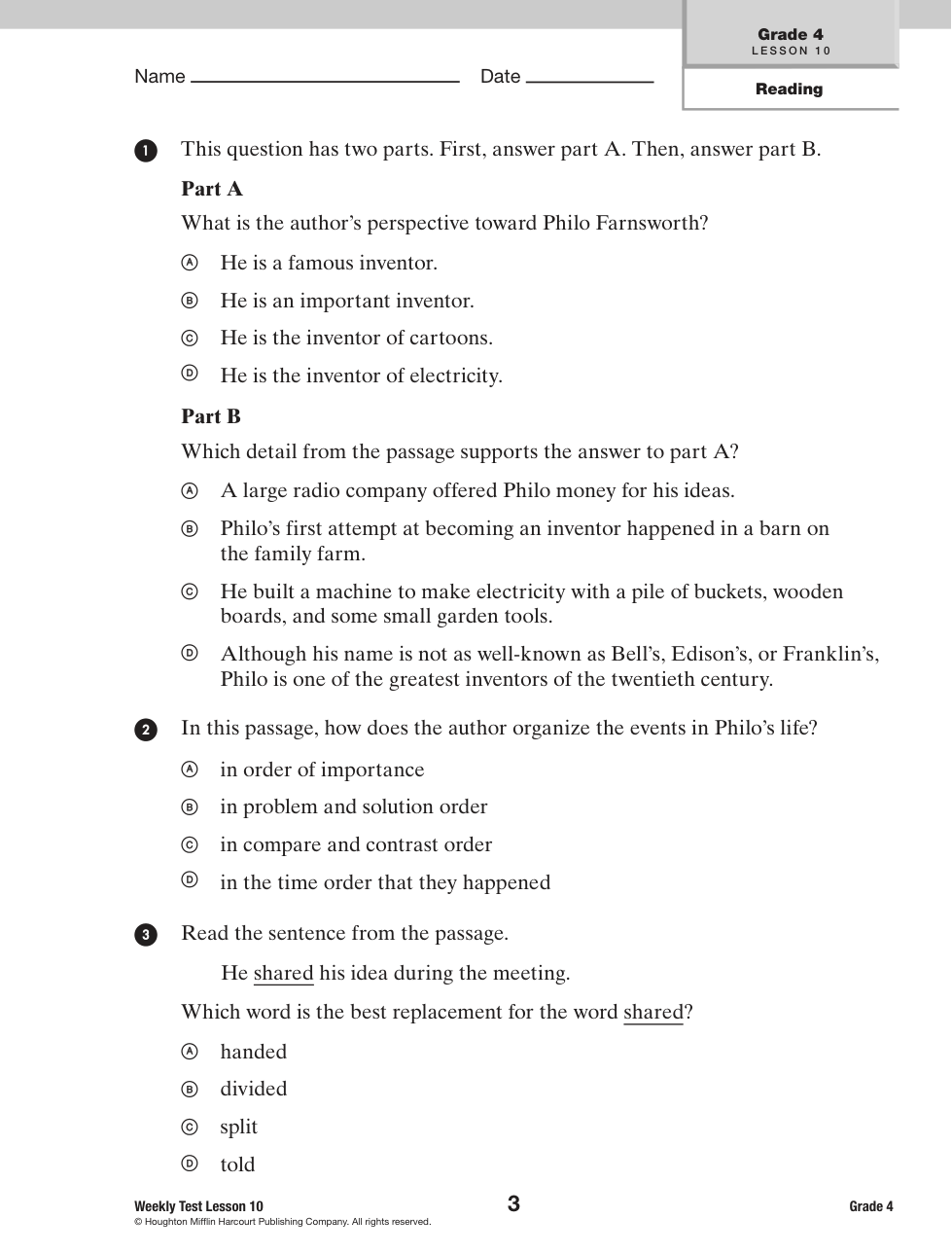
Part A
What is the author’s perspective toward Philo Farnsworth?
Part B
Which detail from the passage supports the answer to part A?
In this passage, how does the author organize the events in Philo’s life?
Read the sentence from the passage.
He shared his idea during the meeting.
Which word is the best replacement for the word shared?
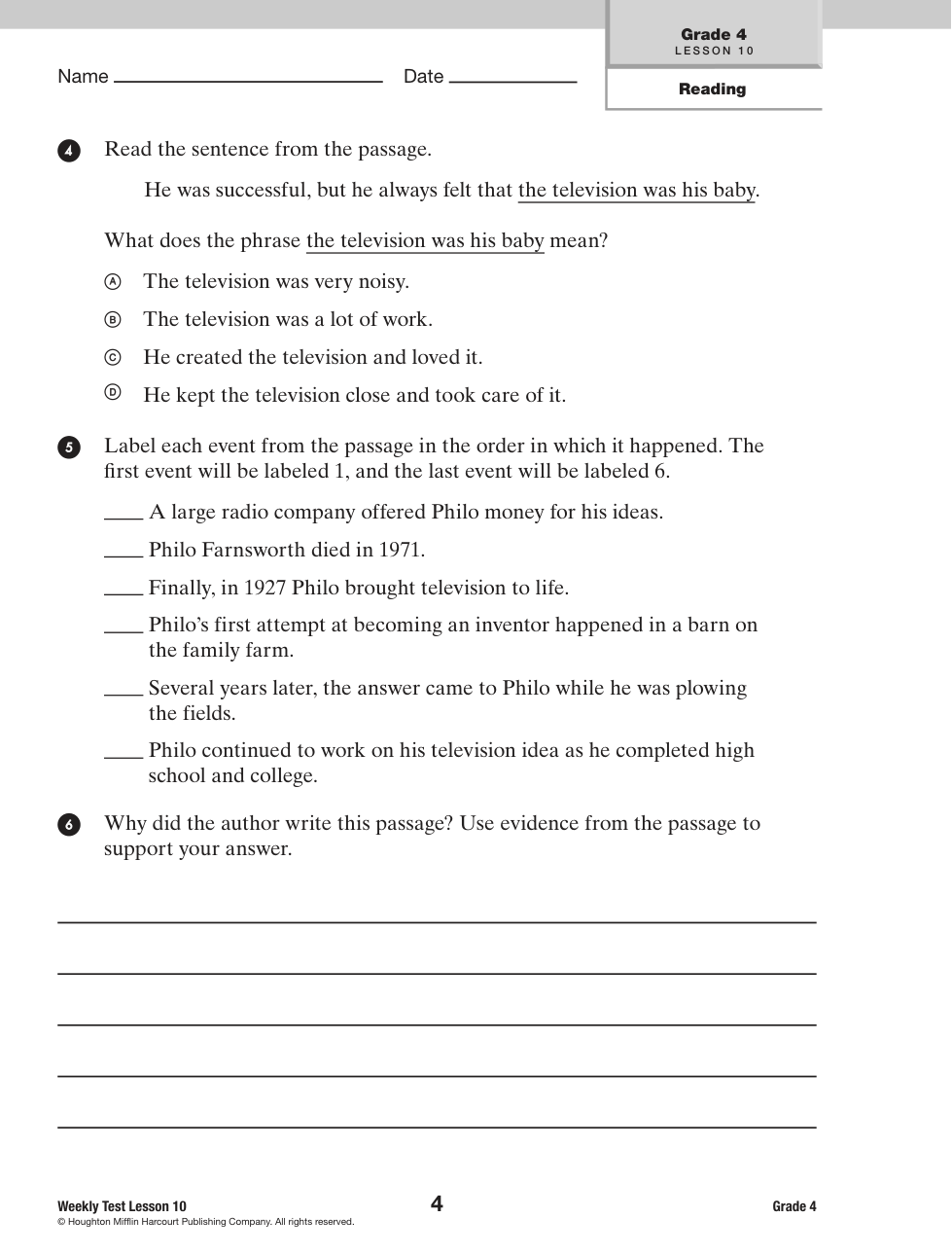
Read the sentence from the passage.
He was successful, but he always felt that the television was his baby.
What does the phrase the television was his baby mean?
Drag and drop each event from the passage in the order in which it happened. The first event will be labeled 1, and the last event will be labeled 6.
1:
2:
3:
4:
5:
6:
Why did the author write this passage?
Use evidence from the passage to support your answer.