2024 (Jun.): NY Regents - Chemistry

Last updated about 9 hours ago
85 questions
Note from the author:
Part A
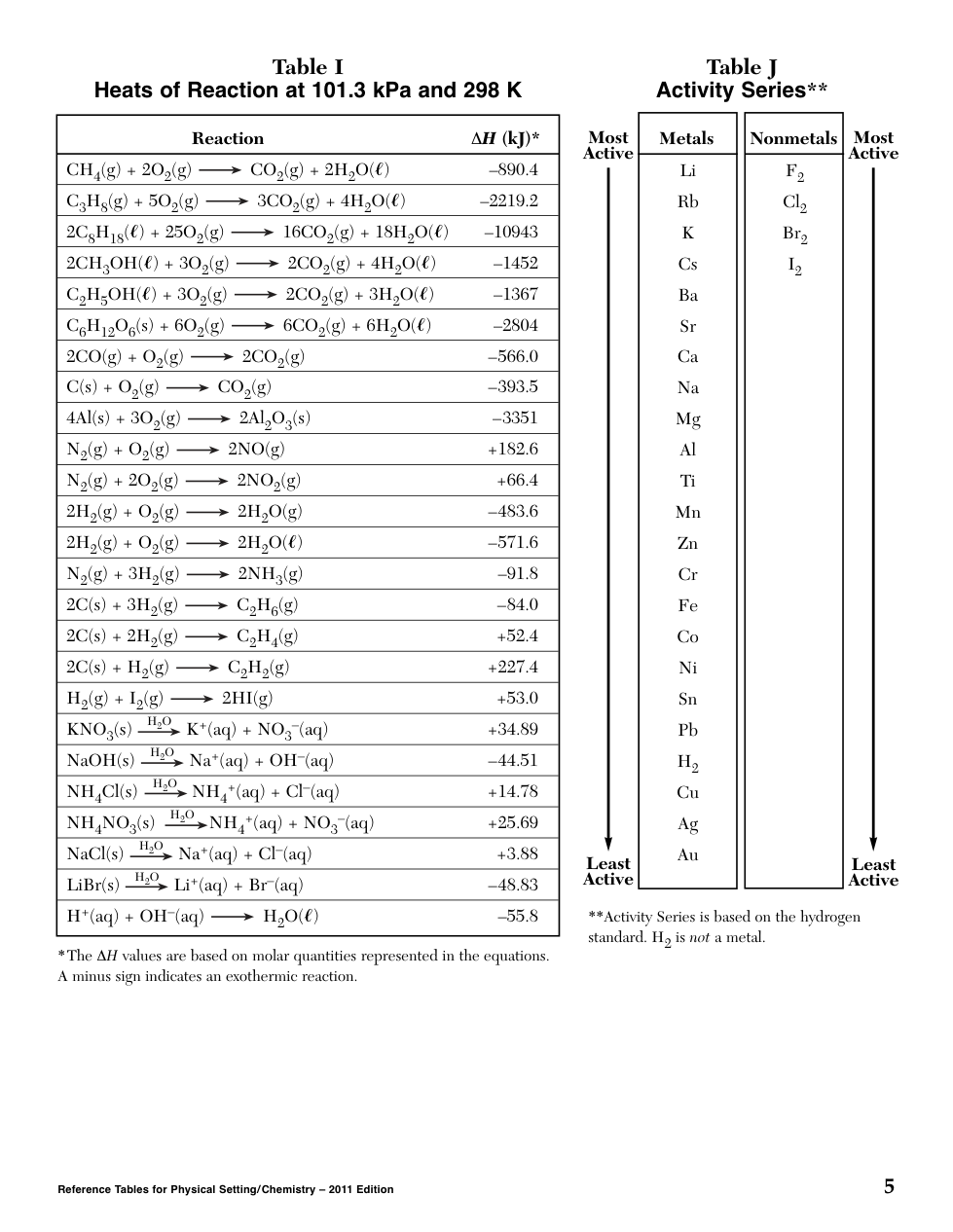
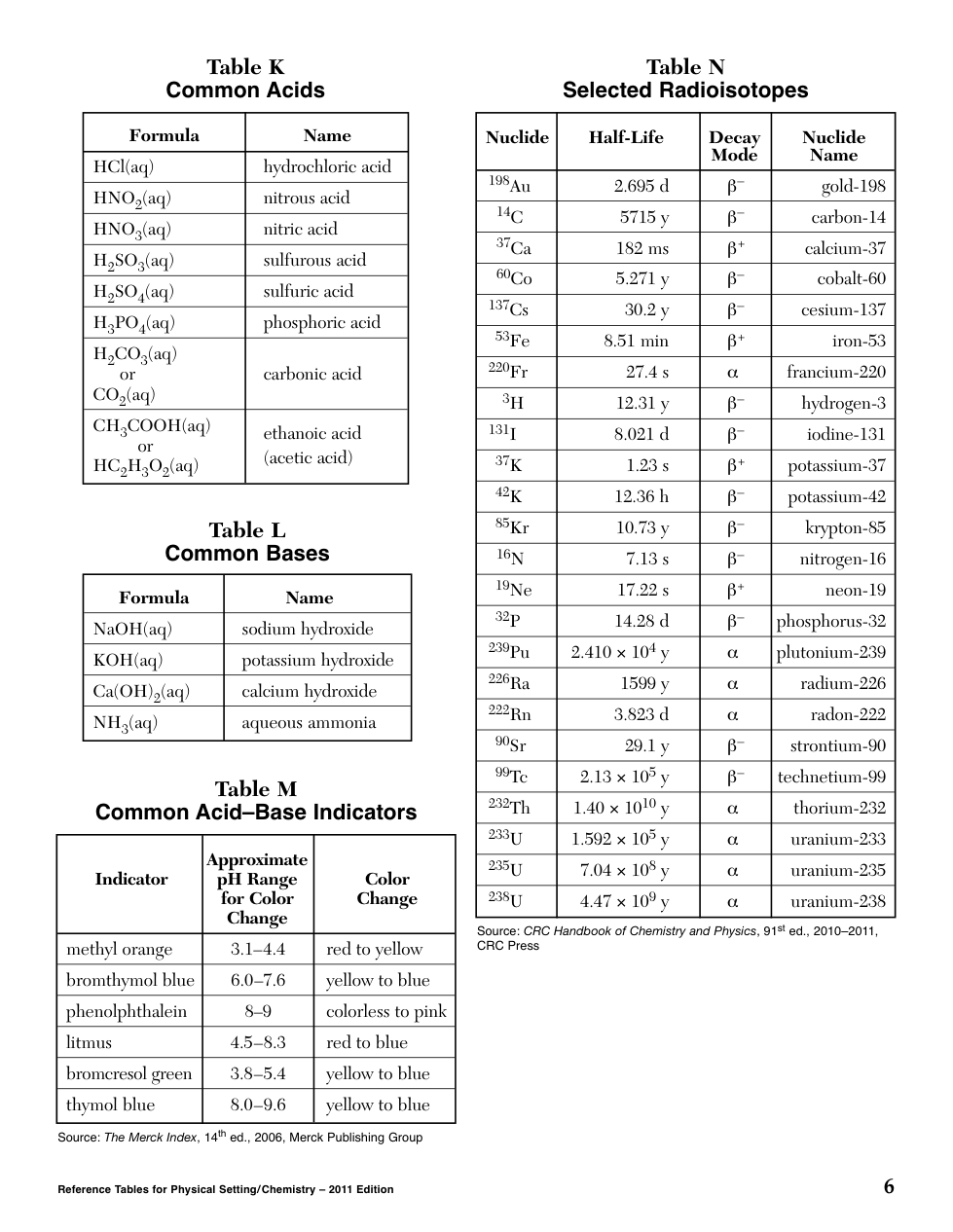
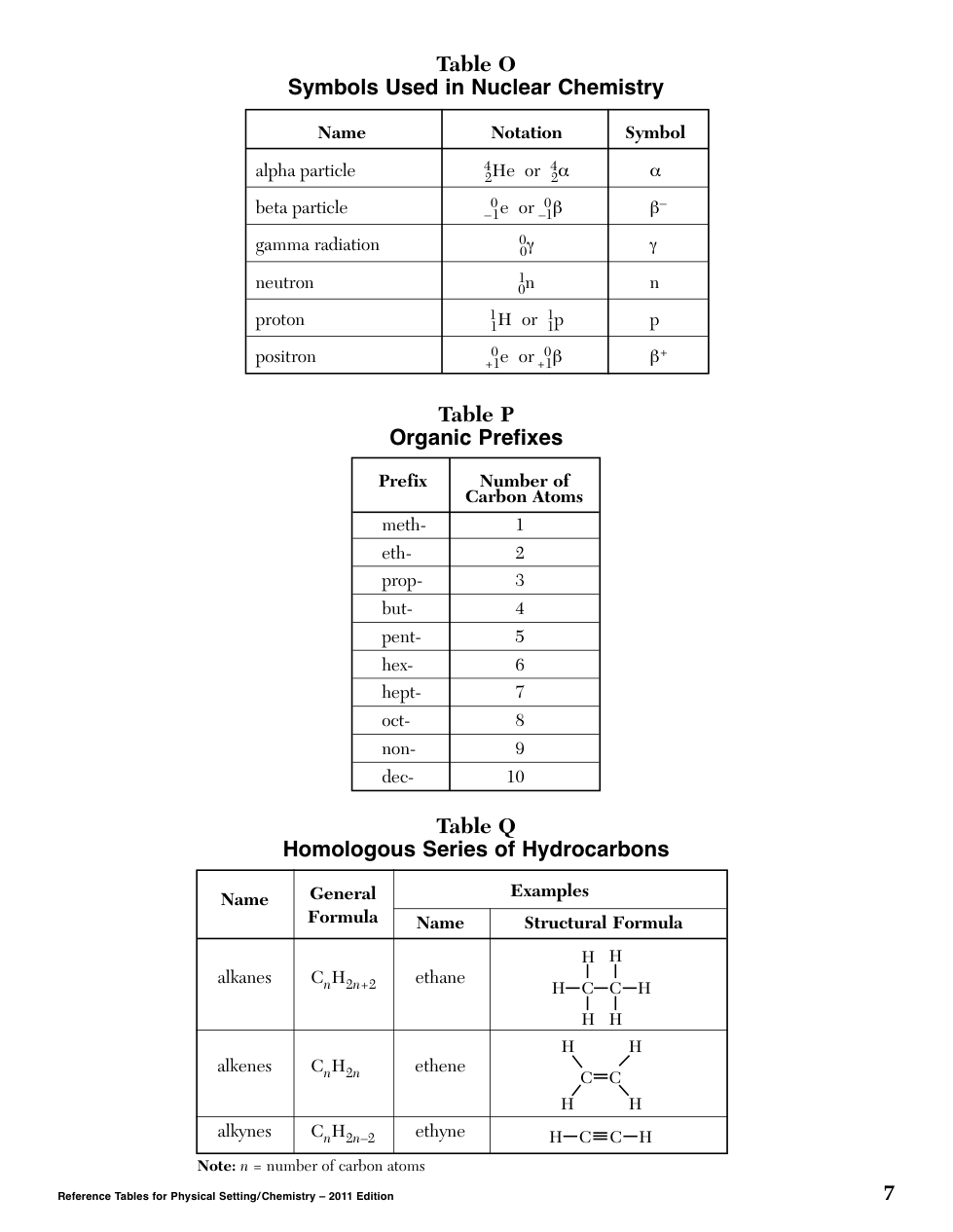
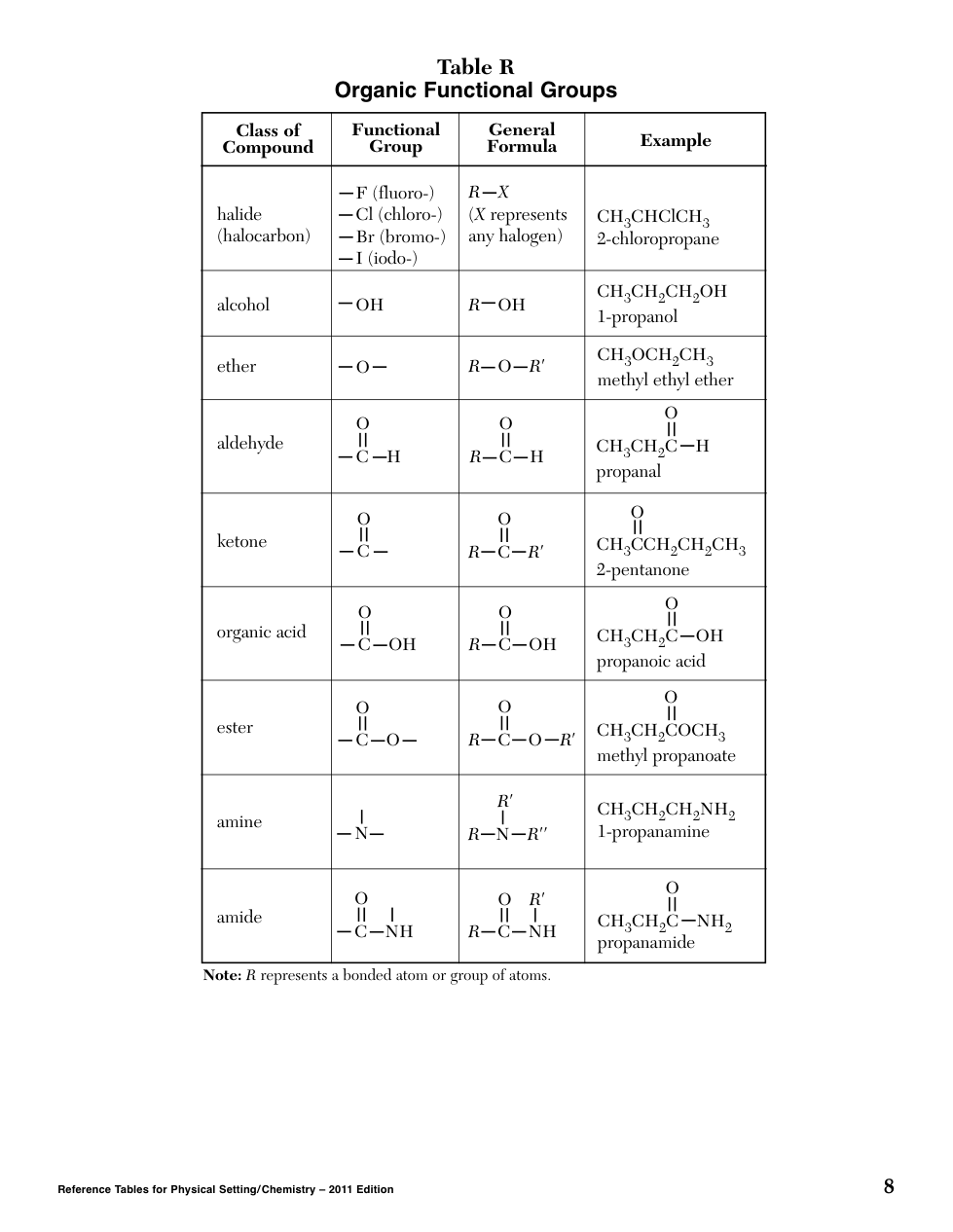
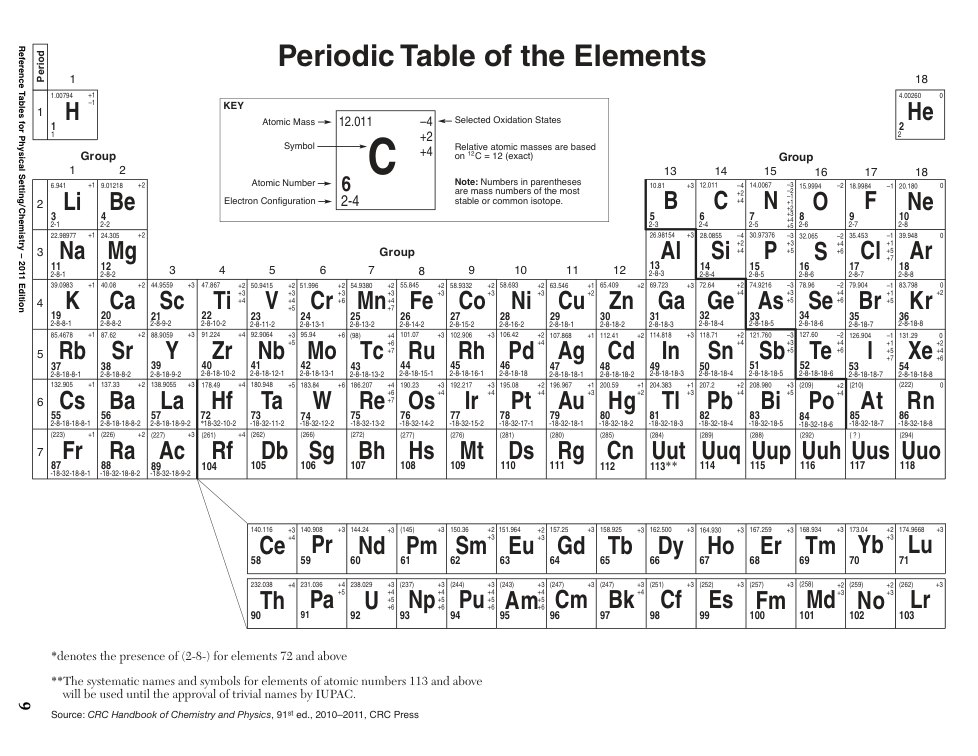
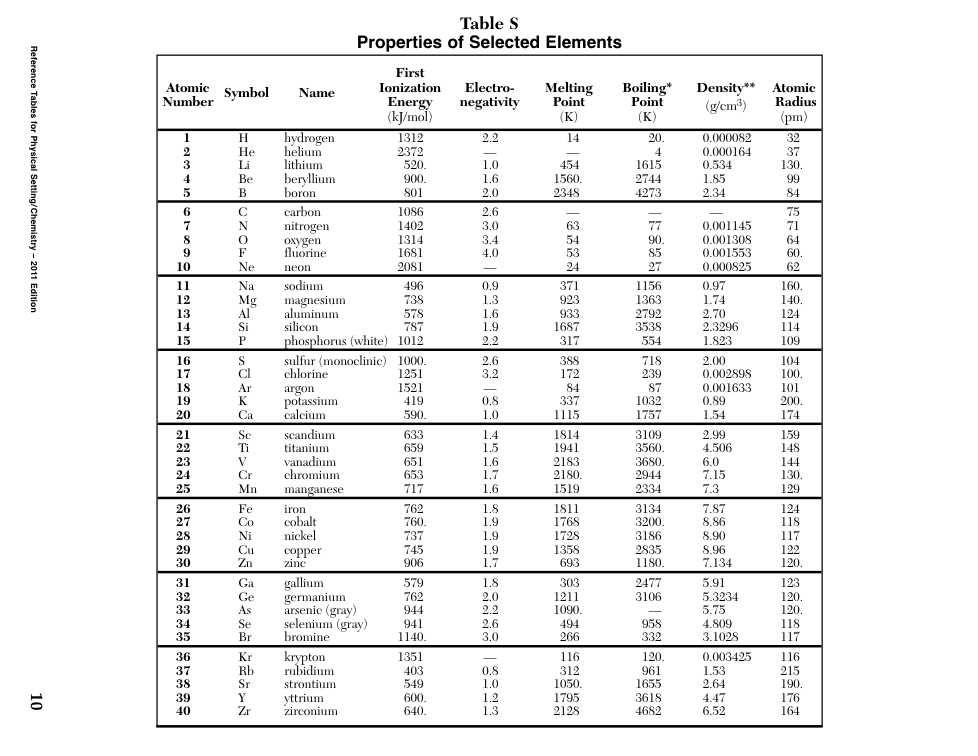
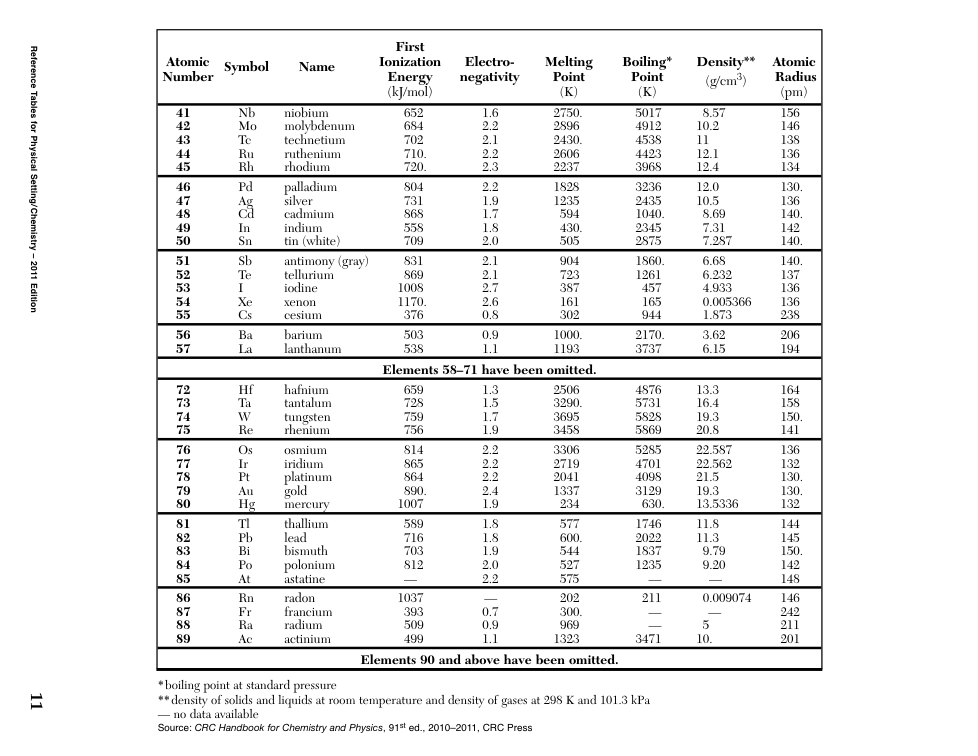
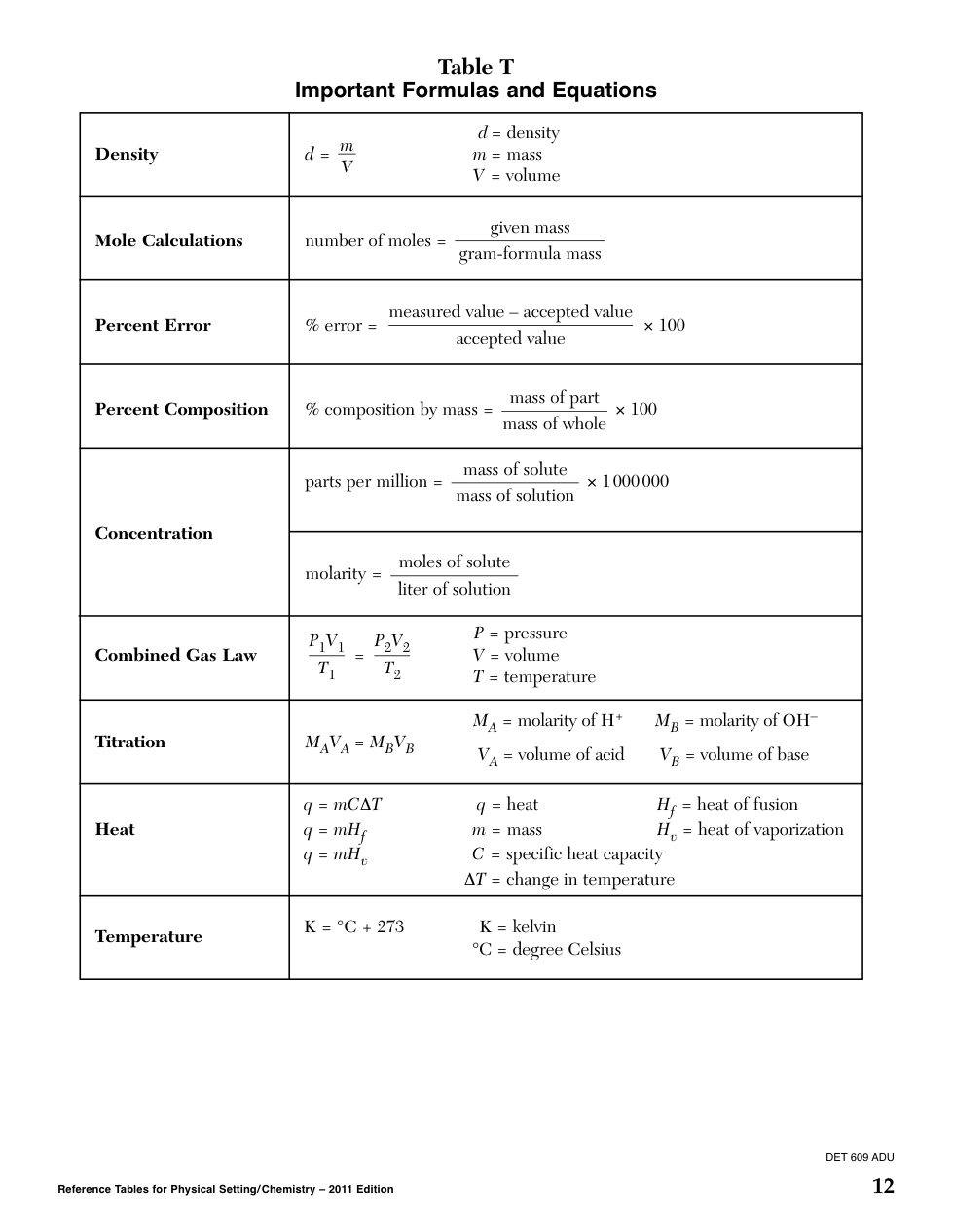
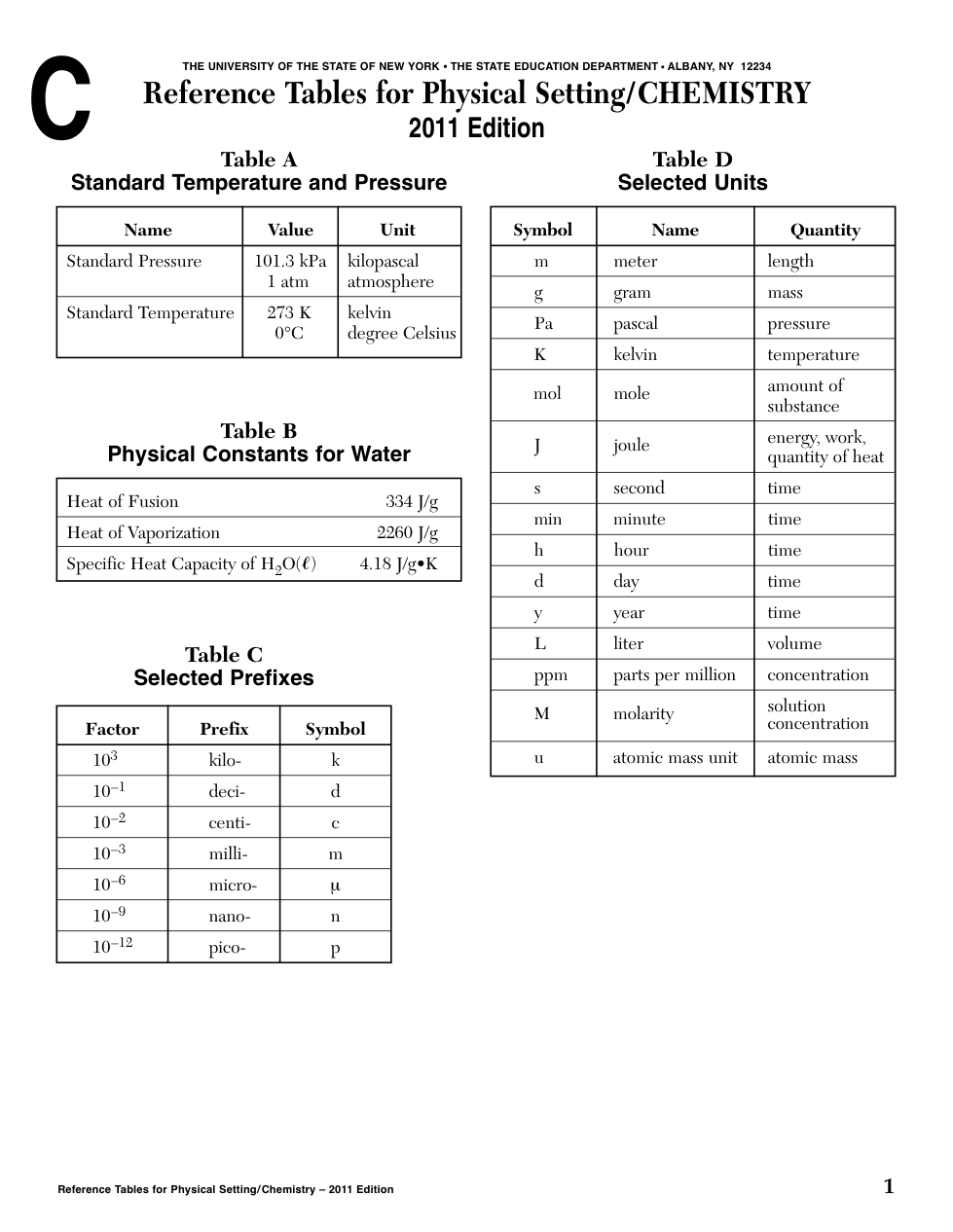
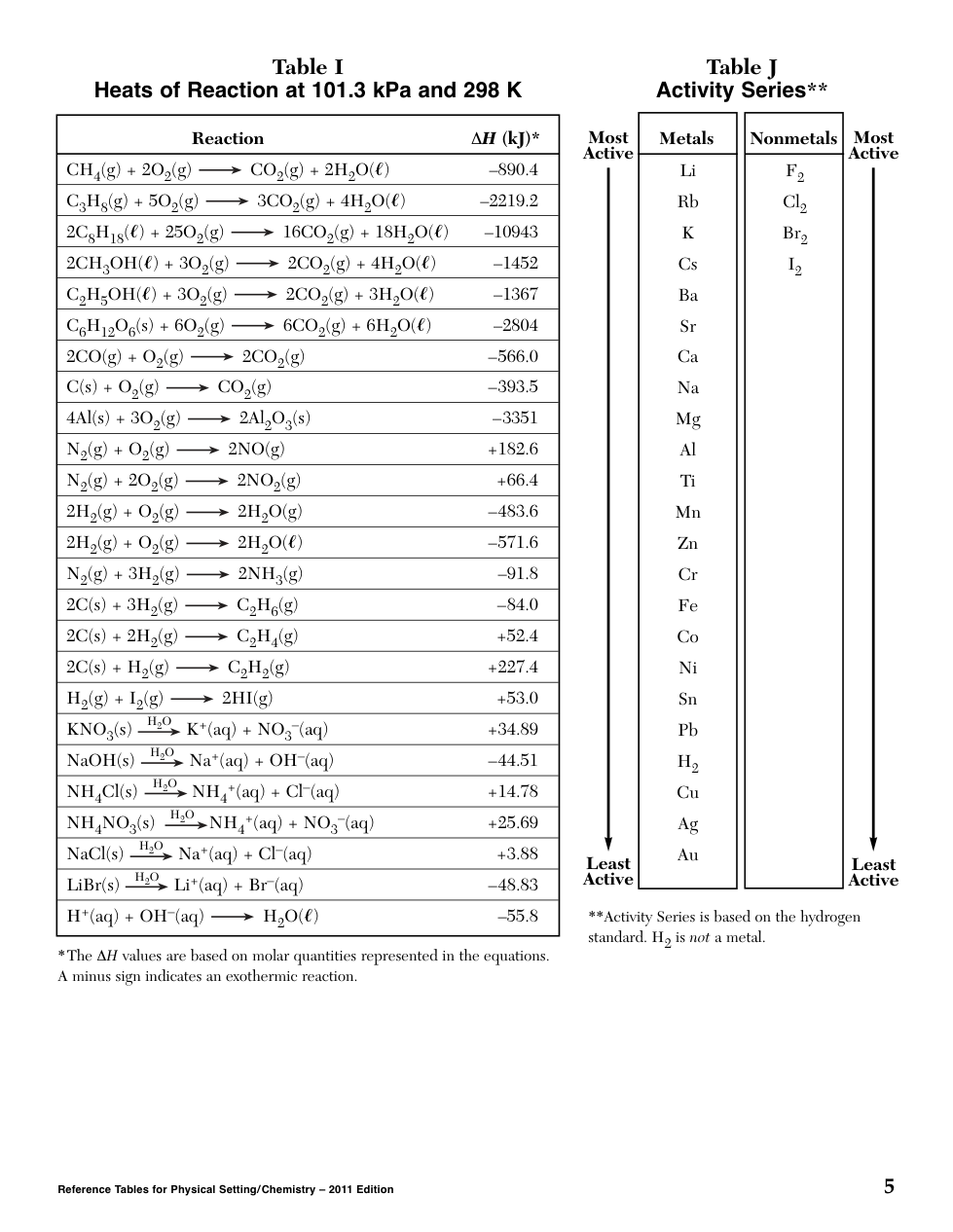
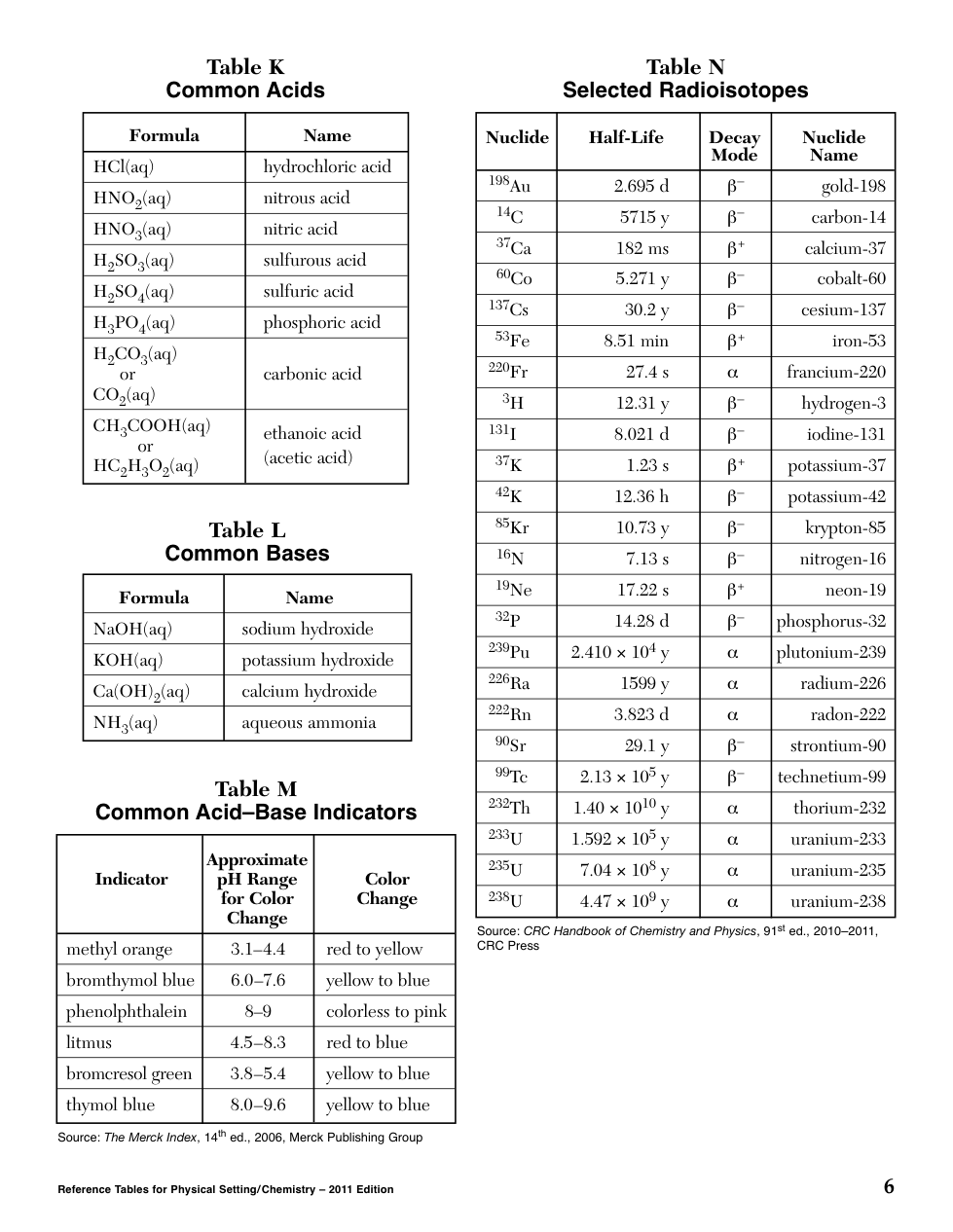
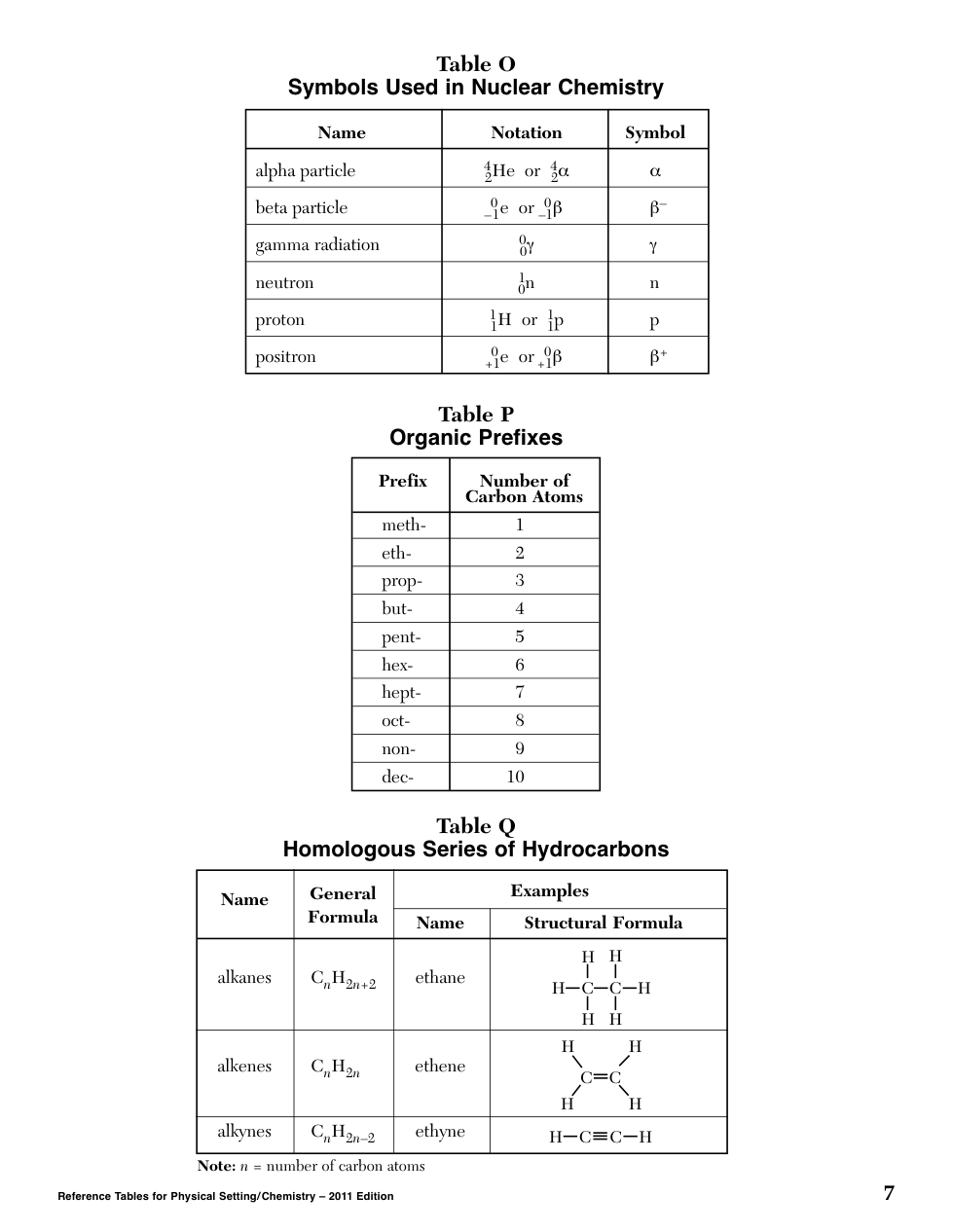
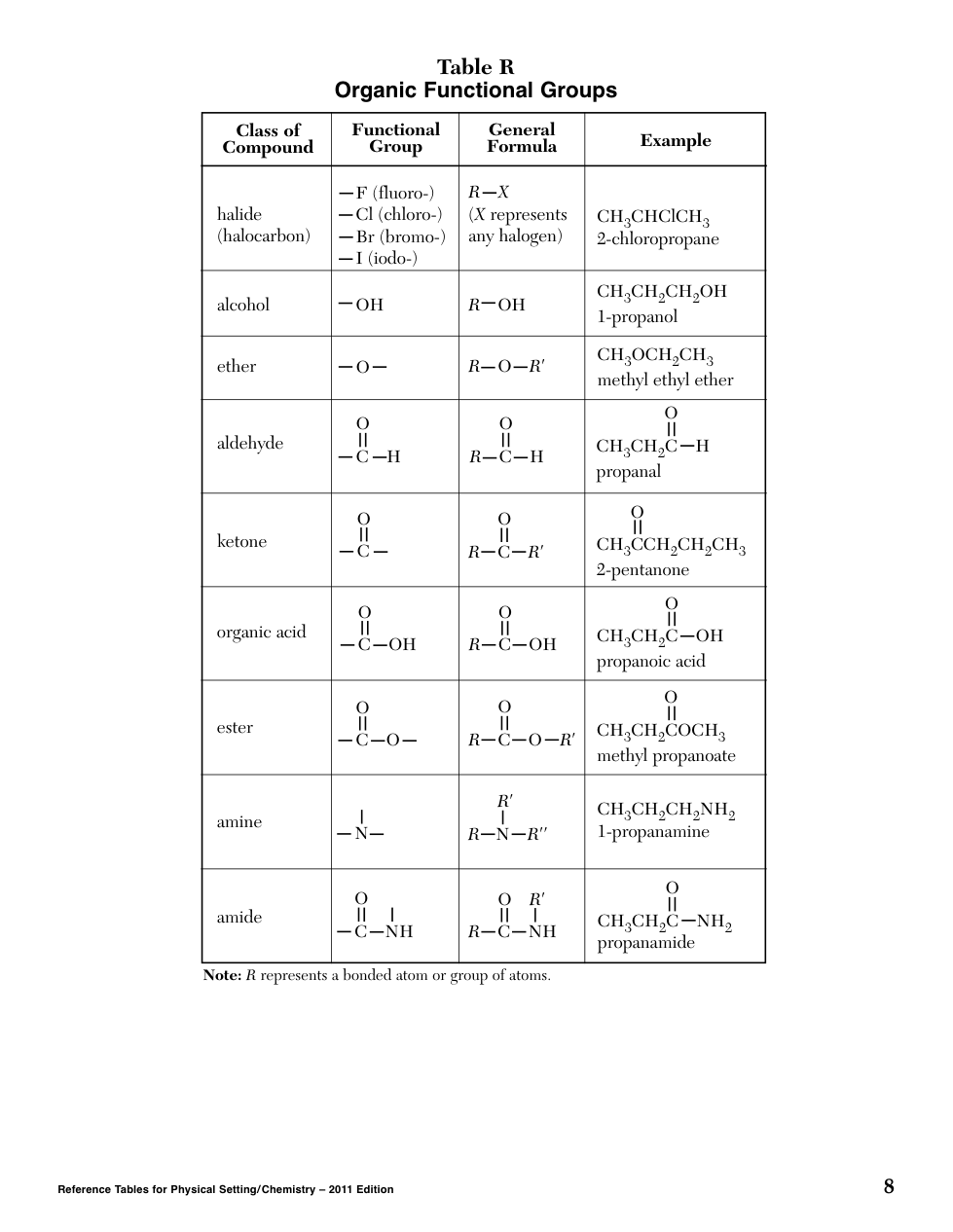
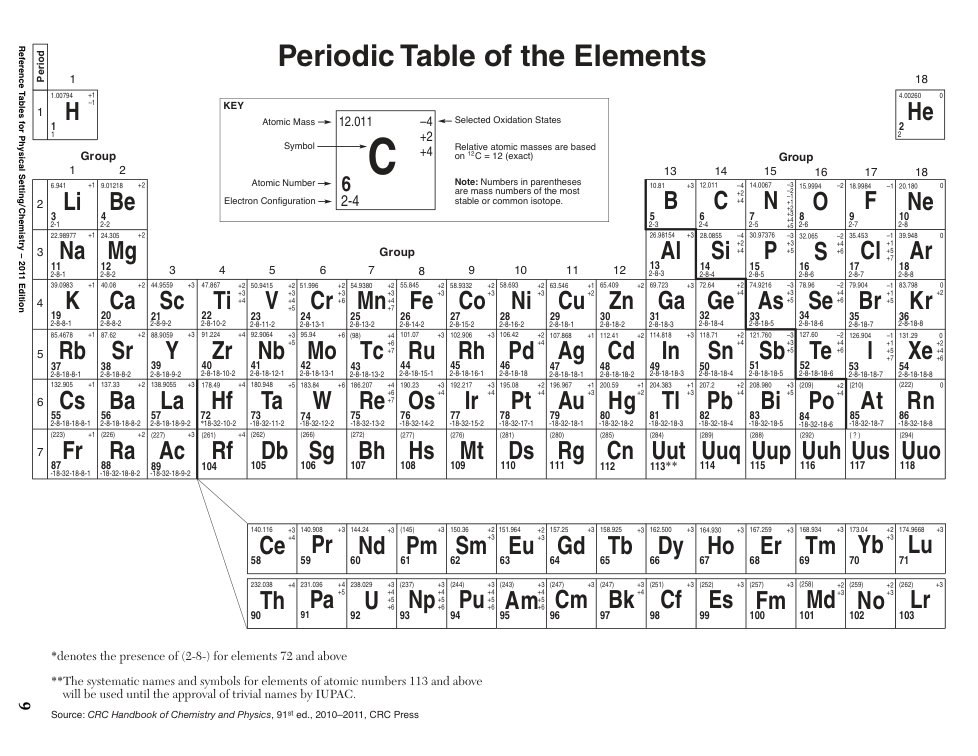
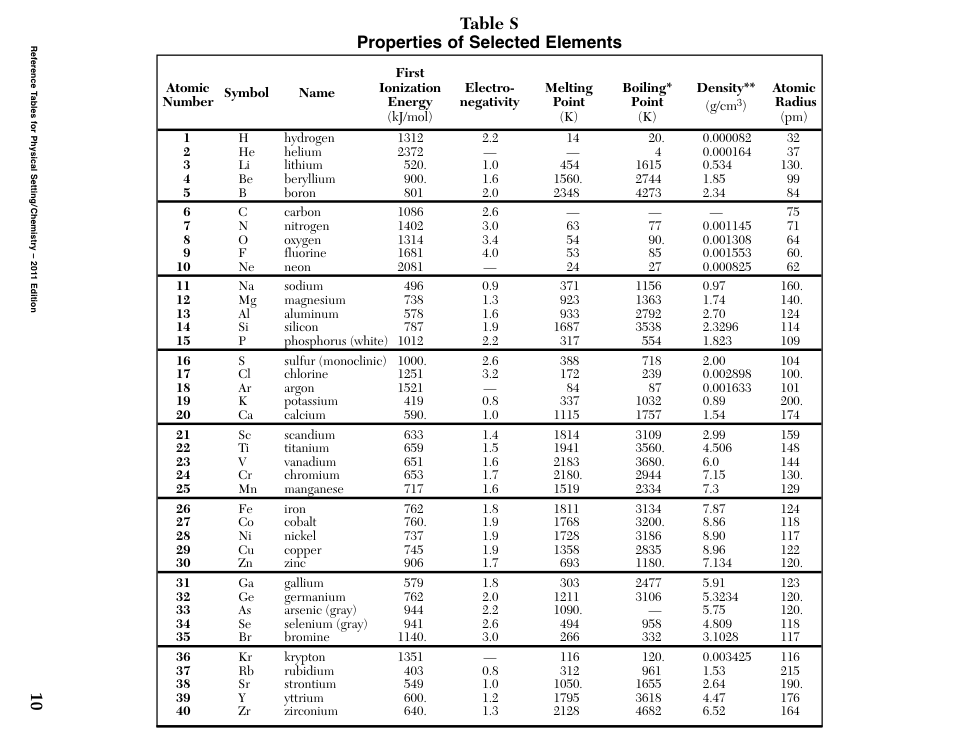
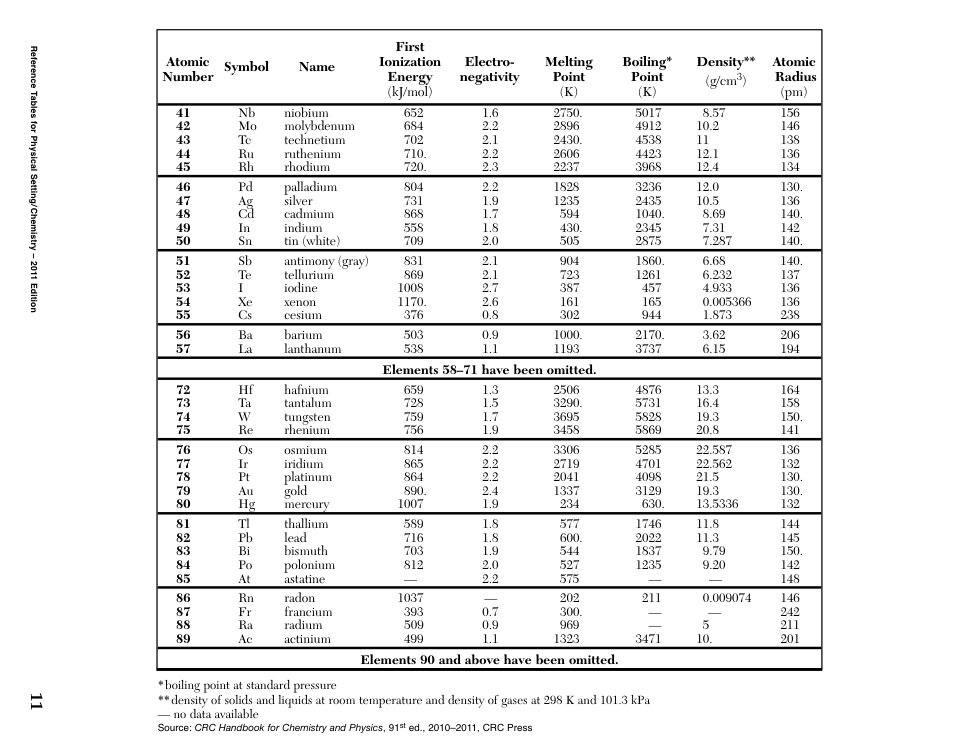
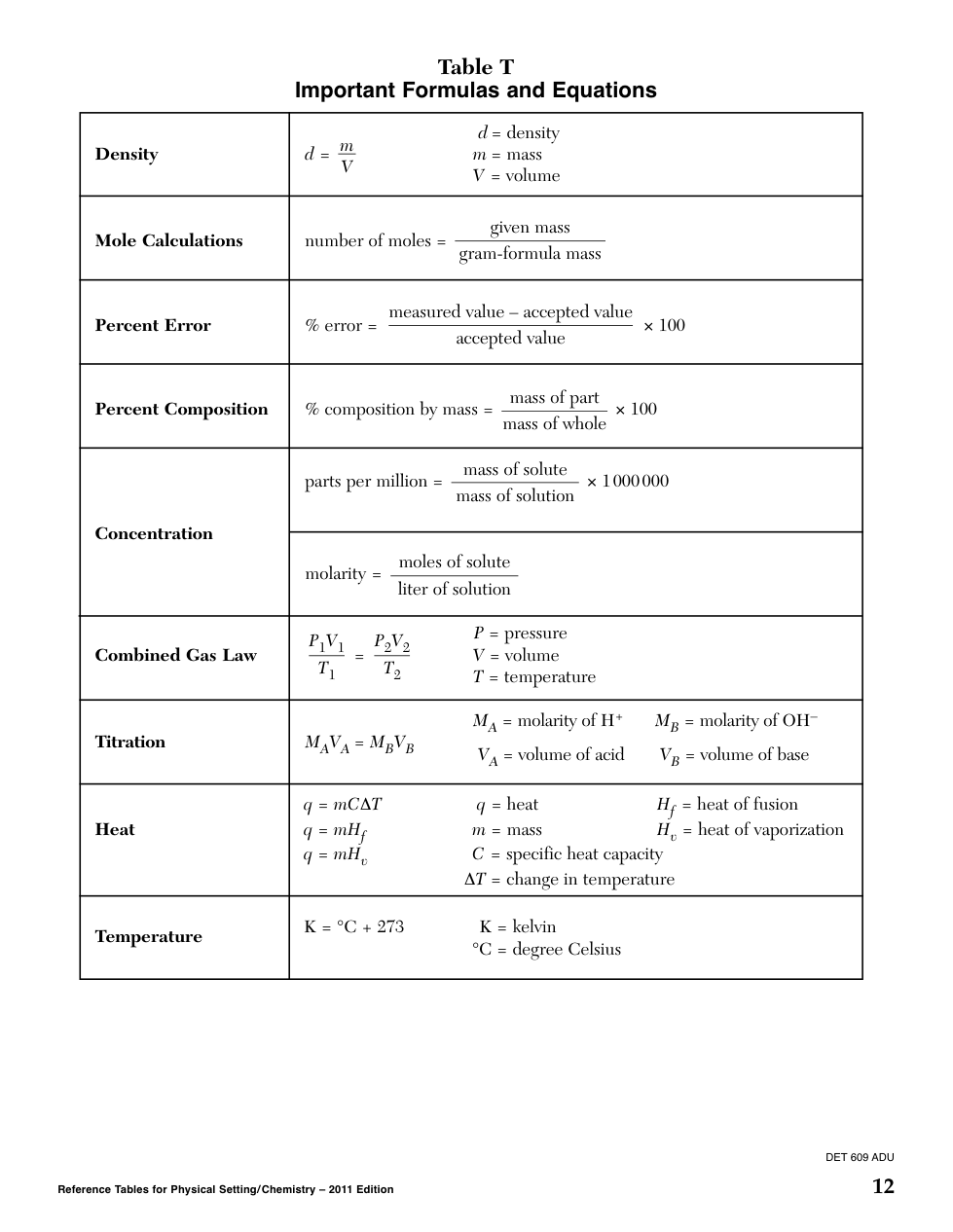
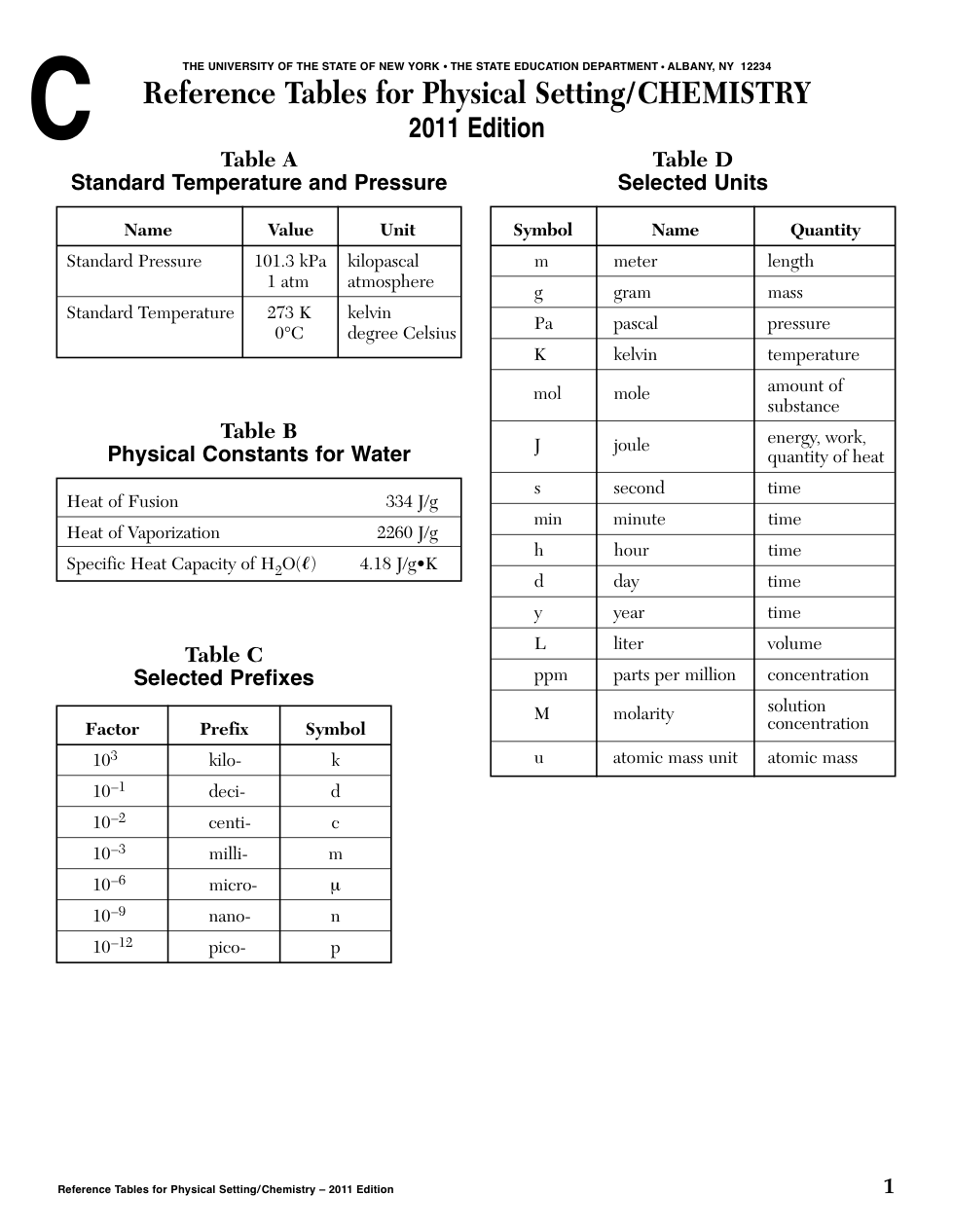
Directions (1-30): For each statement or question, choose the word or expression that, of those given, best completes the statement or answers the question. Some questions may require the use of the 2011 Edition Reference Tables for Physical Setting/Chemistry.
1

Which description of the atom is based on the results of the gold foil experiment in the early 1900s?

1

According to the electron cloud model, which term is defined as the most probable location of an electron in an atom?

1

Which change occurs when an electron returns from a higher energy state to a lower energy state?

1

Which phrase describes the different isotopes of an element?

1

Which statement describes a chemical property of sodium?

1

Oxygen can exist as diatomic oxygen gas,
, or ozone,
These two forms of oxygen have

1

Which formula contains a polyatomic ion?

1

What information about
can be determined from its structural formula, but not determined from its molecular formula?

1

Which quantity is conserved in all chemical reactions?

1

What do the coefficients in a balanced chemical equation indicate about the substances in the equation?

1

At STP, which substance has metallic bonding?

1

How many pairs of electrons are shared between the nitrogen atoms in a molecule of

1

Which formula represents a molecule with an asymmetrical distribution of charge?

1

Given the equation representing a reaction: I_2 \rightarrow I + I What occurs during this reaction?

1

The electronegativity difference between the atoms in a molecule of HF can be used to determine the

1

Which sample of matter is classified as a mixture?

1

At STP, which property of tungsten remains the same for all samples of tungsten?

1

An element is composed of atoms that must have

1

Compared to a 2.0 M aqueous solution of KI at 1.0 atm, water at 1.0 atm has a

1

Which statement describes the particles of an ideal gas, based on the kinetic molecular theory?

1

Chemical reactions are most likely to occur when reacting particles collide with the

1

At STP, a 2.0-liter sample of nitrogen gas and a 2.0-liter sample of oxygen gas have equal

1

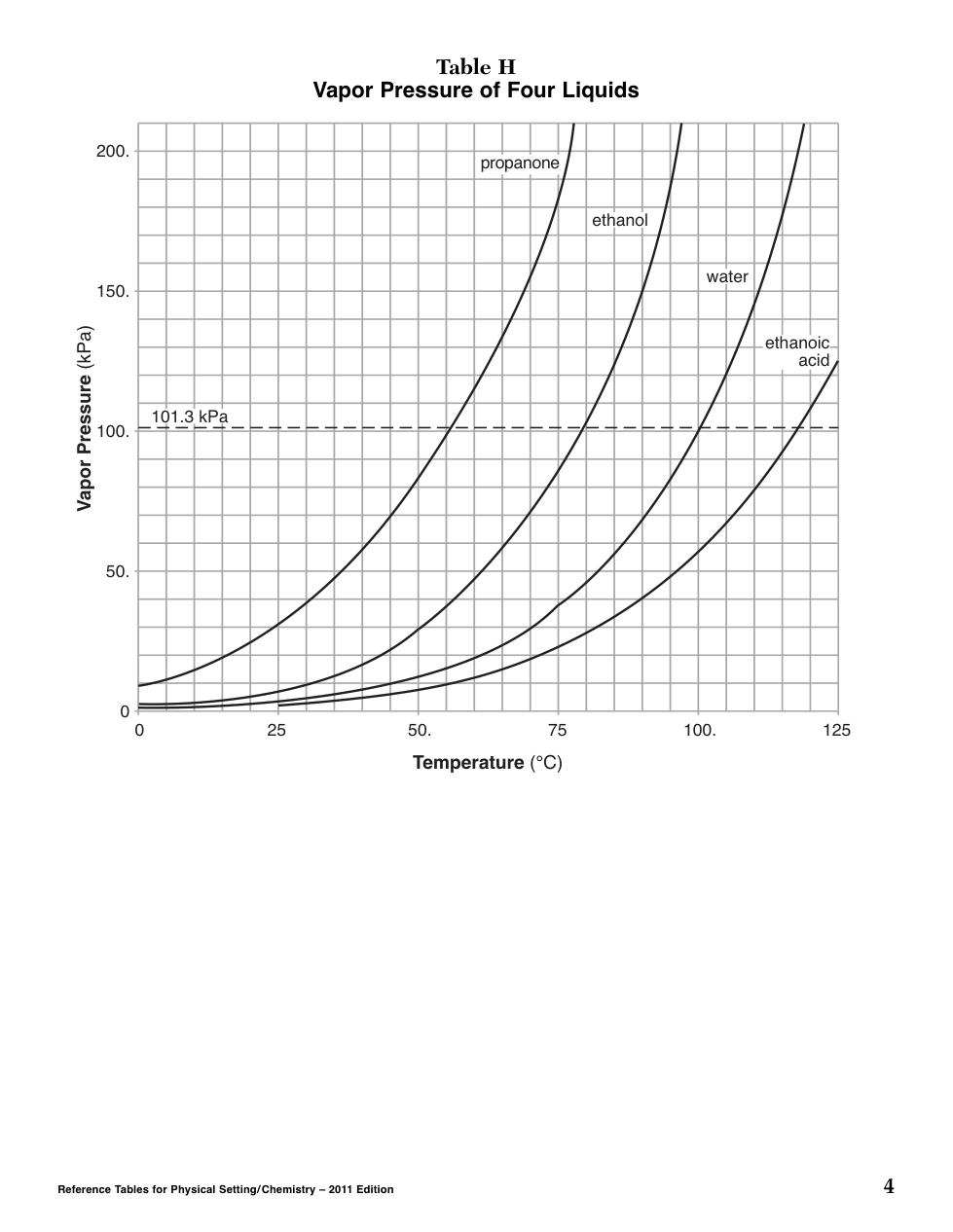
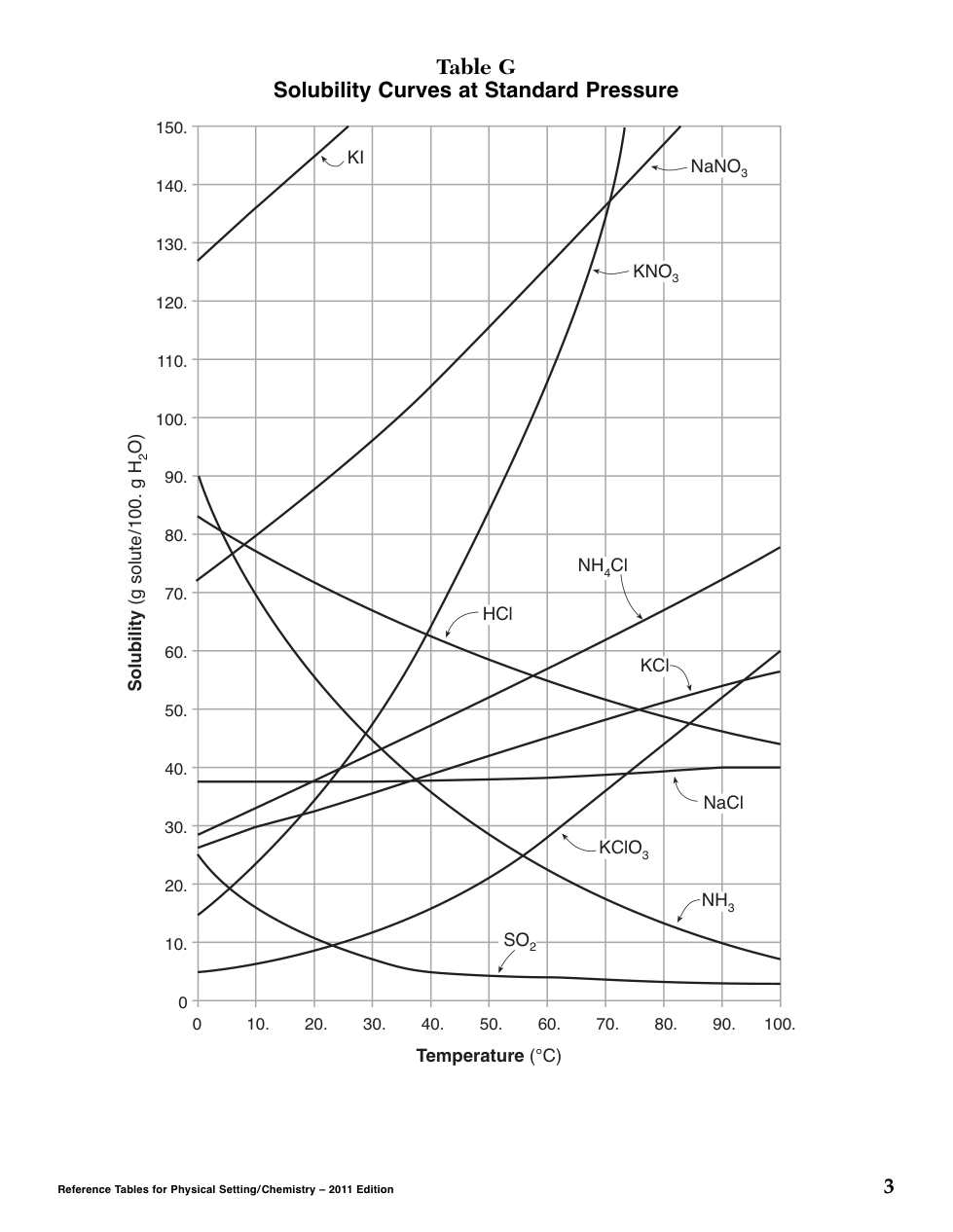
Based on Table H, which compound has the weakest intermolecular forces at 75°C?

1

Which term identifies a force of attraction that exists between molecules of water?

1

Which process results in an increase in disorder?

1

Systems in nature tend to undergo changes that result in

1

What is the general formula for the homologous series that includes ethyne?

1

Given the equation representing a reaction: 2KI + F_2 → 2KF + I_2
When 2.0 moles of electrons are gained by fluorine, how many moles of electrons are lost by iodine?

1

Which compound is an Arrhenius base?

1

Which statement describes a benefit of fission?

Part B-1
Directions (31-50): For each statement or question, choose the word or expression that, of those given, best completes the statement or answers the question. Some questions may require the use of the 2011 Edition Reference Tables for Physical Setting/Chemistry.
1

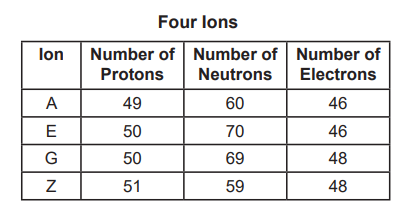
The numbers of protons, neutrons, and electrons in each of four different ions are shown in the table below.


Which ion has the greatest mass?

1

The mass of a sample of nickel is determined to be 20.40 grams. How many significant figures are used to express this mass?

1

What is a chemical name for the compound PbO_2?

1

Which formula is the empirical formula for ethane, C_2H_6?

1

Given a balanced equation representing a reaction:
2CO(g) + O_2(g) → 2CO_2(g) + \text{energy}

Which mass of O_2(g) reacts completely with 5.6 grams of CO(g) to produce 8.8 grams of CO_2(g)?

1

Which numerical setup can be used to calculate the formula mass of

1

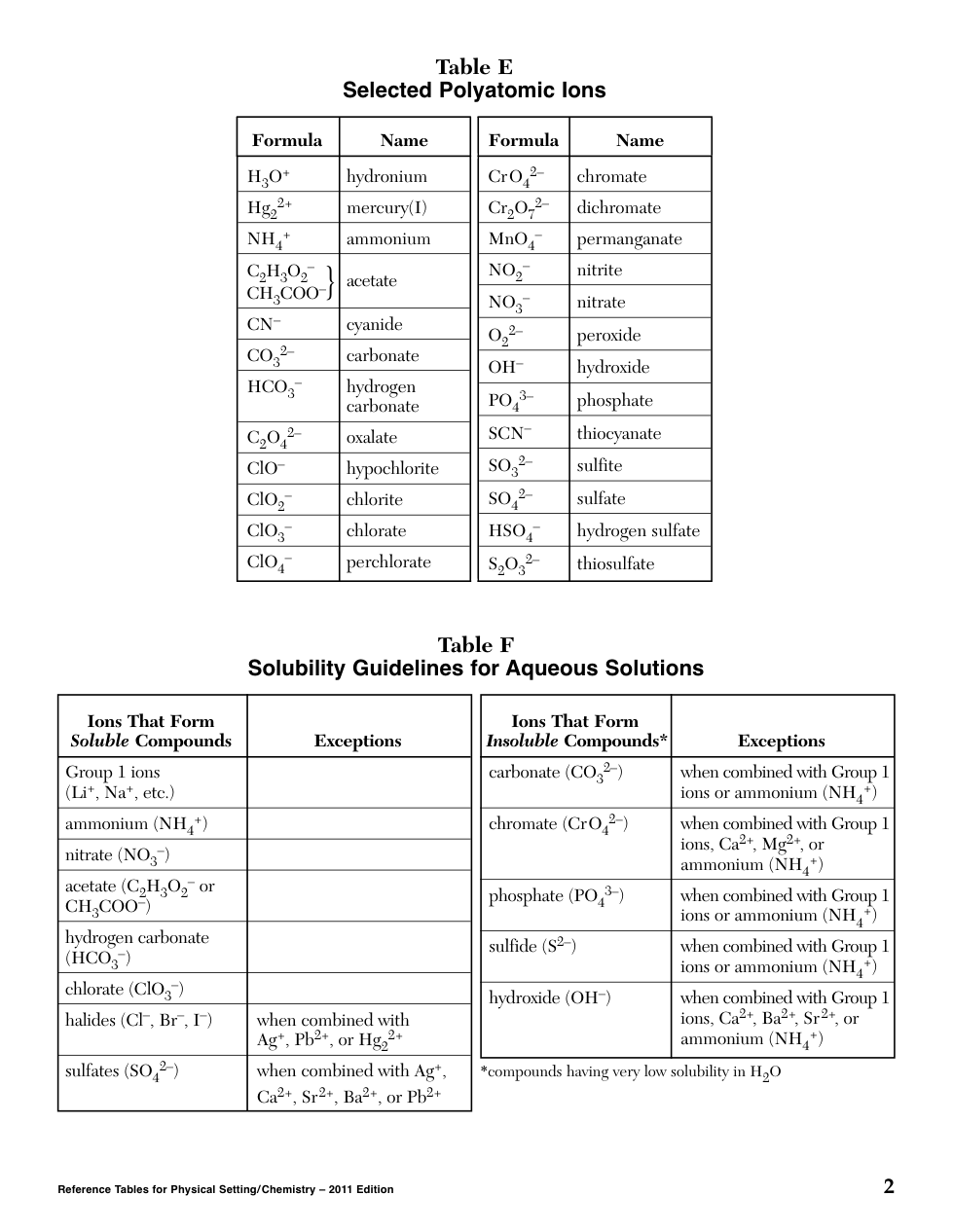
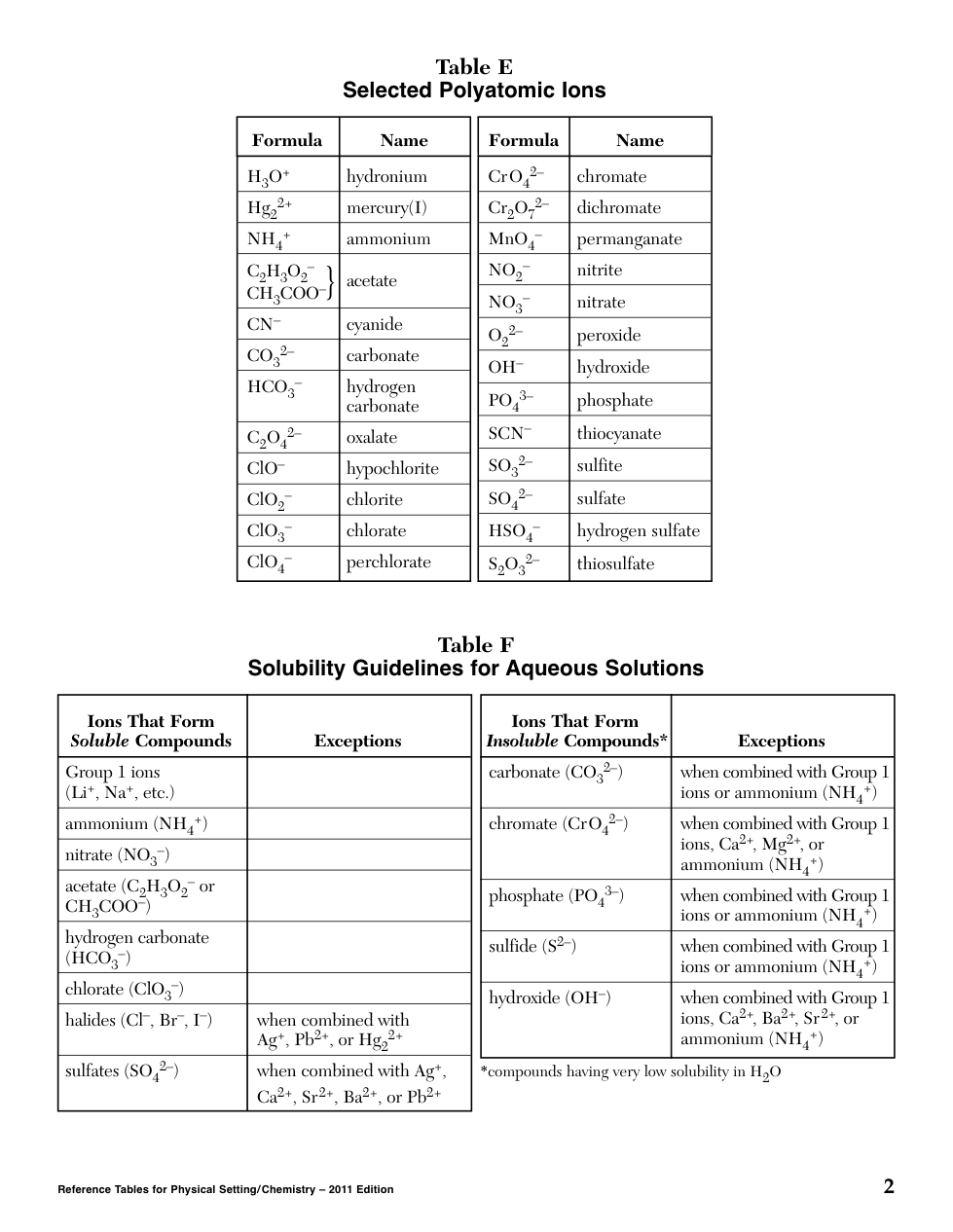
Based on Table F, which compound is most soluble in water?

1

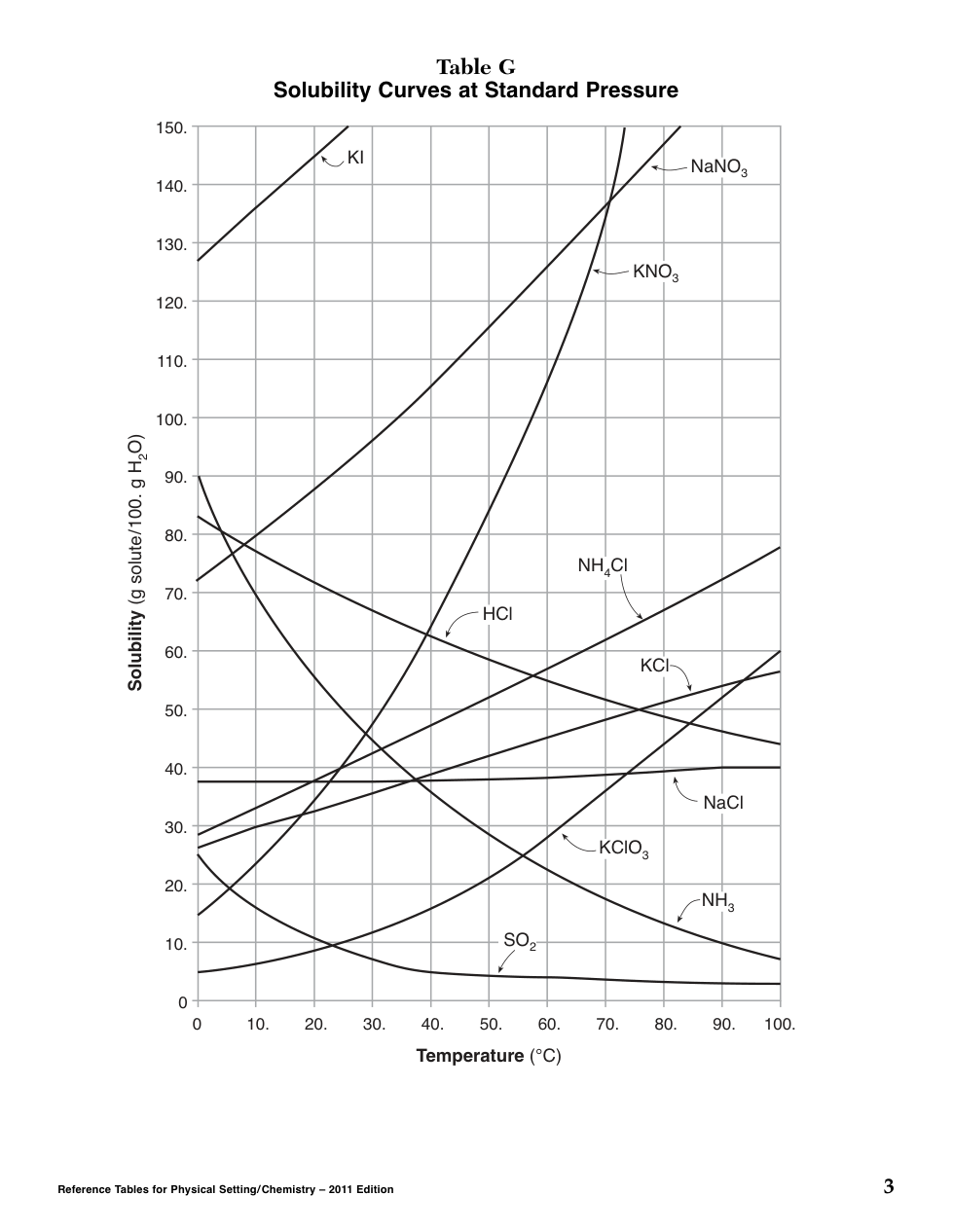
Based on Table G, which combination of solute and solvent will form a saturated solution when thoroughly mixed at 20.°C?

1

A solution has a mass of 2000. grams and contains 0.050 gram of dissolved solute. What is the concentration in parts per million of this solution?

1

A person with a body temperature of 37°C holds a cup of hot water in their hand. The temperature of the cup is 44°C. The air temperature is 22°C. Which phrase describes a heat transfer that occurs in this system?

1

What is the amount of heat absorbed to completely melt 26.2 grams of H2O(s) at 0°C?

1

The graph below shows a compound being cooled, beginning in the liquid phase.


Which statement describes the average kinetic energy and the potential energy between minute 2 and minute 6?

1

Which formula represents a saturated hydrocarbon?

1

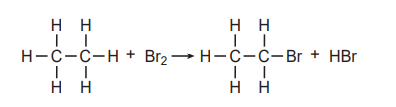
Given an equation representing a reaction:

Which type of organic reaction is represented by this equation?

1

In which compound does sulfur have an oxidation state of +4?

1

Which solution is the best conductor of electricity?

1

Given the incomplete equation representing a neutralization reaction:
Sr(OH)_2 + 2HNO_3 \rightarrow X + 2H_2O
What is the formula of the missing product X?

1

Given the equation representing a reversible reaction:
NH_3(aq) + H_2O(l) \rightleftharpoons NH_4^+(aq) + OH^-(aq)
The water molecule acts as an acid because it

1

Which nuclear equation represents beta decay?

1

Given the equations A and B:
Equation A: ^{2}_{1}H + ^{3}_{1}H \rightarrow ^{4}_{2}He + ^{1}_{0}n
Equation B: ^{235}_{92}U + ^{1}_{0}n \rightarrow ^{90}_{38}Sr + ^{143}_{54}Xe + 3^{1}_{0}n
Which type of nuclear reaction do these equations represent?

Part B-2
Directions (51-65): Record your answers in the spaces provided. Some questions may require the use of the 2011 Edition Reference Tables for Physical Setting/Chemistry.
Base your answers to questions 51 and 52 on the information below and on your knowledge of chemistry.
Compounds that contain the element boron, such as boric acid and sodium borate, produce a green flame when a sample of one of these compounds is placed in a laboratory burner flame. If this flame is viewed through a spectroscope, a bright-line spectrum is seen.
1

State how the bright-line spectra of known elements can be used to identify an unknown element whose bright-line spectrum was viewed through a spectroscope.

1

State, in terms of electrons in shells, why the electron configuration 2-2-1 is an excited state electron configuration of a boron atom.

Base your answers to questions 53 through 55 on the information below and on your knowledge of chemistry.
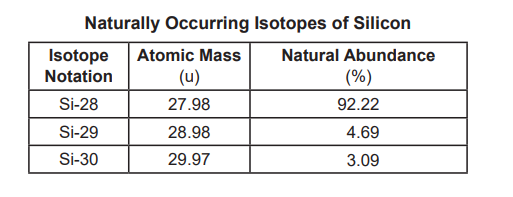
Silicon is an element in Group 14 on the Periodic Table. The atomic mass and natural abundance for the three naturally occurring isotopes of silicon are shown in the table below.

1

Draw a Lewis electron-dot diagram for an atom of silicon in the ground state.

1

Compare the energy of an electron in the first shell of a silicon atom to the energy of an electron in the third shell of the same atom.

1

Show a numerical setup for calculating the atomic mass of the element silicon.

Base your answers to questions 56 through 58 on the information below and on your knowledge of chemistry.
The unbalanced equation below shows a reaction between nitrogen monoxide gas and oxygen gas to produce nitrogen dioxide gas.
NO(g)+O_2(g) \rightarrow NO_2(g)
1

State, in terms of reactants and product, why this reaction is a synthesis reaction.

1

Balance the equation in the drawing space for the reaction, using the smallest whole-number coefficients.

1

Determine the percent composition by mass of oxygen in the product, NO_2 (gram-formula mass = 46 g/mol).

Base your answers to questions 59 and 60 on the information below and on your knowledge of chemistry.
The ionic radii of four Group 17 elements are given in the table below.


1

Identify the noble gas that has atoms in the ground state with the same electron configuration as a Br− ion in the ground state.

1

State, in terms of electrons, why the ionic radius of a Group 17 element is larger than the atomic radius for the same element.

Base your answers to questions 61 and 62 on the information below and on your knowledge of chemistry.
The diagram below represents two sealed, rigid containers and the conditions of pressure, volume, and temperature for each container. Container A is filled with N_2(g) and container B is filled with O_2(g).


1

Explain, in terms of the strength of intermolecular forces, why the gas in container B at standard pressure has a higher boiling point than the gas in container A at standard pressure.

1

In the space below, show a numerical setup for calculating the pressure if the gas in container B is cooled to standard temperature.

Base your answers to questions 63 through 65 on the information below and on your knowledge of chemistry.
The table below shows the formulas of three organic compounds, and a chemical name for two of the compounds.


1

Identify the element in these three compounds that allows them to be classified as organic compounds.

1

Identify the class of organic compound to which compound 1 belongs.

1

Write a chemical name for compound 2.

Part C
Directions (66-85): Record your answers in the spaces provided. Some questions may require the use of the 2011 Edition Reference Tables for Physical Setting/Chemistry.
Base your answers to questions 66 through 69 on the information below and on your knowledge of chemistry.

The Periodic Table of the Elements has changed over the past 150 years. During this time, many elements have been added as they were discovered. The elements 113, 115, 117, and 118 in Period 7 were named in 2016. Their official names have been approved by the International Union of Pure and Applied Chemistry (IUPAC). The table below lists the names, symbols, and atomic numbers for these four elements.


1

Identify the element in this table that is located on the Periodic Table of the Elements in the group classified as noble gases.

1

Explain, in terms of valence electrons, why the elements nihonium and tennessine would be expected to differ in their chemical properties.

1

Describe the general trend in first ionization energy values as the five elements above moscovium in Group 15 on the Periodic Table of the Elements are considered in order of increasing atomic number.

1

State, in terms of protons, why tennessine is listed before oganesson in Period 7 on the Periodic Table of the Elements.

Base your answers to questions 70 through 73 on the information below and on your knowledge of chemistry.

Hydrogen gas is needed for many industrial chemical reactions. An equilibrium system that includes the use of a catalyst produces hydrogen from methane and steam is shown in equation 1 below.
Equation 1: CH_4(g) + H_2O(g) + 210 \text{ kJ} \rightleftharpoons CO(g) + 3H_2(g)

Another equilibrium system produces hydrogen gas as represented by equation 2 below.
Equation 2: CO(g) + H_2O(g) \rightleftharpoons CO_2(g) + H_2(g) + energy
1

Compare the rate of the forward reaction to the rate of the reverse reaction for the equilibrium system at equilibrium represented by equation 1.

1

State how the equilibrium shifts when the temperature of the equilibrium system at equilibrium represented by equation 1 is increased.

1

State, in terms of activation energy, why the catalyst increases the rate of the forward reaction represented in equation 1.

1

On the labeled axes below, draw a potential energy diagram for the forward reaction represented in equation 2.

Base your answers to questions 74 through 77 on the information below and on your knowledge of chemistry.

The diagram and balanced ionic equation below represent an operating voltaic cell.


1

State the form of energy that is converted to electrical energy during the operation of this voltaic cell.

1

Identify one metal from Table J that is more easily oxidized than copper and less easily oxidized than iron.

1

State the purpose of the salt bridge in completing the circuit in this cell.

1

Write a balanced equation for the half-reaction that occurs in the copper half-cell.

Base your answers to questions 78 through 81 on the information below and on your knowledge of chemistry.

In a laboratory investigation, a 0.010 M NaOH(aq) solution with a pH value of 12.00 is used to determine the molarity of a HCl(aq) solution. A 10.0-milliliter sample of the HCl(aq) is exactly neutralized by 20.0 milliliters of the 0.010 M NaOH(aq). During this laboratory activity, appropriate safety equipment is used and safety procedures are followed.
1

State the color of the indicator litmus in a sample of the original NaOH(aq) solution.

1

Determine the pH value of a solution that has a hydronium ion concentration 100 times greater than the original NaOH(aq) solution.

1

Identify the positive ion in the original HCl(aq) solution.

1

Determine the molarity of the HCl(aq) solution using the titration data.

Base your answers to questions 82 through 85 on the information below and on your knowledge of chemistry.

Spacecraft sometimes use a nuclear power source that produces electricity from the heat released by the decay of radioisotopes. Two radioisotopes that have been used in these nuclear power sources are plutonium-238 and americium-241. Both the Pu-238 and Am-241 emit alpha radiation and gamma radiation. The half-life of Am-241 is 432.7 years. Other sources of electrical energy for some spacecraft have been solar panels and batteries.
1

Determine the fraction of Am-241 remaining from an original sample after 865.4 years.

1

Compare the penetrating power of the alpha particles to the penetrating power of the gamma radiation.

1

Complete the nuclear equation for the alpha decay of Pu-238 by writing a notation for the missing nuclide.

1

Compare the energy released by the radioactive decay of 1.0 kilogram of Pu-238 in this nuclear power source to the energy released by 1.0 kilogram of chemical reactants in a battery.