Base your answers to questions 1 through 5 on the information below and on your knowledge of biology.
Carbon! Where Does It Come From? Where Does It Go?
On Earth, carbon compounds are found in the oceans, atmosphere, and living organisms, as well as stored in rocks and sediments. Earth and its atmosphere can be considered a closed system. The amount of carbon in different locations within Earth’s system is always changing.
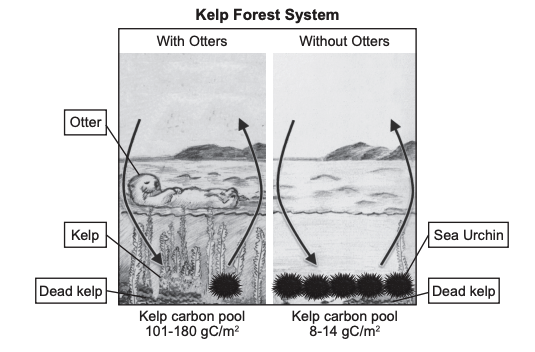
Sea otters help maintain the carbon balance in their ecosystem. Otters eat sea urchins. Eating sea urchins is important, as sea urchins are herbivores that can destroy a kelp forest. Kelp are large autotrophic algae that grow much faster than most plants. When kelp die, they sink into the deep ocean. The low oxygen conditions of the sea floor cause decomposition to be slow or incomplete.
Scientists calculated the carbon pool (how much carbon kelp stores) with and without sea otters, as shown in the model below.

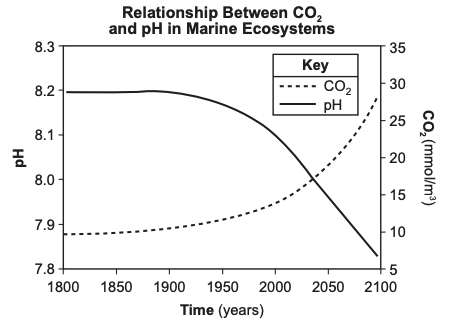
Increased atmospheric carbon dioxide has been linked to changes within marine ecosystems. When
The graph below shows the relationship between atmospheric

Which claim about the kelp carbon pool is best supported by evidence from the information and the model above?
The following diagram shows some information about the cycling of carbon.

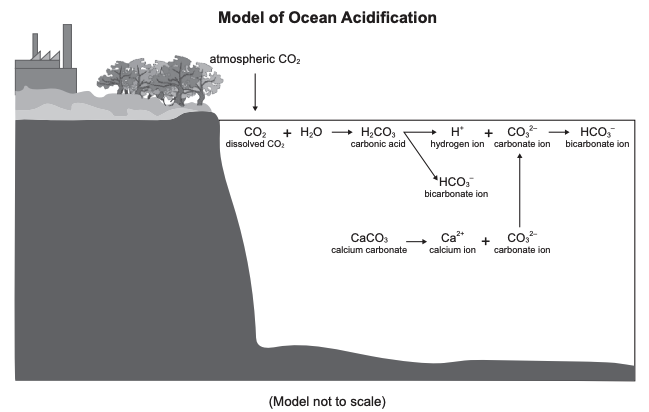
The model below shows the equation for how sea urchins make their shells.
Calcium ions and carbonate ions produce calcium carbonate.
As ocean acidification increases, the amount of available carbonate ions decreases. Use the model and information provided to describe how the cycling of carbon between the biosphere and at least one other sphere is affected as environmental conditions change.
Base your answers to questions 6 through 10 on the information below and on your knowledge of biology.
Drinking Water Is Just The Beginning!
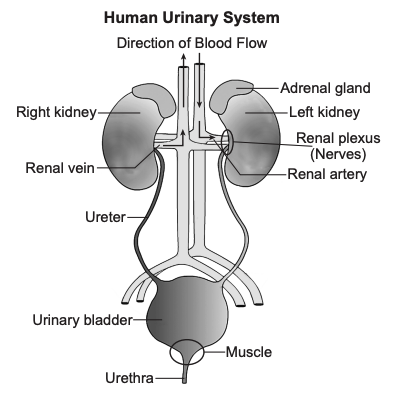
The amount of water taken in must be in balance with the amount lost. The urinary system is involved in maintaining the salt and water balances within the body.
Human Urinary System

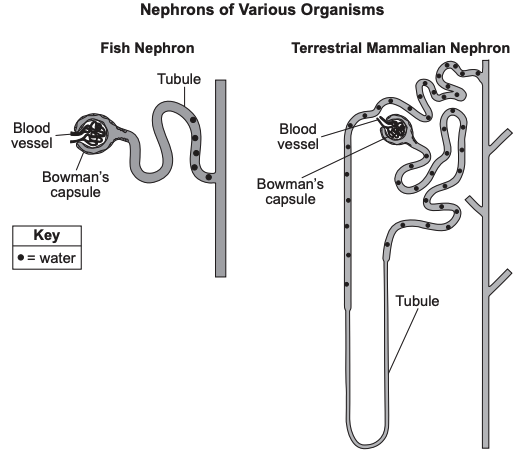
Each kidney is composed of about a million waste-filtering structures known as nephrons. Water is reabsorbed through some parts of the nephron, such as the tubule. The model below shows the structure of a nephron in two organisms.

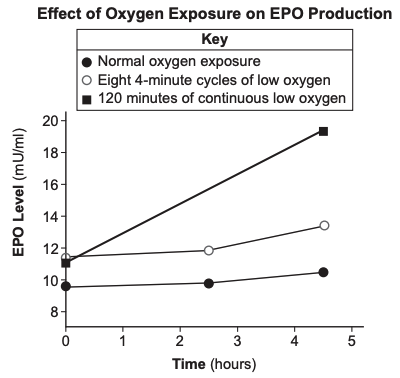
Another function of the kidney is to aid in regulating the number of red blood cells. The kidneys produce a protein known as Erythropoietin (EPO) that stimulates the increased production of red blood cells.
The graph below shows the results of a study. Participants were exposed to different conditions prior to time zero, then EPO levels were measured over a 4.5-hour time period.

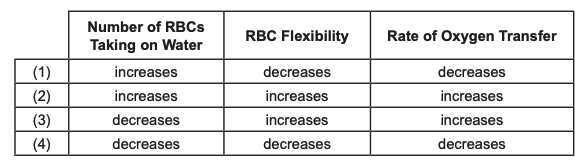
In addition to their other functions, red blood cells (RBCs) have the capacity to carry water. The surface of the cell contains structures called aquaporins, which transport water across cell membranes. Due to their unique cell structure, RBCs are able to expand up to 74% or shrink up to 40% compared to the original cell size.
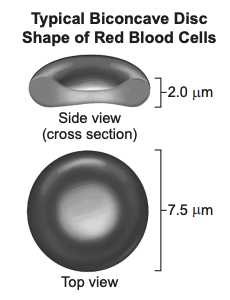
RBCs typically have a biconcave disk shape. A scientific study examined the effect of changing the RBC shape and membrane flexibility on its ability to transfer oxygen. For this study, when the RBC membrane was less flexible, the oxygen transfer capacity decreased by 18%. When the RBC was more flexible, the oxygen carrying capacity increased by 21%. When RBCs take on water their membrane initially becomes more flexible.

Using the information provided, describe the evidence to support the claim that exposure to low oxygen levels results in a feedback mechanism that allows the body to maintain homeostasis.
Base your answers to questions 11 through 16 on the information below and on your knowledge of biology.
Heads or Tails?
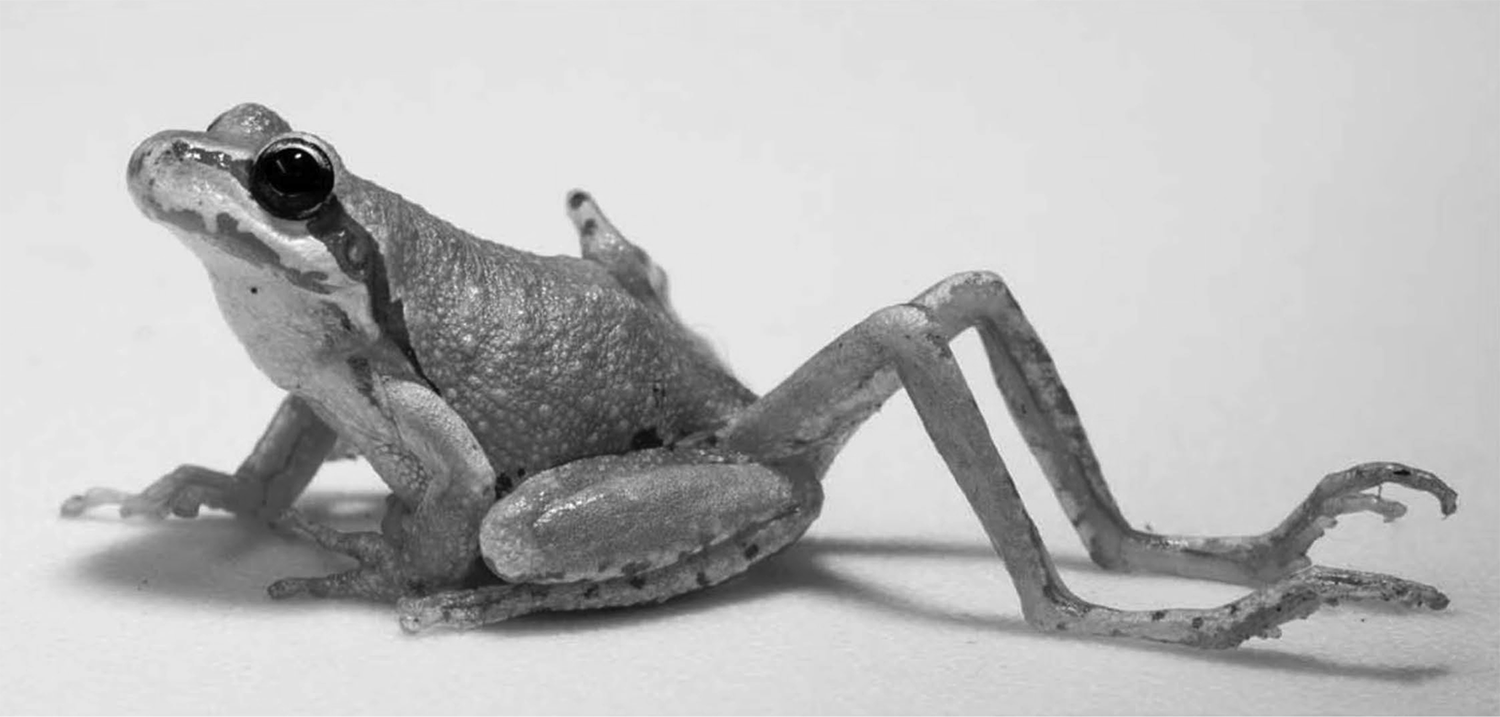
In the mid 1990s, people across several states were finding large numbers of frogs and other amphibians with extra limbs. Possible explanations regarding the cause of these abnormalities ranged from UV radiation, chemical contaminants in the water, parasites, or even airborne substances.
Pacific Chorus Frog with Extra Legs

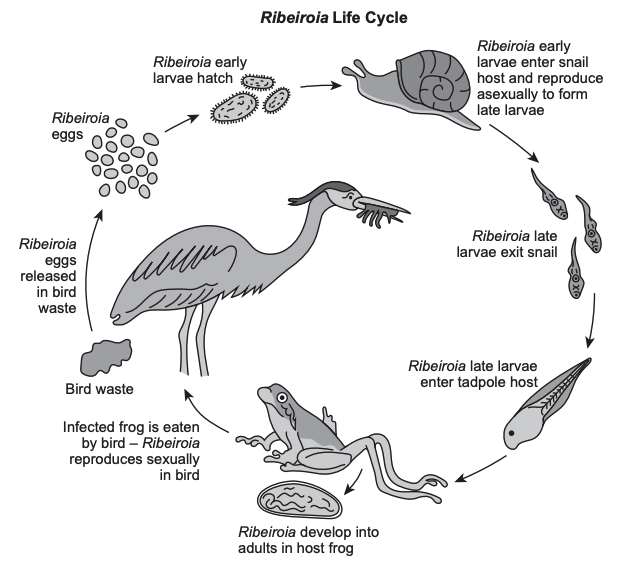
After further research, scientists discovered that these deformities in frogs were not caused by genetic mutations. The actual cause was a parasitic flatworm called Ribeiroia. Ribeiroia completes a complex life cycle by inhabiting several hosts. This life cycle is summarized in the diagram below.

Hox genes are an important group of regulatory genes that help determine the body plan and head-to-tail orientation of animals in their early stages of development. High concentrations of retinoic acid have been found to influence the activity of Hox genes.
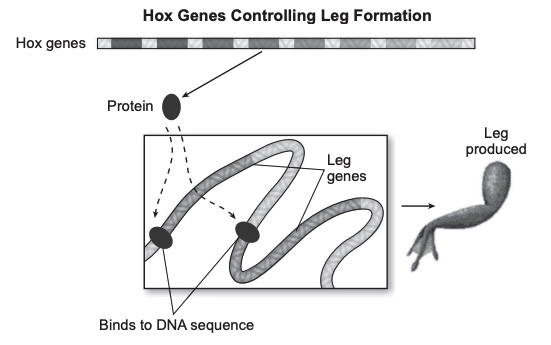
The diagram below shows how proteins produced by the activated Hox genes attach to DNA sequences that act as molecular switches to turn large numbers of different genes on.

Scientists have found that when the Ribeiroia parasite enters the frog tadpole, it burrows into the limb bud which develops into the frog’s leg. The levels of a chemical called retinoic acid increase rapidly in the limb bud of the tadpoles due to the parasitic infection.
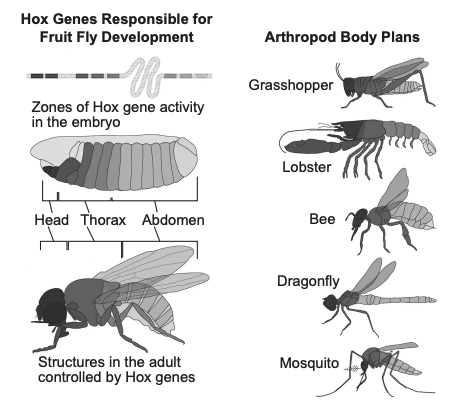
Hox genes are also found in arthropods. The diagrams below show some information about the Hox genes and body segmentation in a fruit fly. The body plans for other arthropod species are also shown. The differing shades of gray indicate the Hox genes responsible for each body segment’s development.

Hox genes are also present in mammals and other vertebrates to produce specific body parts in the correct orientation. Specific Hox genes from a mouse and fruit fly can be interchanged.
Describe genetic and physical evidence that would support the claim that all of these arthropods share a common ancestor.
Construct an explanation for why typical functioning eyes form in a mouse and a fly when specific Hox genes that activate eye development are interchanged.
Base your answers to questions 17 through 21 on the information below and on your knowledge of biology.
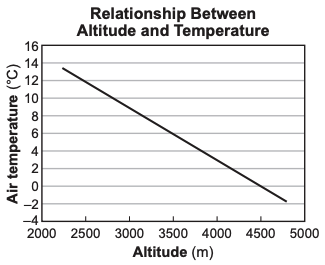
The yak is an herbivore that lives in the high altitude of the Tibetan Plateau, located in the Himalayan Mountains. They inhabit the Tibetan Plateau at elevations between 3,000 and 5,000 meters. Yaks have a large heart and lungs, as well as a specialized hemoglobin in the cells of their blood that enables them to extract more oxygen from the air.


A gene called EPAS1 is involved in allowing animals to respond to a low oxygen environment. Scientists studied this gene in yaks. They found that yaks having a certain allele of the gene had a greater amount of hemoglobin, which transports oxygen through the body. This allele has a small change in nucleic acid sequence from other alleles of the EPAS1 gene found in yak populations.
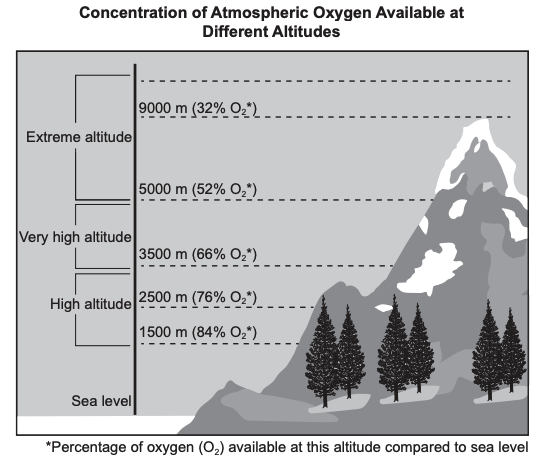
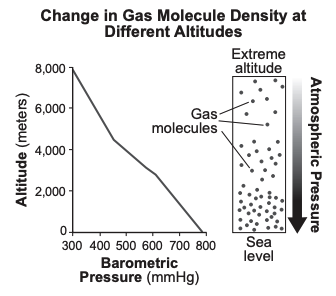
Plants that yaks eat grow under stressful conditions. Decreased atmospheric pressure results in changes in the concentrations of gases, as represented below.

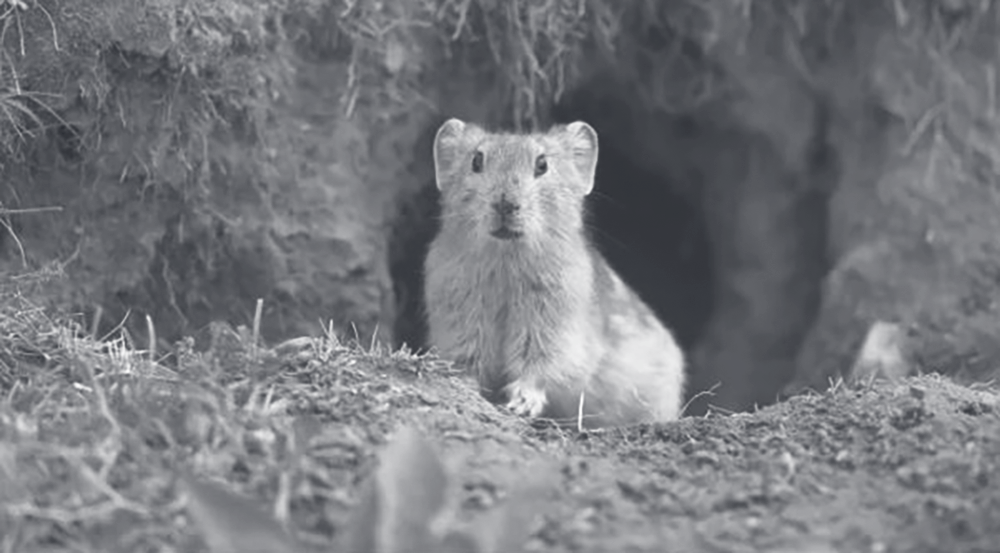
The pika is another herbivorous mammal species that inhabits the Tibetan Plateau. Pika move quickly and spend much of their time foraging for food and keeping a lookout for predators. They are small (5–9 inches long), live in systems of underground tunnels that they dig and maintain, and lack a large heart and large lungs.
The photograph and graph below show some information about the Tibetan Plateau.


Other organisms that are part of the Tibetan Plateau ecosystem include carnivores such as wolves, eagles, and snow leopards.
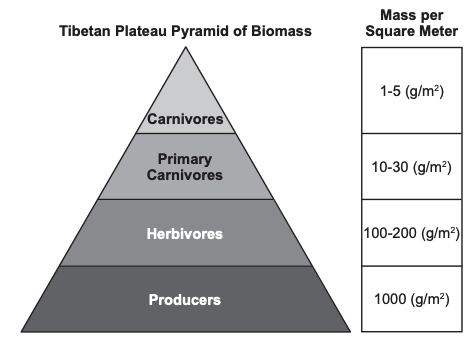
The model below shows some approximate biomass at each trophic level of the Tibetan Plateau ecosystem.

Using evidence provided, construct an explanation that describes how natural selection has led to the development of an adaptation within yak populations that enable them to survive in their environment.
Construct an explanation based on evidence that natural selection leads to a behavioral adaptation that pika possess that would help them to survive in the Tibetan ecosystem.
Use the evidence provided to make a claim about how energy flow among organisms in the Tibetan Plateau ecosystem affects biomass.
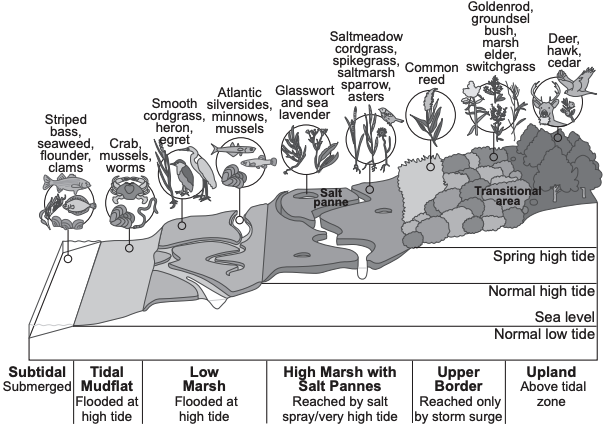
Which claim best describes the complex interactions that would have the greatest immediate effect on populations of smooth cordgrass in the low salt marsh?
Base your answers to questions 28 through 32 on the information and diagrams below and on your knowledge of biology.
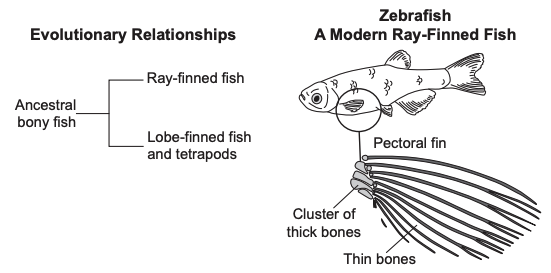
Tetrapods include all animals with backbones that have four limbs that end with digits (fingers and toes). Some tetrapods, such as whales and snakes, do not have four obvious limbs but are included because they have a four-limbed ancestor.
The front limbs of tetrapods are believed to have evolved from the pectoral fins of an ancestral bony fish.

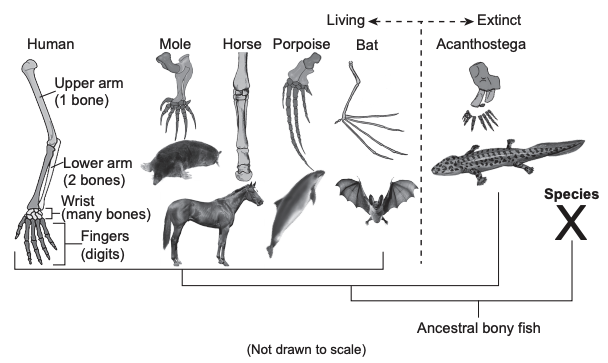
The diagram summarizes some of the current structural and fossil information regarding front limb evolution in some living animal species and some extinct water-dwelling animal species.
Evolution of Tetrapod Front Limbs

Scientists are searching for transitional fossils to provide evidence that land-living tetrapods evolved from bony fish. This missing species is represented by Species X on the Evolution of Tetrapods Front Limbs diagram. In 2004, fossilized remains of a possible contender were discovered in Canada. It was named Tiktaalik. Tiktaalik was a large, fish-like organism that lived about 385 million years ago, when the seas were crowded with many species of fish.
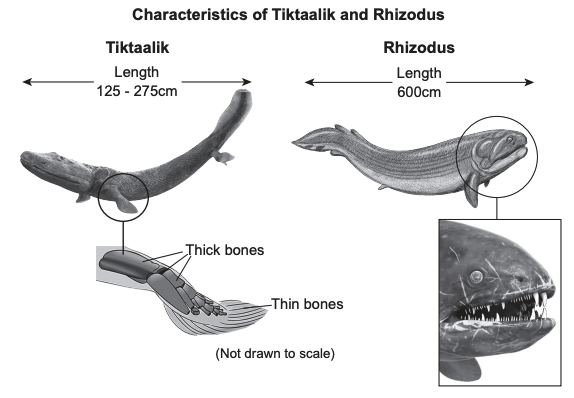
It is believed that Tiktaalik lived in shallow, warm water. During this time period the first plants were taking over the land and creeping insects and spiders flourished. Tiktaalik could spot prey on the land and in the water using its eyes, located on top of its head. It could also use its very strong front fins to chase and catch prey on the shore. Although it was a large animal, it is likely that Tiktaalik was also the prey for even larger predatory fish, such as the gigantic Rhizodus, which had two massive fangs located at the front of its jaw.
The diagram below shows some information about possible extinct organisms.

Construct an explanation, based on evidence, that the evolution of limb development can be the result of environmental factors.
Use patterns in the front limb bone structure to support the researcher's claim that Tiktaalik represents an ancestral form between ray-finned fish and the early tetrapod, Acanthostega.
Base your answers to questions 33 through 37 on the information below and on your knowledge of biology.
Does It Matter?
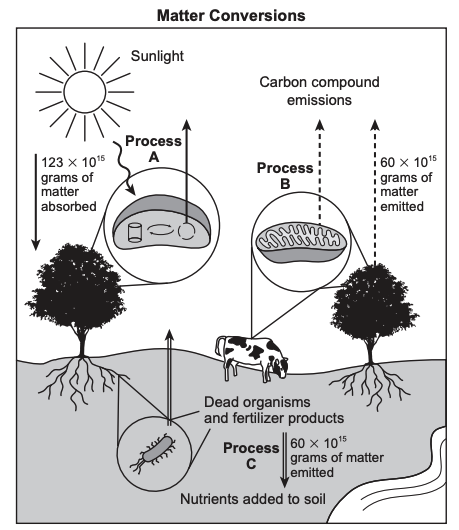
The carbon used by plants is moved between living organisms, the minerals in the soil, the hydrosphere, and the atmosphere through processes in the carbon cycle.
Matter Conversions

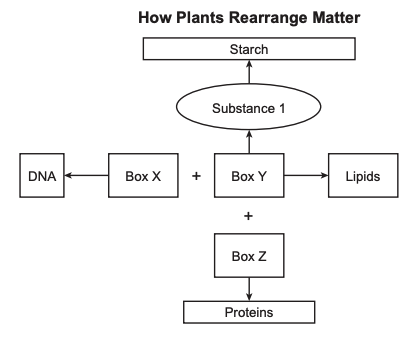
Plants rearrange matter to produce other needed compounds. The model below shows some of the compounds that plants synthesize. Boxes X, Y, and Z represent element(s) used to make these compounds.

Using information from the model, which statement correctly identifies how the movement of matter in this ecosystem provides energy for different organisms?
Base your answers to questions 38 through 42 on the information below and on your knowledge of biology.
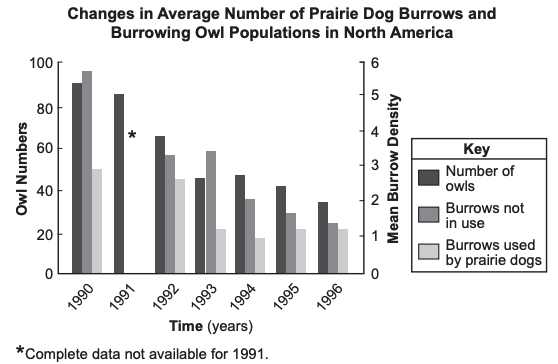
The black-tailed prairie dog is a keystone species because it maintains the complex web of relationships in North America’s central grassland ecosystems. They feed primarily on plants that are high in moisture and nutrients. As they eat the plants, they drop leaf clippings, which add nutrients to the soil. They construct burrows, which when abandoned can provide homes to rattlesnakes, burrowing owls, and insects. Prairie dogs are the primary prey for many organisms, including the black-footed ferret, one of the rarest and most endangered animals in North America.
The prairie dog population of North America’s central grassland is on a steady decline. The most significant threats facing prairie dogs are the conversion of rangeland to cropland, urban development, hunting, and use of poison because they are considered a pest to local farmers and ranchers.
The graph below shows some data collected in a study of 17 prairie dog colonies in Nebraska.

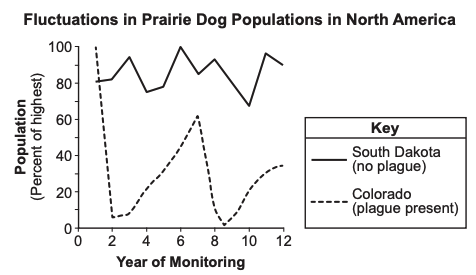
A disease known as the Sylvatic Plague is caused by a bacterium that is carried by fleas on rats. The disease targets small mammals, including the prairie dog. This disease entered the western United States as a consequence of the shipping industry and has been spreading eastward. The graph below shows changes in the prairie dog populations observed in two different states during the 1990s.

Various methods of controlling this plague are being investigated. Two methods that have been found to be effective are described in the table below.
Vaccination | Burrow Dusting |
|---|---|
- Oral vaccine given as peanut butter-flavored tablet - Fights off infection for up to 9 months after becoming effective - Tablets must be eaten by the prairie dogs within 7 days of being dropped | - Insecticide powder is sprayed into prairie dog burrows - Kills fleas that carry disease that is transmitted to prairie dogs - Can reduce fleas for up to 2 years beginning immediately after spraying |
The location of the study is near residential areas and open ranges that are used to graze cattle and serve as habitats for wild animals. Researchers have been asked to make recommendations regarding which strategy would be the best to use to protect the prairie dog populations from the plague without negatively impacting the nearby areas.
Evaluate the claim that a significant decrease in the prairie dog population would have widespread effects by identifying a specific interaction between ecosystem components.
Describe the treatment, vaccination or burrow dusting, that will best protect the prairie dogs from the plague while considering the criteria and constraints of cost, safety, or reliability. Use specific information from the table to justify your choice of cost, safety, or reliability.
Base your answers to questions 43 through 48 on the information below and on your knowledge of biology.
Nature or Nurture?
During one winter in the 20th century, the Netherlands experienced a severe famine (a shortage of food). Some of the women that were in the early stages of pregnancy during the famine gave birth to children that surprisingly had average or even above-average birth weights, considering the poor nutrition of the mothers.
Scientists determined that the children whose mothers were in early pregnancy during the famine (children of the famine), had more obesity and chronic health problems in adulthood compared to their siblings that did not have this exposure. The children of the famine had changes in expression of some of their genes. One of these genes, known as IGF2 (insulin-like growth factor 2), codes for a hormone.
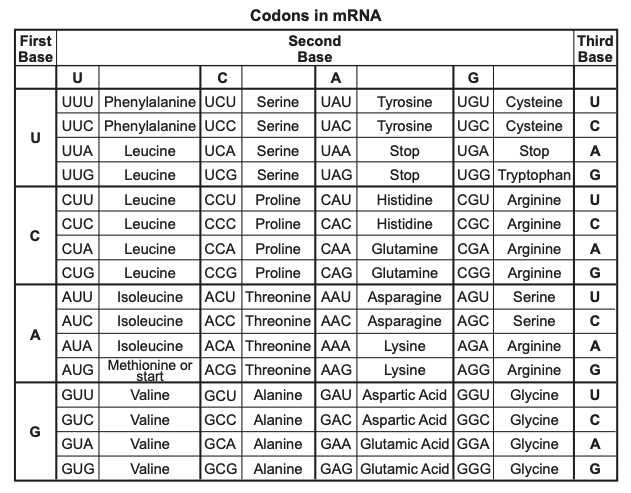
The codon chart below can be used to determine the amino acids that are coded for by a DNA sequence.

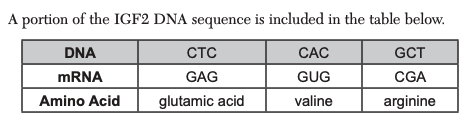
A portion of the IGF2 DNA sequence is included in the table below.

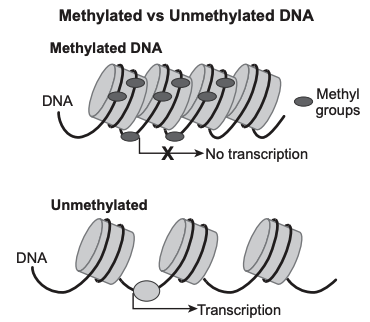
In a cell, DNA interacts with different molecules. It also interacts with methyl groups in a process known as methylation.
The IGF2 gene codes for a hormone that promotes fetal growth. The children of the famine had less methylation of the IGF2 gene than is typical in other children.
Researchers tracked the health of the children of the famine and their offspring for many years. The research findings showed similar results in their offspring.
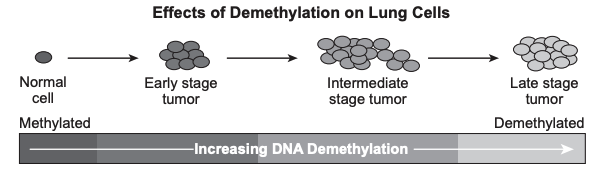
Besides famine during pregnancy, other environmental factors such as smoking nicotine can cause demethylation (removal of methyl groups) of portions of DNA responsible for cell division. The result of this demethylation is shown in the model below.

Construct an explanation based on evidence for how the structure of unmethylated DNA impacts the function of IGF2, resulting in greater birth weight.
Using evidence from the model describe how the disruption of the flow of information affects lung cells with demethylated DNA.
Which statement uses the model to describe how kelp contributes to a reduction of carbon entering the atmosphere?
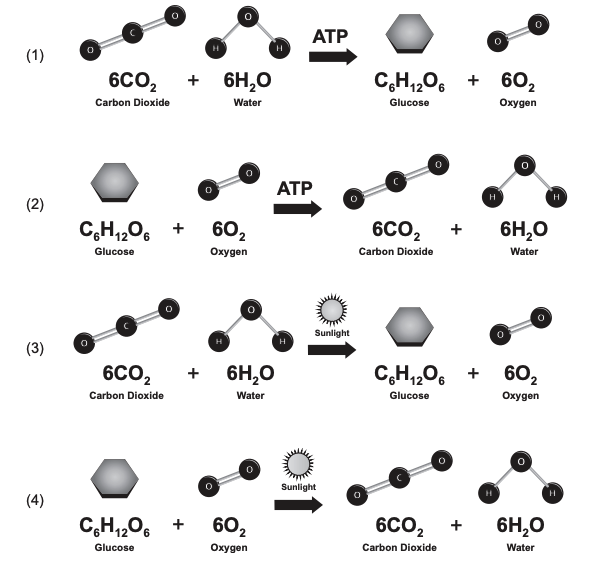
Which model identifies the process that converts light energy into chemical energy inside the kelp?

If the trend in atmospheric CO
Which statement describes how the organization of the urinary system and one other system interact to maintain homeostasis in the human body?
Based on evidence in the model, which statement explains that natural selection led to the evolution of the nephron’s structure and function in terrestrial mammals?
Which statement provides the best explanation for how red blood cells contribute to a feedback mechanism that maintains homeostasis?
What evidence would support the claim that consuming water after exercise helps an athlete’s body maintain homeostasis?

Which question could be asked in order to determine if the abnormalities seen in the frog legs were caused by an inherited mutation?
A student claims that the Ribeiroia parasites that cause the most severe limb abnormalities in frogs have a greater chance of survival and reproduction than those that do not. Which explanation best supports this claim?
Using the information above, which statement might best explain why the extra limbs grew in parasite-infected frogs?
Which question could be asked about the effect of retinoic acid levels on inheritance of the observed changes in the frogs?
What is the most likely origin of the change that resulted in this allele?
Which statement best explains why the carrying capacity for producers in extreme-altitude ecosystems is less than in sea-level ecosystems?
Base your answers to questions 22 through 27 on the information below and on your knowledge of biology.
Salt marshes are unique ecosystems located along an ocean shoreline, between the ocean itself and dry, upland ecosystems. They are important areas that filter water, protect coastlines, and provide essential habitat. Salt marshes can be affected by tides and weather events. Depending on a variety of factors, salt marshes can contain varied amounts of vegetation, which can influence the biodiversity and function of the salt marsh. The model below shows some information about a typical salt marsh.

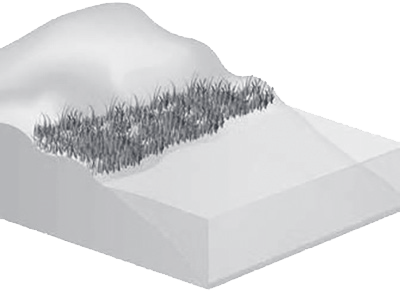
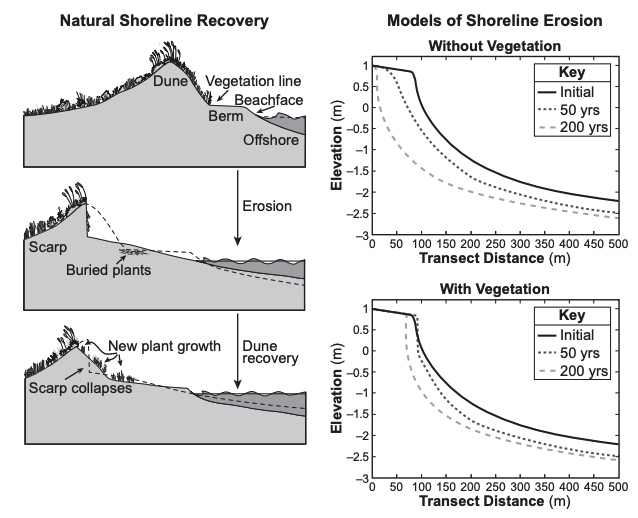
Erosion can affect shorelines, including salt marshes. Mathematical models often report shoreline erosion using transect distance. Transect distance measures the same sand dunes along the same line between two specific points. Due to the influence of tides on coastal zones, elevation also affects erosion. The models below show some information about factors that affect shorelines.
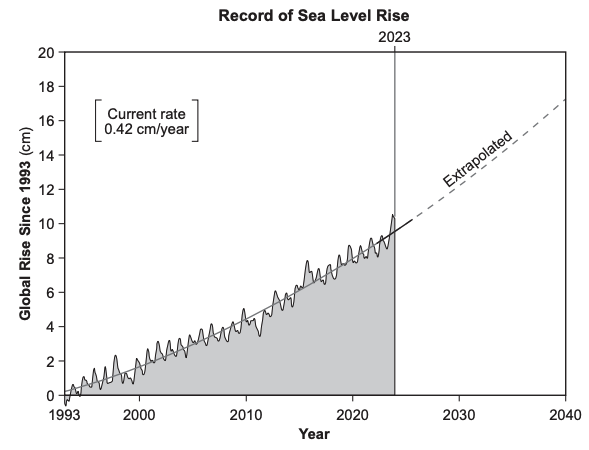
Global climate change may impact salt marshes and other coastal ecosystems. The graph below shows some data collected by NASA using satellites.
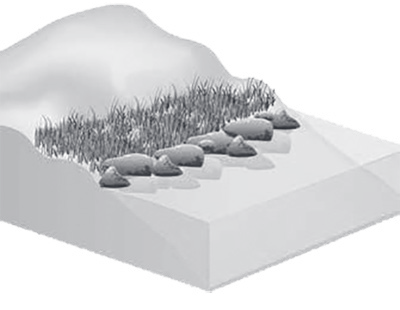
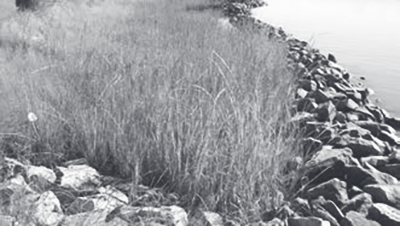
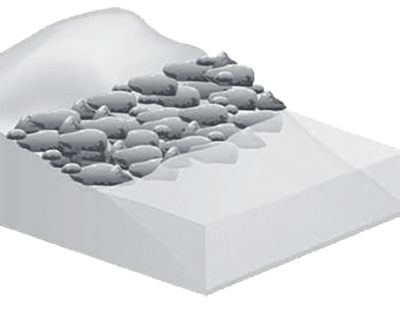
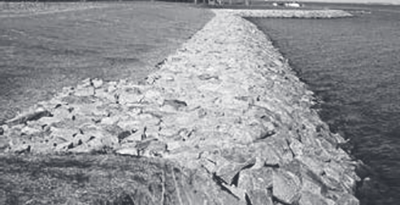
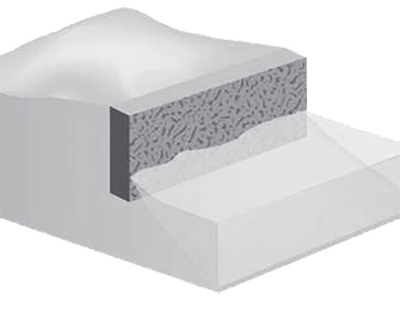
Strategies that mimic the natural surroundings are being developed to reduce erosion and restore shoreline ecosystems. The chart below shows some information about the characteristics of various options for shoreline restoration.
(zoom in on any images as needed)
Name | Living Shoreline | Harder Techniques | ||
|---|---|---|---|---|
Vegetation Only | Sills | Revetment | Bulkhead | |
|
|
|
| |
Description |
|
|
|
|
Optimal Conditions | Low energy wave environments | Low to moderate wave environments | Sites with preexisting hardened shorelines | High energy wave environments |
Material Options | Native plants | Stone and living reef (oyster, mussels) | Stone, rubble, concrete blocks or slabs, sand/concrete-filled bags | Steel, timber, concrete, carbon fiber |
Advantages |
|
|
|
|
Disadvantages |
|
|
|
|
Cost | $ | $$ | $$$$ | $$$ |
Operations & Maintenance Construction | $ | $ | $$ | $$ |
Water levels across the Great Lakes are primarily the result of natural, uncontrolled water supplies into the basin. In June 2019, Lake Ontario experienced record high water levels resulting from heavy rains and storms. Oswego, NY is a city located on the shoreline of Lake Ontario.
Significant damages and other impacts were experienced across the system. Concerns about shoreline loss ranged from loss of revenue from recreational activities in lakeside towns, such as boating, fishing, swimming, and fine dining to property loss for homeowners and businesses. Shoreline communities are seeking reliable ways to reduce property damages and maintain the beach town culture and natural recreational opportunities.
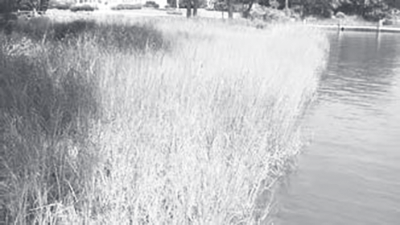
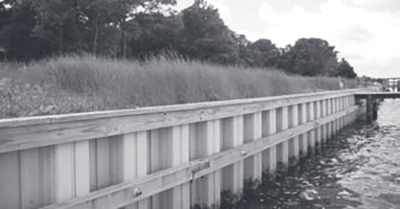
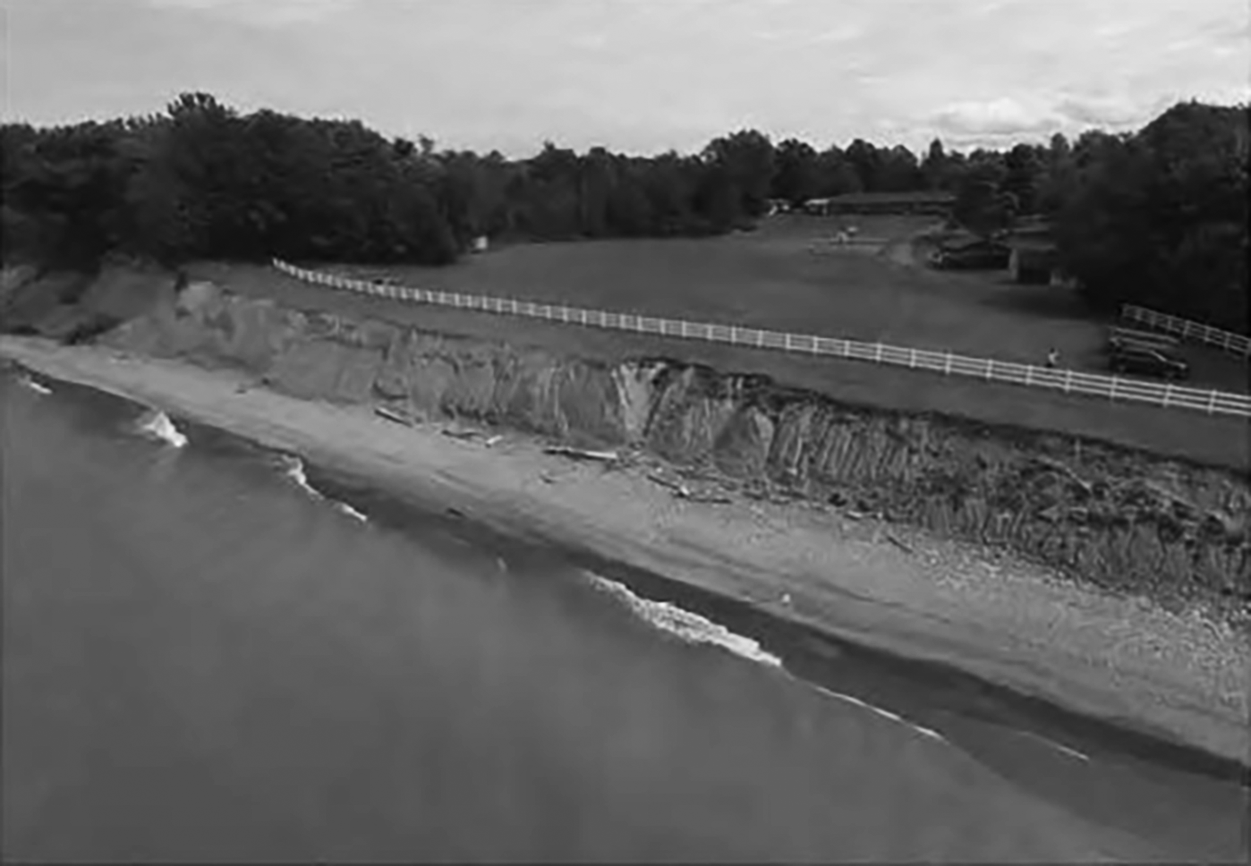
The photograph shows one shoreline in Oswego, NY after the 2019 high water event.
Using the information provided, which statement best describes how natural shoreline erosion affects the habitat’s carrying capacity at different scales?
Using the evidence provided, evaluate the claim that rising sea levels will impact the numbers and types of organisms that interact within a low marsh.
Which type of restoration project would promote the conditions necessary for the development of a stable ecosystem that would support complex interactions between the organisms living there?
Which claim best describes the complex interactions in a natural living shoreline that are affected by changing conditions, such as a severe storm?
Identify the best possible option for shoreline restoration in Oswego, NY from the Shoreline Engineering Solutions chart based on the associated cost, reliability, and aesthetics. Evaluate the social and environmental impacts of this solution using those criteria and their trade-offs.
What evidence could be used to support the claim that there are patterns in how front limbs evolved in descendants of ancestral bony fish?
Which statement below identifies the evolutionary relationships presented in the diagram?
What evidence supports the explanation that animals with traits well-suited to life on land evolved because of the environmental factors present 385 million years ago?
Using evidence from the model, construct an explanation for the role of Process C in the cycling of matter between living organisms in this ecosystem.
Which explanation best supports the claim that elements from Substance 1 in the model combine with different elements to form other carbon-based molecules?
Based on the information in all the models provided, which claim can be made about why Substance 1 is essential for plant metabolism?
Construct an explanation using quantitative evidence for how the cycling of matter in plants results in changes to carbon stored in the atmosphere and biosphere.
How did the number of prairie dog burrows affect the carrying capacity of burrowing owls in the area?
A claim was made that some of the prairie dogs in Colorado had an advantageous heritable trait that protected them from the plague. Which statement would provide evidence to support this claim?
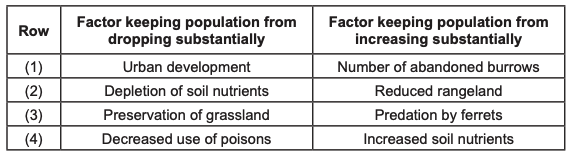
The South Dakota prairie dog population shows fluctuation within a range. Which row of the table identifies how different factors affect the carrying capacity?

Which question would help determine the role of DNA in passing genetic information that influenced birth weight from the mothers during the famine to their children?
A student claimed that changing CTC to CTG in the DNA would result in production of a different protein. Which explanation supports this claim?
Which claim is best supported by evidence that their offspring had similar health problems despite a lack of exposure to famine?
Which statement identifies a solution that researchers could use to decrease tumor growth and progression?