Log in
Sign up for FREE
arrow_back
Library
NYS Making Connections Lab
By Faith Schutt
star
star
star
star
star
Share
share
Last updated over 1 year ago
23 questions
Add this activity
zoom_in
1
2
zoom_in
5
Question 1
1.
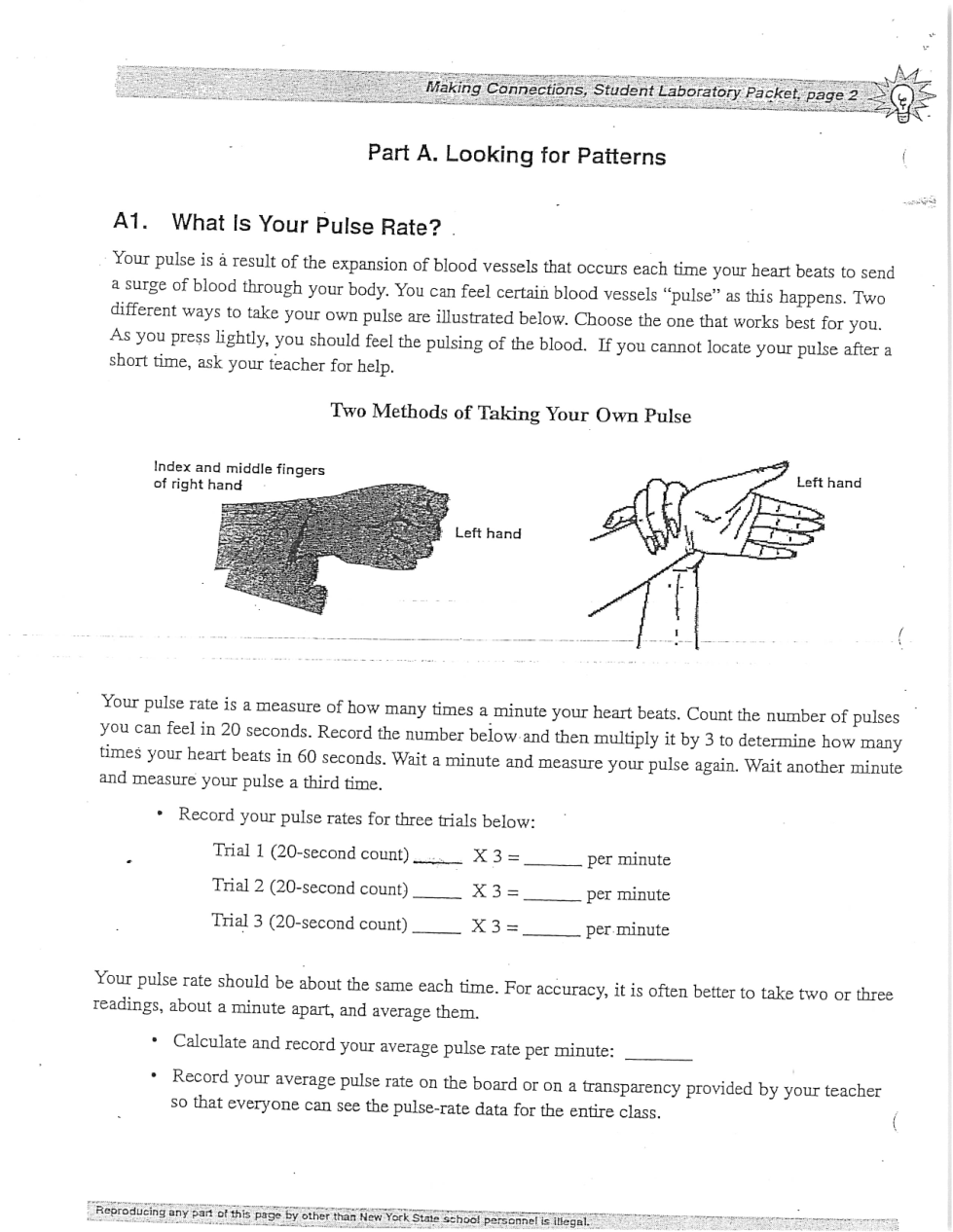
Use the area below to calculate your average pulse per minute.
visibility
View drawing
5
Question 2
2.
Calculate your average
3
4
zoom_in
5
Question 3
3.
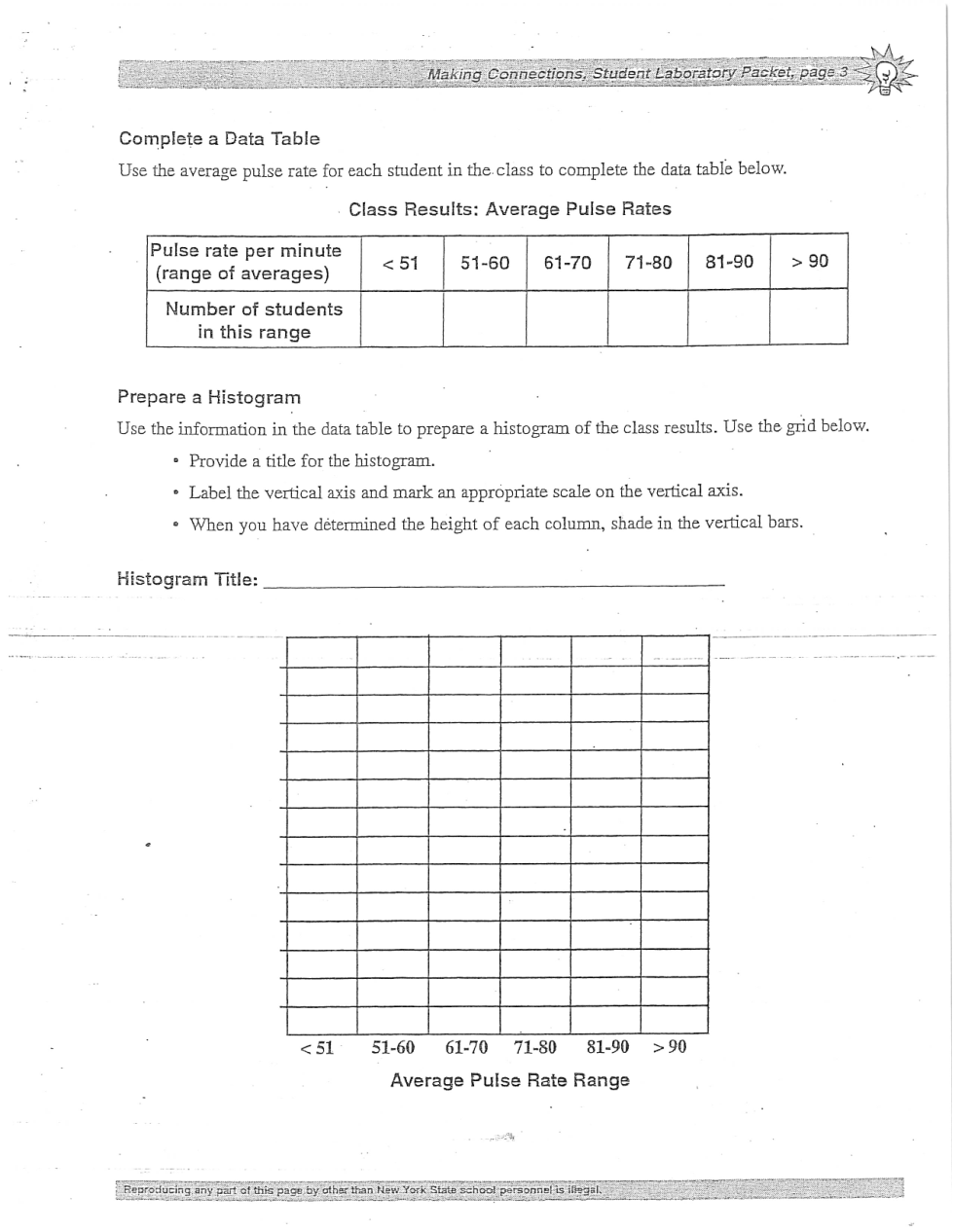
Use the area below to calculate the class results of average pulse rate.
visibility
View drawing
5
Question 4
4.
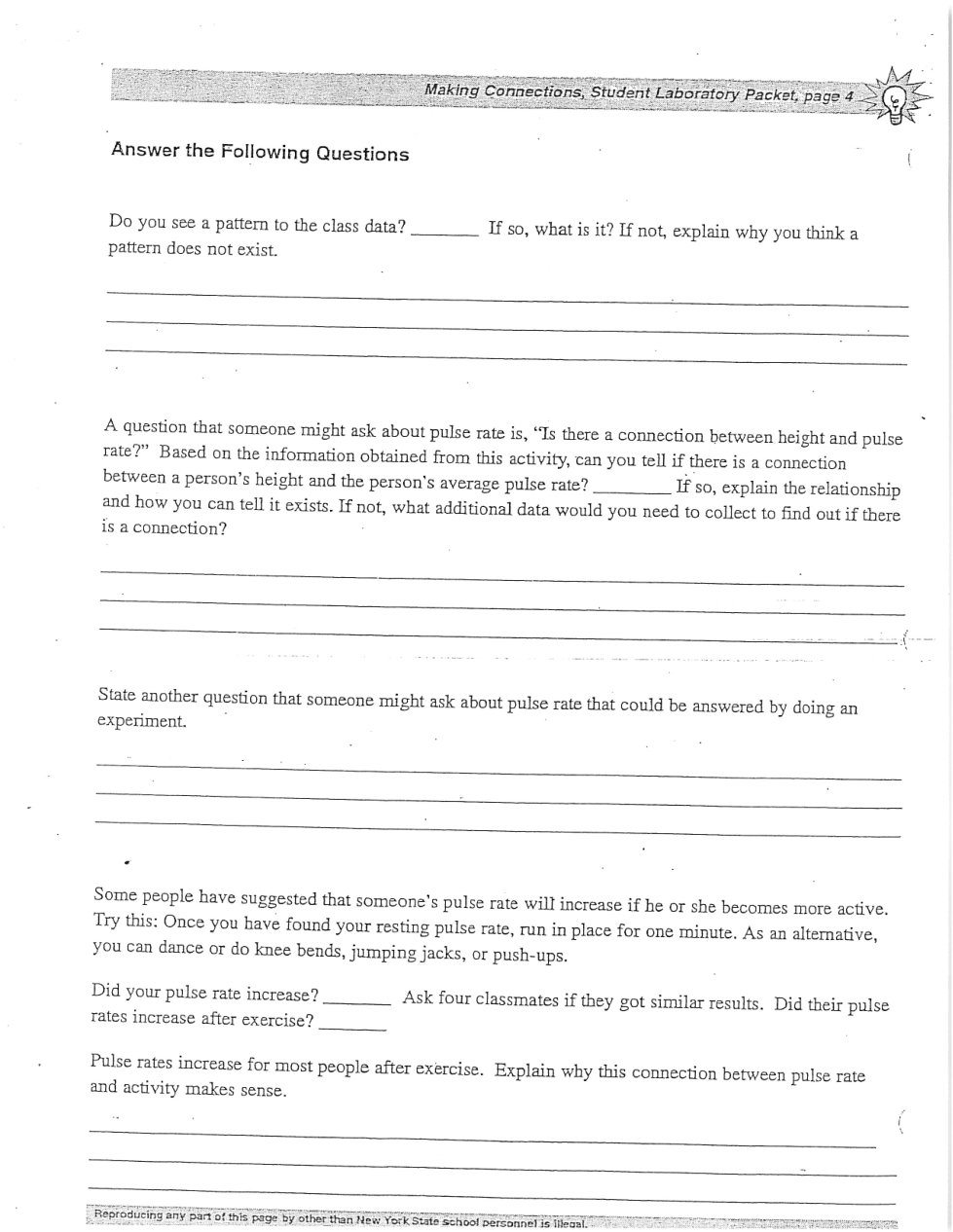
Use the area below to graph the class data recorded above.
visibility
View drawing
5
6
7
8
9
10
11
zoom_in
5
Question 5
5.
5
5
Question 7
7.
2
2
5
0
12
13
14
15
zoom_in
2
Question 12
12.
2
Question 13
13.
5
5
Question 15
15.
16
17
18
19
20
zoom_in
5
5
Question 17
17.
5
5
5
Question 20
20.
21
22
23
zoom_in
2
Question 21
21.
Student A
Student B
5
10
Question 6
6.
No, Heights were not recorded so no relationship can be determined.
Yes, as the pulse rate increases so does height.
No, The heights of students do not correlate to their pulse rate.
Yes, as a person grows their pulse rate will decrease
Question 8
8.
Yes
No
Question 9
9.
Yes
No
Question 10
10.
Pulse rate will increase with exercise because your cells need more carbon dioxide to make glucose and maintain homeostasis.
Pulse rate will increase with exercise because your cells need more carbon dioxide to help carry out life functions.
Pulse rate will increase with exercise because your cells need more oxygen to make ATP.
Pulse rate will increase with exercise because your cells need more oxygen to make glucose.
Question 11
11.
visibility
View drawing
Question 14
14.
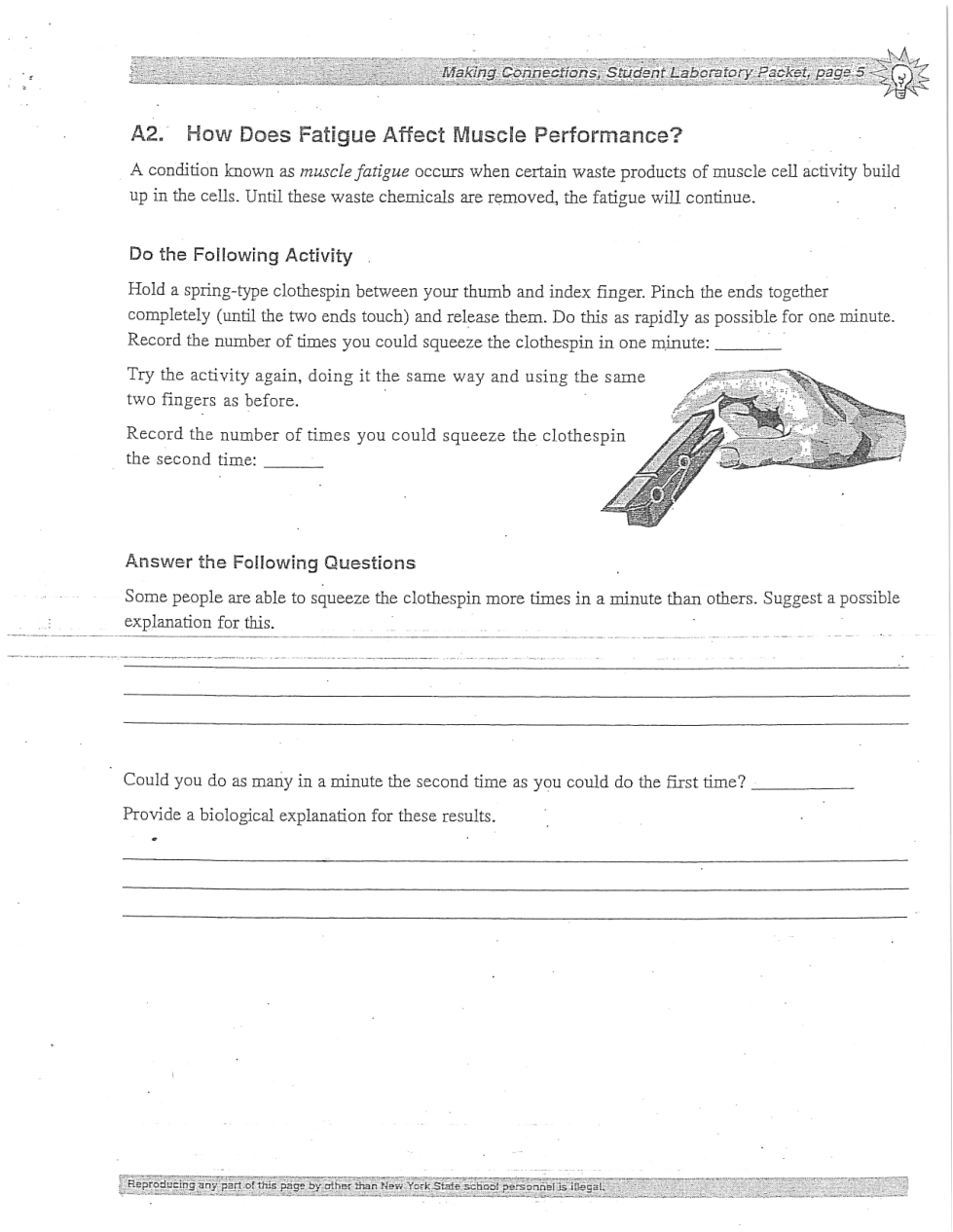
Some people are athletes and have more mitochondria in their cells and can make more ATP that can be used to squeese the clothespin.
Some people have more storred glucose in their body and are able to transform that into ATP to complete life functions
More oxygen is able to diffusion through the alveoli at the lungs providing the cells with the ability to produce more ATP
All of the above.
Question 16
16.
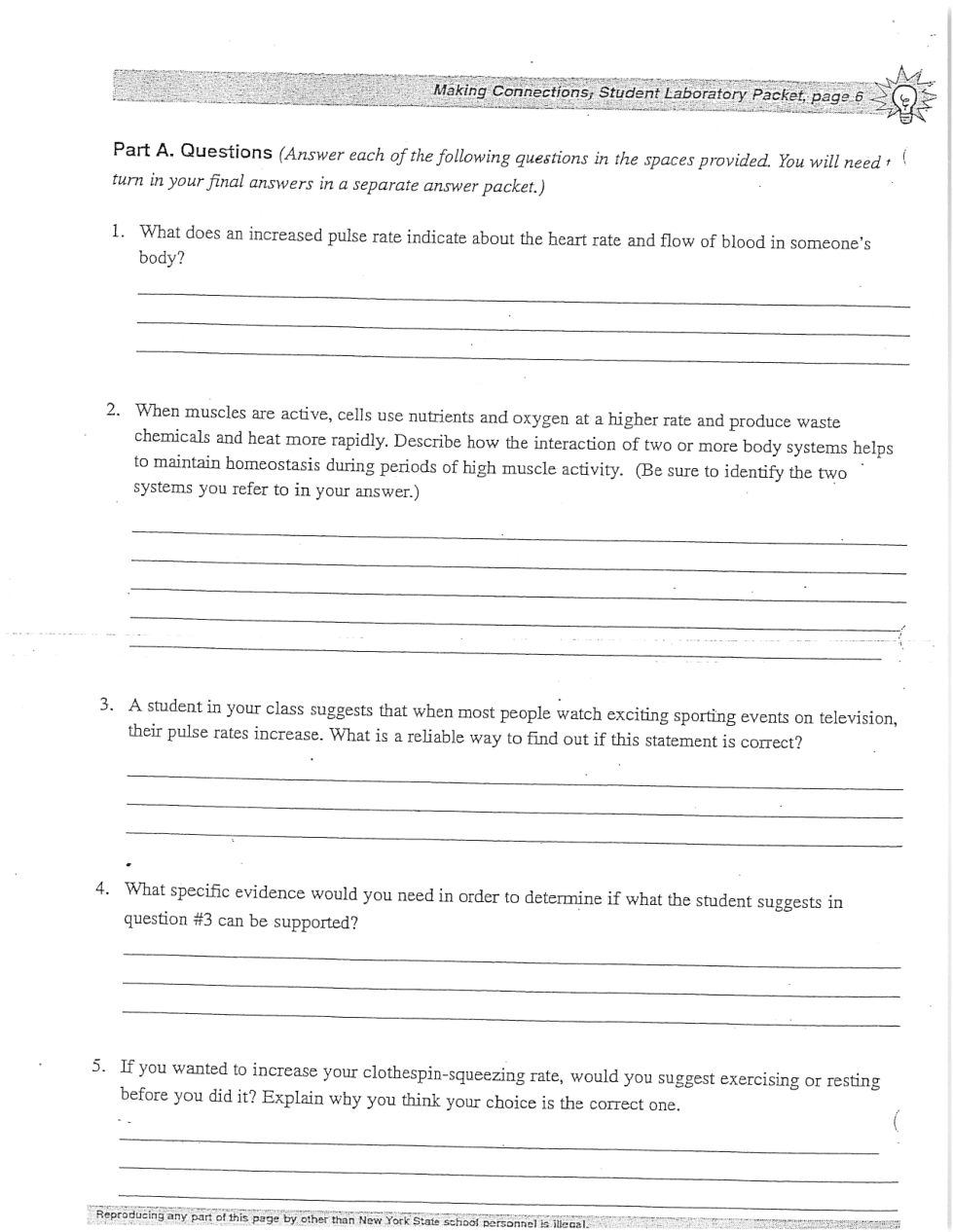
Increased pulse indicates an increased heart rate and and decreased blood flow in someones body.
Increased pulse indicates an decreased heart rate and and decreased blood flow in someones body.
Increased pulse indicates an decreased heart rate and and increased blood flow in someones body.
Increased pulse indicates an increased heart rate and and increased blood flow in someones body.
Question 18
18.
Have students run a mile and then take their pulse an hour later
Have students watch sports and take their pulse
Make an inference.
Perform a controlled experiment
Question 19
19.
Students average pulse rate after watching a sporting event.
Students average resting pulse rate.
Students average clothespin squeezes per minute.
Students height
Question 22
22.
have student A and B compete to see how many times they can squeeze a clothespin
have students run and take their pulse
none of these answers.
perform a controlled experiment
Question 23
23.
Include the following information in your experiment:
Question
Hypothesis
Independent Variable
Dependent Variable
Controlled Variables (3)
How you will analyze data
What results would be if they supported your hypothesis.