The diagram shows an experimental setup and its results after two weeks.
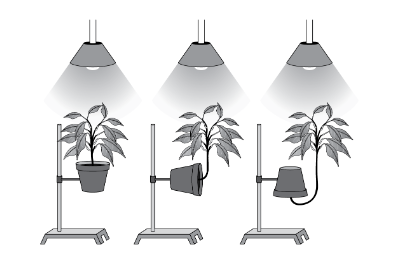
Which tropism is this experiment designed to test?
The diagram shows an experimental setup and its results after two weeks.
Which tropism is this experiment designed to test?
In which structure of the plant does gas exchange occur most frequently?
The diagram shows an experimental setup and its results after two weeks.
Which tropism is this experiment designed to test?
What is one reason that some plants have a strong scent?
What is one possible reason for seeds to have hooks or barbs?
A plant is adapted to a forest with little sunlight. Identify the BEST adaptation this plant might have to ensure its survival.
Which property of an animal’s mouth most strongly indicates whether the animal is a carnivore or a herbivore?
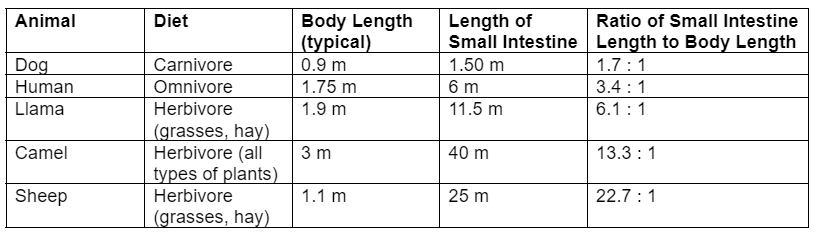
The small intestine is named small because it is relatively narrow and not because of its length. In fact, in mammals, the small intestine is the longest organ of the digestive tract. The small intestine has many coils or loops that allow it to pack into the abdominal cavity.
The table compares a typical body length and small intestine length for several animals, including humans.
Which conclusion is most strongly supported by the data in the table?
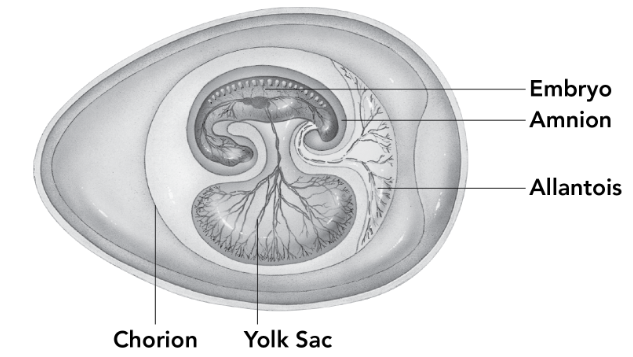
The diagram shows the structure of an amniotic egg, which is laid by reptiles, birds, and a few mammals.
The development and use of the amniotic egg in these species provided an important evolutionary advantage, for which reason?
Nala is explaining how the development of adaptations by natural selection depends on sexual reproduction. Which statement is most useful for Nala to include in her explanation?
Under normal circumstances, the circulatory system and the respiratory system work together to bring oxygen to cells and to remove carbon dioxide from the body. What would happen to these systems if the interface between them was deactivated, removing their ability to work together?
Organ systems of the human body include the circulatory, respiratory, digestive, nervous, muscular, and skeletal systems, along with several others. What best describes the relationships among these systems?
Which two body systems work together to help a person move?
Which statement best describes the function of the nervous system in the human body?
Which diagram represents the human body system responsible for breathing?
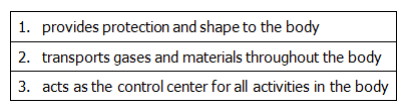
The table lists the functions of some body systems. Which body systems are responsible for the functions listed?
Which organ is matched with the correct body system?