Identify the inputs and outputs of Cellular Respiration
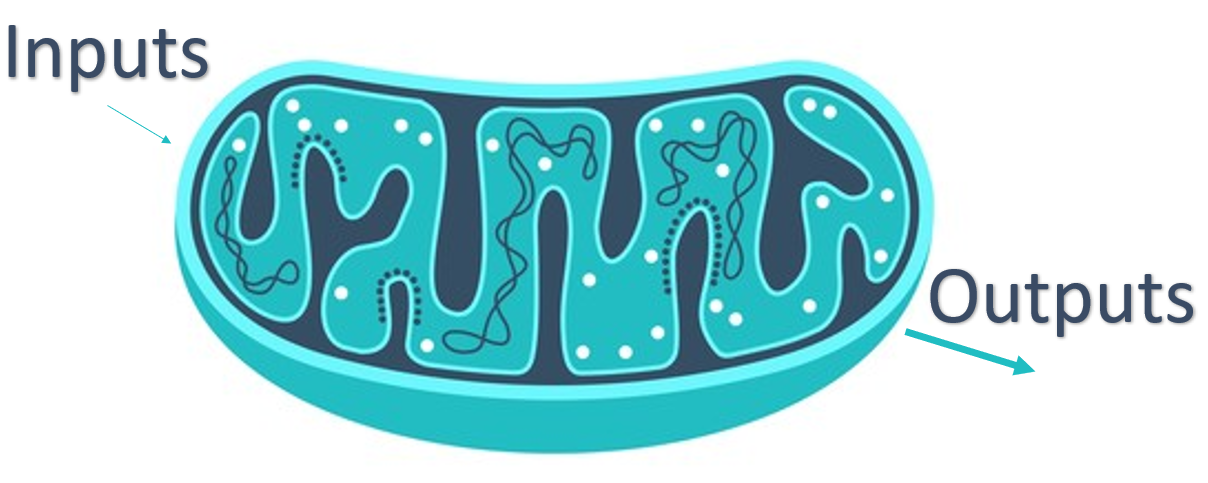
Identify the inputs and outputs of Cellular Respiration
Oxygen (O2)
Carbon Dioxide (CO2)
Energy (ATP)
Water (H2O)
Sugar (C6H12O6)
Inputs
Outputs
Identify the inputs and outputs of Cellular Respiration
Oxygen (O2)
Carbon Dioxide (CO2)
Energy (ATP)
Water (H2O)
Sugar (C6H12O6)
Inputs
Outputs
Identify the inputs and outputs of Photosynthesis
Carbon Dioxide (CO2)
Oxygen (O2)
Energy (Light)
Sugar (C6H12O6)
Water (H2O)
Inputs
Outputs
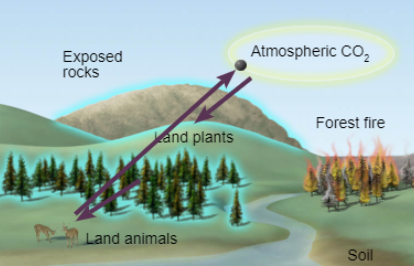
This image shows movement of carbon through which processes?
Match the subunit to the major biomolecules.
| Draggable item | arrow_right_alt | Corresponding Item |
|---|---|---|
Lipids | arrow_right_alt | Nucleotides |
Nucleic Acids | arrow_right_alt | Amino Acids |
Proteins | arrow_right_alt | Simple Sugars |
Carbohydrates | arrow_right_alt | Fatty Acids |
Which of the following is NOT true about cells?
What is homeostasis?
Which macromolecule is the primary component of cell membranes?
What is the arrangement of phospholipids in a cell membrane?
Very small nonpolar molecules such as gases like carbon dioxide, are able to go through the cell membrane in a process called
Photosynthesis occurs in plant cells' while cellular respiration occurs primarily in the
Select 5 common properties of living organisms.
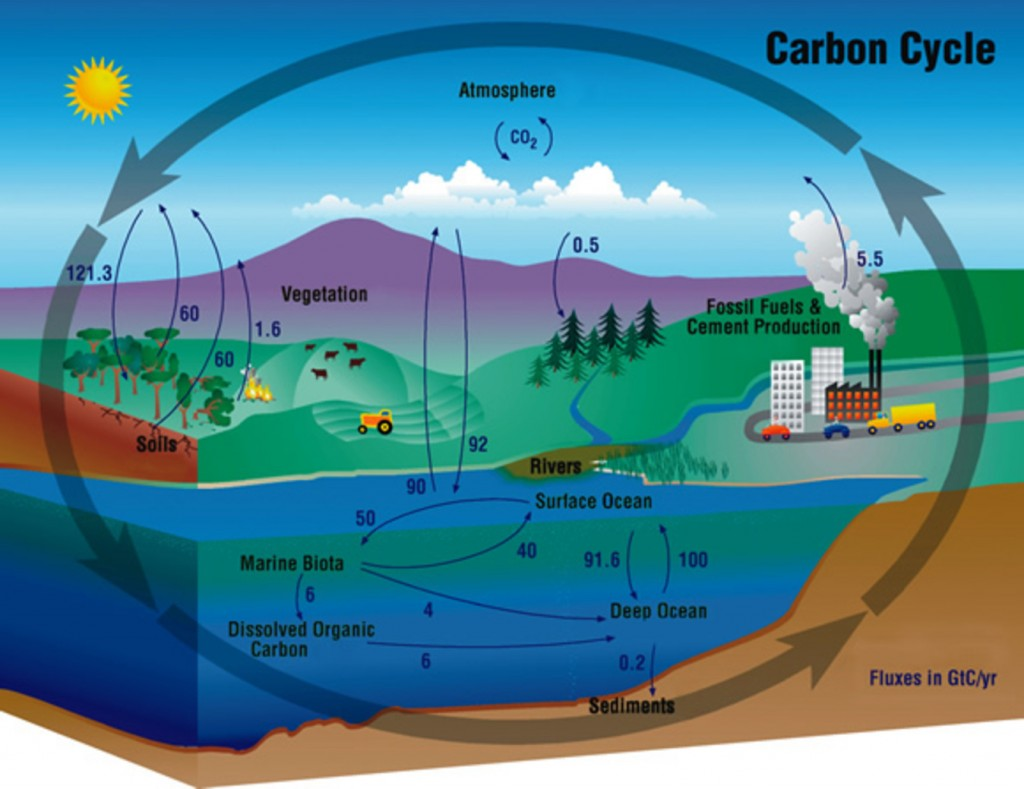
Consider the Carbon Cycle:
What TWO parts does photosynthesis and cellular respiration play a role in the carbon cycle?
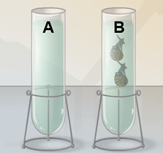
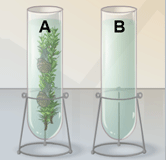
The two tubes contain bromothymol blue (BMB). Two snails are placed in Tube B. After 24 hours, what will the color of the water be in Tube B?
Remember, BMB is an indicator that starts off green, but will turn blue in the presence of oxygen and yellow in the presence of carbon dioxide.
Explain why you chose your answer to #14. What would you expect the carbon dioxide and oxygen levels to be like in Tube B?
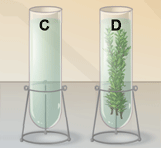
The two tubes contain bromothymol blue (BMB). Two sprigs of Elodea are placed into Tube D. The lights are on. After 24 hours, what will the color of the water be in tube D?
Remember, BMB is an indicator that starts off green, but will turn blue in the presence of oxygen and yellow in the presence of carbon dioxide.
Explain why you chose your answer to #16. What would you expect the carbon dioxide and oxygen levels to be like in Tube D?
Two snails and two Elodea sprigs are placed together in a tube containing a bromothymol blue (BMB) solution. The tubes are put into a dark closet. After 24 hours, what will the color of the water be in tube A?
Remember, BMB is an indicator that starts off green, but will turn blue in the presence of oxygen and yellow in the presence of carbon dioxide.
Explain why you chose your answer to #18. What would you expect the carbon dioxide and oxygen levels to be like in Tube A?
What topic(s) did you find most interesting and what topic(s) did you find difficult?